
Quick Take
- Bitcoin held above $62,000 as renewed US-Iran fighting slowed Strait of Hormuz traffic and lifted oil prices.
- The oil surge revived inflation and rate concerns, which can tighten financial conditions and pressure risk assets like BTC.
- Traders are watching whether tanker traffic recovers or crude stays near $80, keeping the Federal Reserve trade in focus.


Bitcoin price held above $62,000 after renewed fighting between the United States and Iran slowed traffic through the Strait of Hormuz and sent oil prices higher, reviving inflation concerns across global markets.
Data from CryptoSlate shows that the largest digital asset traded near $63,000 on Thursday, holding above the $60,000 level that traders have watched since last month’s selloff.
The move came even as renewed US strikes on Iranian targets and retaliatory attacks by Tehran raised the risk of a broader disruption to energy flows from the Persian Gulf.
Brent crude settled 5.2% higher Wednesday at $78.02 a barrel, its highest close since June 19, after briefly topping $80 during the session. US crude also rose, while shares were mixed and bond markets reflected renewed concern that higher energy costs could keep inflation elevated.
For Bitcoin, the oil move arrives at a difficult point. The digital asset is just stabilizing after a bruising June, but it has not yet produced the sustained demand needed to make the rebound less sensitive to macro shocks.
This is because higher crude prices can feed inflation expectations, lift yields, and reduce the chance of easier monetary policy, all of which tend to weigh on speculative assets.
That leaves Bitcoin caught between two forces: support near $60,000 and a renewed energy shock that could put the Federal Reserve back at the center of the trade.
Strait of Hormuz traffic slowdown revives oil and Fed risk
The latest escalation followed US strikes on Iranian targets for a second consecutive day, after Washington said commercial vessels had been attacked while passing through the Strait of Hormuz.
Iranian media reported explosions along the country’s southern coast and said strikes hit Iranian-controlled islands in the Gulf. Iran’s health ministry said 14 people had been killed over the past two nights.
President Donald Trump said on Truth Social that the US strikes were retaliation for attacks on ships and warned that any further action by Iran would bring a stronger response.
The exchange quickly moved into energy markets because the Strait of Hormuz is one of the world’s most important routes for oil and liquefied natural gas shipments.
Reuters reported that four oil and LNG tankers turned back after attempting to pass through the waterway, including three empty LNG carriers bound for Qatar’s Ras Laffan export terminal.
Bloomberg, citing Kpler data, reported that traffic slowed sharply Thursday. Only one tanker was seen moving through the Strait earlier in the day, alongside an Iranian container ship. No traffic was detected in the corridor closer to Oman, the route used by vessels seeking to avoid Iranian-controlled waters.
The slowdown marked a sharp reversal from recent flows. Bloomberg reported that 14 commodity vessels crossed Wednesday, compared with an average of 34 daily tanker crossings in the three weeks after the ceasefire.
Even without a formal closure, reduced traffic can tighten energy markets. Shipowners may avoid the route, insurers may raise costs and buyers may seek alternative cargoes while the risk of further attacks remains elevated.
Ole Hansen, head of commodity strategy at Saxo Bank, said the disruption showed that the Strait had not fully returned to normal after the ceasefire. He said:
“The disruption is a reminder that the Strait never fully reopened and that the recent removal of the geopolitical risk premium may have been premature.”
The slowdown helped push crude higher, reversing part of the relief that followed last month’s ceasefire. Oil prices had eased after the US and Iran agreed to halt attacks and resume talks, reducing concern that Persian Gulf exports would remain constrained.
The latest fighting has put that assumption under pressure. Brent crude climbed as traders priced in renewed supply risk from the Middle East. Separately, Russia’s diesel export ban added pressure to global fuel markets.
Meanwhile, the oil move has also complicated the rate outlook. Markets had been leaning toward the view that softer inflation and weaker growth would eventually give the Federal Reserve room to ease policy. That view becomes harder to sustain if crude remains near $80 or moves higher.
Reuters reported that investors received a fresh inflation warning after Brent’s advance, with short-dated yields rising and traders pricing in more tightening risk from major central banks.
Hansen said higher oil prices increase the risk that inflation stays elevated for longer, though recent weakness in US jobs data could keep the Fed from moving quickly toward another rate increase.
That leaves markets facing a less favorable mix for risk assets. Higher energy prices can raise transportation and production costs, put pressure on consumers, and make it harder for policymakers to justify easier monetary policy.
Bitcoin’s $62,000 resilience has limits
That shift in the rate outlook puts Bitcoin’s hold above $62,000 under closer scrutiny, because elevated energy prices could keep financial conditions tight just as the digital asset tries to rebuild demand.
The top crypto's current price movement suggests sellers have not yet forced a deeper break after a difficult June, when weaker fund demand, rising exchange supply, and tighter liquidity weighed on the market.
Instead, BTC has remained above the $60,000 level even as crude prices rose and traders reassessed the risk of higher-for-longer interest rates.
CryptoQuant analysts said Brent crude’s move above its annual average has historically coincided with tougher conditions for Bitcoin. The relationship is not automatic, but sustained oil rallies can feed inflation expectations, lift yields and draw capital away from risk assets.
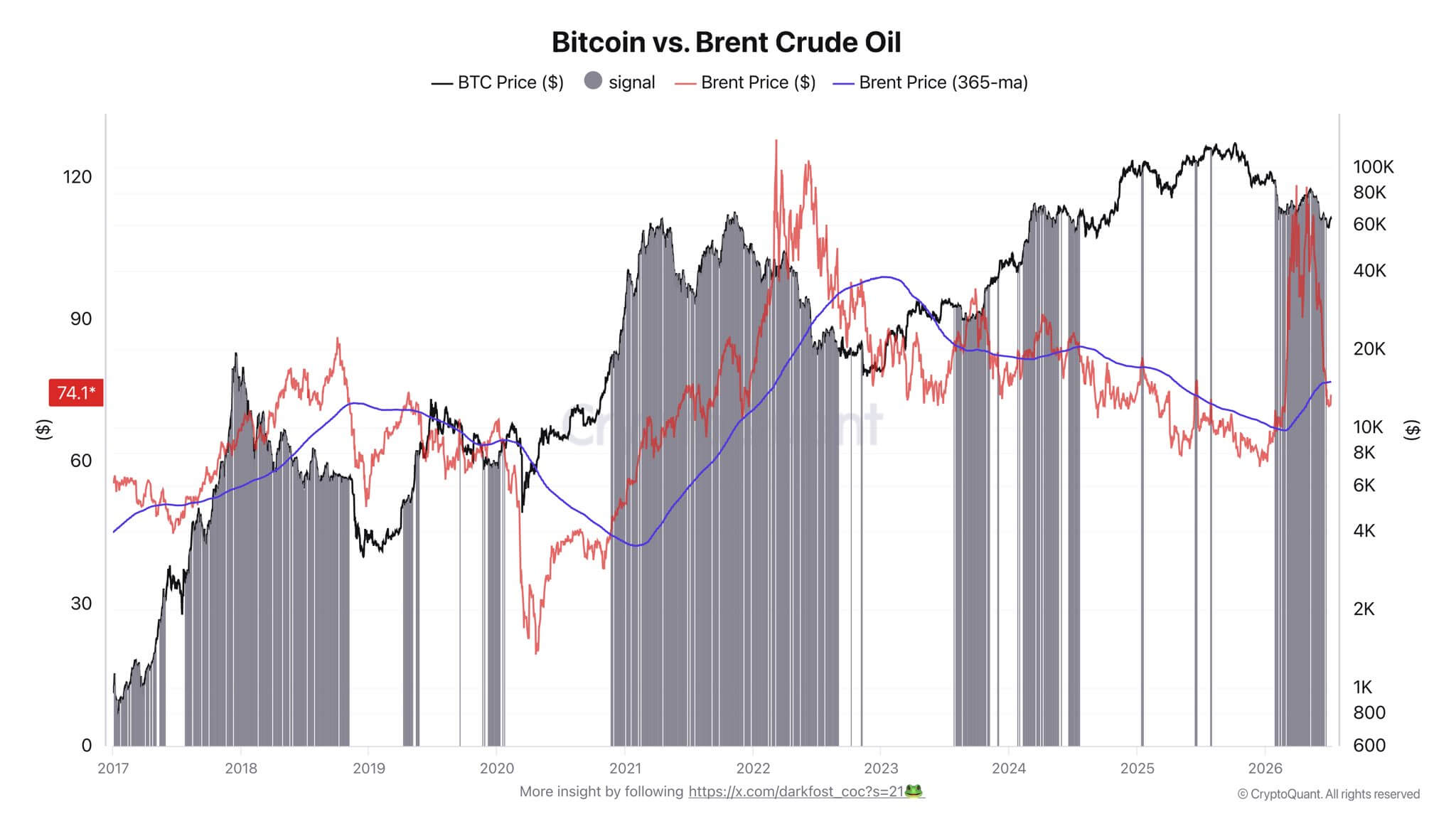
That leaves Bitcoin exposed to the same macro pressure that hit the market in June. A geopolitical shock may strengthen some arguments for scarce assets, but Bitcoin has not traded in a way consistent with gold during periods of stress. Its price remains closely tied to liquidity, positioning, and expectations for monetary policy.
The next move in the Strait of Hormuz could therefore shape the crypto market’s near-term direction. A recovery in tanker traffic would likely reduce part of crude’s risk premium, ease pressure on yields, and allow traders to refocus on Bitcoin-specific drivers, including exchange-traded fund flows, leverage, and spot demand.
However, a prolonged slowdown would keep the pressure on. Brent holding near $80 or moving higher would keep inflation concerns front and center for investors, especially if diesel and LNG markets remain tight.
That would increase the risk that funds reduce exposure to assets that depend on easier liquidity conditions.
Ultimately, Bitcoin’s hold above $62,000 shows the market has not yet treated the renewed conflict as a reason to sell aggressively. But the level is not a clear floor while oil prices remain elevated and traffic through the Strait of Hormuz remains disrupted.

Bitcoin is -0.06% over the past 24 hours and currently sits at rank #1 by market cap.
Mentioned in this article


Editorial credits