Crypto copy trading automates order replication while every resulting gain or loss remains in the follower's account. Comparisons should begin with the copied product and the legal entity that offers it, followed by the controls available before the first order. A leader's return percentage can obscure borrowed exposure or open losses. It can also hide a short record and the gap between leader and follower results after costs.
Top Crypto Copy Trading Platforms
- Cost
- Spot base: maker/taker 0.10%
- Assets
- 500+ crypto
- Fiat funding
- Bank transfer, cards (by region)
- Multi-million-dollar depth on BTC and ETH books
- SAFU, a $1 billion emergency fund in BTC
- Bot Marketplace with grid and DCA bots
- Cost
- Spot maker/taker: global 0.08%/0.10%; EEA 0.20%/0.35%
- Assets
- 296 crypto (review)
- Fiat funding
- SEPA (EEA); other rails vary
- Monthly zk-STARK reserve inclusion checks
- Simulated trading to test before going live
- RFQ block trades for large orders
- Cost
- Spot base: maker/taker 0.10%
- Assets
- 350 crypto (profile)
- Fiat funding
- SEPA/FPS via partners (by region)
- One V5 API across every Bybit market
- Three margin modes on one trading account
- Launchpool and Launchpad token events
- Cost
- Spot base: maker/taker 0.10%
- Assets
- 600+ crypto
- Fiat funding
- Cards, P2P, regional bank rails
- Mirror lead traders on spot and futures
- Cash Plus yield with instant free redemption
- 3M USDT daily withdrawal limit at VIP 0
CryptoSlate may earn a commission when you visit partner sites through links on this page, at no extra cost to you. Our rankings and reviews remain editorially independent and based on our published methodology. Read disclosure
Disclaimer: CryptoSlate may receive a commission when you click links on our site and make a purchase or complete an action with a third party. This does not influence our editorial independence, reviews, or ratings, and we always aim to provide accurate, transparent information to our readers.Comparison Table
| Name | Total Assets | Products | Staking | Trading fees (low) | Trading fees (high) |
|---|---|---|---|---|---|
 Binance Binance | 500 | Spot, Margin, Futures or Perps, Options, OTC, Simple-buy Broker | Yes | 0.00 | 0.10 |
 OKX OKX | 300 | Spot, Margin, Futures or Perps, Options, OTC, Simple-buy Broker | Yes | 0.02 | 0.35 |
 Bybit Bybit | 350 | Spot, Margin, Futures or Perps, Options, OTC, Simple-buy Broker | Yes | 0.00 | 0.10 |
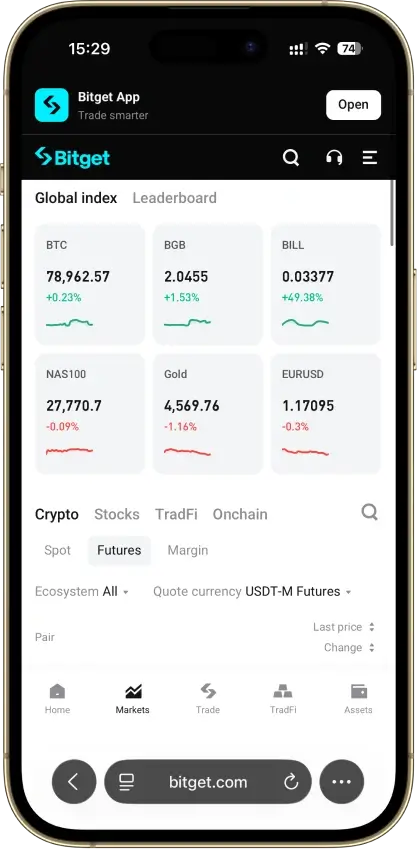
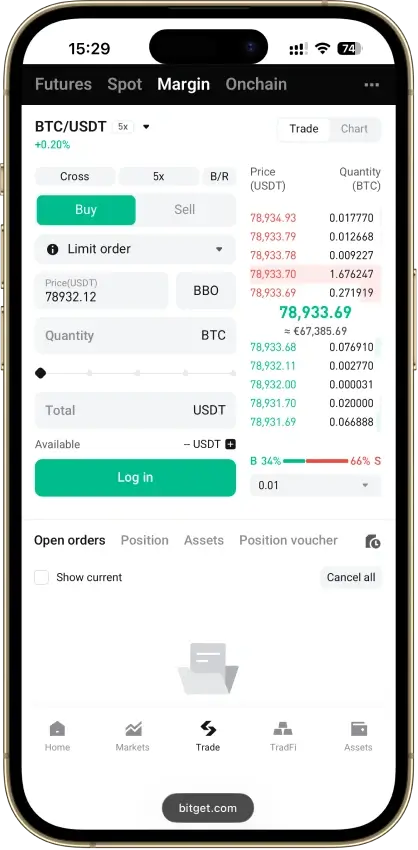
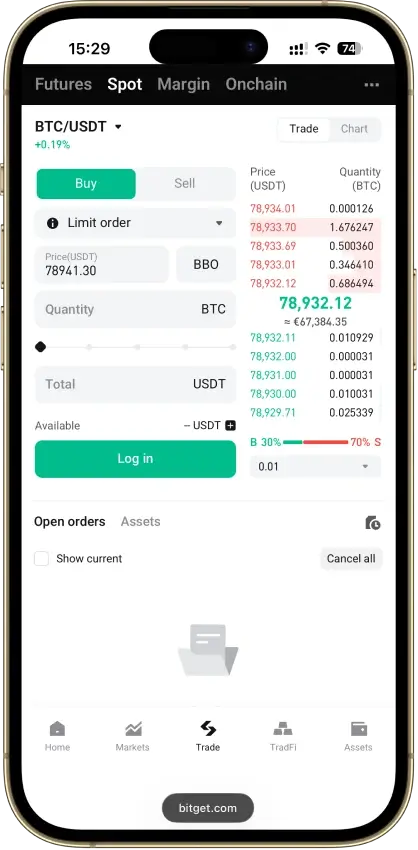
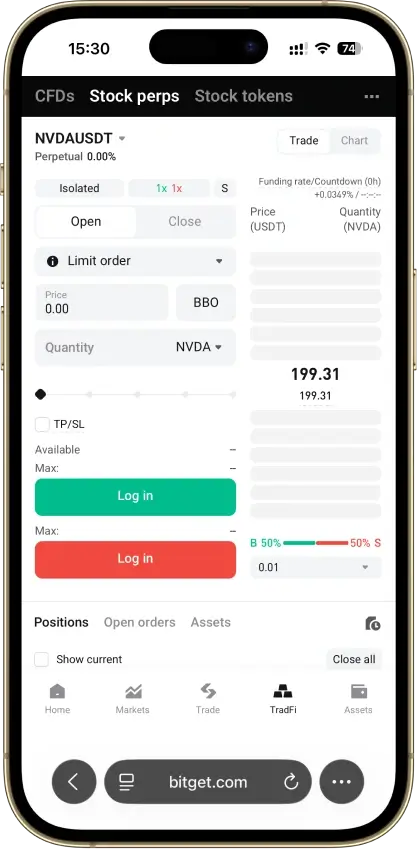
 Bitget Bitget | 800 | Spot, Margin, Futures or Perps, OTC, Simple-buy Broker | Yes | 0.02 | 0.10 |
Crypto Copy Trading Platforms Reviews
Binance
- Cost
- Spot base: maker/taker 0.10%
- Assets
- 500+ crypto
- Fiat funding
- Bank transfer, cards (by region)
Pros
- 0.10% at entry, 0.075% paying in BNB
- Futures, options and FIX API access
- User-verifiable reserve inclusion
- Hardware keys and withdrawal allowlists
- 1,358 spot pairs across 486 assets
Cons
- No MiCA authorization in the EU
- Account reviews can hold withdrawals
- $4.3B U.S. guilty plea in 2023


OKX
- Cost
- Spot maker/taker: global 0.08%/0.10%; EEA 0.20%/0.35%
- Assets
- 296 crypto (review)
- Fiat funding
- SEPA (EEA); other rails vary
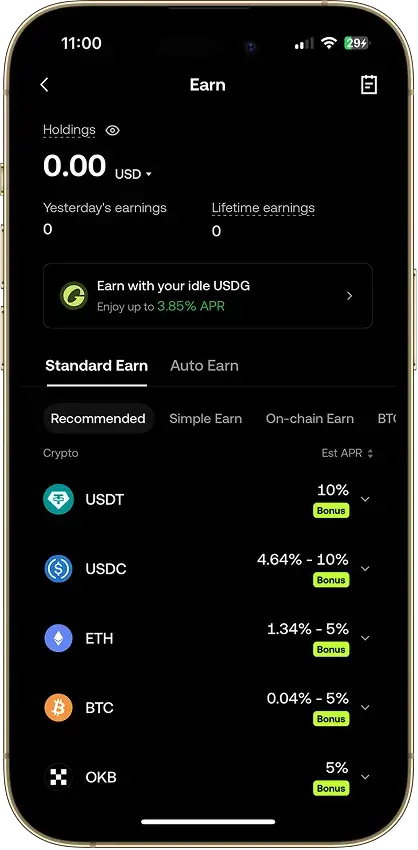
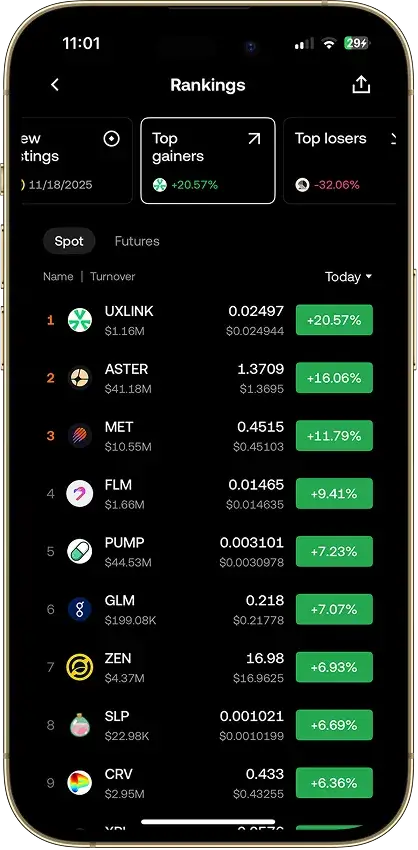
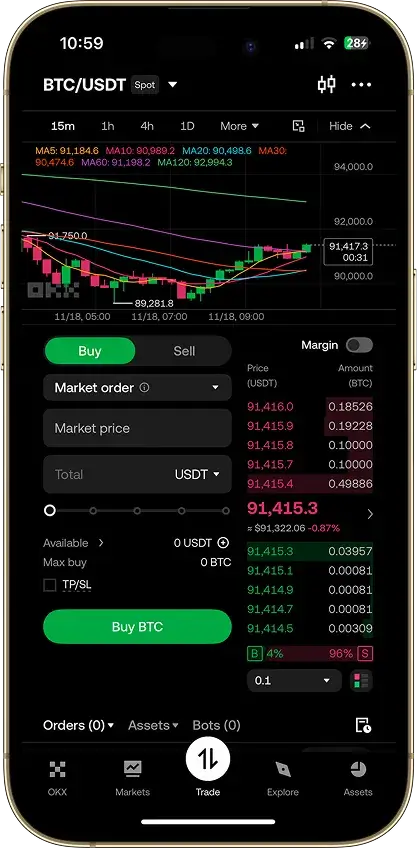
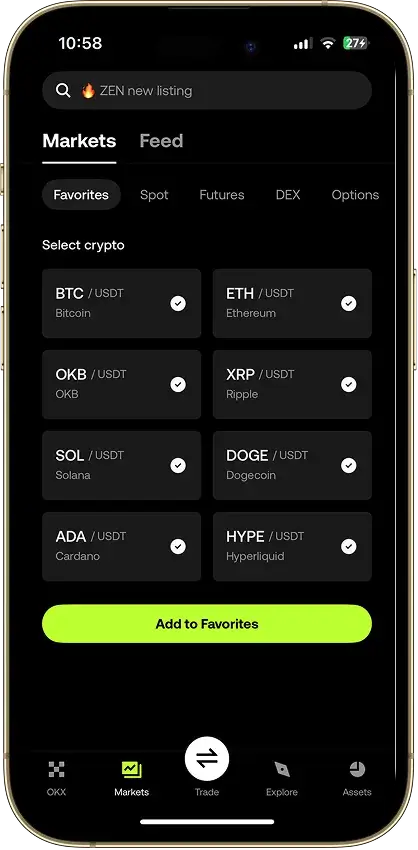
Pros
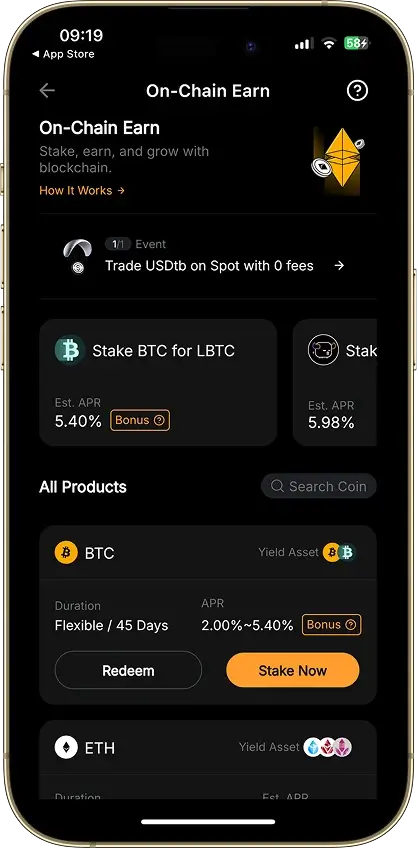
- 0.08% global maker and 0.10% taker fees
- Margin, futures, perpetuals, and options
- REST and WebSocket APIs with subaccounts
- Copy trading and bots where permitted
Cons
- No independent reserve attestation
- $505M U.S. settlement by an affiliate, 2025
- U.S. users get a separate, pricier exchange

Bybit
- Cost
- Spot base: maker/taker 0.10%
- Assets
- 350 crypto (profile)
- Fiat funding
- SEPA/FPS via partners (by region)
Pros
- MNT payment trims spot fees to 0.075%
- 450+ perpetual pairs on Global Bybit
- Options, copy trading, and built-in bots
- Hacken-checked reserve snapshot
- Passkeys and a new-address withdrawal lock
Cons
- One-Click Buy can cost far more than spot
- Bank cash-out relies on partners or P2P
- $1.5B ETH custody breach in 2025

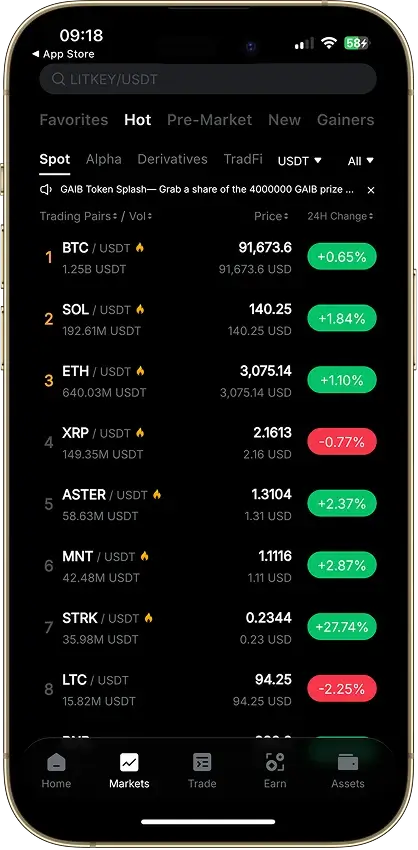
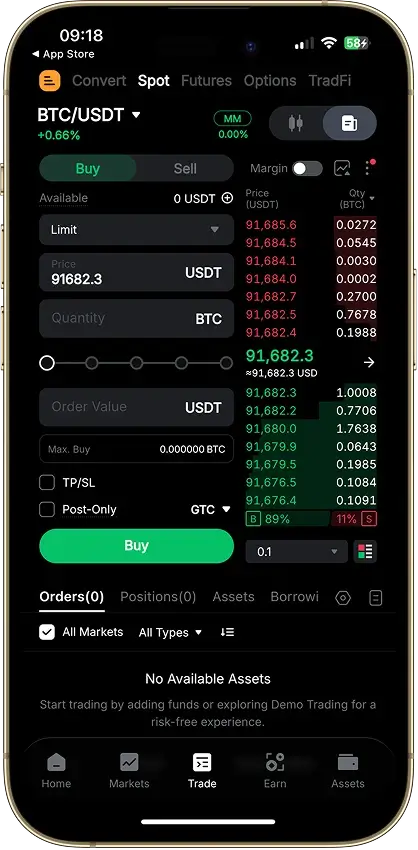
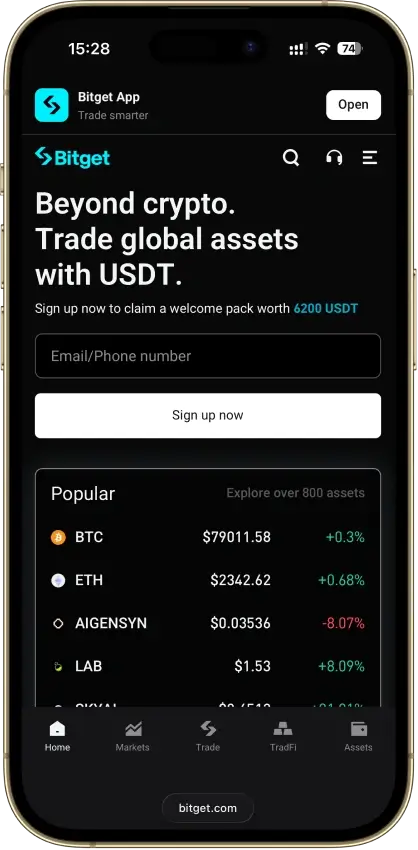
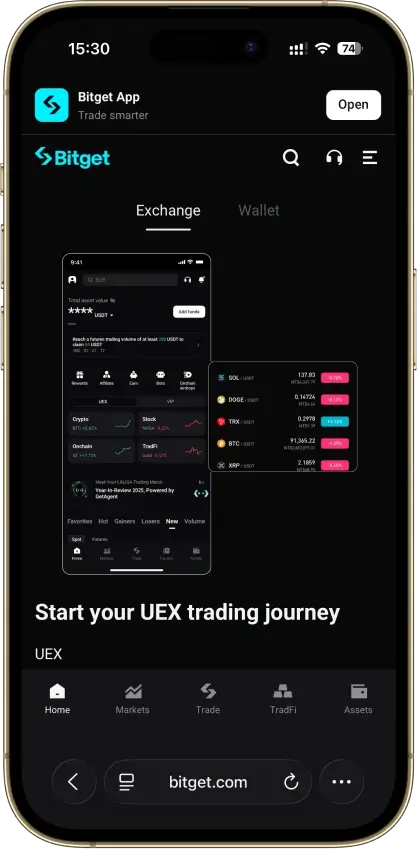
Bitget
- Cost
- Spot base: maker/taker 0.10%
- Assets
- 600+ crypto
- Fiat funding
- Cards, P2P, regional bank rails
Pros
- 0.10% standard spot fees
- Monthly Merkle inclusion checks
- 800+ coins on the global exchange
- Demo trading and scoped API keys
- Bots for automated trading
Cons
- Earn rates and terms change product by product
- BGB flash crash in 2024, trade rollback in 2025
- Simple-buy and P2P spreads sit outside fee tables
How CryptoSlate Assesses Crypto Copy Trading Platforms
The Exchange Score remains the baseline assessment of the company holding the follower's account. Readers can see how that underlying account is scored before considering the copy product. This page keeps that published score. Leader returns do not change it, and neither do follower counts or an advertised risk label.
Copy-trading assessment starts with the first action a follower can take. The company named in the account terms must serve the customer's region, and the signed-in account must provide native order copying for that customer class. Social content and automated-strategy directories cannot substitute for a control that connects a selected leader to orders in the follower's own account.
The review follows the follower's capital through the product, beginning with the leader record. It asks which dates and cash flows feed the displayed result. Closed-trade data must be reconciled with open-position treatment and changes in drawdown or exposure. Allocation comes next. The assessment separates fixed or proportional sizing from position limits, then records symbol filters and the total exposure ceiling. Futures copying also requires a check on margin mode and the follower's control over the exposure multiplier.
Execution evidence is read from the follower's side, starting with the time at which the copy engine submits an order. It should explain minimum sizes and insufficient-balance treatment, followed by the response to a rejection or partial fill. Comparing leader and follower prices helps expose replication drift. Each trading or product charge is then attached to the point in the sequence where it arises.
Exit assessment begins by distinguishing pause and stop from detachment or manual closure. These controls can produce different results when positions remain open. The assessment records what each one does and whether a follower-initiated close breaks the link for that position. It also traces the remaining balance back to an available account before withdrawal. Every changeable product field needs a verification date.
A displayed return is therefore treated as one historical record, not a ranking input by itself. A short, highly exposed record can show a larger percentage than a longer record built with smaller positions. Record length, open-loss treatment, drawdown, follower controls, and execution differences provide the context needed to read that percentage.
How to Choose a Crypto Copy Trading Platform
Start by confirming product access and then identify what the leader record leaves out. The rest of the comparison should reflect both the amount being allocated and the product being copied. A spot follower faces different loss mechanics from a margin-based perpetual-futures follower, even when both select the same leader.
Open the Account You Would Actually Fund
Begin with the account agreement and record the company responsible for the balance, copy engine, and complaints process. Then sign in from the intended country and look for the control that links a leader to follower orders. If that control is missing, a feature described by another company in the group is irrelevant to the account being assessed.
The product must place or proportionally reproduce orders inside the follower's account. Trader posts provide social content, while alerts that require manual entry are signals. A list of automated strategies forms a bot marketplace. These services qualify as native copy trading only when the platform links a selected leader or strategy to follower orders.
Identify What Will Be Copied
Spot copying buys or sells assets without a derivatives position when no borrowing is involved. Loss can still reach most of the allocation if the copied asset falls sharply. Fees and spread affect execution cost, while custody and withdrawal access determine control of the remaining assets.
Futures copying reproduces margin-based contract positions. Margin requirements and funding apply, along with mark-price rules and forced liquidation. Some products also impose automatic position reduction or other loss-allocation terms. Confirm whether the follower copies the leader's exposure multiplier and margin mode, or instead applies separate limits. Even a small difference in collateral or entry price can produce a different liquidation price.
Read the Whole Leader Record
The measurement window and denominator determine what a leaderboard percentage means. Check whether the display covers closed trades only or includes open positions. Deposits and withdrawals may affect the calculation. Results may also appear before trading costs, with funding and profit share deducted later.
Drawdown measures the fall from a prior peak under the platform's stated formula. The figure shows part of the path taken to reach a return, but its treatment of open positions matters. A leader might hold a losing position open while adding collateral, or change the exposure multiplier. Either action can make the summary look calmer than the follower's actual experience.
Follower count and assets under management describe demand, not skill. Selection bias also affects leaderboards because failed or inactive profiles may disappear. Delisted profiles can vanish too, while surviving high-return accounts stay visible. Prefer a longer record with clear definitions, including complete data for both closed and open positions.
Set Follower-Level Limits
Allocation controls determine how much of a leader's behavior can reach the follower's balance. A fixed amount per order and a proportional allocation ratio cover the two common sizing methods. The follower also needs a per-position maximum and a cap on total copied exposure. Futures products should add either a follower-set exposure multiplier or a firm ceiling.
The label on an exit control does not explain what it will do. A maximum-loss setting might stop new copying without closing existing positions. It could instead close positions or detach the leader, depending on the product. Both pausing and unfollowing may leave positions untouched, so read the confirmation screen and terms before assuming either action removes existing risk.
Calculate All-In Cost and Replication Drift
Copying can add a leader profit share or subscription to ordinary trading costs. Spot spread and taker fees affect each entry or exit. Futures followers may also pay funding, with liquidation fees due in some circumstances. Margin products can add a separate borrowing cost.
The follower's order can reach the market after the leader's, leaving time for the price to move. A worse entry creates one source of replication drift. Minimum order sizes may cause small trades to be skipped, while thin markets can produce partial fills. If the leader closes quickly, the follower may enter late and then exit at another price.
Check Custody and Withdrawals
Native exchange copy trading normally keeps the follower's allocation in the platform account. Although the leader does not need the follower's withdrawal credentials, the exchange still controls custody and the withdrawal process. Account security protects access but cannot prove that the platform can meet every withdrawal.
Confirm how funds enter the copy account and whether they must first move from another wallet on the platform. Before transferring funds out, check how the product treats open positions. Download trade and fee records, along with funding and profit-share statements. A complete withdrawal path lets the follower stop copying and close exposure before returning funds to an available balance for withdrawal through the serving entity.
What Is Crypto Copy Trading?
Crypto copy trading is a platform feature that automatically places or scales orders in a follower's account from the activity of a selected trader or strategy. The follower chooses an allocation and may set limits. The platform handles order replication according to its own rules.
This arrangement differs from handing over withdrawal credentials or sending funds directly to a trader. It still exposes the follower to the leader's decisions and the exchange's custody. The follower remains responsible for product eligibility and risk settings, as well as tax records and any loss in the copied account.
Copy execution can follow individual orders or proportional position changes. Some products instead reproduce a strategy-defined portfolio. The platform should explain which event triggers a copied order, including how it treats existing leader positions when a new follower joins. Entering that portfolio at today's prices does not give the follower the leader's original cost basis.
How Crypto Copy Trading Works
The typical flow begins when a follower selects a leader and assigns capital. After checking the minimum allocation and market eligibility, the platform applies the follower's chosen limits. Each new leader order can then generate a follower order based on either a fixed amount or a proportion.
Some systems send the leader's order first, so followers remain exposed to price movement before their orders reach the market. Others batch follower orders or allocate them through a separate engine. Product terms should explain order priority and price protection. They should also cover rejections and partial fills, including what happens when the follower lacks enough available balance.
Closing follows a separate product rule from entry. The platform might copy the leader's exit or trigger a follower-set stop, while still allowing manual closure. A manual action may detach only that position as later orders continue. A full stop should specify whether it prevents new orders and closes those already open, as well as whether it ends the leader relationship.
How to Interpret Copy-Trader Performance
The fields below answer different questions. No single metric establishes that a leader is suitable.
| Performance Field | What It Can Show | What It Can Hide |
|---|---|---|
| Return on investment | Change relative to the platform's chosen base | Short window, cash-flow effects, borrowed exposure, and open losses |
| Profit and loss | Currency gain or loss over the displayed period | Different account size and risk taken to earn it |
| Maximum drawdown | Largest peak-to-trough decline under the stated formula | Intraday losses, open-position treatment, and later deleted history |
| Win rate | Share of trades classified as winners | Large losing trades, tiny winning trades, and position averaging |
| Profit and loss ratio | Relative size of winning and losing results | Tail losses and inconsistent position sizing |
| Record length | Time covered by the profile | Inactive gaps and changing strategy |
| Follower count | Number of accounts following | Suitability, follower profitability, and survivorship bias |
| Assets under management | Capital assigned by followers | Liquidity capacity and concentration |
| Risk score | Platform summary of selected risk inputs | Proprietary weighting and omitted risks |
Historical returns should be read as a record of what happened under specific conditions. They are not a forecast. A follower starts later, may use another allocation, and can receive different fills. The leader can also change assets, exposure, holding time, or risk after the follower joins.
Spot Copy Trading vs Futures Copy Trading
Spot and futures copying belong in separate comparison fields because their downside and costs differ.
| Feature | Spot Copy Trading | Futures Copy Trading |
|---|---|---|
| Exposure | Purchased assets, unless margin is added | Long or short derivatives positions |
| Borrowed Exposure | Usually none in ordinary spot | Often available and sometimes copied from the leader |
| Forced liquidation | No for unborrowed spot holdings | Yes when margin falls below platform requirements |
| Carry cost | Trading fees and spread | Trading fees, spread, funding, and possible liquidation costs |
| Main price risk | Asset falls after purchase | Contract moves against the margin-based position |
| Additional control | Asset and allocation filters | Margin mode, exposure cap, and liquidation buffer |
A spot copy product can still concentrate the account in volatile or illiquid assets. A futures copy product can lose the assigned margin quickly even when the leader's longer record remains profitable. Compare products within the same type before using return percentages as a point of reference.
Copy Trading Risks
Copy trading reduces the work of entering orders. It does not remove market, execution, custody, or counterparty risk.
Leader Risk and Strategy Drift
A leader can change strategy after building a record. Position size may rise, holding periods may lengthen, and a spot profile may begin using illiquid assets. Futures leaders can increase borrowed exposure or average into losing positions. The follower needs limits that continue to apply after those changes.
Slippage and Capacity
Large follower demand can make a strategy harder to reproduce. A leader may trade at a size that fills cleanly, while combined follower orders move the market. Smaller assets amplify that capacity problem. Public follower returns should therefore be separated from the leader's displayed account return wherever the platform provides both.
Drawdown and Liquidation
Drawdown can exceed the historical figure. In futures copying, liquidation can close the follower before the leader because balances, entry prices, exposure multipliers, or collateral differ. A stop order also depends on a trigger and an executable market. It cannot guarantee a price or prevent every liquidation.
Platform and Custody Risk
The exchange controls the copy engine, account ledger, and withdrawal process. Outages can delay entries or exits. A product error can copy the wrong amount or fail to close. Security controls reduce some account risks, while solvency and withdrawal capacity require separate evidence.
Selection and Reporting Bias
Leaderboards favor accounts that remain visible. Failed or abandoned profiles may receive less exposure or disappear. Return windows can start after earlier losses. A platform-defined risk score may omit exposure changes, intraday drawdown, or unrealized loss. Complete records and clear definitions matter more than a polished rank badge.
Copy Trading, Bots, Signals, and Managed Accounts
Similar labels can hide different control and custody arrangements.
| Service | Who Generates the Decision? | How the Order Is Placed | Category Fit |
|---|---|---|---|
| Native copy trading | Selected leader or strategy | Platform replicates it in the follower's account | Included after eligibility verification |
| Trading bot | Predefined rules or algorithm | Software submits orders automatically | Adjacent product, not automatically copy trading |
| Signal service | Signal publisher | Follower enters the order manually or links separate software | Excluded |
| Social trading feed | Community or named traders | No execution required | Excluded unless native copying is a separate verified feature |
| Managed account | Discretionary manager | Manager trades under an account or mandate | Excluded and may carry different regulatory duties |
| API tool | Customer or third-party software | API keys authorize order submission | Excluded by itself |
| Wallet tracker | Observed on-chain address | No order, or separate routing reproduces activity | Excluded from the centralized platform ranking |
Copy trading follows another trader with the follower's own allocation, while prop firm evaluation accounts use a separate fee, drawdown, and payout-rule model.
The account checks used for ordinary spot trading cover funding, custody, and basic withdrawals outside the copy engine. When the copied product is margin based, the futures position and liquidation checks explain the contract mechanics that remain active beneath the copy layer.
Regional Access and Regulatory Questions
Copy-trading access changes by legal entity, location, product, and customer classification. Spot access at an exchange does not establish access to futures copying. A derivatives restriction can remove only part of the copy product while leaving ordinary spot trading available.
Regulatory treatment can also depend on how much discretion the platform or leader exercises and whether the follower approves individual orders. The European Securities and Markets Authority's MiCA answer on copy trading says crypto-asset copy-trading models should be assessed case by case to identify which regulated service is being provided. Traders should check the serving entity's terms and their local regulator's register instead of relying on a global product page.
Location-masking tools do not create eligibility. Misstating residency can breach platform terms and may lead to position closure, account restrictions, or withdrawal review. Confirm access before allocating funds and keep a plan for closing copied positions if regional availability changes.
FAQ
Crypto Copy Trading FAQ
What is the best crypto copy trading platform?
The best fit starts with an eligible serving entity and a live native copy product. Compare spot and futures copying separately. Then check the leader record's length, drawdown, open positions, and calculation method. Follower controls, total cost, replication rules, custody, and the withdrawal path matter more than the highest displayed return.
Is crypto copy trading profitable?
Crypto copy trading can produce gains or losses, and a leader's historical return cannot establish what a follower will earn. Followers start at different prices and may receive different fills. Fees, funding, profit share, and allocation settings also change results. A leader can alter strategy or take more risk after building a profitable record.
Can I lose all the money assigned to copy trading?
Most or all of an allocation can be lost if copied assets fall sharply or a margin-based futures position is liquidated. The exact loss depends on account structure, margin mode, collateral, and platform terms. Follower limits can reduce exposure, but stops and maximum-loss settings cannot guarantee execution during gaps, thin liquidity, or outages.
What is the difference between spot and futures copy trading?
Spot copying normally buys and sells assets without borrowing. Futures copying mirrors derivatives positions that can multiply exposure and face funding and liquidation. The follower may have a different entry price or collateral balance from the leader, so the two accounts can reach different outcomes even when orders are linked.
How do copy-trading platforms pay lead traders?
Platforms may pay leaders a share of follower profit, a fixed subscription, or another published incentive. Profit-share rules should define the rate, settlement period, eligible profit, prior-loss treatment, and any high-water mark. Followers also pay normal trading costs, and futures positions can add funding or liquidation charges.
What happens when I stop copying a trader?
Stopping can prevent new copied orders while leaving existing positions open. Other platforms may offer separate choices to detach, close at market, or retain positions for manual management. Read the confirmation screen before acting. In a margin-based account, an open position can remain exposed to funding and liquidation after the leader link ends.
Are trading bots the same as copy trading?
Trading bots follow coded rules, while copy trading links follower orders to a selected trader or strategy. Some platforms place both products in one marketplace, which can blur the labels. Verify who generates each decision and how orders reach the account. A bot listing alone does not qualify a platform for a copy-trading ranking.
Does a leader's risk score show the worst possible loss?
A platform risk score summarizes selected historical inputs under its own formula. It cannot define the worst future loss. The calculation may omit intraday moves, strategy changes, rare market gaps, follower slippage, or open-position treatment. Use the underlying drawdown, exposure multiplier, concentration, record length, and position data when those fields are available.