Spending crypto in the real world used to mean jumping through hoops. Today, a handful of cards make it straightforward — but straightforward does not mean identical. The gap between the best crypto cards and the ones that eat into your balance through fees, spreads, and fine print is wide enough to matter.
This page compares the leading options across rewards, fees, conversion costs, limits, and usability. Whether you want a crypto debit card for everyday spending, a crypto credit card for rewards, or a virtual crypto card you can use within minutes, the right choice depends on how you actually spend, what fees you can absorb, and whether the reward structure works for your region and funding style.
Top Crypto Cards
- Rewards
- 1–4% crypto backCategory rates and caps apply
- Card fee
- $0 / yearNo FX fee; interest may apply
- Availability
- US + Puerto RicoUS residents only
- No coin sold at checkout, no per-swipe tax
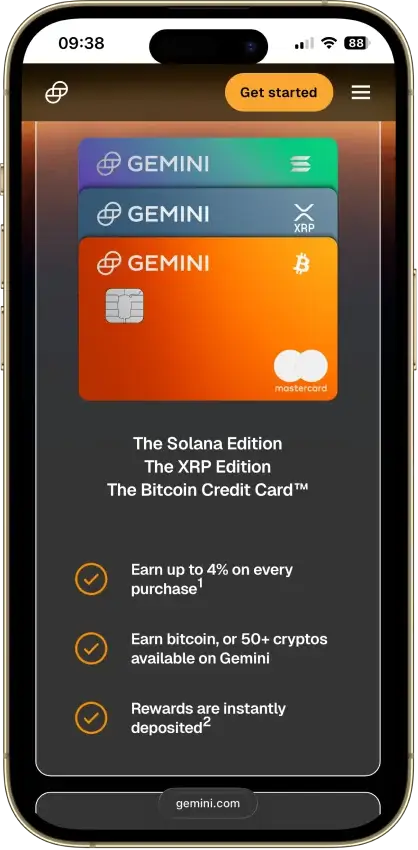
- Bitcoin, XRP, and Solana card editions
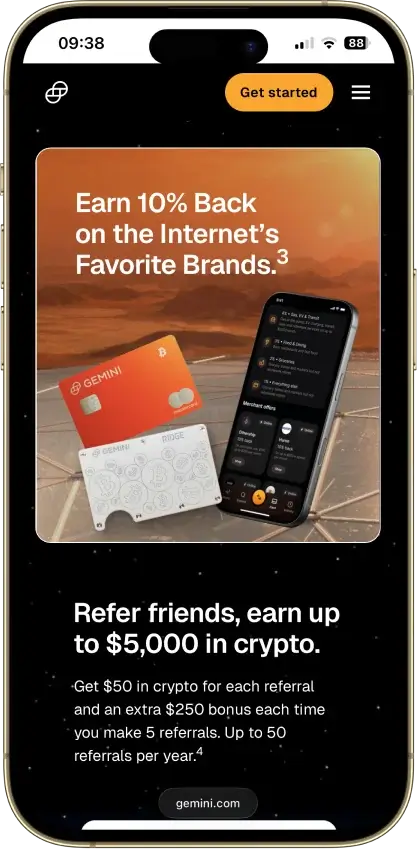
- 10% back at rotating partner merchants
- Rewards
- 1.5% USD cashbackStandard; $2,000 spend/month
- Card fee
- $0 Standard planPaid tiers and FX fees apply
- Availability
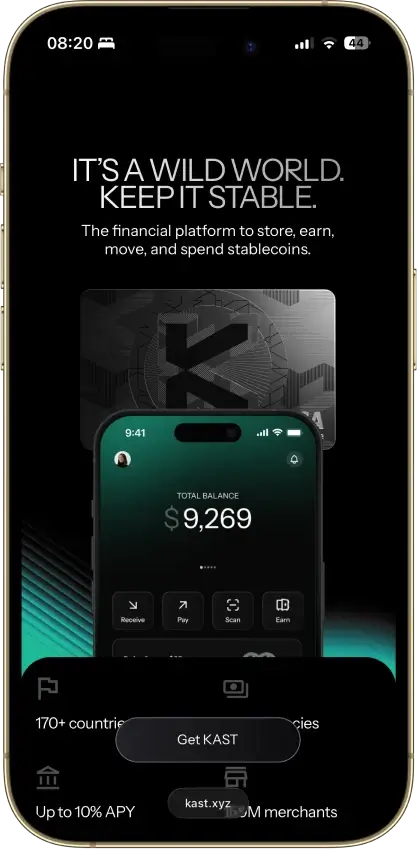
- 170+ countriesEligibility varies by country
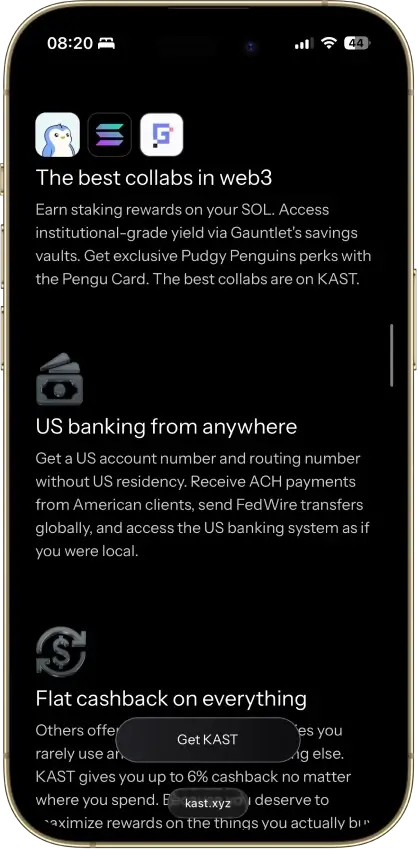
- Virtual US bank numbers for ACH and wires
- Free instant transfers to other KAST users
- Rewards paid in dollars, not a house token
- Rewards
- 2–4% introductory XRP back3 months; tier/funding caps
- Card fee
- $0 EssentialElite $99.99/year
- Availability
- US + UKRegional exclusions apply
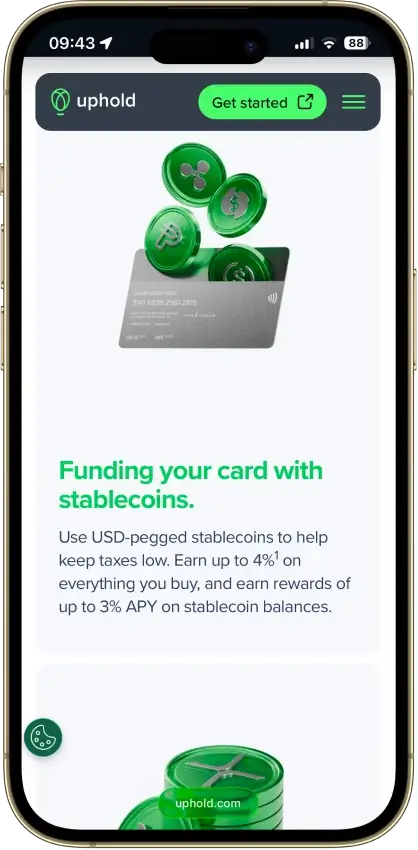
- Stablecoin funding avoids tax on each swipe
- Spend gold and silver balances at checkout
- Any of 200+ wallet assets can fund a purchase
- Rewards
- Up to 2% NEXO / 0.5% BTCCredit; tier and balance rules
- Card fee
- $0 / yearFX and ATM fees may apply
- Availability
- Selected Europe + UKEligibility restrictions apply
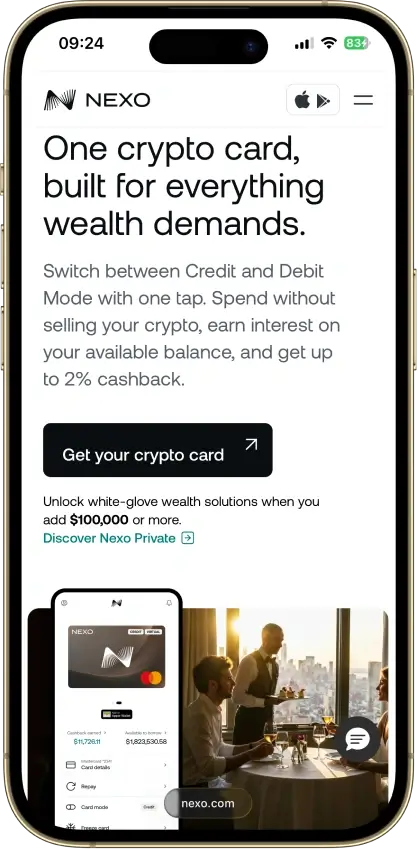
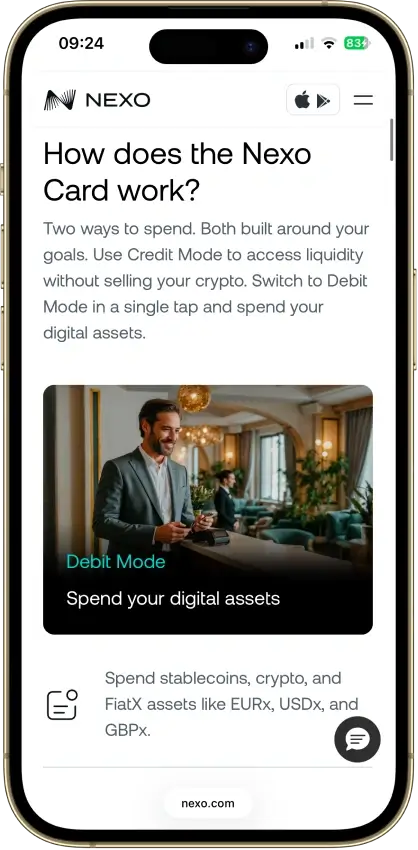
- Tap to switch Debit and Credit Mode
- Idle Debit Mode balance earns daily interest
- Free ATM allowance grows with loyalty tier
- Rewards
- No cashback$10 referral bonus each
- Card fee
- $10 issuance; $0 monthly3–5% top-up; $0.25 per spend
- Availability
- US + eligible countriesCountry restrictions apply
- No-KYC card that accepts US residents
- AI agents can manage cards through MCP
- Privacy coins like XMR can fund the card
- Rewards
- Variable crypto rewardsRotating options in-app
- Card fee
- $0 / yearCrypto spread; ATM surcharges
- Availability
- United StatesExcludes Hawaii
- 24/7 phone support with a dedicated card line
- No card balance to top up or strand
- Built-in tax exports for card spending
- Rewards
- 0% base; 3% Pro creditsWallet pay; 18 USDs/month cap
- Card fee
- $10 virtual / $100 physicalPro $12.90/mo; FX/ATM fees
- Availability
- 100+ countriesEligibility varies by country
- Fireblocks custody with a wallet address per user
- Hong Kong-licensed, FinCEN MSB registered
- Free on-chain and EUR/GBP funding rails
- Rewards
- 1% EU; 2–10% other programsCaps and funding rules vary
- Card fee
- No annual feeFX and crypto fees vary
- Availability
- Selected countriesSeparate regional programs
- Set your own crypto auto-sell priority
- Fiat funding avoids crypto conversion fees
- Cashback paid in liquid BTC, USDC, or AVAX
- Rewards
- 1.5% BTC or CROBasic tier; BTC cap applies
- Card fee
- $0 annual fee on BasicPaid tiers; interest may apply
- Availability
- United StatesCredit card; excludes New York
- Pay a monthly plan instead of staking CRO
- Visa Signature perks, Priority Pass tiers
- Rewards in BTC or CRO, your pick in the app
- Rewards
- No rewards
- Card fee
- $10 issuanceTop-up, FX and dormancy fees
- Availability
- Selected countriesUS excluded; limits apply
- Pay online with no name or address
- Withdraw an unused balance back to a wallet
- Load as little as $10 and discard
- Rewards
- 0.5–8% WXT rewardsClassic only; tier caps apply
- Card fee
- Varies by programDelivery, FX and top-up fees
- Availability
- UK + selected marketsNo US; EEA Classic closed
- Principal member of both Visa and Mastercard
- Multi-currency wallets behind a single card
- Open banking top-ups for GBP and EUR
- Rewards
- No rewards
- Card fee
- $2 virtual / $10 physical mo.Issuance: $15 / $250
- Availability
- Varies by jurisdictionCheck eligibility in signup
- Top up with mobile money as well as crypto
- Balances in EUR, USD, GBP, MXN and BRL
- Unlimited virtual cards to split merchants
- Rewards
- No rewards
- Card fee
- Varies by cardIssuance, top-up and FX fees
- Availability
- Varies by jurisdictionCheck card-program eligibility
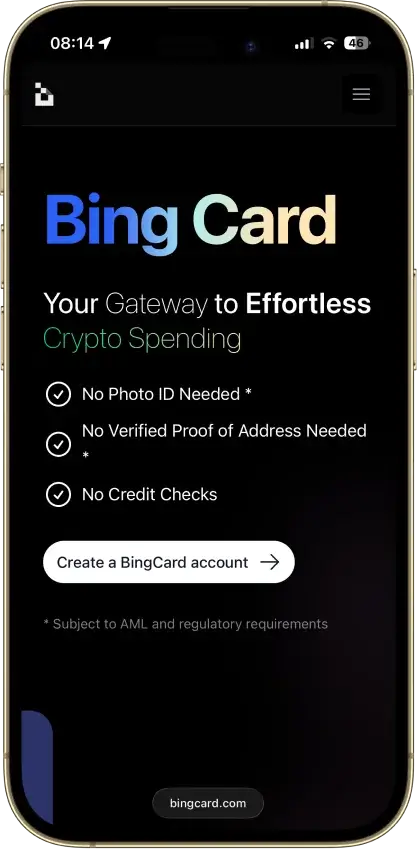
- Virtual tier needs no photo ID to open
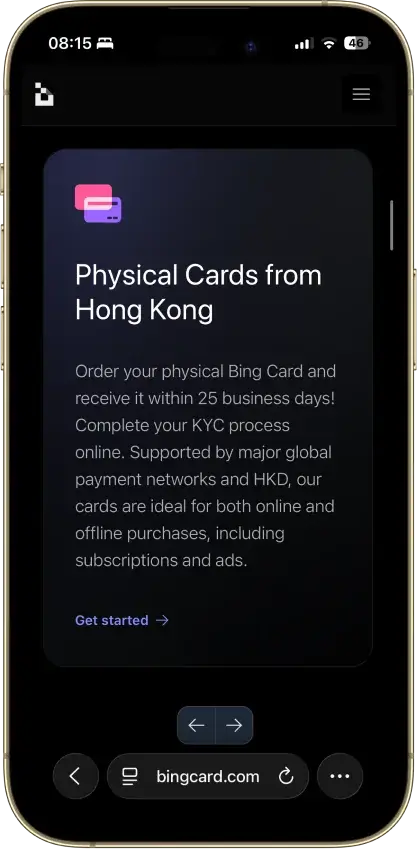
- Physical card ships from Hong Kong in HKD
- Converts once at top-up, never at checkout
CryptoSlate may earn a commission when you visit partner sites through links on this page, at no extra cost to you. Our rankings and reviews remain editorially independent and based on our published methodology. Read disclosure
Disclaimer: CryptoSlate may receive a commission when you click links on our site and make a purchase or complete an action with a third party. This does not influence our editorial independence, reviews, or ratings, and we always aim to provide accurate, transparent information to our readers.These eight cards cover most of what the market offers right now, but they do not serve the same user. Some prioritize frictionless everyday spending. Others are built around tiered rewards, platform loyalty, or crypto-backed borrowing. The comparison table below lays out the key differences before the detailed reviews get into the specifics.
Comparison Table
| Name | Network | Card Type | Digital Wallets | Availability |
|---|---|---|---|---|
 Gemini Credit Card Gemini Credit Card | Mastercard | Credit | Apple Pay, Google Pay, Samsung Pay | All 50 US states + Puerto Rico, US residents only |
 Kast Card Kast Card | Visa | Prepaid | Apple Pay, Google Pay | 170+ countries, varies by jurisdiction. |
 Uphold Card Uphold Card | Visa, Mastercard | Debit | Apple Pay, Google Pay | United States and the United Kingdom. In the U.S., the card is not available in New York, Louisiana, or U.S. territories. In the U.K., Crown Dependencies and British Overseas Territories are excluded. |
 Nexo Card Nexo Card | Mastercard | Dual-mode | Apple Pay, Google Pay | Citizens and residents of selected European countries, including the EEA and the United Kingdom. |
 WaldenPay Card WaldenPay Card | Visa, Mastercard | Prepaid | Apple Pay, Google Pay | Worldwide except 12 restricted countries and six Ukrainian regions; US supported |
 Coinbase Card Coinbase Card | Visa | Debit | Apple Pay, Google Pay, Samsung Pay | US only (all states except Hawaii) |
 RedotPay RedotPay | Visa, Mastercard | Prepaid | Apple Pay, Google Pay | 100+ countries, varies by jurisdiction. |
 Bybit Card Bybit Card | Mastercard | Debit | Apple Pay, Google Pay | Bybit Card is only available in limited countries and runs as separate regional card programs, including EEA and Switzerland, Australia, Argentina, Brazil, AIFC, parts of Asia Pacific, and Mexico. EEA residents may be directed to apply via Bybit EU for an EUR card |
 Crypto.com Card Crypto.com Card | Visa | Credit | Apple Pay, Google Pay, Samsung Pay | The Visa Signature credit card is available to eligible US applicants, excluding New York, subject to credit approval. Separate prepaid programs operate in other supported markets under their own issuers and terms. |
 Solcard Solcard | Visa, Mastercard | Prepaid | — | Most countries, excluding restricted markets including the United States, Hong Kong, Cuba, North Korea, Egypt, Iran, Myanmar, Nigeria, Russia, South Africa, Syria, Ukraine, Venezuela, Belarus. |
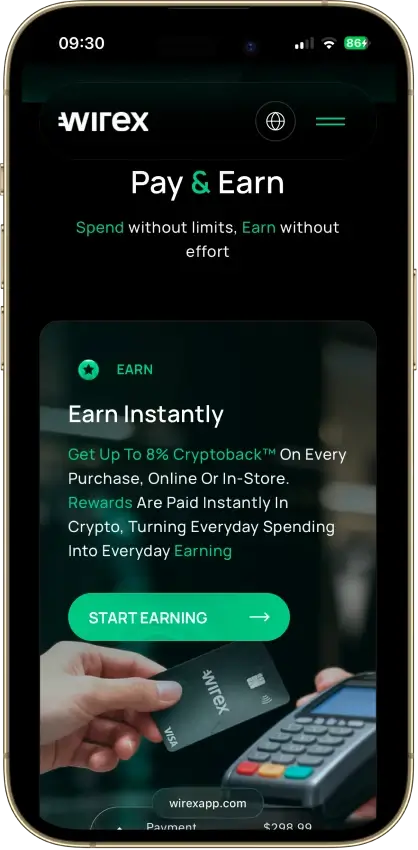
 Wirex Card Wirex Card | Visa, Mastercard | Debit | Apple Pay, Google Pay | Classic Cryptoback remains described for the UK, New Zealand, Hong Kong and Taiwan. Legacy EEA app services ended September 30, 2026, with card transactions paused. EEA customers must migrate to the separate Wirex One product. No US card. Other regional restrictions remain. |
 KemyCard KemyCard | Visa, Mastercard | Prepaid | Apple Pay, Google Pay, Samsung Pay | Varies By Jurisdiction |
 Bing Card Bing Card | Visa, Mastercard | Prepaid | — | US citizens, permanent residents, and US-incorporated entities are barred. |
The table gives a quick snapshot, but the real differences show up once you look past headline rewards and regional availability. The detailed reviews below cover how each card performs in practice, where trade-offs start to matter, and which type of user each option suits best.
Crypto Cards Reviews

Gemini Credit Card
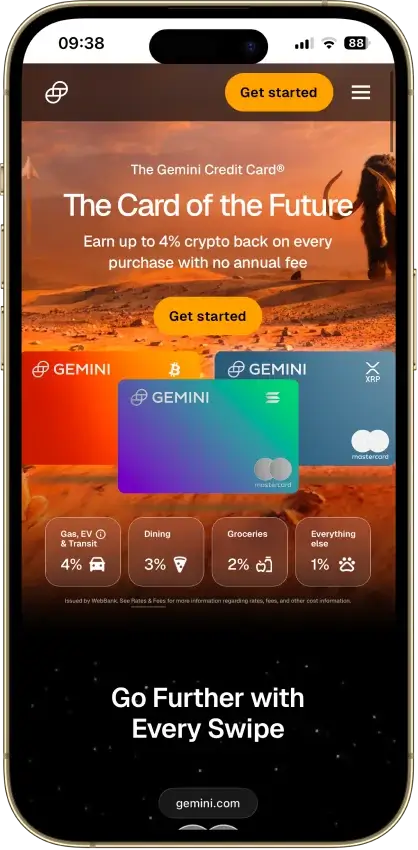
- Rewards
- 1–4% crypto backCategory rates and caps apply
- Card fee
- $0 / yearNo FX fee; interest may apply
- Availability
- US + Puerto RicoUS residents only
Pros
- Unlimited 3% dining and 2% grocery rewards
- $0 annual fee and $0 foreign transaction fee
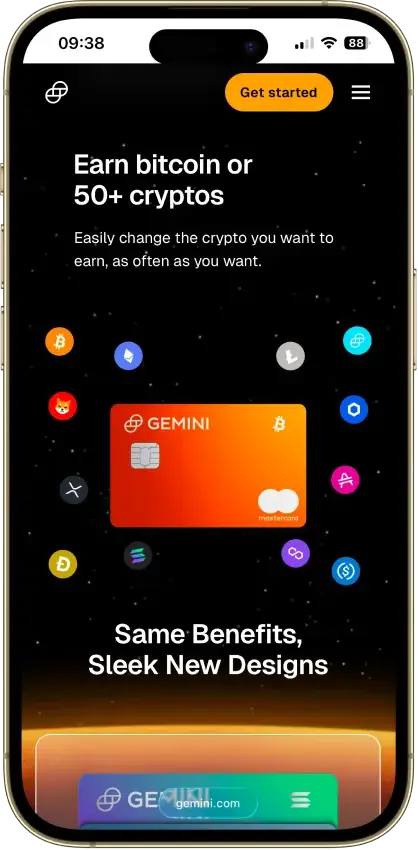
- Instant payout in a choice of 50+ cryptos
- WebBank-issued Mastercard World Elite
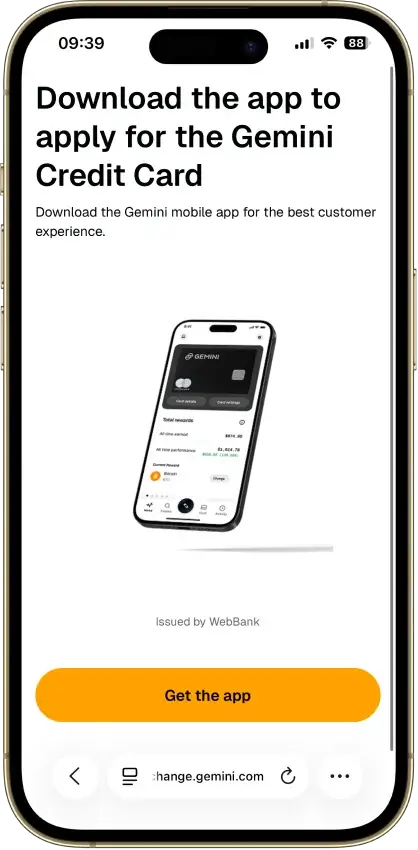
- Soft-pull pre-qualification before applying
Cons
- 4% tier limited to $300 of spend a month
- 1% base rate on most spending
- 18.74%–34.74% variable APR if you revolve
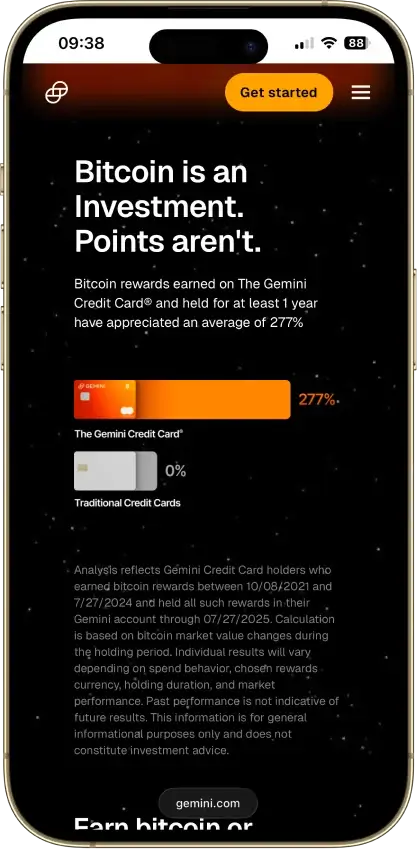
- Rewards taxable at receipt and disposal

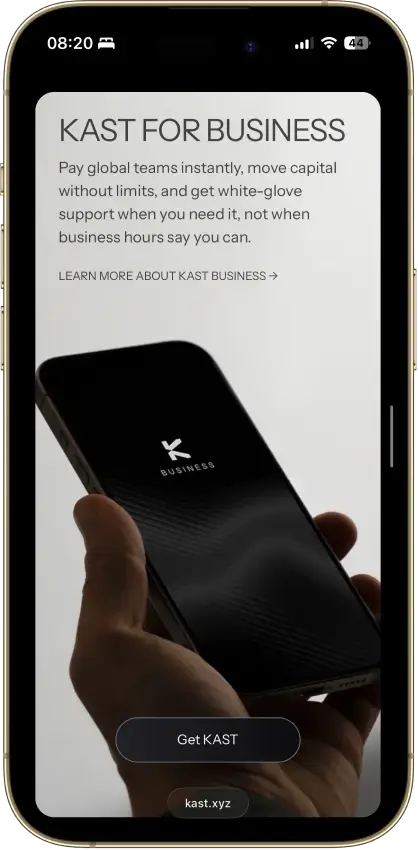
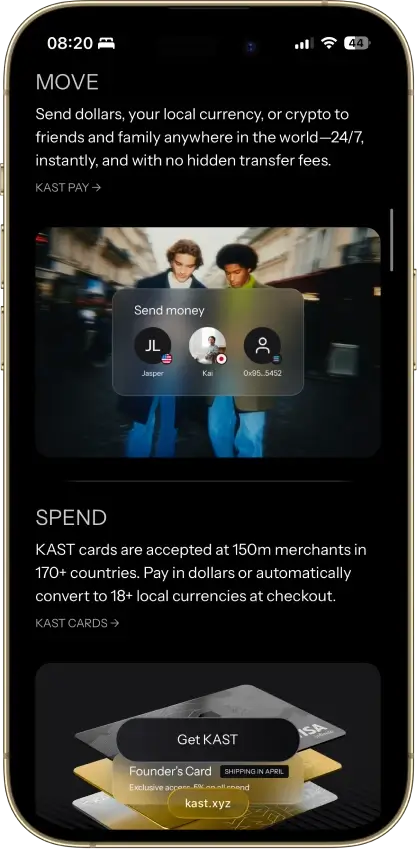
Kast Card
- Rewards
- 1.5% USD cashbackStandard; $2,000 spend/month
- Card fee
- $0 Standard planPaid tiers and FX fees apply
- Availability
- 170+ countriesEligibility varies by country
Pros
- 1.5% back on the free membership
- Stablecoins load at par with no spread
- Virtual card ready minutes after sign-up
- No limit on card purchases
- Five stablecoins across major chains
Cons
- Volatile crypto is sold on deposit at 2%–5%
- Free-tier cashback stops at $2,000 a month
- ATM cash costs $3 plus 2%, limit $750 a day
- Top cashback rates cost $1,000–$10,000 a year
- No listed chargeback fees or timelines
Uphold Card
- Rewards
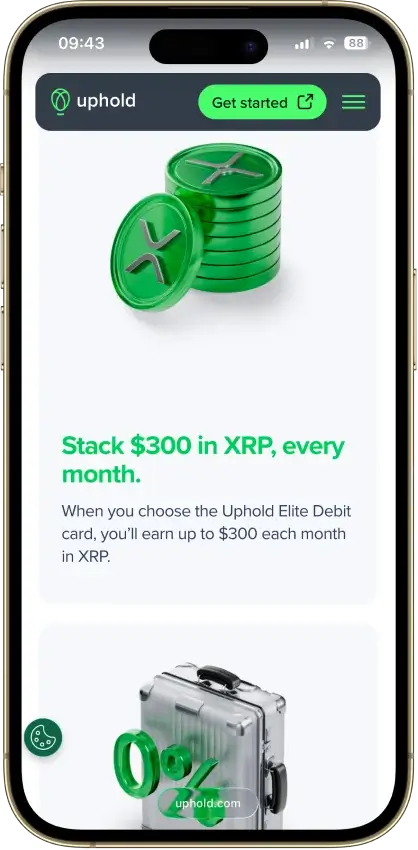
- 2–4% introductory XRP back3 months; tier/funding caps
- Card fee
- $0 EssentialElite $99.99/year
- Availability
- US + UKRegional exclusions apply
Pros
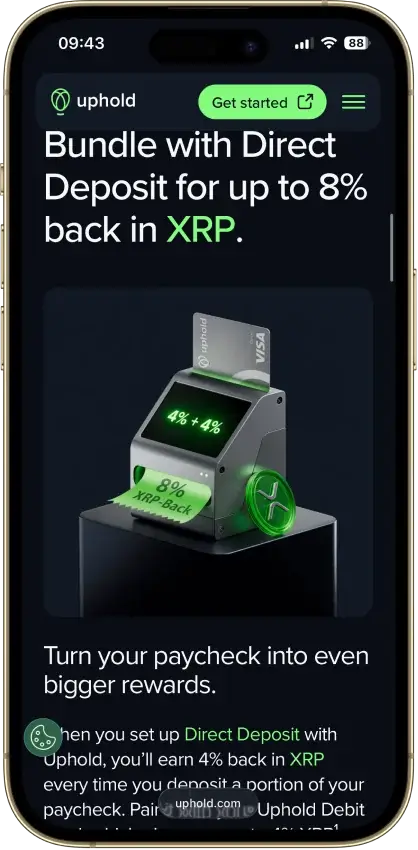
- Introductory 4% XRP on Elite crypto-funded spend
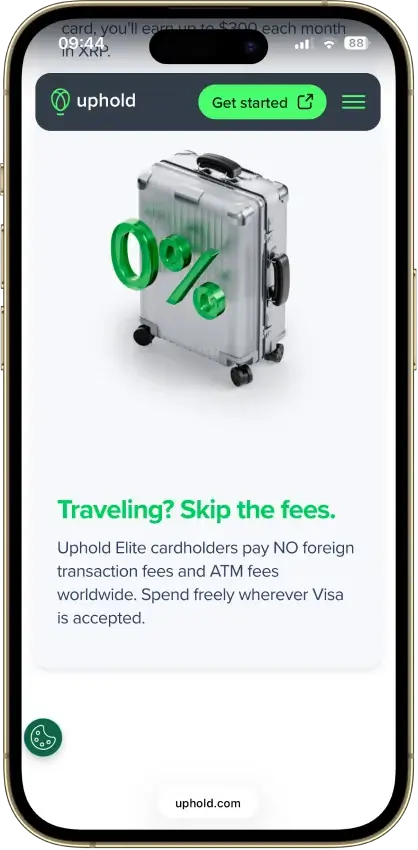
- 0% FX and $0 ATM withdrawals on Elite
- US issuer Cross River Bank is an FDIC member
- No frozen-funds pattern around the card
- Elite lifts daily spend to $25,000
Cons
- Top terms locked to the $99.99/yr Elite tier
- Essential adds 1.50% FX and $2.95 ATM fees
- Crypto-funded spend takes a spread, plus tax
- UK card pays 1% GBP, zero on crypto funding
Nexo Card
- Rewards
- Up to 2% NEXO / 0.5% BTCCredit; tier and balance rules
- Card fee
- $0 / yearFX and ATM fees may apply
- Availability
- Selected Europe + UKEligibility restrictions apply
Pros
- Credit Mode sells no crypto at purchase
- No monthly, annual, or inactivity fees
- 0.2% weekday FX in the EEA, UK, and CH
- Issued by DiPocket UAB, a licensed EMI
- Fund from stablecoins, fiat or Savings crypto
Cons
- Physical ordering paused since Jan. 2025
- Cashback needs Credit Mode and a $5,000+ portfolio
- Base cashback is 0.5% NEXO or 0.1% BTC
- Credit Mode spending accrues interest
WaldenPay Card
- Rewards
- No cashback$10 referral bonus each
- Card fee
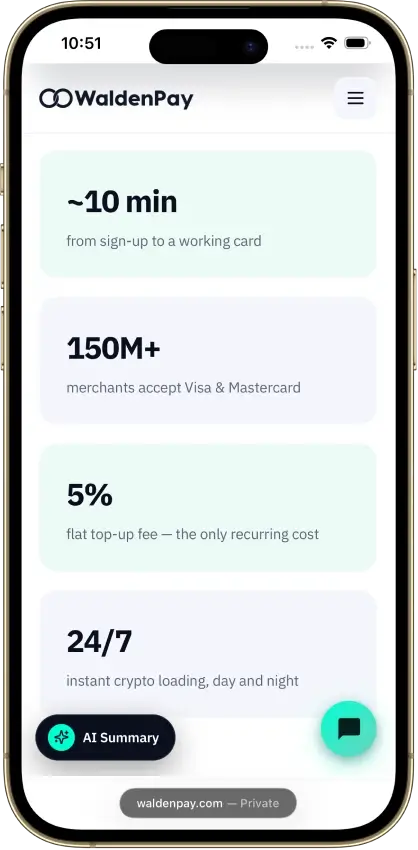
- $10 issuance; $0 monthly3–5% top-up; $0.25 per spend
- Availability
- US + eligible countriesCountry restrictions apply
Pros
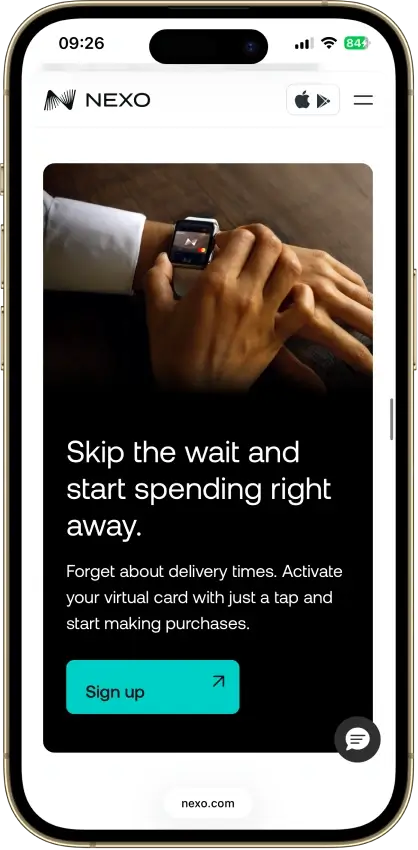
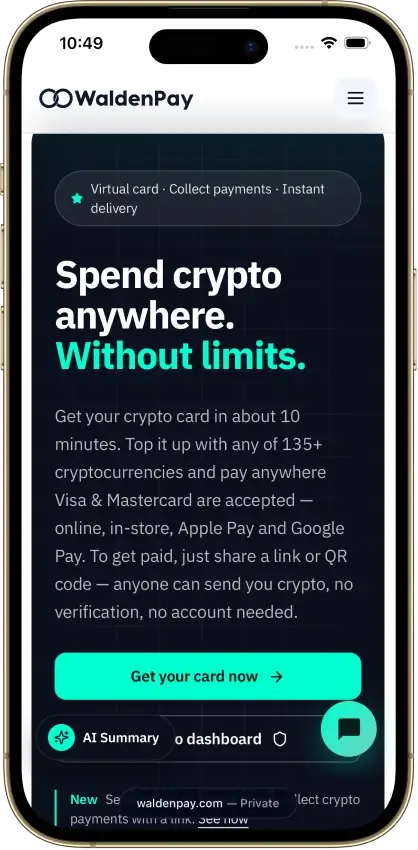
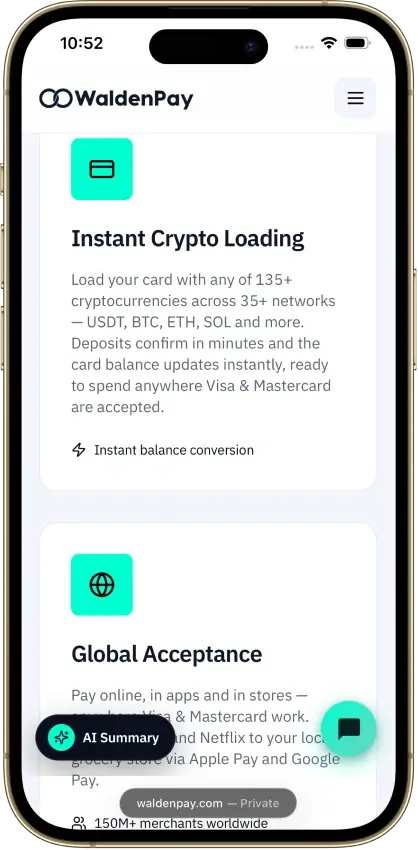
- Card ready within minutes of funding
- No frozen or withheld balances reported
- Instant freeze from the dashboard or Telegram bot
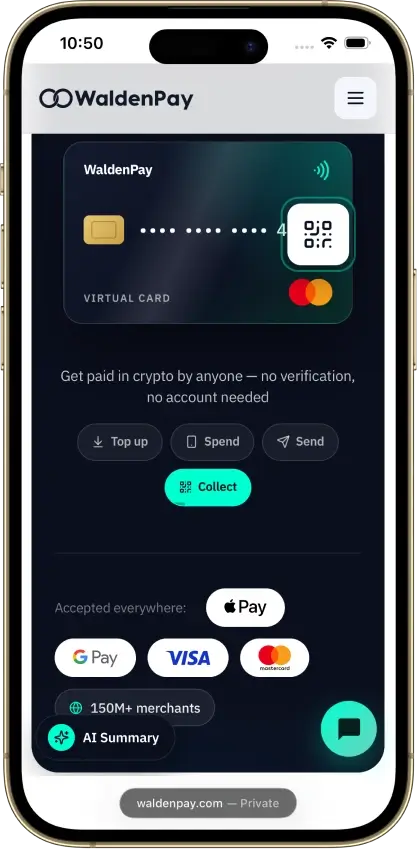
- Apple Pay and Google Pay work for most users
- Support replies within minutes
Cons
- Three fees sit outside the public price list
- 8% lost on merchant refunds
- Issuing bank is not named publicly
- Streaming and gaming subscriptions declined
- 5% top-up fee unless you load $2,000 a month
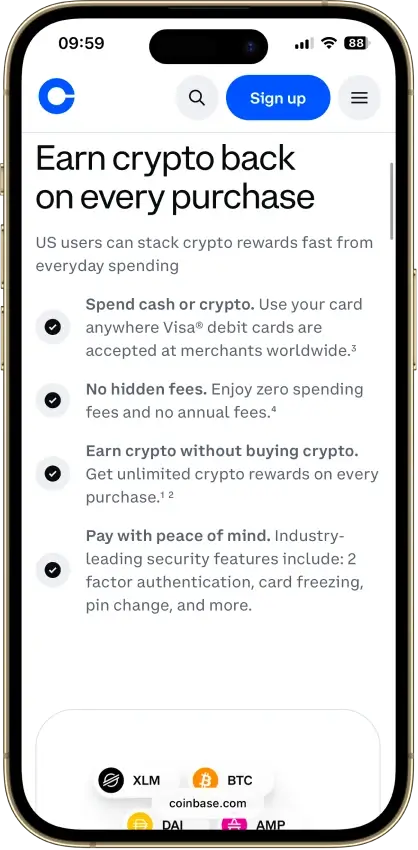
Coinbase Card
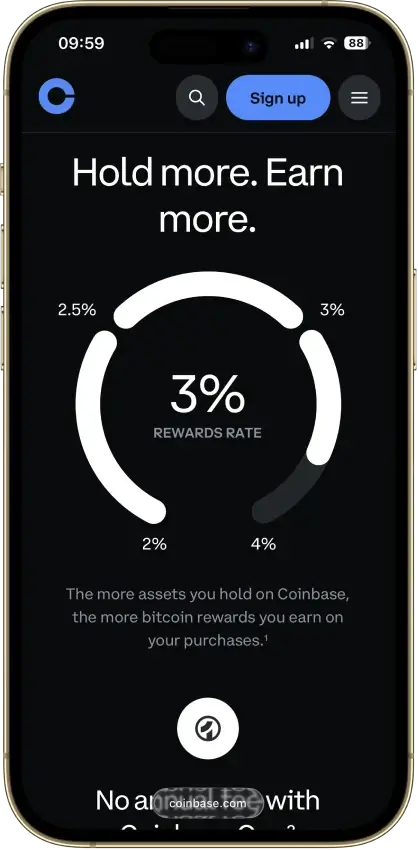
- Rewards
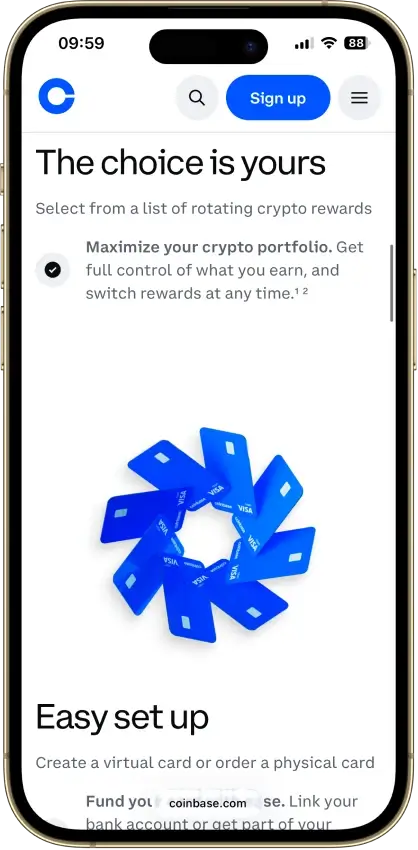
- Variable crypto rewardsRotating options in-app
- Card fee
- $0 / yearCrypto spread; ATM surcharges
- Availability
- United StatesExcludes Hawaii
Pros
- $0 annual, monthly, and foreign transaction fees
- USD and USDC spend at par with no spread
- No credit check, staking, or lockup to earn
- Instant virtual card plus Apple Pay and Google Pay
- Reward coin can be switched at any time
Cons
- Crypto spend triggers spread plus taxable sale
- $2,500 daily spend limit binds on big purchases
- 2025 leak of KYC data via bribed contractors
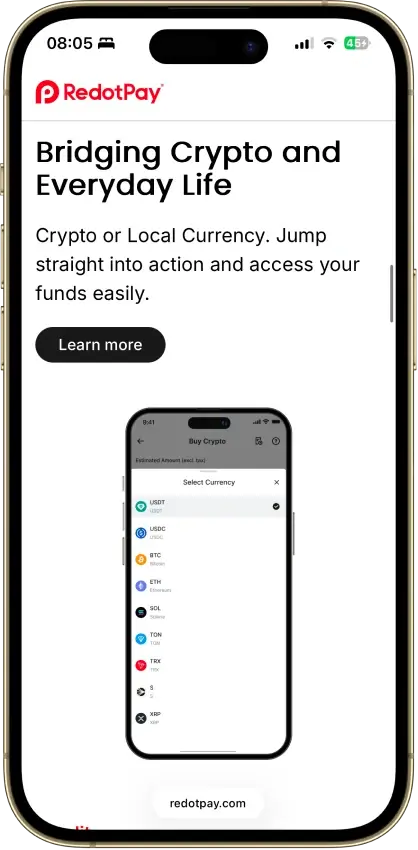
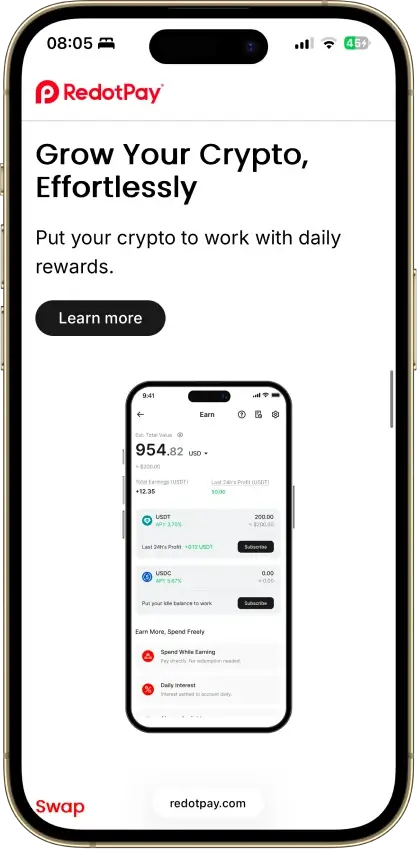
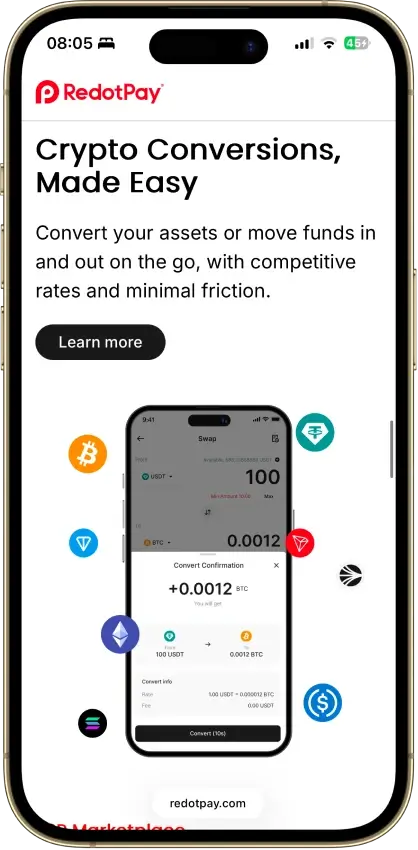
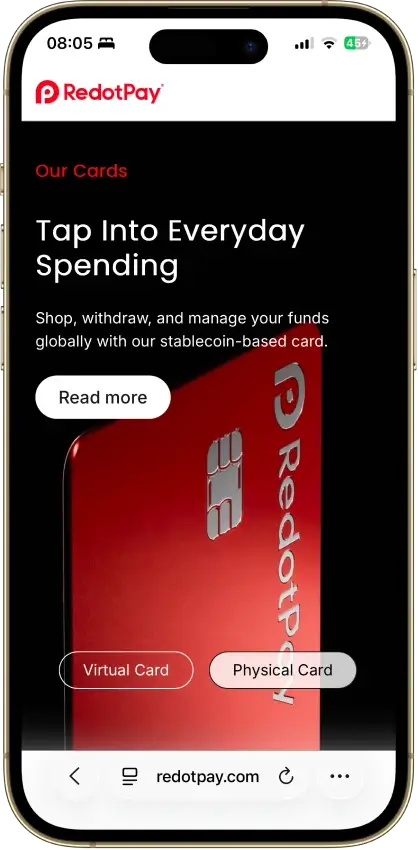
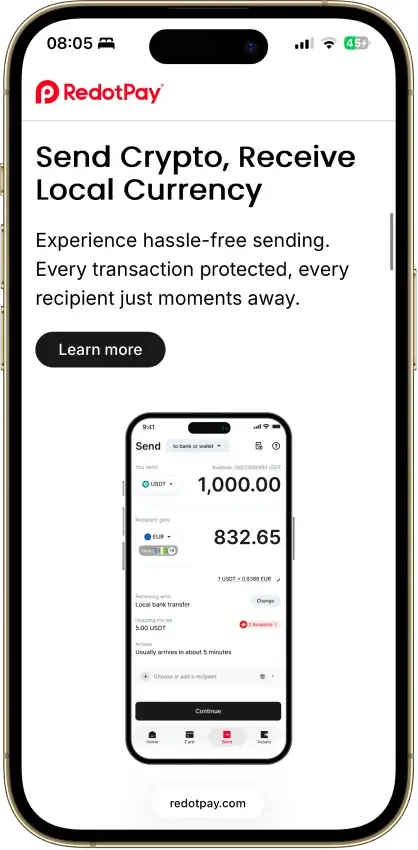
RedotPay
- Rewards
- 0% base; 3% Pro creditsWallet pay; 18 USDs/month cap
- Card fee
- $10 virtual / $100 physicalPro $12.90/mo; FX/ATM fees
- Availability
- 100+ countriesEligibility varies by country
Pros
- No monthly subscription on Standard
- 1.2% FX fee beats most prepaid rivals
- Virtual card goes live within minutes
- Per-card limits and freezes set in the app
- Google Pay, and Apple Pay via a free upgrade
Cons
- Standard issuance: 10/100 USDT, non-refundable
- 2–3% ATM fees, physical card only
- $50 chargeback fee, 3–6 month waits
- Issuing bank and BIN sponsor not disclosed
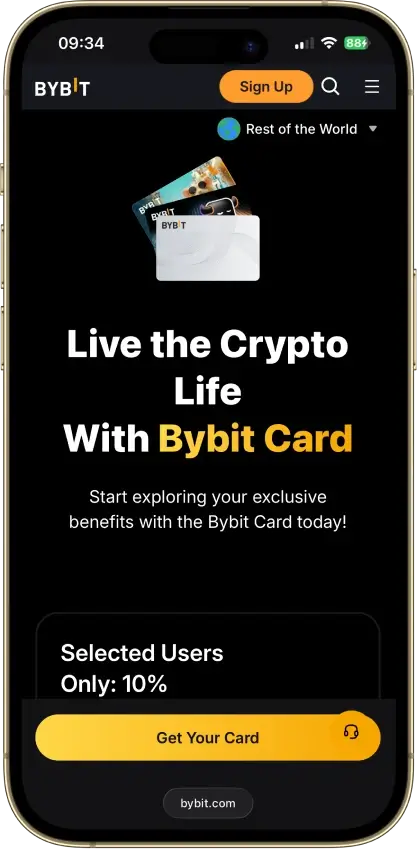
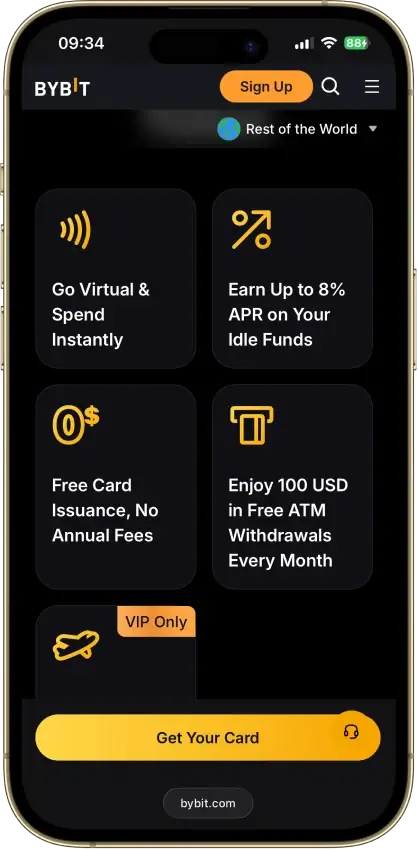
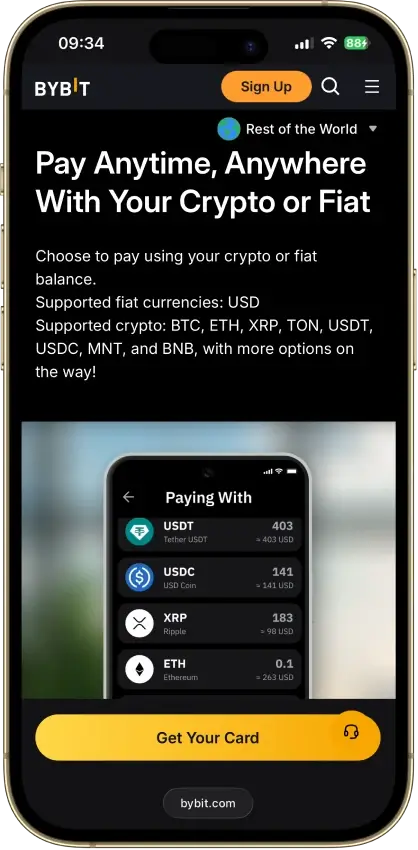
Bybit Card
- Rewards
- 1% EU; 2–10% other programsCaps and funding rules vary
- Card fee
- No annual feeFX and crypto fees vary
- Availability
- Selected countriesSeparate regional programs
Pros
- Bybit EU: 1% uncapped base cashback
- Issued by e-money firms Harmoniie and Moorwand
- No monthly, inactivity, or issuance fees
- €5,000 daily spend and €2,000 ATM limits
- Instant virtual card, freeze and limit controls
Cons
- 0.9% spread plus a taxable sale on crypto spend
- 0.5% FX fee on cross-currency purchases
- Above 1% needs VIP tiers with monthly limits
- €1 minimum makes small crypto buys pricey
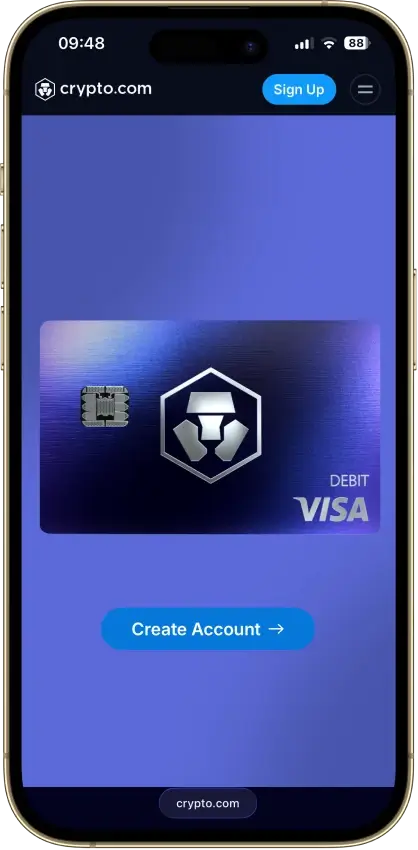
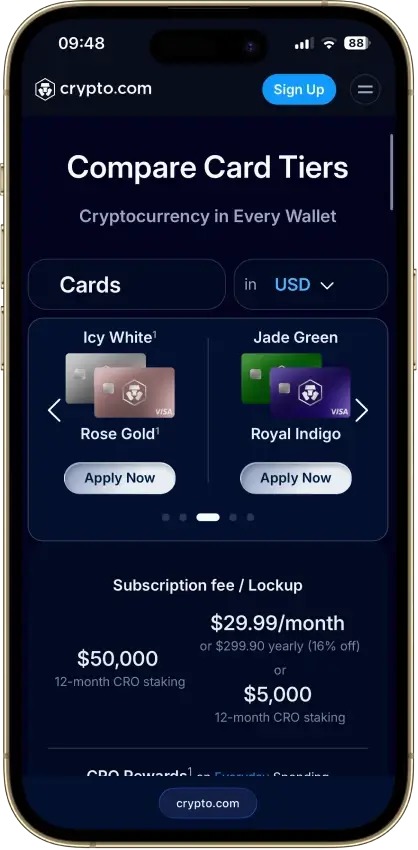
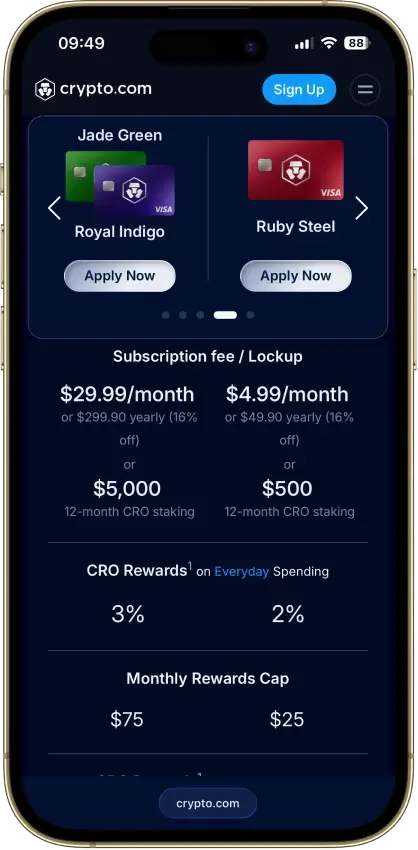
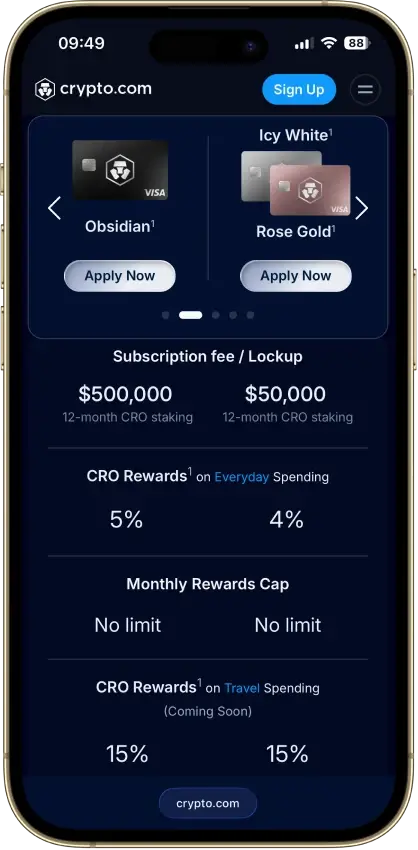
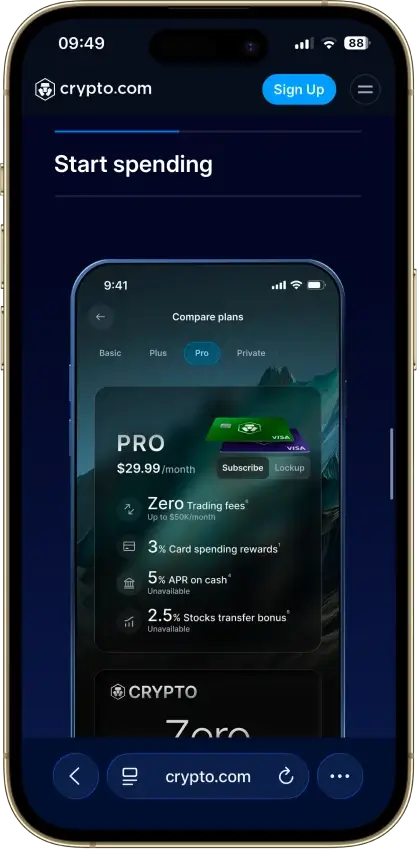
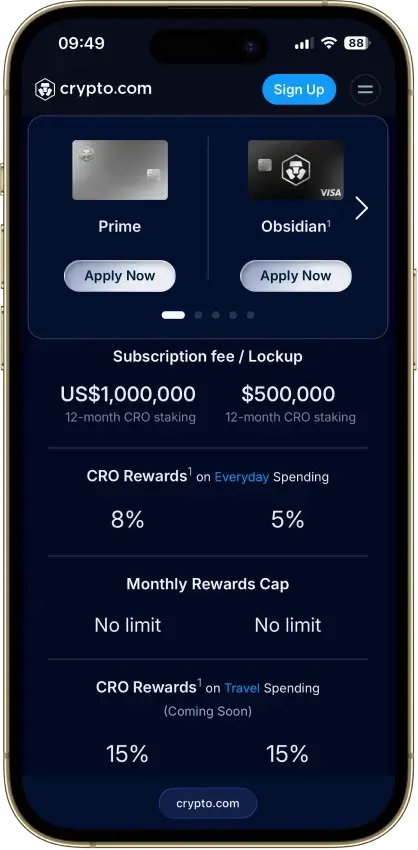
Crypto.com Card
- Rewards
- 1.5% BTC or CROBasic tier; BTC cap applies
- Card fee
- $0 annual fee on BasicPaid tiers; interest may apply
- Availability
- United StatesCredit card; excludes New York
Pros
- Free 1.5% base rate, no stake, no subscription
- $0 annual fee on both cards
- Instant virtual card with one-tap freeze
- Regulated US banks issue both cards
- Credit card purchases sell no crypto
Cons
- Prepaid free tier earns 0% cashback
- 3% FX fee on every accessible prepaid tier
- Top rates need $50k–$500k CRO stakes
- Prepaid rewards pay only in volatile CRO
- Repeated benefit cuts, latest in Nov. 2025
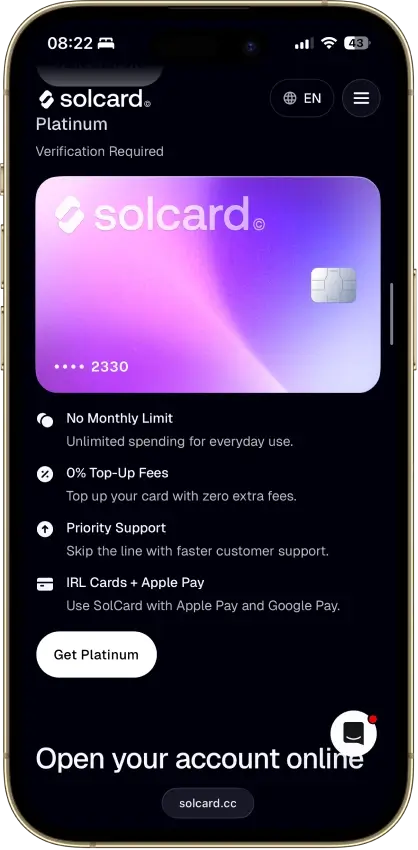
Solcard
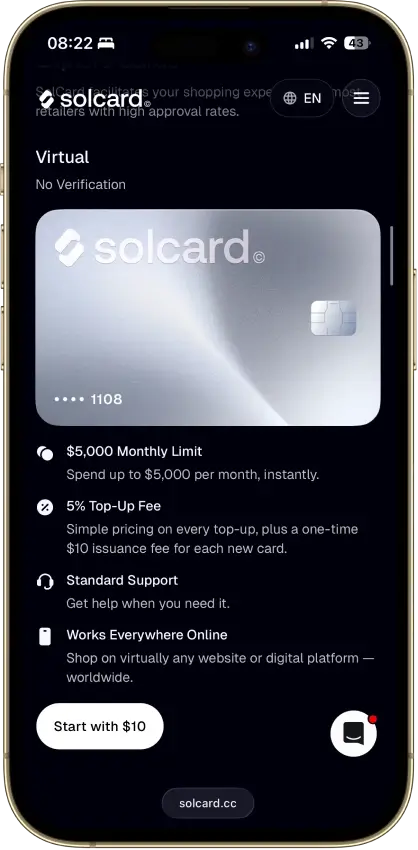
- Rewards
- No rewards
- Card fee
- $10 issuanceTop-up, FX and dormancy fees
- Availability
- Selected countriesUS excluded; limits apply
Pros
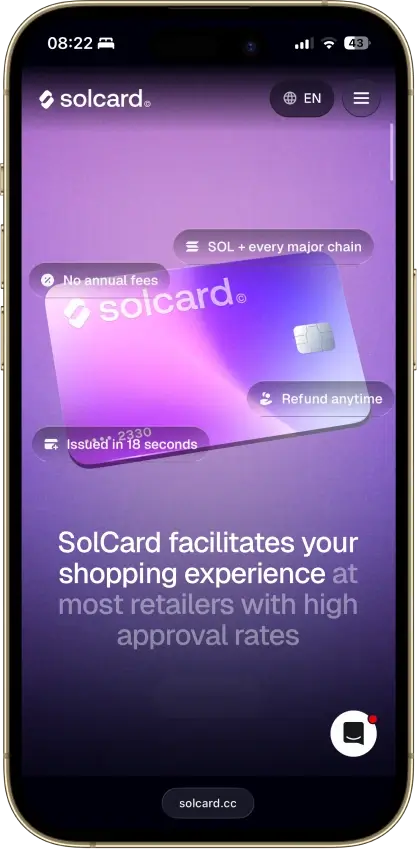
- No-KYC Mastercard issues in 18 seconds
- Stablecoin top-ups across 10+ networks
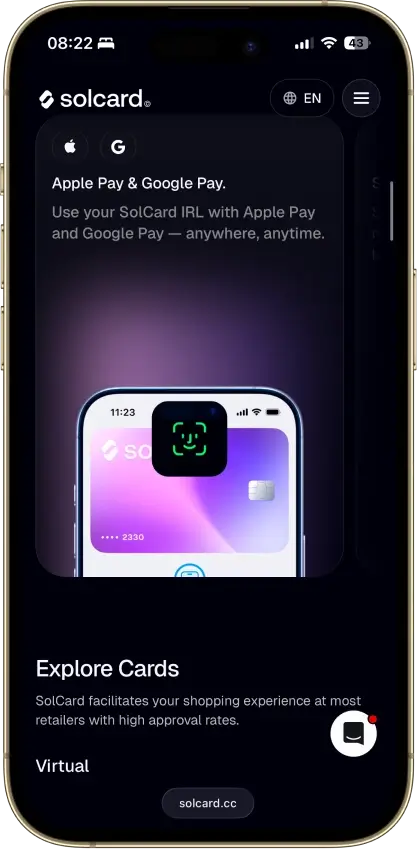
- 0% top-up and Apple Pay on the Visa tier
- No monthly or annual fee
- USDT and USDC load with no spread
Cons
- 5% top-up fee on the no-KYC tier
- Advertised SOLC cashback is not live
- No-KYC Visa cards were canceled in June 2025
- Opaque Hong Kong issuer, no identified bank
- Virtual-only, no ATM access
Wirex Card
- Rewards
- 0.5–8% WXT rewardsClassic only; tier caps apply
- Card fee
- Varies by programDelivery, FX and top-up fees
- Availability
- UK + selected marketsNo US; EEA Classic closed
Pros
- 0% foreign-transaction fee on 30+ currencies
- Free issuance, PIN changes, and an ATM allowance
- Regulated, disclosed issuers in every region
- Free bank-transfer top-ups in most regions
- Virtual cards with Apple Pay and Google Pay
Cons
- Free tier pays 0.5%, in volatile WXT
- 8% needs Elite at €29.99/mo plus a WXT lockup
- 0% FX still carries a conversion spread
- Wirex One reward rates are undisclosed

KemyCard
- Rewards
- No rewards
- Card fee
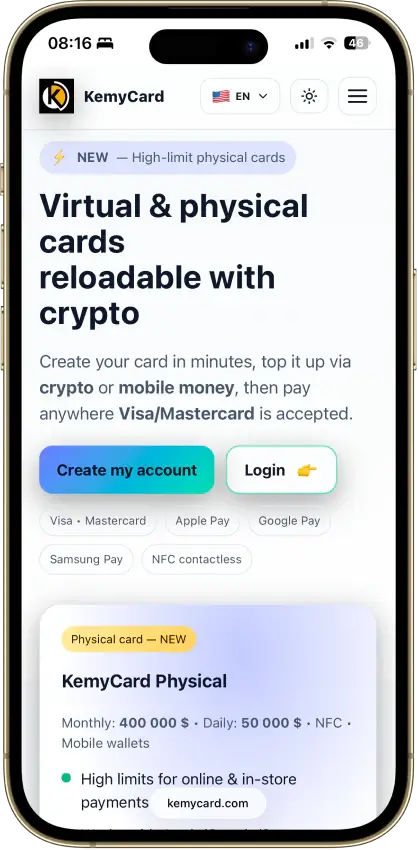
- $2 virtual / $10 physical mo.Issuance: $15 / $250
- Availability
- Varies by jurisdictionCheck eligibility in signup
Pros
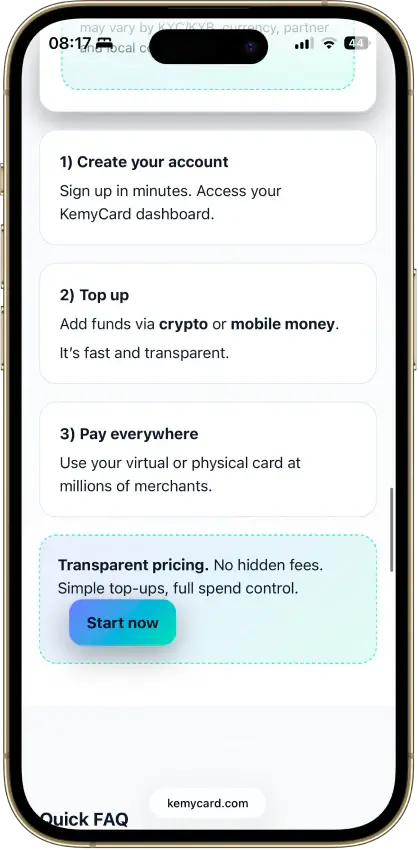
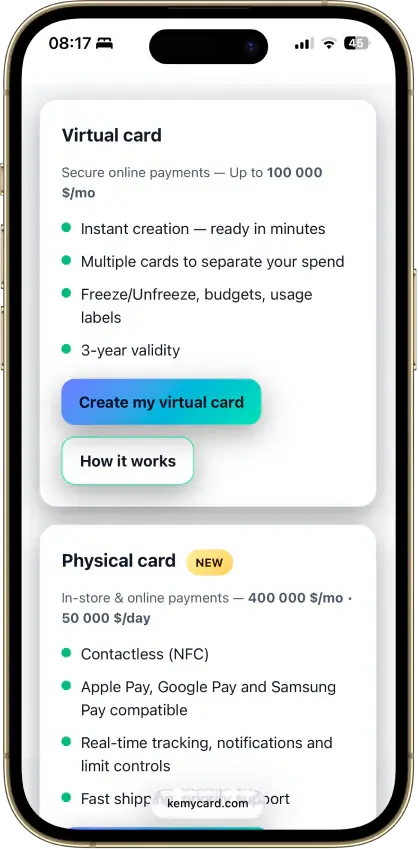
- Virtual card issues within minutes
- Apple Pay, Google Pay and Samsung Pay
- High spend limits on the physical card
- Instant freeze and unfreeze controls
- Cards run from a web dashboard or Telegram bot
Cons
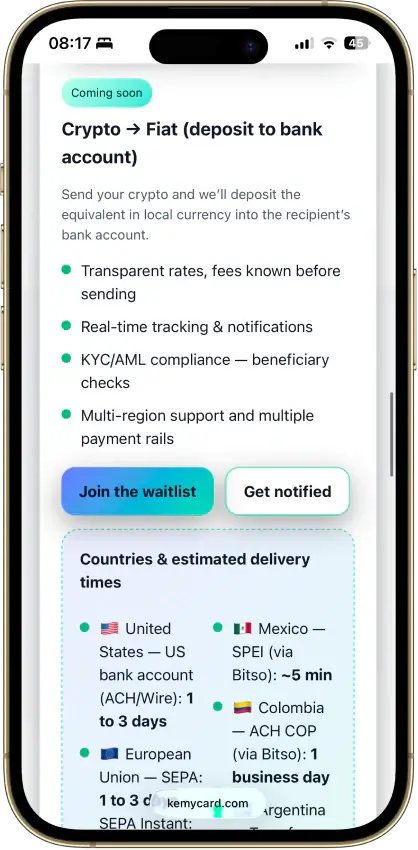
- Owners and issuing bank never identified
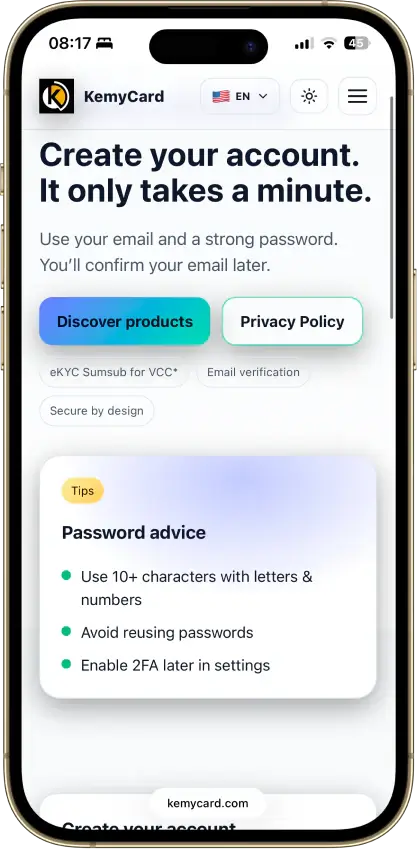
- Sells full eKYC and "no KYC" at once
- 8% deposit fee, 3.5% plus $1 per purchase
- ATM and FX fees not disclosed
- No cashback or rewards
Bing Card
- Rewards
- No rewards
- Card fee
- Varies by cardIssuance, top-up and FX fees
- Availability
- Varies by jurisdictionCheck card-program eligibility
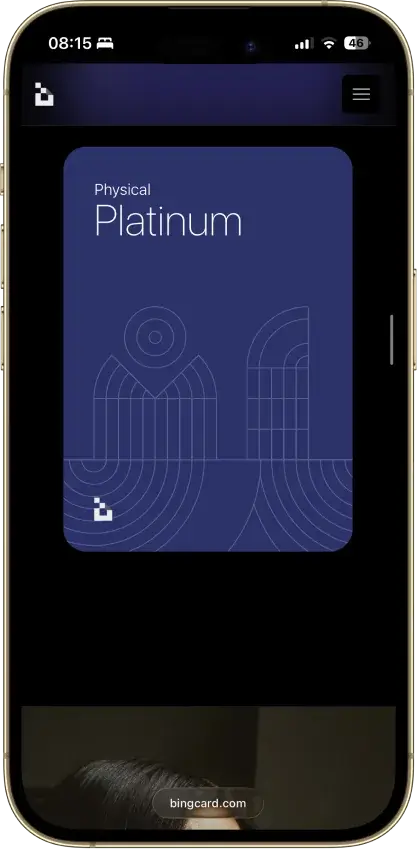
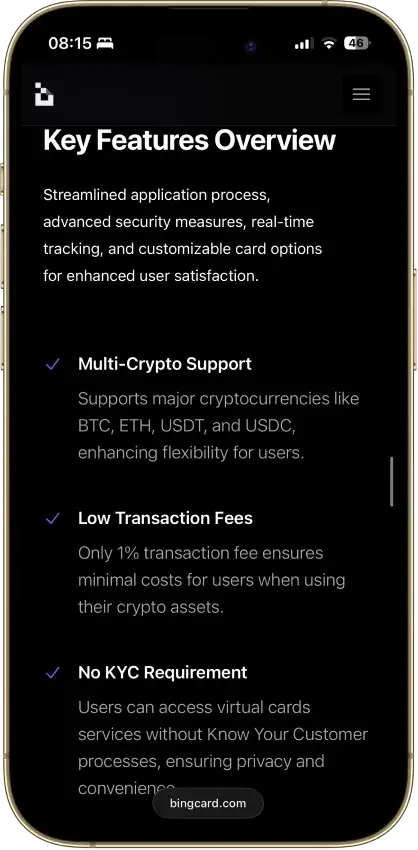
Pros
- Virtual card issues in about five minutes
- No monthly fee on Star or Platinum
- Stablecoin loads avoid a conversion spread
- High monthly spending limits on every tier
- Loads from BTC, ETH, USDT or USDC
Cons
- Reported frozen funds and stuck withdrawals
- No issuing bank, license number or network listed
- No rewards on any tier
- Apple Pay and Google Pay not live
- Every top-up carries a 1% fee, stablecoins too

Ranking Methodology
We rank crypto cards by practical value, not by the biggest advertised reward rate. A card only ranks well when an eligible user can apply, fund the account, spend reliably, understand the costs, and keep enough value after fees, caps, spreads, restrictions, and tax-record friction.
This methodology is built for mixed card models. It covers exchange-linked debit cards, prepaid crypto cards, stablecoin cards, virtual-first cards, crypto rewards credit cards, and hybrid debit/credit products. Each card is judged within the model it actually uses, but friction that affects normal use still lowers the score.
How The Score Is Calculated
Each card receives a weighted score out of 10. Every metric gets a score of 0, 0.5, or 1.0, then that score is multiplied by the metric weight.
Final score = sum of each metric score × metric weight
A score of 1.0 means the card performs well on that metric for the version being reviewed. A score of 0.5 means the card is usable, but there is meaningful friction, missing detail, or a condition that reduces practical value. A score of 0 means the feature is weak, unavailable, paused, unclear, or not verified from reliable sources.
What We Score
The table below shows every metric, the weight assigned to it, what gets checked, and why it changes the final rank. The highest weights go to spend reliability, funding path, fees, and security because those areas shape whether a crypto card works as a real payment product.
| Metric | Weight | What We Check |
|---|---|---|
| Availability And Setup Friction | 1.0 | Current application status, eligible countries or states, waitlists, paused programs, invite-only access, KYC, credit checks, source-of-funds checks, plan gates, and issuer restrictions. |
| Funding Rails And Conversion Path | 1.25 | Fiat funding, crypto funding, stablecoin support, linked account model, top-up flow, supported spend assets, conversion timing, chain support, and refund destination. |
| Real-World Spend Reliability | 1.5 | In-store payments, online payments, subscriptions, travel use, merchant acceptance, pre-authorizations, mobile-wallet spend, card declines, prepaid quirks, and stated limits. |
| Rewards Value After Conditions | 1.0 | Reward rate, reward asset, category caps, monthly caps, exclusions, staking requirements, token-hold rules, plan fees, loyalty tiers, redemption limits, and reward volatility. |
| Fees And Hidden Cost Drag | 1.25 | Annual fees, monthly fees, issuance fees, replacement fees, spreads, FX fees, ATM fees, top-up fees, inactivity fees, gas costs, partner fees, and unclear charges. |
| Operational Convenience And Limits | 0.75 | Virtual and physical issuance timing, funding-to-spend speed, purchase limits, ATM limits, cash access, refund timing, reversal handling, and upgrade friction. |
| App Controls And Virtual Card Tooling | 0.75 | Freeze and unfreeze tools, alerts, PIN controls, virtual cards, Apple Pay, Google Pay, card replacement tools, statements, CSV exports, and app reliability. |
| Security, Custody, And Freeze Risk | 1.25 | Custody model, issuer or banking partner clarity, account security, two-factor authentication, fraud controls, compliance reviews, freeze risk, and escalation path. |
| Support, Refunds, And Chargebacks | 0.75 | Support channels, human escalation, refund process, dispute process, unauthorized-transaction handling, chargeback rights, and cardholder agreement clarity. |
| Tax And Reporting Readiness | 0.5 | Monthly statements, transaction history, CSV exports, reward records, crypto disposal records, stablecoin-spend records, and clarity around tax-relevant activity. |
| Total | 10.0 | Weighted score out of 10 |
How We Keep The Scoring Fair Across Card Types
Crypto cards do not all work the same way. Some spend from a prepaid balance, some liquidate crypto at the point of sale, some use stablecoins, some pay crypto rewards on normal credit-card spend, and some let users borrow against crypto collateral.
The score reflects the intended model. A crypto rewards credit card is not marked down because it does not support onchain spending. A stablecoin prepaid card is not marked down because it lacks traditional credit-card rewards. A crypto-backed credit card is not marked down simply because it uses collateral.
However, the user still has to live with the product. If a card has confusing fees, weak support, unclear custody, poor refund handling, limited availability, or a funding path that creates avoidable cost, that friction reduces the score.
Why Net Value Beats Headline Rewards
The reward rate is only one part of the ranking. A card advertising 5%, 8%, or 10% back can still rank below a lower-reward card if the top rate depends on a paid plan, staking, a native-token balance, a capped category, promotional timing, or a loyalty tier most users will not reach.
We also account for cost drag. FX fees, ATM fees, crypto conversion spreads, top-up charges, issuance fees, and partner costs can reduce or erase the value of a reward. A 2% reward can be stronger than a higher advertised rate when the lower-rate card is cheaper, easier to fund, and easier to use consistently.
This is why the ranking focuses on retained value. The best card is not always the card with the biggest number. It is the card that leaves the user with the best combination of access, cost, reliability, rewards, and control.
How Availability Changes The Ranking
Availability is not treated as a footnote. It can change the rank materially.
A card ranks lower if it is not open to new applicants, has a waitlist, excludes major regions, lacks clear country or state coverage, hides eligibility rules, or only works after a user joins a specific plan. A card can also fall if the virtual card, physical card, rewards program, or mobile-wallet support is available in one market but missing in another.
For the main hub, live cards open to new applicants get priority. Legacy cards, paused cards, waitlisted cards, and region-paused cards should be separated or clearly downgraded so they do not outrank cards a user can apply for now.
How We Handle Regional Versions, Tiers, And Modes
Some crypto cards change heavily by region, issuer, plan, or mode. A card may have one fee schedule in the U.K., another in the EEA, and a different setup elsewhere. Some cards also split value by tier, loyalty level, virtual-card status, physical-card status, Debit Mode, Credit Mode, or verified account level.
When that happens, the review should state the version being scored. If no specific region or tier is being reviewed, the score should reflect the version a new user is most likely to get by default.
The ranking should not assume the highest tier unless that tier is clearly the normal path for the target user. Paid plans, staking levels, premium metal cards, VIP cashback boosts, or promotional tiers only improve the score when the cost and conditions still leave clear value.
How Rankings Are Updated
Crypto card terms can change quickly. Rewards, availability, fees, supported regions, issuer partners, physical-card status, and mobile-wallet support should be checked during major page updates.
When a card pauses new applications, changes issuer, removes a reward tier, adds a required plan, changes a fee schedule, or restricts a major region, its ranking should be reviewed. If a key claim cannot be verified from official or high-reputation sources, the review should use conservative wording or mark the point as not verified.
Best Crypto Cards by Category
The table below works as a shortcut. Each row names the category and the cards that currently fit it best.
| Category | Top Cards |
|---|---|
| Best Crypto Debit Cards | Coinbase Card, Crypto.com Card, Wirex Card |
| Best Crypto Credit Cards | Gemini Credit Card, Nexo Card |
| Best Crypto Cards In The USA | Gemini Credit Card, Coinbase Card, KAST Card |
| Best Crypto Cards In The UK | Uphold Card, Nexo Card, Wirex Card |
| Best Crypto Cards In Europe | Nexo Card, Wirex Card, KAST Card |
| Best Crypto Cards For International Travel | KAST Card, Wirex Card, Nexo Card |
| Best Free Crypto Cards | Coinbase Card, Gemini Credit Card, Nexo Card |
| Best Low-Fee Crypto Cards | Coinbase Card, Gemini Credit Card, KAST Card |
| Best USDT Crypto Cards | KAST Card, RedotPay, Bybit Card |
| Best USDC Crypto Cards | KAST Card, Coinbase Card, RedotPay |
| Best Bitcoin Cards | Gemini Credit Card, Coinbase Card, Crypto.com Card |
| Best Solana Cards | SolCard, KAST Card, Coinbase Card |
| Best XRP Cards | Uphold Card, Gemini Credit Card, Bybit Card |
What Is a Crypto Card?
A crypto card is a payment card that lets users spend through traditional card networks while drawing value from a crypto-linked balance or from a program that pays rewards in crypto. In practice, a cryptocurrency card or crypto payment card does the same basic job: it turns digital balances or crypto rewards into something usable through ordinary card rails.
Some crypto cards work like debit cards and pull from a funded account, exchange balance, or topped-up wallet. Others work more like credit cards and reward purchases in Bitcoin or other digital assets instead of standard cashback or points.
That setup means users can pay at regular online stores, apps, and physical merchants without the merchant needing to accept crypto directly. The main differences come down to how the card is funded, how rewards are paid, and what fees or restrictions apply in the background.
How Do Crypto Cards Work?
Most crypto cards follow a simple setup. The user opens an account, completes identity checks if required, and orders either a physical card, a virtual card, or both. The card is then linked to the provider's app or exchange account.
From there, the user either funds the account with crypto or fiat, tops up a spending balance, or uses a card that rewards normal spending in crypto. When a purchase is made, the payment moves through standard card rails — Visa or Mastercard — while the provider handles conversion, settlement, or rewards logic in the background.
The checkout experience feels familiar, but the economics behind it can vary widely. Some cards focus on direct spending from a crypto balance. Others are mainly built around earning crypto on everyday purchases.
Crypto Card Benefits
The biggest benefit of a crypto card is convenience. It gives users a cleaner way to spend from a crypto-linked balance or earn digital assets back without manually moving money for every transaction.
Many of the best crypto rewards cards also add value through cashback, token rewards, instant virtual cards, and support for Apple Pay or Google Pay. For users who already hold crypto, a good card can also tie rewards, spending, and account management into one place instead of keeping crypto separate from everyday purchases.
Crypto Card Drawbacks
Crypto cards are not always as simple as the headline reward rate suggests. Several costs can reduce the real value of a card over time. Here are the main ones to watch:
- Conversion spreads baked into the exchange rate at point of sale
- Funding fees when topping up with certain assets
- ATM charges once a free monthly allowance runs out
- Subscription or staking requirements to unlock better tiers
- Tax obligations when a purchase triggers a disposal of an appreciated asset
- Regional restrictions, with some cards limited to specific countries or U.S. states
- KYC requirements that lock features until full verification is complete
- Reward structures that shift depending on region, plan, or promotional window
None of these make crypto cards a bad choice. They do mean the best option is usually the one that balances convenience, rewards, and total cost rather than the one with the loudest marketing.
Why Conversion Spreads Matter
Conversion spreads are one of the easiest ways for a crypto card to look better on paper than it performs in practice. Even when a card advertises no annual fee and a decent reward rate, that value can shrink quickly if the provider bakes a margin into the exchange rate or charges a separate conversion fee when non-fiat assets are used to settle a purchase.
This is especially relevant for low-fee crypto cards that convert crypto at the point of sale. A 1% or 2% reward rate loses much of its appeal if the card also charges a spread or adds a fee when assets are sold behind the scenes. Comparing only the reward percentage is rarely enough.
Taxes When Spending Crypto
Using a crypto card can trigger a taxable event in some jurisdictions because the provider may sell or convert crypto to settle the purchase. In those cases, the transaction can be treated more like selling crypto than making a standard card payment.
Spending stablecoins or fiat balances can simplify record-keeping because fewer conversions occur. However, rules vary by country, and tax treatment depends on local regulations.
Because card conversions create transaction records, many users export card statements and exchange logs regularly to track the fiat value at the time of each purchase.
How to Get a Crypto Card
Getting a crypto card is usually straightforward, but the exact path depends on the type of card you want and where you live. Some providers only operate in selected countries or U.S. states, some require full identity verification before you can apply, and some only unlock their best features if you use the provider's exchange, hold a certain token, or pay for a higher-tier plan.
The process is different for a no-KYC crypto card versus a full credit or debit product from a regulated issuer, but for most users the steps look like this:
- Choose the type of crypto card you want. Decide whether you want a crypto debit card, a crypto credit card, a virtual crypto card, or a prepaid option. The right choice depends on whether you want to spend from an existing balance, earn crypto rewards on credit purchases, or get quick virtual access for online use.
- Check country or state availability. Before going further, confirm the card is offered where you live. Availability is one of the biggest differences between issuers, and some cards that look attractive on paper are limited to certain markets.
- Create an account and complete verification. Most providers ask you to open an account and complete KYC before the card is issued. In practice, that means confirming your identity, age, address, and sometimes your residency status.
- Order the physical or virtual card. Once your account is approved, you can usually request a physical card, a virtual card, or both. Some providers make virtual access available first, while physical delivery can take longer depending on region.
- Fund the eligible balance or connect the right product. With a debit-style crypto card, this usually means adding crypto or fiat and topping up a spending balance. With a crypto credit card, it may mean activating the card and linking it to the provider's rewards or borrowing setup.
- Set up security and spending preferences. Before using the card, turn on two-factor authentication, review card controls in the app, and check whether you can freeze or unfreeze the card, change your PIN, or manage spending settings in real time.
- Add it to your wallet and start using it. If the card supports Apple Pay and Google Pay, you can often start using it before the physical card arrives. That can be one of the biggest practical advantages of a strong virtual setup.
It is also worth checking the small-print requirements before applying. Some issuers require users to be at least 18, some reserve better rewards for premium tiers, and some tie the card tightly to their exchange ecosystem or loyalty program. Getting a crypto card is usually simple. Getting good value from it depends on choosing a card that actually fits your region, funding style, and spending habits.
How to Choose the Best Crypto Card for You
Choosing the best crypto card comes down to how you actually spend — not which issuer advertises the highest reward. A card that looks strong for cashback may be a poor fit for travel, stablecoin spending, or daily use if the fees, limits, or availability do not match your needs.
A better starting point is to work backward from your use case. The right crypto card fits your region, funding style, and spending habits with the least friction.
Best for Everyday Spending
If you want a crypto card to replace part of your normal card use, start with reliability. Everyday spending works best with a card that has clear limits, simple funding, stable rewards, and an app that makes it easy to track transactions without surprises. Cards like the Coinbase debit card and the Crypto.com Visa Card are built around frequent use. What matters most is not just the reward rate — it is how easy the card is to top up, how clearly spending is tracked, and how much friction builds up over time from hidden costs.
Best for Rewards-Focused Users
If earning back the most value is the priority, look closely at how the reward structure actually works. Some cards advertise high headline percentages, but real returns may depend on spending caps, loyalty tiers, subscriptions, staking, or promotional windows. A rewards-focused user should compare the asset paid out, the cap on the highest reward category, and whether the better tier requires a meaningful extra commitment. The best crypto card rewards are the ones you can access consistently — not just during a promotional period.
Best for Stablecoin Users
If you mainly hold stablecoins, the best option is usually the one with the cleanest path from balance to payment. USDT crypto cards and USDC crypto cards appeal to users who care less about speculation and more about simple settlement, predictable value, and fewer surprises at checkout. In this case, easy funding, clear conversion rules, and low friction often matter more than a marginally better reward rate tied to a volatile native token.
Best for Travelers
Travelers should focus more on foreign transaction costs, ATM rules, regional acceptance, and wallet compatibility than on the headline cashback figure. A crypto card that works well domestically can become expensive fast once ATM allowances are used up or FX costs begin to stack. For this type of user, the best crypto card for international travel is one that works across merchants and regions, offers solid virtual access, and does not punish normal international usage with tight limits or layered fees.
Best for Beginners
Beginners should usually prioritize simplicity over optimization. The best crypto card for beginners is one with a straightforward setup, clear in-app controls, easy-to-understand funding, and a reward model that does not depend on too many moving parts. A card that is slightly less aggressive on rewards can still be the better pick if it removes confusion around tiers, conversion, and eligibility. Usability usually determines whether a new user keeps using the card at all.
Best for Instant Virtual Access
If you want to start spending quickly, virtual access matters. The best virtual crypto card is usually one that can be issued fast, added to Apple Pay or Google Pay without friction, and managed entirely through the app. This is especially practical for users who make frequent online purchases, want immediate access before a physical card arrives, or prefer a fully digital spending setup.
Security and App Controls to Look For
A good crypto card makes day-to-day security feel easy. Freeze and unfreeze controls, real-time spending alerts, PIN management, and visible transaction tracking are baseline features that make a card both safer and more usable. Account-level protection matters just as much. Strong two-factor authentication, responsive support, and reliable app controls often make the difference between a card a user keeps and one they abandon after the first few weeks.
The Best Crypto Card Depends on How You Spend
Once you look at funding model, fees, and usable rewards together, it becomes easier to see which card fits your needs. Coinbase is a strong pick for users who want straightforward debit-style spending. Gemini is the cleaner option for users who want traditional credit card rewards paid in crypto. Crypto.com, Wirex, Bybit, and Nexo make more sense for users willing to trade simplicity for bigger perks, broader flexibility, or higher upside.
The right choice comes down to what you value most: easy everyday use, stronger rewards, low-fee virtual access, predictable costs, or a more flexible spending model. The best crypto card is the one that fits your region, funding style, and real spending habits — without asking you to pay too much for the privilege.