A crypto exchange in Australia can present one local company in its terms and a wider group in its marketing. That local company may not offer every advertised service. A PayID deposit may reach an account that has different withdrawal rules, while a registration or license may cover less than its badge suggests. This page checks those Australian fault lines first, then turns to cost and custody. Complaint routes and records follow.
Top Crypto Exchanges in Australia
- Cost
- Pro spot base: maker 0.25%, taker 0.40%
- Assets
- 643 crypto (review)
- Fiat funding
- ACH (US); SEPA (EEA); FPS (UK)
- Check your own balance in its reserve proof
- No breach has cost clients their funds
- Kraken+ waives buy fees on $10,000 a month
- Cost
- Spot base: maker/taker 0.10%
- Assets
- 500+ crypto
- Fiat funding
- Bank transfer, cards (by region)
- Multi-million-dollar depth on BTC and ETH books
- SAFU, a $1 billion emergency fund in BTC
- Bot Marketplace with grid and DCA bots
- Cost
- Advanced spot base: maker 0.40%, taker 0.60%
- Assets
- 382 tradable (review)
- Fiat funding
- ACH/wire (US); cards/PayPal if eligible
- 24/7 live phone support for every customer
- Simple Buy and Advanced share one balance
- Pass-through FDIC cover on USD cash
CryptoSlate may earn a commission when you visit partner sites through links on this page, at no extra cost to you. Our rankings and reviews remain editorially independent and based on our published methodology. Read disclosure
Disclaimer: CryptoSlate may receive a commission when you click links on our site and make a purchase or complete an action with a third party. This does not influence our editorial independence, reviews, or ratings, and we always aim to provide accurate, transparent information to our readers.Compare Australian Crypto Exchanges
| Name | Total Assets | Products | Staking | Trading fees (low) | Trading fees (high) |
|---|---|---|---|---|---|
 Kraken Kraken | 600 | Spot, Margin, Futures or Perps, OTC, Simple-buy Broker | Yes | 0.00 | 0.80 |
 Binance Binance | 500 | Spot, Margin, Futures or Perps, Options, OTC, Simple-buy Broker | Yes | 0.00 | 0.10 |
 Coinbase Coinbase | 270 | Spot, Futures or Perps, OTC, Simple-buy Broker | Yes | 0.00 | 0.90 |
Detailed Australian Crypto Exchange Reviews
Kraken
- Cost
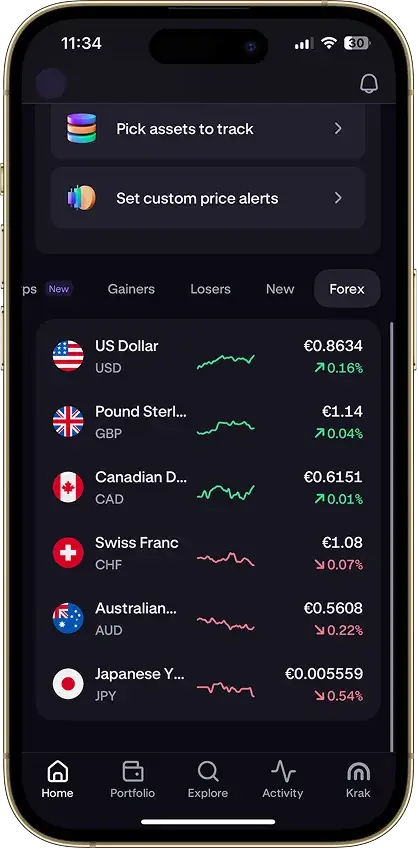
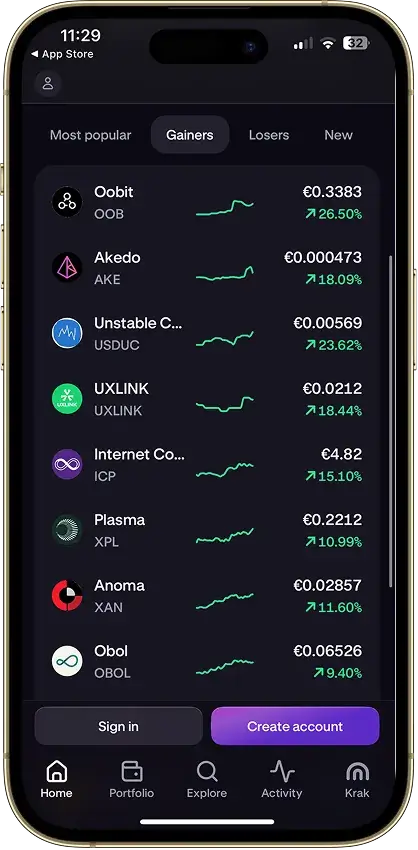
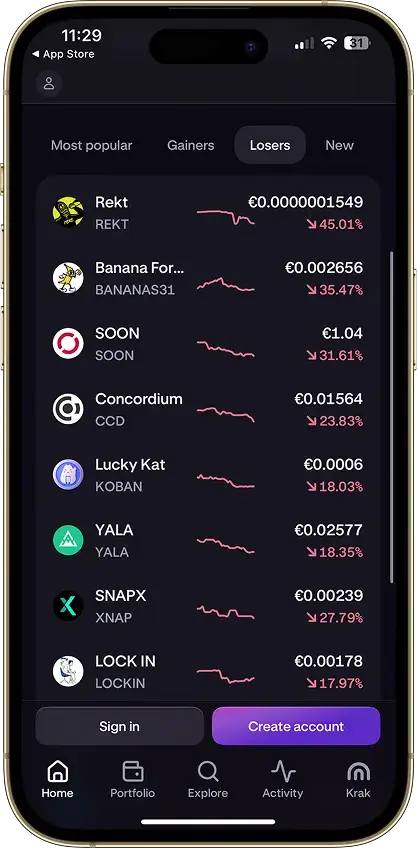
- Pro spot base: maker 0.25%, taker 0.40%
- Assets
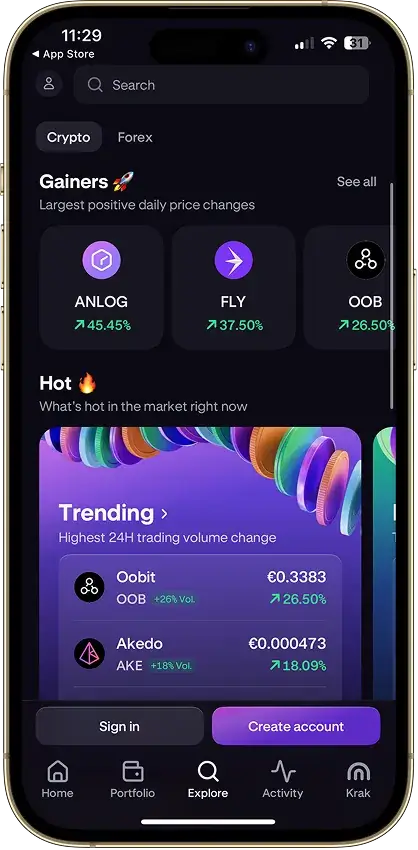
- 643 crypto (review)
- Fiat funding
- ACH (US); SEPA (EEA); FPS (UK)
Pros
- Free U.S. ACH withdrawals
- Sixteen U.S. perpetual contracts after checks
- REST, WebSocket, FIX, and futures APIs
- FIDO2 passkeys and Global Settings Lock
- Advanced orders from TWAP to iceberg
Cons
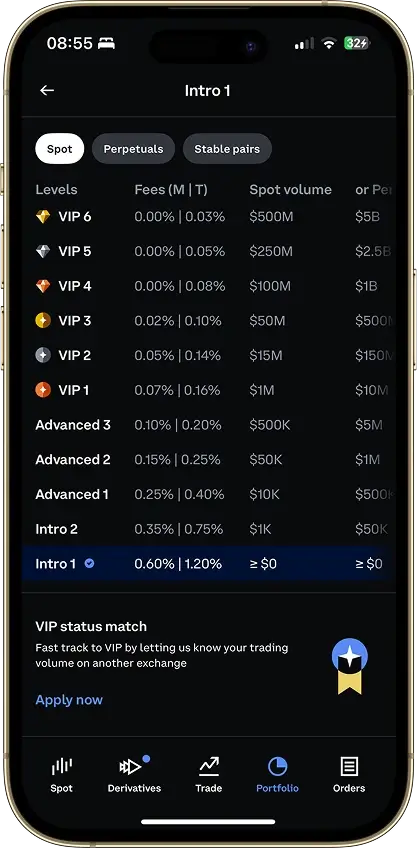
- 0.40% maker, 0.80% taker at entry on Pro
- Seven-day hold on Plaid ACH amounts
- Simple buys add 1% to 1.5% plus spread

Binance
- Cost
- Spot base: maker/taker 0.10%
- Assets
- 500+ crypto
- Fiat funding
- Bank transfer, cards (by region)
Pros
- 0.10% at entry, 0.075% paying in BNB
- Futures, options and FIX API access
- User-verifiable reserve inclusion
- Hardware keys and withdrawal allowlists
- 1,358 spot pairs across 486 assets
Cons
- No MiCA authorization in the EU
- Account reviews can hold withdrawals
- $4.3B U.S. guilty plea in 2023


Coinbase
- Cost
- Advanced spot base: maker 0.40%, taker 0.60%
- Assets
- 382 tradable (review)
- Fiat funding
- ACH/wire (US); cards/PayPal if eligible
Pros
- Free U.S. ACH deposits and withdrawals
- SEC filings and annual financial audits
- Spot trading in every U.S. state
- Passkeys, hardware keys and allowlisting
- U.S. futures and perpetual-style contracts
Cons
- Small Simple Buy orders cost up to 3.5%
- No user-verifiable Merkle inclusion
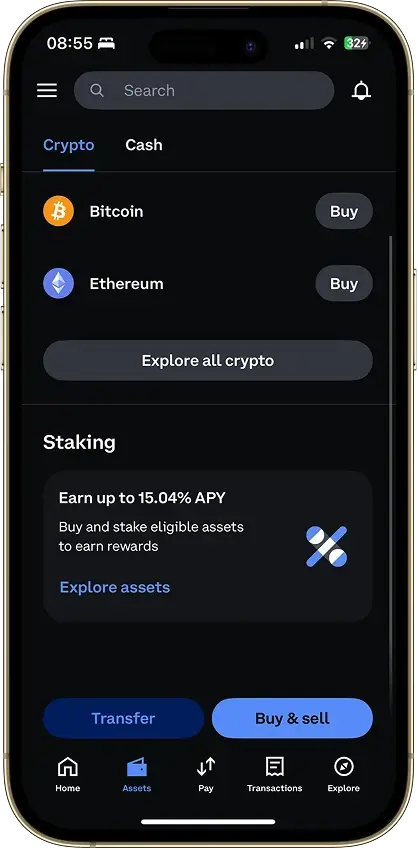
- 35% commission on staking rewards

How We Rank
- Security & custody 22% weight
Cold‑vs‑hot balance, key management (HSM/MPC), incident history, withdrawal controls, client‑asset segregation
- Market quality & reliability 18% weight
Order‑book depth/dispersion, spreads, uptime/SLOs, circuit‑breaker design, incident response
- Regulatory posture 12% weight
Licensing/registrations (MSB/MTL, FCA, MiCA, AUSTRAC, FSA), governance, compliance record
- Fees & pricing 12% weight
Maker/taker levels by tier, “instant buy” spread, funding/withdrawal costs, fee transparency
- Proof of reserves & transparency 8% weight
Frequency/scope of attestations, Merkle user‑verifiable liabilities, on‑chain wallet disclosures, auditor independence
- On/Off‑ramps & payments 8% weight
Breadth of fiat rails (ACH/SEPA/FPS/wire), settlement speed, geographic coverage
- Product breadth 8% weight
Spot, margin, perps/options, staking/earn, card, OTC, API availability
- UX & support 7% weight
App stability/performance, accessibility, documentation, support SLAs, incident communication
- API & pro tooling 5% weight
REST/WebSocket depth, rate limits, sandbox, SDKs, change management and monitoring
The list keeps CryptoSlate's sitewide Exchange Score, whose evidence covers security and custody as well as execution and cost. Withdrawals and support are assessed separately in how CryptoSlate builds its scores. Australia receives a local admission test before any existing score can appear, without creating a new score formula.
The local test follows one account from start to finish by identifying the company in the Australian terms and confirming that a new resident can complete signup. We then check the required service inside that account. Funding and withdrawal must work through documented Australian routes. The broader account and cost checks remain relevant only after those local facts line up.
An Australian eligibility file records four decisions:
- Record the account provider. The legal name and business number must match the governing terms. Name any separate custodian or product issuer too.
- Verify the required service. Spot trading cannot establish staking or lending access. Margin and derivatives need direct checks, as do cards and an OTC desk.
- Prove that value can leave. A deposit logo is insufficient when the account cannot return AUD to the verified bank account. It must also send the intended asset over a supported network.
- Date the evidence. Signup and payment methods can change. Product access and regulatory status can change too.
Provider documents establish what the provider says about its entity and fees. They also set out its product rules. Those documents cannot prove comparative safety or solvency. Liquidity needs a dated quote or order-book observation for the asset and order size being assessed.
Read Australian Status Claims in the Right Order
Australia has several regulatory labels that answer different questions. None should be stretched across an entire corporate group.
Start With AUSTRAC Registration
AUSTRAC's VASP registration rules require covered providers to register before providing covered services in Australia. The status relates to anti-money laundering and counter-terrorism financing duties. It provides neither an investment license nor approval of the business model. It also says nothing about whether customer assets can meet every claim.
Match the register entry to the company in the account agreement. A similarly named affiliate or an old entry does not establish that new Australian accounts remain open. The live signup flow and current terms must tell the same story.
Check What an AFSL Actually Covers
ASIC-administered financial-services law applies when the digital asset or related service is a financial product. An Australian financial services license may therefore matter for a derivative or card. It can also apply to advice or another specified product without covering ordinary spot-crypto activity. Record the license holder and permissions, then compare them with the service under review.
When a product issuer differs from the company holding the spot account, place both names beside the relevant product claim. A group-level statement such as “Australian licensed” hides the distinction a customer needs.
Separate Today's Rules From April 2027
The 2026 digital assets framework created a platform regime scheduled to begin in April 2027. Until commencement, the future regime should be described as enacted but not yet operating. Preparation for a future permission does not change a provider's current status.
This date boundary matters when an exchange describes an application or transition plan. It also matters for an expected license. Check the rule in force on the day the account is assessed. Revisit the page before the new framework begins and whenever commencement or transitional arrangements change.
Follow One AUD Deposit All the Way Back to a Bank
AUD support proves useful only when the account completes a round trip. PayID or Osko can provide a direct bank route, but the sending bank may impose its own limit or fraud hold. The exchange controls name matching and account limits, with separate review steps. A card purchase can be available without an AUD wallet. Its refund or cash-out path may differ from the purchase path.
Use a small amount to collect evidence at each stage:
| Point in the Route | Record to Keep | Failure the Record Helps Explain |
|---|---|---|
| Bank to exchange | PayID, Osko, or transfer receipt plus the beneficiary and reference | Bank hold, wrong reference, name mismatch, or exchange review |
| AUD to crypto | Quote preview, order type, completed price, and fee | Embedded markup, changed price, thin AUD market, or wrong interface |
| Crypto withdrawal | Asset, network, address, minimum, fee, and transaction identifier | Unsupported chain, compliance request, manual review, or address error |
| Crypto to AUD | Sale record and conversion rate | Spread, slippage, or an extra currency step |
| Exchange to bank | Withdrawal request, destination account, stated window, and receipt | Cash-out restriction, payment-provider delay, or first-withdrawal check |
Australian banks can pause payments to crypto businesses under their own fraud controls. Check which party marks the transfer as pending before assigning the delay. Use a bank account in the verified customer's name and retain the reference until both sides show completion.
Covered crypto transfers can also prompt requests for counterparty or destination-wallet information under travel-rule and recordkeeping obligations. Such a request is not, by itself, proof that withdrawals are failing. Compare it with the published policy and use the formal complaint route when a hold exceeds the stated process.
Price the AUD Route at the Intended Order Size
Create an AUD reconciliation by recording the bank debit and the spendable AUD credited. Then record the crypto received after execution and the amount that reaches the nominated wallet. If the plan includes cash-out, add the dollars that land back at the bank. The gaps between those figures expose the funding charge, quote markup, execution cost, network withdrawal and return-to-bank cost.
Where an account offers both an AUD quote and an AUD order book, capture them together for one asset and amount. Record whether either route introduces another currency before execution. The quoted interface can include a markup even when the displayed commission is zero. For a larger order, save the executable prices and quantities available in the AUD market or obtain a firm OTC quote. A percentage from a small trade cannot price the larger transaction.
Recurring purchases need an observation that records whether the schedule uses a quoted purchase or an order book. Check how fees affect the nominated amount, then document what happens after a failed bank payment. Automation is useful only when its pricing and cancellation rules are clear.
Know Where Australian Complaint and Protection Routes Stop
The terms should identify the company responsible for complaints and the response process. AFCA can consider a digital-asset dispute only if the relevant provider is an AFCA member and the matter sits within AFCA's rules. Membership by a related company does not automatically extend to the service holding the account.
The Financial Claims Scheme protects eligible deposits with covered Australian-incorporated deposit-taking institutions. An exchange's use of an Australian bank does not turn crypto or a general platform balance into a protected bank deposit. Identify who legally holds the cash and in what capacity. Then record the claim available if either the exchange or a banking partner fails.
Custody requires the same entity discipline because the terms should identify who controls private keys and whether customer assets can be pooled or used. The ledger must also explain the customer's interest. A reserves snapshot may show selected assets at one moment. Complete liabilities and wallet-control evidence are still needed, along with a clear assurance scope, before it can support a solvency claim.
A disputed exchange hold and a lost personal-wallet key require different evidence and remedies. After a withdrawal reaches the nominated address, the holder controls recovery material and must catch an incorrect address or network choice. Before moving a larger balance, test the exact asset and chain with a small transfer and verify that the backup can restore access. That procedure reduces avoidable transfer errors without turning self-custody into a guarantee.
Match the Australian Account to the Intended Job
Write the intended job as a transaction before comparing accounts. “Buy a fixed amount in AUD each month and withdraw it over the required network” demands schedule pricing, a direct AUD route and repeatable crypto withdrawals. An AUD spot order needs executable depth and suitable controls. A large negotiated trade needs a firm quote from the entity that will settle it. A reward product adds separate custody, asset-use, lockup and release terms.
Borrowed or contract-based exposure adds a threshold that covers the issuer and client class. Check license scope and collateral inside the Australian account, then read the close-out rules. Product design belongs with futures account eligibility or options contract access. This page answers the prior question of whether an Australian resident can use that product through the named entity.
The required AUD market and withdrawal network determine whether the intended transaction can complete. A listed coin adds nothing when it cannot leave over the chain supported by the destination wallet.
Build ATO-Ready Records Before the First Trade
The ATO's crypto recordkeeping requirements cover exchange records and transaction dates. They also cover purpose and counterparties, with Australian-dollar values required for the activity. The guidance recommends exporting transaction history at least every three months and explains the applicable retention periods.
Try the download while the account history is still short so trades and instant purchases remain distinguishable from fees. Rewards and AUD movements need separate entries, as do crypto transfers. Timestamps and quantities must survive outside the account. Values and transaction identifiers are also required. An annual total cannot replace a ledger that reconstructs each disposal or transfer.
An exchange file sees only activity handled by that exchange. Wallet transfers and decentralized applications may require separate reconciliation. Other platforms and staking need their own records, as do airdrops. Keep source files and blockchain records before closing an account. Tax software can organize complete evidence, but it cannot recreate missing records.