Political prediction markets do not all solve the same job. Some are strong on U.S. elections but weak on global politics. Others react faster to coups, cabinet exits, sanctions, and war headlines, but they need closer rule reading before you trade.
Access matters just as much as market coverage. One platform may be easy to fund from a standard brokerage account. Another may offer broader global politics coverage but add more legal, funding, or cash-out friction. And some platforms list a lot of political markets that only trade well when the headline is big enough.
This page helps you choose the platform that fits the geopolitical events you actually want to trade. It shows where trading quality is strong, how money moves in and out, and what to check on access, rules, and settlement before you fund an account.
This shortlist is ranked by how the platforms work in practice. The ranking gives the most weight to tradability, access, cash-out flow, rule clarity, and trust.
Top Political Prediction Markets
- Funding
- USD
- Min. deposit
- $10 ($1,000 by wire)
- KYC
- Full
- $72,580 median depth near the price
- Resting limit orders free on most markets
- Market data API needs no key to read
- Funding
- USD
- Min. deposit
- No card or ACH minimum stated ($1,000 by wire)
- KYC
- Full
- $90,138 median depth within 2¢ of the price
- No fee on resting limit orders
- No-key public API with live order books
- Funding
- USD
- Min. deposit
- No minimum
- KYC
- Full
- Commission capped at 1¢ per contract
- 4,175 events across 28 category pages
- Payouts withdrawable 1 business day after settling
- Funding
- pUSD (crypto)
- Min. deposit
- $2 on most networks ($3 on Ethereum, $3.60 on Bitcoin)
- KYC
- None
- $63,871 median depth near the price
- Geopolitics markets trade fee-free
- London server hosting for market makers
- Funding
- USD
- Min. deposit
- $10
- KYC
- Full
- Single House districts and governor races
- Multi-outcome buys debit only worst-case loss
- Public order book, no login needed
CryptoSlate may earn a commission when you visit partner sites through links on this page, at no extra cost to you. Our rankings and reviews remain editorially independent and based on our published methodology. Read disclosure
Disclaimer: CryptoSlate may receive a commission when you click links on our site and make a purchase or complete an action with a third party. This does not influence our editorial independence, reviews, or ratings, and we always aim to provide accurate, transparent information to our readers.These labels make the shortlist easier to scan by use case. They are not full verdicts, but they show where each platform stands out fastest.
| Use Case | Best Pick |
|---|---|
| U.S. Elections | Kalshi |
| Global Elections | Polymarket |
| Government Shutdown Markets | Kalshi |
| Geopolitical Crisis Markets | Polymarket |
| Fast News Reaction | Polymarket |
| Clearer Regulation | ForecastEx / IBKR ForecastTrader |
Use this shortlist to narrow the field before you jump into the deeper comparison sections. If you want cleaner U.S. access and stronger rule structure, start with Kalshi, Robinhood, and ForecastTrader, but still check state restrictions, client eligibility, and current litigation before funding. If you care more about global elections and geopolitical speed, start with Polymarket, then check whether the funding and cash-out flow fit your jurisdiction.
Active Prediction Markets for Politics
View more marketsTrack active political prediction markets across elections, policy decisions, legislation, polling, and major geopolitical events. These markets show how expectations move as news, data, and campaign developments unfold.
 Next French Presidential Election


 Presidential Election Winner 2028


 Venezuela leader end of 2026?
  Who will be the next Prime Minister of Israel after the next election?


This table shows where each platform is strongest and where it starts to break down in practice.
Comparison Table
| Name | Minimum deposit | KYC | Liquidity model | Early exit | Core categories | Position limit | API access |
|---|---|---|---|---|---|---|---|
 Kalshi Kalshi | $10 ($1,000 by wire) | Full KYC | Order Book | Yes | Elections, sports, entertainment, politics, financials, economics, science and technology, climate and weather, companies, mentions, crypto, commodities | Yes | Yes |
 Polymarket US Polymarket US | No card or ACH minimum stated ($1,000 by wire) | Full KYC | Order Book | Yes | Sports, politics, culture, economics, tech, finance, crypto, climate, geopolitics, science | No | Yes |
 Robinhood Robinhood | No minimum | Full KYC | Broker / Routed | Yes | Pro football, college football, midterms, elections, baseball, basketball, hockey, soccer, tennis, golf, combat sports, esports, economics, financials, crypto, climate, metals, entertainment, technology | Yes | No |
| Polymarket | $2 on most networks ($3 on Ethereum, $3.60 on Bitcoin) | No KYC | Order Book | Yes | Sports, crypto, politics, geopolitics, finance, economy, culture, weather, tech, mentions, esports | No | Yes |
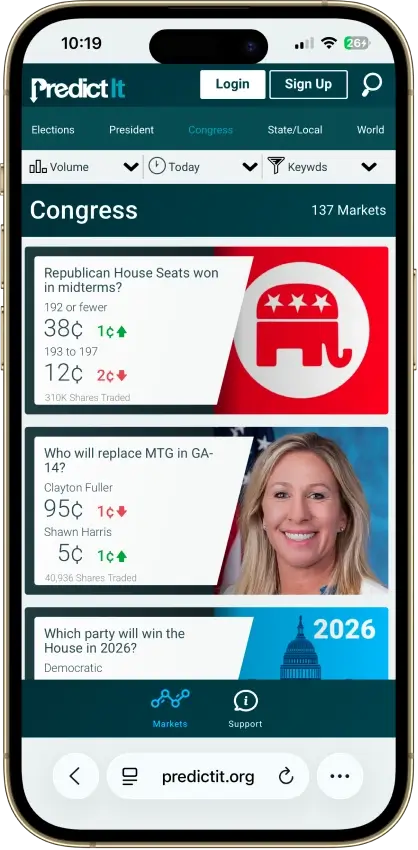
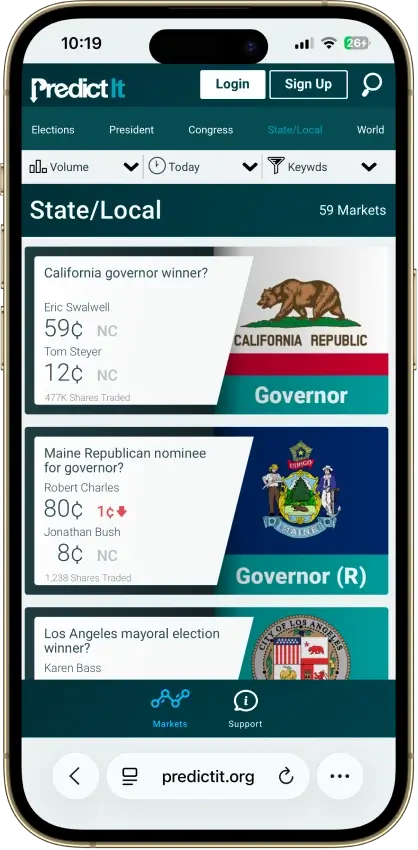
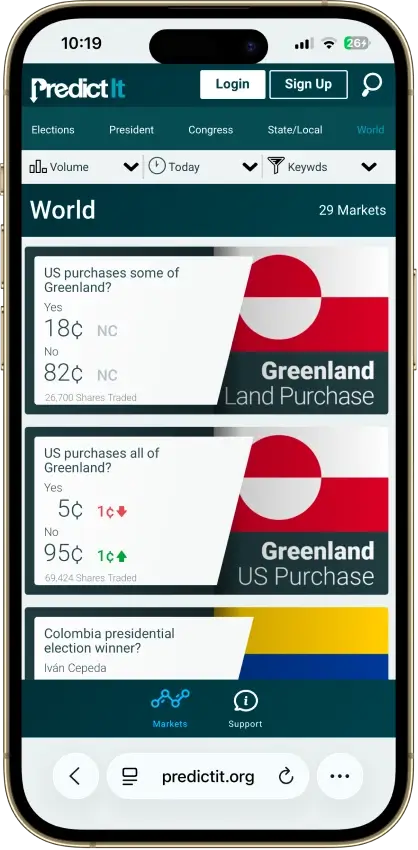
 PredictIt PredictIt | $10 | Full KYC | Order Book | Yes | U.S. elections, primaries, nominations, control‑of‑government and legislative/policy event contracts, plus certain international political questions that do not involve war, terrorism or assassination. | Yes | Yes |
Regulated platforms are usually better on legal clarity, funding rails, and payout confidence. Crypto-native prediction platforms react faster and cover more of global politics, but they add more access and settlement friction. U.S.-focused platforms also tend to go deeper on headline election markets, while broader platforms often list more markets overall but trade thinly outside the biggest stories.
Political Prediction Markets Reviews
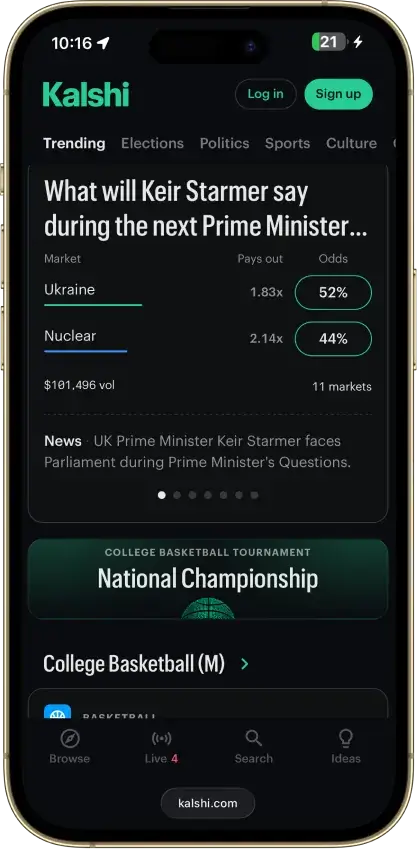
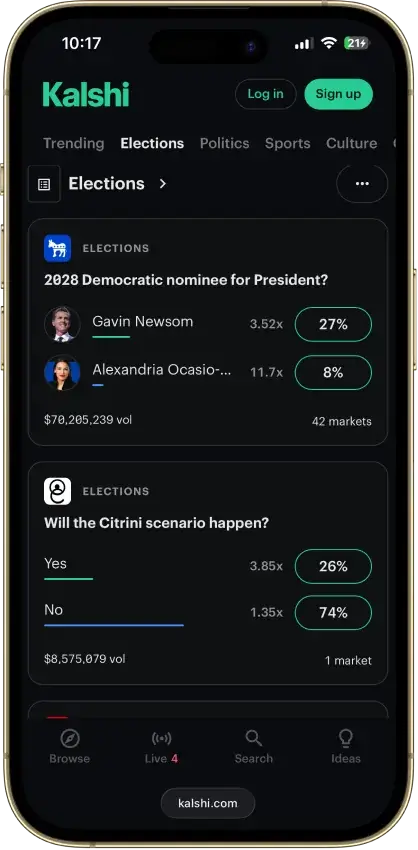
Kalshi
- Funding
- USD
- Min. deposit
- $10 ($1,000 by wire)
- KYC
- Full
Pros
- 1¢ spreads on top election and sports markets
- 8,000+ open events across 17 categories
- Free ACH, wire and RTP deposits
- Debit withdrawals land within hours
- Full API with WebSocket and FIX
Cons
- Court orders block contracts in 3 states
- Disputed outcomes can't be appealed
- Card deposits can cost up to 2%
- No phone support, AI chat first
- No tax form named for trading gains
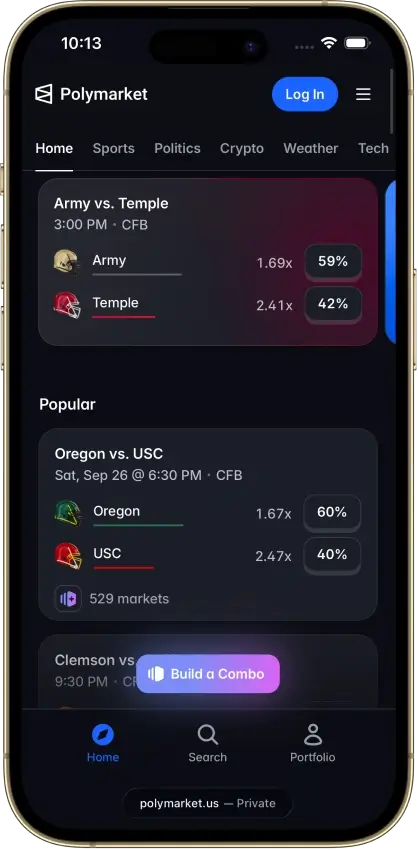
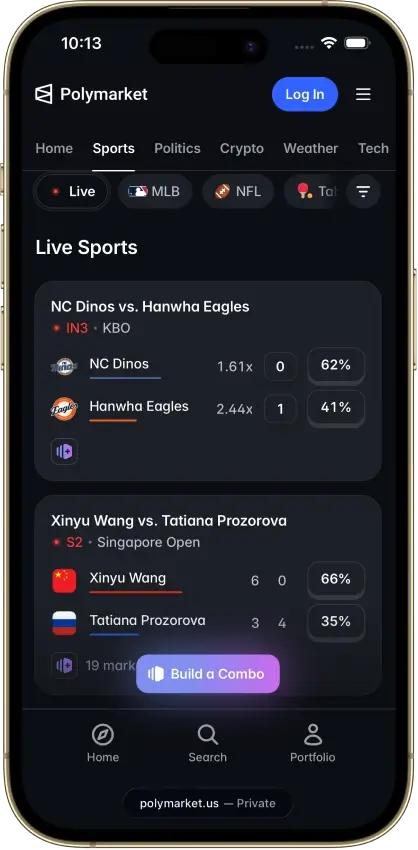
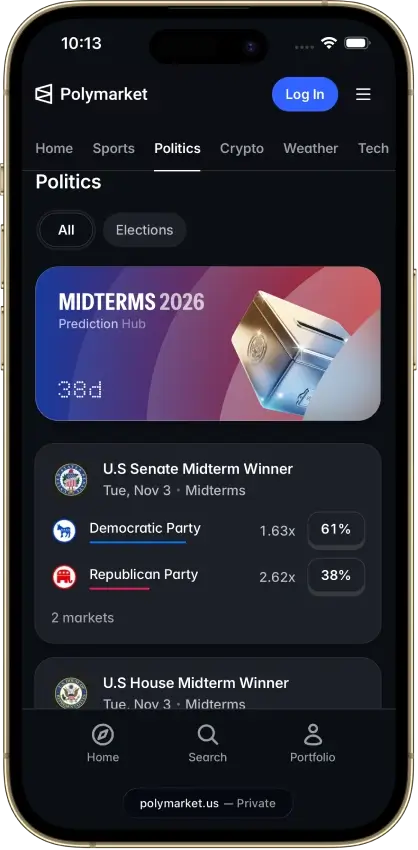
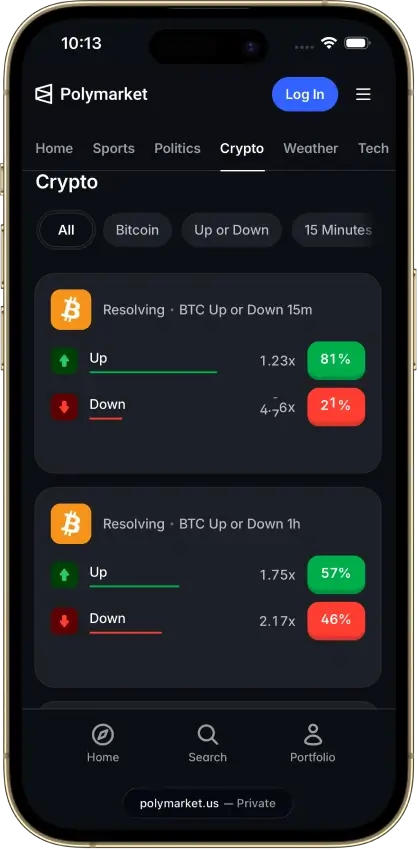
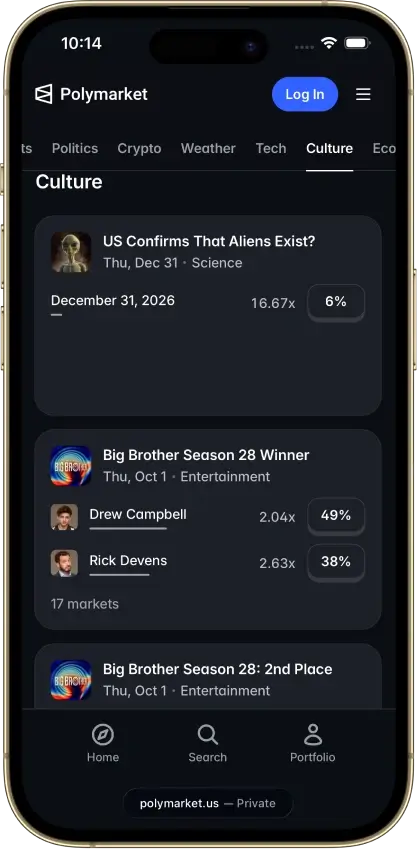
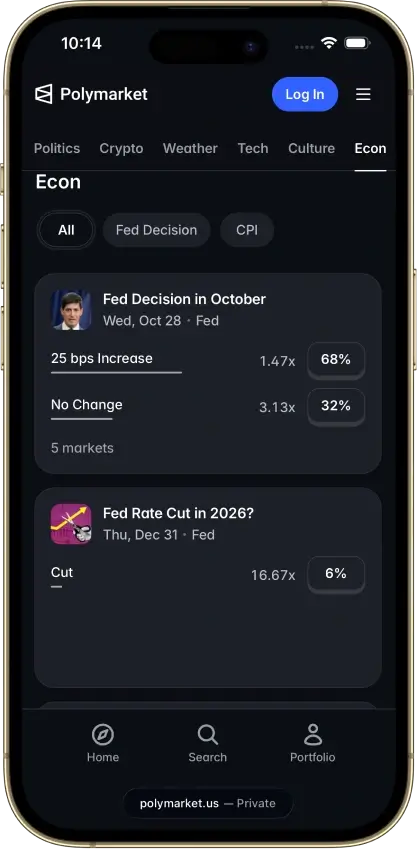
Polymarket US
- Funding
- USD
- Min. deposit
- No card or ACH minimum stated ($1,000 by wire)
- KYC
- Full
Pros
- 0.5¢ spreads on top game markets
- CFTC exchange and clearing house end to end
- Taker fee 1.74¢ at 50¢, level with Kalshi
- iOS, Android, web and a public API
- Available in every state except Nevada
Cons
- Deposits take 3–4 business days to clear
- Withdrawals only to the original source
- No crypto, PayPal or instant transfers
- Company decisions on outcomes are final
- No tax form listed for event-contract gains
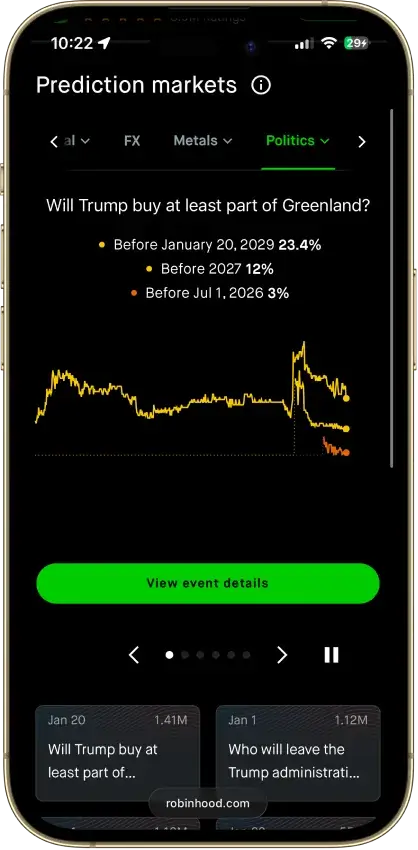
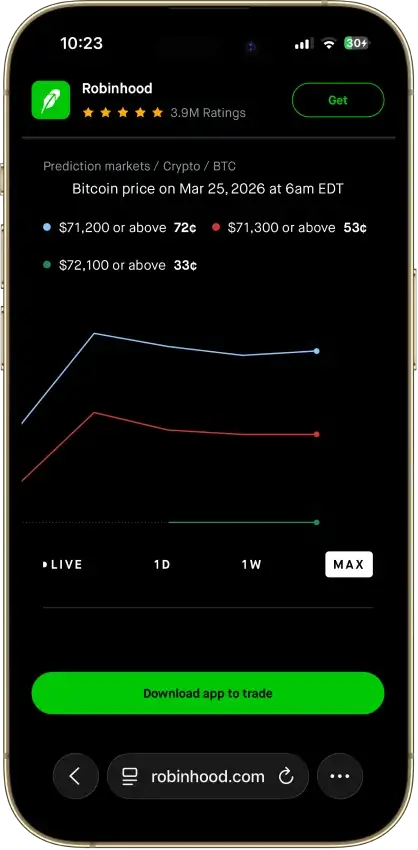
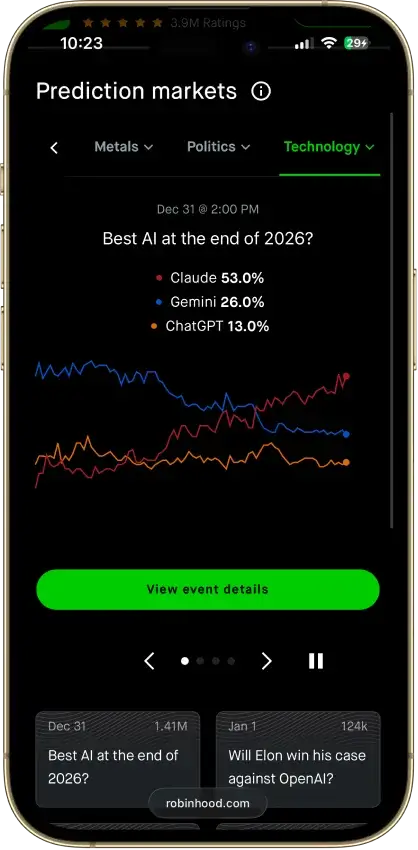
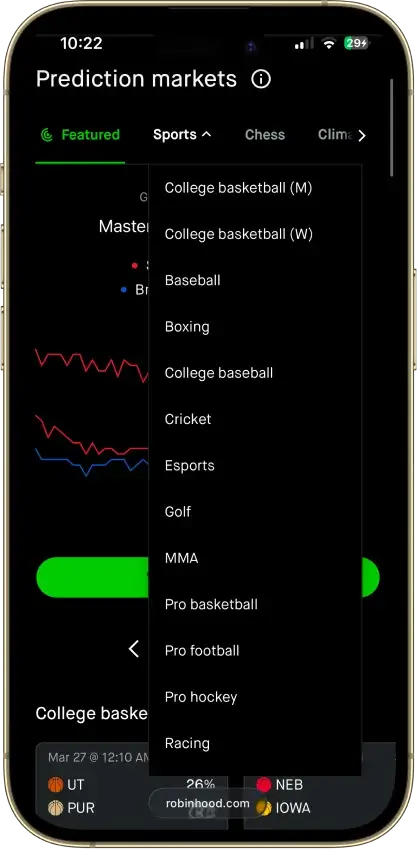
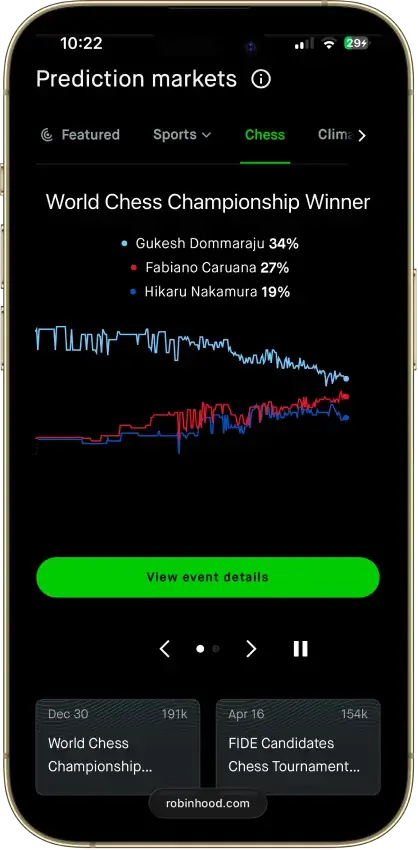
Robinhood
- Funding
- USD
- Min. deposit
- No minimum
- KYC
- Full
Pros
- Gold halves the commission on long shots
- Custom football combos up to 10 legs
- Free ACH deposits and withdrawals
- 24/7 chat plus phone callbacks
- Collateral held in a segregated account
Cons
- Needs a separate derivatives approval
- Trading only in the phone app
- No API or historical data download
- No sports contracts in NV, MD or MI
- Robinhood can't change a settlement

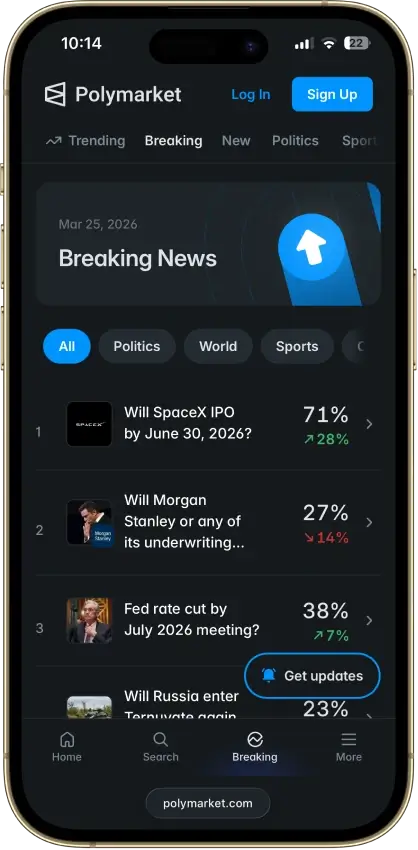
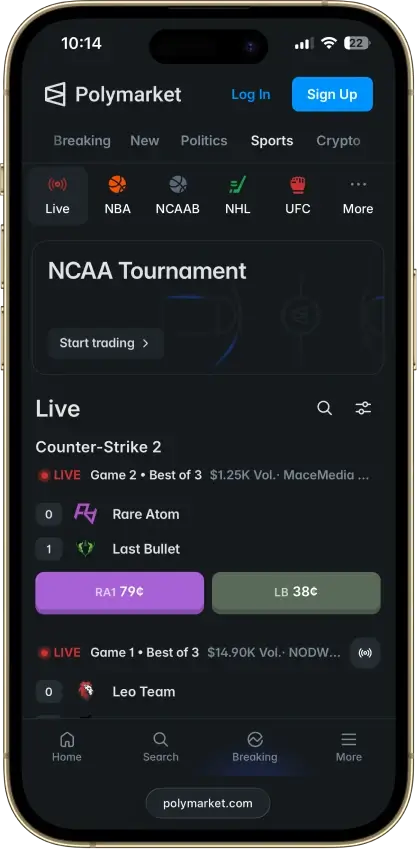
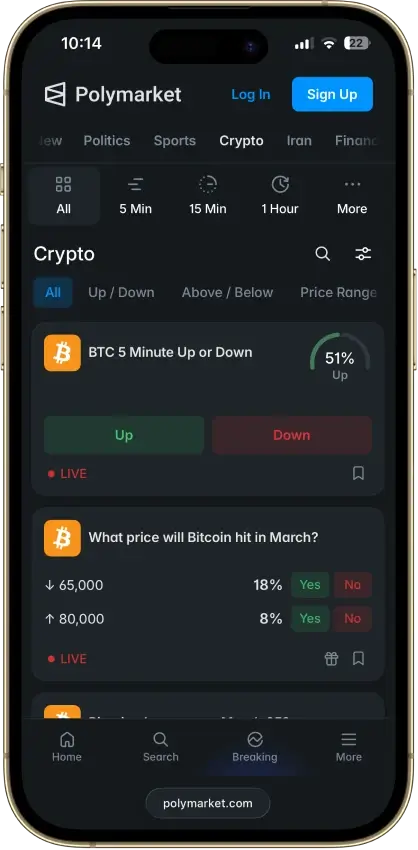
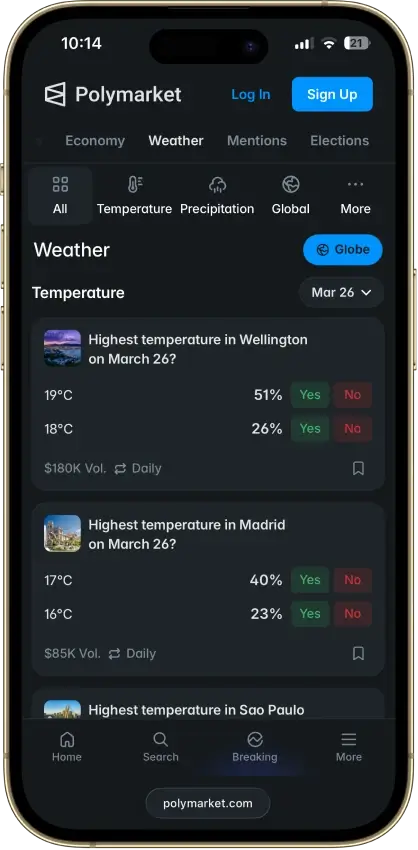
Polymarket
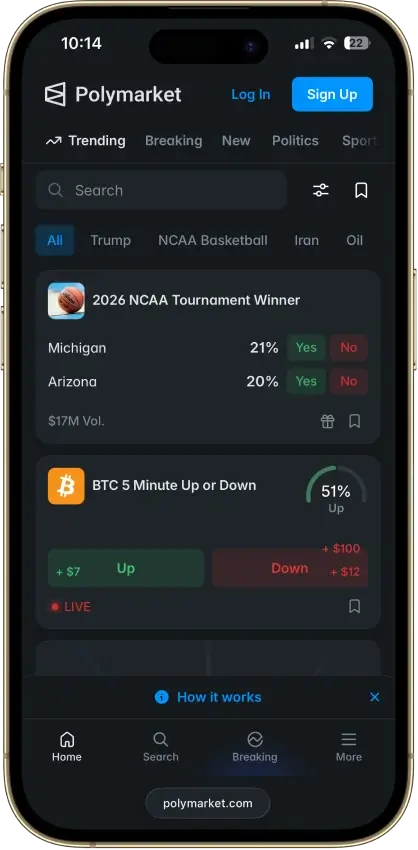
- Funding
- pUSD (crypto)
- Min. deposit
- $2 on most networks ($3 on Ethereum, $3.60 on Bitcoin)
- KYC
- None
Pros
- 1¢ spreads on top politics and sports markets
- Makers pay no trading fees
- Taker fee 0–1.25¢ at 50¢ outside crypto
- Instant withdrawals, no Polymarket fee
- No ID needed to sign up
Cons
- Not licensed by any regulator
- Disputes can end in a UMA token-holder vote
- Crypto only, no card or bank deposits
- Blocked or close-only in 41 countries
- Web only, and no tax statements
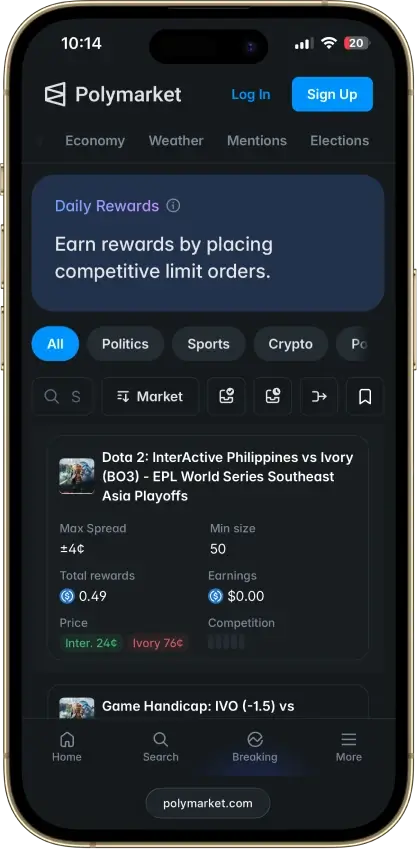
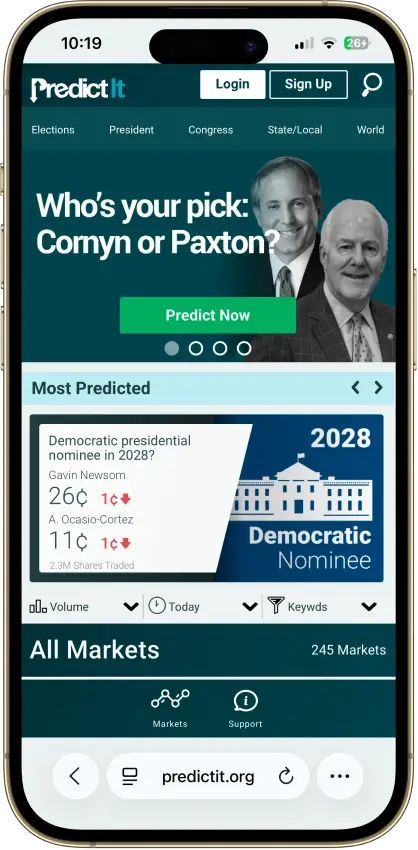
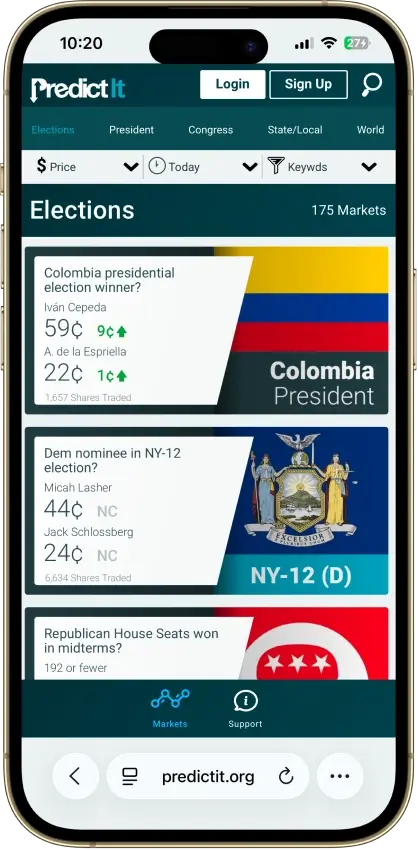
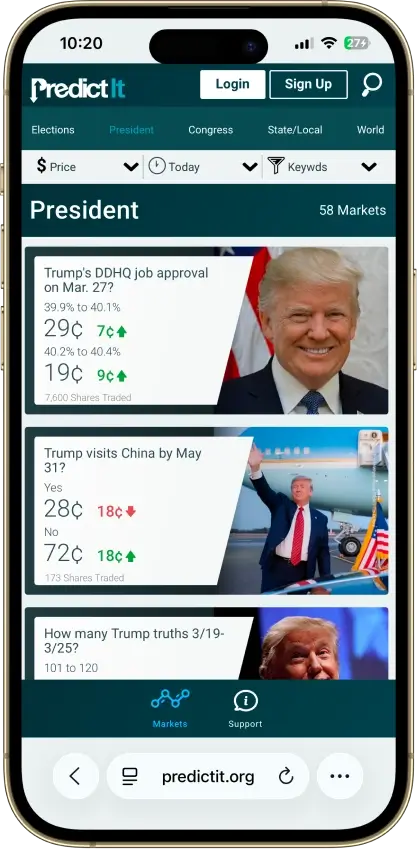
PredictIt
- Funding
- USD
- Min. deposit
- $10
- KYC
- Full
Pros
- Free standard withdrawals since September 2026
- Markets on 35 Senate races
- No fee on losing or break-even trades
- Open to U.S. citizens living abroad
- Free market-data feed, 60-second updates
Cons
- 10% of profit taken on every winning trade
- $227 median depth near the price
- No withdrawals for 30 days after first deposit
- Outcomes settled at PredictIt's discretion
- Web only, no app
How We Rate Geopolitical Prediction Markets
These rankings focus on real use, not marketing claims. A platform scores well here only if it works when money is actually on the line, from account setup to exit.
- Setup Friction + Account Readiness (10%): How hard it is to open, verify, and fully activate an account for political trading.
- Funding Rails + Deposit Friction (8%): Bank support, brokerage funding, stablecoin flow, transfer speed, and avoidable funding pain.
- Cash-Out Flow + Payout Reality (10%): How quickly profits become withdrawable, how money leaves the platform, and where delays show up.
- Liquidity + Execution Quality (18%): Depth, spreads, slippage, order book quality, and whether markets stay tradable beyond the top headline.
- Fees + Hidden Cost Drag (8%): Stated fees, spread drag, exit fees, and other costs that matter in practice.
- Political / Geopolitical Market Usefulness (16%): Election depth, policy coverage, shutdown markets, geopolitical breadth, and how useful the menu is day to day.
- Rule Clarity + Resolution / Dispute Handling (12%): How clearly markets are worded, how edge cases are handled, and how safe the resolution process feels.
- Trust Model + Security / Custody (8%): Regulatory footing, custody risk, platform trust, and the main way a user can get hurt.
- UX + Apps + Data Tooling (5%): Order ticket quality, mobile and desktop usability, chart clarity, and API or data support.
- Transparency + Support + Reporting Readiness (5%): Help quality, account records, exports, statements, tax support, and whether support can solve real problems.
This methodology rewards platforms that still work well after the first trade. That means good access, real liquidity, clear rules, workable cash-out flow, and enough trust for serious political trading. It punishes platforms that look busy on paper but trade thinly, make payouts annoying, hide real cost, or leave too much ambiguity around resolution and disputes.
Political Prediction Markets Vs Political Betting
Political prediction markets and political betting can look similar in search results, but they do not work the same way. The differences show up in pricing, exit flexibility, fees, and how much control you have after the trade is open.
| Factor | Prediction Markets | Traditional Political Betting / Sportsbook-Style Framing | Why It Matters |
|---|---|---|---|
| How Political Markets Work | You buy or sell contracts tied to an event outcome. | You place a wager at odds offered by the operator. | One works more like a market. The other works more like a posted-price bet. |
| Who Sets The Price | Other traders and live market flow shape the price. | The book sets the odds and moves them. | Market pricing can react faster, but it can also get messy in thin books. |
| How Cost Shows Up | Cost shows up through contract price, spreads, fees, gas, and withdrawal friction. | Cost usually shows up through built-in margin in the odds. | Cheap-looking pricing can still hide drag in different places. |
| Can You Exit Early | Usually yes, if there is enough liquidity to sell before resolution. | Sometimes, but only if cash-out is offered and priced fairly by the operator. | Early exit is a major edge when news changes fast. |
| Where Each Model Works Best | Better for active trading, price discovery, and changing event views. | Better for simple one-shot wagers where you just want to pick a side and hold. | The right tool depends on whether you want tradability or convenience. |
| Where Each Model Breaks | Thin books, rule ambiguity, or payout friction can hurt the experience. | Less pricing control, less transparency, and more operator edge. | The trade-off is usually flexibility versus simplicity. |
A political prediction market is usually the better tool when you want live pricing, early exit, and a clearer view of how the crowd rates an outcome. But search results around phrases like “bet on politics” often mix regulated exchanges, offshore betting pages, and loose betting language together. That is where those searching should slow down and check access, legality, rule wording, and payout flow before sending any money.
Best Geopolitical Prediction Markets By Topic
The best platform often depends more on the event than the brand. A great U.S. election venue may still be weak for global cabinet changes, war risk, or non-U.S. election cycles.
| Topic | Best Platform |
|---|---|
| U.S. Presidential Elections | Kalshi |
| Congressional / Senate / House Control | Kalshi |
| Government Shutdown Markets | Kalshi |
| Major Appointments And Policy Deadlines | Kalshi |
| Global Elections | Polymarket |
| Geopolitical Crisis / Conflict Markets | Polymarket |
Choose by event type first, not just by platform name. Kalshi is the better starting point for U.S. elections, shutdown risk, and other U.S. policy deadlines. Polymarket is stronger when the real goal is global elections or fast-moving geopolitical news. That split matters more than logo familiarity.
How To Choose The Right Political Or Geopolitical Prediction Market
The wrong platform usually does not fail because of the brand. It fails on one practical point that looked small at signup and turned into friction later.
- Check Whether The Platform Fits The Topic You Actually Care AboutSome platforms are great for U.S. election maps, Senate control, and shutdown deadlines. Others are much better for cabinet exits, international elections, sanctions, and war-risk headlines. Start with the event type, not the logo.
- Check Whether You Want U.S.-Focused, Global, Or Mixed CoverageKalshi is stronger for U.S.-centered political trading. Polymarket is broader for global politics and geopolitics. Mixed coverage sounds ideal, but some platforms spread too wide and get thin outside headline markets.
- Check How Hard It Is To Get From Signup To First TradeBroker-linked and regulated platforms usually need more identity checks, account setup, or approvals. Crypto-native platforms can be faster once your wallet is ready, but they are less friendly if you are starting from fiat.
- Check How You Fund The AccountBank transfer, debit card, brokerage cash, wallet funding, and stablecoin routing all create different types of friction. The best funding rail is the one you can repeat easily, not just the one that works once.
- Check Whether You Can Exit Before Final ResolutionEarly exit matters a lot in politics. News moves fast. A market is much more useful if you can close before resolution without getting trapped by thin liquidity or bad spreads.
- Check Fees, Spreads, And Hidden Cost DragA low stated fee does not guarantee a cheap trade. Wide spreads, slippage, gas, bridge costs, and withdrawal charges can easily matter more than the headline fee.
- Check Rule Wording, Cutoff Timing, And Resolution SourcesThe best political platforms make the source and settlement rule easy to find before you trade. If the wording is vague, or the cutoff timing is easy to misread, that risk belongs in your platform choice.
- Check Whether The Platform Handles Breaking News Well Enough For Your StyleSome markets reprice almost instantly. Others lag, widen out, or go thin right when the event gets interesting. If your edge depends on speed, pick the platform that still works when headlines hit.
The wrong platform usually fails on one of these checks, not on surface branding alone. That is why the best political prediction market for one user can be the wrong one for someone trading a different event, jurisdiction, or time horizon.
Where You Can Bet On Politics Legally — And What To Check First
Access is not just about whether a platform exists in your country or state. It is also about whether the political markets you want are available to your account type, your jurisdiction, and your funding setup.
| Area | What Users Should Check | Why It Matters |
|---|---|---|
| Jurisdiction | Whether the platform accepts users in your country, state, or territory right now | Access rules can change, and some platforms block order placement even if the site itself loads |
| Age Rule | Minimum age to open and trade an account | Most platforms require adult users, and age mismatches stop onboarding fast |
| Identity Verification | Whether full KYC is required before trading or withdrawal | Some platforms let you browse first but block trading until identity checks clear |
| Account Type Or Approval | Whether you need a brokerage account, derivatives approval, or a compatible wallet | Available platform and available political market are not always the same thing |
| Political Market Availability | Whether politics, elections, or geopolitical contracts are actually live for your user type | A platform may support prediction markets in general but still have a narrow or rotating politics menu |
| Funding Eligibility | Whether your preferred deposit rail works in your region | A platform can be technically available while your easiest funding path is not |
| Withdrawal Path | Whether you can withdraw to bank, card, or wallet without extra friction | Cash-out issues often show up only after the trade is over |
| Reporting And Records | Whether the platform gives enough statement and activity history for your needs | Political markets can create messy record-keeping if reporting is weak |
Kalshi, Robinhood Prediction Markets, and ForecastEx / IBKR ForecastTrader seem better for many U.S.-based users on the surface level, but access is still conditional because Robinhood blocks Maryland users from event contracts, Forecast Contracts are only for eligible clients age 21+, and Kalshi is in active state-level fights including Arizona and Nevada. Polymarket (International) needs more care because it is blocked or restricted in the U.S. and several other jurisdictions, while funding and cash-out are more crypto- and wallet-led than standard broker rails. PredictIt is simpler to understand than a crypto-native platform, but users still need to check fee drag, market depth, and current access rules before funding.
Polymarket is rolling out a U.S. only version as of March 2026.
Age, KYC and Position Limits By Platform
Age rules, identity checks, and position limits matter more than many first-time users expect. These are the rules that can stop you at signup, delay your first trade, or cap your size even when the market itself looks open.
| Platform | Minimum Age | KYC / Identity Check | Position Limits |
|---|---|---|---|
| Kalshi | 18+ | Identity verification is part of onboarding on the regulated U.S. exchange | Varies by contract. Political contracts can run much higher than standard small-contract limits, so check the contract terms before sizing up. |
| Polymarket | Not disclosed | Wallet-based onboarding is easy, but a standard account-level KYC step is not enforced under usual circumstance | None |
| Robinhood Prediction Markets | 18+ | Full Robinhood account onboarding, identity checks, and approval for a Robinhood Derivatives account | Varies by contract. Robinhood says the position limit is set per contract side, per event. |
| ForecastEx / IBKR ForecastTrader | 21+ | Full IBKR brokerage onboarding plus trading-permission approval | Not disclosed |
| PredictIt | 18+ | Identity documents are used to verify identity under U.S. financial-regulation requirements | Up to the $3,500 position limit per contract unless the market page states otherwise |
Regulated broker-style platforms usually ask for more up front, but the account rules are easier to understand once you are through them. Crypto-native access can feel faster at the start, but the compliance and limit structure is often less obvious from the first screen.
Position limits matter most when you trade headline election markets, shutdown deadlines, or anything moving fast on breaking news. Small users may never notice them. Larger-size users should check them before funding, because the limit can shape execution just as much as liquidity or fees.
Liquidity, News Reaction and Execution
A political market can look active on screen and still trade badly once you try to enter, exit, or size up. What matters is not just whether a quote exists. It is whether you can actually trade near that quote when the event gets busy.
Start with these checks before you place a trade:
- Major election markets: Top presidential and party-control markets usually have the best depth, tighter spreads, and cleaner exits. Side races and lower-profile contests get thin much faster.
- Government shutdown and policy markets: These can trade well near the key deadline, then lose depth before and after the main window.
- Geopolitical crisis markets: They often list fast and reprice fast. They also widen the fastest when the news is messy or the facts are still moving.
Then look at actual execution quality:
- Spreads: A tight spread matters more than a low headline fee.
- Slippage: Small orders may fill cleanly, but larger size can push you into a much worse price.
- Limit orders: These matter most when depth is uneven or news is breaking.
- Early exits: A market is much more useful if you can get out before final resolution without crossing a bad spread.
The same event can also price differently across platforms. Sometimes that is real disagreement. Sometimes the contracts are not truly the same. A different cutoff time, source, or confirmation rule can create a different price even when the headline looks identical.
Rules and Resolution
In politics and geopolitics markets, dates move, announcements get revised, officials say one thing before a filing says another, and a media call is not always the same as formal confirmation.
That is why rule wording matters as much as price.
Check these points before you trade:
- Resolution source: Does the market name the exact source that decides the outcome?
- Time and date cutoff: Does the contract say exactly when the event must happen?
- Official confirmation: Does a speech count, or does the platform require a filing, certification, or final published result?
- Void and cancellation policy: What happens if the wording breaks, the source fails, or the event becomes impossible to score cleanly?
- Dispute path: Can users see how a challenge works, or do they only find out after a problem appears?
A political market feels safer to trade when the source is obvious, the cutoff is clear, and the wording answers edge cases before they happen. Users should get cautious when a contract leaves room for exceptions or implied outcomes. That risk showed up in the Kalshi Khamenei market controversy, where many traders expected a payout but the platform relied on a death-related rule and settled the market differently.