Crypto options trading platforms can use the same call-and-put language while offering materially different contracts. The legal entity serving the account controls access. Option type and exercise rules establish the contractual rights. Strike and expiry set their time limits. Settlement currency and the available exit market control how value can be realized.
Top Crypto Options Trading Platforms
- Cost
- Spot usual: maker/taker 0.10%
- Assets
- 330+ listed
- Fiat funding
- SEPA (eligible EEA); cards
- Advanced trading with deep tooling
- Strong security and reserve signals
- Broad fiat and product ecosystem
- Cost
- Spot base: maker/taker 0.10%
- Assets
- 500+ crypto
- Fiat funding
- Bank transfer, cards (by region)
- Multi-million-dollar depth on BTC and ETH books
- SAFU, a $1 billion emergency fund in BTC
- Bot Marketplace with grid and DCA bots
- Cost
- Spot maker/taker: global 0.08%/0.10%; EEA 0.20%/0.35%
- Assets
- 296 crypto (review)
- Fiat funding
- SEPA (EEA); other rails vary
- Monthly zk-STARK reserve inclusion checks
- Simulated trading to test before going live
- RFQ block trades for large orders
- Cost
- Spot base: maker/taker 0.10%
- Assets
- 350 crypto (profile)
- Fiat funding
- SEPA/FPS via partners (by region)
- One V5 API across every Bybit market
- Three margin modes on one trading account
- Launchpool and Launchpad token events
- Cost
- Exchange spot base: maker 0.25%, taker 0.50%
- Assets
- 400+ crypto
- Fiat funding
- ACH (US); SEPA (EEA); cards
- DCA and Grid bots for U.S. spot traders
- Mandatory whitelist for withdrawal addresses
- Discretionary $250,000 cover for unauthorized use
CryptoSlate may earn a commission when you visit partner sites through links on this page, at no extra cost to you. Our rankings and reviews remain editorially independent and based on our published methodology. Read disclosure
Disclaimer: CryptoSlate may receive a commission when you click links on our site and make a purchase or complete an action with a third party. This does not influence our editorial independence, reviews, or ratings, and we always aim to provide accurate, transparent information to our readers.Comparison Table
| Name | Total Assets | Products | Staking | Trading fees (low) | Trading fees (high) |
|---|---|---|---|---|---|
 WhiteBIT WhiteBIT | 330 | Spot, Margin, Futures or Perps, OTC | Yes | — | 0.1 |
 Binance Binance | 500 | Spot, Margin, Futures or Perps, Options, OTC, Simple-buy Broker | Yes | 0.00 | 0.10 |
 OKX OKX | 300 | Spot, Margin, Futures or Perps, Options, OTC, Simple-buy Broker | Yes | 0.02 | 0.35 |
 Bybit Bybit | 350 | Spot, Margin, Futures or Perps, Options, OTC, Simple-buy Broker | Yes | 0.00 | 0.10 |
 Crypto.com Crypto.com | 422 | Spot, Margin, Futures or Perps, Options, OTC, Simple-buy Broker | Yes | 0.00 | 0.50 |
The Best Crypto Options Platforms In More Detail
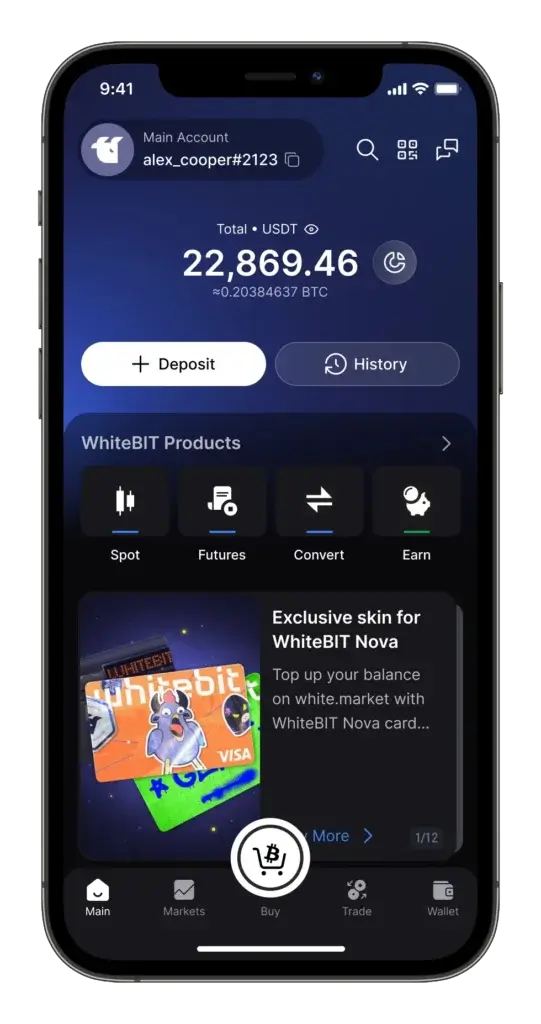
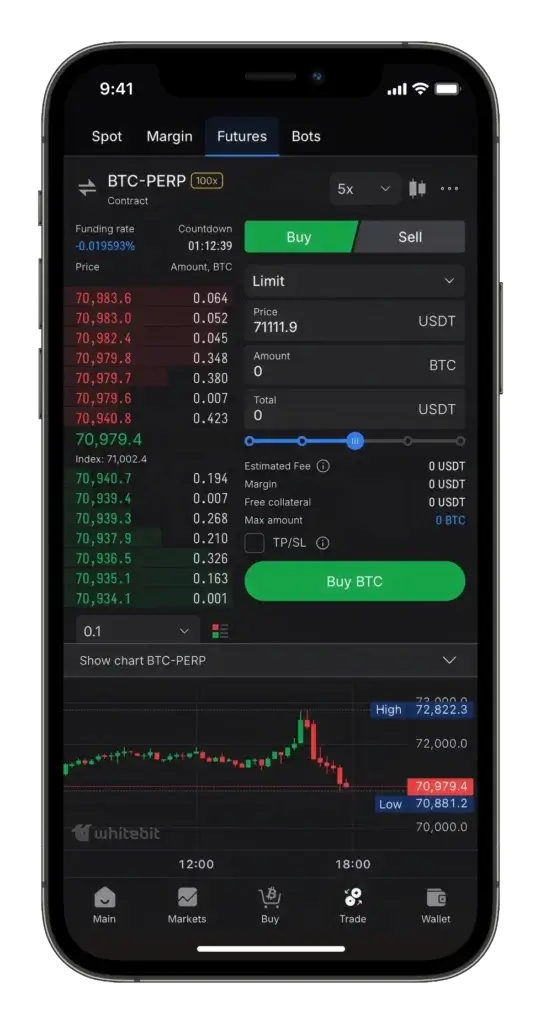
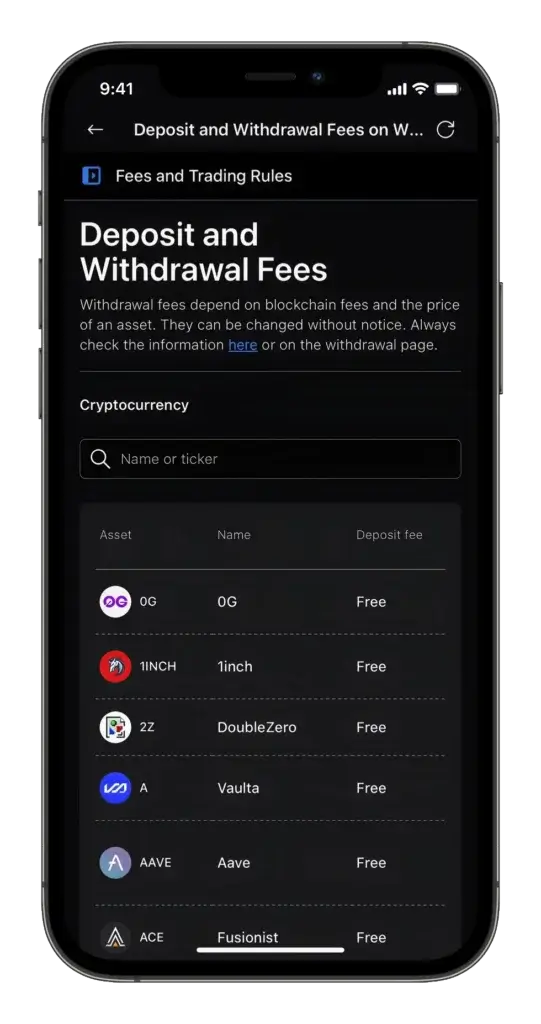
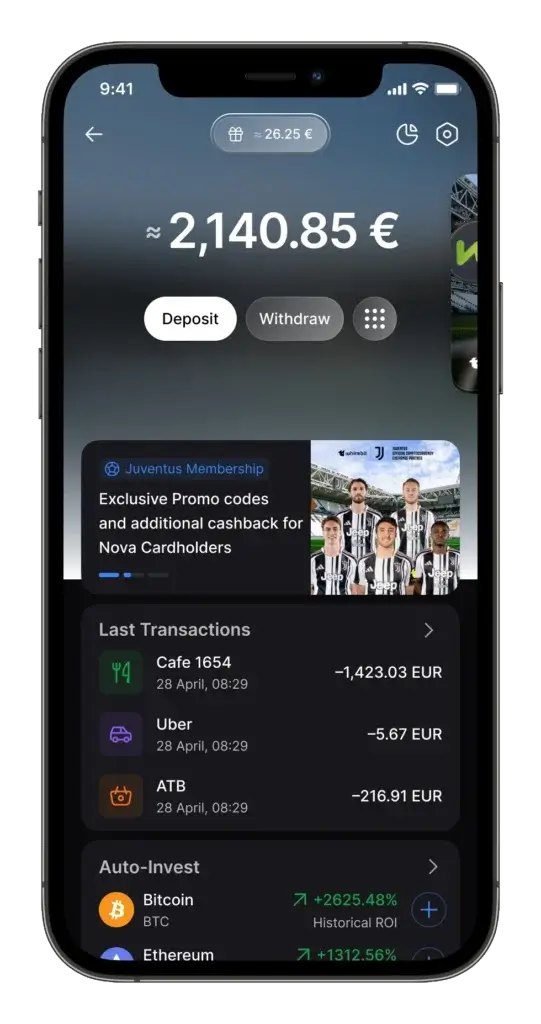
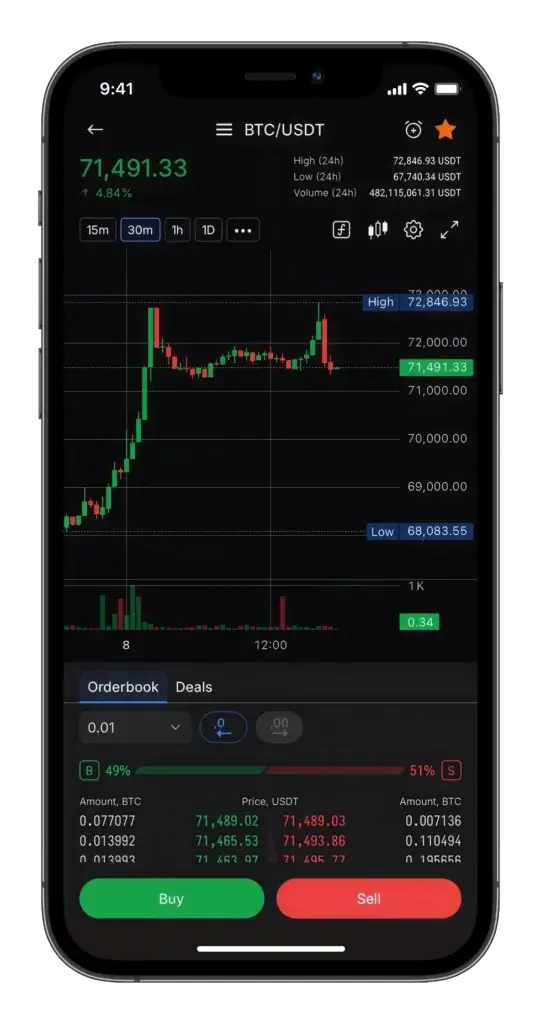
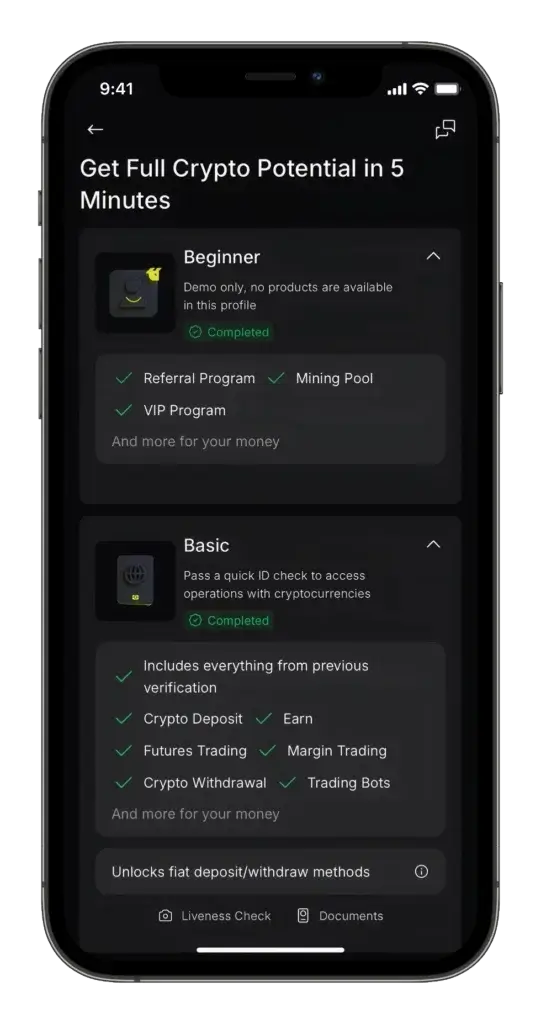
WhiteBIT
- Cost
- Spot usual: maker/taker 0.10%
- Assets
- 330+ listed
- Fiat funding
- SEPA (eligible EEA); cards
Pros
- AAA security, No. 3 on CER.live, zero hacks
- Earn yields up to 22.1% with WBT benefits
- Advanced tools, APIs, and sub-accounts
- Nine fiat currencies and flexible payment rails
- WBT perks and utility across Whitechain
Cons
- Licensing details are difficult to verify
- PoR is a snapshot, not a full financial audit
- Limited public uptime and liquidity data
- Complex regional and product restrictions
Binance
- Cost
- Spot base: maker/taker 0.10%
- Assets
- 500+ crypto
- Fiat funding
- Bank transfer, cards (by region)
Pros
- 0.10% at entry, 0.075% paying in BNB
- Futures, options and FIX API access
- User-verifiable reserve inclusion
- Hardware keys and withdrawal allowlists
- 1,358 spot pairs across 486 assets
Cons
- No MiCA authorization in the EU
- Account reviews can hold withdrawals
- $4.3B U.S. guilty plea in 2023


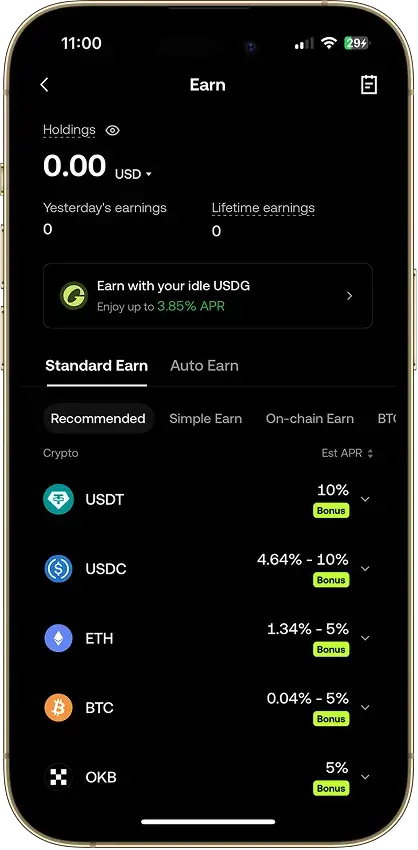
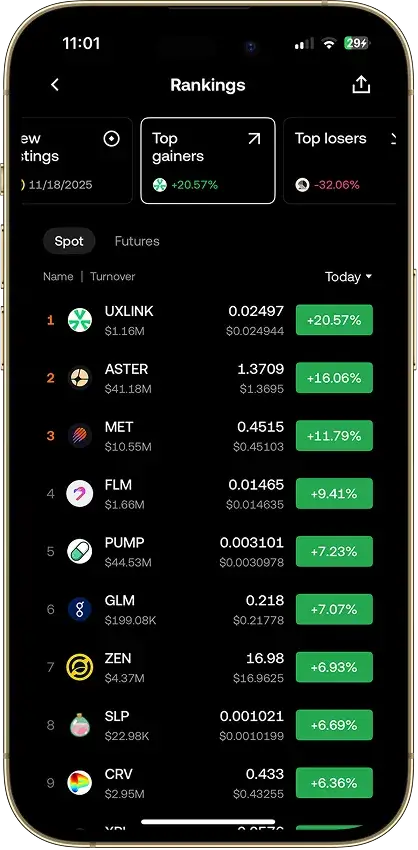
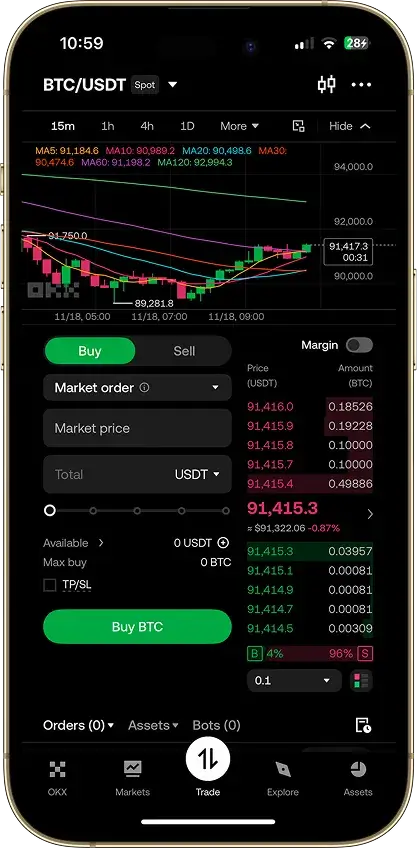
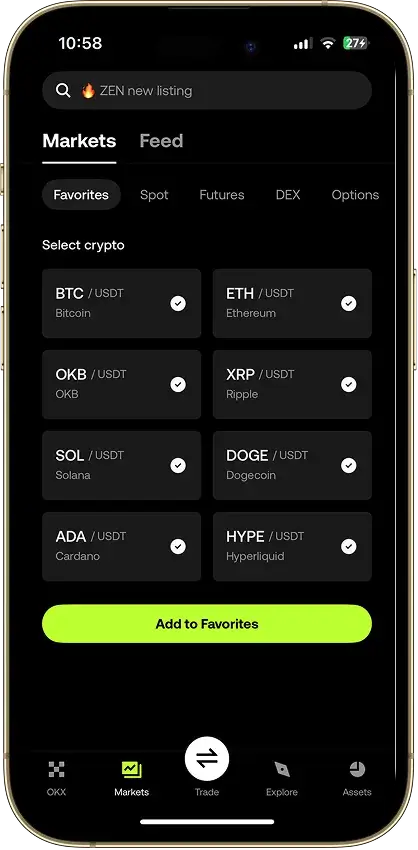
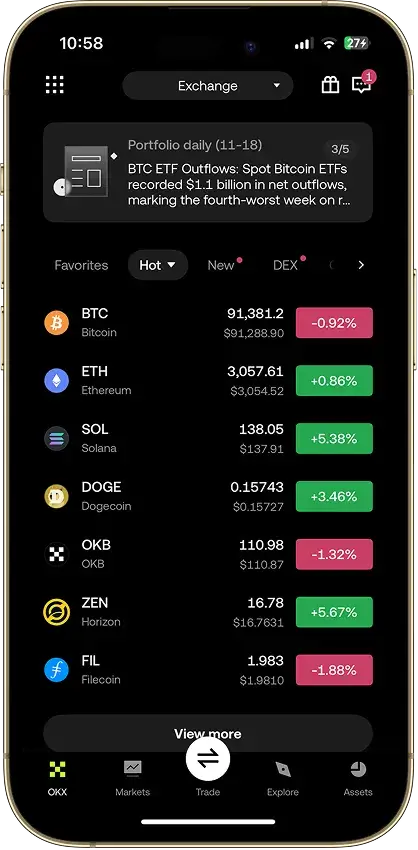
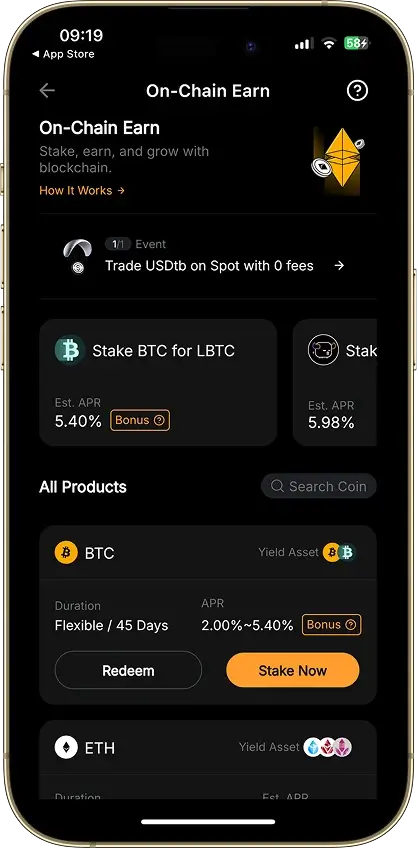
OKX
- Cost
- Spot maker/taker: global 0.08%/0.10%; EEA 0.20%/0.35%
- Assets
- 296 crypto (review)
- Fiat funding
- SEPA (EEA); other rails vary
Pros
- 0.08% global maker and 0.10% taker fees
- Margin, futures, perpetuals, and options
- REST and WebSocket APIs with subaccounts
- Copy trading and bots where permitted
Cons
- No independent reserve attestation
- $505M U.S. settlement by an affiliate, 2025
- U.S. users get a separate, pricier exchange

Bybit
- Cost
- Spot base: maker/taker 0.10%
- Assets
- 350 crypto (profile)
- Fiat funding
- SEPA/FPS via partners (by region)
Pros
- MNT payment trims spot fees to 0.075%
- 450+ perpetual pairs on Global Bybit
- Options, copy trading, and built-in bots
- Hacken-checked reserve snapshot
- Passkeys and a new-address withdrawal lock
Cons
- One-Click Buy can cost far more than spot
- Bank cash-out relies on partners or P2P
- $1.5B ETH custody breach in 2025

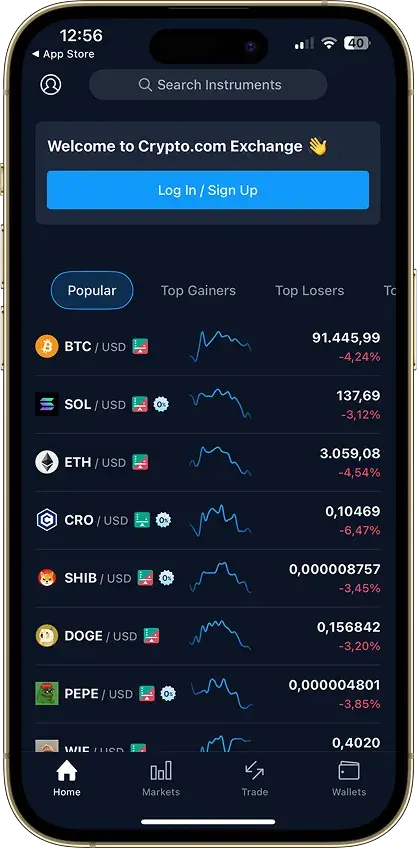
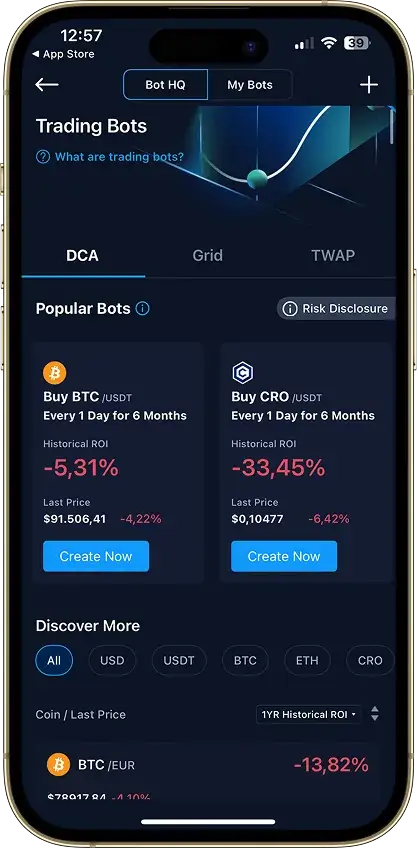
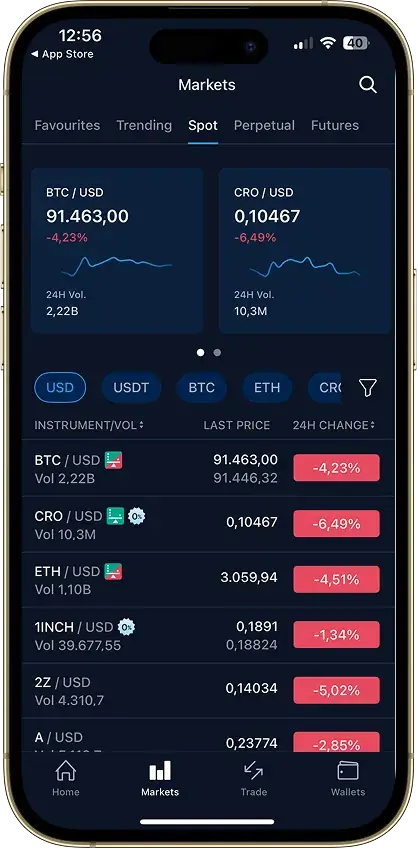
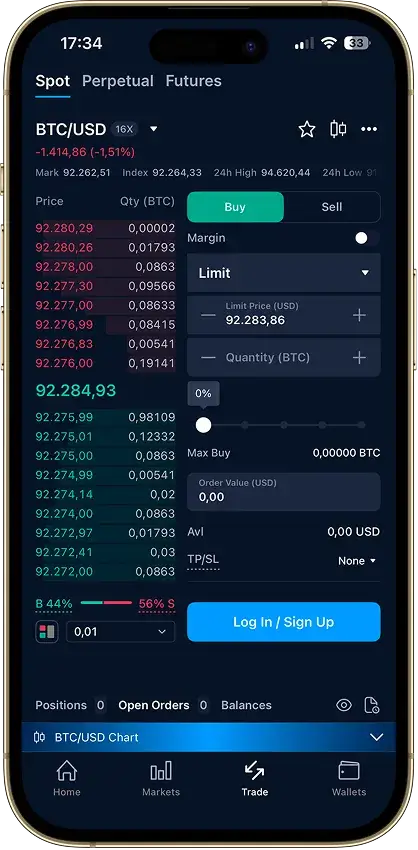
Crypto.com
- Cost
- Exchange spot base: maker 0.25%, taker 0.50%
- Assets
- 400+ crypto
- Fiat funding
- ACH (US); SEPA (EEA); cards
Pros
- 400+ spot coins on the global Exchange
- 0.25% / 0.50% entry spot fees
- CRO balance can cut maker fees to 0%
- U.S. ACH and Fedwire funding where available
- Passkeys, FIDO2 and an anti-phishing code
Cons
- Reserve attestation dates to 2022
- Seven-business-day hold on Instant ACH
- No open retail API sandbox


How We Rank
- Security & custody 22% weight
Cold‑vs‑hot balance, key management (HSM/MPC), incident history, withdrawal controls, client‑asset segregation
- Market quality & reliability 18% weight
Order‑book depth/dispersion, spreads, uptime/SLOs, circuit‑breaker design, incident response
- Regulatory posture 12% weight
Licensing/registrations (MSB/MTL, FCA, MiCA, AUSTRAC, FSA), governance, compliance record
- Fees & pricing 12% weight
Maker/taker levels by tier, “instant buy” spread, funding/withdrawal costs, fee transparency
- Proof of reserves & transparency 8% weight
Frequency/scope of attestations, Merkle user‑verifiable liabilities, on‑chain wallet disclosures, auditor independence
- On/Off‑ramps & payments 8% weight
Breadth of fiat rails (ACH/SEPA/FPS/wire), settlement speed, geographic coverage
- Product breadth 8% weight
Spot, margin, perps/options, staking/earn, card, OTC, API availability
- UX & support 7% weight
App stability/performance, accessibility, documentation, support SLAs, incident communication
- API & pro tooling 5% weight
REST/WebSocket depth, rate limits, sandbox, SDKs, change management and monitoring
How CryptoSlate Evaluates Crypto Options Platforms
An options platform qualifies only when the complete contract chain is visible for the account being assessed. The serving entity must admit the customer and display the contract in a live account. Its specification must identify the buyer’s right, the writer’s obligation, the underlying, strike, expiry, exercise process, and settlement result. A broken link in that chain removes the platform from consideration for that contract.
The general Exchange Score remains the platform-level rating defined in the rules behind the base rating. It covers the wider exchange and stays attached to the same entity and region. Options eligibility is recorded separately, so a large contract menu cannot raise the score and a high score cannot make an unavailable option eligible.
Every options row should let a trader reconstruct one position from quote to exit. The record starts with a named contract, customer class, order size, observation time, bid, ask, and displayed depth. It then identifies the premium currency, trading charges, writer collateral, early-close process, automatic-exercise rule, settlement asset, and any conversion or withdrawal cost. Volatile fields need a verification date.
Headline volume can describe activity across a market without showing the quote available for the selected strike and expiry. Registration records establish a legal role, but they do not grant every account access to every listed product. Executable quotes and account-level entitlement therefore remain separate checks.
What Is Crypto Options Trading?
An option is a contract tied to an underlying asset or index. A call gives its buyer defined upside exposure above a strike price under the contract rules. A put gives its buyer defined downside exposure below a strike price. The buyer pays a premium for that right. The writer receives the premium and accepts the corresponding obligation.
The contract specification determines the result. Product labels do not define the settlement. Some crypto options settle in cash or a stablecoin, while others settle in a cryptoasset. An option on a futures contract can create a futures position at exercise before that position settles. A fixed-payout yes/no contract can use a strike and expiry without behaving like a conventional listed call or put.
The OCC options disclosure document explains the general characteristics and risks of exchange-traded options. Crypto platforms add questions about settlement assets and collateral haircuts. Account location controls access, while custody and platform margin rules add separate risks.
The Contract Fields That Change the Decision
Every shortlist should start with the contract specification. The interface can simplify an order ticket, but it cannot remove the economics encoded in these fields.
| Field | What It Controls | What to Verify |
|---|---|---|
| Underlying | The asset or index the option references | Index inputs and calculation method. Check fallback and outage rules |
| Call or Put | The direction of the buyer’s contractual right | Buyer access and any permission to write contracts |
| Strike | The level used to determine intrinsic value | Strike-ladder spacing and listing policy |
| Expiry | The deadline for the contract | Expiry time zone and final trading cut-off. Note the listed cycles |
| Exercise Style | When exercise may occur | European or American. Record any other defined process |
| Settlement | What happens when the option expires or is exercised | Cash or crypto payment. Asset delivery or a resulting futures position |
| Premium | The price of the option | Quotation currency and payment timing. Fee cap and spread |
| Contract Size | The exposure represented by one contract | Multiplier and minimum order. Check position limits |
| Collateral | Assets supporting written or margined positions | Eligible assets and haircuts. Conversion and liquidation rules |
| Exit Market | Whether the position can be closed before expiry | Order types and trading cut-off. Spread and depth |
Strike breadth is useful only when the intended expiry has a tradable market. A long list of far-from-market strikes can coexist with weak quotes. Expiry breadth has the same limitation. The relevant question is whether the needed strike and date have executable bids and offers at the intended position size.
Which Contracts Belong in the Options Comparison?
The core ranking covers listed calls and puts whose specification defines the right, obligation, strike, expiry, exercise, and settlement. A knock-out contract can appear only in a separately labeled row because its barrier can terminate the position before scheduled expiry. An option on futures also needs a clear label when exercise can create a futures position.
Fixed-payout yes-or-no products and event contracts do not enter the options ranking. Their payout depends on a defined outcome instead of the open-ended value of a conventional call or put. Perpetual swaps, dated futures, spot margin, contracts for difference, and structured yield products follow different comparison criteria. Traders still choosing among those structures can distinguish the main crypto derivative types before selecting a platform.
How to Choose a Crypto Options Platform
Confirm the Serving Entity and Account Access
The customer agreement should name the legal entity responsible for the account. Check that entity against the platform’s product restrictions and the relevant regulator register. Then confirm that the option chain or contract appears in the live account.
An account that supports spot trading does not necessarily support options. Country and state can change product access. Customer classification and knowledge assessments can change it again, as can the account type. Location-masking tools can breach platform terms and create forced-close or withdrawal risk.
Match the Product to the Intended Exposure
A trader seeking a conventional call or put needs a vanilla contract with visible terms and an exit market. The order ticket should show the strike and expiry alongside the premium. A barrier product can terminate early. An option on futures can create a futures position, while a fixed-payout contract has a different return profile.
The desired exposure should be expressible using the contract’s own fields. The specification should explain the payoff. A separate settlement rule should show what the account receives. A shorter product label cannot compensate for either gap.
Inspect the Contract Menu and Size
The platform should list the needed underlying and expiry with usable strikes around the relevant price range. Contract size matters because a minimum that looks small in contract units can represent substantial exposure after applying the multiplier.
New-strike policies determine which contracts appear as the underlying moves or expiry approaches. A comparison snapshot should record the contract and observation time. That dated record is more useful than describing the menu as permanently available.
Read Exercise and Settlement Rules
European-style options allow contractual exercise only at expiry, while American-style options permit it earlier under their rules. A trader can often close either style in the market before expiry. That exit still requires another order at an acceptable price.
Automatic exercise determines whether the account must act as expiry approaches. Some exchanges exercise in-the-money contracts and abandon those with no intrinsic value. Thresholds or manual instructions may apply, along with a final cut-off. Settlement can pay cash or credit crypto. Other contracts deliver an asset or create another position.
Separate the Premium From Collateral
A buyer of a plain option usually pays the premium and fees. A writer may have to post margin because the obligation can grow as the market moves. Portfolio and cross-margin systems can offset some positions while exposing more of the account to a loss elsewhere.
Settlement and collateral currencies create another source of risk. A stablecoin can depart from its reference value. Volatile crypto collateral can fall while the written option moves against the account. Haircuts and automatic conversion can then change the effective cost.
Measure Total Cost and Exit Quality
Published trading fees account for only one part of an options transaction. The premium and bid-ask spread affect entry. Slippage can change the fill, while exercise or delivery charges affect expiry. Collateral conversion and withdrawal costs remain outside the headline rate. A low fee can be immaterial when the market has a wide spread.
Compare an intended order against the available bids and offers. Record the exact contract and order size with its timestamp. Repeat the observation across ordinary and volatile conditions before using words such as liquid or tight.
Understand Option Rights and Obligations
A call buyer pays for the contractual right described in the specification. A put buyer does the same for the opposite directional exposure. If a purchased option expires without intrinsic value, the buyer loses the premium plus transaction costs.
Option writers face a different risk. A covered position may hold an offsetting asset or contract. An uncovered position depends on margin and can create losses that exceed the premium received. Cash settlement does not remove that exposure. It changes the form of payment at exercise.
Multi-leg positions can limit or reshape risk, but each leg adds another spread and fee. Execution may leave one leg unfilled. Exercise and assignment rules can also differ. This page does not provide a strategy library. Platform selection should first establish whether the exchange can margin and settle the complete position as intended.
Understand Exercise and Final Settlement
The expiry timestamp controls when trading stops and when intrinsic value is measured. The settlement index may use one point value or an average over a defined window. Another published method may apply to a specific product. A chart’s last traded price may not be the final settlement price.
European exercise is common in current crypto options markets, but settlement still varies. The CME cryptocurrency options FAQ shows why the detail matters. Some CME cryptocurrency options exercise into an underlying futures contract, while a named financially settled product uses a fixing price instead.
A cash-settled exchange can credit intrinsic value without delivering the underlying coin. Product terms may denominate that payment in a cryptoasset or stablecoin. Other contracts use fiat. Traders should check whether conversion occurs automatically and which price the exchange uses.
Selling an offsetting contract before expiry closes a market position without exercising it early. The exit requires a bid or offer and can incur another spread and fee. A position may be theoretically valuable while remaining expensive or difficult to close.
Crypto Options Fees and Execution Costs
| Position Stage | Buyer’s Cash Flow | Writer or Margined Exposure | Platform Check |
|---|---|---|---|
| Order Entry | Premium, trading fee, spread, and possible slippage | Trading fee, spread, and initial collateral | Full quote at the intended contract size |
| Position Open | No further debit for a fully paid plain option unless terms state otherwise | Changing maintenance requirement, collateral haircut, and possible borrowing cost | Margin calculation and eligible collateral |
| Early Close | Opposing trade, spread, slippage, and closing fee | Collateral released after the closing trade settles | Depth, order controls, and release timing |
| Exercise or Expiry | Exercise or delivery charge where applicable | Assignment, delivery, or cash-settlement obligation | Cut-off, threshold, settlement index, and fee cap |
| Settlement Conversion | Conversion cost when payout and account currencies differ | Conversion of collateral or settlement debit | Applied rate and platform discretion |
| Withdrawal | Network charge, platform fee, and minimum | Remaining balance after obligations are settled | Supported network and withdrawable amount |
A fee calculated from notional value can consume much of a low-priced premium. Any cap should be shown beside the formula. Positions held to expiry also need the exercise, delivery, and settlement-conversion charges that disappear from an opening-fee comparison.
Liquidity and Order Execution
Each underlying splits options liquidity across expiries and strikes. Calls and puts form separate order books. An exchange can show active trading in one near-dated BTC contract while a farther expiry or altcoin strike has little executable depth.
The bid-ask spread is the first observable cost. Depth shows how much size is available before the average fill worsens. Open interest indicates outstanding positions, while reported volume shows past activity. Neither guarantees an exit at the displayed mark.
Request-for-quote systems can improve execution for multi-leg or larger positions, but they require their own evidence. Record the quoted size and response time. Capture the validity window with the all-in price. A quote obtained for an institutional account cannot be generalized to a retail order book.
Assess Collateral and Liquidation Risk
The premium normally defines the contract debit for a fully paid plain option buyer. Writing the contract creates an obligation whose collateral requirement can change with the underlying price, implied volatility, time to expiry, and the platform’s risk model.
A covered writer holds an offsetting asset or position, while an uncovered writer depends more heavily on posted margin. Cross and portfolio systems may recognize offsets, but they can also expose assets outside the option being assessed. Concentration charges and changing correlations can remove an offset when it is needed.
Liquidation rules should explain whether the platform reduces the written option, its hedge, or other positions first. The same document should define the mark, maintenance threshold, assignment treatment, and result of an index outage. Platform custody remains a separate exposure because a profitable contract does not guarantee access to its collateral. CryptoSlate’s custody and account-security criteria cover that wider question.
Crypto Options Trading in the USA
US access starts with the contract, its market, and the intermediary carrying the account. One route uses fully collateralized products on a designated contract market. Another uses options on cryptocurrency futures. The CFTC’s contract-market directory and a registration lookup in NFA BASIC identify regulated organizations, while the live account establishes whether the specific option and state are eligible.
A global options catalog cannot be transferred to a related US company without matching product terms and account approval. Check the exercise result as well because an option on futures can create a futures position. Readers who need ordinary onboarding and payment information can compare US account funding and cash-out routes separately.
Crypto Options Trading in the UK
The retail restriction in FCA Handbook COBS 22.6 applies to the sale, distribution, and marketing of cryptoasset derivatives by firms within scope. Crypto options fall inside that definition. Professional classification follows different requirements and still depends on the provider’s permissions.
An options chain shown by an overseas affiliate does not establish access through the company serving a UK account. Match the legal entity, classification, and live contract before funding. The separate UK page covers sterling deposits, withdrawals, and spot access without treating those services as derivatives permission.
Crypto Options Risks
| Risk | How It Affects a Position | Verification Point |
|---|---|---|
| Premium Loss | A purchased option can expire without value | Maximum debit including fees |
| Time Decay | The option can lose time value as expiry approaches | Expiry and theta. Compare the planned holding period |
| Volatility Repricing | Premium can fall when implied volatility declines | Implied volatility and vega, not direction alone |
| Spread and Slippage | Entry or exit can cost more than the fee schedule | Full quote and depth at the intended order size |
| Expiry and Settlement | The market view can be right after the contract deadline | Final trading time and index. Check the exercise process |
| Writer Exposure | Losses can exceed premium income | Margin model and collateral. Calculate the worst-case payoff |
| Collateral Risk | Collateral can lose value or be converted | Haircuts and eligible assets. Check conversion rules |
| Liquidation | An exchange can forcibly reduce written or portfolio positions | Maintenance margin and liquidation sequence |
| Platform and Custody | Outages or withdrawal restrictions can block action | Status history and custody controls. Verify the withdrawal path |
| Regional Access | A policy or entity change can remove product access | Account terms and close-out process |
The maximum loss on a plain purchased option is commonly the premium plus transaction costs. Written options follow a different loss profile. Borrowing and portfolio effects can change the account result, as can collateral conversion. Knock-out and fixed-payout contracts require their own payoff check. The contract and account terms control.
How to Start Trading Crypto Options
Account and contract verification should precede any directional decision. A defensible setup follows this order:
- Define the exposure and decide whether it requires a vanilla call or put.
- Confirm the legal entity and region. Then check customer class and live product.
- Read the strike and expiry in the contract specification. Check exercise, settlement and multiplier separately.
- Calculate the complete debit or collateral requirement. Include fees and conversion.
- Inspect the full quote and available size on the exact contract.
- Check how the position closes before expiry and what happens automatically at expiry.
- Export the confirmation and keep enough information to reproduce the settlement calculation.
A demo environment can teach navigation and order entry. It cannot reproduce queue priority or live slippage. Collateral stress and outages are also difficult to model, while withdrawals are normally absent. Treat simulated results as an interface test.
When the Decision Is About Options, Not Futures
Options-platform selection turns on the strike ladder, expiry cycle, premium, exercise rule, settlement asset, writer collateral, and executable exit. A perpetual or dated future instead makes funding or basis, margin, mark price, and forced-reduction rules central to the platform decision.
Traders who have already chosen perpetuals or dated contracts can inspect futures-specific platform controls. Anyone still deciding should examine how crypto derivative structures differ before selecting a platform. This page keeps its comparison limited to calls, puts, and clearly labeled option variants.