



























Odds, liquidity, volume, and open interest are sourced from Polymarket and last synced at Jun 19, 2026 2:42 pm.
Probability history
Market details
- Resolution criteria
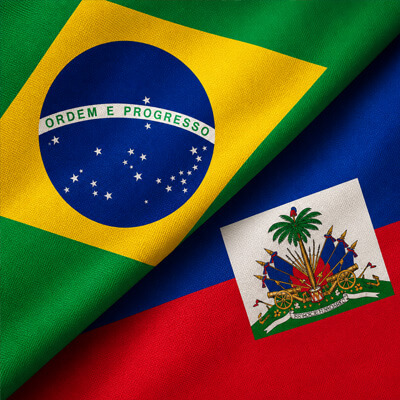
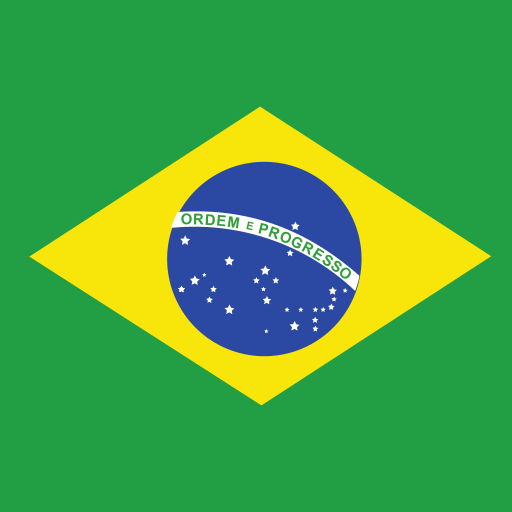
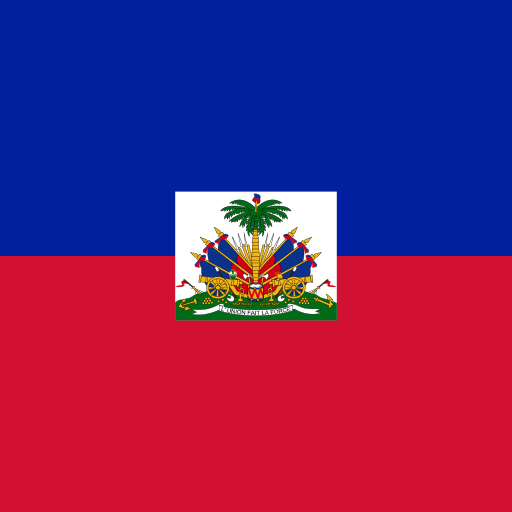
- This event is for the upcoming FIFA World Cup game, scheduled for Friday, June 19, 2026 between Brazil and Haiti.
- Platform
-


- Category
- Sports › World Cup
- Close date
- June 20, 2026, 12:30 AM UTC
- Settlement source
- https://www.fifa.com/fifaplus/en/tournaments/mens/worldcup
- Market rules summary
- Multi-outcome Polymarket event. Each listed option is represented by its Yes price on the underlying market. View full rules
Brazil’s Heavy Price Meets Haiti’s Narrow Path to Chaos
The market is treating this World Cup matchup as a test of whether status, depth, and control can survive a single-game format. Haiti’s path needs disruption early; Brazil’s price depends on turning superiority into a low-volatility match.

Brazil’s 88.5% price says the market expects a controlled result, with Haiti at 3.7% and the draw at 8% serving as the main outlets for match-day variance. The useful read is the shape of that distribution: Brazil is being priced as the side most likely to dictate the game, while the market still assigns more weight to a stalemate than to a Haiti win, which makes game state the central tension.
The price assumes Brazil can make the match small
The strongest inference from the odds is that the market expects Brazil to limit the number of dangerous sequences Haiti can create. In a three-way market, the favorite needs the recognized match result to land on a win, so dominance in possession or territory would matter only if it converts into goals. That is why Brazil’s price carries an assumption about control across both phases: preventing Haiti from finding transition moments while creating enough pressure to avoid a draw.
This matters because soccer favorites often carry two separate burdens in this format. They must be the better team, and they must keep the match from becoming event-driven. The market’s current distribution implies confidence in both conditions. If Brazil can turn the game into repeated attacking possessions and keep Haiti defending deep, the draw and Haiti paths narrow together. If the match becomes fragmented, the draw price becomes a more relevant signal than the outright Haiti price.
The draw price is the warning inside the favorite story
The draw at 8% is more than twice Haiti’s 3.7%, which implies the market sees resistance as a more plausible Haiti outcome than a full upset. That distinction matters for interpretation. A low-scoring match, a slow Brazil start, or a game in which Haiti’s defensive structure survives the first half would support the draw component first. The market is therefore pricing Haiti’s cleanest path as denying Brazil rhythm before it prices Haiti’s ability to win outright.
| Outcome path | Market implication |
|---|---|
| Brazil win | Control converts into goals before variance builds |
| Draw | Haiti disrupts tempo or Brazil’s finishing stalls |
| Haiti win | Disruption combines with a decisive scoring event |
Deep liquidity makes pre-match information harder to ignore
The market has $1.63 million in volume, $3.21 million in liquidity, and $990,840 in open interest, which gives new information enough weight to move the price before the June 20, 2026 close. That scale matters because a single team-sheet shock or incentive change can be absorbed quickly into a market already carrying meaningful exposure. The current price is therefore a live judgment about expected lineups, motivation, and match control, even though the listed resolution source is simply the FIFA-recognized game result.
- A hypothetical Brazil rotation would test the assumption that quality depth preserves control.
- A hypothetical key absence for either side would matter most if it changes chance creation or defensive stability.
- A hypothetical group-table scenario that alters incentives could shift the value of a draw relative to a win.
- Official lineups close to kickoff could force the market to revisit how much of Brazil’s edge comes from personnel versus overall team structure.
Haiti’s route requires a break in the game script
Haiti’s 3.7% price implies the market sees an outright win as requiring a specific chain of events. The likely ingredients are a low-event match, a Brazil mistake, a set-piece or transition chance, and enough defensive resistance afterward to protect the advantage. That path is narrow because each link depends on the previous one. The market is effectively saying Haiti can benefit from volatility, yet needs that volatility to arrive early enough and decisively enough to overcome Brazil’s implied control.
That inference also explains why the draw sits above Haiti. If Haiti frustrates Brazil, the first market consequence is a higher probability of parity. Turning parity into victory requires additional attacking output or a decisive game-state event. Any credible evidence that Haiti can generate chances without surrendering repeated high-quality looks would matter because it would change the relationship between the draw and the Haiti win, not simply the headline favorite price.
The favorite story cracks if Brazil cannot score early
The main counter-signal is a match that stays level longer than expected. A scoreless opening phase would increase the importance of finishing variance, tactical patience, and pressure on the favorite. For an 88.5% Brazil outcome, early control has value because it reduces the draw’s oxygen. Without a goal, the market-implied hierarchy still favors Brazil, yet the path becomes more sensitive to one defensive lapse, one card, or one isolated Haiti chance.
The settlement framework keeps the focus narrow: the FIFA-listed match result determines the outcome, and the market closes around the scheduled game window. That makes catalysts concrete. Confirmed lineups, final injury information, role changes, weather or venue conditions if they become relevant, and any pre-match incentive shift would each matter only insofar as they alter Brazil’s ability to turn superiority into the official result. The price is built on control; the failure mode is chaos arriving before control is rewarded.
Sources
Related markets
 Scotland vs. Morocco
  United States vs. Australia
  Mexico vs. Korea Republic