
52 Years of Fiat: The economic legacy of abandoning the gold standard
CryptoSlate's latest report dives deep into the U.S. government's decision to abandon the gold standard in 1971 and its far-reaching consequences, many of which are still unfolding today.


Introduction
In 1971, the United States, under the leadership of President Richard Nixon, made the unprecedented decision to abandon the gold standard. This system, which had been a cornerstone of global economics for over a century, anchored the value of a country’s currency to a specific quantity of gold.
The move to decouple the U.S. dollar from gold was not just a domestic policy alteration; it sent shockwaves through international markets, reshaping trade, investment, and monetary policies worldwide.
The gold standard had long been viewed as a stabilizing force, providing a tangible backing to currencies and ensuring that governments maintained fiscal discipline. Its primary advantage was the prevention of unchecked money printing, which could lead to hyperinflation.
However, as the U.S. grappled with economic challenges in the late 1960s, including mounting fiscal deficits and balance of payments imbalances, the gold reserves that underpinned the dollar came under intense pressure.
While the immediate implications of this move were difficult to grasp, the 52nd anniversary offers a comprehensive lens to assess the long-term consequences of a currency no longer tethered to gold. In this report, CryptoSlate dives deep into the historical events leading up to 1971 and the subsequent economic ripples that continue to shape today’s financial landscape.
Historical context
The gold standard, a financial system where a country’s currency value was directly pegged to a specific amount of gold, has deep historical roots. Under this system, countries held gold reserves equivalent to their circulating currency, ensuring that governments could not recklessly print money without the requisite gold backing. This tangible asset linkage acted as a check against hyperinflation and promoted fiscal responsibility.
However, as the 20th century progressed, particularly after World War II, the global economic landscape changed. The Bretton Woods Agreement of 1944 established the U.S. dollar as the world’s primary reserve currency linked to gold. Other major currencies were pegged to the dollar, convertible to gold at $35 per ounce. This system created an international monetary order, with the U.S. at its helm, holding the largest gold reserves.
By the late 1960s, the U.S. faced a series of economic challenges. The costs of the Vietnam War, coupled with significant domestic spending, led to mounting fiscal deficits. Concurrently, U.S. gold reserves were dwindling, partly due to countries like France and Germany redeeming their dollar holdings for gold. This put immense pressure on the U.S. gold reserves, leading to concerns about the dollar’s ability to maintain its pegged value.
Furthermore, the “Triffin Dilemma” highlighted an inherent conflict in the Bretton Woods system. As the global demand for the dollar grew, the U.S. had to run more significant deficits to supply the world with enough dollars. However, the more dollars in circulation, the less confidence other nations had in America’s gold reserves and its promise to convert dollars into gold.
These combined pressures culminated in President Richard Nixon’s decision in 1971 to suspend the dollar’s convertibility into gold, effectively ending the Bretton Woods system. This move, known as the “Nixon Shock,” marked the beginning of an era of fiat currencies, where money is not backed by a physical commodity but rather by the trust and confidence of its users.
Economic impact post-1971
The decision to abandon the gold standard in 1971 ushered in a new era of economic dynamics for the United States. The immediate aftermath and the following years were marked by significant shifts in various economic indicators, reflecting the profound implications of transitioning to a fiat currency system.
One of the most immediate and noticeable impacts post-1971 was the surge in inflation. Without the constraints of the gold standard, monetary policy had greater flexibility, allowing for increased money supply.
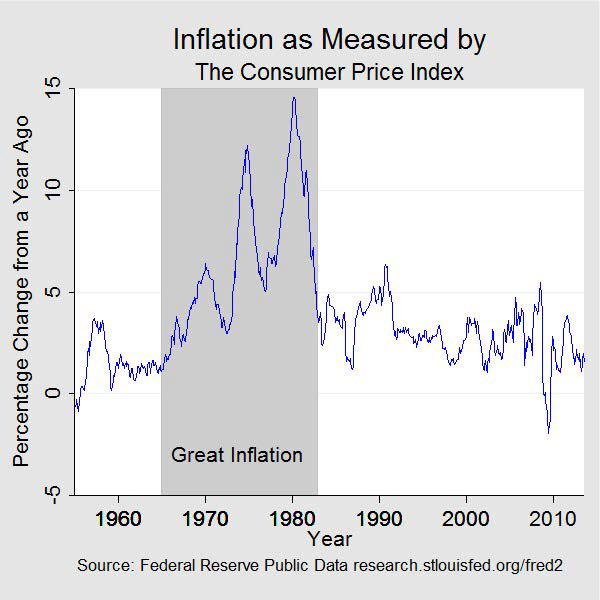
The 1970s saw two major oil crises, 1973 and 1979, further exacerbating inflationary pressures. By the end of the decade, the U.S. was grappling with “stagflation” – a combination of stagnant economic growth and high inflation. The annual inflation rate, around 4% in the early 1970s, peaked at over 13% by 1979.
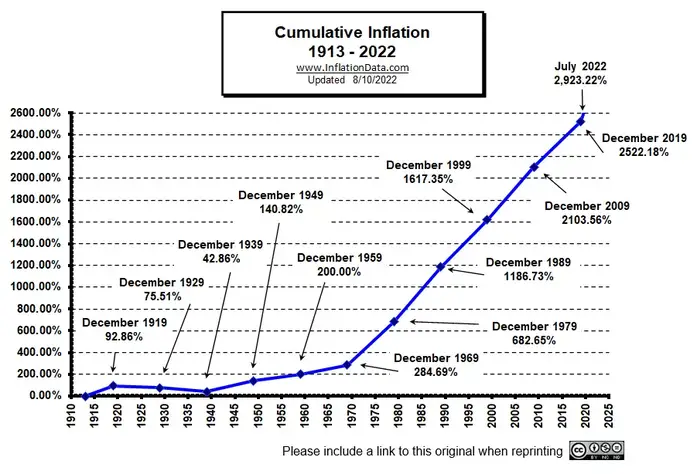
While inflation soared, wages did not keep pace. The purchasing power of the average American worker began to erode.

When adjusted for inflation, real wages remained relatively stagnant throughout the 1970s and into the 1980s. This wage stagnation, juxtaposed with rising living costs, put a significant financial strain on many American households.

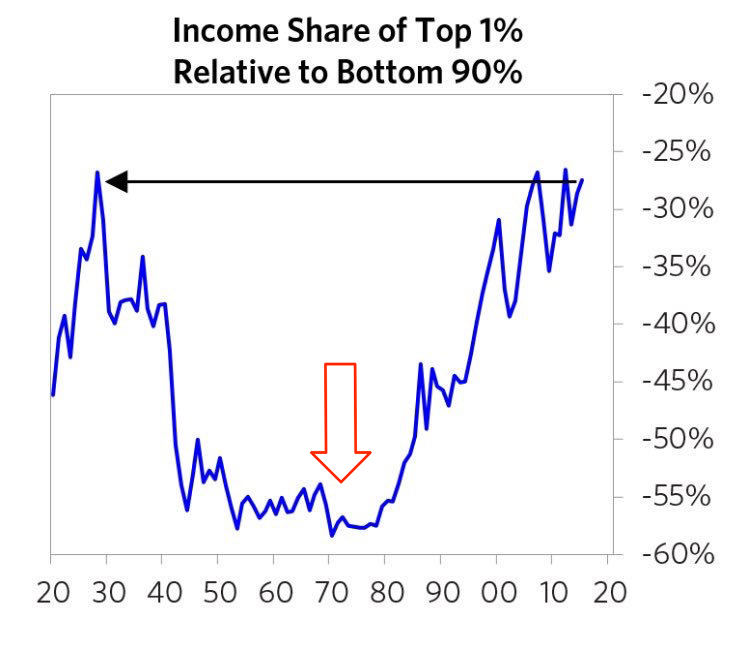
The post-gold standard era also saw a widening gap between the rich and the poor. As financial markets became more volatile and complex, those with assets and investments, particularly stocks, reaped substantial benefits.

In contrast, those reliant solely on wages found it challenging to keep up with the rising cost of living. This divergence has only intensified over the decades, with wealth increasingly concentrating in the hands of a small percentage of the population.
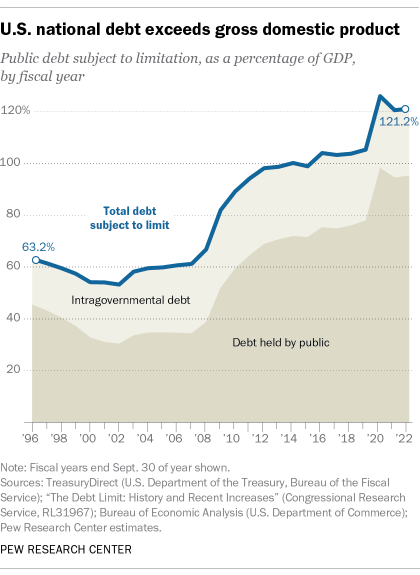
The abandonment of the gold standard had profound implications for debt levels in the U.S. On a personal level, Americans began to accumulate more debt, driven by credit cards, mortgages, and student loans. The ease of credit availability, coupled with wage stagnation, meant that many turned to borrowing to maintain their standard of living.

On a federal level, the U.S. government’s ability to run deficits without the constraints of gold backing led to a significant increase in national debt. While deficit spending can stimulate economic growth, the long-term accumulation of debt has raised concerns about fiscal sustainability.
The rise of cryptocurrencies
The abandonment of the gold standard in 1971, while not directly leading to the creation of cryptocurrencies, set the stage for a broader questioning of traditional financial systems.
As trust in fiat currencies, backed solely by the faith and credit of the issuing government, became a topic of debate in the late 1990s, the search for alternative, trustless systems of value storage and transfer intensified.
Cryptocurrencies, with Bitcoin at the forefront, emerged in this setting. Presented as a decentralized, peer-to-peer electronic cash system, Bitcoin has a capped supply that echoes the scarcity principle of gold. This digital scarcity, combined with its decentralized nature, made it an attractive alternative for those skeptical of traditional monetary systems, especially during the 2008 financial crisis.

The rise of cryptocurrencies can be seen as a response to the perceived vulnerabilities of a fiat system. Just as the gold standard aimed to prevent unchecked monetary expansion, cryptocurrencies, especially Bitcoin, are designed to operate without central authority intervention, making them resistant to inflationary pressures.
While the end of the gold standard did not directly spawn cryptocurrencies, it created an environment of skepticism toward centralized financial control. This skepticism and technological advancements paved the way for the rise of digital assets and decentralized financial platforms.
Current market
In the wake of the U.S. abandoning the gold standard in 1971, the financial world has undergone a series of transformative shifts that are felt to this day.
Historically, gold has been viewed as a safe-haven asset, a store of value during turbulent times. In recent years, the price of gold reached an all-time high, particularly during the Federal Reserve’s unprecedented Quantitative Easing (QE) policy. QE, which involves the central bank purchasing long-term securities to increase the money supply and decrease interest rates, was implemented to stimulate economic growth. However, the influx of money into the economy raised concerns about potential inflation and the devaluation of the U.S. dollar. As a result, many investors turned to gold as a hedge against these inflationary pressures, driving up its demand and price.

Parallel to the gold market, cryptocurrencies, especially Bitcoin, have seen a surge in interest and valuation. Bitcoin, often called “digital gold,” is increasingly being recognized as a hedge against the devaluation of fiat currencies. As central banks worldwide adopt expansionary monetary policies, there’s growing apprehension about the long-term value of fiat currencies. This sentiment has led many to diversify their portfolios with Bitcoin and other cryptocurrencies, viewing them as stores of value in an uncertain economic environment.

Conclusion
The decision of the U.S. to abandon the gold standard in 1971 marked a pivotal moment in global economic history that had far-reaching consequences, many of which are still unfolding today.
The legacy of 1971 is evident in the rise of alternative financial systems. The skepticism towards centralized financial control, combined with technological advancements, gave birth to cryptocurrencies. The gold market, too, has responded to these macroeconomic shifts. With the Federal Reserve’s quantitative easing policy and concerns about fiat currency devaluation, gold prices reached record highs, reaffirming its status as a trusted store of value.
As we navigate an increasingly interconnected and digital global economy, the lessons from the past serve as both a reminder and a guide. The quest for stability, trust, and value preservation remains as relevant today as it was five decades ago, underscoring the enduring impact of the U.S.’s departure from the gold standard.
More Market Reports


