
Netherlands vs. Morocco
Ended Jun 30, 2026, 01:00 UTC
Market resolution
Polymarket reports Draw as the winning outcome for the Netherlands vs. Morocco prediction market with a final probability of 100%. The market closed on Jun 30, 2026, 01:00 UTC. Final reported trading volume was $27.85M.
Final probabilities, volume, and open interest are sourced from Polymarket and were last synced at Jun 30, 2026 5:22 am.
Netherlands Lead While Draw Pricing Complicates Morocco Matchup
The market’s shape suggests a favorite-versus-resistance story, with the draw carrying enough weight to change how every team-specific view is interpreted. The key question is whether that caution comes from match structure, team uncertainty, or unresolved tournament context.

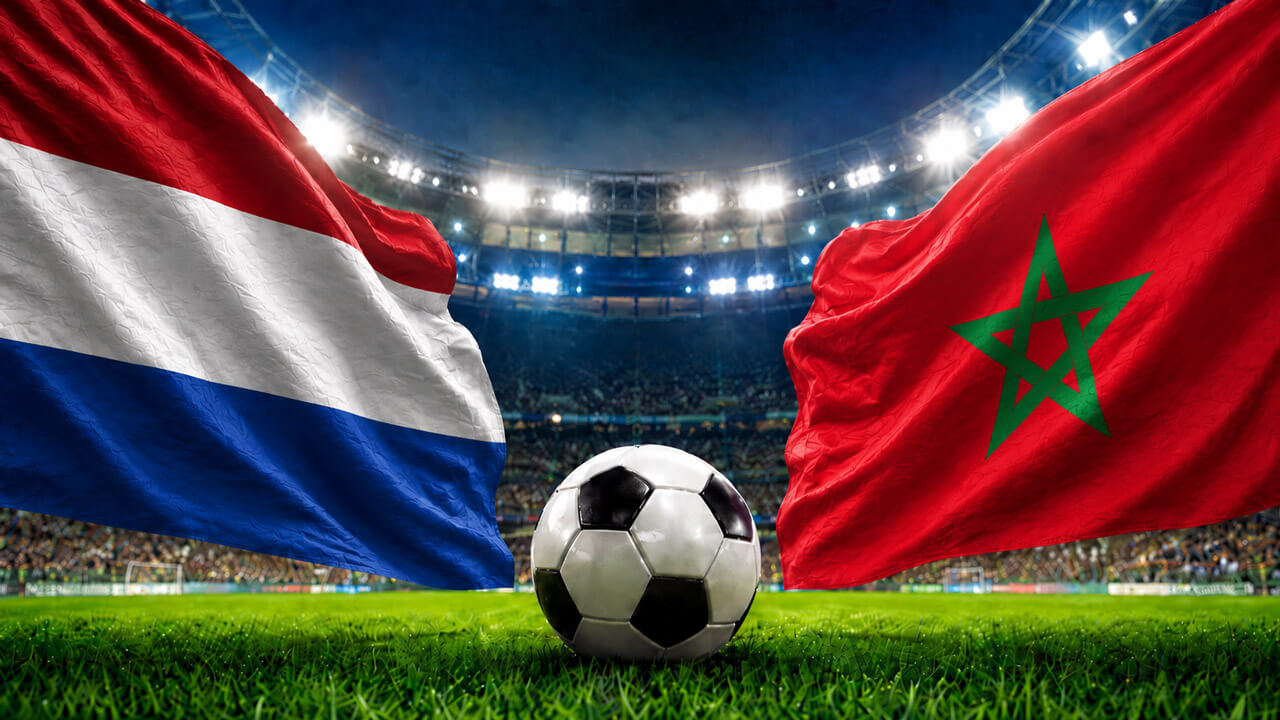
The Netherlands are being priced as the leading outcome against Morocco, yet the market is leaving substantial room for a draw and a Morocco result. That shape matters because it points to a match where directional confidence exists, while the settlement format and World Cup setting prevent a clean favorite-versus-outsider reading.
The favorite price is built on hierarchy, while the draw price limits conviction
At 45.5% for the Netherlands, 30.5% for the draw, and 24.5% for Morocco, the market-implied story is clear enough: the Netherlands sit at the top of the three-outcome distribution, but the gap does not turn the matchup into a one-sided assumption. The Netherlands price implies a perceived quality or matchup advantage, while the draw price absorbs much of the uncertainty that would otherwise flow directly into Morocco.
That matters because a three-way football market can punish vague favorite narratives. A team can control phases, create more chances, and still fail to produce the listed winning outcome. The standalone draw option forces the market to separate “better team” from “wins the match,” and that separation helps explain why the Netherlands do not command a majority probability despite leading both alternatives.
Liquidity gives the current shape more editorial weight than a thin quote
The market has recorded $706.16K in volume, $1.71M in liquidity, and $439.94K in open interest. Those figures do not prove accuracy, but they make the distribution harder to dismiss as a stray early price. For editorial analysis, the scale suggests that the current split has attracted enough capital to express a broad consensus around a Netherlands lean, a meaningful draw band, and a Morocco path that remains material.
The liquidity also affects how future information is likely to matter. In a thin market, a single order can create a misleading move. Here, repricing may require news that changes one of the underlying assumptions: team availability, tactical expectations, tournament incentives, or clarity around the way the official FIFA result will be interpreted for settlement.
The draw is doing more work than a neutral placeholder
The presence of a draw outcome is central to the market’s logic. Since each listed option is represented by a Yes price in a multi-outcome Polymarket event, the market is assigning the draw its own probability bucket instead of treating the match as a binary team comparison. That matters because the draw price can act as a buffer against both team narratives.
A high draw allocation relative to Morocco’s win price suggests the market sees several paths where Morocco avoids defeat without converting that resistance into the winning outcome. It also suggests caution around the Netherlands turning any perceived superiority into a decisive result. The implied story is not simply “Netherlands strong, Morocco weaker”; it is a narrower claim that the Netherlands are the most likely single result while stalemate risk remains prominent.
| Market element | Why it matters |
|---|---|
| Netherlands at 45.5% | Signals the leading expected result, while falling short of majority confidence. |
| Draw at 30.5% | Shows settlement risk and match-state caution are central to pricing. |
| Morocco at 24.5% | Keeps a direct Morocco win in the market’s serious outcome set. |
| June 30 close | Leaves room for lineups, injuries, and tournament context to reshape assumptions. |
Future team context could compress or widen the current gap
The market closes on June 30, 2026 at 1:00 AM UTC, after a long runway in which the most important information has yet to arrive. Because the supplied context confirms only the scheduled FIFA World Cup game and the current Polymarket structure, any discussion of team form, injuries, or tactics has to be treated as a future catalyst unless later source material establishes it.
Several hypothetical developments could force a clearer repricing. Confirmed absences among key starters would challenge the team-specific probabilities. Official lineups could shift the balance if either side uses an unexpected selection. Tournament incentives could matter if a draw carries different strategic value for one team than a win, although that context is not established in the supplied market data. Even clarification around match settlement conventions could matter if users debate how a draw is recognized for this specific event.
- Confirmed injuries or suspensions would test the Netherlands-favorite assumption or the Morocco-resistance case.
- Official starting lineups could alter expectations around tempo, control, and goal probability.
- Any FIFA scheduling or match-status update would matter because settlement relies on the FIFA World Cup source.
- Clearer tournament incentives could change how much weight the market assigns to the draw.
The main counter-signal is Morocco becoming more than the draw’s beneficiary
The strongest challenge to the current distribution would be evidence that Morocco’s path is not mainly defensive or draw-adjacent. If future information supports a more direct win condition for Morocco, the current separation between the draw and Morocco prices could narrow. That would matter because the market presently gives the draw more probability than a Morocco win, implying that resistance is easier to price than outright control.
The opposite counter-signal would be evidence that the Netherlands have a clearer conversion path than the market currently assigns. That could come from team news, matchup information, or a match context that rewards aggressive play. In that scenario, the draw’s role as a buffer would weaken, and the Netherlands price would likely become more sensitive to any evidence that turns superiority into expected scoreboard separation.
For now, the market is pricing a layered outcome: Netherlands as the most likely winner, Morocco as a credible alternative, and the draw as the hinge that keeps both team-specific stories constrained. The next meaningful move should come from information that changes the draw’s role, because that middle outcome is currently carrying much of the market’s hesitation.
Sources
Market details
- Resolution criteria
- This event is for the upcoming FIFA World Cup game, scheduled for Monday, June 29, 2026 between Netherlands and Morocco.
- Platform
-


- Category
- Sports › World Cup
- Close date
- June 30, 2026, 1:00 AM UTC
- Settlement source
- fifa.com
- Market rules summary
- Multi-outcome Polymarket event. Each listed option is represented by its Yes price on the underlying market. View full rules
Frequently asked questions
What was the final result of the Netherlands vs. Morocco prediction market?
Polymarket reports Draw as the winning outcome for the Netherlands vs. Morocco prediction market with a final probability of 100%. The final market snapshot includes $27.85M volume and $13.07M open interest. CryptoSlate last synced the final market data at Jun 30, 2026, 04:22 UTC.
How does the Netherlands vs. Morocco prediction market resolve?
This event is for the upcoming FIFA World Cup game, scheduled for Monday, June 29, 2026 between Netherlands and Morocco. Multi-outcome Polymarket event. Each listed option is represented by its Yes price on the underlying market. The settlement source listed for this market is fifa.com.
Related World Cup markets
 Spain vs. Argentina
 France vs. England
 England vs. Argentina