



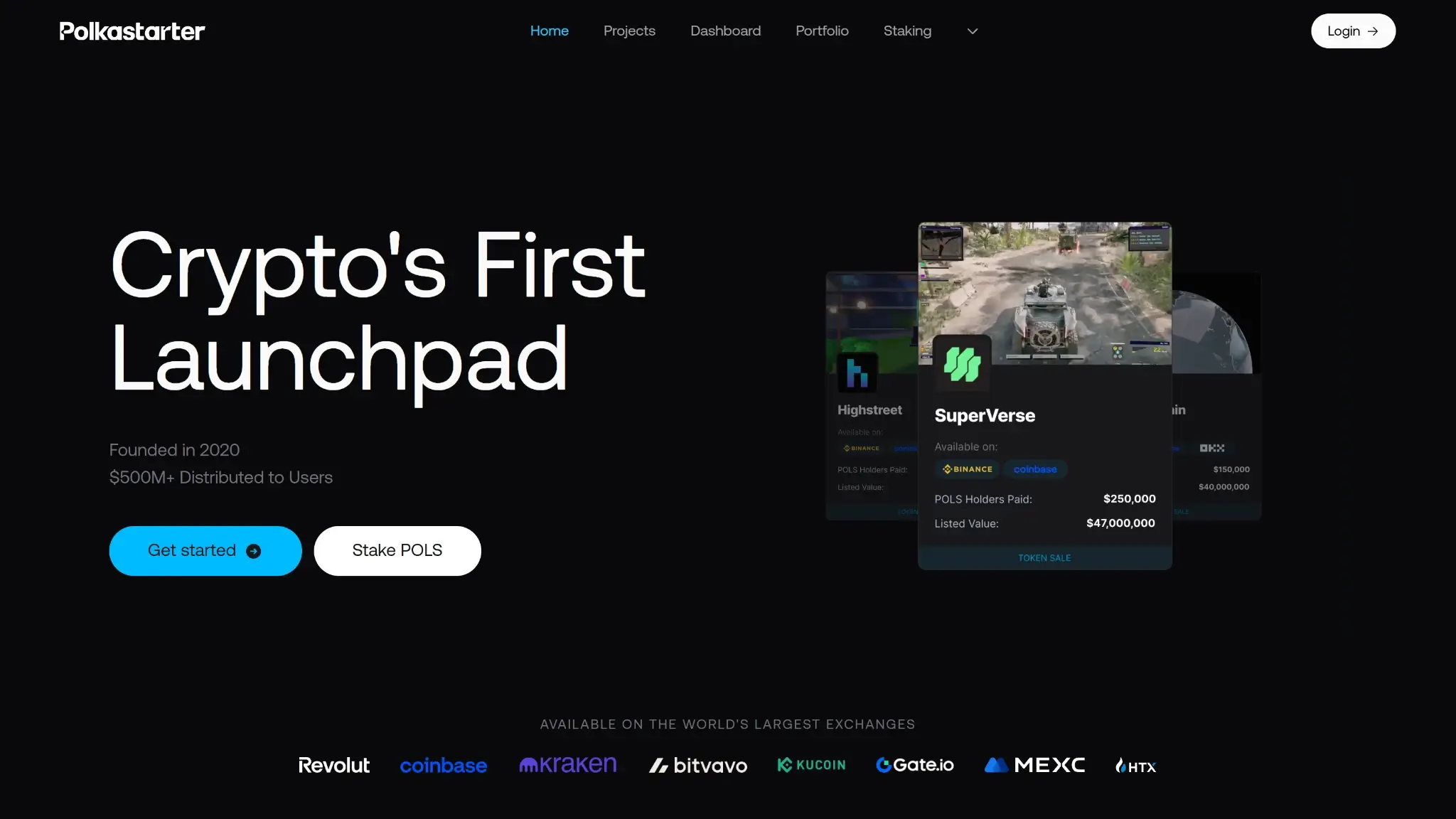
 Released in 2020
- 140 funded projects, 141,188 participants
- POLS Power from staking, holding or LP
- Council review before a project can raise
Polkastarter Overview
- Crypto Launchpad Name
- Polkastarter
- Release Date
- 2020
- Platform Type
- DEX / IDO Launchpad, Incubator / Advisory Launchpad
- Access Model
- Connected Wallet
- KYC Level
- KYC Not Always Required, Varies By Region, Varies By Sale
- Core Sale Types
- IDO, INO, Private / Community Round
- Native Token Dependence
- High
- Allocation Model
- Lottery, Tiered Guaranteed, Snapshot-Based, Hybrid
- API / Public Data Access
- Limited
- Status
- Live
Polkastarter Screenshots
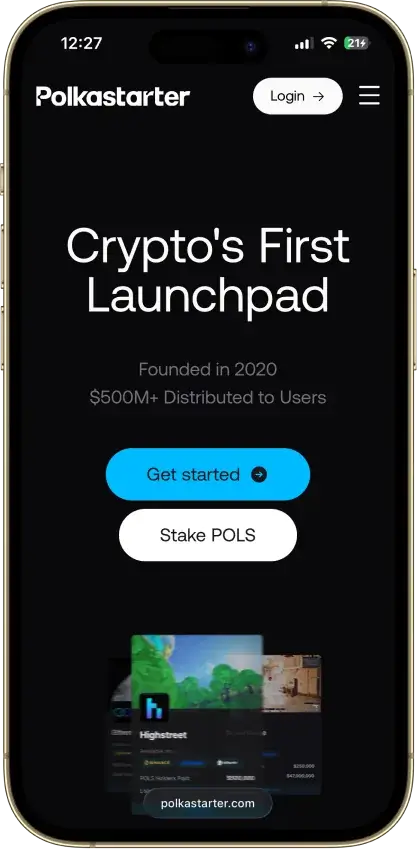
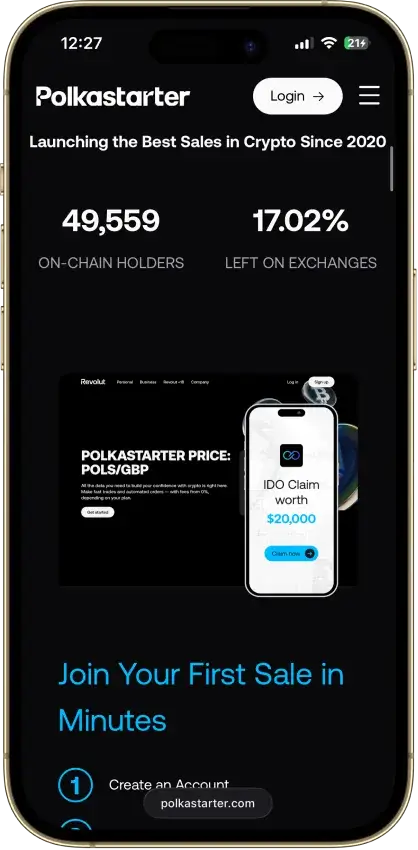
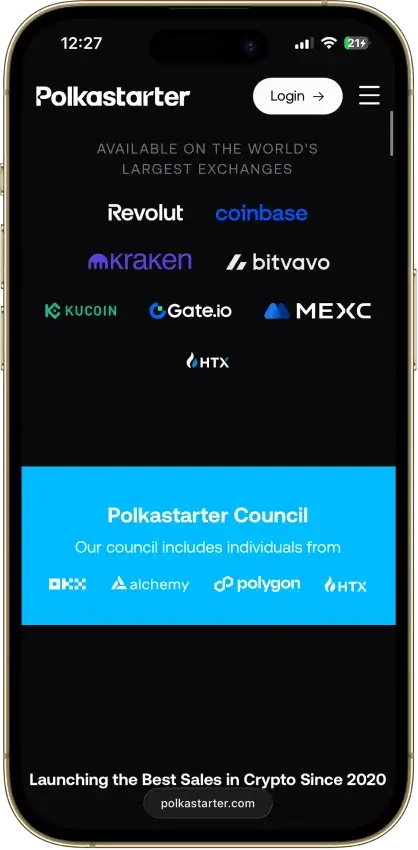
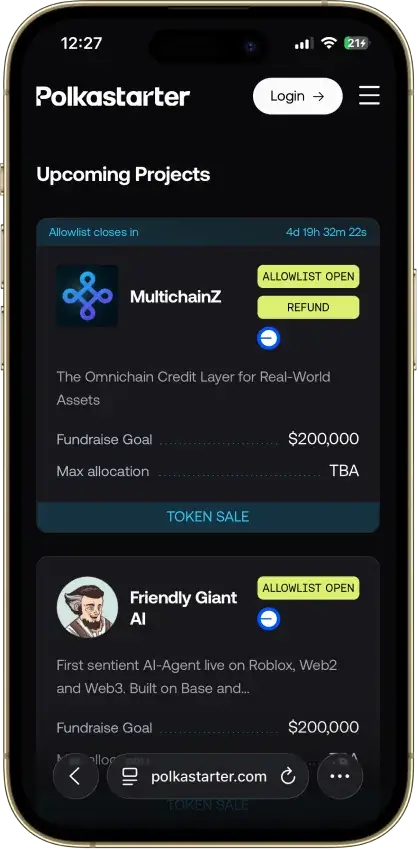
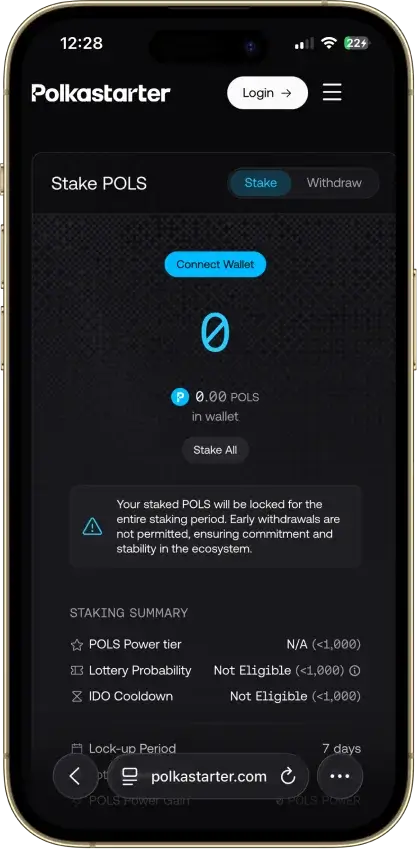
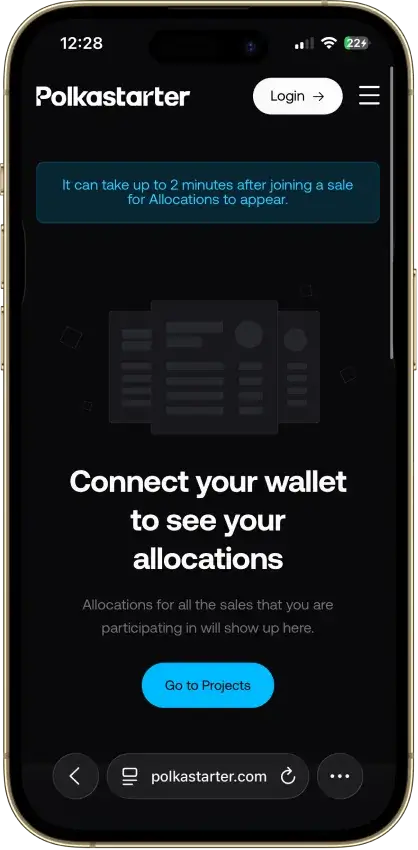
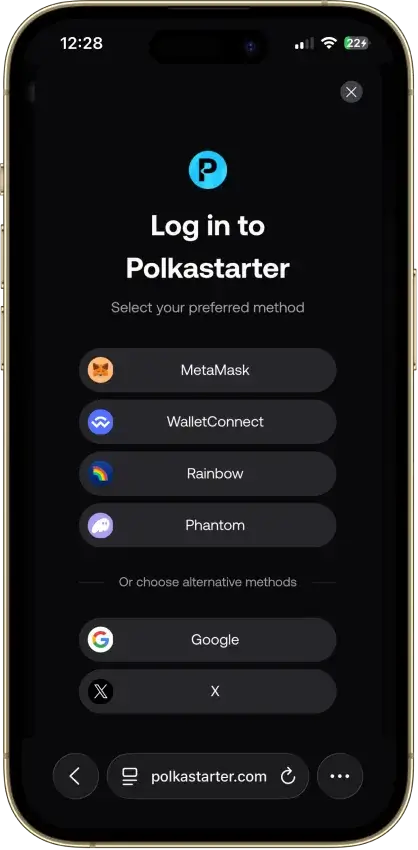
Screenshot 1 of 8
Polkastarter Pros and Cons
Pros
- Visible tier odds before you apply
- Sales across nine chains, Base to Sei
- Tokenomics and listing support for projects
- About $46.7 million raised across sales
- Staking builds POLS Power faster than holding
Cons
- Sales require at least 1,000 POLS Power
- Bronze and Silver odds stay unreliable
- Cooldowns limit repeat wins
Who Polkastarter Is Best For — And Who Should Skip It
Polkastarter makes more sense for users who already operate with a self-custody wallet and do not mind building eligibility before a sale opens. It is much less useful for anyone who wants instant access, low capital commitment, or a no-KYC path.
Where Polkastarter earns its place is that it feels like a real launchpad with structure. The project pages, dashboard flow, and visible eligibility mechanics make it easier to understand what you are trying to qualify for.
Where it loses points is repeatability. A strong Polkastarter IDO does not guarantee the next one will have the same selection odds, vesting shape, or post-TGE exit conditions.
What Polkastarter Actually Is and How It Works
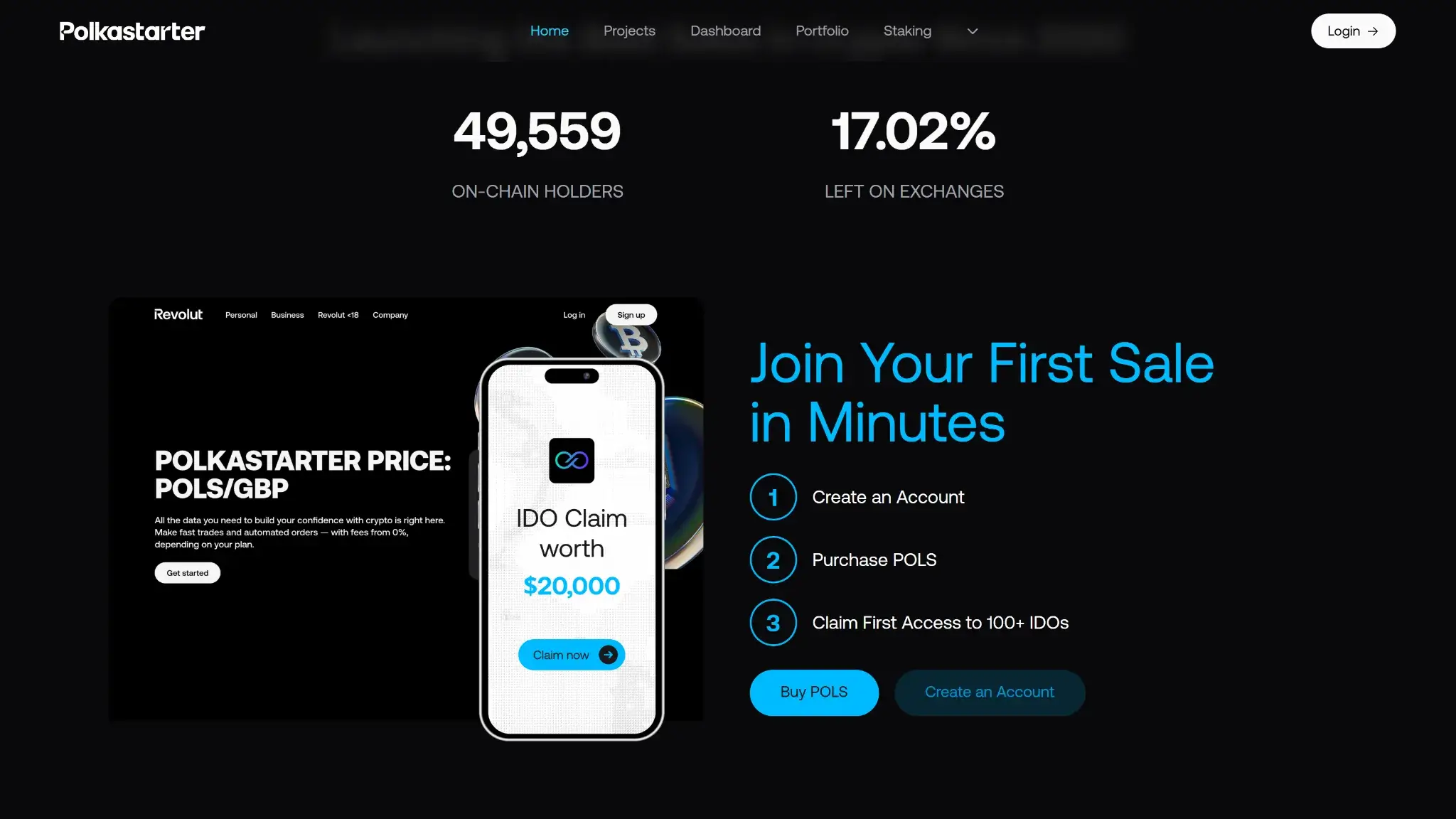
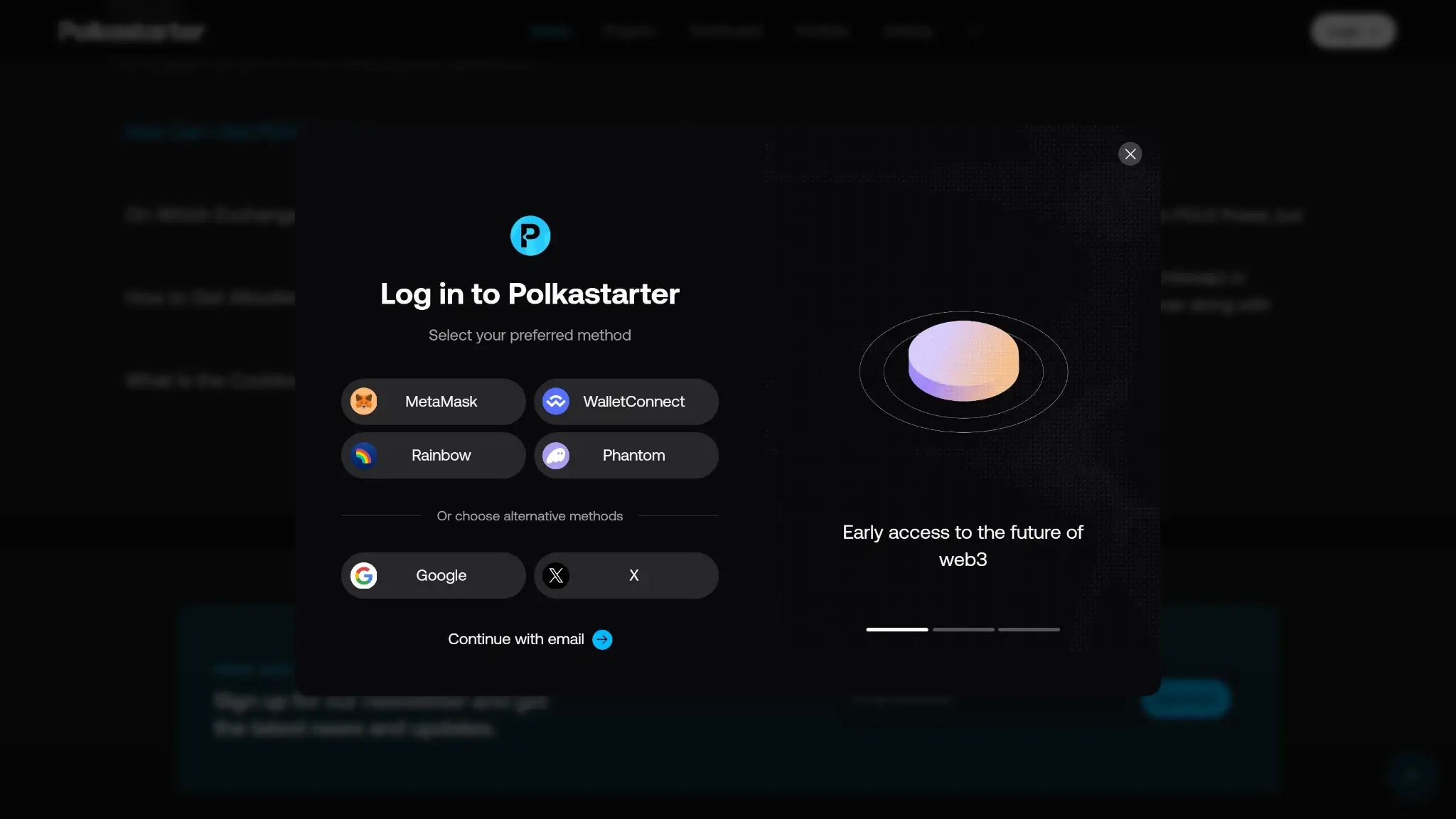
Polkastarter runs a connected-wallet fundraising flow for token sales, with POLS Power acting as the main eligibility engine.
- You create an account and connect a wallet.
- You build POLS Power by staking POLS, holding POLS long enough, or providing liquidity in supported pairs.
- You apply to a project that is marked allowlist open.
- If you are preselected, you complete KYC when that sale requires it.
- You join the sale and fund the allocation if approved.
- Your allocation can take up to 2 minutes to appear after joining.
- You later claim tokens and follow that project's unlock and vesting rules.
The allocation system is not open access. Participation revolves around a threshold model: you need at least 1,000 POLS Power to become eligible, and odds improve materially as you move up the ladder. Recent average allowlist probabilities are displayed at 14.88% for Bronze, 29.79% for Silver, 51.40% for Gold, 71.54% for Platinum, and guaranteed access at Diamond.
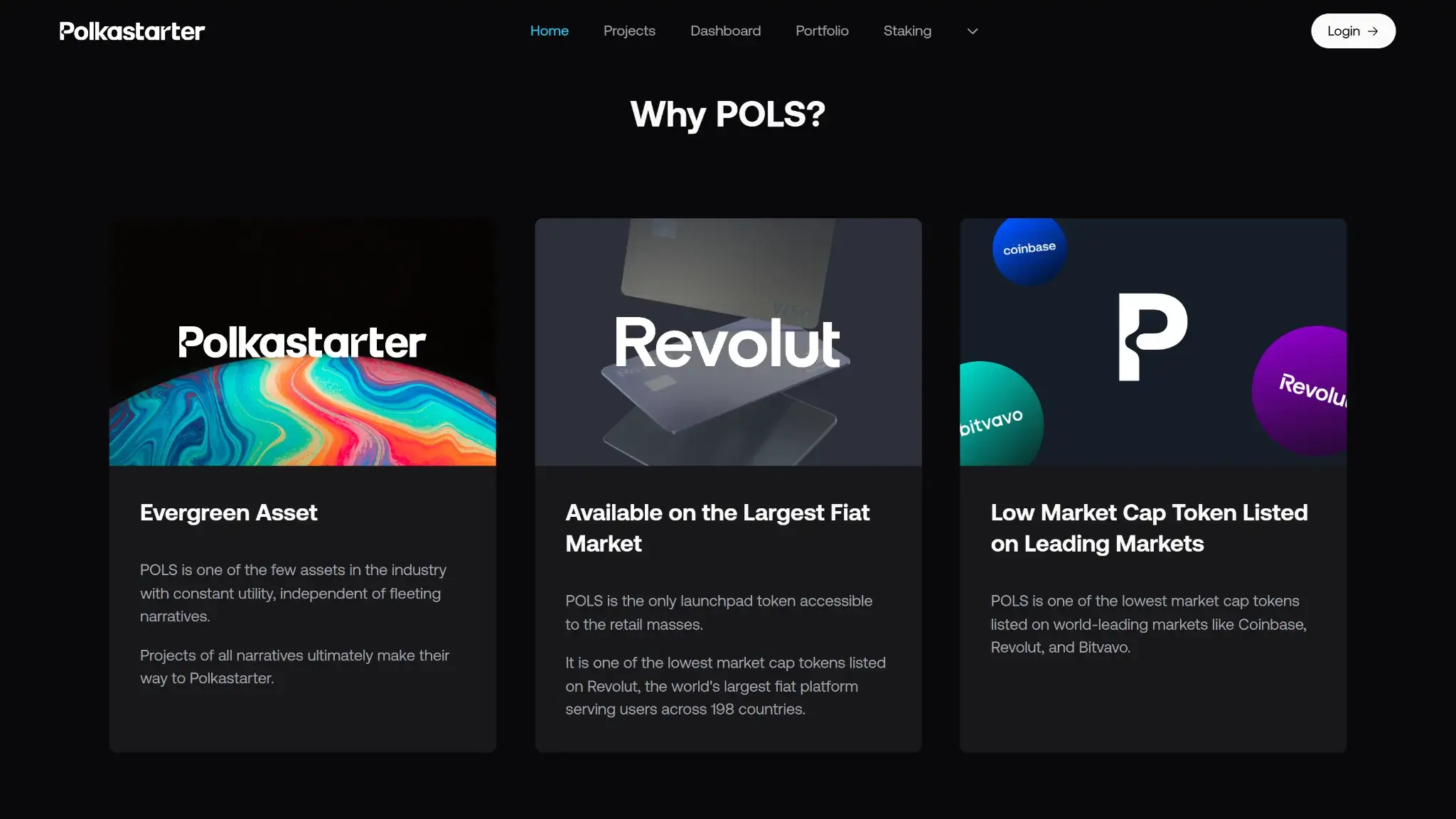
If you are still sorting out wallet setup before your first IDO, it helps to compare self-custody wallet options with hot wallet options first. For EVM-based participation, the exact wallet matters less than clean chain setup, safe signing habits, and fast access on sale day.
After allocation, the platform shifts from gatekeeper to handoff layer. Claim timing, listing path, and vesting schedule are still set by the project rather than standardized by the platform, which is where the real difference between a good and bad Polkastarter IDO shows up.
Availability, KYC and Setup Friction
The real delay comes from becoming eligible, staying compliant, and making sure your chain, funding asset, and POLS position line up before the allowlist closes.
Access slows down in practice because the requirements stack. You may connect quickly, but you still need enough POLS Power, the right sale window, the right jurisdiction, and a completed identity check if that round requires it.
For users still deciding between wallet routes, a general crypto wallet overview is more useful here than chasing niche wallet features.
Track Record, Current Activity and Project Screening
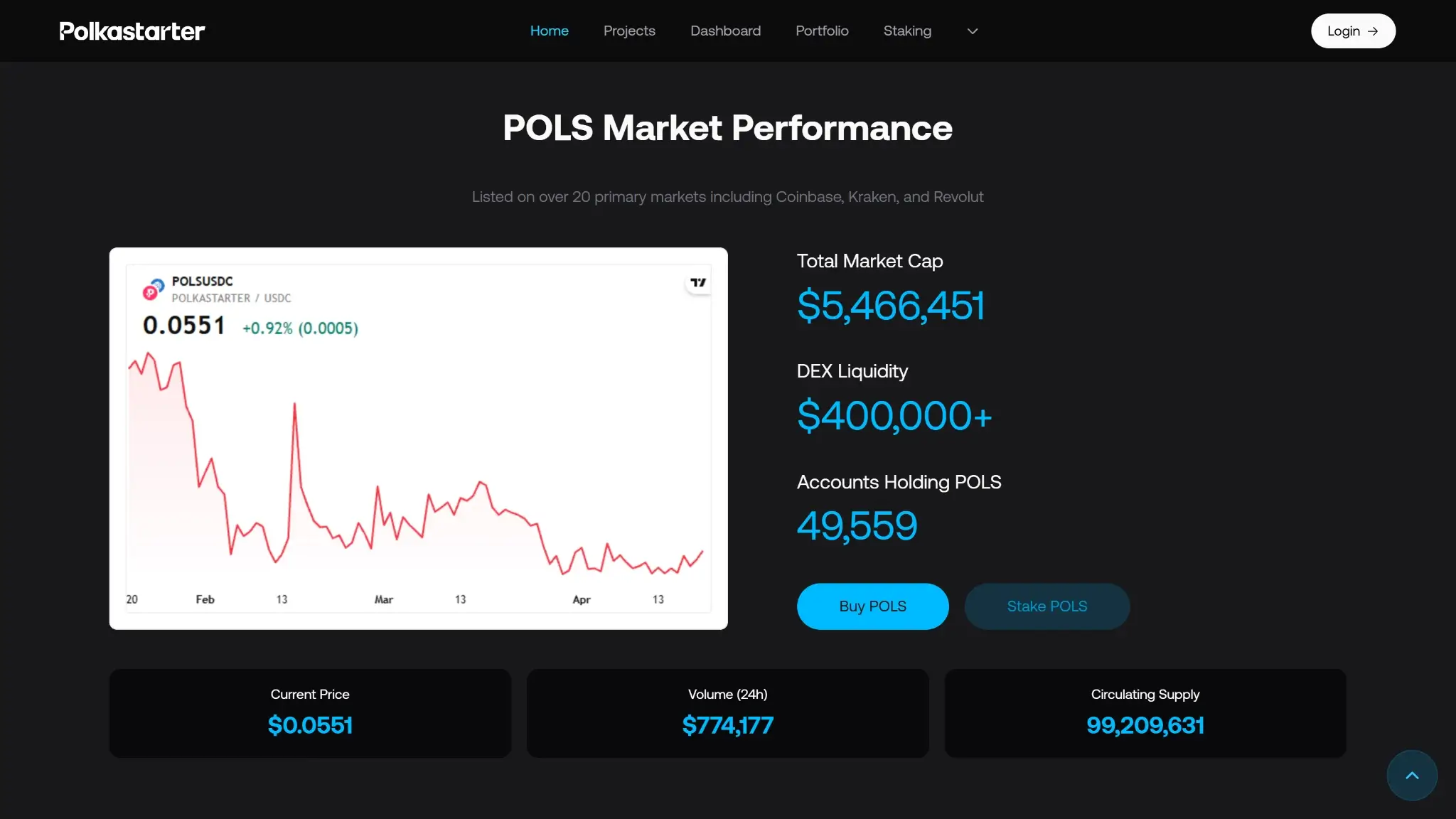
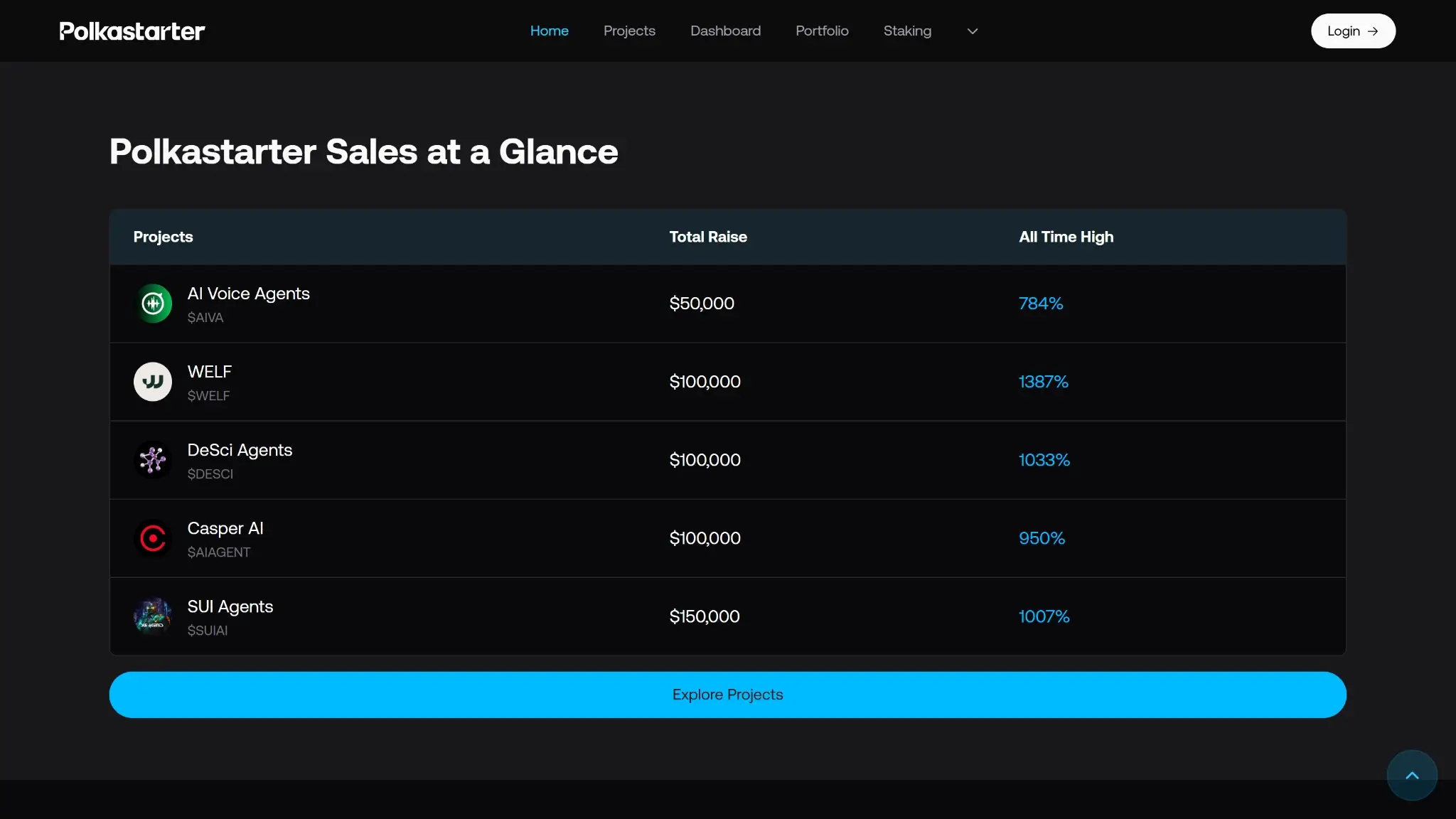
Polkastarter has a launch history that holds up. The platform tracks 140 funded projects, 141,188 unique participants, and roughly $46.7 million raised, while other business-facing surfaces put the figure at more than 100 launched projects and about $48.5 million raised. The exact counters are not perfectly uniform, but the broader point stands: this is not a fresh launchpad manufacturing credibility from a handful of sales.
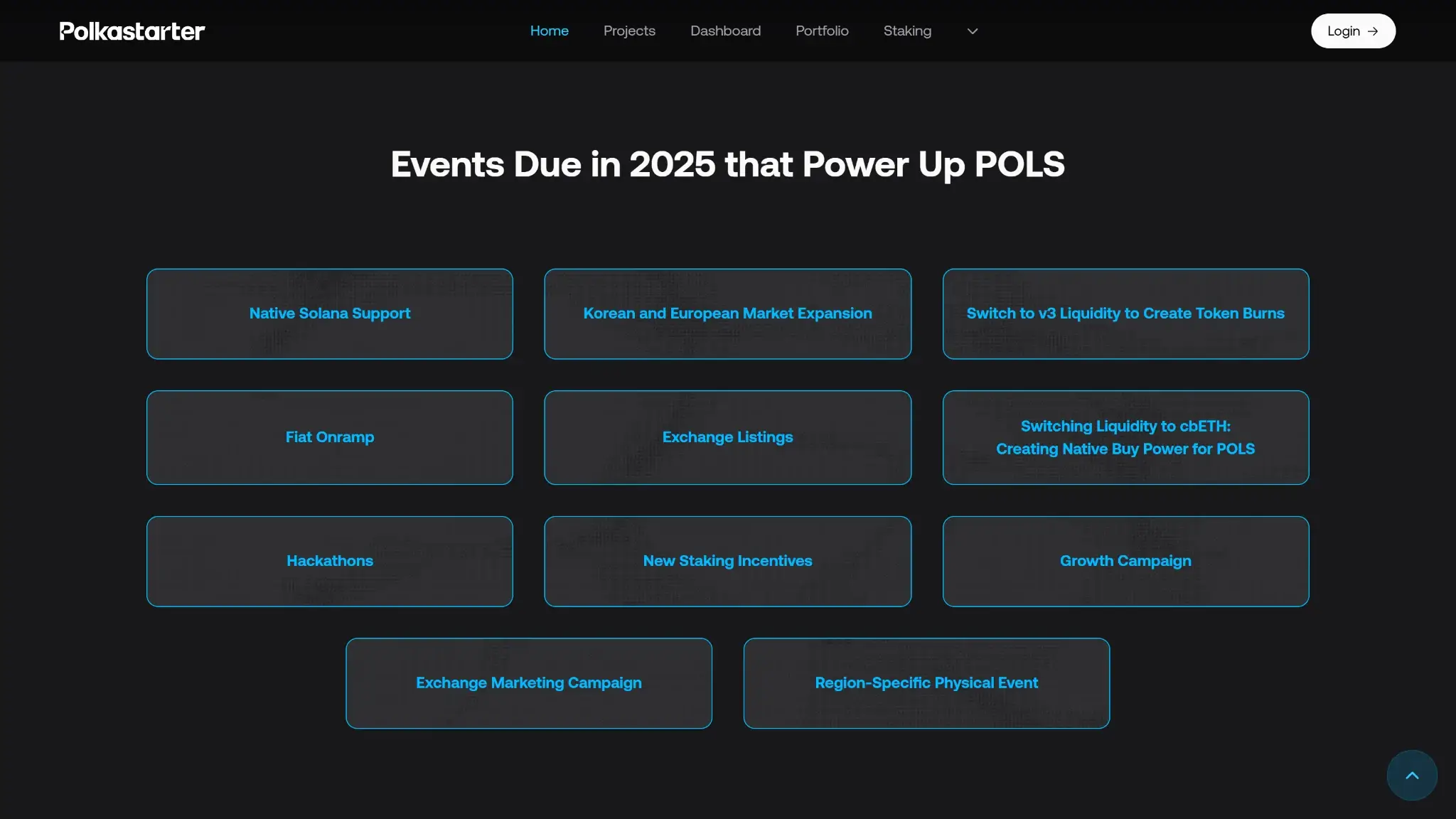
Current activity is real. The sale list runs through multiple launches in 2025 and into 2026, with another allowlist currently open. The cadence is not nonstop, but it is active enough to keep the platform relevant.
The positive outcome mix looks decent from visible sale snapshots, with several recent projects showing positive returns and older featured winners posting much larger upside. The archive is not clean enough to treat as one quality bucket, though. Different cycles, different narratives, and very different market conditions sit inside the same launch history.
Project screening is stronger than on open token-sale directories because there is an actual review path. Applications move through research, council review, and pre-raise support. The platform also offers tokenomics, branding, exchange-introduction, and go-to-market help, which makes it more hands-on than a simple listing page.
Project Mix, Discovery Quality and Ecosystem Fit
Compared with exchange-led launchpads and open meme-heavy launch sites, Polkastarter sits in the middle. It is more selective and structured than platforms built around rapid-fire token creation, but broader and more experimental than narrow exchange-only sale calendars.
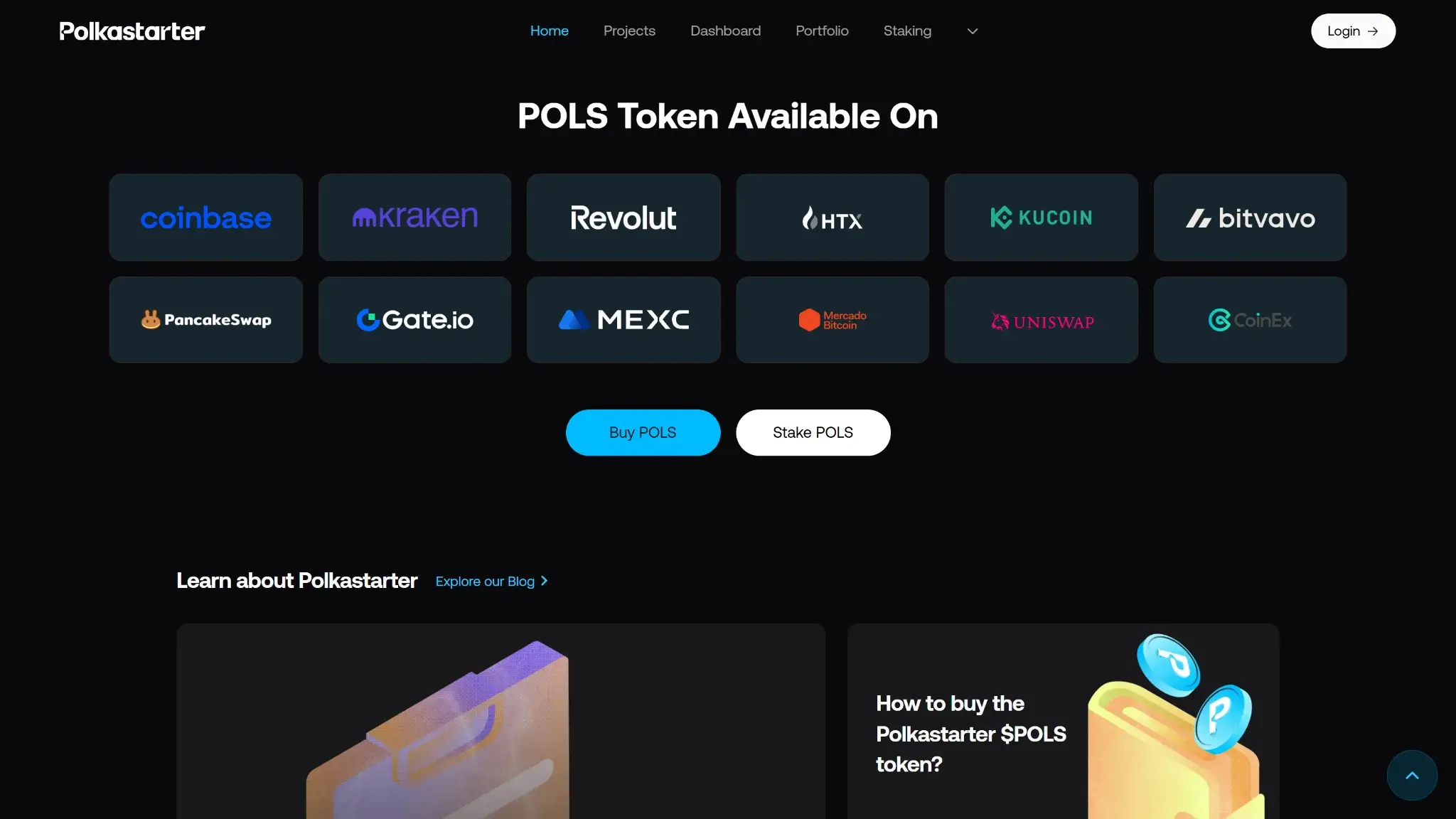
The mix is broad enough to stay useful without turning into a cluttered directory. It is not hyper-focused on one chain or one narrative, but it still filters harder than launchpads built for raw volume.
- Sale-type mix: mostly IDOs, with NFT, gaming, and community-style extensions around the edges
- Launch speed: active but episodic, not a constant stream
- Quality consistency: better than open launch feeds, still uneven across market cycles
- Discovery: useful when you want curated opportunities, less useful when you want daily turnover
In practice, Polkastarter works better as a quality filter than a high-frequency sale machine. That makes it easier to watch selectively, but less useful for anyone who wants nonstop upcoming IDO volume.
Claim Flow, Vesting and Exit Reality
Polkastarter standardizes the path into a sale more than the path out. Once you are in, token claim timing, TGE unlock, vesting schedule, and any cliff or delay are still mostly project-level decisions. One sale can feel clean and tradable while the next becomes a slow vesting position.
Two practical details: First, allocations can take up to 2 minutes to appear after joining a sale, which is small but worth knowing during live participation. Second, the cooldown period starts only after you actually allocate funds, and users with 30,000 or more POLS Power are exempt. That makes the platform more favorable for higher-tier repeat participants than for smaller users trying to rotate from one IDO to the next.
The best exit outcomes still come from projects with meaningful TGE unlocks and usable liquidity soon after launch. The weaker ones reproduce familiar launchpad problems: small unlocks, long vesting, thin liquidity, and an allocation that looks good until you try to monetize it.
Fairness, Bot Resistance and Launch Integrity
The main protective layers are the allowlist structure, KYC when a sale requires it, multi-account and bot penalties, and the cooldown rule that limits repeat wins for smaller tiers. Those are real controls and they do reduce the easiest forms of abuse.
The trade-off is that anti-bot design does not remove whale bias. The same POLS Power ladder that makes eligibility clearer also gives larger holders better odds, no-cooldown status at higher tiers, and guaranteed access at the top end. The main integrity risk here is capital-weighted access, not classic sniper abuse. Queue abuse is less central than on FCFS launchpads, but fairness still bends toward users who can hold more POLS for longer.
Other integrity details remain project-specific. Liquidity lock visibility, treasury unlock transparency, and contract verification clarity are not standardized tightly enough at the platform level to treat every sale the same. The result is a launchpad that is better than a free-for-all, but still not neutral in practice.
Security, Smart Contract Risk, Compliance and Trust
The main trust sits less in pure self-custody and more in the combined stack of wallet permissions, sale contracts, project-side execution, and centralized eligibility controls. You stay in self-custody until you actively commit funds, which is better than parking assets on an exchange account for every sale, but that does not make the full process trustless.
Where funds sit and who controls them depends on the point in the flow. Before participation, assets remain in your wallet. Once you join a sale, the risk shifts to contract execution, distribution logic, claim mechanics, and whether the project handles listing and vesting cleanly. Privacy trade-offs also matter more than on a pure wallet-only launchpad because KYC can still appear late in the funnel. In disputes, support can help with platform-side status or eligibility issues, but it cannot reverse a weak token launch or repair poor post-TGE liquidity.
Customer Support, Community and Incident Handling
The documentation layer is better than the hands-on help layer. Polkastarter explains the sale flow reasonably well, but practical support is limited once a live round gets busy or a project-side issue appears.
- Help center: not available as a dedicated public support hub
- Guides and docs: blog guides, dashboard guidance, documentation, and Polkastarter.js
- Live chat: not available
- Email or ticket support: support@polkastarter.com
- Telegram / Discord / X presence: active community channels, with Telegram and Discord used for support escalation
- Status page: not available
- What support can fix: dashboard issues, application-status confusion, KYC routing questions, and some participation troubleshooting
- What support cannot fix: bad token performance, project vesting terms, listing delays, or thin liquidity after TGE
- Incident communication: usually routed through the site, dashboard, blog, Telegram, Discord, or X rather than a dedicated operations page
Support breaks down after the sale is live or after the token launches. Polkastarter can help with access and process issues, but once the problem shifts to token economics, unlocks, or market quality, the platform's support ceiling becomes clear.
Polkastarter Alternatives
-


Bybit Launchpad
A practical look at Bybit Launchpad, from allocation rules and KYC to vesting, liquidity, and the real cost of participation.
-

Binance Launchpad
Binance Launchpad still delivers one of the cleanest exchange-side launch flows, but small users can still end up with very little size.
-

Pump.Fun
Pump.fun is the fastest Solana memecoin launchpad, but speed comes with bot pressure, weak screening and uneven exits.
-

Coinlist
CoinList is a stronger-quality crypto launchpad than most, but the flow is less predictable and more compliance-heavy than it first looks.
-

Legion
A curated pre-TGE launchpad that trades open access for project-led selection.
Someone might still choose a different launchpad because Polkastarter solves a specific problem. It suits wallet-native users who want curated IDOs, but there are cleaner options for exchange simplicity, meme speed, reputation-based access, or more formal sale structures.
| Alternative | Why Someone Would Choose It Instead |
|---|---|
| Bybit Launchpad | Better for users who want exchange-account simplicity, smoother funding, and a more familiar centralized-sale flow using MNT or USDT rather than wallet-based allowlists |
| Binance Launchpad | Better for users who want deeper secondary liquidity, broader exchange distribution, and a launch ecosystem that now leans heavily on Launchpool and BNB-driven access |
| Pump.fun | Better for users who want ultra-fast Solana meme launches, open creation, and immediate bonding-curve trading instead of curated IDO screening |
| CoinList | Better for users who want more formal token-sale structures, stronger sale-level detail, and a platform that still runs a meaningful volume of notable launches |
| Legion | Better for users who want merit-based allocation logic and less dependence on holding a house token just to improve access odds |
Pick Polkastarter when you want curated onchain IDOs and can tolerate POLS-based gating. Pick one of the alternatives when your priority is exchange convenience, meme-launch speed, more structured sale disclosures, or reputation-based access.
Final Verdict
Polkastarter has real structure behind it: council-reviewed project screening, a visible eligibility ladder, and a multi-chain footprint that now covers nine networks. That puts it ahead of most IDO platforms on process alone. The problem is access. Base eligibility starts at 1,000 POLS Power, Bronze and Silver tier odds sit below 30%, and KYC can land after preselection rather than upfront. Staking locks run 7 days minimum with a 90-day obligation in the terms. Cooldowns also limit how often smaller holders can rotate between sales. None of that disqualifies it, but it does narrow who the platform actually works for: committed on-chain users with enough POLS to reach the mid-tiers or above. Anyone looking for fast, light, or KYC-minimal IDO access will hit the ceiling quickly.
Disclaimer: CryptoSlate may receive a commission when you click links on our site and make a purchase or complete an action with a third party. This does not influence our editorial independence, reviews, or ratings, and we always aim to provide accurate, transparent information to our readers.