Best Crypto Exchanges for Beginners (April 2026)

Compare the best crypto exchanges for beginners, understand fees vs spreads, and learn how to start trading safely with less confusion.

Updated Apr. 8, 2026
Reviews in this list 6
Trusted Reviews Editorially curated & independently checked
Curated by Yousra Anwar Ahmed
Since Feb 2026 50 reviews
Checked by George Ong
Since Mar 2018 111 fact-checks
Affiliate Disclosure

Disclaimer: CryptoSlate may receive a commission when you click links on our site and make a purchase or complete an action with a third party. This does not influence our editorial independence, reviews, or ratings, and we always aim to provide accurate, transparent information to our readers.

Picking your first crypto exchange is less about chasing the biggest coin list and more about choosing a platform that makes buying, selling, and moving funds simple and safe. The best crypto exchange for beginners usually combines straightforward onboarding, clear pricing (so you know what you’re paying), easy bank funding, strong security defaults like 2FA, and support you can actually reach if something goes wrong.

This guide compares beginner-friendly platforms and walks through the basics of crypto trading for beginners, from your first spot buy to using simple order types. It’s not a guide to high-leverage derivatives or pro-only tools — if that’s what you’re after, you’ll be better served by our futures/leverage exchange guides.

Availability and features can vary by country or state, so always confirm your region’s supported products before you fund an account.

Best Crypto Exchanges for Beginners

If you’re new to crypto, the right exchange is the one that gets you from “sign up” to “first buy” with minimal confusion — and then gives you a sensible next step when you’re ready to place your first limit order.

Top Picks - Crypto Exchanges for Beginners

Rank
Name
Rating
Offer
Products
Secure link
Rank 1
9.1
Pro‑grade platform with low maker–taker fees
Spot, Margin, Futures or Perps, OTC, Simple-buy Broker
Rank 2
8.6
Deep USD liquidity and easy bank rails
Spot, Futures or Perps, OTC, Simple-buy Broker
Rank 3
8.3
Referral bonus up to $25 in CRO
Spot, Margin, Futures or Perps, Options, OTC, Simple-buy Broker
Rank 4
8.2
Longest‑running exchange (since 2011)
Spot, Futures or Perps, OTC
Rank 5
7.9
Security-first exchange with full-reserve custody
Spot, Futures or Perps, OTC, Simple-buy Broker
Rank 6
7.6
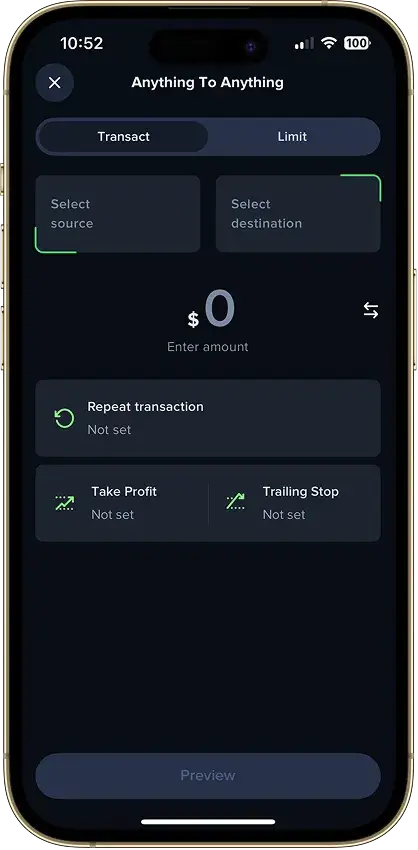
Anything-to-anything swaps across crypto, fiat and metals
Spot, OTC, Simple-buy Broker

The best beginner exchanges aren’t always the ones with the absolute lowest headline fees — they’re the ones that reduce mistakes on your first buys with clear onboarding, easy funding, and simple order flows. If you want the smoothest first purchase, Coinbase and Robinhood are typically the least intimidating. If you want a platform you can grow into without switching later, Kraken is the most “beginner → intermediate” friendly. The rest fill specific beginner needs: Gemini for security-first users, Bitstamp for a straightforward fiat on-ramp to major coins, Crypto.com for an app ecosystem, and Uphold for quick conversions.

The table below compares what matters most early on: how simple it is to make your first buy, how clear the pricing is, and how easy it is to move funds in and out once you’re verified.

To avoid confusion, “advanced trade” refers to the order-book trading screen where you can place limit orders and see explicit maker/taker fees.

Comparison Table

NameCustodyProductsStakingTrading fees (low)Trading fees (high)
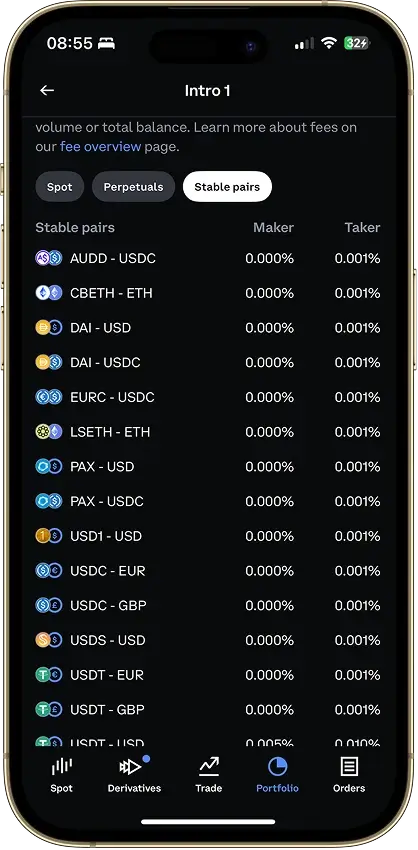
Kraken 500 Spot, Margin, Futures or Perps, OTC, Simple-buy Broker Yes 0.00 0.40
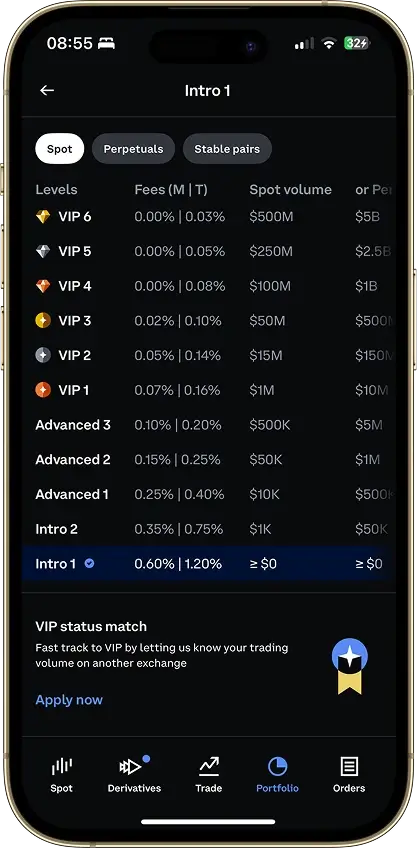
Coinbase 270 Spot, Futures or Perps, OTC, Simple-buy Broker Yes 0.00 0.60
Crypto.com 438 Spot, Margin, Futures or Perps, Options, OTC, Simple-buy Broker Yes 0.00 0.50
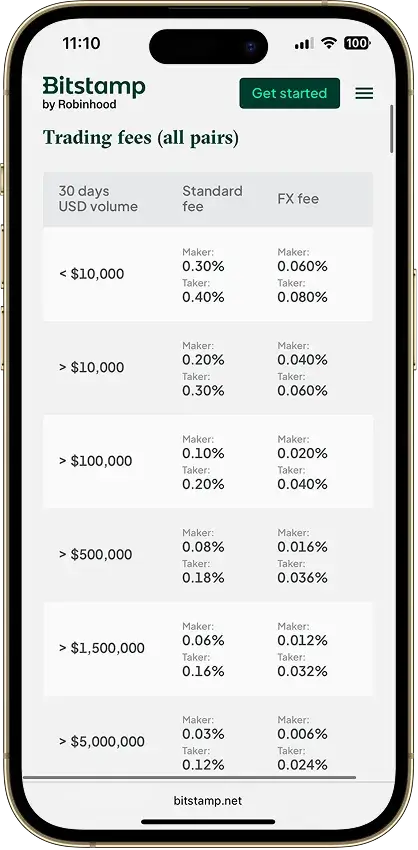
Bitstamp 107 Spot, Futures or Perps, OTC Yes 0.00 0.40
Gemini 80 Spot, Futures or Perps, OTC, Simple-buy Broker Yes 0.00 0.40
Uphold 360 Spot, OTC, Simple-buy Broker Yes 0.25 2.95

If you want the smoothest “first buy” experience, Coinbase, Robinhood, and Crypto.com are usually the least intimidating. If you want to learn limit orders and reduce costs without switching platforms later, Kraken is typically the cleanest upgrade path. Gemini and Bitstamp suit beginners who prioritize a straightforward, security- and banking-first experience, while Uphold is best when the convenience of quick conversions matters most.

If you just want a quick answer, scan the table first. Then use the reviews to confirm fit, see where real-world costs show up (spreads on instant buys, card purchase costs, temporary withdrawal holds, and KYC verification delays), and choose an alternative if your priorities change.

Detailed Review - Crypto Exchanges for Beginners

Once you line the picks up, a few differences become obvious. Coinbase, Robinhood, Gemini, and Bitstamp tend to win with trust signals and a low-friction “first buy” experience, while Kraken is typically the strongest option if you want a clean path from beginner buys into more advanced trading later. Crypto.com and Uphold are often chosen for ecosystem-style convenience and quick conversions.

Where beginners get surprised most often isn’t the headline trading fee — it’s the everyday friction: the price gap on instant buys (spread), plus occasional holds or verification delays that can slow deposits or cash-outs. Keep that in mind when comparing platforms, especially if you’re trying to make your first trade quickly.

How We Chose the Best Crypto Exchanges for Beginners

This guide uses the same backbone as CryptoSlate’s main exchange rankings: the CryptoSlate Exchange Score (CES) — a single 0–10 rating built from nine weighted pillars, each scored from verifiable evidence and hands-on testing.

To stay consistent with the crypto exchanges criteria, the CES pillars are:

  • Security & custody (22%) — cold vs hot storage posture, key management, withdrawal controls, incident history
  • Market quality & reliability (18%) — spreads and depth on major pairs, uptime, circuit-breakers, incident response
  • Regulatory posture (12%) — licensing/registrations and compliance track record (where applicable)
  • Fees & pricing (12%) — maker/taker tiers plus the real cost of “instant buy” pricing, withdrawals, and transparency
  • Proof of reserves & transparency (8%) — PoR scope, frequency, liabilities visibility, disclosures
  • On/Off-ramps & payments (8%) — bank rails and payout paths, coverage, settlement speed
  • Product breadth (8%) — spot plus optional extras (OTC, staking/earn, card, etc.)
  • UX & support (7%) — app stability, accessibility, documentation, support responsiveness and comms
  • API & pro tooling (5%) — depth of REST/WebSocket tooling and reliability for advanced users

We then apply a beginner-first lens to the same evidence. The CES score remains the comparable benchmark, while the Beginner fit notes and this page’s ordering prioritize the things that most often make or break a new user’s experience:

  • First, trust and safeguards. We prioritize strong custody practices, clear withdrawal controls, and transparent disclosures, because beginners are more vulnerable to phishing, account takeovers, and “oops” mistakes.
  • Next, fee clarity on the exact flow beginners use. We weigh how easy it is to understand the cost of instant buys/conversions (where spreads often hide) and whether there’s a clear path to lower-cost trading later.
  • Then, payments that actually work. We emphasize reliable deposits and cash-outs via common rails and clear settlement/hold rules, because that’s where beginners most often get stuck.
  • After that, UX and support under stress. We look for clean onboarding, understandable order screens, and support that can resolve verification/withdrawal issues without a week-long wait.
  • Finally, we treat pro-only features as optional. API depth, derivatives, and VIP fee engineering matter later; beginners benefit more from simple defaults and predictable execution.

That’s why we don’t just read marketing pages. We also sanity-check the basics: onboarding and KYC flow, deposit and withdrawal paths, order placement on spot markets, fee disclosures on both instant-buy and advanced trading screens, security settings like 2FA and withdrawal protections, and how clearly the platform communicates during outages or incidents.

Update cadence:

  • Security/PoR/Regulatory: checked monthly and after major announcements.
  • Fees/Rails: reviewed monthly or upon detected change.
  • Market Quality: daily ingest; quarterly stress test window.
  • Full re-score: quarterly or after a material change (major outage, new PoR disclosure, enforcement action).

For the full scoring rubric, see the exchange methodology section on the main CryptoSlate exchange hub.

What Makes a Crypto Exchange Beginner-Friendly?

A beginner-friendly exchange isn’t the one with the longest feature list — it’s the one that makes the basics easy: fund your account, place a simple spot trade, and withdraw without confusion. In practice, the best crypto trading platform for beginners is the one with clear costs, sensible security defaults, and a user experience that doesn’t push you into advanced tools before you’re ready.

Simple Onboarding

A good crypto platform for beginners gets you from sign-up to verification with minimal friction and clear instructions. The ideal onboarding flow tells you exactly what’s required (ID, selfie, address), how long it usually takes, and what you can/can’t do while verification is pending.

That’s also where beginners can get trapped. If you fund the account before verification is fully approved, you can end up with a balance you can’t withdraw for days. Even small mismatches — using a nickname, a different address format, or a blurry photo — can trigger repeated KYC retries. And because “verification” is a common touchpoint, scammers often target new users with fake emails, lookalike apps, and “verify now” links.

To keep it simple, verify first, use official app store downloads, and match your legal details exactly before you fund the account.

Fee Clarity

Beginners often feel fees most on “simple buy” buttons and instant conversions, where the cost can show up as a spread, a convenience fee, or both. A beginner-friendly exchange makes it obvious what you’re paying before you confirm, and offers a clear path to lower-cost trading when you’re ready.

For example, if you buy $100 of crypto via an instant-buy screen and the “sell” quote immediately after is $98, that ~$2 gap is the spread. It changes by asset and market conditions, but the idea is the same: you’re paying a premium for convenience.

Where this goes wrong is quiet “death by a thousand cuts.” You buy with a card and pay a card fee, then convert into another coin and pay the spread again, then convert again and pay it again. Some platforms advertise low or zero trading fees, but still earn via spreads on simple buys — so small purchases get eaten up without you noticing. Fixed withdrawal fees can also wipe out small balances.

A practical approach is bank funding over cards, comparing the quote on simple buy vs an advanced trade screen, and checking withdrawal fees before you buy.

Funding and Cash-Out

The best beginner exchanges make deposits and withdrawals predictable: clear settlement times, clear minimums, and a cash-out flow that doesn’t suddenly change because your account is new.

Even when your deposit shows up, your money may not be “free” yet. It’s common for new accounts and certain funding methods to trigger temporary withdrawal holds. Bank transfers can take longer than expected, and some banks block or reverse transfers to crypto platforms. If you only discover that during volatility, it becomes stressful fast.

The practical move is to expect potential holds on fresh accounts and confirm the deposit/cash-out rails that actually work in your region.

Security Defaults

A beginner-friendly exchange nudges you into safer settings immediately — 2FA or passkeys, login alerts, and device/session management that’s easy to review. If withdrawal allowlisting/whitelisting is available, it’s one of the best “set it once and forget it” protections.

Without strong defaults, beginners tend to get hit by the most common attack patterns: phishing pages that steal passwords, fake support accounts that ask for codes, and SIM-swap risk if you rely on SMS 2FA. The worst outcome is simple: an attacker logs in and withdraws before you realize anything is wrong.

The safer setup is authenticator-based 2FA (or passkeys), withdrawal allowlisting when available, login alerts turned on, and keeping long-term holdings in a wallet once you’re comfortable.

Mobile UX

Most beginners start on mobile, so the app experience matters. The most user friendly crypto platform for beginners makes the core actions — buy, sell, deposit, withdraw — easy to find, and it clearly labels order types and networks.

A confusing UI is how expensive mistakes happen. It’s easy to place a market order when you meant a limit order, buy the wrong amount, or — most costly — withdraw on the wrong network. For example, USDT (ERC20) and USDT (BEP20) can both use the same “0x” address format, so choosing the wrong network may mean your deposit doesn’t arrive without a manual recovery process. Picking the wrong network can permanently lose funds, even if the address looks “right.” Some apps also hide the cheaper advanced trading screen, which keeps beginners paying convenience pricing longer than necessary.

A good habit is using the order preview, double-checking networks before every withdrawal, and practicing with small amounts until everything feels routine.

Support Quality

When something goes wrong, support is the difference between a small delay and a long lockout. For beginners, the most important scenarios are account flags, withdrawal delays, and verification issues—because they block access when you need it.

The risk is being stuck in a ticket queue while markets move, or getting tricked by imposters. Scammers routinely impersonate support in DMs and comments, asking for 2FA codes or remote access. Real support won’t ask for your codes, passwords, or seed phrases.

To stay safe, use support links inside the official app/site only, never share codes or seed phrases, and check whether live chat is available before you fund heavily.

Room to Grow

You don’t need advanced order types when you’re just getting started, but you’ll want them soon. The best crypto trading platform for beginners gives you a clean upgrade path: simple buys first, then an advanced mode where you can use limit orders and see fees more clearly.

If there’s no upgrade path, beginners often overpay on spreads for months without realizing it. Then, when they finally switch platforms, moving funds can trigger new verification checks or withdrawal holds — often at the worst time. On the other hand, “room to grow” can also backfire if it pushes you into margin or futures too early; leverage is where small mistakes turn into liquidations.

A smarter progression is learning limit orders and basic risk rules first, and treating leverage as “later,” not “next.”


How to Choose a Crypto Exchange for Beginners

If you’re choosing your first cryptocurrency exchange for beginners, you’ll get the best result by deciding in this order: (1) can you fund and cash out easily where you live, (2) are the real costs clear on the exact buy/sell flow you’ll use, and (3) will the platform protect you from the most common beginner mistakes.

Simple Buy vs Advanced Trade

First, figure out which screen you’ll actually use. “Instant buy/convert” tools are designed for speed and simplicity, but the cost often shows up in the spread or convenience pricing. Advanced trade screens (order book) usually give you more control and clearer fees, but they can feel intimidating at first.

If you’re starting with small buys or recurring purchases, instant buy can be fine — just understand the pricing. If you expect to trade actively, place limit orders, or care about minimizing costs, you’ll want an exchange that has an easy “upgrade path” to advanced trading.

Costs Beginners Actually Pay

Next, focus on the costs that hit beginners most often:

  • Spreads on simple buys/converts (you pay more than the mid-market price)
  • Card purchase fees (often the most expensive way to buy)
  • Withdrawal fees and network fees (especially painful on small balances)
  • Minimums/limits (minimum buy, minimum withdrawal, daily limits)

A quick way to sanity-check costs is to compare the same purchase amount in two places on the same platform: the instant buy quote vs the advanced trade price. If you can’t easily see what you’re paying before you confirm, assume it’s not beginner-friendly.

Deposits and Withdrawals in Your Region

Then make sure the “money in / money out” part actually works for you. The best beginner exchange is the one that supports the rails you’ll use in practice — bank transfer, card, and a reliable fiat withdrawal method.

Depending on your country, that might mean ACH, SEPA, Faster Payments, Interac e-Transfer, UPI, or local instant-transfer systems. Even if deposits are easy, it can still go sideways if withdrawals are held on new accounts, if your bank blocks transfers, or if settlement times aren’t clearly explained.

If any step is unclear, pause and check the platform’s help pages before you scale up.

Security and KYC Before Funding

After that, treat security as part of setup — not something you do “later.” You want an exchange that makes it easy to lock down your account:

  • Turn on authenticator-based 2FA or passkeys (avoid SMS if possible)
  • Enable login alerts and review active sessions/devices
  • Use withdrawal allowlisting/whitelisting if it’s available
  • Complete verification before making large deposits

This is also where beginners get stuck: funding before KYC finishes can lead to withdrawal restrictions, and phishing scams often pretend to be “verification” or “support.” Keep everything inside the official app/site and never share codes.

Support Before You Need It

Finally, assume you’ll need help at least once — verification delays, deposit timing, a withdrawal check, or an account flag. Before you commit significant funds, check whether the platform offers live chat, how easy it is to open a ticket, and whether the help center answers beginner questions clearly.

A practical move is to search the help center for the exact issues beginners face (verification time, withdrawal holds, bank transfers, wrong-network withdrawal). If the answers are vague or hard to find, support will likely feel the same when you’re stressed.

A simple rule of thumb is to choose the exchange that makes cashing out and withdrawing easy and predictable in your region — everything else is secondary.

How to Start Crypto Trading for Beginners

Getting started is mostly about doing the “boring” setup correctly so you don’t get stuck later. If you follow the steps below, you’ll avoid the most common beginner problems: surprise fees, withdrawal holds, verification delays, and wrong-network mistakes.

  1. First, choose an exchange built for beginners. Confirm it supports your country/state, has the deposit method you’ll actually use (bank transfer is usually simplest), and makes pricing clear on the buy screen you plan to use.
  2. Next, create your account and verify your email/phone. Use a unique password (ideally from a password manager) and only sign up through the official website or app store listing.
  3. Then, complete KYC and lock down security. Finish identity verification before you deposit meaningful funds, turn on authenticator-based 2FA or passkeys, and enable login alerts (and withdrawal allowlisting if it’s available).
  4. After that, fund your account — preferably by bank transfer. Cards are convenient but often cost more. Begin with a small test deposit so you can learn the flow and spot any holding period on withdrawals.
  5. Now make your first spot buy (or set a small recurring buy). Keep the first trade small, double-check the confirmation screen, and avoid chasing fast-moving candles. If you’re new, recurring buys can remove a lot of timing pressure.
  6. Once you’re comfortable, learn market vs limit orders before using Advanced Trade. Market orders prioritize speed (and can slip in volatile moments). Limit orders prioritize price control. Practice with small sizes until the mechanics feel routine.
  7. Finally, withdraw to a self-custody wallet when you’re ready. Do a small test withdrawal first, confirm you’re using the correct network, and keep your recovery phrase offline and private. If something feels confusing, pause — most expensive mistakes happen when you rush withdrawals.

What Is Crypto Trading for Beginners? Basics Explained

At its simplest, cryptocurrency trading for beginners — what most people mean when they say trading crypto for beginners — is buying and selling crypto assets, usually on a centralized exchange, while trying to manage risk (price swings) and costs (spreads/fees).

To start, spot trading means you buy or sell crypto for immediate settlement, and you actually hold the asset (or sell what you already hold). It’s the most common “first step,” and it’s also where beginners feel volatility first.

Next, recurring buys (also called DCA) let you purchase a fixed amount on a schedule (weekly/monthly). This reduces the pressure of trying to “buy the bottom,” and it helps keep your first strategy simple.

After that, market vs limit orders is the first trading concept worth learning. A market order prioritizes speed (it fills at the best available price), while a limit order prioritizes price control (it only fills at your chosen price or better) — which matters most during fast moves.

Meanwhile, spreads vs maker/taker fees explains why “fees” can feel confusing. The spread is the gap between the buy and sell quote (often most noticeable on instant buys and conversions), while maker/taker fees are the explicit fees charged on advanced trading screens (order books).

In terms of storage, a custodial exchange balance vs a self-custody wallet is about who controls the keys. Custodial means the exchange holds the private keys on your behalf; self-custody means you control them (and there’s no “password reset” if you lose your recovery phrase).

Finally, “available assets” vs “good first buy” is a reality check. An exchange offering hundreds of coins doesn’t mean those coins are suitable for beginners — starting with more liquid, widely traded assets usually means fewer surprises with spreads, slippage, and exit liquidity.

How to Learn Crypto Trading for Beginners

If you want to learn crypto trading for beginners the safe way, focus on building a repeatable routine before you worry about speed, signals, or “advanced strategies.”

Begin by learning the mechanics, not the market: read the exchange’s help pages for deposits, withdrawals, fees, and supported networks so you understand what happens when you move money in and out.

From there, practice order placement with tiny amounts (or paper trading if your platform offers it). Make a small spot buy, place a small limit order, cancel it, and repeat until the screens feel boring.

Once that feels routine, write down a simple plan and track what you do. A basic log (date, asset, size, why you entered, how you exited, what you paid in fees/spread) makes it much easier to see what’s working — and what’s just impulse.

Along the way, learn a few fundamentals that prevent big mistakes: position sizing, avoiding leverage early, and how spreads/fees compound when you trade too often.

Finally, treat security as part of learning. If you can’t confidently pick the right network on a withdrawal, pause and test with a very small amount first.

Is Day Trading Crypto Good for Beginners?

For most people, day trading crypto for beginners isn’t the best first step. Crypto moves fast, mistakes are expensive, and the learning curve is steep — so it’s usually smarter to start with spot buys (or a small recurring buy) until the basics feel routine.

That’s because several things can go wrong quickly:

  • Volatility: prices can swing hard in minutes, and beginners often buy or sell based on panic.
  • Fee drag + spread impact: frequent trades mean spreads and fees compound fast, especially on small positions.
  • Slippage: the price you expect and the price you actually get can differ during fast moves.
  • Tax/admin complexity: lots of trades can create a messy record-keeping situation (rules vary by country).
  • Emotional decision-making: beginners tend to overtrade, revenge-trade, or chase pumps.

Here’s the practical difference:

What you’re trying to doBeginner spot / recurring buysBeginner day trading
Learn the basicsSlower pace; easier to understand orders and feesFast pace; easy to make costly errors
Control costsFewer transactions, less fee/spread dragMany transactions, fees/spreads compound
Manage riskEasier sizing and longer time horizonHigher stress; tighter timing and discipline needed
Keep it simpleMinimal tax/admin overheadMuch heavier tracking requirements

If you still want to learn how to day trade crypto for beginners, treat it as a later phase. Start by mastering spot execution (market vs limit), position sizing, and a simple risk rule (for example, small fixed risk per trade). Then practice with paper trading or tiny position sizes before scaling — ideally without leverage until you can explain liquidation, slippage, and why a “good trade” can still lose.

Risks of Crypto Trading for Beginners

Crypto trading can be beginner-friendly, but it’s not “set and forget.” Most bad outcomes come from a handful of predictable mistakes — rushing, skipping security steps, and not understanding how transfers work.

To start, volatility is the obvious risk. Prices can move sharply in minutes, and beginners often buy high during hype or sell low during panic. Keeping position sizes small at first and avoiding “all-in” trades is usually the simplest way to stay in the game long enough to learn.

Next, phishing and social engineering is how many beginners lose accounts — not by “bad trading,” but by being tricked. Fake apps, lookalike websites, and impersonated support accounts try to capture logins, 2FA codes, or get you to install remote-access tools. If someone is pressuring you to act fast, that’s usually the tell.

Then there’s wrong-network withdrawals, which can be permanently expensive. A crypto address can look valid across multiple networks, and choosing the wrong chain (or sending tokens to an unsupported network) can be difficult — or sometimes impossible — to recover.

A common example is sending USDT on BEP20 (BSC) to a deposit address that only supports USDT on ERC20 (Ethereum). The address may look correct, but the network mismatch is what breaks the deposit. This is why small test withdrawals and slow double-checking matter more than speed.

After that, leaving too much on an exchange increases your exposure to problems that aren’t under your control — account flags, withdrawal pauses, platform outages, or security incidents. Exchanges are convenient for trading, but many beginners sleep better once longer-term holdings live in a wallet.

It’s also easy to stumble into overtrading. Frequent “small” trades can stack up spreads and fees, and the constant decision-making leads to impulsive entries and exits. A simple plan (what you’re buying, how often, and why) beats constant reacting.

Another common trap is leverage too early. Margin and futures can look like a faster path to profits, but they also create liquidation risk — meaning a small price move can wipe out a position. If you can’t explain liquidation, funding rates, and position sizing in plain language, leverage is usually premature.

Finally, KYC and withdrawal review delays can catch beginners off guard. New accounts, unusual deposit patterns, or certain funding methods can trigger holds or manual reviews — often right when you want to move funds quickly. Completing verification early helps surface these issues before they matter.

Beginner safety checklist

  • Verify your account before depositing meaningful funds.
  • Use authenticator-based 2FA or passkeys (avoid SMS if possible).
  • Bookmark the official site and download apps only from official stores.
  • Never share 2FA codes, passwords, or seed phrases — support will not ask.
  • Start with small buys and avoid leverage until the basics are routine.
  • Double-check the network every time you withdraw.
  • Move long-term holdings to a wallet once you’re comfortable.
  • Keep notes on deposits/withdrawals in case you need support later.

FAQ

Which crypto exchange is best for beginners?

For most beginners, the “best” exchange is the one that makes deposits, first buys, and withdrawals simple and predictable. In this guide, Coinbase is the easiest all-around starting point, while Kraken is often better if you want to grow into advanced trading without switching later.

What is crypto trading for beginners?

Crypto trading is buying and selling crypto assets (usually on a centralized exchange) while managing two things: risk (price volatility) and costs (spreads/fees). For beginners, “trading” often starts with spot buys and simple order types before anything more complex.

How do you trade crypto for beginners?

If you’re wondering how to trade cryptocurrency for beginners, start small, use spot markets, and keep the first steps simple: fund your account, buy a small amount, learn market vs limit orders, and avoid leverage. Once the mechanics feel routine, you can place limit orders to control price and reduce slippage.

How to start crypto trading as a beginner?

Begin by completing verification and security setup first (2FA/passkeys), then fund via bank transfer if available, make a small test buy, and do a small test withdrawal. That early “deposit → buy → withdraw” loop catches most beginner issues (holds, network selection, fee surprises) before you scale.

How to make money trading crypto for beginners?

Most beginners do better by treating “making money” as a long-term goal, not a short-term sprint. In the early stages, the biggest wins are usually avoiding big losses: keep position sizes small, understand spreads and fees, and don’t use leverage until you can explain liquidation and sizing.

If you want a practical starting point, focus on learning spot trading mechanics first (market vs limit orders), consider small recurring buys instead of trying to time the market, and keep a simple log of what you buy and why. As you gain confidence, you can use limit orders to control price and reduce slippage — but be wary of “signals,” hype, or guaranteed-profit claims.

What fees should beginners watch for on a crypto exchange?

Instead of focusing only on maker/taker rates, pay attention to what you’ll actually use: spreads on instant buys/converts, card purchase fees, withdrawal fees, and any minimums/limits. If the platform doesn’t clearly show costs before you confirm, assume you’re paying for convenience.

Do beginner crypto exchanges require ID verification?

Most beginner-friendly centralized exchanges do require ID verification (KYC), especially if you want bank funding and reliable cash-outs. Even when an exchange allows limited access without full verification, withdrawals and higher limits often require completing KYC.

What is the safest crypto exchange for beginners?

“Safest” depends on strong security practices and predictable operations. Prioritize platforms with proven custody controls, strong account security options (2FA/passkeys, withdrawal protections), clear disclosures, and reliable deposit/withdrawal rails — then reduce your own exposure by moving long-term holdings to a wallet once you’re comfortable.