



Stablecoins
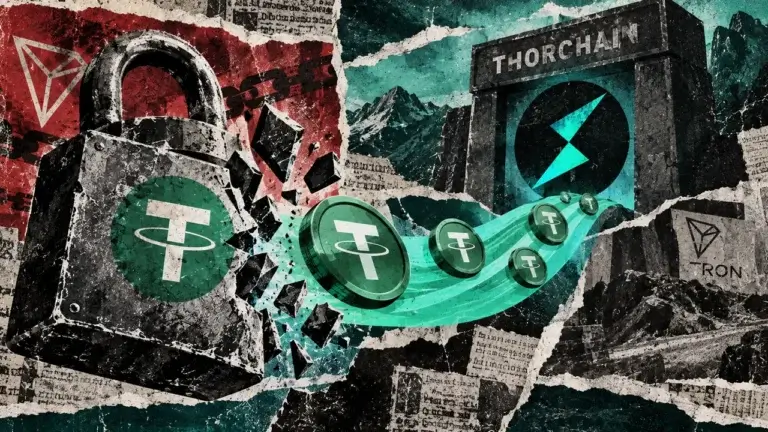
Tether freezes $1.4M in TRON vaults and THORChain stalls
A researcher reported resumed TRON swaps after four vaults were blocklisted, exposing issuer control over USDT inside decentralized infrastructure.

$39.87B traded Price signal supported
Trading Activity price-reliability indicator with 100 percent data coverage. Low activity replaces price-derived sentiment because the displayed market price may not be supported by meaningful trading.Target $1.0000 0.13% below
Peg Health price-stability indicator with 100 percent data coverage. It measures observed market pricing, not reserve quality or redemption safety.Price-based current market conditions indicator with 0 percent data coverage. This is not a price forecast.
$39,867,416,019.54 traded over the last 24 hours. The available activity evidence is sufficient to retain the asset’s price-derived signal.
Low activity can make the displayed price sensitive to a handful of trades. Trading Activity assesses price reliability—not project development, legal status, reserves, or solvency.
Price movement Not interpreted while trading support is below the reliability threshold.
What it measures
The model combines reported 24-hour volume, market-cap turnover, valid-pair liquidity, active exchange breadth, and quote freshness. Missing optional evidence lowers coverage; missing volume or a known-stale quote suppresses price-derived interpretation.
Configured model weights
When inputs are missing, these configured weights are renormalized across the available evidence; data coverage records what is missing.
How to read it
Scores of 0–19 are dormant, 20–39 are thin, 40–69 are supported, and 70–100 are active. Scores below 40 withhold price-derived interpretation.
Tether is trading 0.13% below its $1.00 target. The combined current, reconstructed historical, and volume evidence produces an on-peg reading.
Peg Health measures observed market-price stability only. It does not assess reserves, redemption access, issuer risk, or solvency.
What it measures
The model combines current target deviation, reconstructed price stability, weakest-snapshot resilience, and volume stress. Moving fiat targets use current-price evidence unless matching historical FX targets are available.
Configured model weights
When inputs are missing, these configured weights are renormalized across the available evidence; data coverage records what is missing.
How to read it
Higher scores indicate stronger observed price stability: 90–100 is on peg, 70–89 is watch, 40–69 is stressed, and 0–39 is depegged. A large current deviation can move the result into a more severe band.
Showing 10 spot markets sorted by CoinMarketCap exchange rank. Markets excluded from CMC price or volume calculations are hidden.
| Pair | |||||
|---|---|---|---|---|---|
| 1 | USDC/USDT | $1.00 | $1.57B | 1,061 | |
| 2 | BTC/USDT | $81,021.26 | $726.33M | 1,124 | |
| 3 | Binance Alpha | CT/USDT | $0.29 Best price | $944.42M | 549 |
| 4 | BTC/USDT | $81,023.17 | $243.93M | 869 | |
| 5 | BTC/USDT | $81,026.11 | $515.41M | 854 | |
| 6 | BTC/USDT | $81,023.02 | $410.07M | 902 | |
| 7 | BTC/USDT | $81,021.03 | $305.13M | 945 | |
| 8 | BTC/USDT | $81,021.80 | $277.41M | 828 | |
| 9 | BTC/USDT | $81,024.42 | $341.09M | 981 | |
| 10 | Pionex | BTC/USDT | $81,022.41 | $1.3B | 928 |
Affiliate Disclaimer: CryptoSlate may receive a commission when you click trading links on this page and complete an action with a third party. This does not influence our editorial independence or coverage.
A researcher reported resumed TRON swaps after four vaults were blocklisted, exposing issuer control over USDT inside decentralized infrastructure.
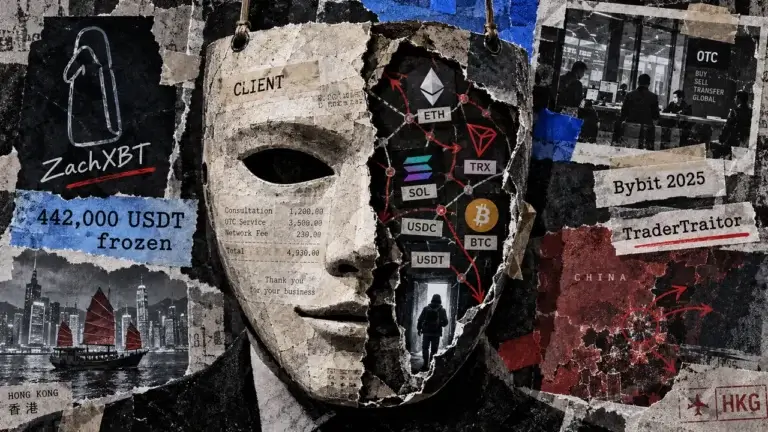
His October 5 disclosure describes 2025 trades and private chats that he says helped trace Bybit funds and secure a 442,000 USDT freeze.
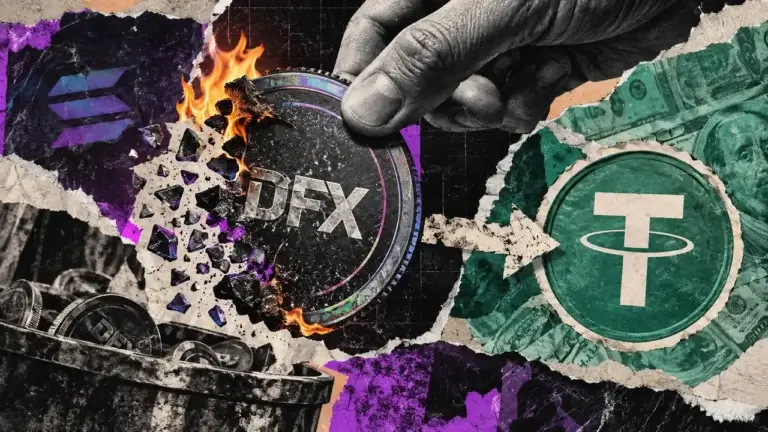
Drift's October 1 launch quote valued DFX near one cent per USDT lost, while redemption ends future pool participation for the tokens burned.

Treasury sanctioned A7 while FinCEN moved to cut exchanges and OTC desks off from the network’s stablecoin conversion pipeline.
See USDT across major fiat currencies and swap the active converter instantly.
Quick SelectUsing the live USD market price. Additional fiat rates will appear after the daily sync.
Tether is a fiat-backed stablecoin designed to track the U.S. dollar. Its main token, USD₮, is commonly referred to by the ticker USDT and is used across crypto exchanges, wallets, decentralized finance, payments, and cross-border settlement. USD₮ is pegged 1:1 to the U.S. dollar and backed by Tether's reserves.
USDT does not operate as a standalone blockchain. Tether issues tokens on supported blockchain networks, and users transfer those tokens through wallets, exchanges, payment processors, and applications that support the relevant chain. That makes network selection important — an Ethereum USDT transfer, a Tron USDT transfer, and a Solana USDT transfer are separate blockchain routes even though they represent the same dollar-pegged asset.
Tether is best understood as market infrastructure rather than a normal upside-focused crypto asset. USDT is widely used for trading pairs, dollar settlement, stablecoin liquidity, DeFi collateral, and moving value between venues. For price-focused users, the key question is not whether USDT can rise like a volatile token, but whether it can keep trading close to $1 under normal and stressed market conditions.
For longer-term research, the main signals are reserve quality, liquidity, redemption access, exchange support, regulatory pressure, supported networks, and issuer controls. USDT's usefulness comes from liquidity and broad distribution. Its risks come from reliance on the issuer, reserve composition, redemption rules, token freezes, and market confidence.
| Field | Detail |
|---|---|
| Asset | Tether |
| Ticker | USDT |
| Common Styling | USD₮ |
| Asset Type | Fiat-backed stablecoin |
| Launch | 2014 |
| Issuer | Tether International, S.A. de C.V. |
| Peg Asset | U.S. dollar |
| Consensus | Not applicable |
| Mineable | No |
| Max Supply | No fixed maximum supply |
| Circulating Supply | 183.67B |
| Total Supply | 189.32B |
| Main Use Cases | Trading pairs, dollar settlement, exchange liquidity, DeFi liquidity, payments, remittances, and on-chain transfers |
| Direct Redemption | Available only to verified eligible Tether customers under Tether's terms |
| Website | Tether.to |
| Explorer | Varies by network |
| Whitepaper | Not applicable to the current reserve-backed issuer model |
| Main Risk Areas | Peg stability, reserves, redemption access, issuer controls, regulation, chain-specific transfer risk, and market confidence |
Tether launched in 2014 as a blockchain-enabled platform for using fiat currencies digitally. Tether International, S.A. de C.V. is now the relevant issuer in Tether's legal terms, after the company redomiciled from the British Virgin Islands to El Salvador.
USDT is issued by Tether and transferred on supported blockchains. New tokens are created when multiple private authorization keys sign and broadcast creation transactions on a specific blockchain. Those tokens can sit in Tether's treasury as “authorized but not issued” until they are transferred out of treasury and enter circulation.
The same supply flow works in reverse. Tokens may be burned to reduce authorized tokens on a blockchain, including after redemption. Tether may also seize and destroy tokens remotely in some circumstances in response to government, law-enforcement, or other authority demands.
Most users interact with USDT through exchanges, wallets, DeFi applications, and payment services rather than directly with Tether. Direct issuance and redemption are contractual services available only to verified eligible Tether customers, and the right to redeem is personal to that verified customer under Tether's legal terms.
Tether publishes circulation information and reserve reports through its transparency process. Tether typically publishes daily information about tokens in circulation and quarterly information about reserves.
The latest reserve report is Tether International's Financial Figures and Reserves Report as of Dec. 31, 2025, authorized and approved on Jan. 30, 2026. BDO Advisory Services S.r.l. performed a reasonable assurance engagement under ISAE 3000R on the report, but the report is a point-in-time assurance report and not a full financial statement audit.
| Reserve or Liability Item | Amount |
|---|---|
| Reserves backing fiat-denominated Tether tokens | $192,877,729,144 |
| Total company liabilities | $186,539,895,593 |
| Digital token liabilities | $186,450,610,920 |
| Excess of reserves over liabilities | $6,337,833,551 |
Reserves exceeded liabilities by $6.337 billion at the Dec. 31, 2025 reporting date. The report also noted that the reporting date was limited to a point in time and that activity before or after that date was not part of the assurance scope.
| Reserve Category | Amount |
|---|---|
| U.S. Treasury bills | $122,325,714,946 |
| Overnight reverse repurchase agreements | $19,279,408,559 |
| Term reverse repurchase agreements | $5,548,439,332 |
| Cash and bank deposits | $33,952,735 |
| Cash, equivalents, and short-term deposits subtotal | $147,187,515,572 |
| Corporate bonds | $3,031,239 |
| Precious metals | $17,450,435,088 |
| Bitcoin | $8,430,374,292 |
| Other investments | $2,762,856,288 |
| Secured loans | $17,043,516,665 |
| Total reserves | $192,877,729,144 |
This reserve mix is important because USDT's peg depends on more than headline backing. Treasury bills and repos form the largest part of the reported reserves, but the report also lists gold, Bitcoin, secured loans, other investments, and corporate bonds. That means reserve liquidity, valuation assumptions, counterparties, and market stress remain important risk factors.
On Mar. 24, 2026, Tether formally engaged a Big Four accounting firm to complete its first full independent financial statement audit. That is an audit engagement announcement, not a completed audit.
Direct redemption with Tether is not the same as selling USDT on an exchange. Users must be verified Tether customers to cause Tether tokens to be issued or redeemed by Tether, and the fiat payable on redemption is paid to a bank account in the customer's name.
Direct redemption carries a 100,000 USD minimum for token acquisition or redemption, a redemption fee equal to the greater of $1,000 or 0.1%, a 0.1% acquisition fee, and a 150 USD₮ verification fee.
| Redemption Item | Detail |
|---|---|
| Direct Redemption | Available only to verified eligible Tether customers |
| Minimum Acquisition or Redemption | 100,000 USD |
| Redemption Fee | Greater of $1,000 or 0.1% |
| Acquisition Fee | 0.1% |
| Verification Fee | 150 USD₮ |
| Retail Access | Most users buy, sell, or transfer USDT through exchanges and wallets rather than redeeming directly |
Tether tokens are not legal tender, are not backed by any government, and are not protected by FDIC, SIPC, or analogous insurance.
Tether supports USD₮ across multiple blockchain routes, including Ethereum, Tron, Liquid, Solana, Polkadot AssetHub, Tezos, Near, TON, Aptos, Avalanche, Cosmos via Kava, Celo, and Kaia. Network support can vary by exchange or wallet, so users should check both the sending platform and receiving platform before transferring.
| Network or Protocol | Status |
|---|---|
| Ethereum | Supported |
| Tron | Supported |
| Solana | Supported |
| Avalanche | Supported |
| Cosmos via Kava | Supported |
| Celo | Supported |
| Kaia | Supported |
| Liquid | Supported |
| Polkadot AssetHub | Supported |
| Tezos | Supported |
| Near | Supported |
| TON | Supported |
| Aptos | Supported |
| Omni, Bitcoin Cash SLP, Kusama, EOS or Vaulta, and Algorand | Legacy or deprecated for Tether redemption obligations |
Tether is no longer issuing or obligated to redeem Tether tokens on Kusama, Bitcoin Cash SLP, Omni Layer, EOS, and Algorand. USD₮ redemption under Tether's terms ceased on Omni, Bitcoin Cash SLP, Kusama, EOS, and Algorand effective Sep. 1, 2025.
The main user risk is a network mismatch. A USDT deposit address on one chain may not accept USDT sent from another chain. Wrapped, bridged, or exchange-pegged USDT representations should not be treated as identical to Tether-issued USDT unless the venue, contract, and network are confirmed.
USDT is one of crypto's main liquidity rails. It is widely used as a quote asset on exchanges, a settlement token between venues, and a dollar-denominated asset in DeFi and payment workflows. On Apr. 28, 2026, USDT dominance was 59.21% of the stablecoin market, making Tether the dominant stablecoin by market share in that snapshot.
| Stablecoin Item | Detail |
|---|---|
| Peg Asset | U.S. dollar |
| Peg Type | Fiat-backed reserve model |
| Issuer | Tether International, S.A. de C.V. |
| Reserve Reporting | Daily circulation data and quarterly reserve reports |
| Direct Redemption | Restricted to verified eligible Tether customers |
| Supported Networks | Multiple blockchains, with venue-specific support |
| Main Risks | Reserves, redemption access, regulation, issuer controls, transfer mistakes, and depeg risk |
USDT's market role is different from Bitcoin, Ethereum, or Solana. A volatile crypto asset may be evaluated by growth, network adoption, tokenomics, or upside scenarios. A dollar stablecoin is evaluated by peg stability, reserve confidence, redemption access, liquidity, supported networks, and regulatory durability.
USDT's biggest asset-specific risks are peg stability, reserve composition, redemption access, issuer controls, regulation, and chain-specific transfer mistakes. The token is designed to track $1, but secondary-market prices can move above or below the peg during periods of stress, liquidity imbalance, or exchange-specific disruption.
Reserve transparency remains a central issue. Tether provides quarterly reserve reports, and the Dec. 31, 2025 report showed reserves above liabilities at that point in time. The report was not a full financial statement audit, and BDO's scope was limited to the balances and information as of the reporting date.
Issuer controls are also material. Tether may freeze Tether tokens or suspend access where required by law, where it determines doing so is prudent, or where a user violates its terms or applicable law. This can help with sanctions and law-enforcement response, but it also means USDT carries issuer-level control risk that decentralized assets do not have.
Historical enforcement actions are part of Tether's risk profile. In 2021, the CFTC ordered Tether to pay $41 million over claims that USDT was fully backed by U.S. dollars, finding that Tether's reserves were not fully fiat-backed for most of a sampled period from 2016 to 2018. The New York Attorney General also announced an $18.5 million settlement with Bitfinex and Tether in 2021, alleging false statements about Tether's backing and related losses.
External reserve assessments have also been critical. In November 2025, S&P Global downgraded its USDT stability assessment to “5 (weak)”, citing higher-risk assets in reserves and disclosure concerns, while also noting USDT's historical price stability through volatility.
Tether price prediction should be understood as peg outlook, not upside forecasting. USDT is designed to track the U.S. dollar, so the relevant question is whether it can continue trading near $1 across exchanges, wallets, and supported networks.
The strongest USDT-specific signals are reserve liquidity, redemption demand, secondary-market liquidity, exchange access, regulatory treatment, supported-network reliability, issuer controls, and competition from other stablecoins. For stablecoins, a “bullish” case is not a higher token price. It is continued peg stability, deep liquidity, and reliable redemption or exchange access.


Tether Limited is the issuer of Tether’s family of fiat-pegged stablecoins, most notably USD₮ (commonly referred to as USDT), the largest U.S.
Tether is a fiat-backed stablecoin issuer. Its main token, USD₮ or USDT, is designed to track the U.S. dollar and is used for trading, settlement, payments, DeFi liquidity, and on-chain transfers. USDT is pegged 1:1 to the U.S. dollar and backed by Tether’s reserves.
USDT’s peg depends on Tether’s reserve backing, market liquidity, redemption access for verified eligible customers, and confidence across exchanges and wallets. In normal conditions, arbitrage and redemption channels can help keep USDT close to $1, but the token can still trade above or below the peg during market stress.
USDT is used as a dollar-denominated trading pair, settlement asset, DeFi liquidity token, payment rail, remittance tool, and bridge between crypto venues. Its usefulness depends on liquidity, exchange support, supported blockchain networks, and whether users can safely move it through the correct network.
All Tether tokens in circulation are backed by its reserves. In its Dec. 31, 2025 reserve report, Tether International reported $192.878 billion in reserves and $186.540 billion in total liabilities. That report was a point-in-time assurance report, not a full financial statement audit.
All Tether tokens in circulation are backed by its reserves. In its Dec. 31, 2025 reserve report, Tether International reported $192.878 billion in reserves and $186.540 billion in total liabilities. That report was a point-in-time assurance report, not a full financial statement audit.
Direct redemption is available only to verified eligible Tether customers under Tether’s terms. The fee schedule lists a 100,000 USD minimum acquisition or redemption amount and a redemption fee equal to the greater of $1,000 or 0.1%. Most retail users buy, sell, or transfer USDT through exchanges and wallets.
USD₮ is supported across multiple networks, including Ethereum, Tron, Liquid, Solana, Polkadot AssetHub, Tezos, Near, TON, Aptos, Avalanche, Cosmos via Kava, Celo, and Kaia. Venue support can differ, so always match the correct asset, network, and address before sending USDT.
Yes. Tether may freeze Tether tokens or suspend services where required by law, where it determines doing so is prudent, or where terms or applicable law may have been violated. This issuer-control feature is central to USDT’s risk profile.
No. USDT does not have a fixed maximum supply. Supply changes when Tether issues tokens, moves authorized tokens out of treasury, redeems tokens, holds tokens in treasury, or burns tokens on supported blockchains. Tether distinguishes between “authorized but not issued” tokens and issued tokens in circulation.
CryptoSlate does not provide investment advice. USDT is designed for dollar stability, liquidity, and settlement rather than price appreciation. Users should focus on peg stability, reserve quality, redemption access, supported networks, issuer controls, regulation, and custody risk before holding or transferring USDT.
As of Oct 18, 2026, Tether trades at $1.00.
Tether has a market capitalization of $183,430,393,585.42.
Tether has a 24-hour trading volume of $39,867,416,019.54.
Tether reached an all-time high of $1.22, recorded on Feb 25, 2015. It is currently 17.83% below its all-time high.
Tether recorded an all-time low of $0.57, recorded on Mar 2, 2015. It is currently 75.73% above its all-time low.