

 Launched in 2015
- Direct conversions between supported assets
- Vault multisig gives you two of three keys
- Metals trade beside crypto in one app
Uphold Overview
- Crypto Exchange Name
- Uphold
- Parent Company
- Uphold HQ Inc.
- Launch Year
- 2015
- KYC
- Yes
- Products
- Simple-buy Broker
- Staking
- Yes
- Copy Trading
- No
- Derivatives
- No
- Proof of Reserves
- Yes
- Payout Time
- Fiat: Instant - 5 days
Additional details
- Languages
- English, Spanish
- Restricted Countries
- Canada, Anguilla, Belarus, Cuba, Iran, Iraq, North Korea, Syria, …Canada, Anguilla, Belarus, Cuba, Iran, Iraq, North Korea, Syria, Russia, Armenia, Barbados, Central African Republic, Chad, Eritrea, Fiji, French Southern Territories, Guinea, Heard Island and McDonald Islands, Liberia, Mali, Mauritania, Palau, Samoa, South Sudan, Sudan, United States Minor Outlying Islands, Vanuatu, Virgin Islands (U.S.)
- Restricted States
- New York
Uphold Screenshots

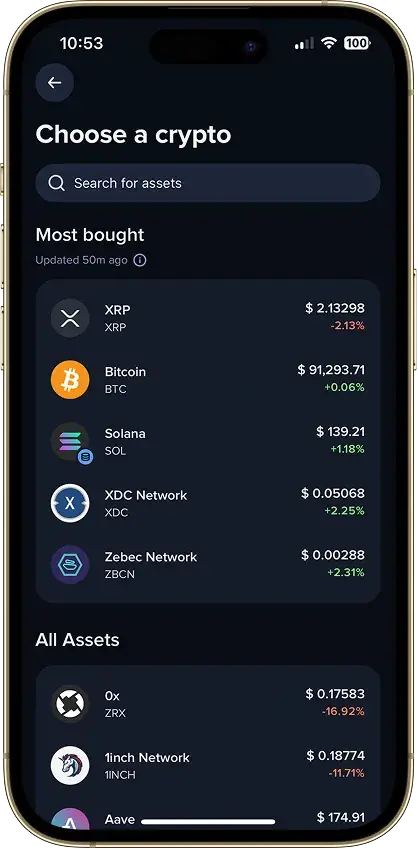
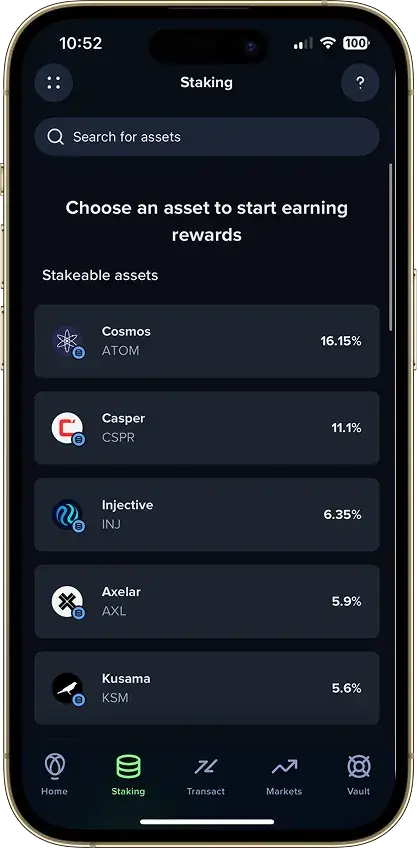
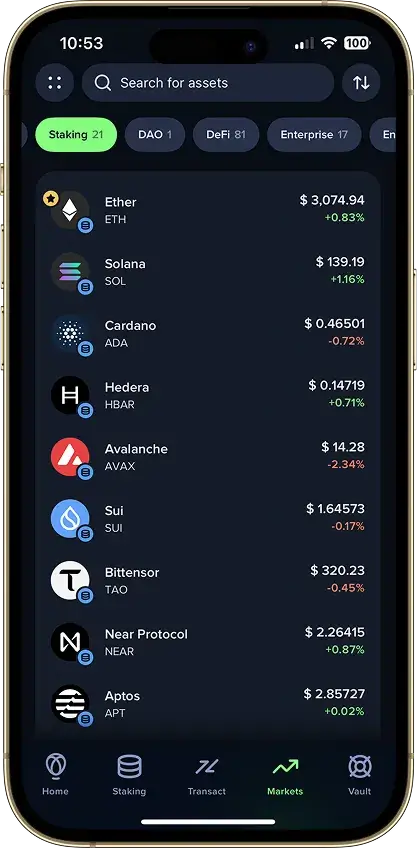
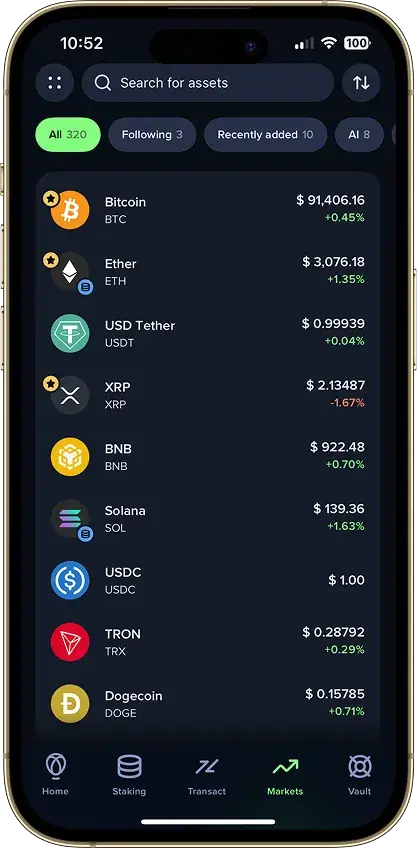
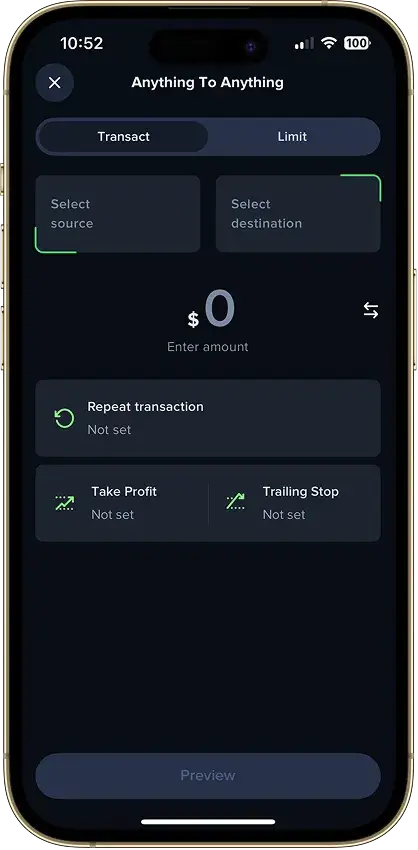
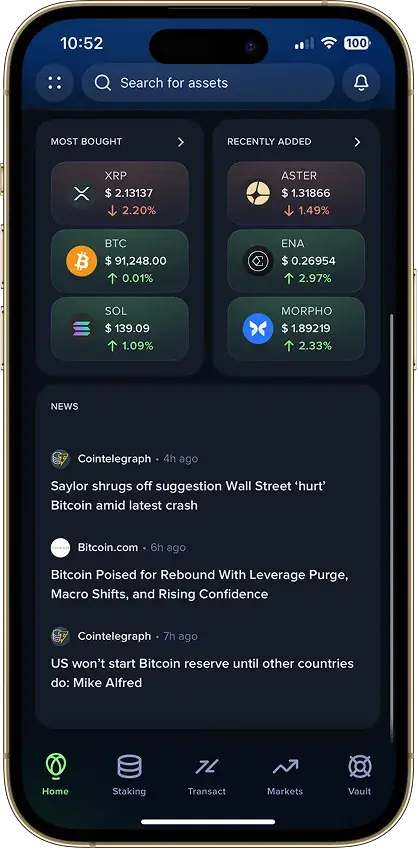
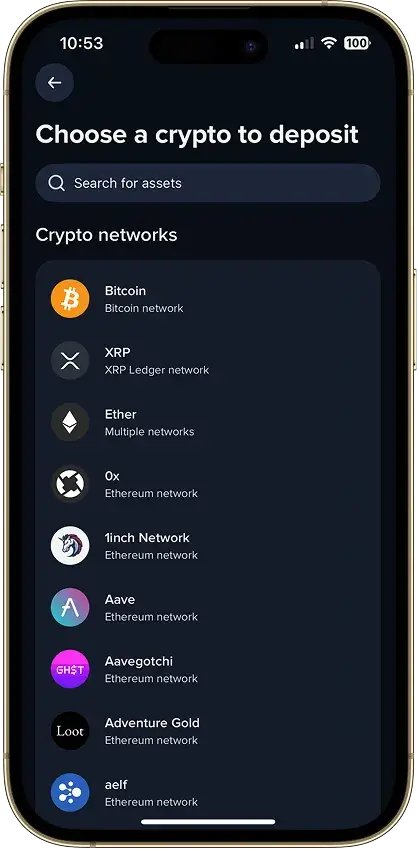
Screenshot 1 of 8
Uphold Pros and Cons
Pros
- Free standard U.S. ACH transfers
- Flexible and Boosted staking options
- Limit, take-profit and trailing-stop orders
- Transaction-history CSV downloads
- Exact amount shown before each conversion
Cons
- BTC/ETH spreads typically exceed 2%
- Flexible Staking takes 50% of rewards
- Some ACH funds face a 65-day destination hold
- No conventional retail order book
- Self-reported reserves, no Merkle check
Quick Decision: Is Uphold Worth It?
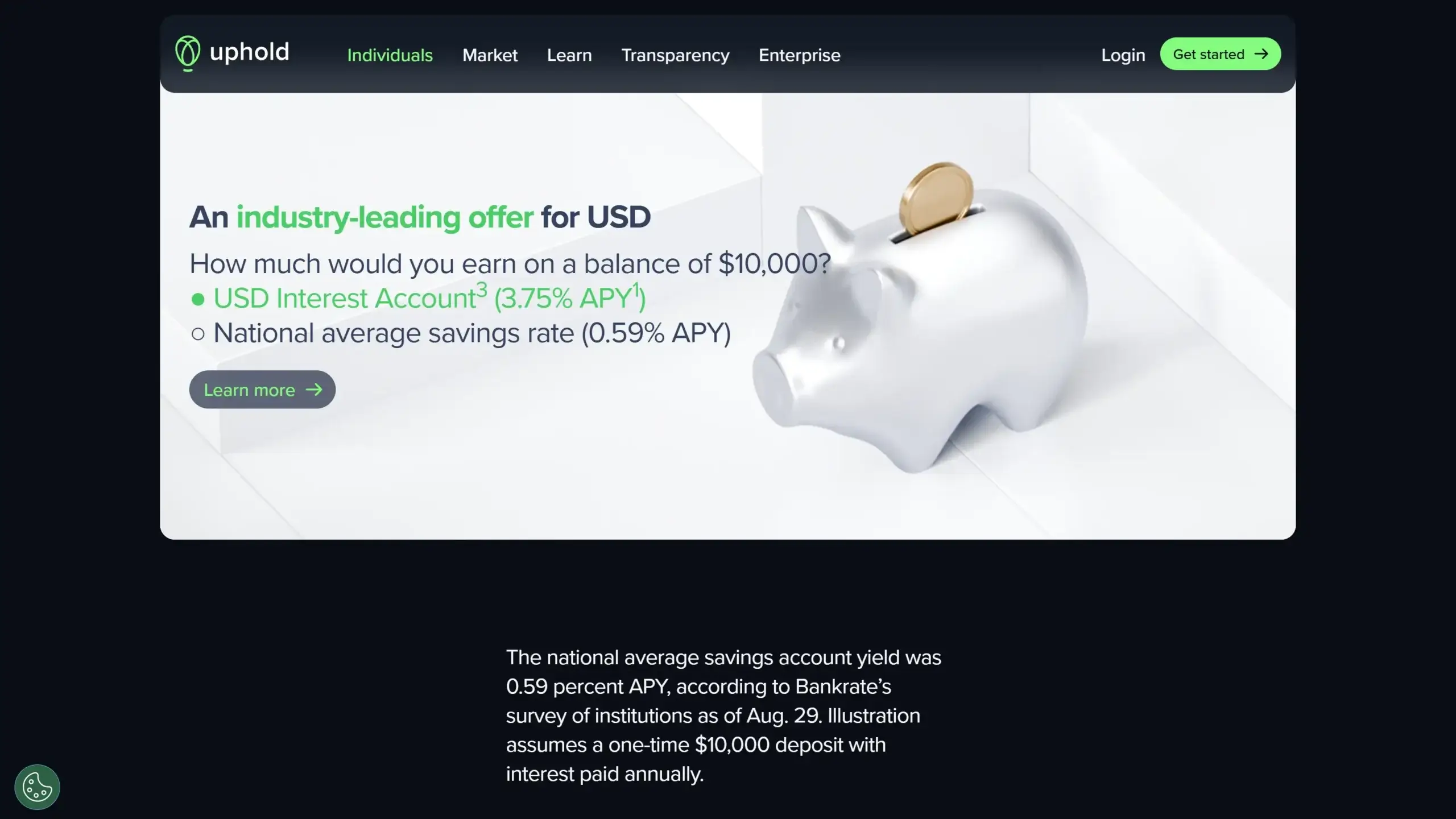
Uphold lets you exchange supported assets directly from a single quote, without placing orders on a conventional retail order book. That approach suits occasional conversions and users who want bank funding alongside their crypto balances. This Uphold review focuses on the U.S. trading account, where convenience comes with substantial crypto trading costs and separate terms for staking, Vault and the debit card.
Uphold uses spread-based pricing, not a retail maker/taker fee schedule. Typical BTC and ETH spreads are 2.05%–2.20%. Its reserve disclosures are self-reported: reserve tiers require login, and customers cannot verify that their own balance is included through a Merkle proof.
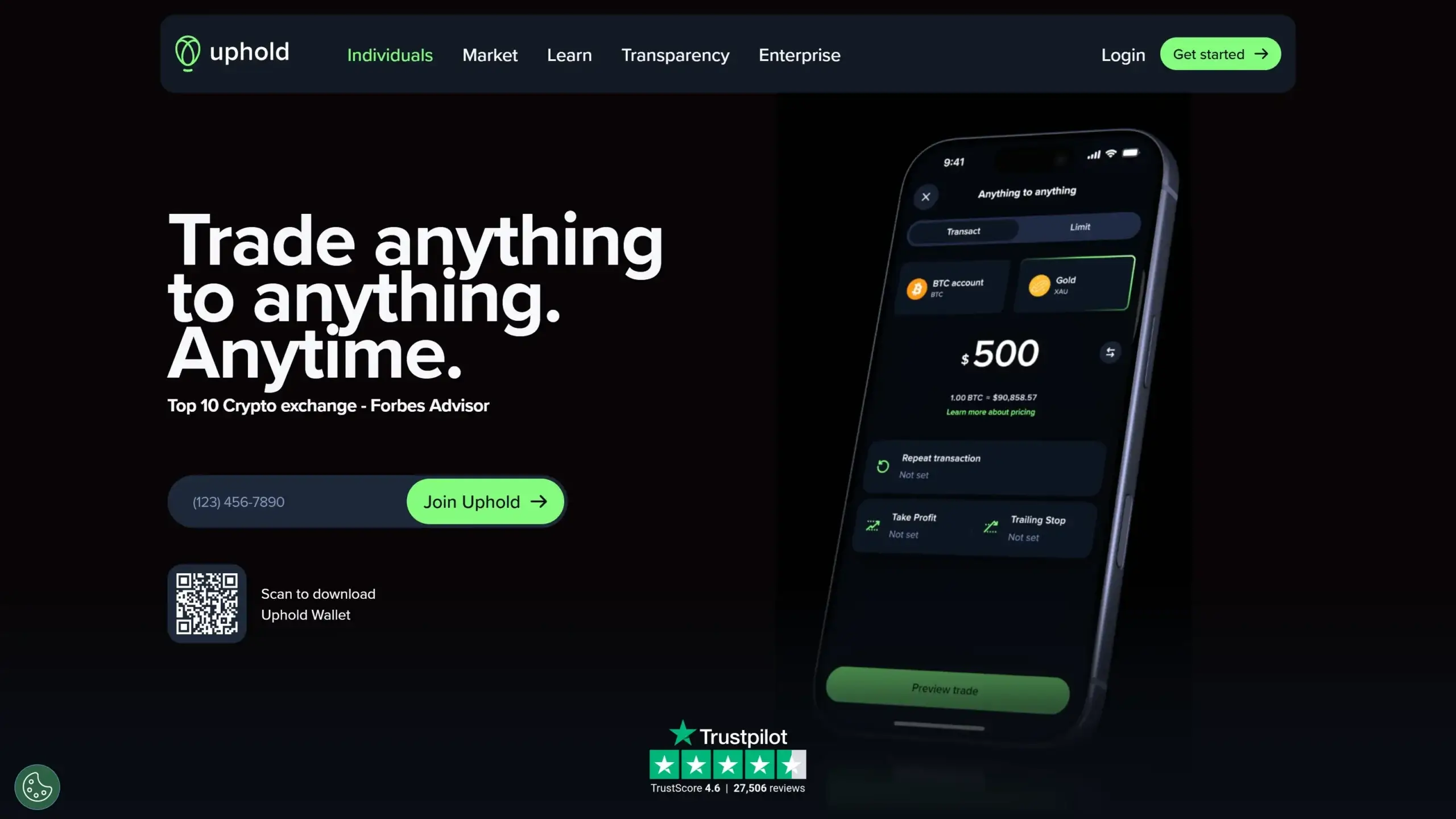
Uphold is worth considering when a supported asset or a direct conversion is more useful to you than an exchange terminal. Free ACH funding avoids the card deposit charge, and you can inspect the amount you will receive before accepting the quote.
Frequent traders have less reason to accept the spread. A limit order controls the price at which you transact without giving you access to a cheaper Pro account. The Coinbase trading review explains an alternative with separate simple-buy and order-book pricing.
Who Uphold Is Best For And Who Should Skip It
Uphold's value depends on how often you convert assets and how soon you need to move the proceeds. A user holding coins for months encounters the spread less often than someone repeatedly entering and exiting positions.
Buying on Uphold specifically to transfer into Vault also requires checking whether Vault accepts the asset. Its supported tokens are a smaller set than those you can trade.
Features And Services
The Uphold app connects products that do not share one custody or protection arrangement. Opening a securities or cash-interest product introduces another provider even when you keep using the same app.
Uphold Securities Inc. supplies equities, and Atomic operates the USD Interest Account's cash-sweep arrangement. Third-party lending has separate counterparty and collateral risks. Ordinary crypto balances remain outside bank deposit insurance.
Supported Assets And Markets
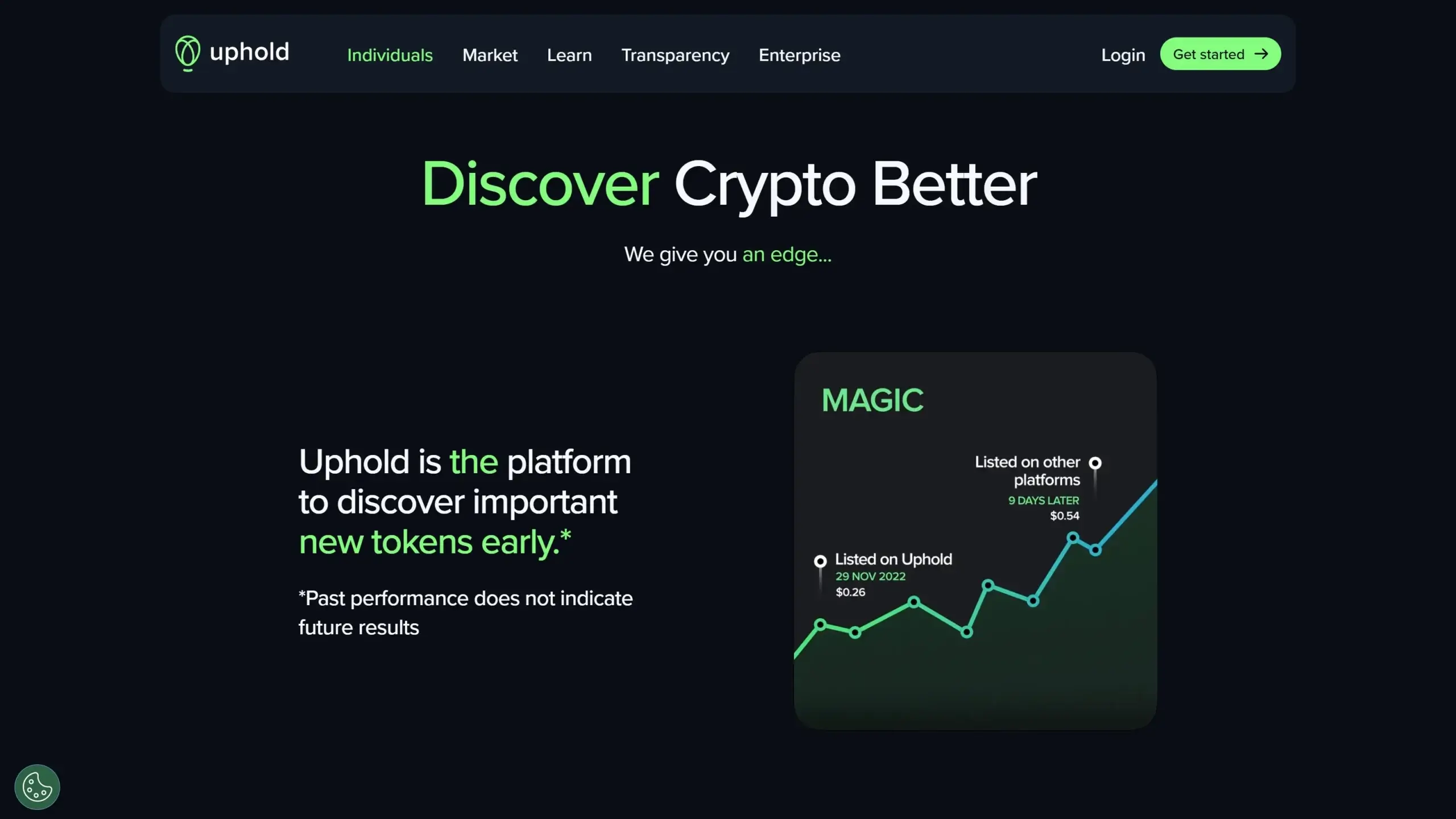
Uphold supports major coins, stablecoins and additional tokens. Its Vault, card and enterprise material uses differently scoped asset totals, leaving no single reconciled U.S. crypto count.
Foreign-currency exposures can be ledger entries tracking exchange rates, without a depositable or withdrawable foreign-cash balance. Metals and securities are separate asset classes.
Liquidity, Order Types, And Trading Limits
Uphold obtains liquidity from external exchanges and providers. Its limit, take-profit and trailing-stop instructions automate the conditions for a trade, but they do not expose a conventional retail matching engine or establish a maker fee.
Trading limits depend on the asset and funding method. Compare the received amount at the order size you intend to use. The review of Kraken Pro's tools explains how a visible order book changes that workflow.
Staking And Rewards
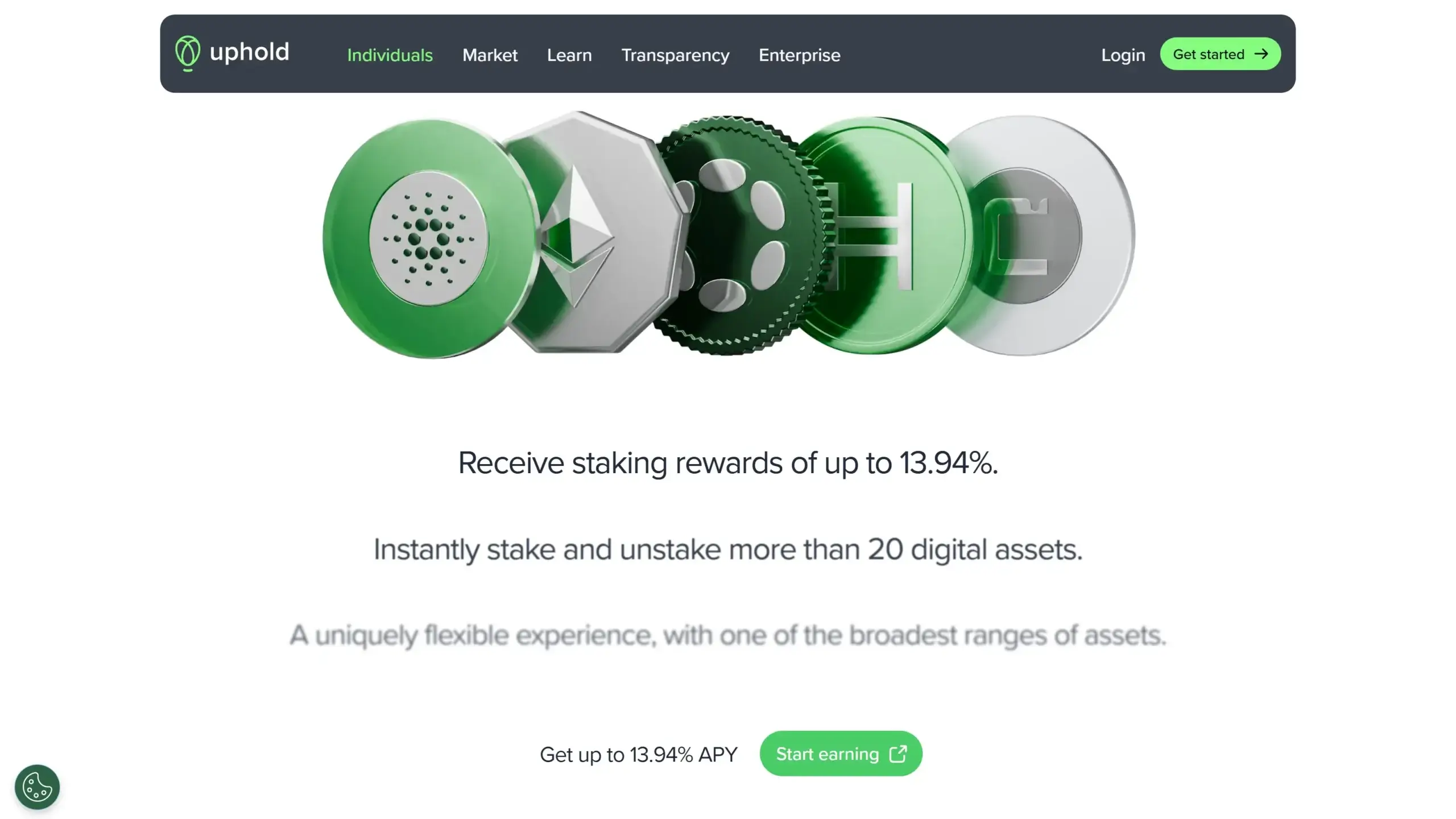
Flexible Staking permits normal trading access to participating balances. Boosted Staking commits assets to a protocol process that can delay an exit. Those differences affect both the commission and the amount available to withdraw.
Compare exchange staking commissions and exit times if rewards are your main reason to open an account. Flexible enrollment lets Uphold stake a portion of eligible holdings. You cannot choose individual assets within that enrollment, so excluding one requires opting out of Flexible Staking.
Card
The Essential debit plan has no annual fee and advertises 2% XRP rewards, capped at $120. Elite costs $99.99 annually and advertises 4% on crypto or metals spending and 3% on fiat or stablecoin spending, capped at $300 monthly. These reward rates apply for three months after qualifying activation on or after January 1, 2026.
The card excludes Louisiana, New York and U.S. territories. Spending crypto can realize a taxable disposal, and promotional rewards should not be treated as a permanent offset to trading costs. The offer page does not specify the Essential cap's reset period or the ongoing reward rate after the promotion. The Uphold debit-card assessment covers the separate spending decision.
Wallet And Self-Custody Options
Vault gives you two signing keys and keeps a third with Uphold. Any pair can authorize movement, so your keys can move assets without the company. Uphold can assist if one user key is lost, but losing both without backups can permanently remove access.
Vault supports BTC, HBAR, XRP and selected XRPL tokens, including RLUSD, CORE and SOLO. It requires a mobile subscription, with the current price shown during setup. Compare wallets with independent recovery if you want to manage access entirely outside the exchange app.
API And Programmatic Trading
Uphold's developer material centers on integrations for businesses. Enterprise connectivity should not be assumed to give every retail customer a bot-trading interface with identical permissions or pricing.
Confirm personal trading-bot access with Uphold before building against enterprise documentation.
Fees And Pricing
Uphold's July 1, 2026 fee schedule puts the typical BTC and ETH spread above 2%. Retail conversions use this quoted spread rather than a maker/taker schedule.
A $5,000 BTC trade implies approximately $102.50–$110 in spread at those published rates, before any funding charge. That is an illustration using the schedule, not a guaranteed executable quote.
Hidden Costs To Watch On Uphold
The funding choice and transaction size can add charges beyond the crypto spread.
- Eligible trades below $500 add $0.99. Listed exemptions include stablecoin trades and specified payment or order types.
- A crypto-to-stablecoin conversion takes the higher applicable asset-class rate, so an altcoin sale does not inherit stablecoin pricing.
- Selected USD and major USD-stablecoin conversions qualify for parity pricing while parity stays within 0.2%. The rolling monthly volume allowance is $20,000.
- The instant U.S. cash-out fee is 1.75%, subject to a minimum charge of $1.
Standard ACH avoids a funding markup, but it cannot remove the conversion spread. Check the final received amount even when using a limit instruction.
Deposits, Withdrawals, KYC And Availability
Uphold separates the ability to trade a deposit from the ability to withdraw it. A newly funded balance can be usable for purchases while the bank transfer remains unsettled.
If an ACH bank was not linked through Plaid or loses that connection, a 65-day restriction may prevent withdrawal to another destination. Once the deposit settles, return to the originating bank remains possible. This is not a universal 65-day freeze on all funds.
What US Users Need To Check Before Signing Up
Uphold's state money-transmitter coverage provides a defined U.S. operating framework. It does not give every state the same products or turn a pending license application into an approval.
The current U.S. staking terms exclude Washington from both modes. That restriction is separate from general account access and must be checked before funding specifically to earn staking rewards.
Payment Rails, Networks, And Limits
A withdrawal can begin only after funds have cleared and Uphold permits the destination. Processing then depends on the selected rail, so an instant method cannot bypass an unsettled deposit.
Fiat Rails By Region
For the scored U.S. account, standard ACH is the bank route without a platform fee. Other jurisdictions use separate terms.
Uphold's EEA notice says its MiCAR application remains under review, while the agreement body also contains CASP-authorization wording. Until those statements are reconciled, unrestricted EEA trading should not be assumed from the agreement alone.
Withdrawal Networks And Fees
Uphold lists network-specific withdrawal charges, including several stablecoin routes. A listed coin can still have fewer transfer options than a separate self-custody wallet.
Compare the received amount on a network supported by both endpoints. Uphold's network charge is an estimate that it can retain or subsidize when the actual broadcasting cost differs.
Verification Levels And Withdrawal Limits
Uphold uses identity and payment checks alongside method-specific limits. It does not publish a single withdrawal allowance that follows every customer through a numbered VIP ladder.
Daily, weekly and monthly method caps apply together. A monthly reset does not cancel a weekly cap, and an approved identity check does not remove settlement requirements.
Is Uphold Safe? Security, Custody And Proof Of Reserves
Uphold supplies account-security controls and publishes reserve-related information, but the trading account still requires trust in its custody and reporting. Its security claims should be distinguished from an independently accessible assets-and-liabilities attestation.
Controls
Uphold supports authenticator-app and SMS two-factor authentication. Its security page describes continuous monitoring, penetration testing and a public bug-bounty program. It states that it has SOC 2 Type 2, ISO 27001 and PCI DSS credentials. Retail hardware-key support and withdrawal allowlisting are not disclosed.
Custody And Insurance
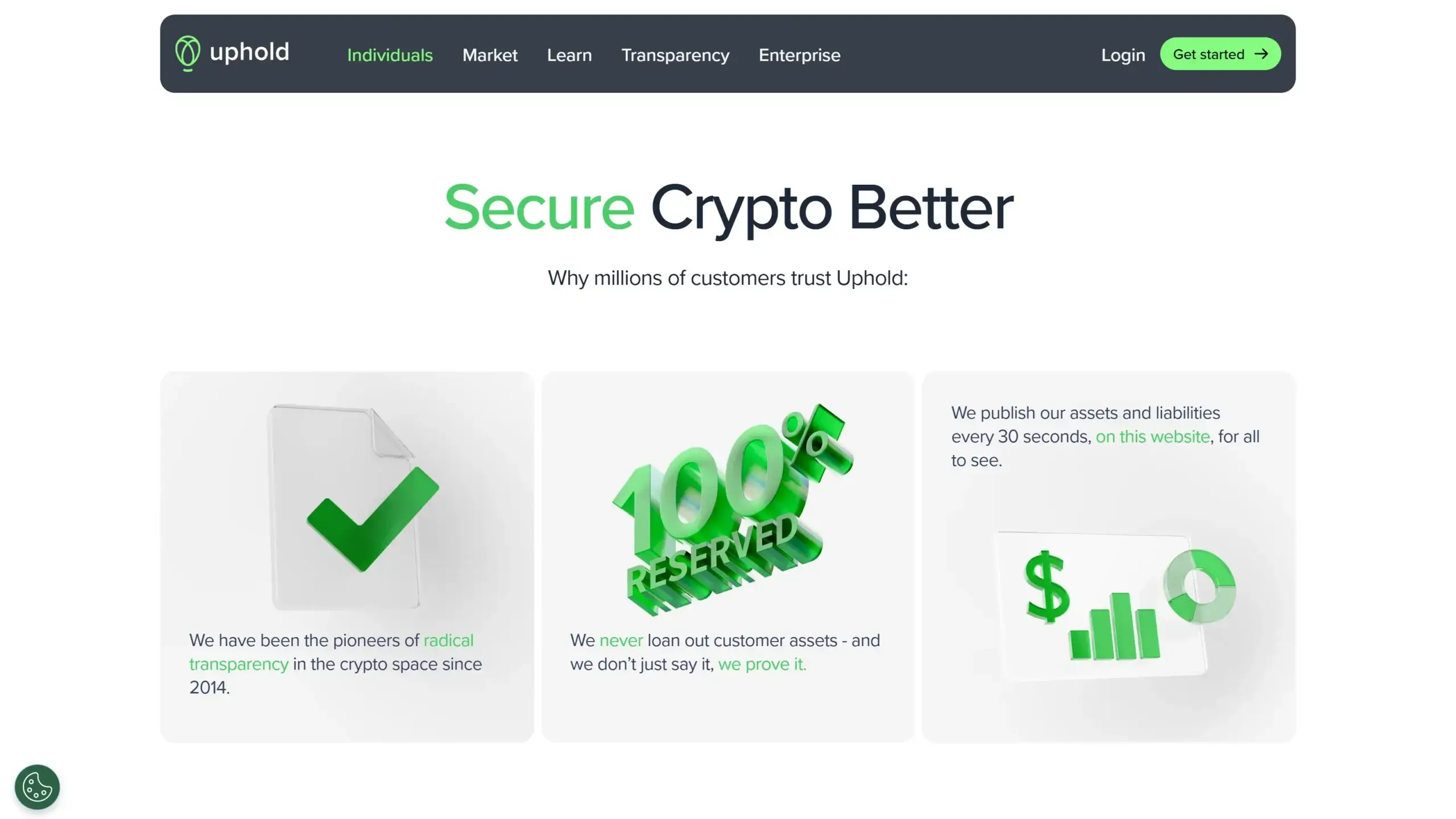
Uphold says ordinary customer funds are fully reserved and not lent without participation in staking or DeFi lending. A precise cold-storage allocation and exchange-wide crypto insurance limit are not publicly established. Vault's user-held keys should not be used to describe security of the custodial trading balance.
Eligible USD held at Cross River Bank can receive conditional FDIC pass-through protection. Atomic's separate cash-sweep program has its own insurance conditions. Neither arrangement insures the market value of crypto or makes a crypto withdrawal reversible.
Proof Of Reserves Or Audits
Uphold describes real-time asset and liability reporting, but the current public transparency page requires login to view reserve tiers. It does not expose a customer balance-inclusion proof. Although Uphold's security page describes its reserve technology as independently audited, a current public report establishing complete liabilities is not supplied there.
Reserve disclosures are one consideration when assessing an exchange's safety. A self-reported reserve percentage is neither deposit insurance nor a promise that a flagged withdrawal will be released immediately.
Incidents And Remediation
In April 2026, New York's Attorney General announced a settlement requiring Uphold to pay $5 million to customers harmed by its historical promotion of CredEarn. Cred was a third-party lender that failed in 2020. The settlement also directed any money Uphold receives from Cred's bankruptcy proceedings to harmed customers and required changes to its review of third-party investment products. The case concerns lending promotion, making due diligence important when considering another yield product offered through the app.
App, UX And Customer Support
The Uphold website and mobile apps emphasize choosing a source asset, a destination and a received amount. Vault requires the phone that holds its signing key, so desktop access does not cover every product.
UI And Navigation
Review the conversion preview before approval and distinguish trading balances from Vault or another provider's product. Limit instructions add automation, but there is no hidden Pro pricing screen to switch to.
Mobile App
iOS and Android support the main account workflows. Vault operates through mobile, while its subscription is managed through the applicable app store. Retain backups independently of the phone before relying on assisted recovery.
Reliability And Status Page
Uphold's public status service helps identify platform incidents. An operational status indicator cannot diagnose an account-specific compliance hold.
Plan around the published settlement allowance when cash must reach a bank by a deadline. Leave additional time for a payment review or a receiving-bank delay.
Customer Support
Uphold routes general questions through its help center and support requests. State-specific complaint procedures offer escalation paths, but they are not a promise of round-the-clock general phone support.
- Submit account and payment issues through authenticated support.
- Keep transaction IDs and the affected bank method with a withdrawal request.
- Follow the relevant state complaint procedure if a formal complaint remains unresolved.
Support can investigate a hold or failed payment. It cannot guarantee recovery of a transaction sent to an incompatible blockchain address.
Reporting And Tax Records
Uphold provides a transaction-history CSV with origin, destination and fee fields. U.S. tax forms depend on the activity and tax year, while monthly statements are not offered uniformly across every location. Keep external wallet records alongside these downloads because an exchange export alone does not establish the acquisition cost of coins bought elsewhere.
Uphold Alternatives
-


Coinbase
Coinbase fits U.S. users who fund by ACH and use Advanced, but Simple Buy costs and regional product rules require attention.
-

Kraken
Kraken combines quarterly reserve-inclusion checks with separate Pro trading tools and account security controls. Its entry spot fees and funding-related withdrawal holds are the main tradeoffs.
-

Gemini
Gemini offers U.S. access, free ACH, and documented controls. Compare alternatives for lower entry fees or access in more countries.
-

Robinhood
Free standard ACH and crypto near your investments, with different pricing for market maker and exchange-routed orders.
Coinbase and Kraken are relevant when order-book pricing or trading controls are the deciding factors. Two other U.S. options address disclosure and brokerage preferences.
| Alternative | Better For And The Catch |
|---|---|
| Coinbase | A shared simple-buy and Advanced balance. The basic purchase screen can still be costly |
| Kraken | Dedicated Pro trading and reserve-inclusion checks. Funding-related holds still need attention |
| Gemini | Audited corporate disclosures and ActiveTrader. Entry fees are 0.60% maker and 1.20% taker |
| Robinhood | Crypto alongside securities accounts. Routing choice changes pricing, and coin access differs by platform |
Uphold is easiest to justify when direct conversions or its staking modes match an actual need. For a different account structure, the Gemini account review covers ActiveTrader, while the evaluation of Robinhood's crypto account explains brokerage-linked trading.
Uphold Category Scores
These scores highlight how this review performs in specific categories, with each score tailored to the focus of that category.
Final Verdict
Uphold earns 6.0/10 for its U.S. custodial retail account. Direct asset conversions, bank funding and two staking modes provide useful functionality. The cost of ordinary crypto trades, limited retail execution tooling and incomplete public verification of custody and reserves constrain the result. Choose Uphold if you have checked the specific asset, accept the quote and can allow time for bank-funded withdrawals. A dedicated exchange is more suitable if you require an order book with maker/taker pricing. Automated traders also need documented retail API access.
Disclaimer: CryptoSlate may receive a commission when you click links on our site and make a purchase or complete an action with a third party. This does not influence our editorial independence, reviews, or ratings, and we always aim to provide accurate, transparent information to our readers.