
How BlackRock’s Bitcoin ETF shapes the crypto market
CryptoSlate's latest market report dives deep into the meteoric rise of BlackRock's Bitcoin ETF to understand how it positioned itself at the forefront of the crypto market.

Introduction
BlackRock is the world’s largest asset manager, with over $9 trillion in assets under management (AUM). Founded in 1988, the company has consistently expanded its influence across various asset classes and financial products, establishing itself as a formidable force in the traditional financial market. Its size and market presence enable it to influence global financial trends significantly.
BlackRock’s journey into the crypto market began with a strategic approach to digital assets. The company initially dipped its toes into crypto by offering private Bitcoin funds to its clients. This cautious entry allowed BlackRock to gauge market interest and regulatory landscapes without significant exposure. The move was part of a broader strategy to integrate innovative financial instruments into its extensive portfolio.
In early 2023, BlackRock made a decisive move by filing for its spot Bitcoin ETF, IBIT. This product quickly gained attention due to BlackRock’s strong market reputation and investor confidence in its management capabilities. The initial application faced rigorous scrutiny and required multiple revisions to meet the US Securities and Exchange Commission (SEC) standards. Despite these challenges, the market response was overwhelmingly positive, reflecting the growing demand for regulated Bitcoin investment products.
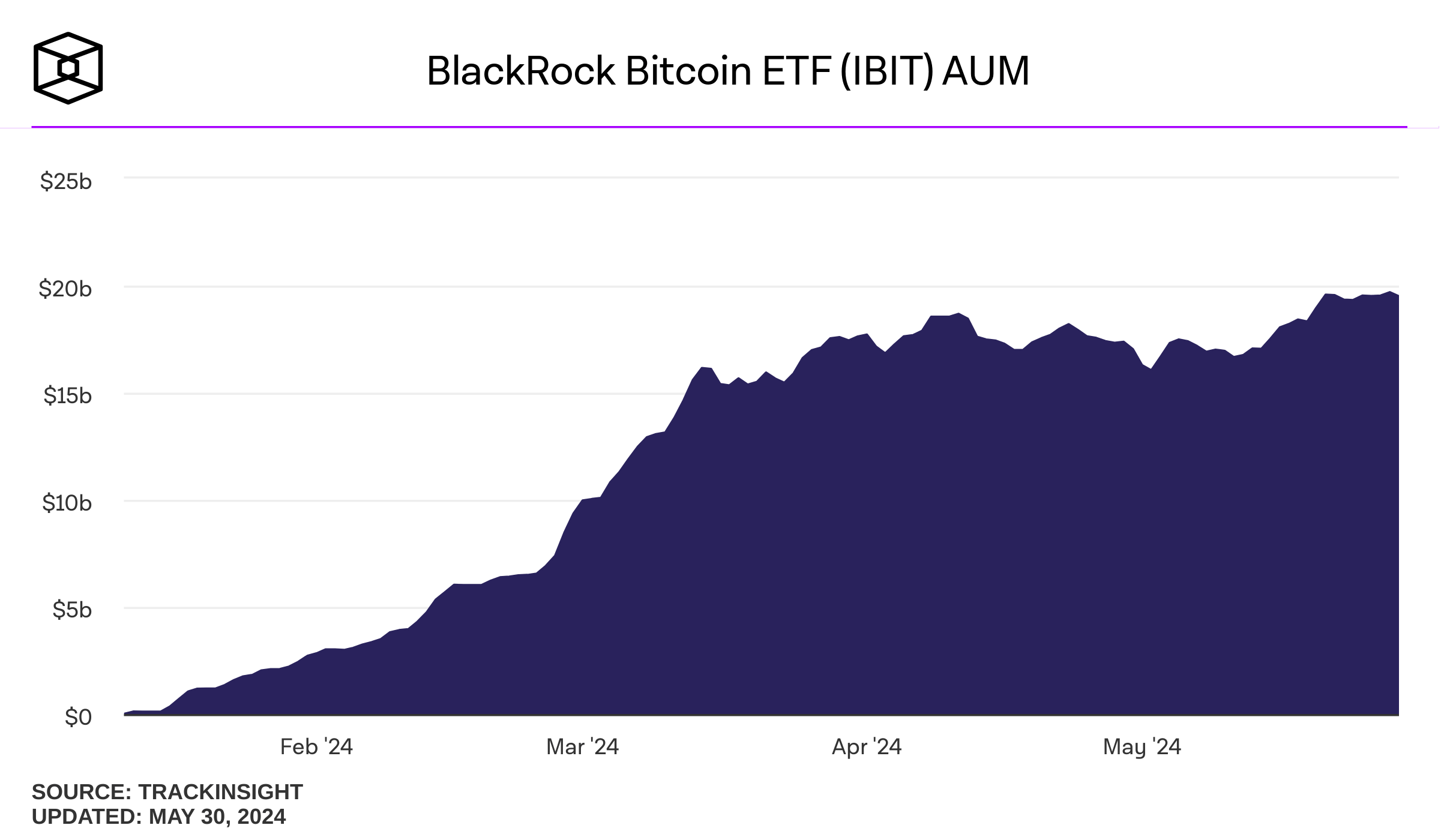
IBIT’s rapid ascent has been one for the books. Less than five months after its launch, it became the fastest ETF product to reach $20 billion in AUM, setting a new benchmark in the industry. This achievement shows the appetite for Bitcoin exposure among institutional and retail investors. As of May 31, IBIT holds the title of the largest spot Bitcoin ETF on the market, a testament to its robust design and strategic marketing.
In this report, CryptoSlate will explore the factors contributing to BlackRock’s meteoric rise in the Bitcoin ETF market. Examining IBIT’s growth trajectory, marketing strategies, and regulatory compliance will provide insights into how BlackRock has positioned itself at the forefront of the crypto ETF landscape. Additionally, the report will assess the broader implications of BlackRock’s market presence in the crypto industry, including its impact on investor confidence, market stability, and future trends.
The rise of BlackRock’s IBIT
BlackRock’s entry into the Bitcoin ETF market began with the filing of its spot Bitcoin ETF application, IBIT, in January 2023. This marked a significant step for the asset management giant as it aimed to bridge the gap between traditional finance and the crypto market. The initial filing faced several rounds of revisions to address concerns from the US Securities and Exchange Commission (SEC). These changes included enhanced security measures, improved transparency protocols, and detailed compliance frameworks to meet regulatory standards.
The market reaction to BlackRock’s IBIT filing was overwhelmingly positive. Investors and market analysts viewed BlackRock’s move as a strong endorsement of Bitcoin’s legitimacy as an investment asset. The initial excitement was driven by the company’s reputation in the financial world, which instilled confidence in the new product’s stability and potential.
Compared to its competitors, IBIT quickly distinguished itself. While other spot Bitcoin ETFs, such as those by Fidelity and VanEck, also aimed to provide regulated Bitcoin exposure, IBIT’s rapid success can be attributed to several unique factors. First and foremost, BlackRock leveraged its extensive marketing network to promote IBIT effectively. This included targeted campaigns across various media platforms, highlighting the ETF’s benefits and the company’s expertise in asset management.
Investor confidence was another critical factor. BlackRock’s established presence in traditional finance reassured investors of IBIT’s credibility. This was particularly important for institutional investors who required a reliable and trustworthy product to venture into the volatile crypto market. Institutional support further bolstered IBIT’s growth, with several large financial institutions backing the ETF, enhancing its market credibility.
Regulatory backing played a crucial role in IBIT’s rapid ascent. The detailed and rigorous compliance measures implemented by BlackRock ensured that IBIT met all necessary regulatory standards, making it a preferred choice among cautious investors. Furthermore, the ETF’s competitive fee structure made it an attractive option. Compared to other Bitcoin ETFs, which typically have expense ratios ranging from 0.40% to 0.70%, IBIT offers a lower fee of 0.25%. This competitive fee structure attracts cost-conscious retail investors and appeals to institutional investors looking for cost-effective investment vehicles.
Within months of its launch, IBIT reached a remarkable milestone: It became the fastest ETF product to achieve $20 billion in assets under management (AUM). This rapid growth underscored the significant demand for regulated Bitcoin investment products and highlighted BlackRock’s adeptness in capitalizing on market opportunities.
In summary, IBIT’s rise can be attributed to a combination of strategic marketing, strong investor confidence, institutional support, robust regulatory compliance, and a competitive fee structure. These factors collectively positioned IBIT as a leading product in the Bitcoin ETF market, setting a new benchmark for the industry.

IBIT vs. GBTC
Grayscale’s Bitcoin Trust (GBTC) was launched in 2013 as the first institutional Bitcoin product, providing accredited and institutional investors with a regulated way to gain exposure to Bitcoin. GBTC allowed investors to trade shares in a trust that holds Bitcoin, effectively simplifying the process of investing in the digital asset without the need to purchase and store Bitcoin directly. This innovation marked a significant milestone in the crypto market, attracting significant institutional interest.
In 2015, GBTC received approval to trade publicly on the OTCQX market, which allowed individual investors to buy and sell shares of the trust.
In 2023, Grayscale initiated the transition of GBTC to a spot Bitcoin ETF, aiming to capitalize on the growing demand for more transparent and liquid Bitcoin investment products. This transition was motivated by the advantages ETFs offer over trusts, including lower fees, better liquidity, and reduced tracking errors. Despite these benefits, the approval process for GBTC’s conversion faced regulatory hurdles, similar to other spot ETF applications.
The investor demographics and market strategies for IBIT and GBTC differ significantly. IBIT targets a broader audience, including retail investors, leveraging BlackRock’s extensive marketing network and brand reputation. In contrast, GBTC has historically focused on institutional investors and high-net-worth individuals, building its market strategy around its pioneering status and established trust structure.
Analyzing the historical performance of IBIT versus GBTC reveals distinct patterns. IBIT, benefiting from its ETF structure, has shown lower volatility and more stable growth than GBTC. The ETF’s inherent liquidity and lower tracking errors contribute to its smoother performance. In contrast, GBTC has experienced higher volatility, partly due to the premium or discount to net asset value (NAV) that can develop in trust structures.
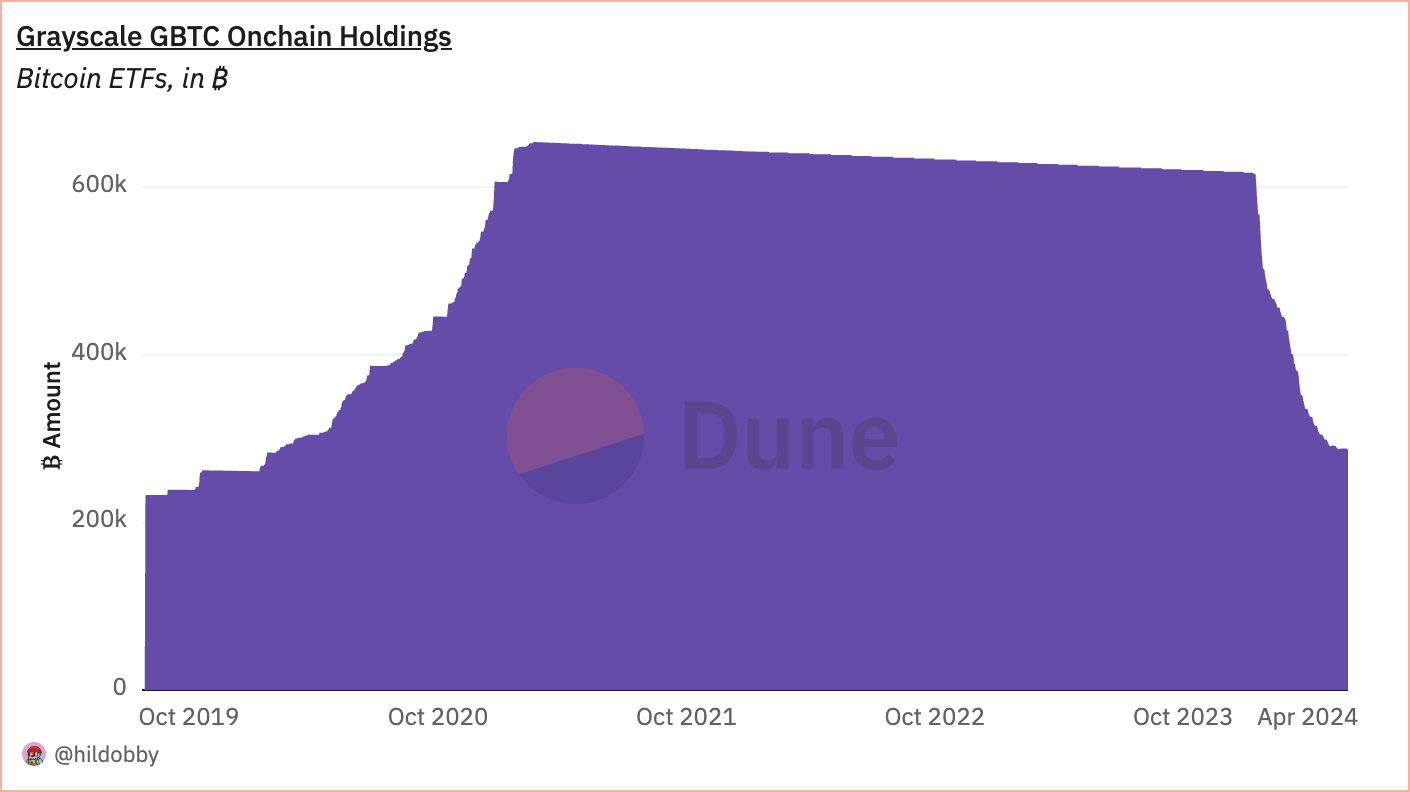
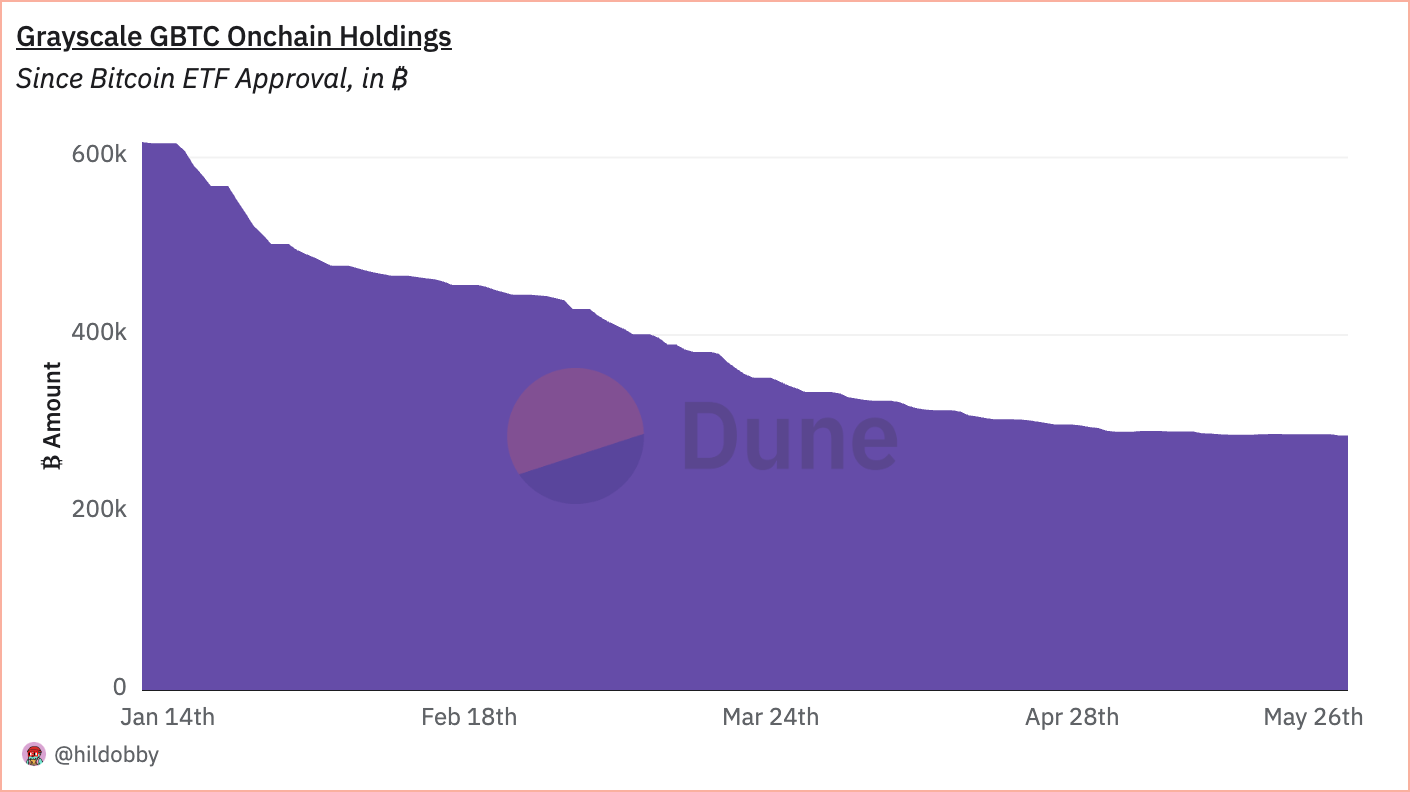
Since January 2024, GBTC has faced significant outflows, with investors moving their funds to more favorable investment vehicles like BlackRock’s IBIT. GBTC has seen outflows exceeding $1 billion in the first quarter of 2024 alone. This trend reflects the growing preference for ETFs over trusts, driven by the superior liquidity, lower fees, and enhanced regulatory clarity offered by ETFs. The outflows from GBTC highlight the shifting tides in the crypto investment market, where investors increasingly favor products that offer better lower fees and reduced operational complexities.
The structural differences between ETFs and trusts are pivotal in understanding their performance and investor appeal. ETFs, like IBIT, trade on exchanges and offer closer to real-time pricing, high liquidity, and lower management fees. Trusts, such as GBTC, often trade at a premium or discount to their NAV and can have higher fees due to additional management and storage costs. These structural distinctions influence investor choice and market trends.
Regulatory considerations also play a crucial role. ETFs generally face more straightforward regulatory paths and offer greater investor protections, contributing to their popularity. Trusts, while innovative, often encounter more complex regulatory challenges and operational constraints, affecting their market positioning.
BlackRock’s crypto strategy
BlackRock’s foray into the crypto market extends beyond its spot Bitcoin ETF. The firm has developed a strategy encompassing a range of crypto-related products and services. Notably, the company has launched several crypto funds, including blockchain technology ETFs and crypto asset funds, to provide diversified exposure to the digital asset ecosystem. For instance, its Blockchain and Tech ETF offers investors access to companies involved in blockchain technology.
Partnerships and collaborations have been pivotal in BlackRock’s crypto strategy. The firm has formed strategic alliances with key players in the crypto industry, including Coinbase and Fidelity. These partnerships have enabled BlackRock to integrate advanced trading and custody solutions into its offerings, enhancing the overall security and efficiency of its crypto investment products. Collaborating with established crypto entities also allows BlackRock to tap into its expertise and market insights, further strengthening its position in the digital asset space.
BlackRock’s involvement in the crypto market has profoundly impacted traditional financial markets. By legitimizing Bitcoin and other cryptocurrencies as viable investment assets, BlackRock has encouraged other institutional investors to explore the crypto space. This has led to a significant increase in institutional capital flowing into cryptocurrencies, driving market growth and maturity. The company’s active participation in the crypto market has also spurred regulatory developments as policymakers work to establish clearer guidelines for institutional crypto investments.
Institutional investment plays a crucial role in the broader adoption of crypto. BlackRock’s entry into the market has demonstrated that large-scale, reputable financial institutions are willing to engage with digital assets, thereby boosting investor confidence. This institutional backing is essential for the mainstream acceptance of Bitcoin and crypto, as it helps mitigate the perceived risks associated with these assets.
Its influence on the crypto industry, particularly Bitcoin, is substantial. Its robust marketing and educational efforts have raised awareness about Bitcoin’s potential as a store of value and investment asset. Moreover, the company’s substantial capital inflows into Bitcoin have contributed to price stability and market liquidity. As more institutions follow BlackRock’s lead, the crypto market will likely experience increased stability and growth.
BlackRock’s spot ETH ETF
BlackRock’s strategic expansion into the crypto market continues with its recent filing for a spot Ethereum (ETH) ETF in the United States. This move is a natural progression following the success of its Bitcoin ETF.
The updated application for the spot ETH ETF includes several key components and innovations designed to address regulatory concerns and enhance investor protection. BlackRock’s application emphasizes robust custody solutions, leveraging partnerships with established crypto custodians to ensure the secure storage of Ethereum assets. Additionally, the ETF is structured to provide daily liquidity, allowing investors to buy and sell shares on major exchanges, thus facilitating ease of access and trading.
One of the significant regulatory challenges BlackRock faces with its ETH ETF 19-b filing gaining approval from the US Securities and Exchange Commission (SEC). The SEC has historically been cautious about approving spot crypto ETFs, citing concerns about market manipulation, liquidity, and investor protection. However, the regulator approved the listing of ETH ETFs in the US in May, passing expectations set by market experts and analysts.
To be approved for listing, BlackRock’s application must address these issues comprehensively, demonstrating that the ETF will operate within a robust regulatory framework and adhere to stringent compliance standards. The expected approval timeline for the ETH ETF remains uncertain, with industry analysts predicting a final decision could come as early as the end of June, depending on the SEC’s review process and regulatory climate.
The potential impact of BlackRock’s spot ETH ETF on Ethereum prices and the broader market could be substantial. By providing a regulated and easily accessible investment vehicle, the ETF is likely to attract significant institutional and retail capital. This influx of investment could drive up demand for ETH, positively influencing its price. Moreover, the ETF’s approval could enhance the legitimacy of Ethereum as a mainstream financial asset, encouraging more investors to explore and invest in ETH.
Comparing BlackRock’s spot ETH ETF to other existing Ethereum-related financial products reveals several advantages. Currently, most Ethereum investment vehicles, such as Grayscale’s Ethereum Trust (ETHE), operate as trusts rather than ETFs. Like its Bitcoin ETF, BlackRock’s ETH ETF would offer near real-time pricing, lower fees, and greater liquidity, making it a more attractive option for investors.
Furthermore, the company’s entry into the Ethereum market is expected to increase competition among financial institutions offering crypto products, potentially leading to more innovative and investor-friendly solutions. The ETF’s launch could also drive broader market adoption of Ethereum, encouraging other firms to develop similar products and services, thereby expanding the overall market for ETH-related investments.
Conclusion
BlackRock’s rapid ascent in the Bitcoin ETF market has been remarkable. IBIT became the most prominent spot Bitcoin ETF in less than five months after its launch, amassing over $20 billion in assets under management (AUM). This achievement shows just how huge BlackRock’s presence and influence in the crypto industry are. The company’s success in the Bitcoin ETF market can be attributed to its extensive marketing, investor confidence derived from its standing in traditional finance, and strategic institutional support.
Comparing BlackRock’s IBIT to Grayscale’s GBTC shows the key differences between the products. Grayscale was a pioneer with its Bitcoin Trust, the first institutional BTC product. However, transitioning from a trust to a spot Bitcoin ETF has highlighted differences in investor demographics and market strategies. IBIT has attracted a broader institutional investor base, leveraging its reputation and lower fee structure to gain a competitive edge. Conversely, GBTC has faced challenges, including significant outflows since its ETF transition and higher volatility.
Looking ahead, the Bitcoin ETF market is poised for continued growth. As more institutional investors seek regulated and accessible crypto investment vehicles, ETFs like IBIT are likely to see increased inflows. This trend could drive further innovation and competition, enhancing the overall market ecosystem. Additionally, regulatory clarity and advancements in custodial solutions will play crucial roles in shaping the market’s evolution.
BlackRock’s dominance in the crypto market has far-reaching implications. Its involvement has legitimized cryptocurrencies as viable investment assets, attracting substantial institutional capital. This influx of investment boosts market liquidity and stability and encourages other financial institutions to explore crypto opportunities. If BlackRock maintains its dominant position in the Ethereum ETF market, it could set new standards for crypto investment products, fostering broader adoption and innovation.
The crypto ETF landscape could see significant transformations. BlackRock’s leadership might spur the development of more diversified and investor-friendly products, driving competition and lowering fees. This evolution would benefit investors by providing a wider array of options and potentially enhancing returns.
More Market Reports


