

Admiral Samuel Paparo appeared before the Senate Armed Services Committee on Apr. 21 for a posture review for the US Indo-Pacific Command ahead of the fiscal year 2027 defense request.
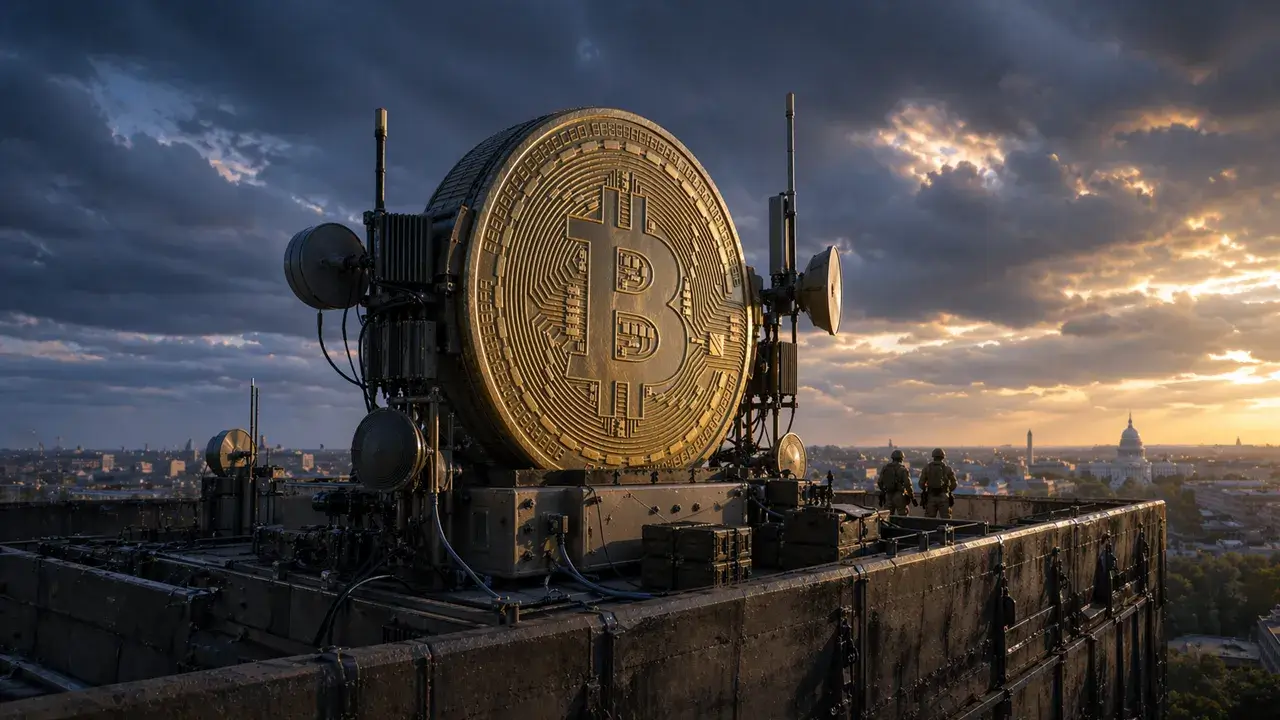
Paparo reportedly disclosed that INDOPACOM is running a Bitcoin node and treating the protocol's architecture as operationally relevant for securing networks and projecting power.
In February 2024, Paparo told Sen. Elizabeth Warren that cryptocurrency's “opaqueness” was a key enabler of proliferation, terrorism, and illicit trafficking. He added that crypto “makes the world less secure,” and acknowledged that blockchain methodologies held promise for ensuring financial transactions.
Washington's dominant framing was that crypto was a compliance headache, a sanctions-evasion tool, and a revenue stream for North Korea.
Now, Paparo treats Bitcoin's cryptography, blockchain accountability, and proof-of-work as components of a toolkit for network security and power projection. In two years, the vocabulary changed from pathology to protocol. This could potentially be related to SoftWar author and US Space Force service member Jason Lowery's work in this area.
How Washington built the policy foundation
Paparo's 2026 remark arrived within a policy architecture that had been taking shape for more than a year.
On Jan. 23, 2025, the White House made it US policy to protect lawful access to open public blockchain networks and promote dollar-backed stablecoins worldwide. That order drew a line in Washington, recognizing open public blockchains as infrastructure and separating them from the broader “everything crypto is suspect” category.
On Mar. 6, 2025, the White House established a Strategic Bitcoin Reserve, directing that Bitcoin placed in the reserve would not be sold, giving it the sovereign-asset treatment the US government applies to gold.
On July 18, 2025, the GENIUS Act passed, and the White House framed it as a national security instrument, tying stablecoin regulation to the dollar's status as a reserve currency and expanding the scope.
By April 2026, Treasury had proposed rules to implement the GENIUS Act's AML requirements and had launched a cybersecurity information-sharing initiative for digital asset firms, describing those firms as a critical part of the US financial sector whose resilience was relevant to the broader system.
That placed digital asset infrastructure inside critical system thinking, the same framing Paparo's posture statement uses for INDOPACOM's own mission networks.
Why the venue changes everything
INDOPACOM's April 2026 posture statement describes a command built around denying China's objectives, achieving “information and decision superiority,” and deploying a “data-centric Zero Trust Architecture Mission Partner Environment” across its partner network, with resilient C5ISRT systems capable of operating through contested domains.
Inside a hearing room devoted to China deterrence, cyber effects, and zero-trust mission networks, a Bitcoin protocol remark lands inside the command's own strategic vocabulary, placed there by the commander himself.
Reuters reported in January 2026 that the China-led mBridge platform had processed more than $55.5 billion across more than 4,000 cross-border transactions, with the digital yuan accounting for roughly 95% of volume.
The Indo-Pacific theater is already a contest over payment and settlement architecture, and Paparo's command is the US institution most directly responsible for managing that contest.
The reclassification of Bitcoin coexists with Washington's active enforcement posture.
Treasury's March 2026 congressional report said North Korean cybercriminals stole at least $2.8 billion in digital assets between January 2024 and September 2025, including the $1.5 billion Bybit theft the FBI attributed to Pyongyang.
Treasury's 2026 National Money Laundering Risk Assessment described illicit actors as preferring stablecoins for laundering due to their liquidity and stability.
Washington's current posture is a bifurcation between open public blockchains receiving infrastructure-grade protection, Bitcoin receiving reserve-asset treatment, stablecoins receiving statecraft framing, and the rest of the digital asset ecosystem still runs through a hard compliance lens.
Washington is parsing the stack by protocol type, giving each layer its own policy treatment, and the April 2026 Treasury cyber initiative fits that model precisely.
How this resolves
The bull case runs through confirmation and extension. If other defense or intelligence agencies begin using similar protocol-level language, NDAA or national strategy documents could eventually treat public blockchain participation as part of resilience planning or as an adversary-attribution tool.
The trajectory from the January 2025 executive order through the Strategic Bitcoin Reserve and into an INDOPACOM posture hearing supports that arc, with Bitcoin completing the move from asset class to strategic substrate.
The bear case runs through scandal and reversion. A major DPRK-linked theft, a ransomware wave timed to a geopolitical flashpoint, or a high-profile sanctions-evasion case could overwhelm the infrastructure argument and push officials back toward treating Bitcoin as inseparable from the broader illicit-finance problem.
Paparo's own 2024 language shows how quickly that framing can dominate a hearing room, and Treasury's compliance lens stayed fully in place throughout the policy evolution.
If Paparo's remark holds, the surrounding policy record is already rewriting which rooms Bitcoin gets discussed in.
A reserve asset enters budget, fiduciary, and sovereign-wealth conversations. A protocol woven into zero-trust mission networks enters resilience, attribution, and adversary-competition conversations.
A protocol relevant to zero-trust mission networks falls into a different policy category than a ransomware payment vehicle.
Once those separations become part of the official vocabulary, the audience for Bitcoin in Washington expands well beyond financial regulators and compliance officers.
Mentioned in this article



Editorial credits