Generational wealth shift poised to reshape U.S. investment trends and market dynamics
The mass retirement of Baby boomers' is poised to trigger a seismic shift in the U.S. financial landscape.



Quick Take
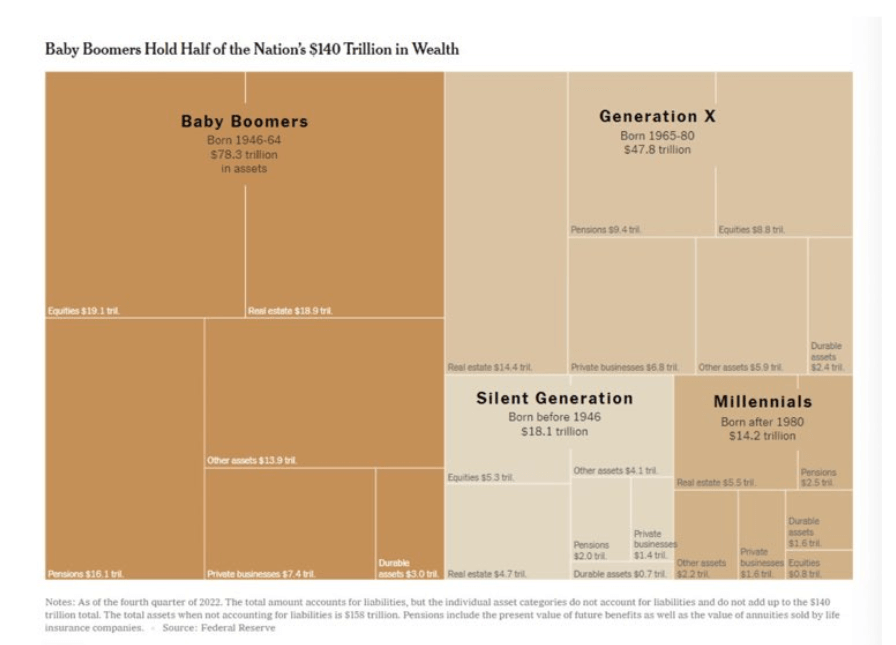
U.S. wealth, as per Federal Reserve data, stands at approximately $140 trillion, a vast treasure trove colored by generational divisions. These differences are thrown into stark relief when one considers that baby boomers oversee approximately $78 trillion in assets, predominantly in equities and real estate. Generation X follows with a respectable $47.8 trillion. However, millennials, tasked with navigating an increasingly complex financial landscape, hold a mere $14 trillion, while the silent generation commands an estimated $18 trillion.
These figures underscore a robust wealth gap between the generations, where the youngest are at a significant disadvantage. However, the gears of time are inexorable and bring with them inevitable change. As baby boomers move into retirement and bequeath their assets to future generations, and millennials step into their prime earning years, shifts in asset valuations are anticipated.
This generational wealth transition could have a profound impact on the financial landscape, leading to potential changes in investment trends and market dynamics. As this wealth cycle evolves, monitoring these shifts is crucial to understanding the future trajectory of the U.S. economy.