








Stablecoins
Why TRON’s $30 trillion lifetime volume could become a trap
TRON’s USDT dominance has made it a global settlement rail, but the same liquidity has also drawn illicit flows and raised the cost of winning regulated finance.

$631.19M traded Price signal supported
Trading Activity price-reliability indicator with 100 percent data coverage. Low activity replaces price-derived sentiment because the displayed market price may not be supported by meaningful trading.Target
Peg Health price-stability indicator with 0 percent data coverage. It measures observed market pricing, not reserve quality or redemption safety.30D -2.2% 24.4% below ATH
Price-based current market conditions indicator with 100 percent data coverage. This is not a price forecast.$631,191,583.63 traded over the last 24 hours. The available activity evidence is sufficient to retain the asset’s price-derived signal.
Low activity can make the displayed price sensitive to a handful of trades. Trading Activity assesses price reliability—not project development, legal status, reserves, or solvency.
Price movement Not interpreted while trading support is below the reliability threshold.
What it measures
The model combines reported 24-hour volume, market-cap turnover, valid-pair liquidity, active exchange breadth, and quote freshness. Missing optional evidence lowers coverage; missing volume or a known-stale quote suppresses price-derived interpretation.
Configured model weights
When inputs are missing, these configured weights are renormalized across the available evidence; data coverage records what is missing.
How to read it
Scores of 0–19 are dormant, 20–39 are thin, 40–69 are supported, and 70–100 are active. Scores below 40 withhold price-derived interpretation.
Logarithmic historical position supports it. The available evidence produces a bullish reading rather than a price forecast.
A complete ATL and ATH range is not available for this asset.
What it measures
The model converts price momentum, logarithmic historical position, milestone recency, and short-term volume confirmation into one 0–100 score. Missing evidence lowers data coverage instead of counting as neutral.
Configured model weights
When inputs are missing, these configured weights are renormalized across the available evidence; data coverage records what is missing.
How to read it
50 is the neutral midpoint. Scores of 60 or higher are bullish, 40 or lower are bearish, and 41–59 are neutral.
Showing 10 spot markets sorted by CoinMarketCap exchange rank. Markets excluded from CMC price or volume calculations are hidden.
| Pair | |||||
|---|---|---|---|---|---|
| 1 | TRX/USDT | $0.33 | $52.03M | 740 | |
| 2 | TRX/USDC | $0.33 | $2.95M | 618 | |
| 3 | TRX/KRW | $0.34 | $1.53M | 484 | |
| 4 | TRX/USDT | $0.33 | $6.2M | 648 | |
| 5 | TRX/USDT | $0.33 | $2.53M | 456 | |
| 6 | TRX/USDT | $0.33 Best price | $1.82M | 767 | |
| 7 | TRX/USDT | $0.33 | $5.99M | 624 | |
| 8 | TRX/USDT | $0.33 | $7.77M | 570 | |
| 9 | TRX/USDT | $0.33 | $9.84M | 677 | |
| 10 | TRX/USDT | $0.33 | $16.96M | 568 |
Affiliate Disclaimer: CryptoSlate may receive a commission when you click trading links on this page and complete an action with a third party. This does not influence our editorial independence or coverage.
TRON’s USDT dominance has made it a global settlement rail, but the same liquidity has also drawn illicit flows and raised the cost of winning regulated finance.
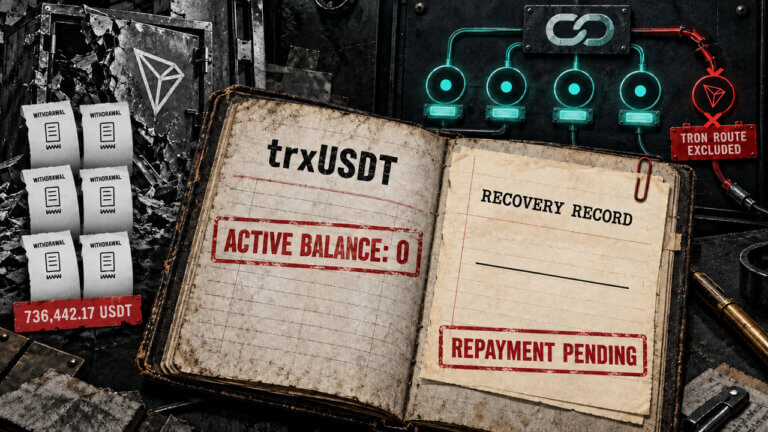
Providers retain a separate on-chain record of what they are owed, but Chainflip has not disclosed repayment timing.
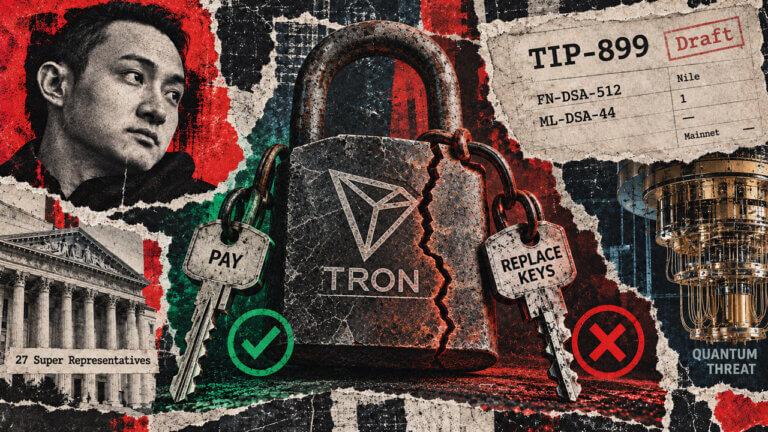
If validators disable a signing scheme, the draft design’s recovery path depends on which owner permissions survive.
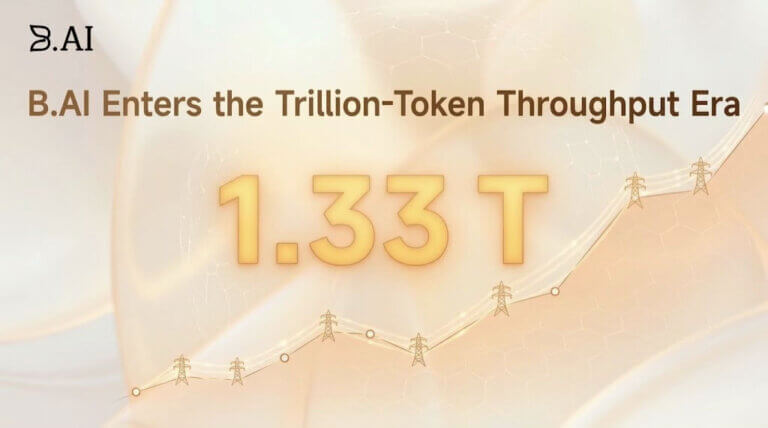
B.AI said its free model-access campaign drove 1.33 trillion daily tokens while it builds routing, payment, and agent collaboration tools.
See TRX across major fiat currencies and swap the active converter instantly.
Quick SelectUsing the live USD market price. Additional fiat rates will appear after the daily sync.
TRON (TRX) is a Layer 1 smart contract blockchain whose current market role is closely tied to stablecoin settlement, especially Tether (USDT) on TRON. The network began in 2017, launched its mainnet in 2018, and moved TRX from its earlier Ethereum-token phase onto TRON's own blockchain infrastructure.
TRX is the native asset of the TRON network. It is used for staking, voting, resource allocation, smart contract activity, DeFi collateral, and payments. Unlike a proof-of-work coin, TRX is not mined by users. New TRX is minted through protocol rewards, while TRX can also be burned when users pay for network resources such as Bandwidth and Energy.
TRON's strongest current use case is not the original entertainment-content narrative from its early years. It is stablecoin movement at scale. On Apr. 29, 2026, TRON had about $87.4 billion in stablecoin market cap, with USDT representing 97.83% of that value. The same snapshot showed about 11.33 million transactions and 2.94 million active addresses over 24 hours.
| Field | Detail |
|---|---|
| Asset | TRON |
| Ticker | TRX |
| Asset Type | Native Layer 1 blockchain asset |
| Launch | TRON was established in 2017, with mainnet launch in 2018 |
| Founder or Issuer | Founded by Justin Sun; ecosystem coordinated by TRON DAO |
| Consensus | Delegated proof of stake |
| Mineable | No |
| Max Supply | No fixed maximum supply shown by major market-data providers |
| Circulating Supply | 95B |
| Total Supply | 95B |
| Main Use Cases | Stablecoin transfers, staking and voting, smart contracts, DeFi, payments |
| Website | TRON DAO official resources |
| Explorer | TRONSCAN |
| Main Risk Areas | USDT concentration, delegated-validator concentration, issuer controls, regulatory history, wrong-network transfer risk |
TRX has no fixed maximum supply and roughly 94.78 billion TRX in circulating supply in current Apr. 29, 2026 market snapshots.
TRON uses a delegated proof-of-stake system based on elected Super Representatives. Any account can apply to become a Super Representative candidate by paying 9,999 TRX, and token holders can vote for candidates. The top 27 candidates by votes become Super Representatives and produce blocks for the network.
TRX staking gives users TRON Power, which is used for voting. Staking 1 TRX gives 1 TRON Power. Candidates ranked 28th to 127th become Super Representative partners, which can receive voting rewards but do not produce blocks.
TRON's fee model is built around Bandwidth and Energy rather than a simple gas-only system. Bandwidth measures transaction data size, while Energy measures computation used by the TRON Virtual Machine. Users can obtain resources by staking TRX. If they do not have enough available resources, TRX is burned to pay for the transaction or smart contract execution.
Smart contracts run on the TRON Virtual Machine. TVM has Ethereum Virtual Machine compatibility in some areas, but the systems are not identical. TRON uses an Energy model, different address behavior for some contract operations, and TRON-specific resource mechanics.
TRX does not have a fixed maximum supply in current major market-data listings. Its supply model is shaped by protocol rewards, voting rewards, and resource-related burns rather than a hard cap. That makes TRX different from assets such as Bitcoin, where issuance is tied to a fixed terminal supply.
| Supply Metric | Detail |
|---|---|
| Circulating Supply | 95B |
| Total Supply | 95B |
| Max Supply | No fixed maximum supply shown |
| Fully Diluted Valuation | $31.65B |
| Emissions or Issuance | New TRX is minted through block-production and voting rewards |
| Burns | TRX can be burned when users pay for Bandwidth or Energy |
| Unlocks | No major scheduled unlock cycle is central to TRX's current supply model |
| Treasury or Foundation Allocation | Historical launch allocation is less relevant than live supply, staking, and burn mechanics |
The key supply question for TRX is whether resource burns, network usage, and protocol rewards offset one another over time. The coin page should avoid calling TRX “deflationary” unless current net issuance and burn data are verified at the time of publication.
TRON is best understood as a high-volume settlement network for dollar-pegged tokens, especially USDT. As of Apr. 29, 2026, TRON had about $5.0 billion in DeFi total value locked, about $87.4 billion in stablecoin market cap, and nearly 98% USDT dominance among stablecoins on the chain.
| Context Item | What to Watch |
|---|---|
| Network Activity | Transactions, active addresses, stablecoin transfers, and fees |
| Stablecoin Concentration | USDT supply and transfer activity on TRON |
| Security Model | The 27 elected Super Representative block-producer set |
| Ecosystem | DeFi, payments, stablecoin settlement, wallets, and exchange withdrawals |
| Supply Mechanics | Protocol rewards, staking, and resource burns |
| Market Access | Exchange listings, liquidity, and supported TRX trading pairs |
TRON's stablecoin concentration is a strength and a risk. It gives the network a clear real-world use case, but it also means activity depends heavily on Tether's issuer policies, USDT liquidity, compliance actions, and exchange support.
Binance.US relisted TRX in April 2026, with TRX deposits opened on the TRON network and TRX/USD and TRX/USDT trading scheduled to begin on Apr. 16, 2026. That matters for U.S. market access, but it should be treated as an exchange-access update rather than a change to TRON's core network design.
TRON also has a regulatory history that readers should understand. In March 2026, the SEC filed a proposed resolution in its case involving Justin Sun, TRON Foundation Limited, BitTorrent Foundation Ltd., and Rainberry. A final judgment dated Mar. 9, 2026 ordered Rainberry to pay a $10 million civil penalty, while the broader matter was resolved through dismissal of remaining claims described in the SEC release and court filings.
TRON's main risk is concentration around USDT. On Apr. 29, 2026, USDT made up 97.83% of stablecoin value on the network, so changes in Tether policy, issuer-level controls, or stablecoin regulation could affect TRON activity more directly than on chains with a more diversified stablecoin mix.
The Super Representative model is another trade-off. A smaller elected block-producer set can support fast coordination and predictable block production, but it gives TRON a different decentralization profile from networks with larger validator sets. This is a design choice, not just a performance feature.
Users also need to distinguish TRX from TRC-20 tokens. TRX is the native asset of the TRON blockchain. USDT on TRON is a TRC-20 token. Sending TRX, USDT-TRC-20, ERC-20 USDT, or BEP-20 USDT to the wrong network or address type can result in loss.
Issuer controls are relevant for USDT users on TRON. The T3 Financial Crime Unit, a joint initiative involving Tether, TRON, and TRM Labs, had frozen more than $300 million in criminal assets by October 2025. That shows active compliance capabilities, but it also reminds users that issuer-controlled stablecoins are not the same as native, censorship-resistant assets.
| Guide | URL |
|---|---|
| TRON News | /news/tron/ |
| Best TRON Wallets | /crypto-wallets/tron-wallets/ |


TRON launched its token sale on Aug 31, 2017, completed it on Sep 2, 2017, raised $70,000,000.
TRON DAO is the community-governed decentralized autonomous organization responsible for stewarding the TRON public blockchain ecosystem.
TRON is a Layer 1 smart contract blockchain with TRX as its native asset. The network supports smart contracts, DeFi, staking, and payments, but its most important current role is stablecoin settlement, especially USDT transfers on TRON.
TRON uses delegated proof of stake. TRX holders can stake tokens to receive TRON Power, then vote for Super Representative candidates. The top 27 candidates produce blocks, while network resource costs are handled through Bandwidth and Energy.
TRX is used for staking, voting, paying for network resources, smart contract activity, DeFi collateral, and transfers. Users can also burn TRX indirectly when they do not have enough Bandwidth or Energy to cover transaction costs.
No. TRX is not mined through proof of work. New TRX is created by the TRON protocol through block-production rewards and voting rewards, while TRX can also be burned when users pay for network resources.
TRON does not have a fixed maximum supply shown by major market-data providers. CoinMarketCap and CoinGecko both list TRX with no fixed cap or infinite max supply, so supply analysis should focus on issuance, staking rewards, and resource burns.
TRON Power is voting power on the TRON network. Users receive it by staking TRX. Staking 1 TRX gives 1 TRON Power, which can be used to vote for Super Representative candidates.
TRX is the native asset of the TRON blockchain. TRC-20 USDT is Tether issued on TRON as a token. They use the same network, but they are different assets. Users should always match the asset and network before depositing or withdrawing.
TRON carries market, network, governance, issuer, and transfer risks. The network has high stablecoin activity, but that activity is concentrated in USDT. Users should also consider the 27-Super-Representative model, regulatory history, exchange support, and wrong-network transfer risk before moving funds.
As of Oct 14, 2026, TRON trades at $0.33.
TRON has a market capitalization of $31,645,122,995.70.
TRON has a 24-hour trading volume of $631,191,583.63.
TRON reached an all-time high of $0.44, recorded on Dec 3, 2024. It is currently 24.41% below its all-time high.
TRON recorded an all-time low of $0.001091, recorded on Sep 15, 2017. It is currently 30.43 thousand percent above its all-time low.