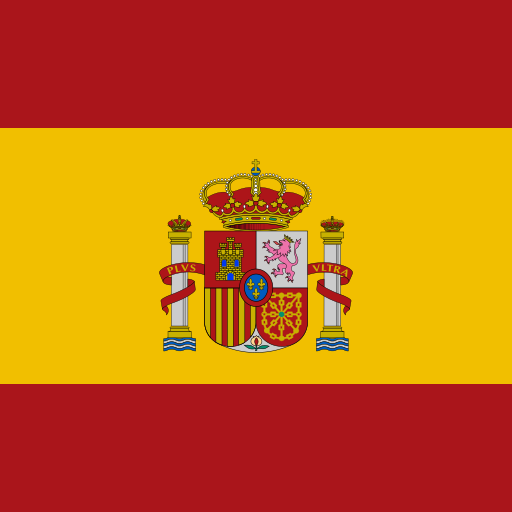
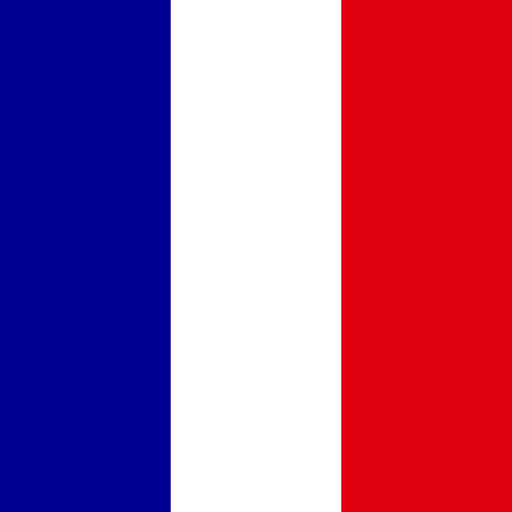
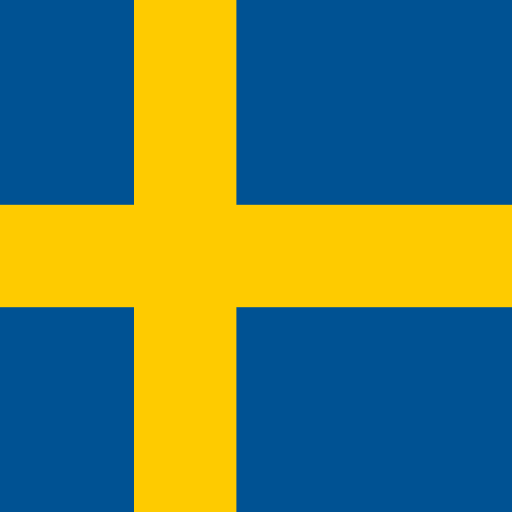
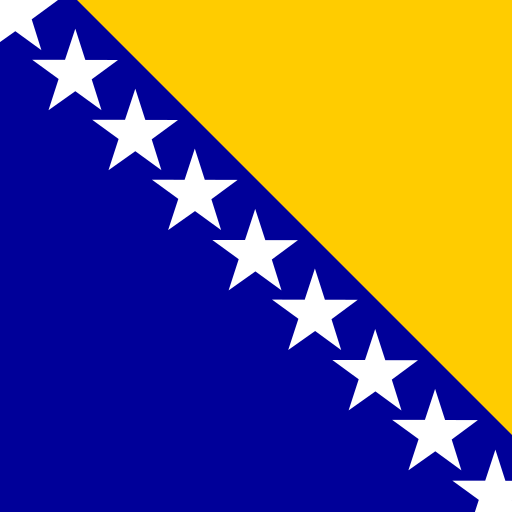
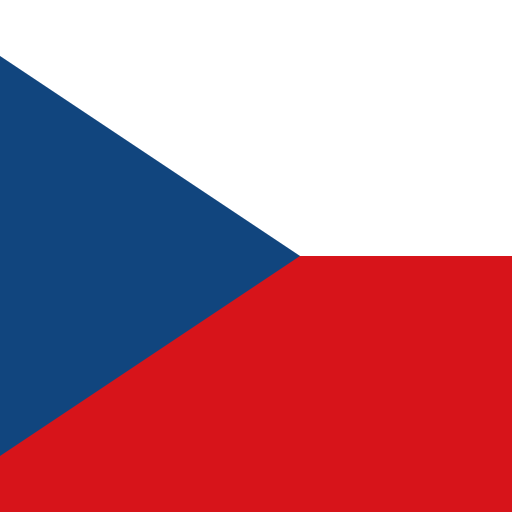
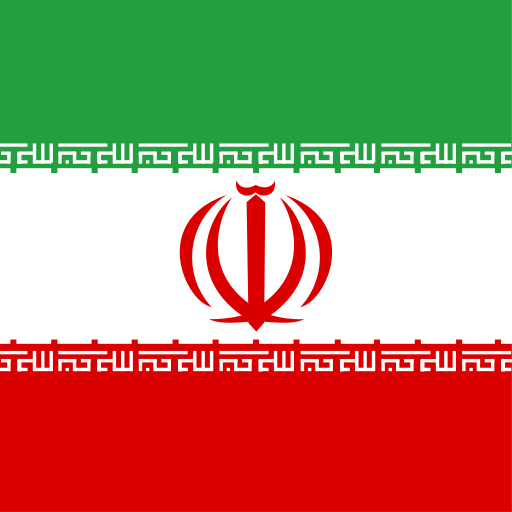
Spain at 17.5% and France at 17.3% sit almost level because this market is giving maximum credit to the sides perceived as having the cleanest current tournament profiles, while refusing to crown a dominant favorite more than a year before resolution. That tension matters: the board is saying the best team in the field still carries roughly five chances in six of falling short.
The favorite ceiling is the market’s main message
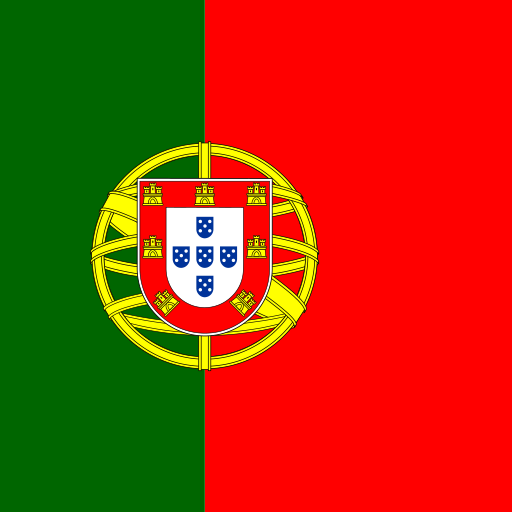
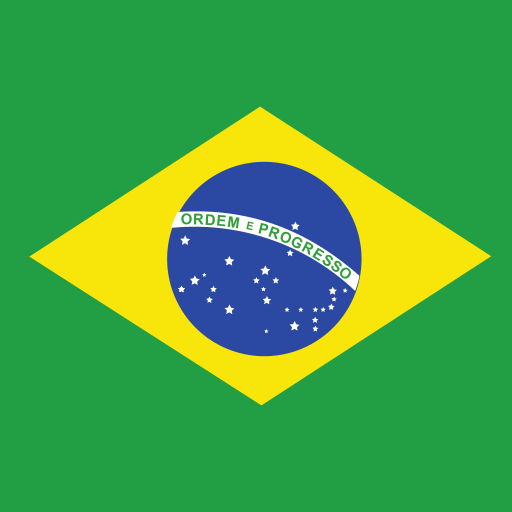
The price cap is as informative as the ordering. Spain, France, England at 11.3%, Portugal at 10.7%, Brazil at 9.4%, and Argentina at 8.3% form a clear upper tier, yet no outcome has cleared one-fifth of the pool. That implies the market treats squad quality as a real edge, then subtracts heavily for draw path, one-match variance, injuries, suspensions, and penalties. For editorial purposes, the meaningful signal is concentration without dominance: buyers are willing to pay for elite teams, though they still demand compensation for tournament structure.
| Cluster | Listed prices | Market implication |
|---|
| Spain and France | 17.5% and 17.3% | Near co-favorites, with no runaway leader |
| England and Portugal | 11.3% and 10.7% | Strong challengers priced below the top pair |
| Brazil and Argentina | 9.4% and 8.3% | Heavy names treated as secondary threats |
The table also shows why absolute percentages need care. The event uses separate Yes prices for each listed option, and the listed prices sum above 100%, so the cleaner signal is relative ordering and clustering. That matters because a small edge at the front can look larger when read as a pure probability instead of a market price with friction and spread.
Europe’s premium rests on assumptions still awaiting verification
The four highest-priced European teams, Spain, France, England, and Portugal, combine for 56.8% of listed price share. Brazil and Argentina combine for 17.7%. That gap suggests the market is paying for a perceived advantage in current squad depth, tactical stability, or expected tournament readiness. This is an inference from the odds, since the supplied market page gives prices and resolution rules, not team analytics. The implication is powerful anyway: the board is awarding present-cycle credibility ahead of football brand gravity.
The hidden assumption is that the leading European sides will carry their perceived quality into the tournament with manageable injury and selection risk. A single star absence, a managerial disruption, or a difficult knockout path could damage that premise quickly. The premium also assumes their advantages survive against peers, where marginal tactical or fitness differences can disappear in a 90-minute elimination match.
Legacy powers are the cleanest counter-signal to the front tier
Brazil at 9.4% and Argentina at 8.3% are priced high enough to remain central to the title conversation, yet low enough to show real skepticism versus Spain and France. That is the strongest counterargument to the board’s current hierarchy. If either side produces evidence that current-cycle doubts are overstated, the repricing path is obvious because the public imagination already gives those teams immediate credibility.
Germany at 5.2% and the Netherlands at 3.6% add another test. Their prices imply recognition without full trust. If those teams gain a favorable route or arrive with stronger squad signals, probability could shift from the crowded top four into the second tier. That would challenge the idea that the present board has correctly separated contenders from brand names.
Path information can move prices faster than reputation
The resolution rule is simple: the market resolves to the national team that wins the 2026 FIFA World Cup. That simplicity makes path information especially valuable. A draw that places several favorites on the same side could transfer price toward a lower-ranked contender on a cleaner route, even with no change in perceived team quality. In a multi-outcome event, one team’s improved path mechanically drains probability from others.
- Final field and draw: can alter the expected number of elite opponents a contender must beat.
- Squad and fitness news: can weaken a favorite’s edge before the first match.
- Late tactical or managerial signals: can raise or lower trust in second-tier prices.
- Liquidity flow: can amplify changes once public tournament narratives harden.
The close date of July 20, 2026 means the market has ample time to absorb these catalysts. The reported $1.23B volume makes the front-board ordering harder to dismiss as idle quoting, while $16.11M in open interest points to current exposure that can still expand or rotate. France’s 24-hour move of minus 0.1 percentage points indicates no fresh shock in the supplied snapshot, which makes future hard information more important than daily drift.
The obvious elite tier could be the market’s crowding error
The main failure mode is crowding around the easiest story: Spain and France as co-favorites, with England and Portugal close behind. If that view is overly dependent on current sentiment, the market may be underpricing how quickly knockout paths, injuries, or a single poor group-stage signal can compress the top. The long tail reinforces this risk because many listed teams sit near 0.1% to 0.3%, leaving little room for surprise narratives until qualification and tournament evidence force attention.
Evidence that would confirm the current structure would be a bracket and squad-news cycle that preserves the top teams’ perceived advantages. Evidence that would weaken it would be immediate: a difficult route for Spain or France, a healthier or more convincing Brazil or Argentina setup, or second-tier teams gaining credible paths. Until then, the market is pricing elite quality with a deliberate ceiling.
Sources