With a market capitalization of $1.2 trillion, the crypto industry has become far too large not to be influenced by global macroeconomic events. The everchanging global geopolitical landscape affects not only Bitcoin’s price but the pace of the entire industry’s development.
Aside from intra-industry black swan events, Bitcoin has become increasingly sensitive to traditional markets. Its correlation to TradFi has become so high that analyzing its past performance and modeling future behavior is virtually impossible without macro analysis.
In this market report, CryptoSlate presents several key macro factors that could significantly impact Bitcoin in the months ahead.
None of these factors came as a surprise to the market — the Federal Reserve’s interest hike, the U.S. debt ceiling, and the collapse of regional banks in the U.S.
The compounding effect of these factors creates a chaotic environment that promotes volatility and uncertainty. Stocks have been reacting poorly, wiping billions from the market and threatening to make even more losses.
We take a deep dive into each of these factors, analyze the crypto market’s response to similar events in the past, and explore their potential impact on Bitcoin’s price.
The Federal Reserve’s interest rate hike
On May 3, the Federal Reserve announced that it would be raising interest rates by 25 bps, bumping the federal funds rate to a target range from 5% to 5.25%. On Wednesday, the FOMC marked the tenth straight meeting that it raised interest rates in an attempt to calm down rapidly rising inflation.
At its nine previous meetings, the Federal Reserve raised rates by 4.75% from near-zero levels recorded in March 2022. The Fed’s year-long fight against inflation is the most rapid series of increases the U.S. has seen since the 1980s.
The federal funds rate is in line with CPI inflation, which hit 5% YoY in March 2023. And while inflation has reduced slightly since its 2022 highs, it’s still the highest increase the U.S. has seen in decades.
Graph showing the Federal funds rate target from 1970 to 2023 (Source: The Washington Post)
And while the market correctly predicted Wednesday’s outcome, it remains uncertain over future hikes. Some believe the careful wording in the Federal Reserve’s statement indicated a pause in rate hikes in July.
However, the Fed’s moves past June are becoming increasingly hard to predict — as the ongoing turmoil in the banking sector threatens to wipe out any stability created by previous hikes.
The chances of seeing the Federal Reserve pivot and begin reducing interest rates in 2023 remain incredibly low, even if the economy starts showing signs of recovery with a rising unemployment rate and a notable drop in inflation.
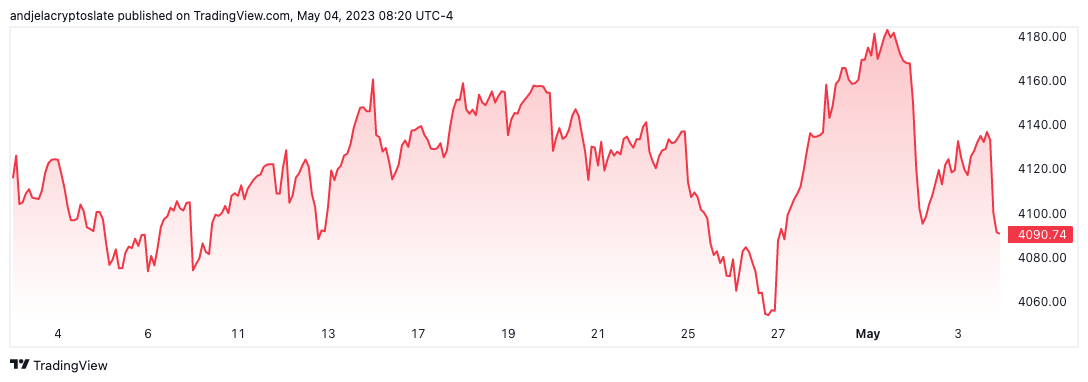
The certainty of the Fed not pivoting means that the markets have already begun pricing in high-interest rates throughout the rest of the year.
Graph showing the price of the S&P500 index from April 3 to May 4 (Source: TradingView)
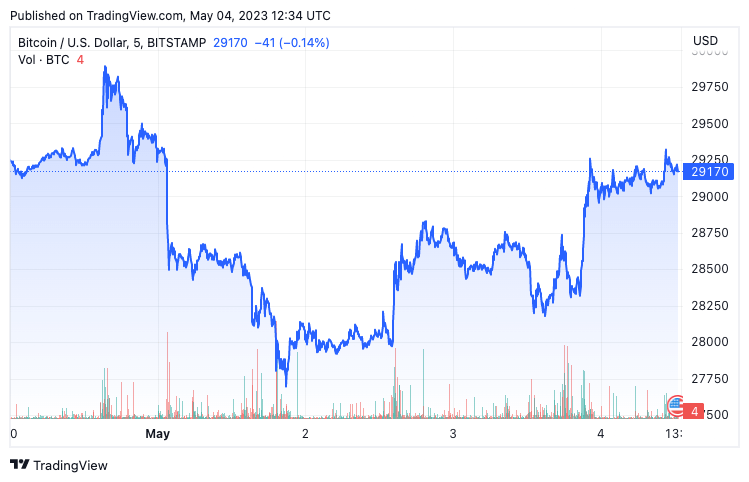
Aside from the S&P 500, Treasury yields dropped slightly — as did DXY. The crypto market emerged from Wednesday’s FOMC meeting unscathed, with Bitcoin surpassing $29,000.
Graph showing Bitcoin’s price from April 30 to May 4 (Source: CryptoSlate BTC)
The U.S. debt ceiling
The U.S. official hit its debt ceiling on January 19 this year, topping the limit of how much money the country can borrow to fund the government and meet its financial obligations.
While this isn’t the first time the U.S. hit the debt limit, the rising inflation and struggling banking sector meant that a potential default could wreak havoc in the global economy. Since January 19, the Treasury Department has used various accounting maneuvers to continue funding the government.
These maneuvers — called extraordinary measures — include temporarily curbing government investments in various funds or exchanging Treasury securities for non-Treasury securities. These measures have historically been successful in delaying default and preventing a government shutdown.
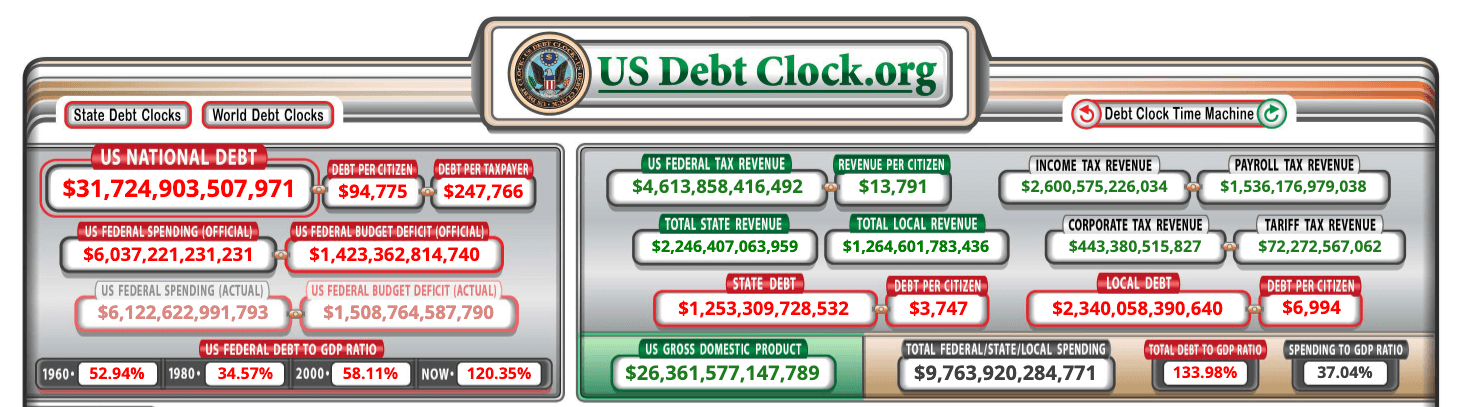
However, none of these measures could cover government operations for extended periods. According to Treasury Secretary Janet Yellen, the government’s ability to use extraordinary measures to delay a default could be exhausted by June 1.
The U.S. national debt (Source: USDebtClock.org)
Analysts and economists have long debated the possible outcomes of the U.S. defaulting on its debts, which would be detrimental to the global economy. To avoid this, U.S. policymakers are currently embroiled in a bitter battle, each party fighting for its own solution to the mounting debt problem.
The Biden administration has been arguing that a constitutional clause prevents the U.S. from defaulting on its debt, as it overrides the debt limit introduced by Congress. Meanwhile, some House Democrats are looking into forcing a debt ceiling increase if negotiations with House Republicans fail.
The G.O.P. introduced legislation to increase the debt limit for a year and drastically reduce government spending. However, President Joe Biden refuses to sign the legislation, and the two parties are yet to reach an agreement.
In 2021, Treasury Secretary Janet Yellen argued that the statutory limit on U.S. debt should be abolished, calling the borrowing cap “destructive” to the economy.
The ongoing political turmoil within the U.S. makes it difficult to predict the outcome of the debt crisis. The markets seem well aware of this and are preparing for a universally bad outcome. Regardless of the government’s approach, the confidence in U.S. debt has been irretrievably broken.
The U.S. banking crisis
The failure of First Republic this month marks the fourth time a large U.S. bank collapsed in less than two months. It’s also the second-largest bank failure the U.S. has ever seen — second only to the collapse of Washington Mutual in 2008.
CryptoSlate’s previous analysis found that despite assurances from bankers and the government, the banking system in the U.S. was in serious trouble.
The three banks that failed in 2023 — excluding Silvergate — are already bigger than the 25 that crumbled after the 2008 financial crisis. This caused a ripple effect that devastated bank shares, with losses going up as high as 45% in a single day. Western Alliance dropped by more than 20% on May 4, while First Horizon and PacWest saw losses exceeding 40%.
Many believe PacWest would be the next to fail, as the bank announced it was considering its options after being approached by potential buyers. Other mid-sized banks in the U.S. could easily follow suit if their shares continue to drop throughout the quarter.
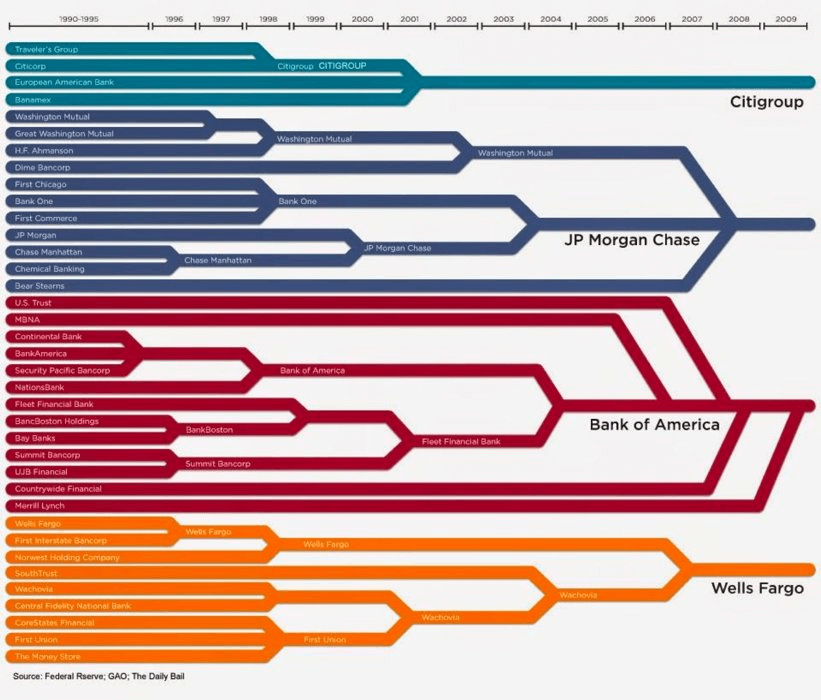
However, the lifeline the failing banks have received so far and will continue to receive in the future creates a new set of problems. JPMorgan’s acquisition of First Republic led many to warn about the rapid centralization of the U.S. banking system. It also seems to have wiped out any remaining confidence the market had in the banking sector — a trend that has become evident when looking at bank shares and indices.
Illustration showing the consolidation of major U.S. banks into four banking conglomerates (Source: The Daily Ball)
Conclusion
The U.S. is headed toward a period of intense financial uncertainty. All of the factors mentioned above have contributed to market fragmentation that saw investors flee the banking sector and other high-risk assets and begin searching for more stable investments.
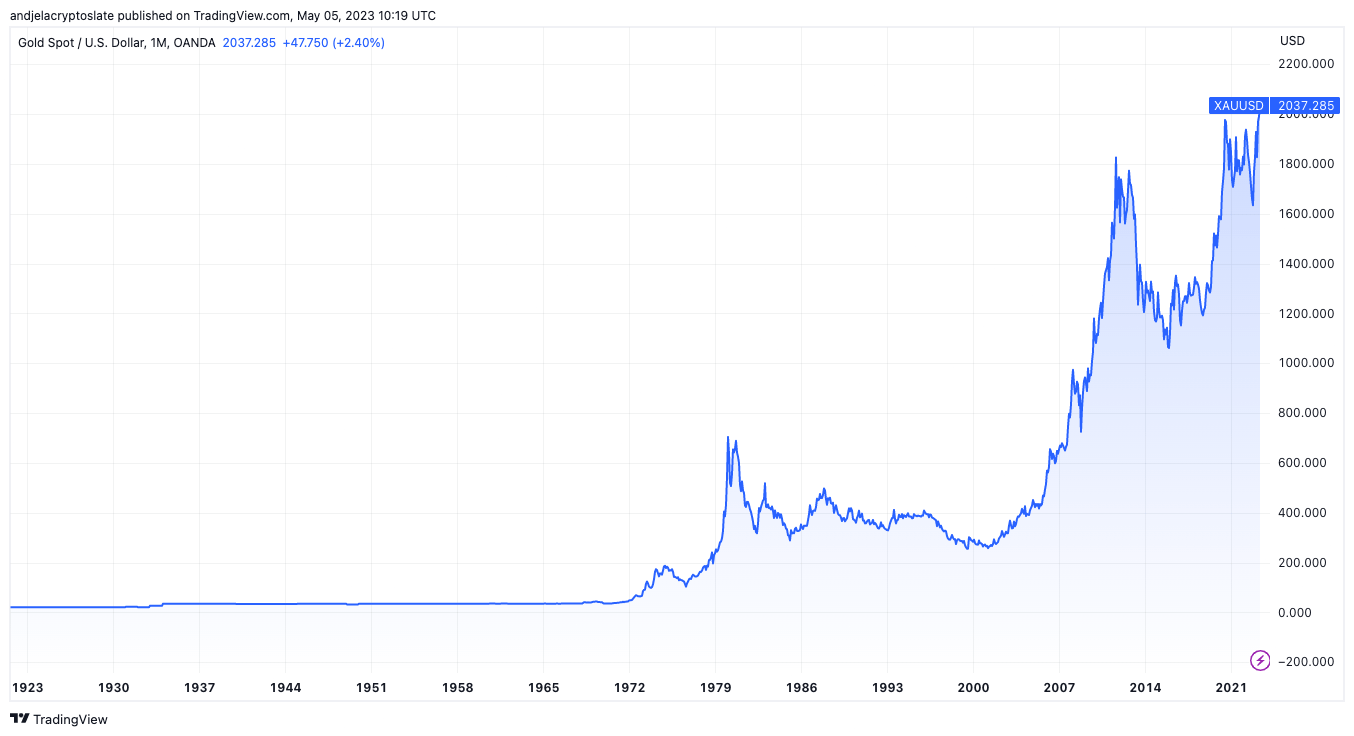
This search for stable, long-term investments pushed gold to its all-time high — with an ounce of gold trading at over $2,037 at press time.
Graph showing the price of gold from 1923 to 2023 (Source: TradingView)
Other commodities also saw spikes as the funds leaving bank and tech stocks sought more stability.
The effect the ongoing market turmoil in the U.S. has had on Bitcoin so far has been similar to commodities. CryptoSlateanalysis found that Bitcoin’s drop below $30,000 only increased whale accumulation, further cementing the conviction long-term holders have in the asset.
The Federal Reserve’s latest interest rate hike left Bitcoin essentially flat. However, last week, news about First Republic Bank pushed its price up, with BTC reacting strongly to the developing situation.
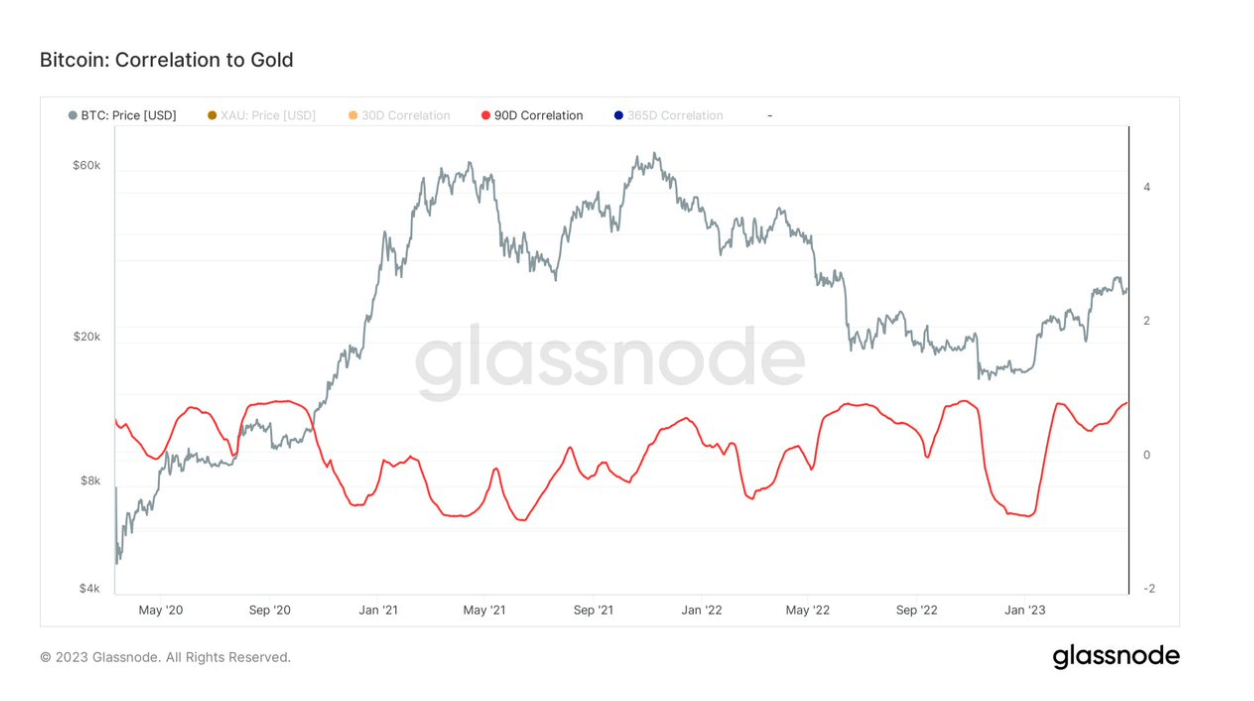
Bitcoin’s correlation to gold grew stronger as the banking sector posted more losses. At the end of April, Bitcoin’s 30-day rolling correlation with gold reached 57%, while the 90-day rolling basis saw the correlation rise to 86%.
Graph showing Bitcoin’s correlation to gold from May 2020 to May 2023 (Source: Glassnode)
These on-chain metrics further prove that investors are beginning to see Bitcoin as a relatively stable asset that can be used to hedge inflation. Price reactions to almost all of the macro turmoil since the beginning of the year have been positive — pushing Bitcoin’s supply in profit to its two-year high.
However, an increase in unrealized profits hasn’t led to a rise in trading volume, as previous CryptoSlate analysis showed. This indicates that most investors are choosing Bitcoin as a long-term investment and most likely won’t be taking any short-term profits over the following months.
Having another regional bank in the U.S. fail would only push Bitcoin’s price further up. The Federal Reserve’s inability to curb inflation could fuel another rally, as more investors would flee the fiat uncertainty.
The U.S. defaulting on its debt is a highly unlikely and unprecedented outcome. Any additional measures the Treasury and Federal Reserve take on to avoid defaulting would further shake the market, which could, in turn, push more investors towards Bitcoin.