
Overview
Introduction
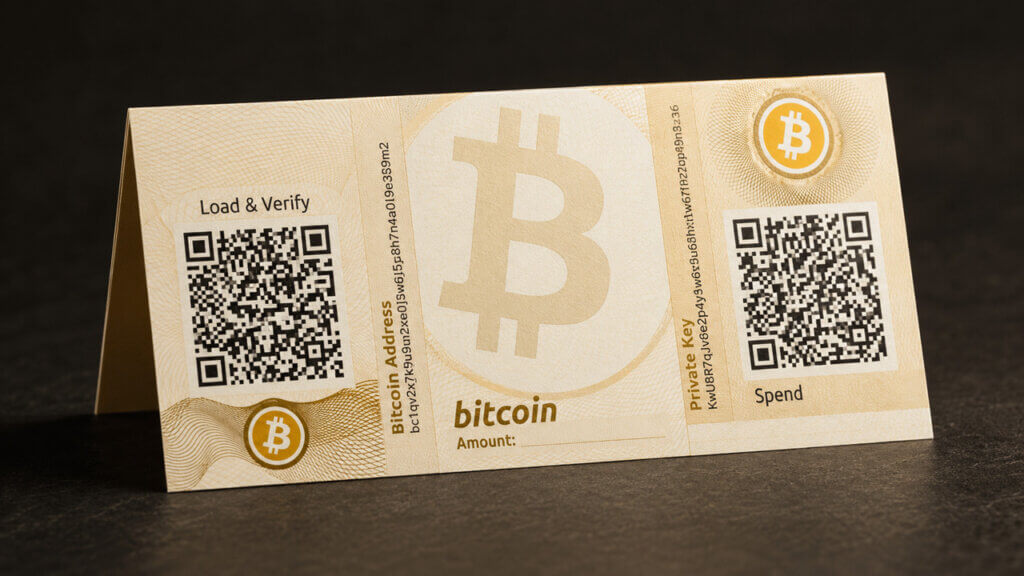
A bitcoin paper wallet is a printed or written record of a Bitcoin private key and its matching public address. It does not hold coins inside the paper. The Bitcoin network records the BTC balance. The paper carries the secret needed to spend it.
If you found an old printout with two QR codes and are trying to figure out whether it still has funds, or how to move them safely, this guide covers what you need to know before touching the private key.
Key Takeaways
- A paper wallet stores one Bitcoin private key and one receive address, usually as printed text and QR codes.
- The private key authorizes spending. Anyone who sees it can potentially move the funds.
- Checking the balance requires only the public address, never the private key.
- Sweeping moves BTC to a fresh wallet address via an on-chain transaction. Importing adds the old key to software, which is riskier.
- One exposed, damaged, or mistyped key can make funds permanently inaccessible or easy to steal.
What Is A Bitcoin Paper Wallet?
A bitcoin paper wallet is a legacy self-custody method: one Bitcoin private key and one matching public address, written or printed on paper. The address receives BTC. The private key authorizes spending. Anyone who sees or copies that private key may be able to move the funds.
That makes the paper a control record, not a vault.
Most paper wallets were created between 2011 and 2016, when hardware wallets either didn't exist or were expensive and hard to source. At the time, printing a key and locking it in a drawer genuinely was one of the safer cold storage options. The risk model has shifted since then, but millions of old paper wallets are still sitting in drawers, filing cabinets, and safe deposit boxes, some of them holding meaningful BTC balances.
Paper Wallet Vs Wallet Address, Private Key, And Seed Phrase
A paper wallet is the physical backup, while a wallet address, private key, public key, and seed phrase are distinct parts of wallet control. Confusing them can expose the wrong secret or lead you to check the wrong thing.
| Term | What It Does |
|---|---|
| Paper wallet | Stores a Bitcoin address and private key on paper, usually as text and QR codes. |
| Bitcoin wallet address | Receives BTC and can be checked publicly on a block explorer. |
| Private key | Authorizes spending from the matching address and must stay secret. |
| Public key | Helps create or verify public address information without revealing the private key. |
| Seed phrase | Restores many keys and addresses in a modern wallet. |
| QR code | Lets a wallet or explorer scan address or key text, which is safe only for the public side. |
The most common source of confusion is between seed phrases and paper wallets. A seed phrase written on paper is not the same thing as an old paper wallet. A seed phrase is a backup for a modern HD wallet, and it can derive hundreds of addresses. A legacy paper wallet controls one address with one private key. The recovery steps, risks, and tools are different in each case.
How A Bitcoin Paper Wallet Works
It works by separating the public receive address from the private key that can later spend the funds. The public side can be used to receive or inspect BTC. The private side must stay hidden until you're ready to spend or sweep.
The flow looks simple at each step, but each one creates a different failure point:
- Create a Bitcoin key pair and matching address.
- Print or write the public address and private key.
- Send BTC to the public address.
- Store the paper away from cameras, moisture, fire, and theft.
- Spend or sweep the funds later using the private key.
Paper wallets can feel deceptively safe because the key stays offline for years. The problem is that the moment the private key is scanned, typed, photographed, or pasted into software, it should be considered exposed. After any sweep, all remaining value should be moved to a fresh wallet address. That public-versus-secret distinction is where most paper wallet mistakes begin.
Why Investors Avoid Bitcoin Paper Wallets?
Paper wallets fell out of favor because the security is weak and depends entirely on the user executing every step correctly, with no software guardrails to catch mistakes.
The biggest problems appear before and after the paper itself exists. A generator can be malicious or compromised. A connected computer can have malware. A printer can store job history or send the file to a cloud queue. A QR code can fade over time. A private key can be photographed by accident.
Common failure points include:
- Online generators that may leak or reuse keys.
- Malware on the device used to create or sweep the key.
- Printer memory, cloud print queues, and saved PDF files.
- Fire, water, fading ink, and torn QR codes.
- Typos in hand-copied keys.
- Lost BIP38 passphrases (explained below).
- Change-output mistakes after partial spending.
- Address reuse after the key has been exposed.
None of this means every old paper wallet is empty or compromised. An old paper wallet can still control BTC if the private key remains secret and legible. But a single mistake eliminates the benefit of offline storage entirely.
That is why most users now prefer the top cold hardware wallets for long-term storage. A hardware wallet keeps signing keys off the laptop while showing transaction details on a dedicated screen with confirmation prompts. Paper offers none of that: no screen, no firmware, no address verification flow, and no warning if you are about to paste a key into the wrong place.
Checking A Paper Wallet Balance Without Exposing The Key
You can check a paper wallet balance by entering only the public Bitcoin address into a block explorer. A balance lookup does not require the private key, seed phrase, BIP38 passphrase, or wallet password. The distinction matters because entering the wrong thing at this stage can immediately put the funds at risk.
Public address lookups show transactions, confirmations, and unspent activity tied to that address. They cannot prove who owns the address and they cannot move BTC.
| Safe To Enter | Never Enter |
|---|---|
| Public Bitcoin address | Private key |
| Public address QR code | Private key QR code |
| Transaction ID | Seed phrase |
| Block height or transaction hash | BIP38 passphrase |
| Watch-only public information | Wallet app password |
If the paper shows two QR codes, identify the public address side before scanning anything. If the label is missing or unclear, stop. Guessing wrong can expose the key to a camera, browser, clipboard manager, or website that should never see it. Most paper wallets label the public side “Address” or “Bitcoin Address” and the private side “Private Key” or “Secret.” If those labels are absent or worn, treat the wallet with extra caution.
Block explorers that accept public Bitcoin addresses include Blockchair, mempool.space, and Blockchain.com. You do not need an account for a balance check. Copy the address manually rather than scanning if you are unsure which QR code is which.
Sweep vs Import: The Safer Way To Move Old Bitcoin Paper Wallet Funds
Sweeping is usually safer for old paper wallets because it creates a Bitcoin transaction that moves BTC to a fresh address controlled by a new wallet. Importing adds the old private key to wallet software and may leave funds controlled by the same exposed key.
| Method | What Changes |
|---|---|
| Sweep | Moves BTC from the old key to a fresh wallet address with an on-chain transaction. |
| Import | Adds the old private key to a wallet and may keep funds tied to that same key. |
| Watch-only import | Tracks an address without spending authority. |
| Exchange deposit | Sends BTC to a custodial deposit address after the user controls the sending wallet. |
For most people, sweeping into one of the crypto wallets for beginners that support private-key sweeps is cleaner than importing an old key with no clear backup path. A hot wallet can work as a temporary sweep destination for a small or urgent recovery, but a large or long-term balance warrants a more secure destination.
One note on software versions: Bitcoin Core 30.0 removed legacy-only wallet RPCs including importprivkey, so older console instructions may not work on a current Bitcoin Core setup. If a wallet cannot process the key format, stop before trying random converters or sharing screenshots with anyone.
How To Move BTC From An Old Paper Wallet
Moving BTC from an old paper wallet means sweeping the private key into a new wallet address and then retiring the old paper key. The goal is to expose the key once, on a clean device, and leave no meaningful balance on the old address.
Before You Touch The Private Key
Have the destination wallet and receive address ready before the private key is exposed. If the final destination is an exchange, create the deposit address only after confirming it is a BTC deposit address on the Bitcoin network. The paper-wallet recovery step happens before the exchange receives anything.
Check the following before exposing the real key:
- The destination address belongs to your new wallet.
- The wallet supports Bitcoin private-key sweeping.
- The device is not sharing screens or syncing clipboard data.
- You are not using the real key for practice runs.
Use a clean device. Close browser extensions you do not need. Close any screen-sharing software. Do not photograph the paper key during the process.
The Recovery Steps
Use this sequence rather than a wallet-specific shortcut:
- Check the public address balance without entering the private key.
- Choose a reputable wallet that supports sweeping Bitcoin private keys.
- Create or prepare a fresh destination wallet.
- Verify the receive address on the destination wallet.
- Check the current network fee inside the wallet before broadcasting.
- Sweep the full balance from the old private key.
- Wait for confirmation before treating the move as complete.
- Stop using the old address after the key has been exposed.
After The Sweep Broadcasts
Once the transaction broadcasts, wait for it to confirm and verify the new wallet shows the received BTC. Retire the old paper wallet even if the paper still looks intact.
Do not send more BTC to the old address after a sweep. The private key has now touched software, a camera, a keyboard, or a clipboard path. Any future receive should go to a new address.
If the sweep fails, write down the exact error message and stop. The most common causes are specific enough to narrow down without sharing the key:
- Encrypted BIP38 key.
- Unsupported private-key format.
- Damaged or misread QR code.
- Address type mismatch.
Do not engage with direct messages offering paid recovery help, or websites asking for the full key.
Paper Wallet Risks: BIP38, WIF, Forks, And Change Outputs
Paper-wallet recovery can fail because the key format, encryption, address type, or transaction history does not match the wallet's workflow. The most common technical problems are BIP38 encryption, WIF private keys, compressed vs uncompressed keys, forked coins, and change outputs.
BIP38 defines a passphrase-protected Bitcoin private key format designed for paper wallets and physical bitcoins. If BIP38 encryption was applied during creation, the key on the paper is encrypted. That reduces theft risk if the paper is found, but it adds a second secret. If the passphrase is lost, the printed encrypted key is unspendable.
| Issue | Recovery Risk |
|---|---|
| BIP38 | The encrypted key needs the correct passphrase before funds can be spent. |
| WIF | Older paper wallets often show private keys in Wallet Import Format, which wallet support can vary on. |
| Compressed keys | Some old tools and wallets may derive different address forms from the same key material. |
| Change outputs | Partial spending from an imported key can send leftover BTC to an address the user does not expect. |
| Forked coins | Old pre-fork balances can create separate recovery questions outside normal BTC sweeping. |
| Damaged QR codes | A scanner may read the wrong data or fail silently if the paper is degraded. |
Change-output risk is one reason importing can be more dangerous than it appears. If a wallet spends only part of a balance from an imported key, the remaining change may move to an address the user does not recognize, depending on how the wallet handles the old key and change address logic.
Forked coins such as Bitcoin Cash require separate handling and are an edge case for old keys. Move the BTC first. For fork-related claims, get separate expert guidance and do not enter a private key into a fork-claiming website.
Paper Wallet Vs Hardware Wallet, Hot Wallet, And Exchange Custody
A paper wallet is one custody method. Hardware wallets, hot wallets, and exchange custody solve different problems. The meaningful comparison is not paper versus app branding. It is who controls the keys, where signing happens, and what recovery burden falls on the user.
| Storage Method | Best Use Case Or Main Risk |
|---|---|
| Paper wallet | Legacy cold storage or old-key recovery, with high handling risk. |
| Seed phrase backup | Modern wallet recovery, usually for many derived addresses. |
| Hardware wallet | Long-term self-custody with signing isolated on a dedicated device. |
| Hot wallet | Frequent use on a connected device, with higher malware and phishing exposure. |
| Exchange custody | Trading, fiat access, or support convenience, with platform control over withdrawals. |
A non-custodial wallet gives the user control over the signing keys. A custodial account does not. CryptoSlate's centralized custodial wallets category covers the account-based model where a platform manages key custody.
An exchange can make sense after a sweep if the next step is selling, trading, or fiat off-ramping. In that case, crypto exchanges belong in the custody comparison after the private-key recovery step is complete.
Hardware wallet options worth comparing before moving meaningful BTC:
- The Blockstream Jade Plus wallet suits Bitcoin-focused cold storage.
- The Ledger Nano X wallet covers a multi-asset hardware route.
- The Trezor Safe 5 wallet provides another device-based comparison point.
FAQs
Is an old paper wallet still safe?
It can be safe only if the private key was generated securely, stayed completely secret, and remains readable. Most users cannot verify the original generator, device, printer, storage conditions, or any handling since creation. That uncertainty is the core risk.
Is a seed phrase written on paper the same as a paper wallet?
No. A seed phrase written on paper is a backup for a modern HD wallet that can derive many addresses. A legacy paper wallet records one private key and one matching Bitcoin address. The recovery process, risks, and tools involved are different for each.
Should I sweep or import a paper wallet?
Sweeping is usually safer because it moves BTC to a fresh wallet address via an on-chain transaction. Importing may leave funds controlled by the old private key, which should be considered potentially exposed once it touches any software or camera.
Can I check a paper wallet balance without the private key?
Yes. Use only the public wallet address in a block explorer. Never enter the private key, seed phrase, or BIP38 passphrase into a balance checker or any third-party tool.
Can I send more BTC to an old paper wallet address?
You can send BTC to any valid Bitcoin address, but reusing an old paper-wallet address after the key has been exposed is a bad idea. Use a fresh receive address from a modern wallet instead.
What should I do if someone saw my paper wallet private key?
Move the BTC to a fresh wallet as quickly as possible, then stop using the old address permanently. If the balance is significant or the key format is unclear, seek help without sharing the key itself.
What happens if my paper wallet QR code is too faded to scan?
You can type the private key manually if the text is still readable. If both the QR code and the text are degraded, data recovery from the physical paper may not be possible. This is why some users laminate paper wallets or keep multiple copies in separate locations.
Do paper wallets work with SegWit or Taproot addresses?
Most legacy paper wallets use older P2PKH address formats starting with “1”. SegWit (bech32 addresses starting with “bc1q”) and Taproot (starting with “bc1p”) addresses are generated differently. If your paper wallet shows a “1” address, sweeping it into a modern wallet is straightforward. If the address format is unfamiliar, check which address type it represents before choosing sweep software.