Crypto options can look safer than other leveraged products because the loss on a bought option is usually capped at the premium. That is true, but it does not make the product simple. A trade can still fail for reasons that have nothing to do with direction alone, and that is where many early mistakes happen.
The main risks are easier to grasp when they are separated into the mechanics that damage a trade. Some risks eat away at the option’s value over time. Others come from the market structure itself, from thin books and wider spreads to platform-level product limits and regional restrictions.
| Risk | What It Means In Practice | Why It Matters |
|---|
| Time Decay | An option loses value as expiry approaches, especially when the contract is short-dated and the move has not arrived. | A trade can lose money even when the broader market view is still intact. |
| Implied Volatility Shifts | Option pricing changes when the market starts expecting bigger or smaller moves. | A volatility drop can hurt the premium even if price moves in the expected direction. |
| Wide Spreads In Thin Markets | The distance between bid and ask can be large on illiquid strikes or expiries. | The real entry and exit price can be worse than the screen first suggests. |
| Expiry Risk | The contract has a fixed life, and the trade has to work within that window. | A correct directional idea can still fail if the move comes too late. |
| Liquidation Or Collateral Pressure | This matters more with written options, structured positions, or margin-based setups than with simple long options. | Risk can expand quickly once the trade moves beyond a defined-premium structure. |
| Regional Access Or Compliance Risk | A platform may be available in a country while the options product itself is not. | Funding the wrong venue or entity can leave you without access to the product you intended to trade. |
| Misunderstanding Simplified Options Products | App-based options can look cleaner than full-chain products, but the economic trade-offs are still real. | A simpler interface can hide how pricing, settlement, and contract design affect the outcome. |
Time decay is the risk most people feel first. Every option carries a clock, and that clock matters more as expiry gets closer. A bullish or bearish idea can be directionally right and still lose money because the move did not happen fast enough.
Implied volatility is the next piece that surprises newer traders. Options are not priced on direction alone. They are also priced on how much movement the market expects. When volatility contracts, the premium can fall even when price action is not openly hostile to the trade.
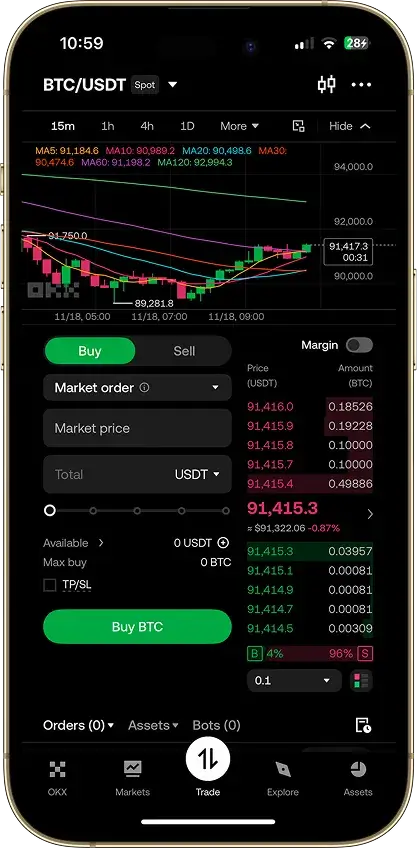
Thin markets and wide spreads matter more in crypto options than many people expect. Smaller expiries, less active underlyings, and quieter hours can all make fills worse. That means the cost of getting in and out is often larger than the headline premium suggests.
Expiry risk is separate from direction and separate from volatility. A futures trade can keep running as long as margin holds. An option has a deadline. If the setup depends on a move that takes longer than expected, the contract can still expire with little or no value.
Liquidation and collateral pressure usually sit outside the simplest long-option trade, but they become more relevant with written options, spread structures, or anything that relies on posted margin. That is one reason simple long calls and long puts are easier starting points than more advanced overlays.
Regional access risk is not just legal fine print. It is a practical trading risk. Product availability can vary by country, by entity, and by user category. A platform that works for spot may not legally offer options under the same account setup.
The last risk is product misunderstanding. Simplified options flows make onboarding easier, but they do not remove the core trade-offs around premium, expiry, volatility, or settlement. The safest starting point is a small position in a structure you can explain clearly before the order is live.