Best Regulated Prediction Markets In The U.S. — Market Coverage, Fees and How To Choose (March 2026)

A comparison of top regulated prediction markets U.S. users can legally trade on in 2026, with breakdowns of fees, state restrictions, and how each platform holds up beyond the first deposit.

Updated Mar. 30, 2026
Reviews in this list 5
Trusted Reviews Editorially curated & independently checked
Curated by Yousra Anwar Ahmed
Since Feb 2026 45 reviews
Fact check in progress A fact-checker will be assigned shortly.
Affiliate Disclosure

Disclaimer: CryptoSlate may receive a commission when you click links on our site and make a purchase or complete an action with a third party. This does not influence our editorial independence, reviews, or ratings, and we always aim to provide accurate, transparent information to our readers.

Two regulated prediction markets in the US can list the same yes-or-no contract and still feel completely different once you get past the app. One may run the exchange directly. Another may sit on top of a separate regulated market. That changes what you can trade, how money moves, and what happens when you try to cash out.
A platform can look polished, then get weird once you hit state limits, thinner markets, or slow payouts. The first deposit is easy. Getting your money back on a non-headline contract is the harder part.

The right choice depends on what you are solving for first: the clearest legal structure, the broadest event menu, the easiest funding path, or the smoothest first-use experience.

Rank
Name
Rating
Best For
Contract Type
Platform Type
Key Advantages
Secure Link
Rank 1
8.0
U.S.-first traders who want regulated event markets
Binary Contracts, Scalar Contracts, Range Contracts
Regulated Event Exchange
  • Regulated U.S. prediction market
  • Strong depth in major markets
  • API and historical data access
Rank 2
7.0
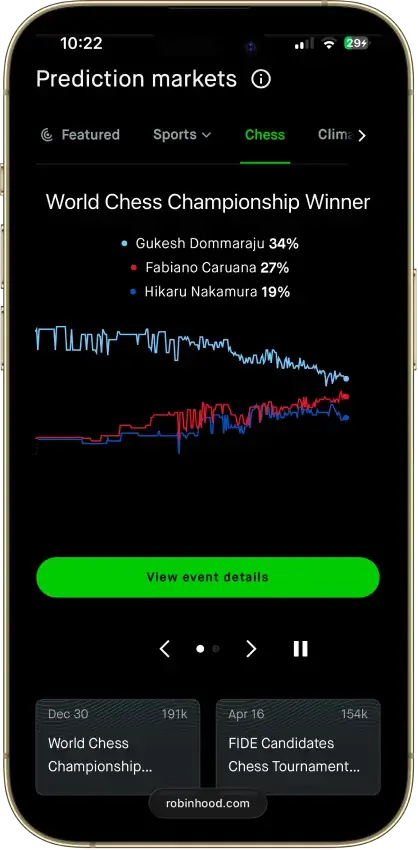
Existing Robinhood users who want mobile-first access to real-money event contracts
Binary Contracts, Multi-Outcome Contracts
Broker-Integrated Market
  • Built into the main Robinhood app, so existing users can fund and trade without leaving their brokerage workflow
  • Real-money event contracts offered through Robinhood Derivatives and partner CFTC-regulated exchanges
  • Lets you close positions before resolution instead of forcing you to hold every trade to final payout
Rank 3
6.5
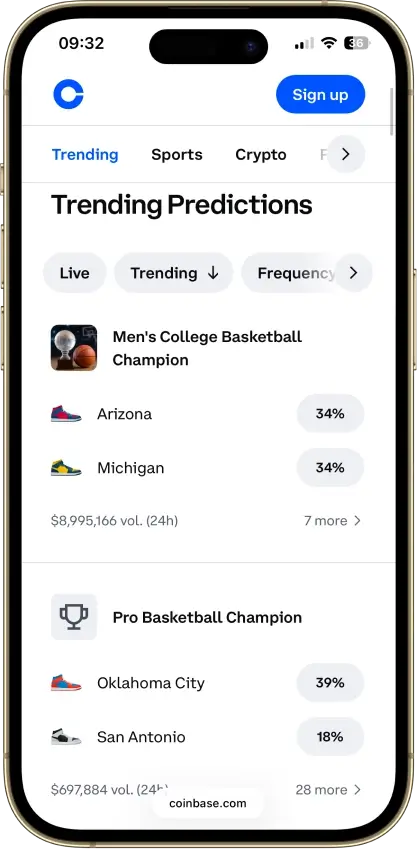
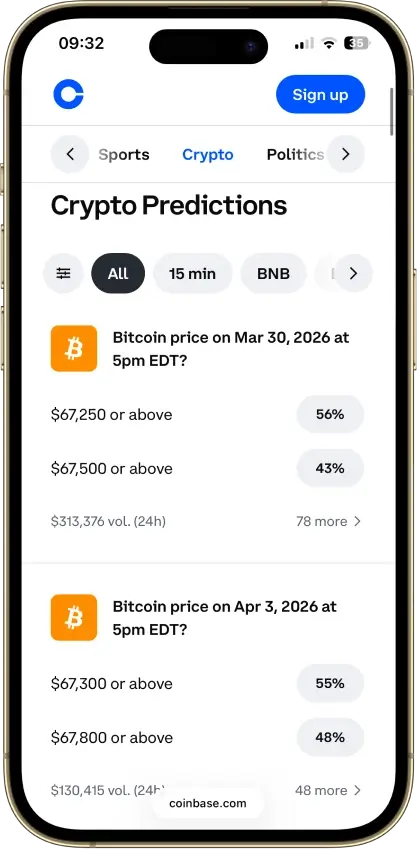
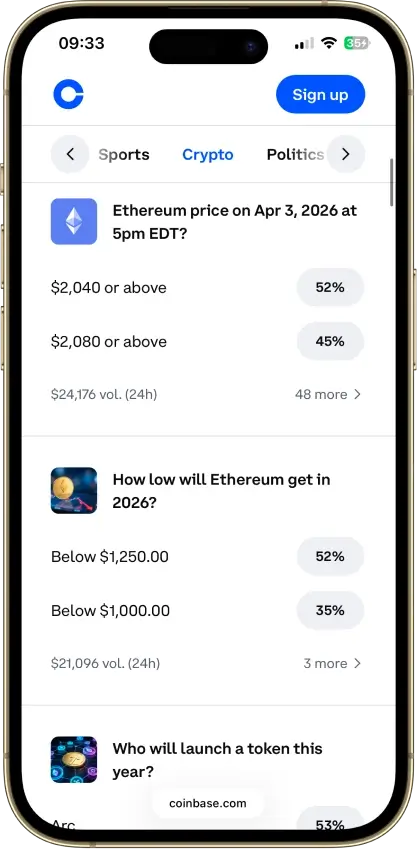
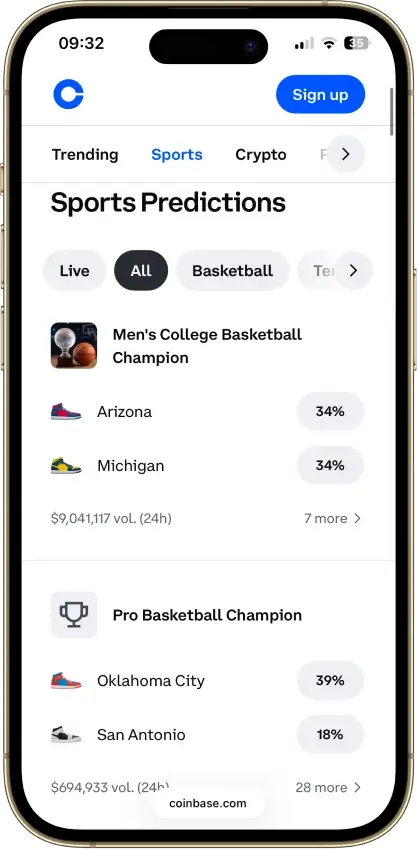
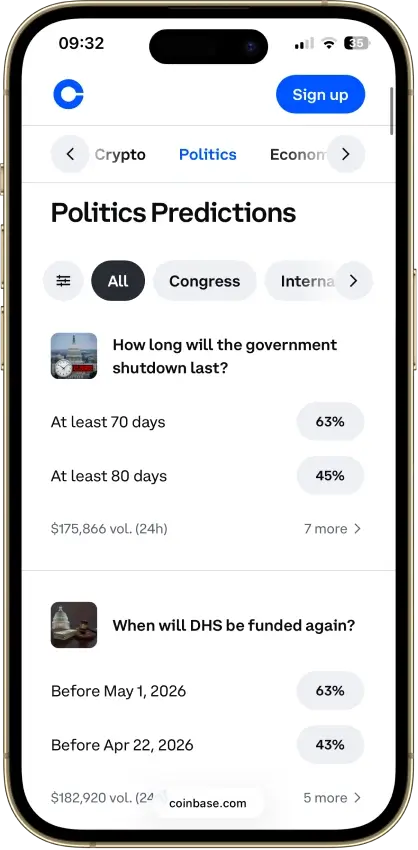
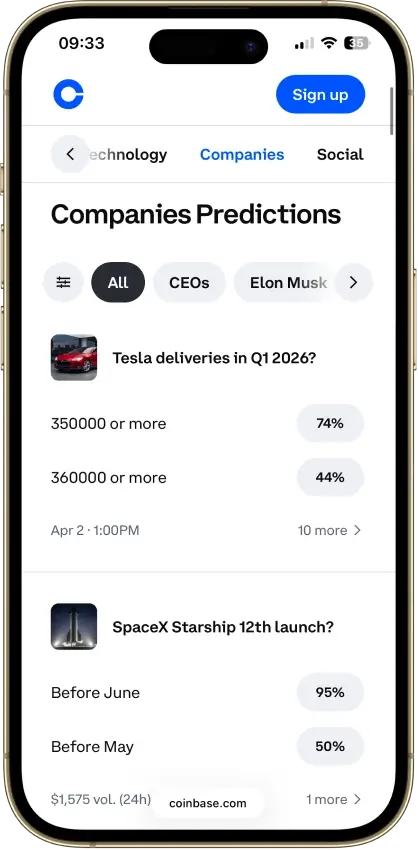
Coinbase users in the U.S. who want regulated prediction markets in one account
Binary Contracts, Multi-Outcome Contracts, Range Contracts
Regulated Event Exchange
  • Built into the main Coinbase account experience
  • Fund with USD or USDC and sell early on open markets
  • Offered through CFTC-registered, NFA-member Coinbase Financial Markets
Rank 4
5.5
Mainstream U.S. users who want regulated event contracts inside a familiar app flow
Binary Contracts, Multi-Outcome Contracts
Broker-Integrated Market
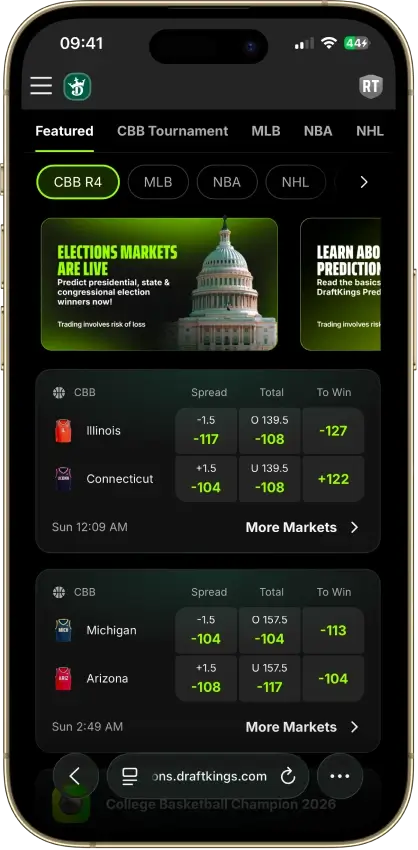
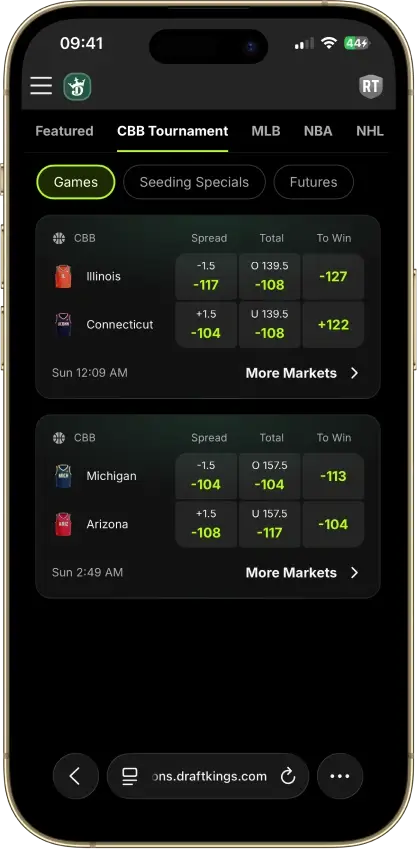
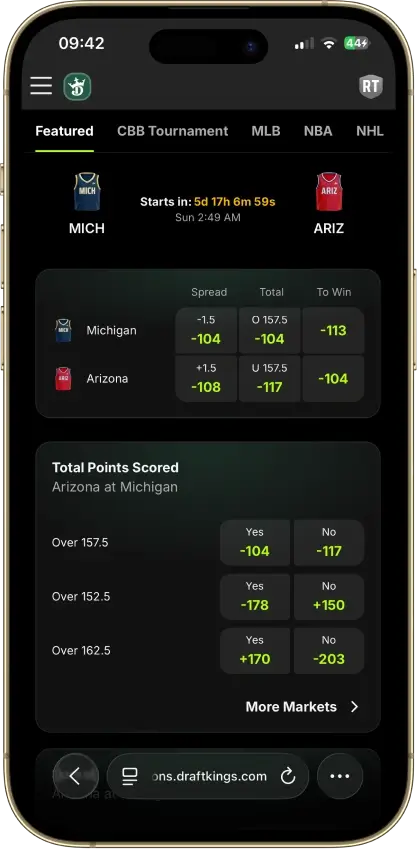
  • Standalone DraftKings app and web product
  • Regulated setup through Wedbush
  • $0.01 per contract per side, plus exchange fees
Rank 5
5.5
U.S. political traders who want category depth more than low friction or large sizing
Binary Contracts, Multi-Outcome Contracts
Regulated Event Exchange
  • Deep U.S. political market coverage
  • Real-money trading for eligible U.S. users without crypto wallet or stablecoin setup
  • Public market data access makes outside tracking easier than on fully closed platforms

Use the shortlist by starting with the market type, not the brand. If you want one platform that can handle politics, economics, sports, and major news events without feeling narrow, start with Kalshi. If you want the easiest path from account funding to first trade, Robinhood is the simpler entry. Coinbase belongs near the top if you want regulated event contracts inside an existing Coinbase account, especially across crypto, company, politics, sports, and macro markets, but it is still more gated in practice than the broad market board first suggests. PredictIt is still mainly a politics pick. DraftKings is only the better fit if sports is the main reason you are here. Most bad picks in this category come from choosing the most familiar app, not the platform built for the contracts you actually want.

This table is meant to cut decision time, not summarize marketing copy. It focuses on the five points that usually separate a usable platform from one that looks better than it trades.

Comparison Table

NameMinimum depositKYCLiquidity modelEarly exitCore categoriesPosition limitAPI access
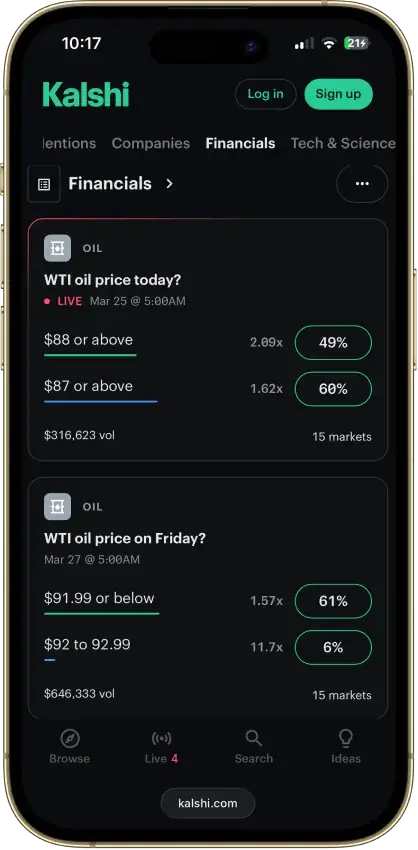
Kalshi $1 Full KYC Order Book Yes Elections, politics, sports, culture, crypto, climate, economics, mentions, companies, financials, tech & science Yes Yes
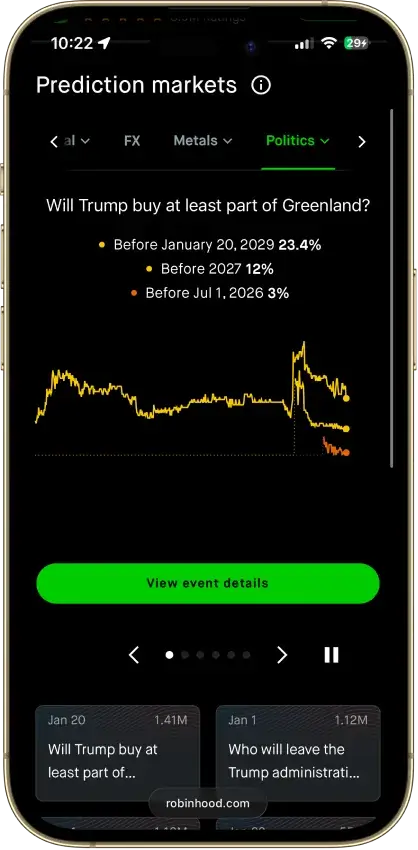
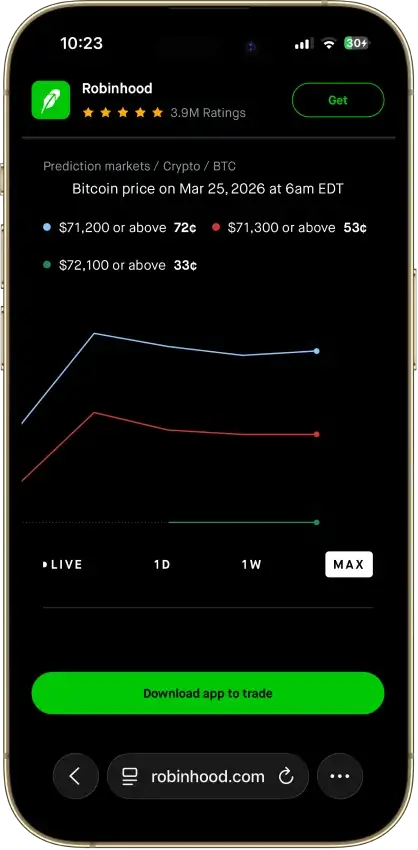
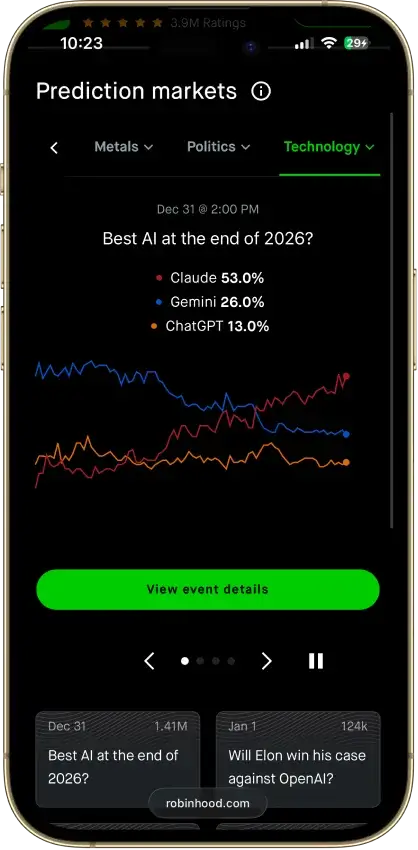
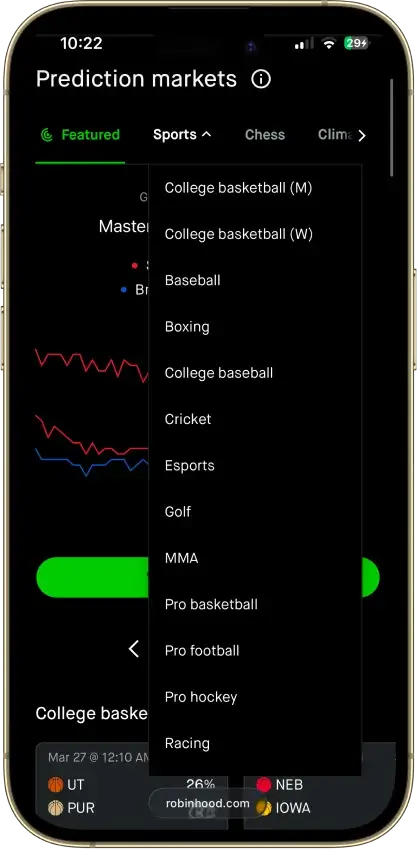
Robinhood $1 Full KYC Broker / Routed Yes Sports, Politics, Culture, Crypto, Climate, Economics, Companies, Financials, Tech & Science, Health and World
Coinbase Prediction Markets $10 Full KYC Order Book Yes Politics, Sports, Crypto, Economics, Entertainment, Financials, Elections, Weather, Science And Technology, Companies, Social, Mentions Yes
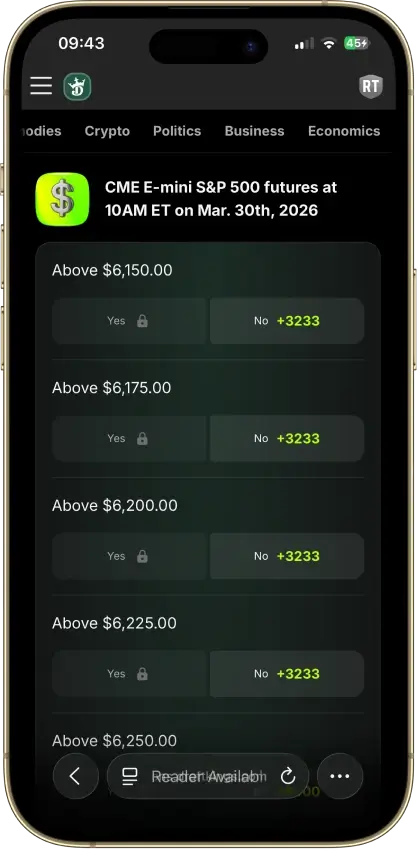
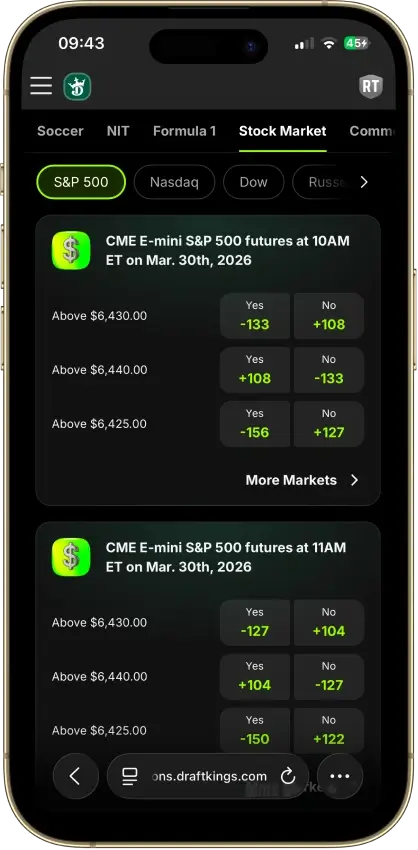
DraftKings $5 Full KYC Broker / Routed Yes Sports, Stock Market, Commodities, Crypto, Politics, Business, Economics. Yes
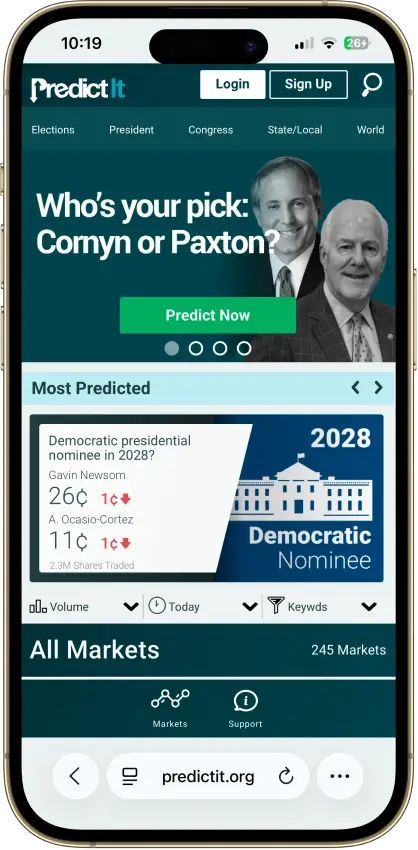
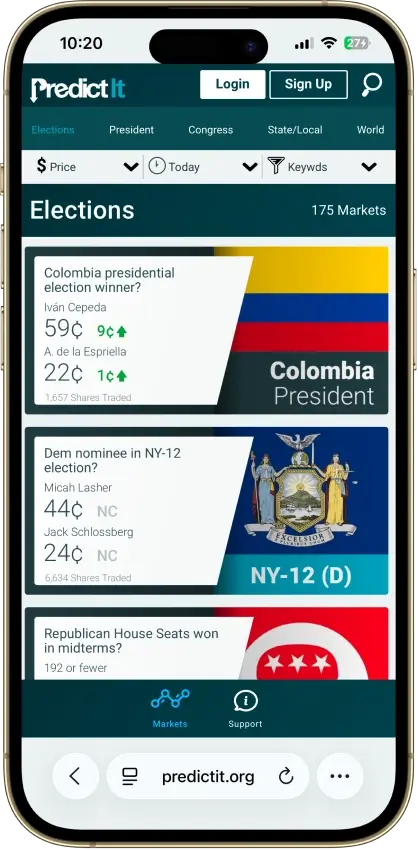
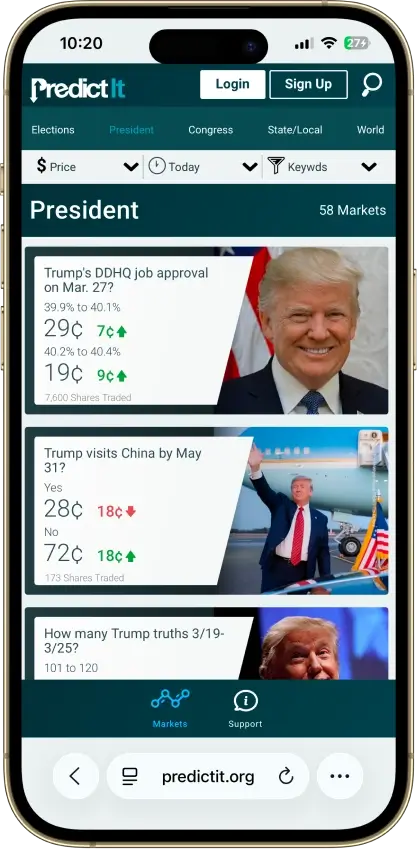
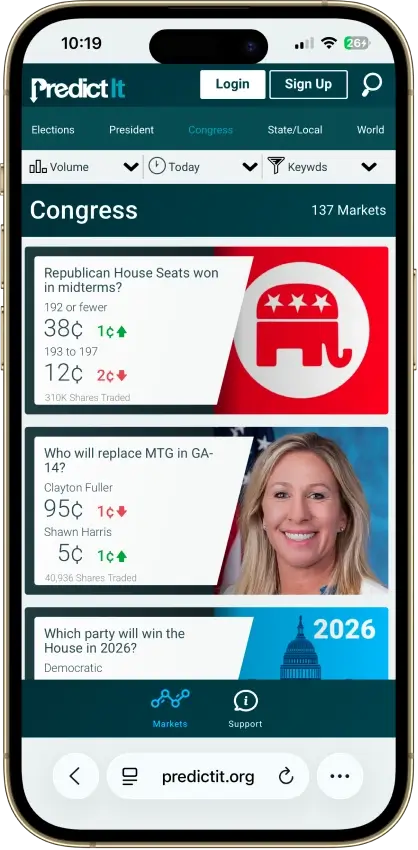
PredictIt $10 Full KYC Order Book Yes U.S. elections, primaries, nominations, control‑of‑government and legislative/policy event contracts, plus certain international political questions that do not involve war, terrorism or assassination. Yes Yes

Kalshi is the strongest choice for those who want the clearest structure and the broadest serious market range in one place. Robinhood is easier to approach, but it is not as deep once you move past the biggest contracts. Coinbase works better as an extension of an existing Coinbase routine than as a first-choice prediction platform. PredictIt still matters for politics, but it loses ground fast on depth and execution. DraftKings has a clearer case for sports than for anything broader. That matters because a platform can be legally accessible and still be the wrong fit once you care about exits, payout flow, or contract range.

Detailed Reviews

How We Rank Regulated Prediction Markets In The U.S.

These rankings focus on real use, not branding, promos, or headline claims. A platform should not score well just because it looks polished, carries a familiar name, or advertises low fees. It should score well because a U.S. user can open the account, fund it, trade the contracts that matter, exit when needed, and get paid without unnecessary friction.

In this category, the weak points usually show up after the first trade. A platform can look clean on the way in and still create problems once a user tries to find a less obvious market, sell early, or move money out after settlement. That is why we rank these platforms by how they hold up in real use, not by how well the app is packaged.

  • Legal And Structural Clarity: We look at who actually runs the market, how clear the contract setup is, and whether a user can understand the platform’s role before funding the account.
  • Market Coverage And Usefulness: We care about whether sports, politics, economics, and other event-contract categories are actually usable, not just technically present.
  • Setup, Funding, And Cash-Out Flow: We look at KYC, onboarding speed, deposit friction, payout timing, and how clean the withdrawal path feels after a market resolves.
  • Fees, Liquidity, And Early Exits: Headline fees matter less than total cost in practice, especially when weak depth or thin exits make a position harder to close.
  • Rules, Access Limits, And Trust: A platform scores higher when contract wording is clear, resolution sources are understandable, state limits are easy to follow, and the product model is explained plainly.
  • App Quality And Reporting Readiness: We also care about whether the app is stable, usable, and good enough for users who need statements, history, and a dependable account experience.

Two legal platforms can perform very differently once real money is involved. One may be easier to fund but thinner when you want to exit. Another may look narrower at first but hold up better across categories or when you need a cleaner payout.

The rankings reward platforms that are easy to understand, easy to fund, and still tradable when money is at stake. A strong brand is not enough. A smooth app is not enough. If access is patchy, good markets are thin, exits get weak, or payouts feel harder than they should, the platform falls.

What Makes A Prediction Market Regulated In The U.S.?

In the U.S., “regulated” in this category usually means the contracts sit inside a federal financial or derivatives framework. That is the first point that matters. It is not enough for an app to be popular, available in some places, or marketed as a legal way to speculate on events. What matters is the structure underneath: who offers the contract, how settlement works, what rules govern access, and how clearly that setup is defined before a user puts money in.

The second point is that legal, licensed, and regulated do not always mean the same thing. A platform can be available somewhere and still leave more uncertainty around product structure, user protections, or access limits than a stronger regulated venue. In the U.S., that gap matters more because federal oversight, state restrictions, and contract-level limits can all shape the real experience. Two platforms can both look legal from the outside and still feel very different once you try to fund, trade, exit early, or withdraw after settlement.

That is why this type of prediction markets has to be judged from the inside out. Start with the structure, then judge the app. The legal setup underneath decides what contracts exist, where they can be used, how money moves, and how dependable the platform feels when a market gets busy or a payout matters. Get that part wrong, and the rest of the platform matters a lot less.

Who Actually Runs These Prediction Markets?

This is one of the biggest points people miss. The app you open is not always the same thing as the exchange, broker, or regulated entity sitting behind the contract. Once you understand that stack, a lot of the differences in market range, funding flow, and payout timing stop feeling random.

Platform / AppEntity Behind The MarketWhat That Means For The UserMain Risk To The User
KalshiKalshiEX LLC, with Kalshi Klear handling clearingYou are closer to the exchange itself, so listings, rules, and settlement sit in one clearer systemIf Kalshi cuts a category, changes access, or faces a state fight, the markets you came for can disappear fast
Robinhood Prediction MarketsRobinhood Derivatives, LLC through KalshiEX LLC for current event contractsThe app feels familiar, but the contracts come through a separate regulated market structureThe app can feel broader than it is, so you may fund the account and still find a thin or limited market menu
Coinbase Prediction MarketsCoinbase Financial Markets, with market flow coming from Kalshi at launchYou trade inside Coinbase, but the prediction product still depends on separate regulated market plumbingThe Coinbase flow can feel seamless until onboarding checks, transfer windows, or product limits slow down access to your money
PredictItPrediction Market Research Consortium under a CFTC no-action framework, with Aristotle supporting operationsThe platform is built around a narrower academic and political-market model, not a broad exchange modelYou are accepting a narrower product with weaker exits, so getting in can be easier than getting out cleanly
DraftKings PredictionsGUS III LLC d/b/a DraftKings Predictions as the app-facing intermediary, with outside exchanges supplying contractsYou get a sports-first prediction app experience, but market depth depends on the exchange connections behind itThe brand can make the product feel deeper than it is, so contract choice and liquidity may fall short when you need them most

This matters because the user experience is shaped by more than the logo on the screen. The entity behind the market decides how contracts are listed, how settlement is handled, what limits apply, and where friction appears when money moves. When a platform feels smooth on the way in but narrower or slower later, this is often the reason.

Where Each Platform Is Strongest

A platform can be a strong all-around option and still lose its edge in a specific market type. That is why it helps to separate politics, sports, crypto-linked contracts, and macro forecasting instead of treating the whole group like one interchangeable shortlist.

Politics And Elections

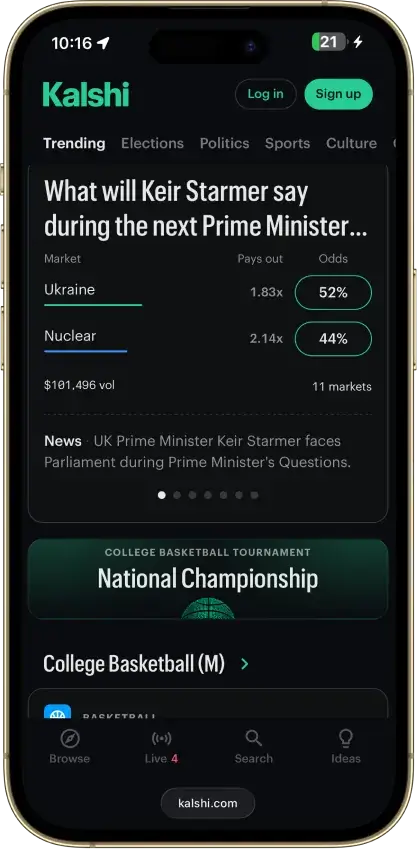
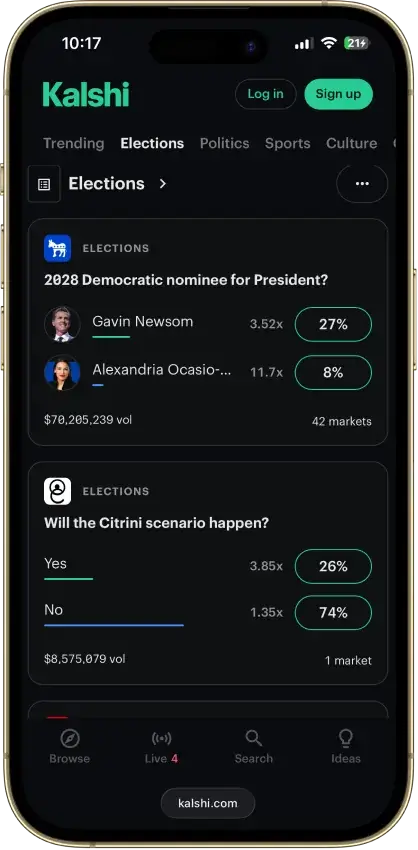
Kalshi is the strongest starting point for politics prediction contracts and election markets if you want the best mix of legal clarity, broad coverage, and usable exits. It handles the category like a real event-contract venue, not just a special tab inside a bigger app.

PredictIt still matters here because politics is where it remains most focused and most recognizable. If your whole reason for using a prediction market is presidential races, congressional control, nominations, or legislative questions, it still deserves a look. But once you care about depth, cleaner exits, and a stronger overall structure, Kalshi is the better platform.

Robinhood can work for bigger political headlines, but it does not yet feel like the place to go when you want a wide political board.

Sports Event Contracts

DraftKings and Robinhood make the strongest first impression for sports-focused users because the product framing is familiar right away. Robinhood has pushed harder into live-style sports contracts and higher-traffic sports markets, which makes it more interesting than a casual glance suggests.

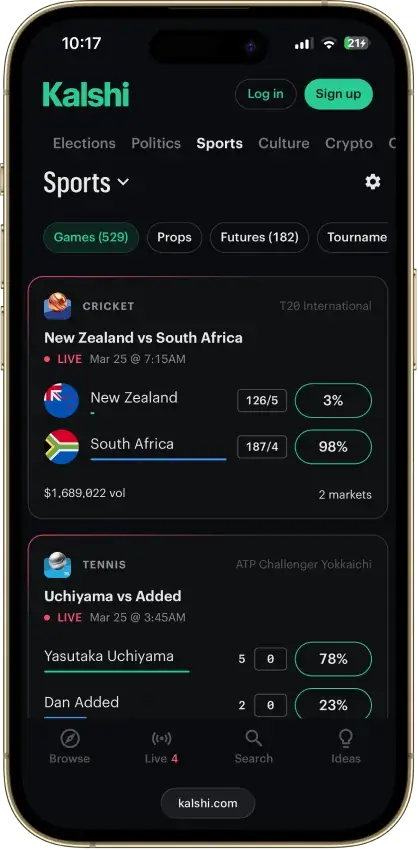
DraftKings has the clearest sports-first identity in this shortlist, and that matters if sports is the only thing you want. But Kalshi is still very competitive here, especially if you care more about tradable exits, broader event coverage, and a platform that does not lose its edge the moment you move past the most obvious game.

In practice, the best sports choice depends on whether you value a sports-first app or a better all-around exchange experience.

Crypto, Companies, And Financial Events

Coinbase stands out most when the user already lives inside Coinbase and wants event exposure without moving money somewhere new. That makes it a strong fit for crypto, company, sports, politics, and macro contracts that already sit inside the Coinbase account flow

Kalshi is still the broader venue in this slice because it covers companies, crypto, and financial events as part of a much wider board. Robinhood can handle big financial or company-linked headlines, but it is not the first choice if this is your main use case.

PredictIt is too politics-heavy for this lane, and DraftKings is more sports-led than finance-led.

Economics, Macro, And Forecast Contracts

Kalshi is the best starting point for CPI, Fed, recession, inflation, jobs, and other macro or forecast-style contracts. This is one of the clearest areas where range and structure matter, because users often want several related markets around the same release and need the ability to exit cleanly when prices move.

Robinhood is useful for headline macro contracts and big economic releases, especially for casual users who want a simpler app. Coinbase can surface some relevant markets, but macro is not where it feels strongest. PredictIt is much more political than economic, and DraftKings remains far more sports-led than forecast-led.

The best regulated platform changes with the contract category. The politics-first pick is not automatically the best sports app. The easiest funding path is not automatically the best place for macro trading. Once you separate the list by what you actually want to trade, the shortlist becomes much easier to use.

Fees, Funding, Withdrawals and Payout Speed

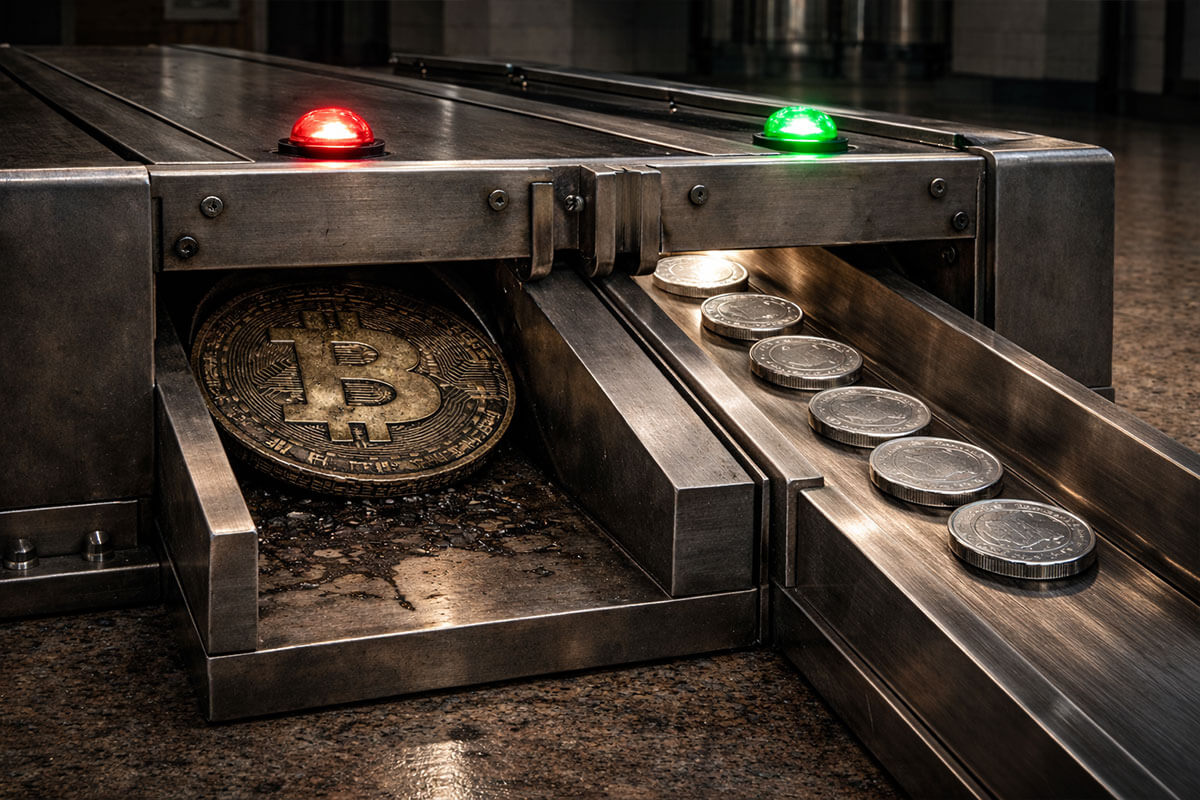
Getting money into a prediction market account is step one. Getting it back out, in full, without waiting days, is the part that actually varies across platforms.

The fee line on the order ticket is only part of the cost. Spreads, deposit method holds, transfer windows, and withdrawal fees all affect what you end up with. Some platforms settle contracts within hours but hold the proceeds in a separate balance with restricted transfer times. Others charge nothing obvious on entry, then take a meaningful cut at the end.

The table below breaks down deposit options, trading costs, withdrawal speed, and the specific friction point most likely to slow or reduce your final payout on each platform.

PlatformTrading CostWithdrawal Speed / Payout SpeedMain Cash-Out FrictionBiggest Money-Movement Problem
KalshiMost markets: $0.07-$1.75 per 100 taker contracts; maker fees are lowerMany markets settle within hours; ACH usually takes a few business days; debit can be near-instantDeposit-method holdsFast settlement does not guarantee fast bank cash-out
Robinhood Prediction Markets$0.01 Robinhood commission + $0.01 exchange fee per contract per sideProceeds are usually withdrawable in about 2 business daysBrokerage settlement timingResolved cash is not instantly withdrawable
Coinbase Prediction MarketsNot publicly disclosed; shown at order confirmationReusable right away; auto-transfer to primary balance runs every 2 hours from 6 a.m. to 4 p.m. ET on business daysBusiness-hour transfer windowsResolved does not mean off-platform cash
PredictIt10% of profits + 5% withdrawal feeInitial deposits face a 30-day withdrawal hold; withdrawals are not especially fast30-day first-deposit hold + 5% withdrawal feeEnd-of-process fees shrink profits
DraftKings Predictions$0.01 per contract bought or sold + separate exchange feeContract payouts can post quickly, but withdrawals vary by method and can take daysPayment-method matching and withdrawal rulesPayout and withdrawal are separate steps

A user should think about money movement in four stages, not one. First, you enter the position. Then the contract resolves. Then winnings post to some kind of platform balance. Only after that do you get truly usable cash back in your bank or outside wallet. That gap is easy to miss when the app looks simple. It is smallest when the funding and withdrawal rails are clean, and it feels worst when the platform has a separate prediction balance, slow transfer windows, or end-of-process fees that make the final cash-out smaller than it looked on the trade screen.

State Access, KYC and Where Friction Still Shows Up

Opening an account and accessing the market you actually want are two different things on most of these platforms. You can pass identity checks, fund the account, and still find that the specific contract or market type you came for is restricted by state, excluded by platform rules, or gated behind a separate approval layer.

Here is a quick table to help you with just that:

PlatformState AvailabilityKYC LevelMain Limitations
KalshiAvailable in most US states; NV and MA currently restricted (NV blocks new sports/election/entertainment contracts; MA has enjoined sports contracts pending appeal). Also facing disputes in AZ, IL, MD, MT, NJ, OH.18+; personal details; document verification if requested.Access can change by contract type even after account approval, especially in sports.
Robinhood Prediction MarketsExcluded in MD. NV residents cannot trade new sports event contracts. Disputes also reported in NJ, MA, OH.Full Robinhood account plus Robinhood Derivatives approval.You can have the account and still not get the contract board you expected.
Coinbase Prediction MarketsUS only (NV excluded). Access is not affected by international travel once enabled.U.S. address, SSN or TIN, photo ID, legal-name match, and suitability review covering age, trading experience, occupation, income, and net worth.A normal Coinbase account does not guarantee prediction-market approval.
PredictItAvailable in the US.Standard account verification; SSN or ITIN becomes relevant for U.S. reporting thresholds.Access may be broad, but the product stays politics-first and exits are weaker.
DraftKings PredictionsAll markets: CA, ID, UT, NM, ND, SD, NE, OK, NM, TX, AL, RI GA, SC, FL; Sports unavailable: OR, WY, CO, KS, MO, LA, MS, KY, IN, WV, VA,NC, NY, VT, MA, NJ, DR, MD, DC. Financial markets only: WA, MT, NV, AZ, IA, IL, AR, TN, MI, PA, CT. No markets: ME, NH, OH. Tribal land is excluded.Full identity and geolocation checks.The app may open, but the contract type you want may still be blocked where you are.

Kalshi and Robinhood still feel cleaner on the path from signup to first trade, especially if the user already has a funded Robinhood account or wants a dedicated event-trading venue. Coinbase creates the most friction because the review is more explicit and the product is more gated. DraftKings can feel simple at first, then get much narrower once physical location and market type start to matter. PredictIt is easier to access at a basic level, but that simplicity comes with a much narrower product.

Liquidity, Early Exits and Contract Quality

A regulated prediction market only works if the contract is tradable before it resolves. The biggest headline markets usually look fine on the surface, but the difference shows up once you try to exit early, size up, or trade something less obvious.

Kalshi is the strongest overall here because it holds up better on depth, exits, and contract quality across politics, macro, and major sports. Robinhood can feel active on larger contracts too, but that strength falls off faster once you leave the biggest boards. PredictIt and DraftKings tend to thin out sooner, which matters more than headline pricing once you actually need to close a position.

Execution quality matters just as much as posted fees. A cheap contract is not really cheap if the spread is wide, the order book is thin, or slippage grows the moment size increases. The same event can also trade differently across platforms because of weaker depth, different close times, different settlement sources, or slightly different wording. That is why contract quality matters as much as raw volume. A busy market is still a bad one if the wording is loose or the edge cases are unclear.

Regulated Event Contracts Vs Sports Betting Apps

These products can look similar from the outside. Both let you take a position on an outcome. But the pricing model, exit mechanics, and legal framework are different enough that choosing the wrong one for your use case costs you real value.

FactorRegulated Event ContractsSports Betting AppsWhy It Matters
PricingMarket-driven contract pricing, usually between $0.01 and $0.99Fixed odds or lines set by the sportsbookOne feels more like trading a market, the other feels more like taking the book’s price
Early ExitsOften built around buying and selling before resolutionCash-out exists, but terms are set by the sportsbookEvent contracts are usually better if you want to manage a position actively
Market StructureExchange-style or broker-connected event contractsHouse-run wagering productStructure affects transparency, execution, and how prices move
Legal ModelFinancial or derivatives frameworkState sports-betting frameworkThe same state can treat these products very differently
Best ForUsers who want tradable positions, market pricing, and yes-or-no exposure beyond standard betsUsers who want parlays, props, team bets, and a simpler betting flowThe better tool depends on whether you want to trade an event or just bet on it

A regulated event contract makes more sense when you want a market price, the ability to exit before resolution, or access to markets outside the standard sportsbook menu – politics, economics, and macro forecasts included. A sportsbook is the simpler choice when you want team bets, player props, or same-game parlays. The right tool depends on whether you want to trade an event or just bet on it.

How To Choose The Right U.S. Regulated Prediction Market

Before committing to a platform, run through these eight checks. Most bad choices in this category fail on one of them, not on branding.

  1. Confirm what “regulated” actually means on that platform – the legal structure behind the contract matters more than the app store listing.
  2. Find out who is behind the market you are trading. The app and the back-end entity are not always the same, and that gap affects listings, limits, and settlement.
  3. Match the platform to the category you plan to trade most. A strong politics platform is not automatically a strong sports or macro platform.
  4. Test the full funding and withdrawal flow, not just the deposit step. Fees, holds, and transfer timing can cut into a cash-out that looked clean upfront.
  5. Check whether early exits are available and liquid. If you cannot get out before resolution without giving back most of the value, the contract is harder to use actively.
  6. Look at the real cost, not just the posted commission. Spread, slippage, thin books, and withdrawal fees all add up.
  7. Check state restrictions and KYC requirements before assuming full access. An approved account can still have product or market limits depending on where you are.
  8. Read the contract wording and confirm the resolution source before you trade. Loose wording or an unreliable source makes even a liquid contract risky.

Most bad platform choices here fail on one of these checks, not on how the app looks or how easy the first deposit felt. A polished interface and a smooth onboarding flow can mask a thin market board, slow withdrawals, patchy state coverage, or contract wording that only becomes a problem at settlement. Check the fundamentals first.

FAQ

What are regulated prediction markets?

They are markets where users trade contracts tied to real-world outcomes under a financial or derivatives framework instead of a standard sportsbook model. In the U.S., this usually means event contracts, forecast contracts, or yes-or-no contracts offered through a regulated structure. The key point is that the legal setup sits behind the contract, not just the app.

Are prediction markets legal in the U.S.?

Some are, but not all, and not in the same way. Legal access depends on the platform, the contract type, and sometimes the state you are in. In practice, the safe answer is to judge legality platform by platform, not as one broad category.

What are CFTC-regulated prediction markets?

They are prediction-style event markets offered through a Commodity Futures Trading Commission-regulated framework. The product is usually described as an event contract rather than a sportsbook wager. That structure is why these platforms get compared with betting apps but do not fit cleanly into the same legal bucket.

Which are the best regulated prediction markets in the U.S.?

For most users, the strongest shortlist is Kalshi, Robinhood Prediction Markets, Coinbase Prediction Markets, PredictIt, and DraftKings Predictions. Kalshi is the overall choice. Robinhood is the easiest mainstream starting point. Coinbase makes more sense for existing Coinbase users, while PredictIt and DraftKings are narrower category plays.

What is the best legal alternative to Polymarket for U.S. users?

Kalshi is the clearest answer for most U.S. users. It has the strongest mix of legal clarity, broad event coverage, and tradable exits in this group. Robinhood can be easier to approach, but it is not as broad.

Which regulated prediction markets are best for sports?

DraftKings Predictions and Robinhood Prediction Markets are the most sports-focused names in this list. Kalshi is still very competitive if you want a stronger all-around event market and better exits. The best sports choice depends on whether you want a sports-first app or a broader trading venue.

Which regulated prediction markets are best for politics?

Kalshi is the strongest overall politics platform in this group because it combines legal clarity, broad coverage, and better exits. PredictIt still matters if politics is your whole focus and you want a narrower politics-first product. Robinhood is more of a headline-politics option than a deep political board.

How fast are payouts on regulated prediction markets?

It depends on the platform and the withdrawal rail. Kalshi can settle quickly, but bank withdrawals still take time. Robinhood usually makes proceeds withdrawable in about two business days. Coinbase can post winnings quickly inside predictions, but auto-transfers to the primary balance only run every two hours during weekday business hours.

Are regulated event contracts the same as sports betting?

No. They can look similar on the surface, especially for sports outcomes, but they do not use the same structure. Event contracts are built around market pricing and tradable positions, while sportsbooks use bookmaker odds and a betting model.

How do Robinhood, Coinbase, DraftKings, and Kalshi actually differ?

Kalshi is the clearest dedicated event-contract venue. Robinhood is the easiest mainstream app-led entry. Coinbase is the most ecosystem-dependent and the most gated on approval. DraftKings is the narrowest and most sports-led of the group.

Is PredictIt a regulated prediction market?

It is better described as a limited U.S. politics-focused prediction market operating under a narrower legal structure than the stronger event-contract platforms. That is why it still belongs in the conversation but not at the top of the list. It matters most for politics, not as a broad all-purpose regulated market.

What is the difference between event contracts and prediction markets?

In everyday use, people often mean the same thing. In practice, “event contract” usually points to the formal regulated product structure, while “prediction market” is the broader category label. The difference matters when you are judging legality, access, and how the market is actually set up.