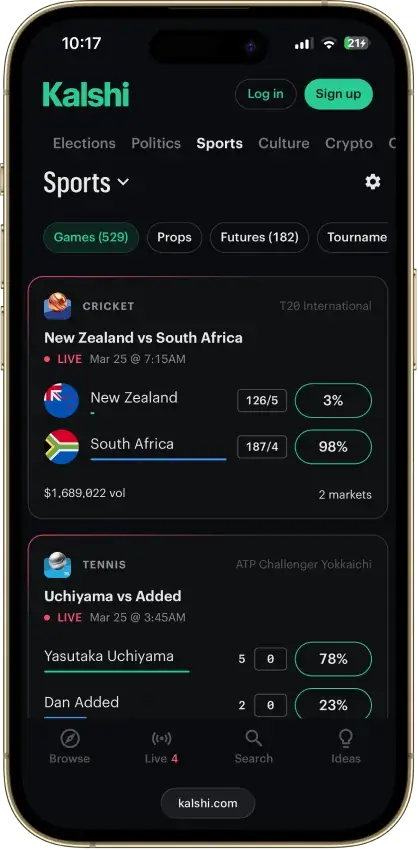
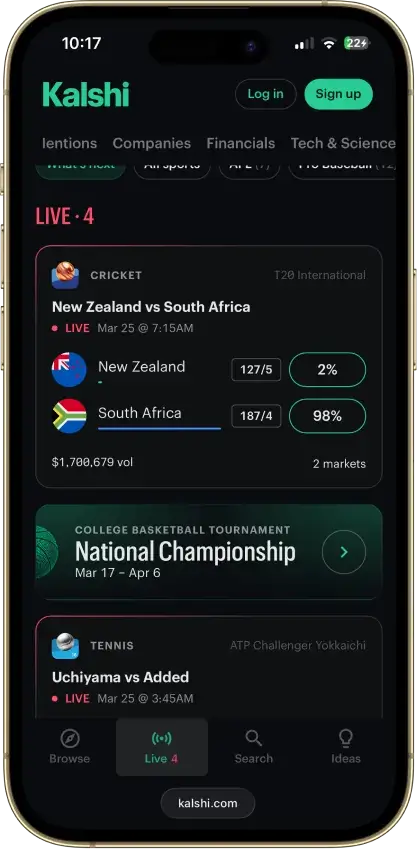
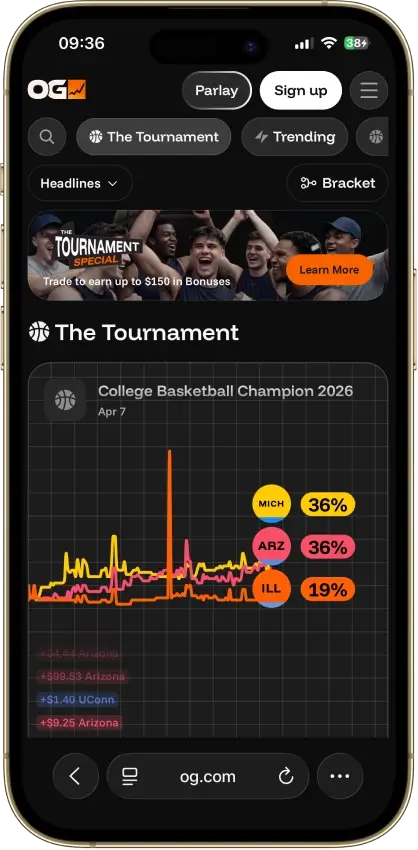
A good platform match usually comes down to a few practical checks. Most bad choices happen because one of these breaks in real use, not because the brand looked weak from the start.
Check Which Sports And Leagues Actually Trade Well
A platform can look strong until you move beyond headline NFL or NBA events. Check whether the sports you care about have real depth, active pricing, and enough volume to enter and exit without bad fills.
Check Whether You Want Pregame, Live, Props, Or Futures
Some platforms are better for pregame markets. Others are more useful for live trading, longer-dated championship markets, or narrative-heavy props. Pick the platform that matches how you plan to trade most often.
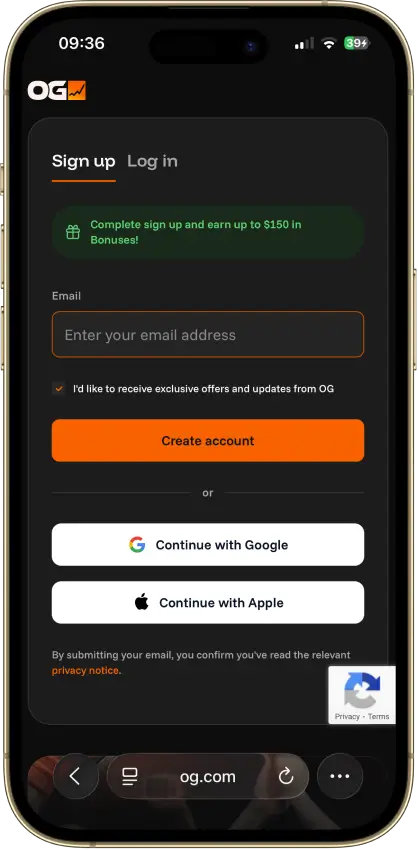
Check How Hard It Is To Get From Signup To First Trade
This is where many platforms lose users. Broker approvals, KYC checks, geolocation rules, and wallet setup can all slow down account readiness. A cleaner path matters if you want to move quickly.
Check How You Fund The Account
Bank transfer, card, brokerage cash, and crypto wallet funding all feel different in practice. Choose the rail that matches how you already move money, not the one that sounds cheapest at first glance.
Check Whether You Can Exit Before The Resolution Period
Early exit is one of the biggest differences between platforms. Some let you trade out at any time if liquidity holds up. Others are closer to hold-until-resolution products.
Check Fees, Spreads, And Hidden Cost Drag
The posted fee is only part of the cost. Wide spreads, slippage, gas, FX, and withdrawal friction can make a platform more expensive than it first appears.
Check How The Platform Handles Injuries, Delays, And Voids
Sports markets can get messy fast. Injury news, postponements, canceled games, and odd edge cases all test how clear the rules really are. If the grading language is vague, that risk lands on the user.
Check Whether The App Fits Casual Use Or Active Trading
Some apps are built for quick mobile use. Others work better on desktop or for more active order management. Choose the setup that fits your pace, not just the cleanest-looking interface.
The wrong platform usually fails on one of these checks, not on branding. It might fund poorly, trade thinly, handle edge cases badly, or make withdrawals harder than expected. That is what usually turns a decent-looking platform into the wrong choice.