This article was published 3 years ago. Some details may no longer reflect current market conditions or recent developments. If you spot anything that needs an update, contact us.
Ethereum network bounces back as 60% validators go offline and first inactivity leak occurs
Unravel the story behind Ethereum's first inactivity leak, with over 60% of validators going offline, and learn how end-users remained unaffected during this unprecedented event.



Quick Take
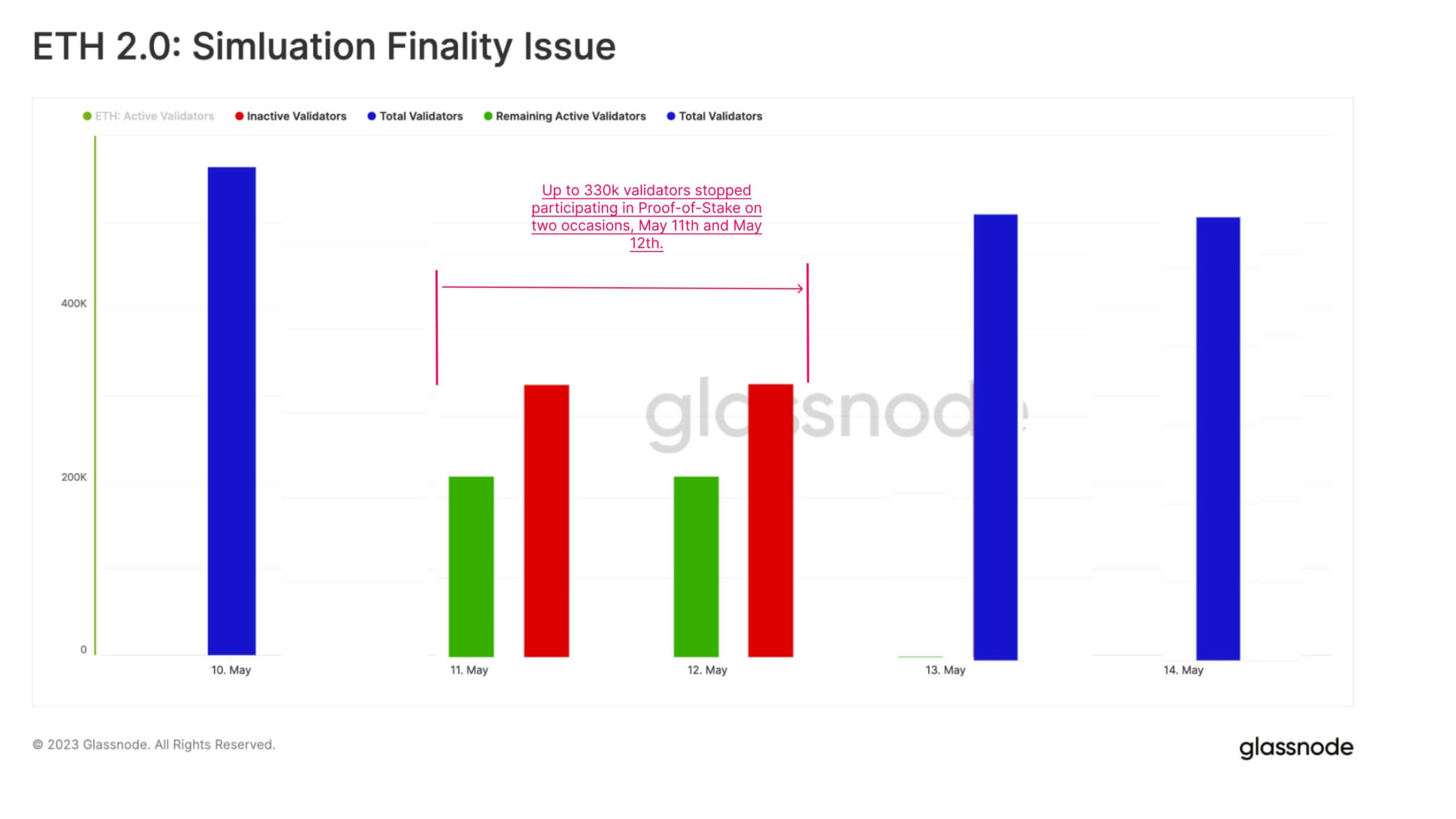
- On May 11 and 12, the Ethereum network saw a loss in finality — where over 60% of validators stopped performing duties.
- Roughly 330,000 validators stopped participating in proof of stake on two occasions.
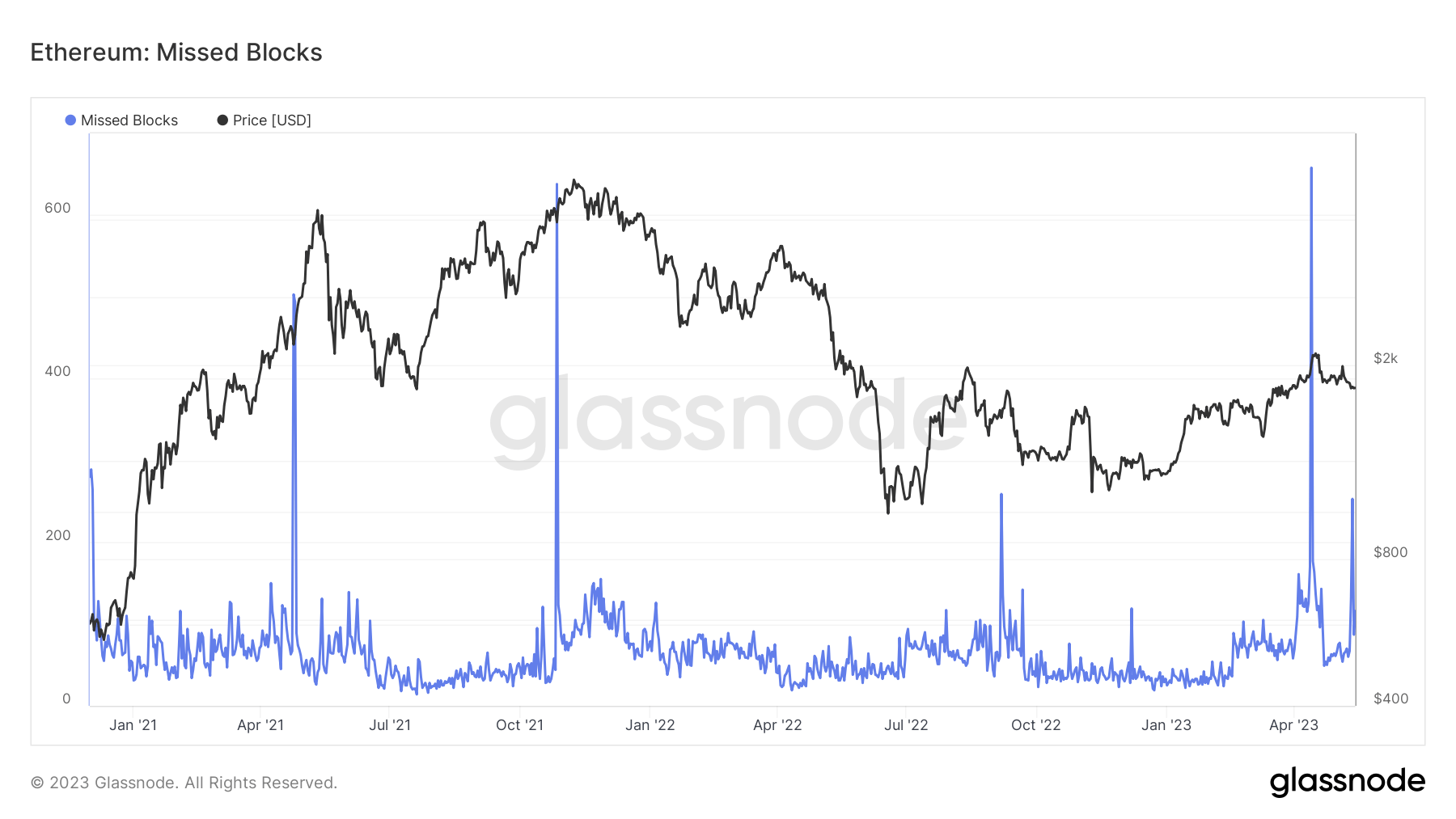
- This is equivalent to up to 60% of validators who went offline and were not performing their duties; this saw 253 blocks not proposed on time. Only on four other occasions were more missed blocks than last week's incident.
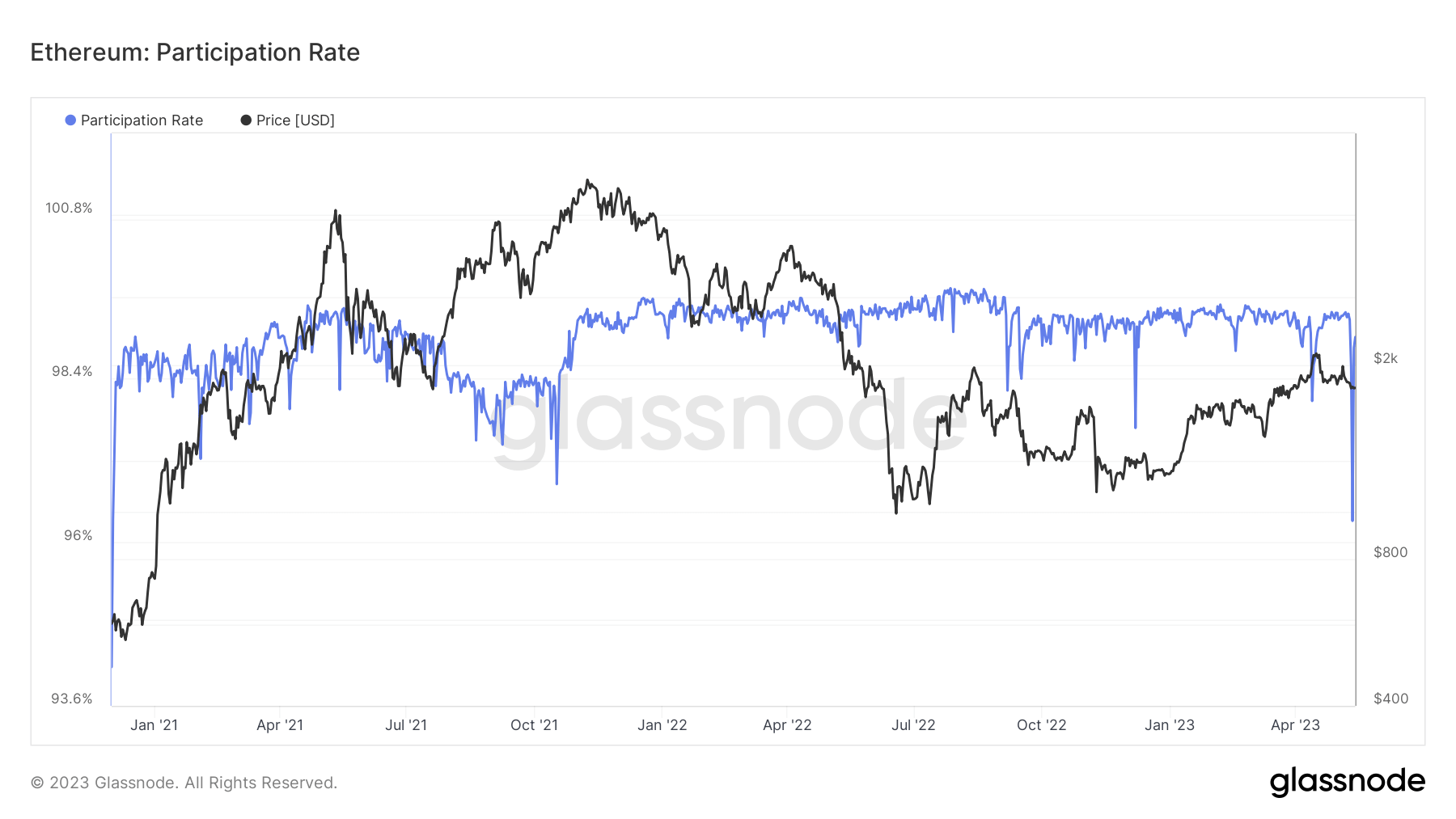
- The participation rate is defined as a measure of network validator responsiveness, tracking the proportion of slots that were missed to the total available. The participation rate is calculated as (Total Slots – Slots Missed) / Total Slots. The participation rate dropped to 96% but came online shortly after to over 98%.
- According to Glassnode, both incidents did not affect end-users to the mainnet as transactions were being processed.
- An inactivity leak occurred for the first time; this is where inactive validators are penalized until they are moved out of the chain, or they begin participating again.
- According to Glassnode, “The amounts subtracted from validators' beacon chain accounts during the inactivity leak are effectively burned, resulting in less ETH issuance during that time.”