



 Launched in 2024
- 0 SOL fee to create a coin
- Creator rewards on eligible coins, with a portion of trading fees going to the creator
- Native migration from the bonding curve to PumpSwap for continued trading after graduation
Launch your meme coin
Pump.Fun Overview
Pump.Fun Screenshots
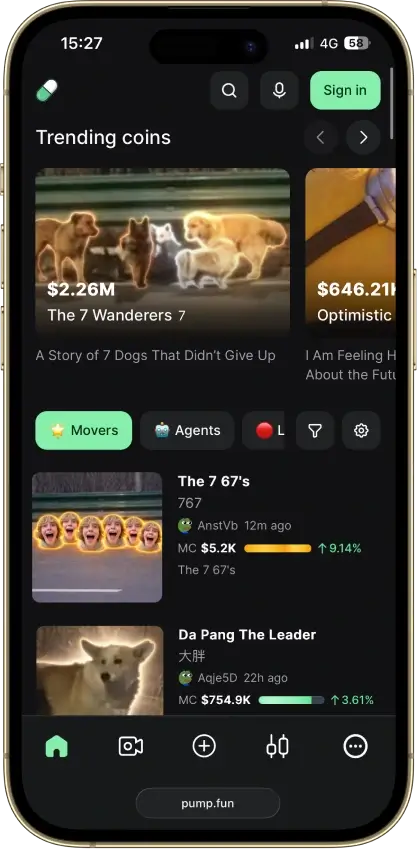
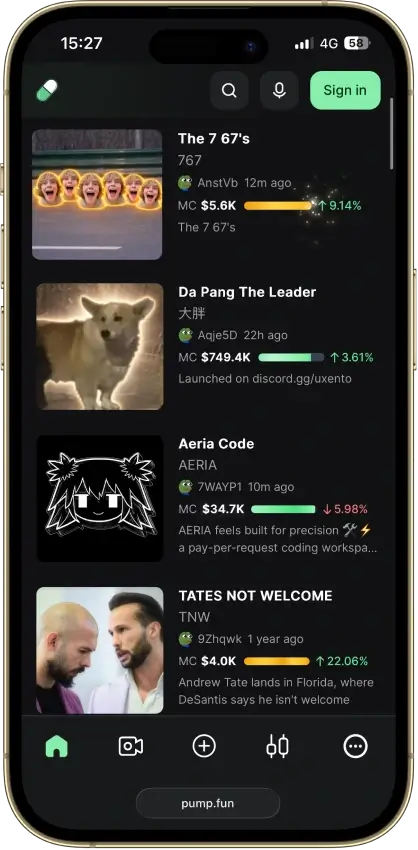
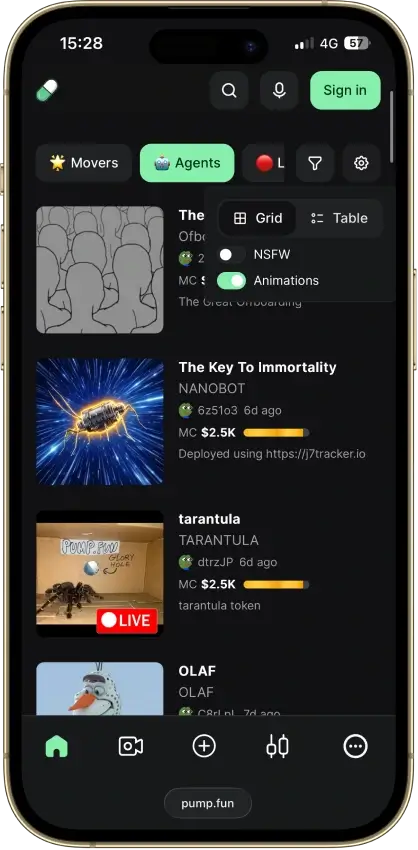
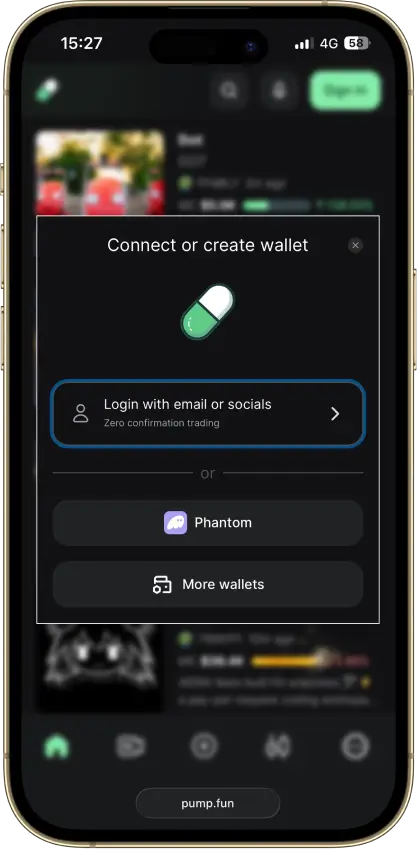
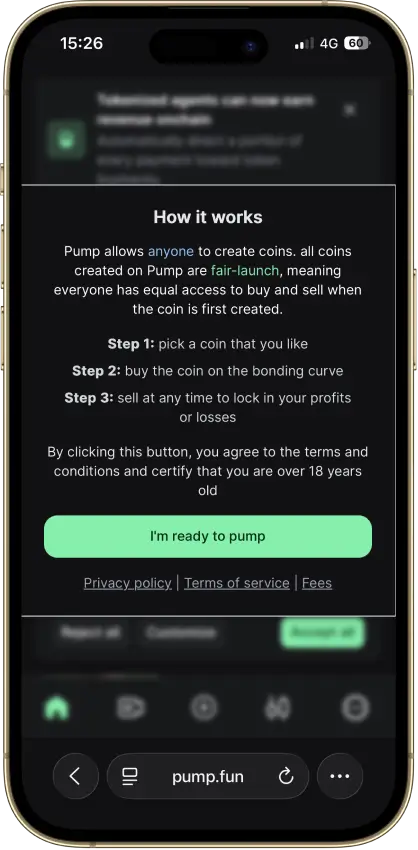
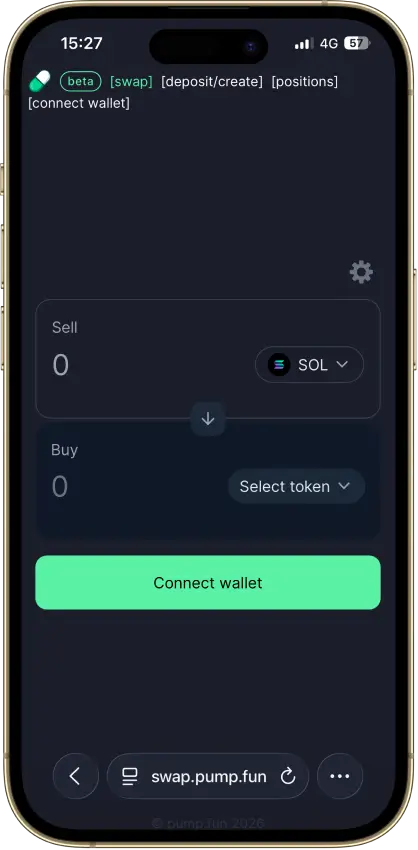
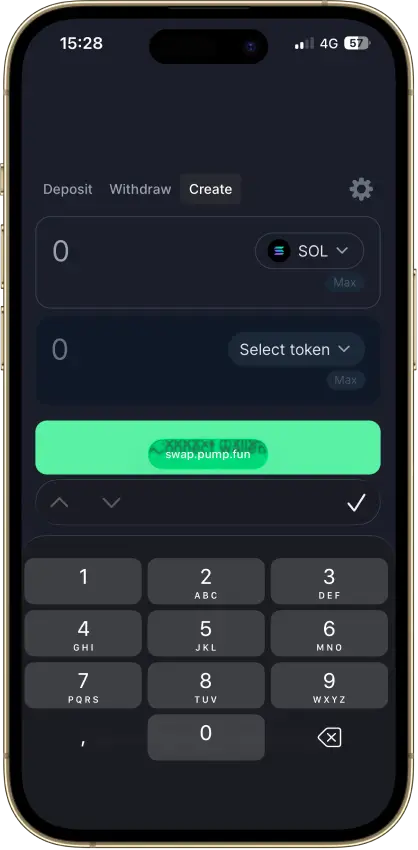
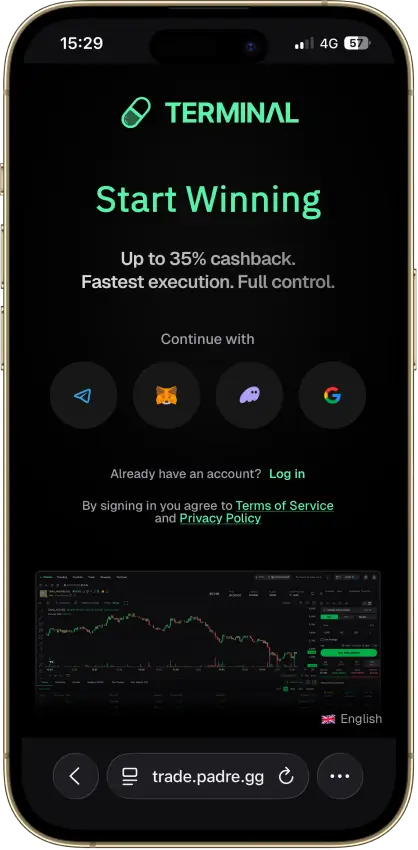
Screenshot 1 of 8
Pump.Fun Pros and Cons
Pros
- Free coin creation with a transparent fee schedule for trading and graduation.
- Wallet-based setup instead of forcing users into custodial balances.
- PumpSwap integration gives graduated tokens an onchain trading venue inside the same ecosystem.
- Help-center coverage is strong for deposits, swaps, token creation, and mobile onboarding.
- Graduated-token liquidity uses locked-and-burned LP mechanics instead of relying on manual liquidity removal.
Cons
- Extremely speculative, user-generated token environment with a high risk of total loss.
- Weak fit for mainstream U.S. retail users who want regulated fiat rails and clearer protections.
- No public exchange-wide proof of reserves, insurance disclosure, or traditional reserve reporting.
- Legal terms are aggressive, with mandatory arbitration, class-action waiver language, and broad platform discretion.
Is Pump.fun Worth It?
Pump.fun is a Solana memecoin launchpad and trading venue, not a mainstream crypto exchange. It works best for users who care about quick launches, transparent trading fees, and a simple path from bonding-curve trading into PumpSwap.
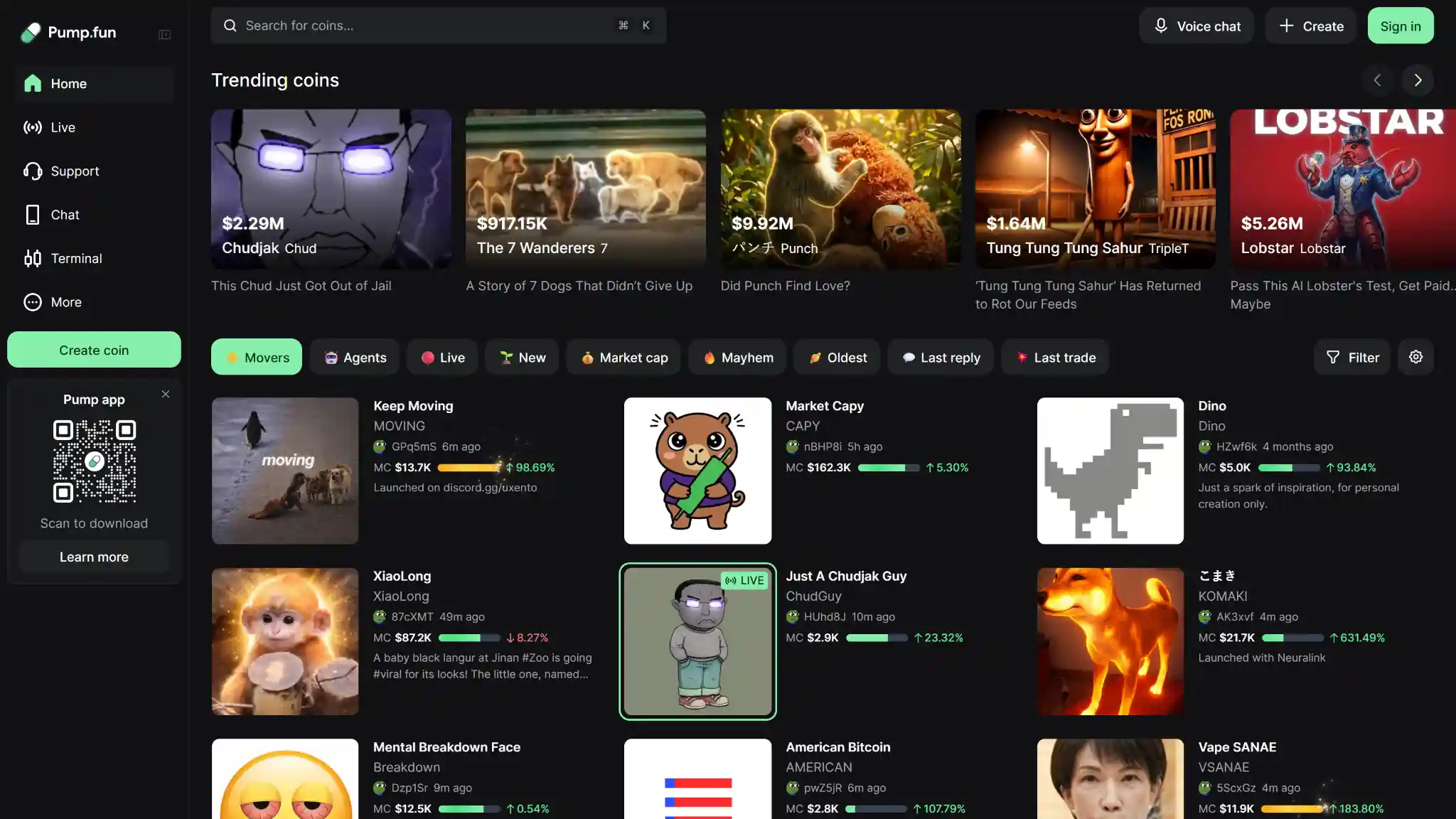
On the downside, it is a market built around user-generated tokens, with extreme speculation, uneven asset quality, limited U.S. clarity, and fewer traditional trust signals than a regulated retail exchange. Most beginners should skip it, along with anyone who wants strong fiat banking rails, conservative asset selection, or clearer custody and reserve reporting.
Who Is Pump.fun Best For
Pump.fun is best for users who already know their way around Solana wallets, onchain execution, and very high-risk trading. The clearest fit is an active memecoin trader chasing early momentum or a creator who wants to launch quickly without going through a centralized listing process. It can also suit experienced onchain speculators who want fast access to bonding-curve trades and post-graduation liquidity on PumpSwap.
It is a poor fit for beginners, passive investors, and most U.S. retail users looking for a familiar exchange experience. It also does not suit fee-sensitive users who want low-cost spot trading on established assets, or lower-risk users who care more about asset quality, compliance clarity, and investor protections than raw speed and open access.
Pump.fun Fees and Pricing
Costs depend on the route you use: trading on the bonding curve, trading a graduated token on PumpSwap, or using mobile funding methods. The pricing below reflects the platform’s fee schedule as captured in March 2026.
Creating a coin is free. If a coin graduates from the bonding curve to PumpSwap, a fixed 0.015 SOL fee is taken from the coin’s liquidity rather than charged as an additional user payment. For trading, the first thing to check is whether the token is still on the bonding curve or already on PumpSwap. Bonding-curve trades carry a 1.25% total fee, split into a 0.300% creator fee and 0.95% protocol fee.
For graduated coins in canonical PumpSwap pools, fees fall as the coin’s SOL-denominated market cap rises. The fee schedule starts at 1.25% total for coins between 0 and 420 SOL market cap and gradually declines to 0.30% total at 98,240 SOL and above. For non-canonical PumpSwap pools, the official total is a flat 0.30%, split across protocol and LP fees. In practice, Pump.fun’s base tier versus top tier pricing is tied to the coin’s state and pool structure, not to your personal trading volume.
Pump.fun’s web app, advanced frontend, and mobile app do not charge additional platform fees beyond the trading schedule, although some mobile users may see fee increases of up to 0.1% on certain transactions. Those extra amounts may be routed to creators, coin fee owners after a community takeover, referrers, or back to the user. On top of Pump’s own schedule, users still need to account for third-party wallet costs, blockchain network fees, slippage, and any optional priority settings.
There is no public staking commission schedule tied to the core trading product. A few habits can keep costs down: avoid repeated in-and-out trading on fresh bonding-curve coins, check whether a token has already graduated into a lower-fee PumpSwap tier before sizing up, and use direct wallet funding where possible instead of stacking optional mobile funding costs on top of trade fees.
VIP Tiers and Fee Discounts
Pump.fun does not have a traditional VIP ladder with 30-day volume thresholds, maker/taker discounts, or loyalty-based pricing. There is also no public native-token discount or subscription plan that lowers standard trading fees across the platform.
Fee differences come from where and how the token trades, not from your personal volume. Bonding-curve trades have one fee level, canonical PumpSwap pools become cheaper as market cap rises, and non-canonical pools use a separate flat schedule. There is no meaningful user-level VIP program to model here.
Deposits, Withdrawals, KYC and U.S. Availability
Pump.fun is not a fiat-first platform and does not have the kind of global funding-and-limits matrix most retail users expect from a mainstream exchange. In practice, the platform is mostly wallet-based. On web, you can deposit and withdraw SOL into and out of your Pump wallet. On mobile, Pump adds more funding options, including Apple Pay or card and selected crypto deposits across supported networks.
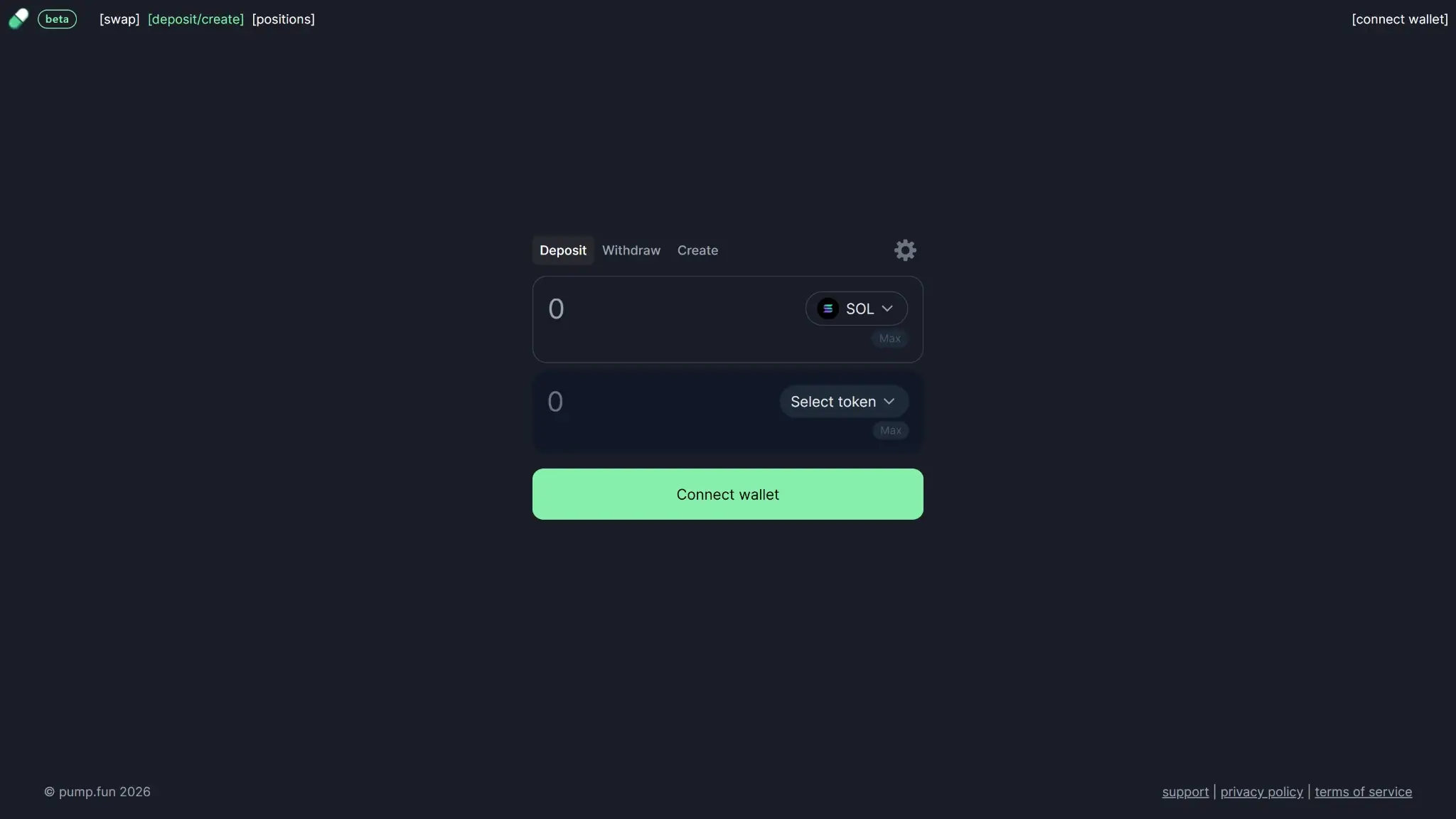
Pump also does not have a single global schedule for minimum deposits, maximum withdrawals, or named verification tiers. Where specifics do appear, they are usually route-specific. In practical terms, web funding centers on sending SOL into the Pump wallet, while mobile adds card or Apple Pay funding plus selected crypto deposit routes. The withdrawal rule is that users need 0.005 SOL in the wallet to process a withdrawal.
Geo Access and Entity Mapping
Pump.fun does not come with a region-by-region entity map in the style of a regulated exchange. The platform is broadly linked to Baton Corp., Bracket Ltd., and affiliated Pump entities, but there is no simple operating-entity. So it makes more sense to read Pump’s geo access through its restrictions and feature carve-outs than through a neat legal-entity map.
The U.S. picture is not clean enough to label as a straightforward yes. Pump’s main site and app are visible, but the official token portal explicitly displays a restricted jurisdiction notice for the United States. Users cannot access the platform in prohibited or sanctioned jurisdictions including Cuba, Iran, North Korea, Syria, and Russia. Pump does not offer a public state-by-state availability list.
| Region | Access Status | What Users Can Do | Key Restriction or Caveat |
|---|---|---|---|
| United States | Restricted / unclear | Main site and app may be visible | Official token portal shows a U.S. restricted-jurisdiction notice, and Pump does not have a state-by-state availability list |
| Other permitted markets | Varies by jurisdiction | Wallet-based platform access may be available | Access depends on local law and Pump’s own restrictions; there is no clean country-by-country availability chart |
| Prohibited or sanctioned jurisdictions | Not available | No access | Jurisdictions including Cuba, Iran, North Korea, Syria, and Russia |
Registration and Onboarding
Pump’s onboarding is wallet-first, not bank-account-first. On the web flow, each email address is linked to one unique Pump wallet. On mobile, the account options are broader. Pump supports Privy-based access methods such as email, Apple ID, or social login, and it also supports Login with Wallet or importing an existing wallet by private key or recovery phrase.
For setting up, you sign in, access your wallet, and then fund it either by transferring SOL, using mobile card or Apple Pay, or using supported crypto deposit routes. For Privy-based accounts, wallet credentials can later be exported, although those accounts export a private key rather than a full seed phrase. The only warning is to not lose access to the login method tied to your wallet, and do not delete a Privy-based account before exporting wallet credentials.
Pump does not have a standard upfront document-verification flow like a mainstream exchange KYC program. Instead, the the platform may collect other personal, commercial, or identification information where it deems this necessary for anti-money-laundering compliance. Separately, it may require age verification where it considers that necessary. There is no default KYC ladder, but compliance checks can still appear.
Fiat Rails by Region
Pump.fun does not have a proper regional fiat-rail matrix. The only fiat-adjacent route is mobile card or Apple Pay funding, but regional coverage is not laid out in a clean country-by-country schedule.
For most target users, the most practical low-cost funding route is still sending SOL directly from an external wallet or exchange into the Pump wallet and keeping a small SOL buffer for transaction and withdrawal costs.
Withdrawal Networks and Fees
Pump is still a Solana-first product, so withdrawals are best understood through that lens. Users need 0.005 SOL in the wallet to process a withdrawal, while Pump does not provide a full cross-chain withdrawal-fee schedule or fixed settlement times. For most users, the simplest route is sending SOL in and out directly and keeping a small SOL balance for future transactions.
Verification Levels and Withdrawal Limits
Since it’s a decentralized platform, Pump.fun does not have verification levels with clean fiat and crypto limits in the way a centralized exchange normally would. Standard account creation can begin through email, Apple ID, social login, or direct wallet login, while the privacy and policy materials leave room for additional information requests where Pump thinks they are necessary for compliance or age-gating.
Pumpfun doesn’t have any public withdrawal-limit schedule, hold-period chart, whitelist requirement, or travel-rule matrix. That means users should assume the operational rules are more discretionary and less standardized than on a regulated retail exchange.
Is Pump.fun Safe? Security, Custody and Proof of Reserves
Pump.fun’s safety profile comes down to its custody model, security controls, reserve transparency, and incident history as of March 2026. The key point is that Pump.fun makes more sense as a wallet-based onchain product than as a traditional exchange. That lowers classic custodial-balance risk, but it does not remove smart-contract risk, access-control risk, or the extreme market risk that comes with user-generated memecoins.
Controls
Pump.fun’s security controls are relatively thin compared with a large centralized exchange. Users should not share passwords or 2-factor authentication codes, to watch activity history for suspicious behavior, and to report any suspected security breach immediately. But Pump doesn’t have a strong user-facing security guide that clearly maps which account types support 2FA, passkeys, device/session management, withdrawal allowlists, anti-phishing codes, or delayed-withdrawal vault features.
In practice, most of the security burden appears to sit with the user. Pump’s wallet flows emphasize protecting your login method, not sharing private keys, and exporting credentials before deleting an account. For Privy-based accounts, users can export a private key, but not a seed phrase. That is workable, but it also means recovery discipline matters. Once a withdrawal is submitted, it cannot be canceled.
One coin-level protection is worth noting. When a token migrates to PumpSwap, the liquidity pool tokens are locked and burned, which means the developer cannot manually remove liquidity to zero. That helps reduce classic hard-rug liquidity removal. It does not prevent a creator from selling a large token position and crashing price.
Custody and Insurance
Pump.fun’s custody model is wallet-based and non-custodial. Only the user controls the funds and that Pump cannot access or freeze them. Wallet services are provided by Privy.io, while a wallet generated through Privy remains the responsibility of Privy and the user, and Pump does not control the wallet or its private keys.
That matters because Pump is not holding customer balances in the same way a custodial exchange does. If you use Pump through its wallet flow, the main questions are whether you can protect your login method, store exported credentials safely, avoid signing malicious transactions, and manage the smart-contract and token risks you take on yourself.
Pump doesn’t feature any public crime-insurance policy, specie policy, or similar insurance language for user crypto balances. There is also no framework for fiat balance segregation or bank-partner treatment, largely because Pump is not built like a fiat-heavy exchange. Even if a third-party payment or banking partner offers some limited protections around payment processing, that would not mean your memecoins or onchain crypto balances are insured.
Proof of Reserves or Audits
Pump.fun does not have an exchange-wide proof-of-reserves program in the style of a centralized exchange, including a public Merkle-tree reserve attestation, user-verifiable inclusion tool, liabilities disclosure, cadence schedule, or reserve dashboard.
There are narrower audit-related claims around specific features. The official Tokenized Agent and Mayhem Mode disclaimers both say those systems are audited and designed using industry-standard security practices. But the official site does not link to a public audit report, named audit firm, or formal attestation package that users can inspect directly. So while there are feature-level audit claims, there is no broad exchange-style reserve or solvency transparency program to rely on.
Because Pump is largely wallet-based, the absence of proof of reserves is not the same kind of red flag it would be for a custodial exchange holding large pooled customer balances. Even so, the lack of a public, detailed audit trail means users are being asked to rely more on product claims and legal disclosures than on independently inspectable reserve data.
Incidents and Remediation
Pump.fun’s most important public security incident was the May 2024 exploit in which roughly $1.9 million was reportedly drained after a former employee allegedly abused privileged internal access tied to the protocol’s withdrawal authority. That incident matters because it points to internal access-control risk around protocol operations, even if Pump’s retail product is largely wallet-based.
The second important event was the February 2025 compromise of Pump.fun’s official X account, which was reportedly used to promote fake tokens, including a fake “PUMP” token. That was not the same thing as a wallet-custody breach, but it still mattered because crypto users often rely on official social channels for launches, warnings, and links. In practical terms, it was a communications-security failure that increased scam exposure.
How to Verify PoR Yourself
There is no true exchange-wide proof-of-reserves program to verify here. If you are trying to assess Pump.fun’s safety, the more realistic checklist is different: confirm whether the product flow is wallet-based, read the wallet and export-credential docs carefully, verify any smart-contract or feature documentation yourself, and avoid treating social media announcements as trustworthy until they are reflected in the official site and docs.
Status Page and Incident History
Pump.fun does not maintain a dedicated public status page focused on security, custody, or solvency events. Pump does link to a Tech updates Telegram channel, which is useful as a development and announcements stream, but it is not the same thing as a formal incident-history ledger or exchange-style status page.
| Month Year | Event | Impact | Resolution |
|---|---|---|---|
| May 2024 | Former-employee exploit tied to privileged withdrawal authority | Roughly $1.9 million reportedly drained from protocol-related funds; highlighted internal access-control risk | Pump published a postmortem, attributed the incident to a former employee, resumed operations, and publicly described remediation efforts |
| February 2025 | Official X account compromise | Fake token promotions increased scam and communications risk for users following official social channels | Account control was reportedly restored; incident reinforced the need to verify announcements on official site and docs |
Supported Assets and Markets
In simple terms, Pump.fun offers huge token breadth with very little quality control. That breadth comes from permissionless creation, not from a selective listing standard. In practice, that means traders get access to a constant stream of new Solana memecoins, but they also inherit all the usual problems of open token creation: duplicated themes, abandoned launches, spoof branding, thin post-hype liquidity, and extreme failure rates.
It also comes with obvious gaps. Pump.fun is not a strong choice if your idea of supported assets means deep spot books for majors like BTC and ETH, broad fiat trading pairs, or multi-product exposure across margin, futures, or options. The core identity here is simple: launch meme tokens, trade them early on the bonding curve, and then keep trading them through PumpSwap if they graduate.

Stablecoin support matters, but it is clearly secondary to SOL in the way the ecosystem is structured. USDC and USDT support is available in selected deposit and routing contexts, while SOL remains the key asset for fees, wallet funding, and much of the platform’s trading logic. That makes Pump.fun easier to use for existing Solana users than for someone coming in from a fiat-first or multi-chain trading workflow.
Fiat pair coverage is thin in the traditional exchange sense. Pump does not have a market structure built around USD, EUR, or GBP spot books. Instead, fiat appears mainly at the funding layer, especially through mobile card and Apple Pay flows. For users who care about quote-currency depth, regulated fiat books, or clean cross-currency execution, that is a major limitation.
The issue for U.S. users is not just fewer tokens. U.S. availability appears feature-specific and legally constrained, with some official surfaces restricted and no clean state-by-state market-access schedule. For a U.S. user, the practical result is less certainty, not just fewer tokens.
There is no evidence tying $PUMP to lower standard trading fees, VIP tiers, or market access across the platform. Pump.fun’s market mechanics are driven by token state, pool type, and onchain product structure, not by holding an exchange token for discounts.
Listings and Delistings Policy
Pump.fun does not operate like a centralized exchange with a traditional listing committee, formal listing reviews, and routine delisting notices for underperforming assets. Launches are effectively permissionless. A user creates a token, the token becomes part of the Pump ecosystem, and visibility then depends on activity, discovery, and platform surfacing rather than on passing a curated listings process.
That said, “permissionless” does not mean “anything goes forever.” Pump’s Terms and platform rules reserve broad discretion to remove, modify, reject, restrict, or ban user material and user-generated digital assets where needed. In practice, that means Pump’s policy lever is closer to moderation and access control than to a classic exchange delisting framework.
The best way to describe Pump.fun’s listings model is simple: easy launches, weak curation, and discretionary moderation instead of formal listing and delisting governance. That structure is great for speed and experimentation, but it puts much more of the due-diligence burden on the user.
App, UX and Customer Support
As of March 2026, Pump.fun’s day-to-day experience centers on moving quickly between discovery, creation, trading, chat, and support rather than on managing a traditional exchange dashboard. The web product is easy to navigate at a glance, the help center is better than you might expect for a platform like this, and mobile localization is broad.

UI and Navigation
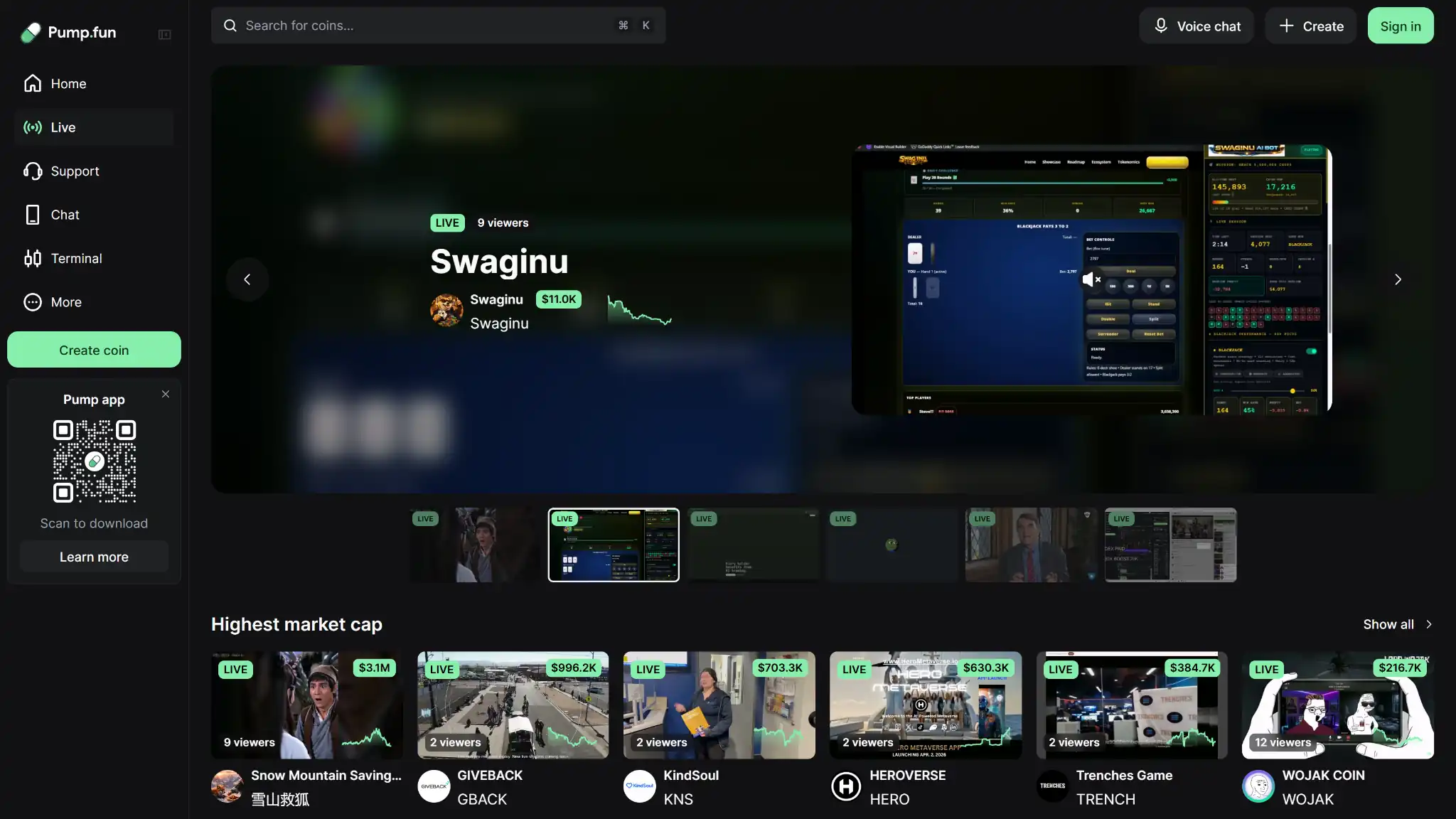
Pump.fun’s information architecture is built around a few obvious entry points: Home, Live, Support, Chat, Terminal, and Create coin. That works because the site tells you quickly what you can actually do: find coins, watch activity, create a token, or jump into trading. Search is visible, trending feeds are front and center, and the route from discovery to coin page to trade is short.
For common desktop actions, the flow is reasonably efficient. You can search for a token, open the coin page, view comments and holders, switch to Terminal, or sign in and trade without moving through a lot of hidden menus. The platform is strongest when the task is simple and native to Pump’s identity, like following new launches or checking bonding-curve progress.
It gets clunkier once you move beyond the core actions. Features like wallet export, account-deletion warnings, mobile import flows, Mayhem Mode details, or Tokenized Agent mechanics often sit in separate help-center articles or documentation pages instead of one unified settings and controls hub. That is manageable for experienced onchain users, but it is less polished for mainstream users who expect more guidance inside the product.
Localization is a bright spot. The iPhone listing shows English plus 34 additional languages, and the help center is available in a broad range of translated versions. That does not automatically mean every support interaction is multilingual, but it does improve accessibility for non-English readers. Accessibility signals are otherwise thin. Pump does not have a detailed accessibility page covering screen-reader support, custom display options, or trading-specific accessibility features.
Mobile App
Pump.fun has live mobile apps on both major platforms, but the public picture is not the same on each. On iOS, the app appears as “pump.fun: Meme Coins”, is listed as Only for iPhone, and shows a 4.7/5 rating from roughly 1.1K ratings. The version history also suggests a fast release cadence, with multiple updates across January, February, and March 2026.
On Android, the app appears as “PumpFun”, shows 500K+ downloads, and was updated on March 6, 2026. The Android app sits at roughly 4.3/5 stars, with roughly 2,448 reviews.
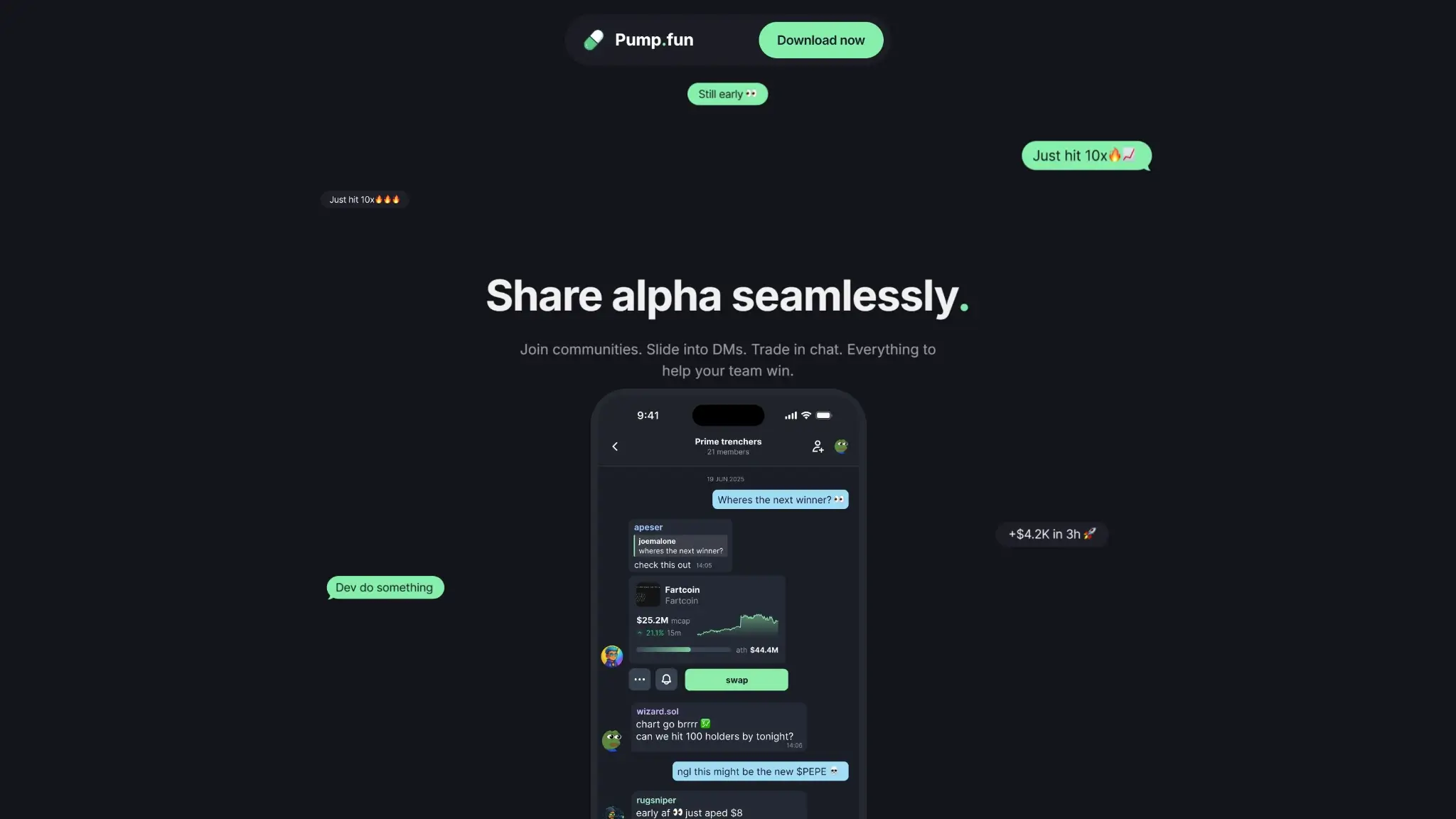
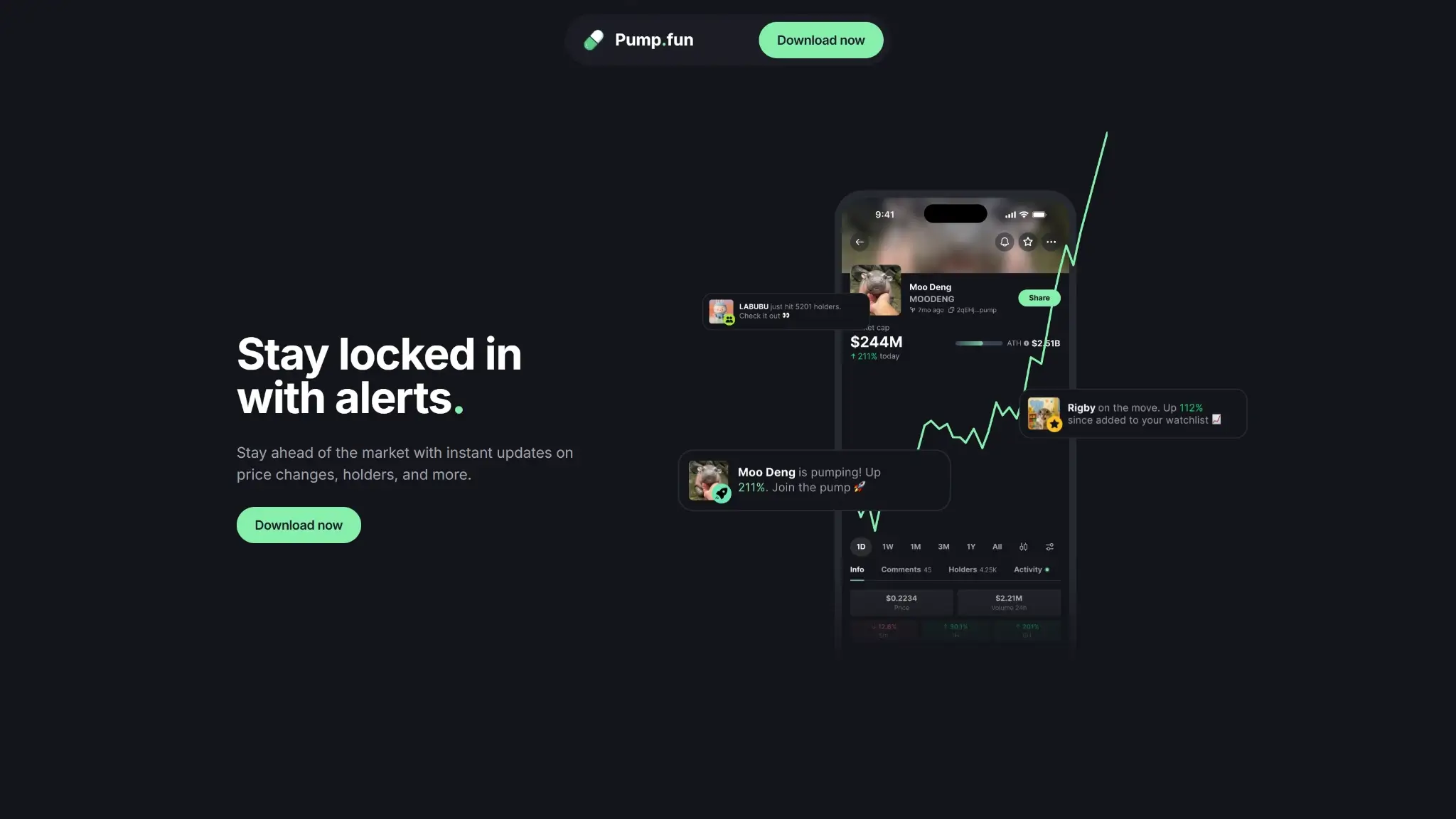
Feature parity with web looks good in the core areas that matter most. The mobile app supports coin discovery, wallet-based deposits and withdrawals, trading, account access, wallet import, and wallet export. Pump also markets the app as a destination for coin notifications, which helps reinforce mobile as a monitoring tool, not just a lighter trading wrapper, but it does not have much detail on alert controls or notification settings.
Pump does not feature custom PIN, Face ID, or fingerprint protection inside the app itself.
Reliability and Status Page
Pump.fun does not appear to maintain a formal public status page in the style of a major exchange. There is no structured uptime dashboard, product-by-product incident tracker, or historical status log covering web, trading, deposits, withdrawals, and mobile services. What Pump does provide is a Tech updates Telegram link, which is useful for following product changes but is not a substitute for a real operational status page.
The Terms also give Pump plenty of room to disclaim reliability guarantees. They say transactions may fail, access may be interrupted, and blockchain conditions can change execution timing dramatically. That language fits a fast-moving onchain product, but it also makes clear that users carry much of the reliability risk themselves.
Without a formal public issue log, routine reliability is harder to verify than it is on a large exchange.
Customer Support
Pump.fun’s support setup is more patchwork than what you get from a major exchange. The strongest official channel is the Pump.Fun Web Help Center, which covers deposits, withdrawals, wallet imports and exports, mobile usage, coin creation, moderation, and other operational basics. For direct contact, users can check out the official Telegram support route.
Pump does not offer a 24/7 phone-support, a dedicated live-support desk for account issues, or a response-time SLA for routine account and trading problems. That matters because Pump does have chat inside the product, but that is community chat around tokens, not the same thing as a formal customer-support channel.
For account-recovery type issues, the help center is the first stop. Pump documents wallet export, wallet import, and account-deletion flows, including repeated warnings for Privy-based accounts. If your issue is tied specifically to the Privy wallet layer, Pump’s own help materials point users to Privy Support for Privy-account problems. For moderation removals, Pump’s policy says appeals can be made through the support link on the homepage.
The support model works, but it does not feel especially polished or institutional. It is better suited to self-directed crypto users who are comfortable troubleshooting with documentation, Telegram, and wallet-management steps than to beginners expecting hand-held escalation through a polished support queue.
As a basic anti-phishing rule, use only the official help center and its official Telegram support. Do not trust random replies in token chats, unsolicited social DMs, or lookalike support accounts.
Features That Matter on Pump.fun
Pump.fun is not a broad exchange with a long menu of side products. Its ecosystem is narrower and more distinct: create a token, trade it early on the bonding curve, move into PumpSwap if it graduates, and manage everything through a wallet-first interface. The features that matter most here are the launch flow, the onchain trading stack, the wallet model, and the experimental token mechanics around creator economics and automated buybacks.
Wallet and Self-Custody Options
Wallet control is one of Pump.fun’s core product decisions. The platform can generate a wallet for the user through Privy, or the user can log in with an existing wallet or import one using a private key or recovery phrase. That makes Pump feel much closer to a consumer-friendly onchain app than to a custodial exchange account.
The catch is that most of the responsibility sits with you. Pump does not control the wallet’s private keys, which means recovery, export discipline, and login security depend heavily on the user. For Privy-based accounts, the platform offers wallet export, but the important detail is that these accounts export a private key, not a standard seed phrase. That is workable for experienced users, but it is less forgiving for beginners who may assume account recovery works like a normal exchange login.
Supported networks are not presented as a broad cross-chain wallet suite. In practical use, Pump is still a Solana-first product, even if mobile deposit flows mention assets like USDC, USDT, and ETH on selected networks. The wallet setup suits users who already understand Solana transactions, wallet hygiene, and onchain execution. It is a weak fit for anyone who wants bank-like account recovery or a heavily protected custodial experience.
Other Notable Features
Coin Creation and Bonding-Curve Trading
This is the feature set that defines Pump.fun. Token creation is fast, simple, and free at the point of launch. A new coin begins on the bonding curve, where price discovery and early speculation happen before graduation. That structure is a big part of why Pump became important in the memecoin market: it compresses launch, discovery, and early trading into one tight flow.
That same design is also why the product is so risky. Pump makes token creation dramatically easier than a centralized listing process, which is great for speed and experimentation but brutal for quality control. The feature is a strength only if you already understand that “easy launch” also means “easy junk.”
PumpSwap and Post-Graduation Trading
Once a token graduates, Pump.fun routes it into PumpSwap, which gives the platform a more complete life cycle than a pure token launcher. Instead of stopping at launch and letting users figure out the next venue themselves, Pump keeps trading inside its own ecosystem.
That continuity matters. Traders can move from early bonding-curve speculation into a live liquidity-pool environment without leaving the product family. It also matters because graduated-token liquidity is paired with the locked-and-burned LP structure already discussed above, which reduces one of the classic rug-pull vectors at the liquidity layer.
Cashback Coins and Creator-Fee Design
Pump.fun has also expanded the economics of token launches beyond a simple creator-fee model. Some launches can use Cashback Coin mode, where some or all of the fees that would normally go to the creator are redirected as Cashback Rewards to eligible users of that token.
It stands out, but the limitations matter. Pump is explicit that cashback rewards are not guaranteed, are not interest, are not dividends, and should not be treated as predictable income. Cashback mode changes token economics, but it does not turn these launches into reliable yield products.
Tokenized Agent
The Tokenized Agent feature is one of Pump’s more unusual additions. According to the official disclaimer, it lets a token creator automate buybacks and burns of an Agent Token using a smart-contract system and deposited assets such as SOL, USDC, USDT, and USD1. Buybacks are scheduled to occur on an hourly basis, and bought tokens are burned.
The warnings matter as much as the feature itself. Pump says the Tokenized Agent is experimental, can malfunction, may create new manipulation opportunities, and does not guarantee value creation, revenue, or token appreciation. In practice, this looks like an advanced experimental feature for niche creators and speculators, not a mainstream investor benefit.
Mayhem Mode and Experimental Launch Mechanics
Pump.fun has also introduced Mayhem Mode, an experimental launch format that can mint an additional 1 billion tokens during a coin’s first 24 hours, with remaining supply later burned. The purpose is to create a more chaotic and high-velocity early market, which fits Pump’s audience but also pushes risk even higher.
Mayhem Mode shows how Pump designs product. It is not trying to become a conventional exchange with more asset classes and institutional tooling. It is building more ways to intensify and gamify token launches inside the memecoin niche. That is strategically coherent, but it narrows the platform’s appeal to users who actively want that kind of market environment.
Final Verdict
Pump.fun is worth using only if you want a wallet-based, high-speed Solana memecoin launchpad and understand the risks that come with that environment. It is strongest when used by experienced traders and creators who care more about fast launches, early trading access, and onchain continuity into PumpSwap than about regulation, curated markets, or traditional exchange protections. For everyone else, the trade-offs are hard to ignore. Pump.fun remains highly speculative, operationally thinner than a mainstream crypto exchange and less reassuring on U.S. clarity, reserve transparency, and user protections than most retail users should accept by default.
Best For
Solana memecoin traders and creators
0 SOL fee to create a coin · Creator rewards on eligible coins, with a portion of trading fees going to the creator · Native migration from the bonding curve to PumpSwap for continued trading after graduation
Disclaimer: CryptoSlate may receive a commission when you click links on our site and make a purchase or complete an action with a third party. This does not influence our editorial independence, reviews, or ratings, and we always aim to provide accurate, transparent information to our readers.