


- Dual-entry structure with MNT subscription or USDT lottery
- Exchange-native claim and listing path
- Snapshot system can count eligible balances across key Bybit accounts
Bybit Launchpad Overview
- Crypto Launchpad Name
- Bybit Launchpad
- Platform Type
- CEX / IEO Launchpad
- Access Model
- Exchange Account
- KYC Level
- Full KYC, Varies By Region
- Core Sale Types
- IEO
- Native Token Dependence
- None For Base Access
- Allocation Model
- Lottery, Pro-Rata Subscription, Snapshot-Based, Mixed By Sale
- API / Public Data Access
- Limited
- Status
- Live
Bybit Launchpad Screenshots
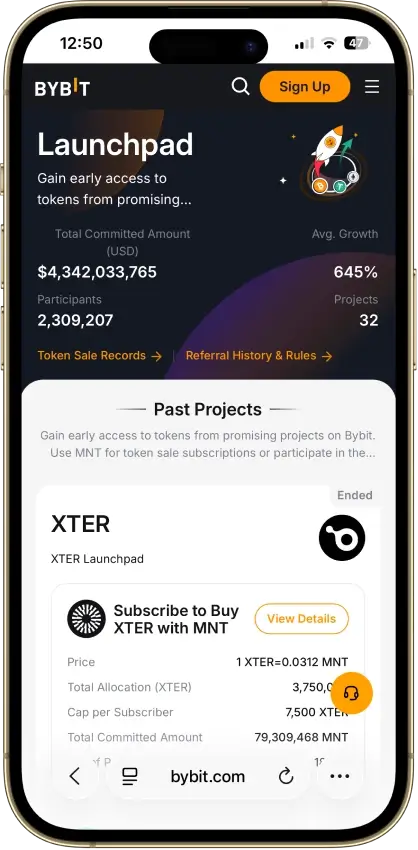
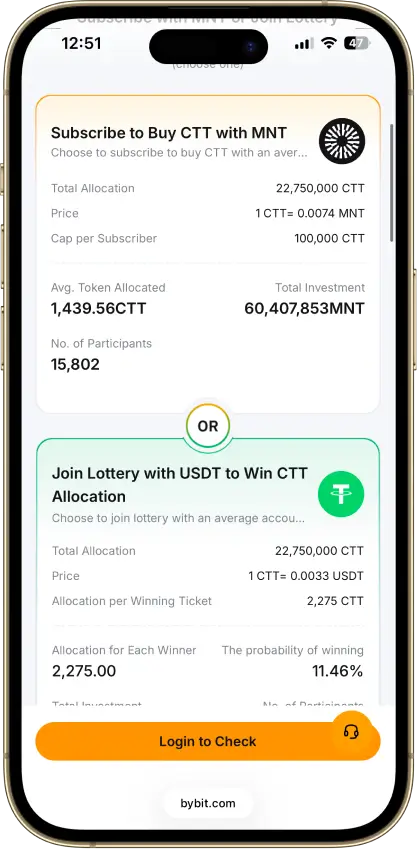
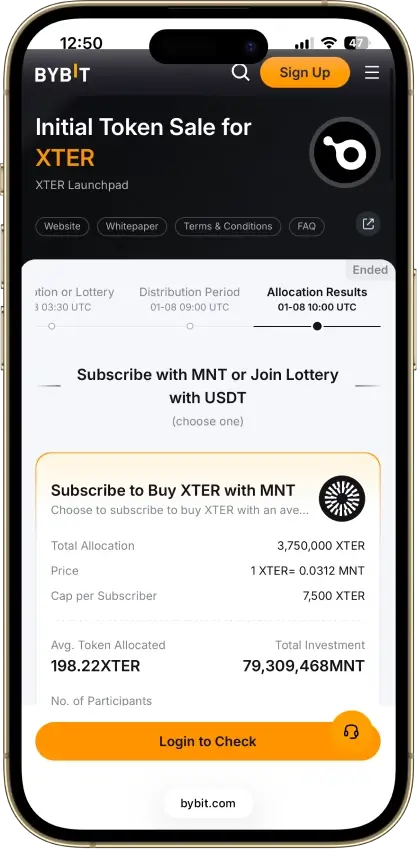
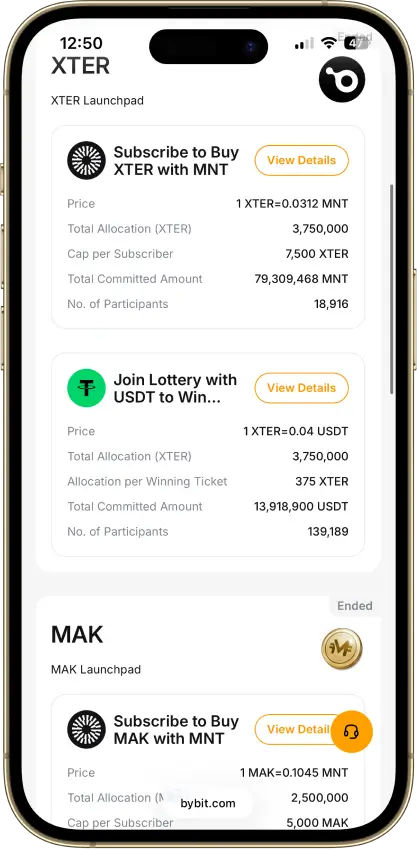
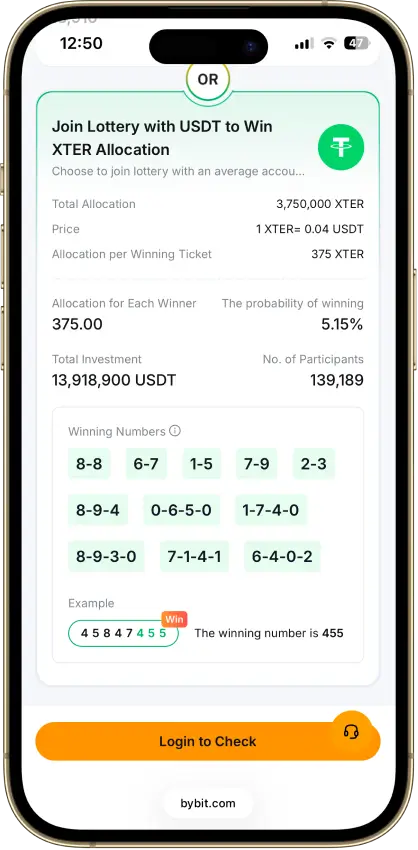
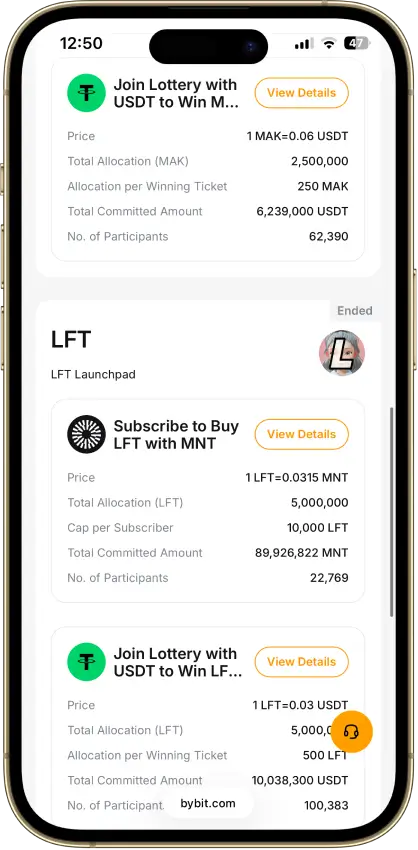
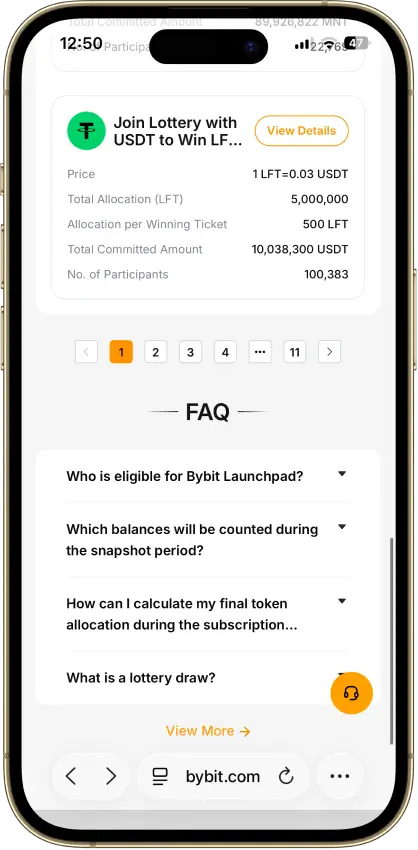
Screenshot 1 of 8
Bybit Launchpad Pros and Cons
Pros
- Two participation paths instead of one fixed native-token gate
- No wallet claim or bridge step after allocation
- Unused committed funds are returned automatically after distribution
- Snapshot balances can include eligible assets across Funding Account and UTA
- Spot listing path is usually clearer than onchain handoff models
Cons
- Standard KYC is mandatory before the subscription window opens
- Restricted-jurisdiction rules remove access entirely for some users
- USDT lottery access can still mean weak allocation odds for small users
- Main account only, with no direct subaccount participation
- Classic Launchpad cadence looks less consistent than the brand implies
Who Bybit Launchpad Is Best For — And Who Should Skip It
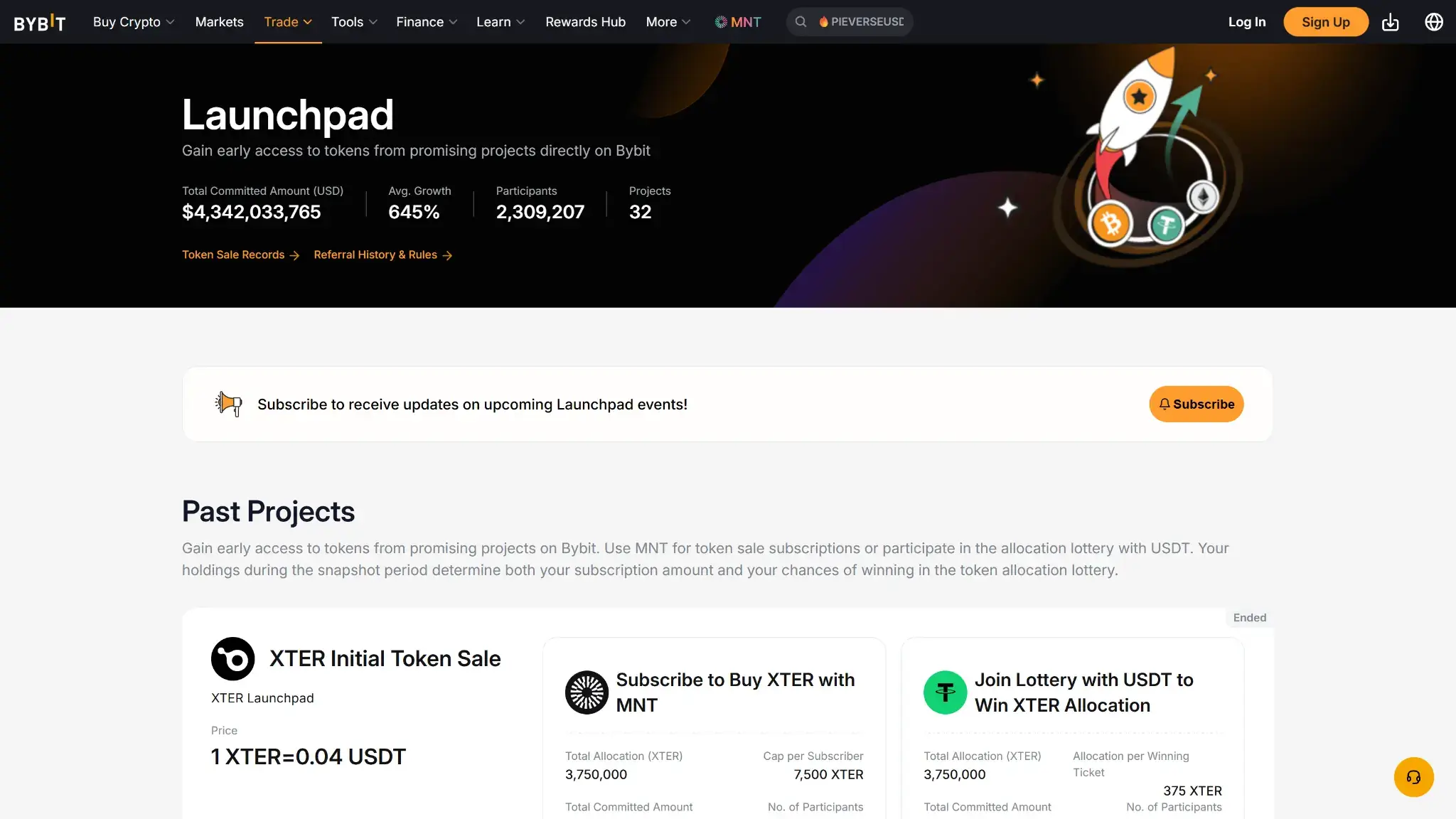
Bybit Launchpad fits best when you already keep funds on Bybit and want the least complicated path from token sale into a tradable exchange balance. It is less about onchain discovery and more about exchange-native execution.
Bybit Launchpad reduces participation friction more than it reduces discovery friction. It suits users who already trust the Bybit account model and want early access without extra wallet steps. Those evaluating the broader platform should read the Bybit Exchange Review and browse the full crypto exchange comparison before deciding.
If you are still choosing your first platform, it also helps to compare against exchanges built for beginners before committing to a venue.
What Bybit Launchpad Actually Is And How It Works
Bybit Launchpad is a centralized token-sale venue inside the Bybit exchange. You do not connect one of the cold wallets, and you do not join by sending funds to a sale contract. You join with a verified Bybit account, eligible balances, and whatever funding asset the event requires.
How access works:
- You need a main Bybit account, not just a subaccount.
- You need completed identity verification before the subscription period starts.
- You need to be outside restricted jurisdictions.
- You usually need either MNT or USDT, depending on the sale method.
How allocation works:
- The MNT route uses a snapshot-driven subscription model tied to your average balance.
- The USDT route uses a lottery structure instead of guaranteed size.
- The exact split between methods can change by event.
- Your commit size is shaped by snapshot rules and any sale cap.
What happens after allocation:
- The used portion of your committed funds is deducted.
- The unused portion is returned automatically after distribution.
- The new token appears in your Bybit account.
- Trading starts once the new spot pair goes live.
What kind of launches this platform is built for:
- Exchange-native token launches
- Users who want pre-listing exposure without wallet friction
- Projects that want a centralized distribution and listing path
- Users who value convenience over open participation
The clearest way to understand Bybit Launchpad: it is not a wallet-native discovery pad. It is a controlled exchange sale lane where access, allocation, and trading are bundled into one account experience.
Availability, KYC and Setup Friction
Most users can find the launchpad page quickly through Bybit's navigation. The harder part is being fully eligible before a sale starts.
What slows access in practice is not the button flow. It is the combination of mandatory KYC, nationality and jurisdiction filtering, and the need to hold the right average balance before the subscription window opens.
Users residing in unsupported regions may check out top crypto exchanges in the U.S. and the exchanges available in the UK. Some of the listed options may also offer token launchpads.
Track Record, Current Activity and Project Screening
Bybit Launchpad has enough history to feel established, but current activity matters more than older launch counts. The real question is whether the classic Launchpad lane still moves often enough to be a genuine reason to choose the platform today.
That answer looks mixed. The product is live, and the brand has enough history to signal a filtered, exchange-run sale venue. But the classic Launchpad flow does not run like a nonstop pipeline. In practice, users searching for upcoming projects, current sales, or fresh announcements may find a live product with uneven cadence rather than a steady stream of opportunities.
The screening side also lands in the middle. Bybit applies more control than open wallet-first pads where almost anyone can launch, so the floor is usually higher than a free-for-all model. But it does not feel like a research-heavy incubator where deep project support, hands-on advisory work, and selective curation are the main selling points.
The result is a launchpad that feels more credible than open-access pads, but less conviction-driven than the most selective rivals. That is good enough for users who already trust Bybit and only need occasional early access. It is less convincing for users who want a launchpad to act as a primary discovery engine or a meaningful filter for project quality.
Project Mix, Discovery Quality and Ecosystem Fit
Bybit can cover different token types, but the current experience feels more like selective exchange access than a high-volume discovery engine.
That puts Bybit in an in-between position. It is broader than a niche pad, but does not currently feel like the strongest home for users who want a constant feed of fresh launch opportunities.
- Sale-type mix: mostly exchange-native token sales, with newer retail momentum leaning more toward Launchpool-style participation
- Launch speed: fast once a sale is live, because funding, distribution, and listing stay on-exchange
- Quality consistency: better than open, low-filter pads, but not consistently elite
- Discovery feel: useful when a campaign is active, thin between campaigns
In practice, the mix works best for users who already like the Bybit environment and only need occasional early access. It works worse for those who want a launchpad to function as a primary project-discovery habit.
Claim Flow, Vesting and Exit Reality
Bybit handles the claim side more cleanly than most onchain pads. After the distribution period ends, the unused portion of your committed MNT or USDT is returned automatically, and newly allocated tokens are credited into your Bybit account without requiring a separate wallet claim. On the MNT route, the new token lands in your Unified Trading Account, while unused committed funds go back to the Funding Account. On the USDT route, winning allocations and refunds settle back into the account flow without an external claim step.
The bigger variable is vesting and exit timing, not claim mechanics. TGE unlock percentage, any cliff, and the wider vesting schedule vary by sale, so there is no single Bybit-level unlock standard you can rely on in advance. The operational flow is simple, but the economic outcome still depends on how much supply unlocks at listing and how much real liquidity shows up once the spot pair opens.
That gives Bybit a real convenience advantage, not a certainty advantage. The exit path is easier than wallet-first pads, but users still need to judge whether the listing window, unlock mix, and early order book are actually good enough to turn a smooth claim flow into a good exit.
Fairness, Bot Resistance and Launch Integrity
Bybit Launchpad is cleaner than a pure FCFS (first-come, first-served) pad because access is built around KYC, snapshots, subscription sizing, and a lottery route rather than raw click speed. That reduces the usual bot and queue-sniping problem and makes Sybil-style multi-wallet gaming harder than on fully open onchain pads, since the gate sits at the account and verification layer rather than just the wallet layer.
That still does not make the platform neutral. The MNT side can lean toward users with more capital, because larger average balances can translate into stronger subscription weight. The USDT lottery path softens the native-token gate, but it does not remove luck or small-user frustration. The main fairness issue here is less about sniper bots and more about capital-weighted access inside a controlled exchange model.
Launch integrity is also only partly standardized. Liquidity after listing is usually clearer than on onchain pads, but liquidity lock visibility, team and treasury unlock visibility, and token-level verification clarity still depend on the individual sale rather than the platform itself. The main integrity risk is not usually a hidden contract trap during participation. It is joining a sale whose post-listing supply and liquidity profile turns out weaker than the launch page first suggests.
Security, Smart Contract Risk, Compliance and Trust
The main trust sits with Bybit as a centralized exchange, not with a sale-specific smart contract.
When you join Bybit Launchpad, funds sit inside exchange accounts controlled through Bybit's custody model. You are not in self-custody during participation, and you are not interacting with a project contract directly to secure your spot. That lowers wallet friction and reduces the usual claim-contract risk, but it also means exchange operations, account controls, and jurisdiction rules matter more than code-level sale transparency.
Contract risk still exists at the project-token level, but it is not the main exposure during the subscription flow. The larger trade-off is custody and privacy. Full KYC is part of the access model, so the process is convenient but not private. Disputes flow through the exchange support stack rather than through onchain proof, which is simpler for account issues and weaker for users who want a fully self-custodial path. Users who prioritize platform safety over sale format should compare Bybit against the safest crypto exchanges before deciding.
Recent Incidents And Reputation Issues
A reputation issue from early 2025 still matters here. The February 2025 wallet security incident changed the trust conversation around Bybit at the exchange level, even though Launchpad itself is not a wallet-first sale venue.
It shows that exchange-level custody risk cannot be treated as background noise. The sale flow is smooth, but the trust decision sits one layer above the launchpad product itself.
Customer Support, Community and Incident Handling
Documentation and actual support are not the same thing on Bybit. The self-service layer is broad, but the real test is what happens when timing, eligibility, or account status blocks your sale access.
- Help center: large help center with self-service flows for KYC, account recovery, security, funding, and support navigation
- Live chat: available through the support flow and used for urgent account or restriction issues
- Email or ticket support: Submit Case ticket system is the main path; support@bybit.com appears as an official support address
- Discord / Telegram / X presence: official Discord, English Telegram, announcement Telegram, and many regional Telegram and X communities
- Status page: dedicated deposit and withdrawal status page plus the main announcements feed for maintenance and operational updates
- What support can fix: account access, KYC review, some funding issues, some balance-credit problems, and general product navigation
- What support cannot fix: jurisdiction bans, missed snapshot windows, weak allocation odds, vesting design, or poor token price action after listing
- Incident communication: announcements, help-center updates, support channels, and official community accounts
Support is strongest when the issue is account-based and documented. It gets weaker when the problem is market-based, sale-design-based, or tied to rules you missed before the snapshot window closed.
Bybit Alternatives
-


Polkastarter
A curated, wallet-based IDO launchpad where access is structured but token-gated.
-

Binance Launchpad
Binance Launchpad still delivers one of the cleanest exchange-side launch flows, but small users can still end up with very little size.
-

Kucoin Spotlight
KuCoin Spotlight makes token-sale access easier than most onchain pads, but sale rules, allocation quality, and vesting still vary too much to ignore.
-

Legion
A curated pre-TGE launchpad that trades open access for project-led selection.
Some users should choose a different launchpad. The main reasons are usually wallet-first access, stronger sale cadence, different allocation logic, or a higher premium on curation over exchange convenience.
| Alternative | Why Someone Would Choose It Instead |
|---|---|
| Polkastarter | Better fit for wallet-first IDO participation, allowlist-based access, and users who want a more onchain-native launch flow than a CEX account model provides. |
| Binance Launchpad | Better fit for users who want a larger exchange ecosystem, stronger post-TGE liquidity, and a more active Launchpad or Launchpool machine if they are comfortable with BNB exposure. |
| KuCoin Spotlight | Better fit for users who want another exchange-run token sale venue with a stronger altcoin-heavy audience and a different exchange user base than Bybit. |
| Legion | Better fit for users who want merit-based access, tighter curation, and less obvious whale-balance competition than a snapshot-heavy exchange sale model. |
Bybit still makes the most sense when you want a smoother exchange-native sale flow and a cleaner route into spot trading. But if you want wallet-first access, stronger cadence, or a more reputation-weighted allocation model, these alternatives can be more compelling. Users who prefer onchain trading may also want to look at decentralized exchange options before settling on a venue.
Final Verdict
No wallet claims, no bridge steps, and unused funds return automatically after each sale. For existing Bybit users, that is a genuinely clean setup. The problems are around who actually gets in. Full KYC is mandatory, and the U.S., UK, and Canada are blocked outright. On the allocation side, the MNT path rewards larger balances, while the USDT lottery route lowers the bar but removes certainty. Sale cadence is also uneven, so there is no consistent pipeline to rely on. If you already use Bybit and sit in a supported region with decent capital, it does the job. If you are outside that profile, the friction adds up fast.
Disclaimer: CryptoSlate may receive a commission when you click links on our site and make a purchase or complete an action with a third party. This does not influence our editorial independence, reviews, or ratings, and we always aim to provide accurate, transparent information to our readers.