



Coinlist Overview
Coinlist Screenshots
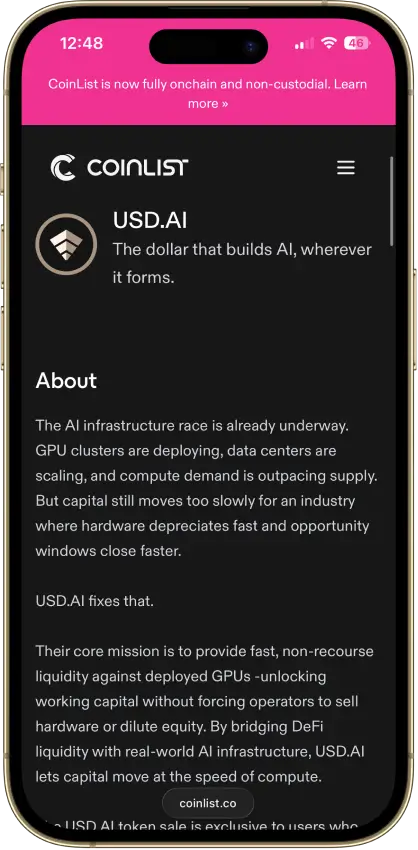
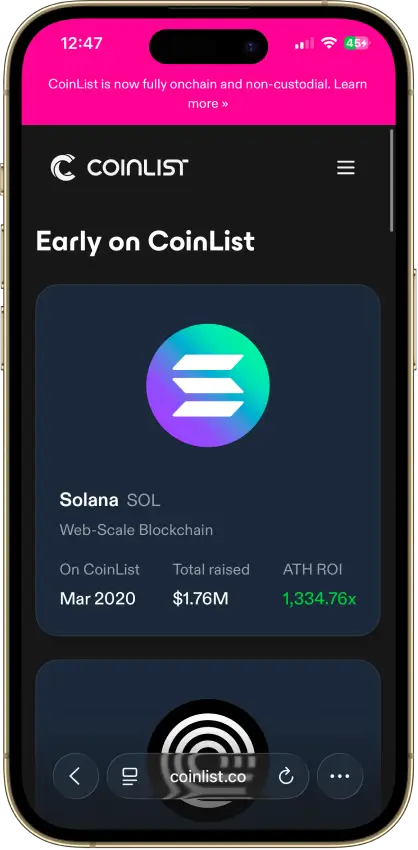
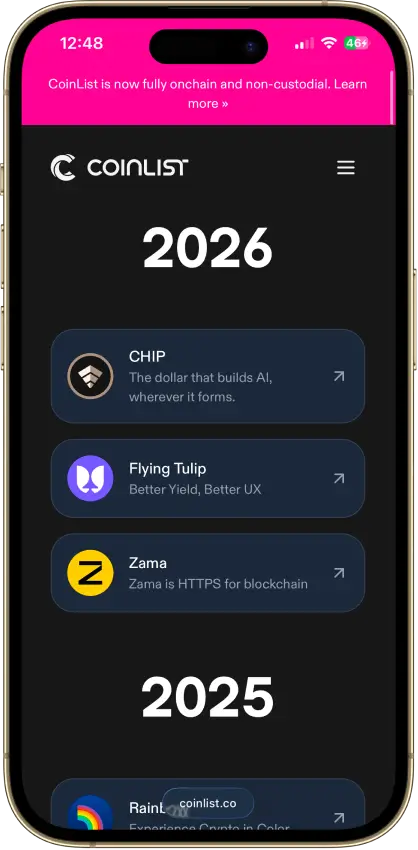
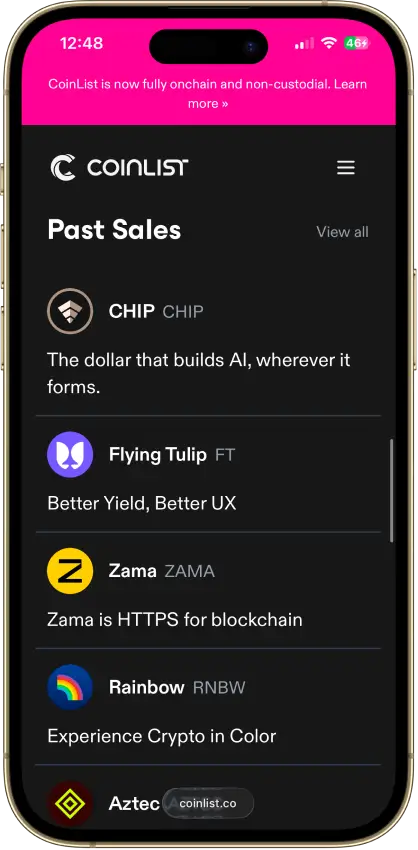
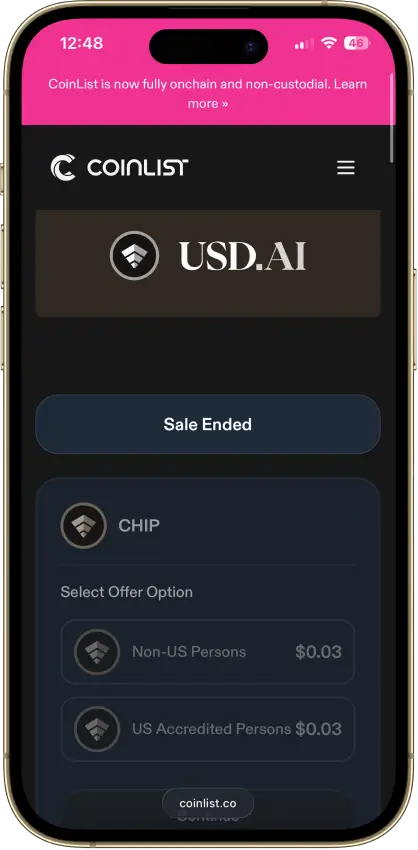
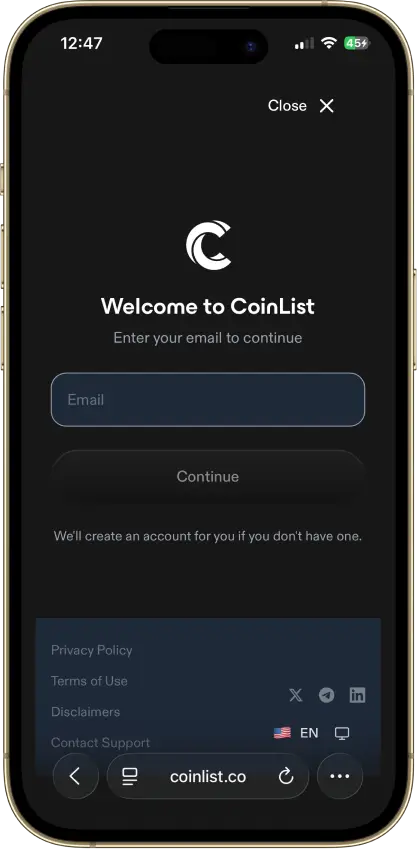
Screenshot 1 of 8
Coinlist Pros and Cons
Pros
- No platform token needed for base access
- Multi-cycle launch history with several category-defining names
- Recent sale activity is still real, not just legacy brand value
- Allocation methods are broader than pure lottery or tier farming
- Non-custodial flow sends tokens to user-controlled wallets
Cons
- Full KYC is a hard requirement
- Region restrictions can remove access sale by sale
- Sale design changes often enough to create a learning curve
- Vesting and unlock terms vary too much to assume fast liquidity
- Real participation depends on the sale-required asset, wallet readiness, and chain setup at the right time
Who CoinList Is Best For — And Who Should Skip It
CoinList works best when project quality and sale access matter more than convenience. It is less compelling when the goal is low-friction flipping, anonymous participation, or a consistent launch flow.
CoinList is strongest for users who want early access to infrastructure, DeFi, privacy, and data projects and who do not want to buy a launchpad token just to participate. That alone makes it more capital-efficient than many tiered launchpads.
It is weaker for those who want every sale to feel predictable. CoinList can still work, but it asks the user to treat each sale as its own setup rather than assuming the last flow will repeat.
What CoinList Actually Is And How It Works
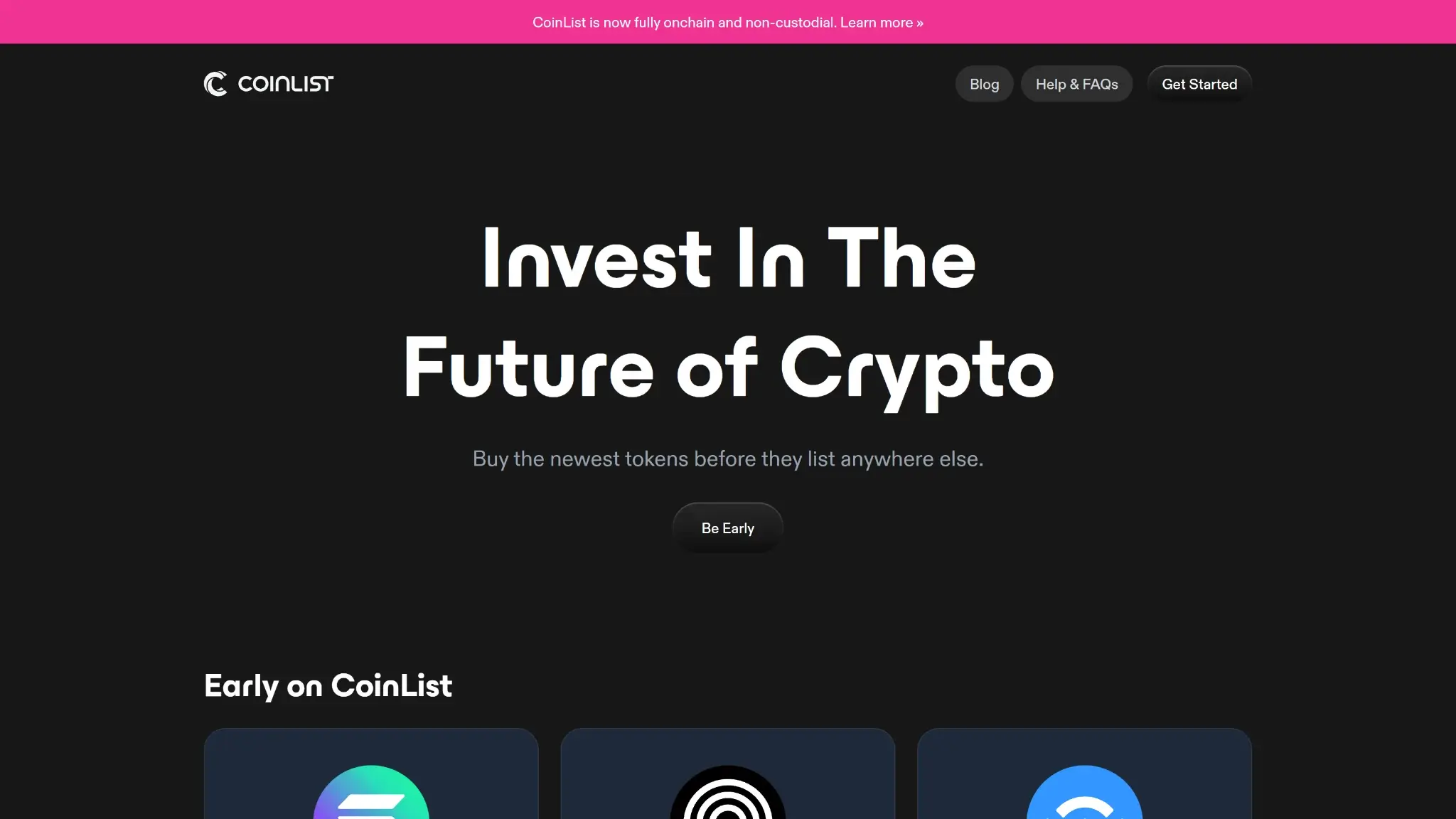
CoinList is a token distribution platform that connects issuers with verified users through sale-specific launches. It behaves less like a classic exchange launchpad and more like a compliant sale layer built around non-custodial participation.
Access generally works like this:
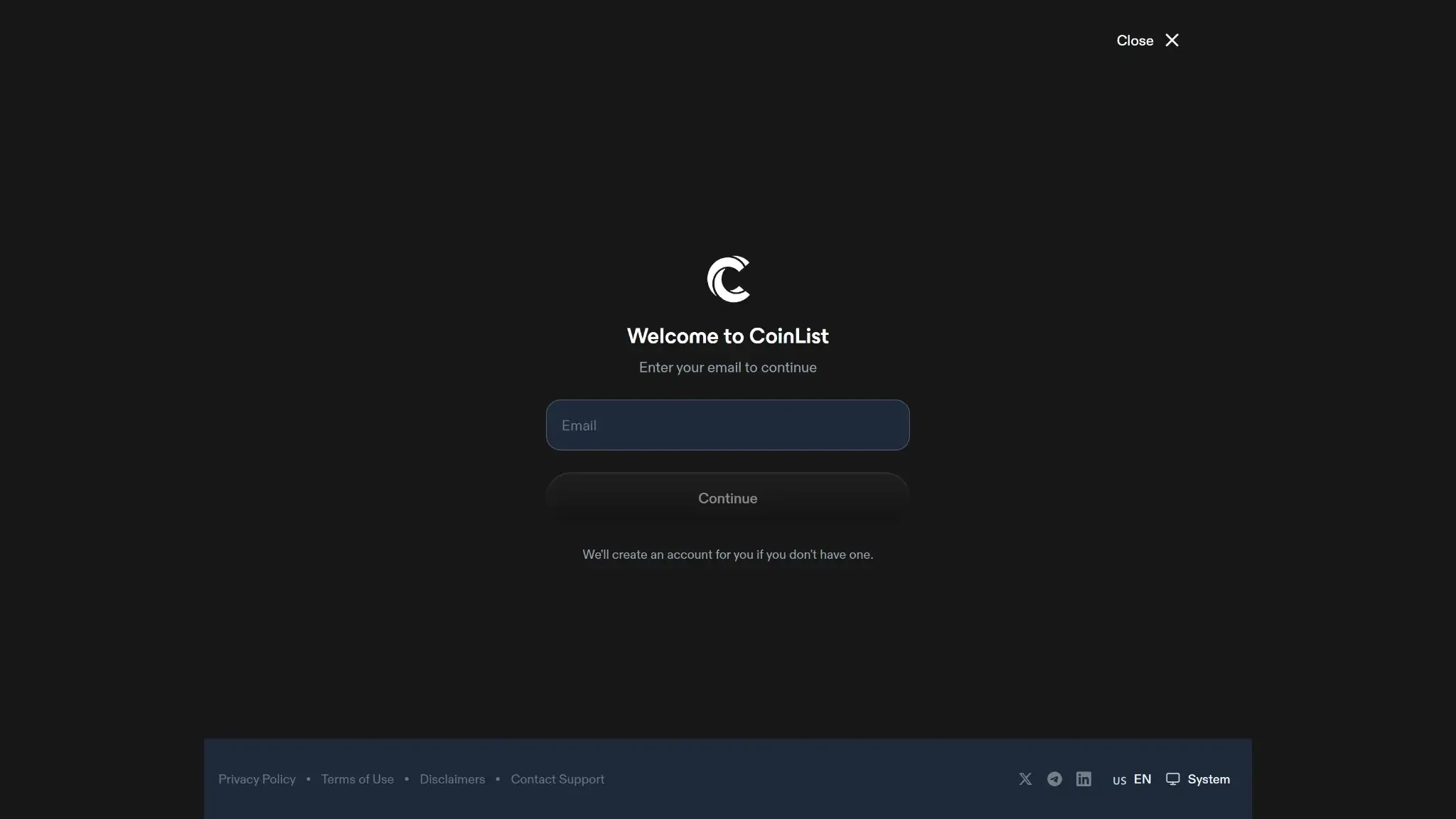
- Create a CoinList account
- Pass KYC and eligibility checks
- Connect a compatible non-custodial wallet or use the CoinList wallet flow where supported
- Fund with the sale-required asset and chain
- Join the sale window and submit a purchase request or bid
Allocation is not one fixed system. One sale may use FCFS. Others may use Filling From The Bottom, a sealed-bid Dutch auction, a Continuous Clearing Auction or guaranteed allocation with pro-rata overflow. That is the most important thing to understand before joining any CoinList token sale.
After allocation, refunds and token delivery depend on the sale terms. Unsuccessful participants are generally refunded once the allocation process finishes, while successful participants receive tokens to the connected or designated wallet under the sale's unlock schedule.
CoinList is built for higher-signal public and community token sales, not for anonymous memecoin launches, farming campaigns, or fast no-KYC churn. Users coming from crypto exchanges for beginners should expect more setup work here, while those already comfortable running a self-custody wallet will find the flow easier to navigate.
Availability, KYC and Setup Friction
The biggest frictions here are not the headline minimums. They are whether your region is eligible, whether KYC clears in time, whether the right wallet is linked, and whether your wallet holds the right stablecoin on the right network before the window closes.
What slows access in real use is failed readiness: wrong region, late KYC, an unfunded wallet, missing gas, or a misread sale window can block participation even when everything else is in order.
Track Record, Current Activity and Project Screening
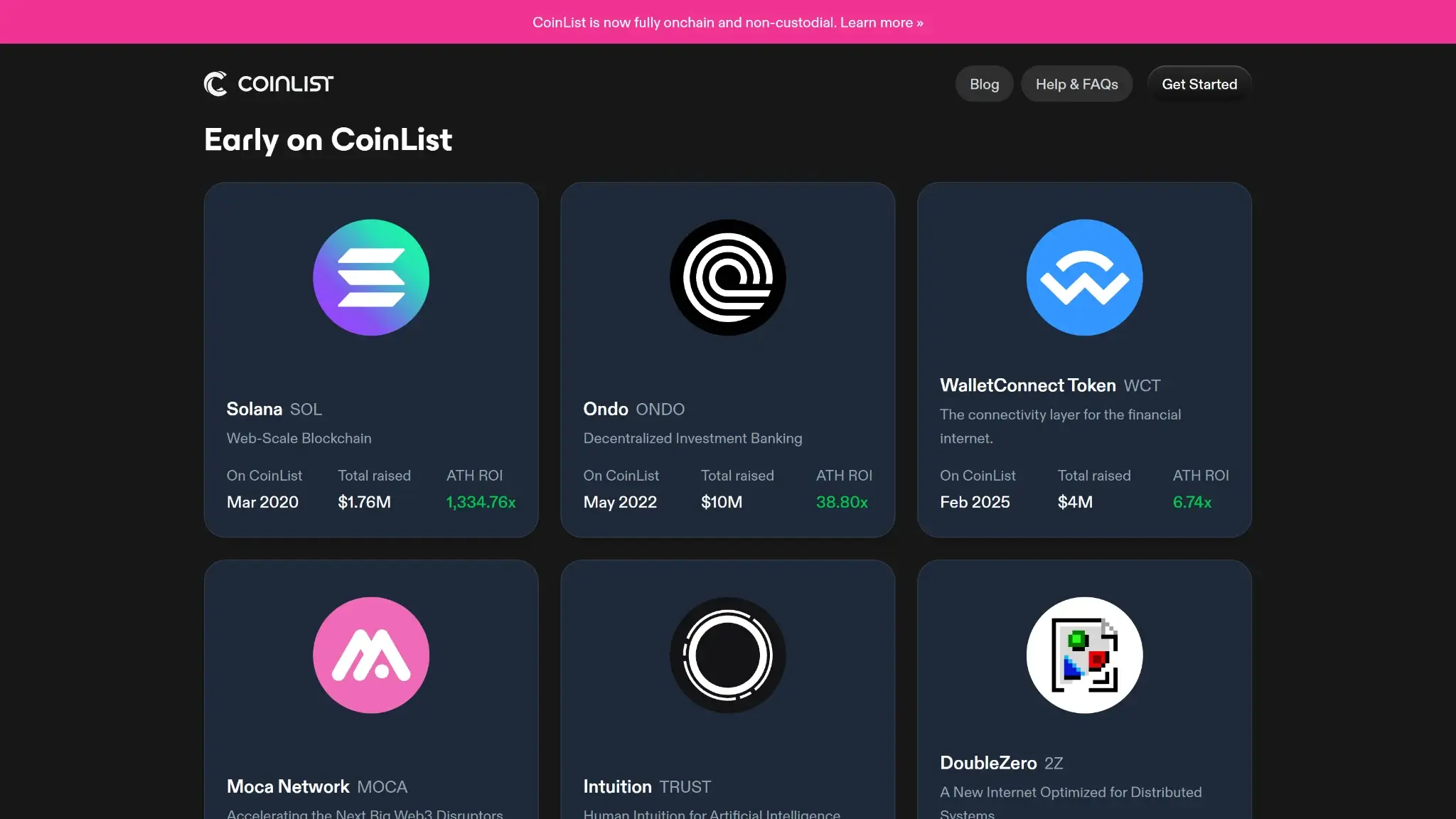
CoinList has one of the stronger launch histories in the space. Its early token-sale record includes Filecoin, Solana, Flow, Mina, Casper, and Ondo, which gives it more real history than most newer launchpads can point to.
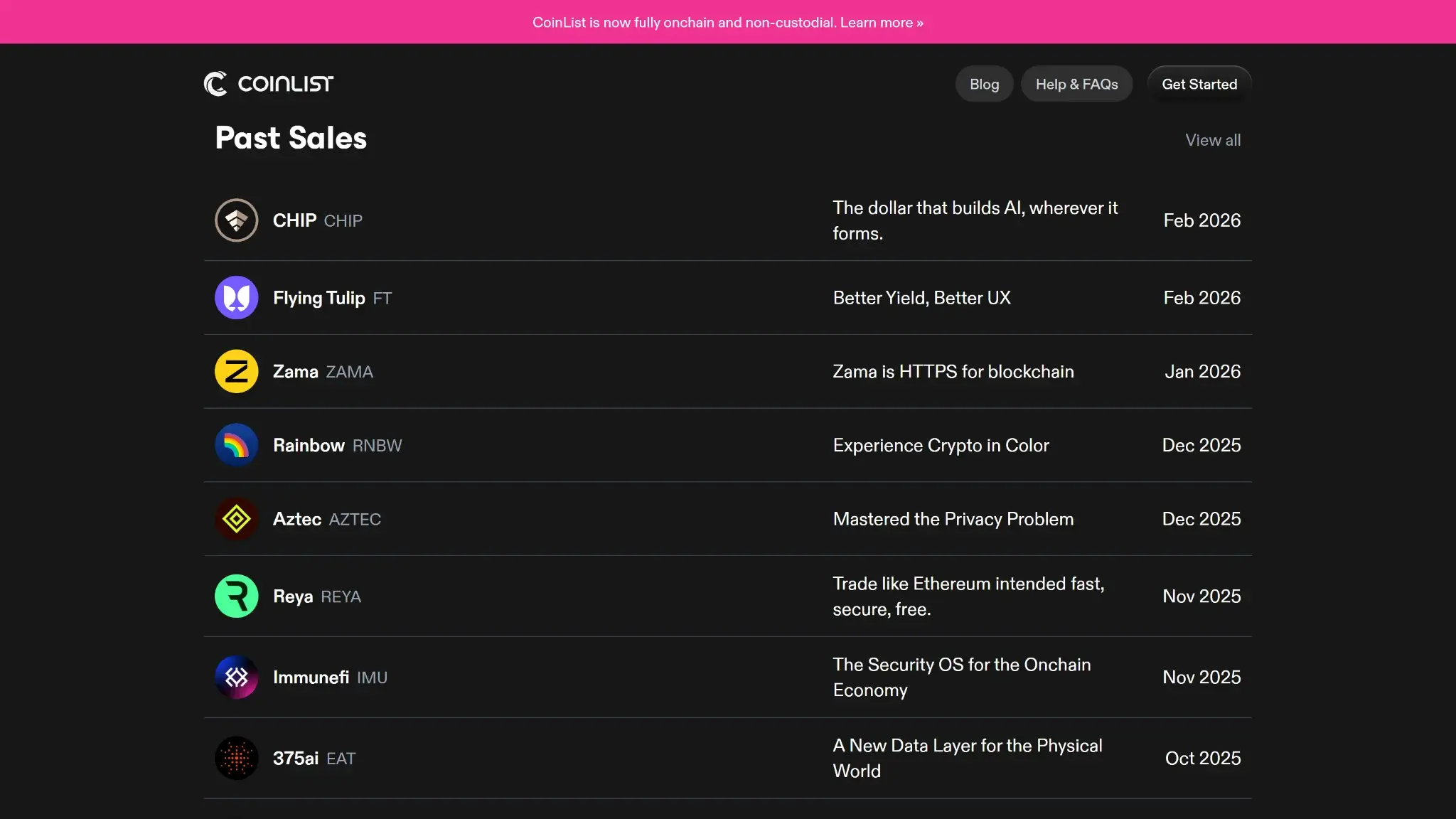
Current activity goes beyond old-brand momentum. CoinList closed 2025 with 21 token sales and entered 2026 with launches including Zama, Flying Tulip, and USD.AI. That is a healthier recent cadence than many launchpads that look credible on paper but post very few live opportunities.
The weak point is consistency. Not every sale carries the same access quality, exit profile, or post-TGE outcome. Project screening still looks better than the average open pad, but CoinList is not a pure incubator-first platform. Its edge is stronger distribution, compliance handling, and sale design, not hand-holding every issuer from zero.
Project Mix, Discovery Quality and Ecosystem Fit
Compared with direct rivals, CoinList is broader than a niche launchpad and more selective than low-bar retail launch aggregators. It is not the place for meme-speed experimentation, but it stays relevant for users focused on serious token launches with infrastructure, privacy, data, and protocol-level depth.
The mix is broad enough to stay interesting but selective enough to avoid feeling random. CoinList is not narrow, but it has a clear bias toward thesis-driven launches rather than pure hype rotations.
- Sale-type mix: broader than most users expect
- Launch speed: active, but not constant every week
- Quality consistency: above average, not uniform
- Discovery feels: useful when filtered for live sales, cluttered if you treat the historical catalog as the current pipeline
For real participation, the breadth gives CoinList a higher ceiling than narrow category pads. The trade-off is that discovery works best when the user can separate live opportunities from older brand history.
Claim Flow, Vesting and Exit Reality
CoinList does not offer one clean exit template across every sale. Some launches unlock quickly, while others use partial unlocks, cliffs, or multi-month linear vesting. That can turn the same nominal allocation into either a fast trading position or a slow inventory release.
The second thing that matters is where tokens actually land. CoinList's current flow is built around connected or designated wallets, not the older model of an exchange balance handling settlement. That is cleaner for self-custody, but it means wallet setup mistakes, gas requirements, and chain-specific handling all become part of the exit path.
The main friction is usually not the purchase price. It is the gap between getting an allocation and getting usable liquidity on terms you actually want. If the goal is fast flipping, check unlock timing, vesting, listing venue, and sale-specific lock rules before treating the allocation as near-term liquid exposure.
Fairness, Bot Resistance and Launch Integrity
CoinList is generally fairer than raw FCFS launchpads when it uses formats like sealed-bid auctions, Filling From The Bottom, or pro-rata overflow. Those structures reduce simple queue racing and make it harder for click speed or account size alone to dominate the result. The absence of a native-token tier ladder also helps, since users do not have to buy and lock a house token just to reach a better bracket.
The weak point is that fairness still depends heavily on the live sale design. A pure FCFS window can still reward timing, multiple-account attempts, and better operational setup. CoinList also does not standardize every integrity variable at the platform layer. Liquidity lock visibility, treasury unlock clarity, and token verification still depend largely on the issuer and the sale terms.
The real question is whether the live sale limits queue abuse, makes allocation transparent, and gives clear distribution terms before money is committed.
Security, Smart Contract Risk, Compliance and Trust
The main trust sits in CoinList's compliance and sale-administration layer, not in CoinList acting as a long-term custodian of user assets. For token sales, the current model is non-custodial, so wallet control stays with the user and CoinList is not holding the private keys tied to participation.
That lowers custody risk, but it raises the importance of wallet hygiene, smart-contract interaction, issuer-side distribution, and sale-specific legal restrictions. The privacy trade-off is real because KYC sits at the center of access. When disputes happen, CoinList can assist with account, eligibility, and process issues, but it cannot recover private keys or reverse signed onchain transactions. That is a different trust model from larger crypto exchange platforms, where custody and settlement usually sit more squarely inside the platform.
Customer Support, Community and Incident Handling
Documentation is one of CoinList's stronger support layers. Human help exists, but it routes through tickets and status updates rather than always-on live assistance.
- Help center: public FAQ hub covering token sales, account verification, login, wallet transition, and general platform issues
- Live chat: not offered as a primary support channel
- Email or ticket support: support tickets are the main visible contact route
- Phone support: 212-500-1159 is listed in the current terms for questions, complaints, and business continuity cases
- Discord / Telegram / X presence: issuer communities matter more than a central CoinList support chat; CoinList itself is more visible through sale pages, blog posts, and X-linked events than through social DMs
- Status page: yes, with a public incident history page
- Support can fix: account access issues, ticketed KYC questions, sale-process clarification, and authenticity checks
- Support cannot fix: lost private keys, signed wallet transactions, wrong-network sends, or blockchain finality
- Incident communication: support portal, public status page, and sale or blog updates
Support is most useful before or around participation. After a self-custody mistake or an irreversible onchain action, it has limited ability to help, which is where the practical support ceiling shows up.
Final Verdict
CoinList earns its score on the strength of two things: a launch history that most rivals cannot match, and no platform token requirement for base access. Most tiered launchpads quietly tax participation by requiring users to buy and hold a native token before they can even reach the queue. CoinList skips that entirely. The trade-off is complexity pushed elsewhere: KYC is mandatory, region restrictions apply sale by sale, and every launch can run on different allocation mechanics, vesting schedules, and wallet requirements. There is no single repeatable flow to learn once and apply consistently. It suits users who can handle per-sale setup and want access to infrastructure, DeFi, and AI-focused launches without the token-staking overhead. It is the wrong fit for anyone expecting low-friction, anonymous, or routine participation.
Strong token-sale history without a native-token buy-in · Current sale flow is non-custodial and wallet-based · Allocation mechanics are broader than simple FCFS
Disclaimer: CryptoSlate may receive a commission when you click links on our site and make a purchase or complete an action with a third party. This does not influence our editorial independence, reviews, or ratings, and we always aim to provide accurate, transparent information to our readers.