



Pump.Fun Overview
Pump.Fun Screenshots
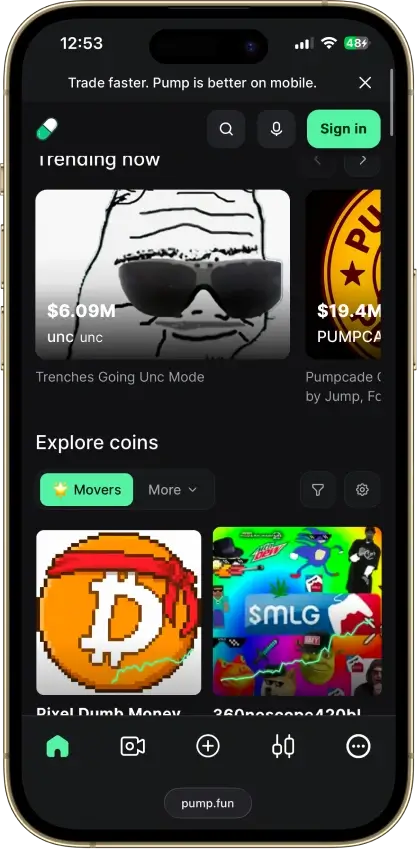
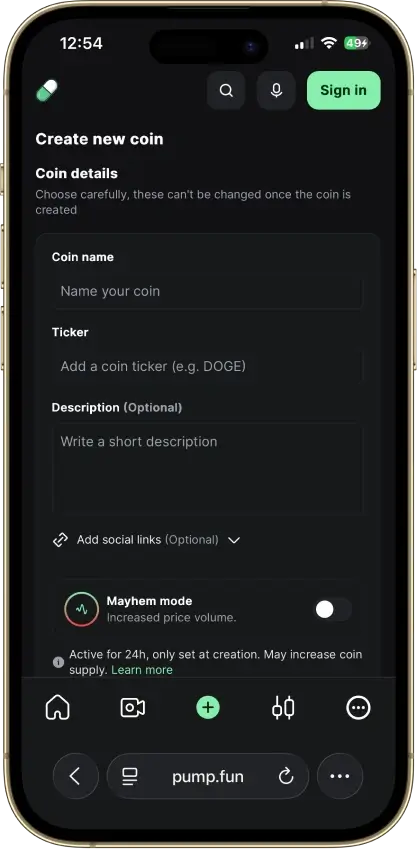
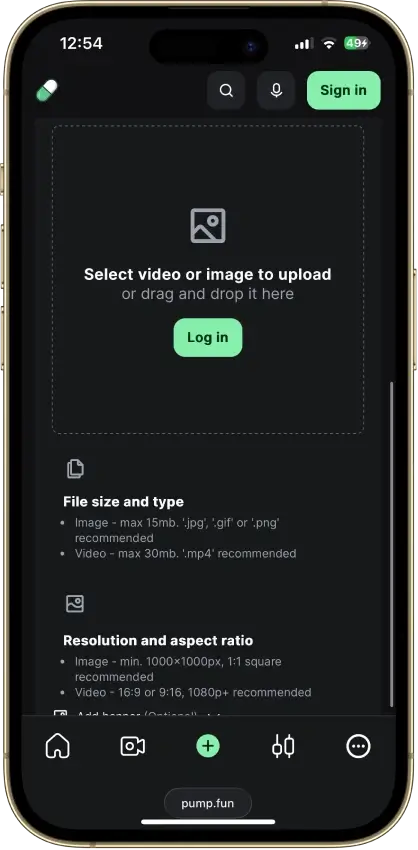
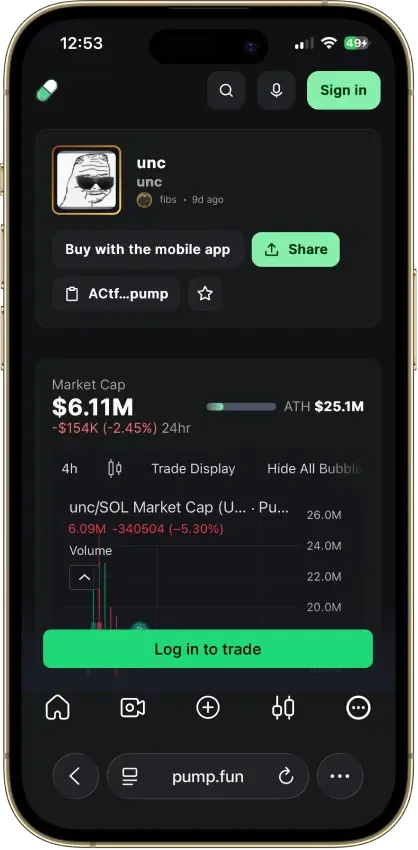
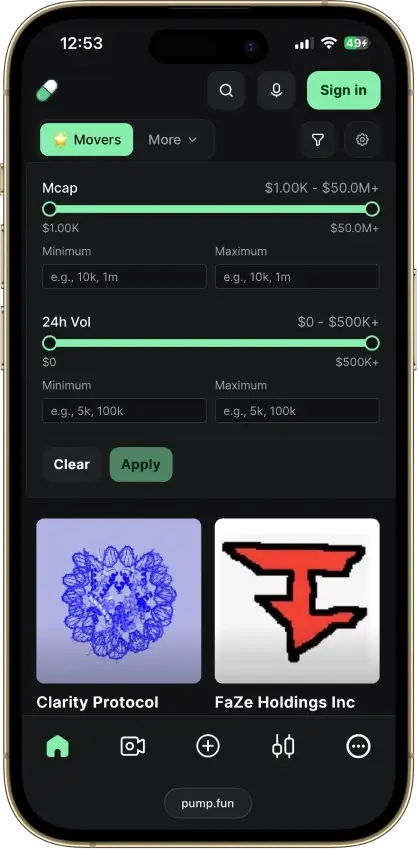
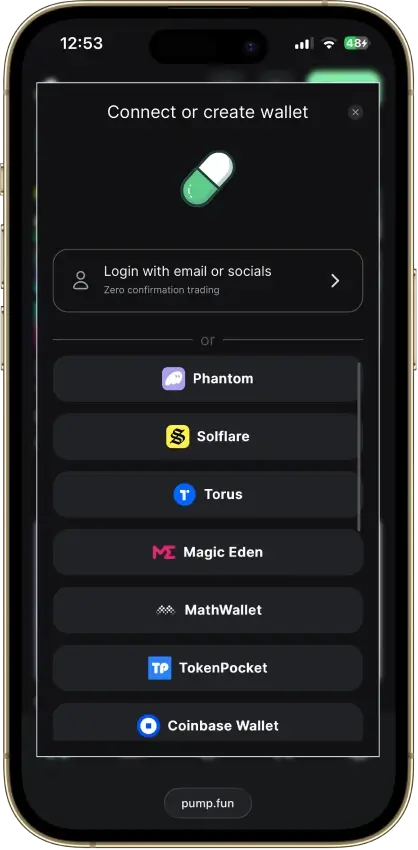
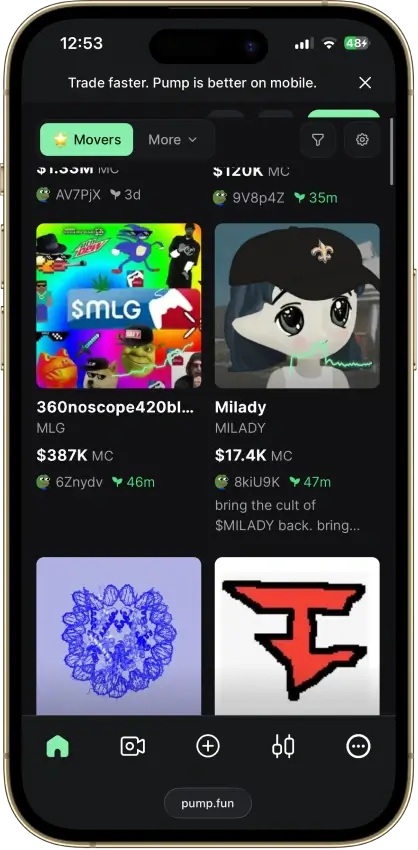
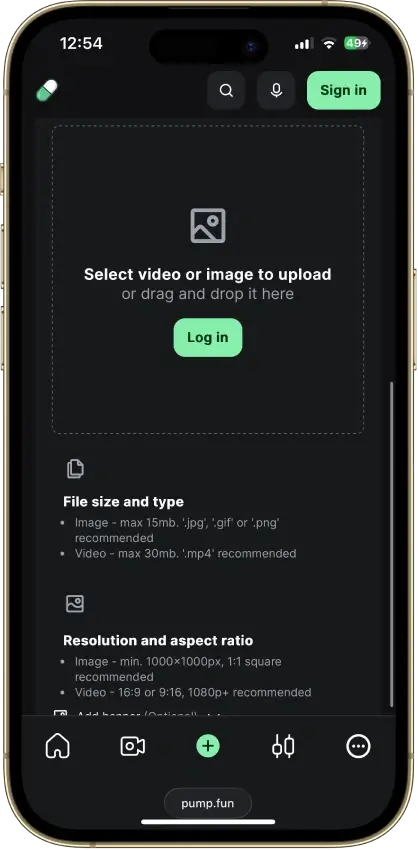
Screenshot 1 of 8
Pump.Fun Pros and Cons
Pros
- No separate platform fee to create a coin
- Live trading starts immediately, with no whitelist or claim window to wait through
- No staking or house-token lock needed for base access
- Graduated tokens move from the launch flow into PumpSwap trading
Cons
- Most launches never produce usable post-launch liquidity
- Bot pressure and sniping punish slow entries and exits
- Discovery quality is noisy because almost anyone can launch
- Price action can collapse before a coin ever reaches graduation
Who Pump.fun Is Best For — And Who Should Skip It
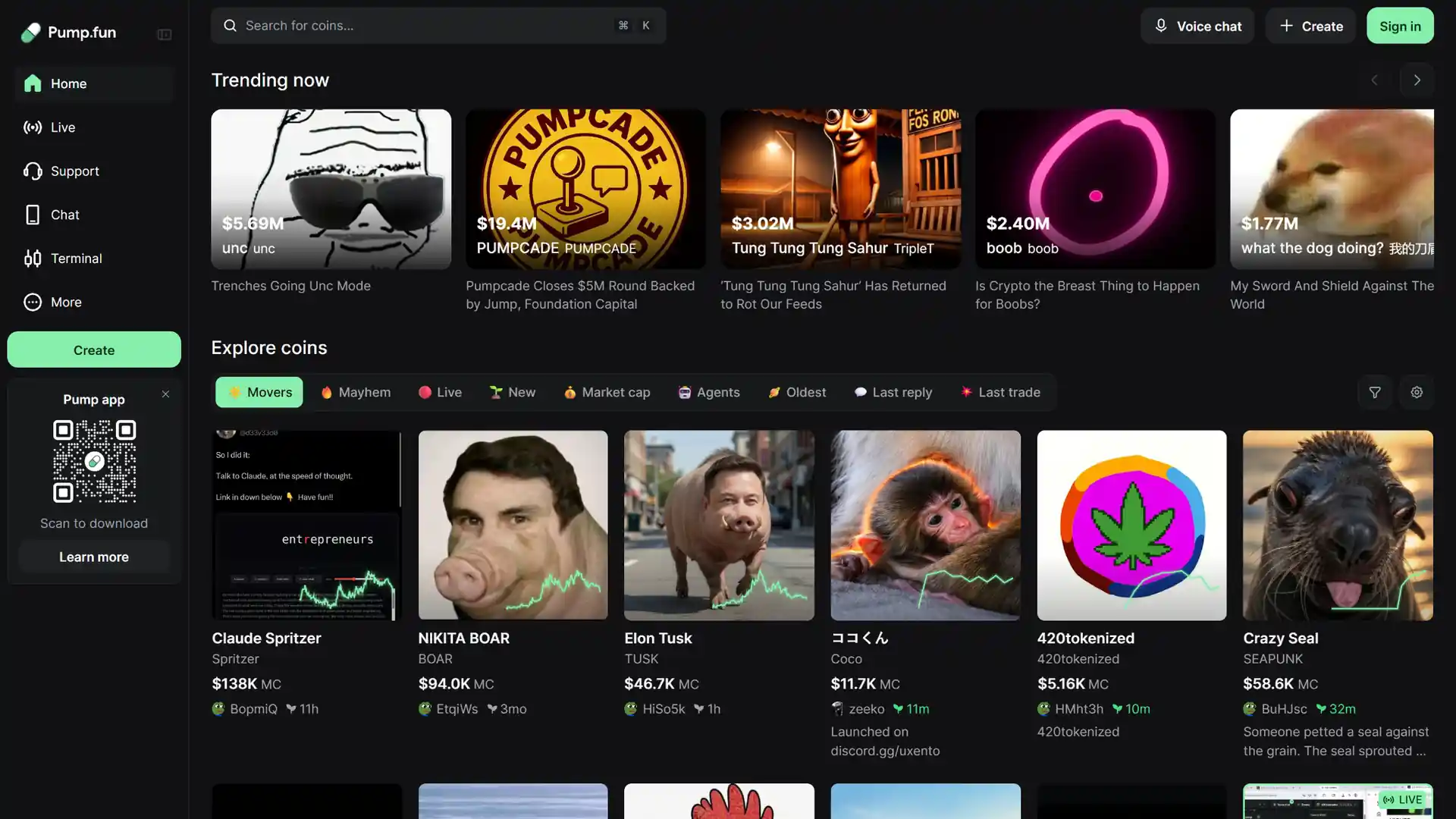
Pump.fun fits those who want speed more than structure. It works best when the goal is fast Solana memecoin exposure, not curated early-stage investing.
Pump.fun makes more sense for those treating it like a live memecoin market than a classic crypto launchpad. The edge comes from speed, pattern recognition, and knowing when not to chase.
Those looking for screened teams, slower sale mechanics, or cleaner post-launch support should skip it. Pump.fun can work well for the right style, but it does not protect users from bad launches, crowded entries, or weak exits.
What Pump.fun Actually Is and How It Works
Pump.fun does not run like a normal IDO page with applications, tiers, and token claims. It runs like a public launch rail: a creator makes a token, that token goes live on a bonding curve, and anyone with SOL can start buying or selling immediately.
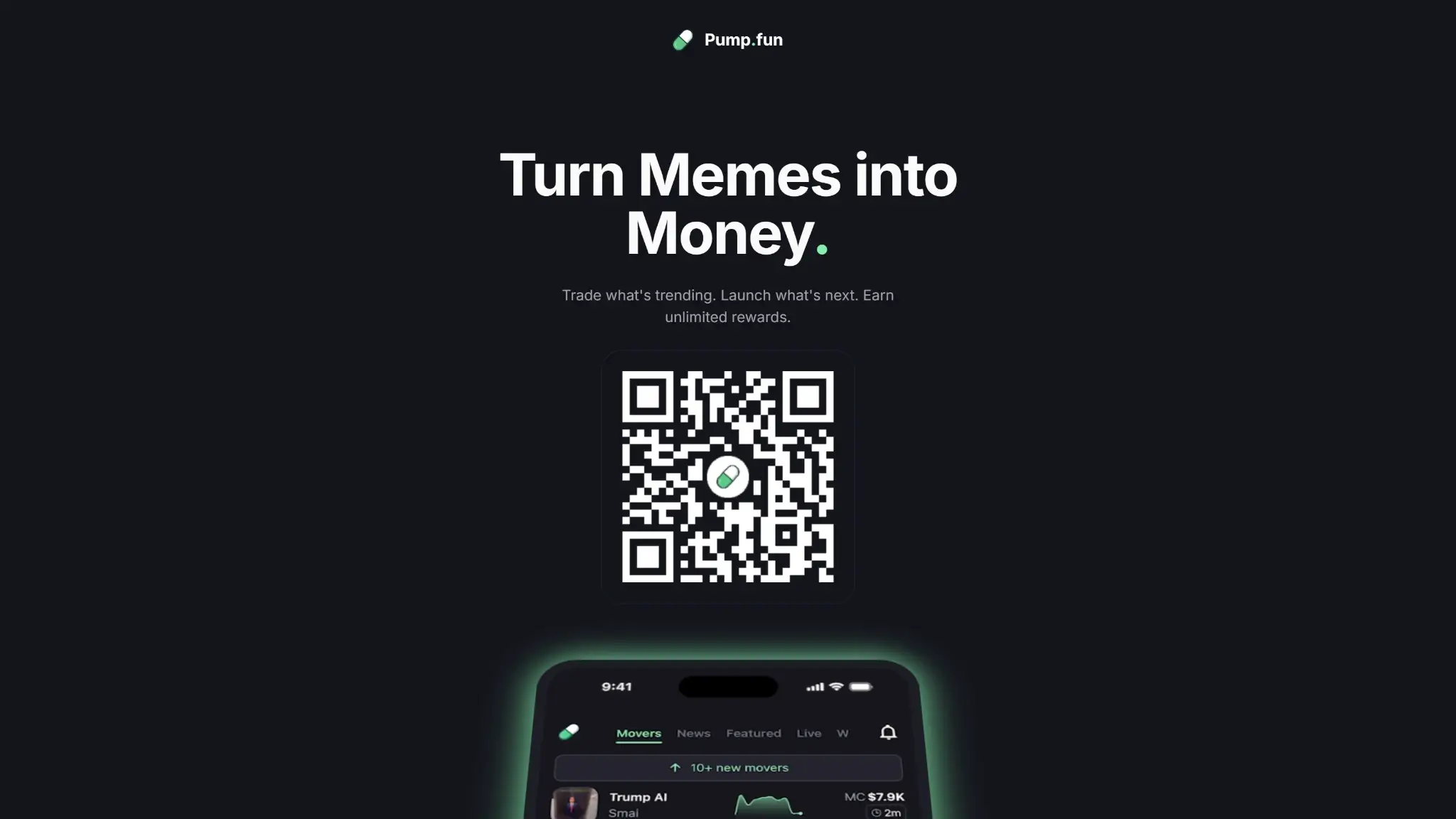
Access is simple:
- Connect a Solana wallet or use the Pump mobile wallet flow
- Fund it with SOL
- Create a token or buy into a live one
- Trade directly on the bonding curve while demand builds or fades
Allocation works differently here too. There is no protected whitelist allocation for most users. Your “allocation” is the price and size you can get on the curve before momentum shifts.
After that, one of two things happens. The coin either stalls on the curve and fades, or it reaches the graduation threshold and moves into PumpSwap for broader market trading. Pump.fun handles the launch and early bonding-curve phase; PumpSwap is the market layer that takes over after graduation.
This model is built for fast meme launches, creator-driven attention, and community speculation. It is not built for deep fundraising diligence, tier-based fairness, or access to carefully screened projects.
If you wanna dig deeper into how the exchange compares with alternatives after the token is launched, check out our Pump.fun review!
Availability, KYC and Setup Friction
Setup friction on pump.fun is not mostly about forms or approvals. It is about arriving with a funded Solana wallet, knowing how to move SOL quickly, and being ready to act when prices move in seconds.
The main friction is still wallet readiness and execution speed, but the mobile app now also supports Apple Pay / card deposits and selected crypto deposits across multiple assets and networks.
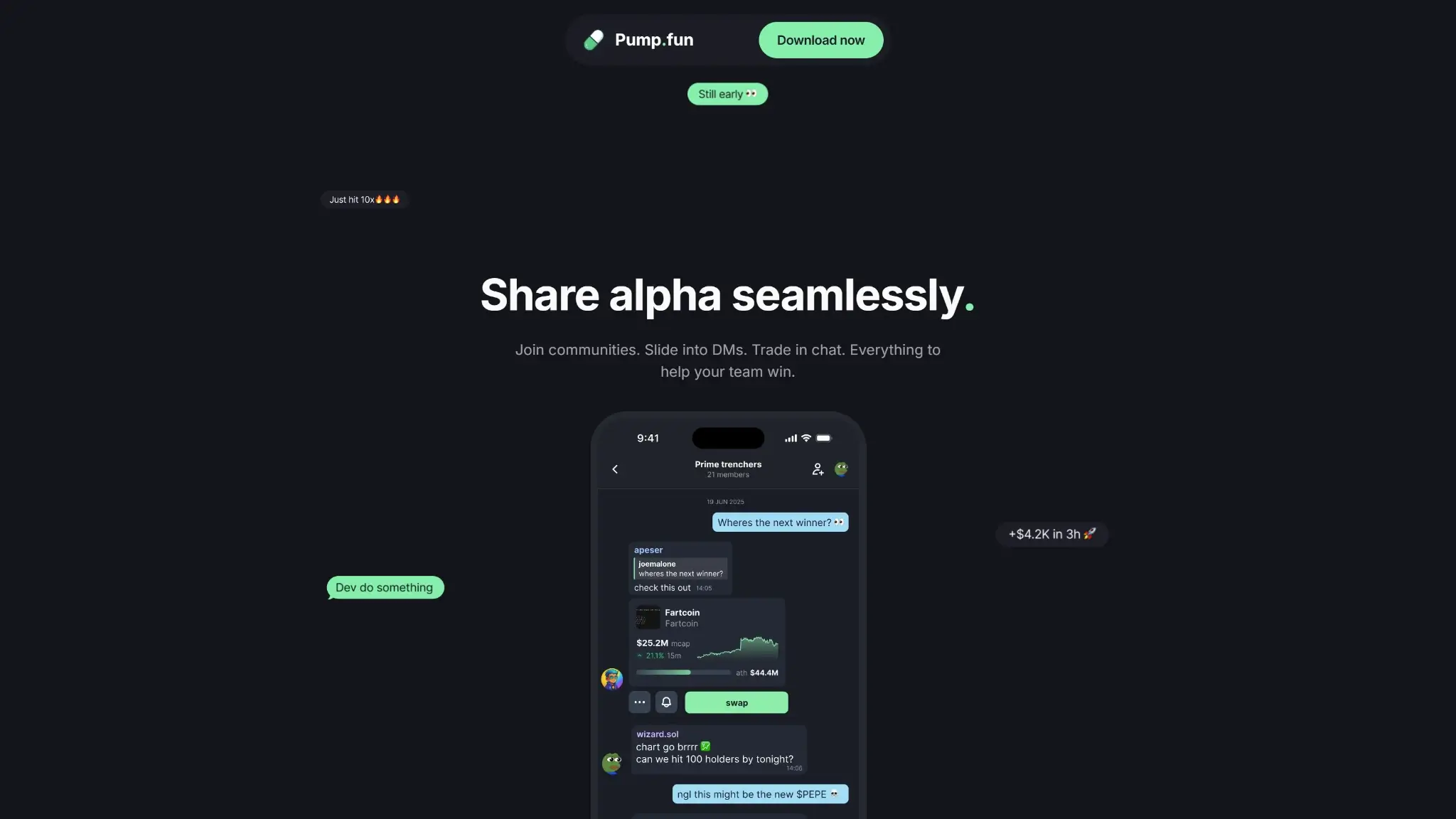
Those already using wallets built for Solana will move much faster, while newer users may want to get comfortable with self-custody wallet options before jumping into live memecoin launches.
Important: Livestreaming is 18+ only, and Pump reserves the right to require age verification.
Track Record, Current Activity and Project Screening
Pump.fun has one of the strongest raw activity records in the launchpad category. It has handled millions of launches, generated about $1 billion in cumulative protocol revenue, and pushed cumulative DEX volume to roughly $88 billion. Even after peak memecoin mania cooled, activity stayed large enough to keep pump.fun near the center of Solana launch flow.
That scale does not translate into strong outcome rates. The platform still produces a large volume of failed or forgettable launches, and only a small share of tokens ever graduate into cleaner secondary liquidity. Recent conditions improved from the worst slowdown periods, but the success rate remains thin relative to the number of coins created.
Pump.fun has also produced some of the biggest memecoin breakouts in the market, which is why creators keep returning. Those wins sit alongside a long tail of dead launches, copycat tokens, and short-lived hype spikes that never produced durable liquidity.
Weakness
Project screening is the clearest weakness. There is content moderation, account enforcement, and some newer creator tools, but almost no traditional vetting of the kind users would expect from a curated IDO launchpad. Project support is closer to distribution infrastructure than incubation. Creators get launch rails, creator-fee mechanics, and optional experimental features like tokenized agents or Mayhem Mode, not deep advisory support.
The practical takeaway is straightforward: pump.fun has strong distribution for this niche, but that strength sits at the distribution layer, not the screening layer. Treat its track record as proof of reach and launch volume, not proof of project quality.
Project Mix, Discovery Quality and Ecosystem Fit
Compared with more curated launchpads, Pump.fun is broader, faster, and much noisier. Considering direct Solana memecoin rivals, it still competes on raw flow, attention, and the ability to turn a fresh idea into a live market almost instantly.
Claim Flow, Vesting and Exit Reality
Pump.fun differs from a normal launchpad because there is usually no claim step at all. A token goes live immediately, trading starts on the bonding curve, and users get exposure by buying on the market rather than waiting for a later unlock. That makes access simple, but it pushes all the risk into the first minutes and hours.
Standard vesting does not apply to ordinary buyers here. There is no cliff, no delayed token distribution, and no protected post-sale buffer. If momentum dies on the curve, exit conditions can deteriorate fast. If the token graduates, the path improves because trading moves off the launch phase and into PumpSwap, which acts as the market layer after graduation. Many launches never reach that point.
The real exit question on pump.fun is not “when do tokens unlock?” It is “does this coin reach usable liquidity before attention disappears?”
Fairness, Bot Resistance and Launch Integrity
Pump.fun's fairness story is mostly about open access, not hard anti-bot protection. Anyone with a wallet can enter without a whitelist or house-token stake, which cuts out the usual tier bias. Open access on a fast bonding curve still rewards whoever is funded, automated, and early. In practice, that leaves room for snipers, coordinated wallets, and traders who react faster than ordinary users.
Sybil resistance is weak because wallet-based access is easy to split across multiple addresses, and there is no identity layer for base participation. Whale bias is lower than in a guaranteed-allocation sale, but it is not gone. Large wallets can still shape early price action, dominate attention, and sell into late buyers once momentum forms.
Integrity visibility is mixed rather than absent. Token contracts and metadata are immutable, and once a coin migrates to PumpSwap the liquidity pool tokens are locked and burned, which limits classic LP-pull rugs. Concentration risk remains. Team wallets, treasury exposure, and creator sell pressure vary coin by coin, and that is the main launch-integrity problem users have to screen for themselves.
Security, Smart Contract Risk, Compliance and Trust
The main trust question on pump.fun is not custody in the usual exchange sense. Users can connect their own wallet or use a Privy-based embedded wallet. Generated wallets are provided by Privy and are not controlled by Pump. The platform still controls the launch rail, the interface, moderation rules, and parts of the trading flow around new coins.
Contract and market-integrity risk matter more than classic deposit risk. Pump.fun is not holding a fiat balance like a CEX launchpad would, but coin-level smart contract exposure, fake traction, copycat launches, and creator concentration still matter. Privacy trade-offs are lighter than on KYC-heavy launchpads, yet not zero: wallet activity is public, usage data can still be collected, and jurisdiction controls still apply. Disputes are usually about access, moderation, or communication, not reversing an onchain trade.
Recent Incidents and Reputation Issues
Major issues now include the May 16, 2024 exploit, the FCA warning on Dec. 3, 2024 and UK block, the Feb. 26, 2025 X-account hack, U.S. class actions filed in Jan. 2025 that were still active in April 2026, the June 2025 suspension of Pump.fun and Alon Cohen on X, and the return of livestreaming under a published moderation policy.
Customer Support, Community and Incident Handling
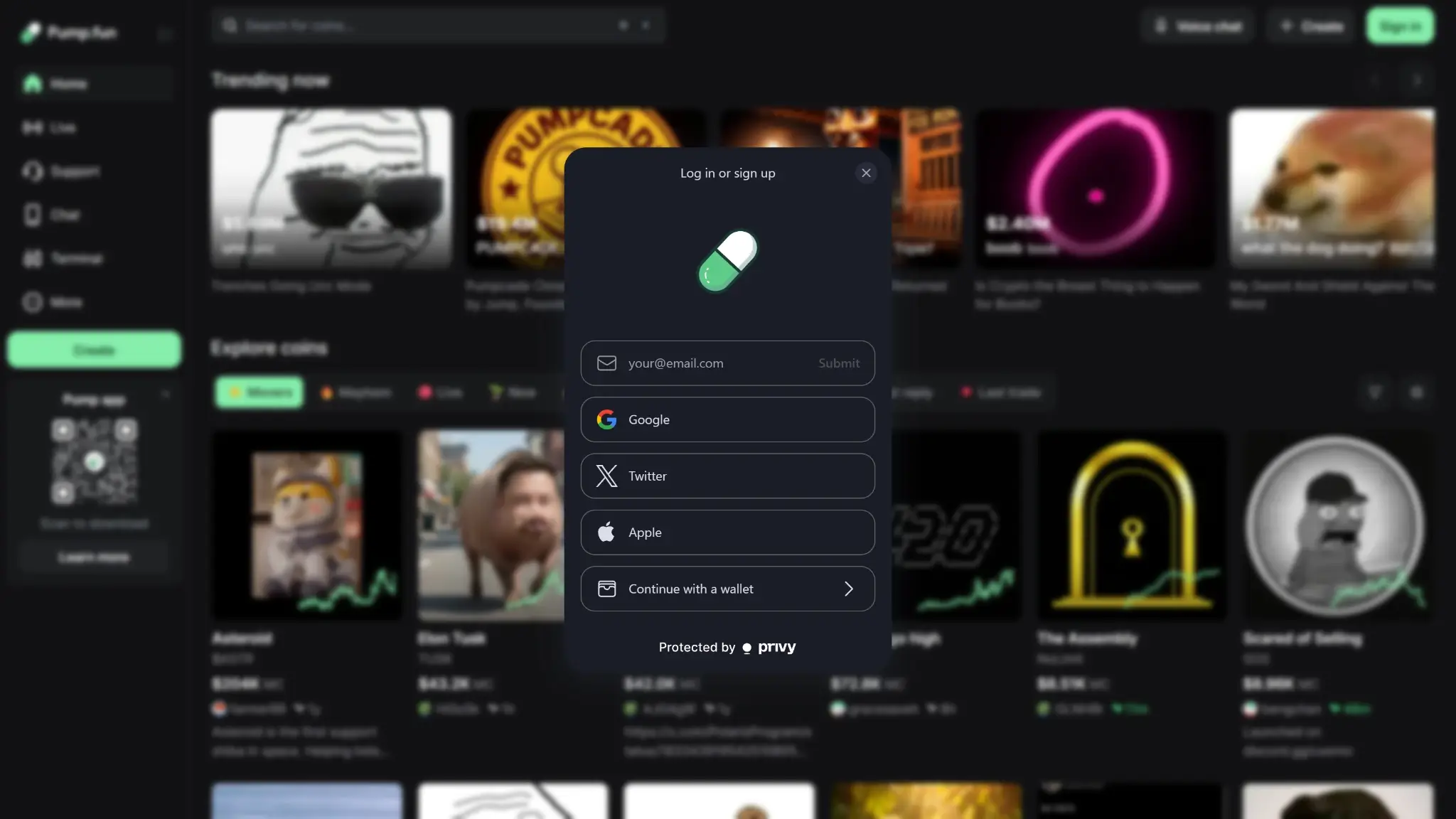
Pump.fun's help content is better than its real-time support depth. Answers about mechanics are usually findable, but that is different from getting hands-on help during a live issue or a fast-moving launch.
- Help center: Intercom-based Pump.Fun Web Help Center with sections for coin creation, wallet management, tokenomics, PumpSwap, general app issues, and mobile support
- Live chat: Not clearly disclosed as a staffed real-time support channel
- Email or ticket support: support@pump.fun; legal@pump.fun is used for trademark, DMCA, moderation, and livestream appeals
- Discord / Telegram / X presence: Telegram support channel, Telegram tech-updates feed, and the official X account for announcements
- Status page: Not available as a dedicated public status dashboard
- What support can fix: Search issues, app questions, wallet flow problems, fee explanations, and some moderation or access problems
- What support cannot fix: Reverse signed onchain trades, recover losses from bad entries, stop creator dumping, or recover funds sent to the wrong address
- How incidents are communicated: Official announcements go through X, with support and product updates also flowing through Telegram and help-center articles
Support breaks down when the problem is market loss rather than product failure. On pump.fun, many of the worst outcomes happen too fast for support to matter, and most of them are not things support can unwind.
Final Verdict
Pump.fun earns its score on speed and access, not quality. Token creation costs nothing at the platform level, there's no KYC wall for basic wallet use, and trading starts the moment a coin goes live on the bonding curve. That's genuinely useful for memecoin launches and creator experiments. The problem is that the same openness that makes it fast makes it noisy: project screening is minimal, bot pressure is real, and most tokens never reach graduation or durable secondary liquidity on PumpSwap. The FCA warning and active U.S. class actions from 2025 add regulatory weight that serious users can't ignore. This is a platform for traders who already know Solana wallet flow and accept high failure rates, not for anyone looking for curated projects or protected entry.
Zero-cost coin creation at the platform level · Instant bonding-curve trading from launch · Direct graduation path from launch into PumpSwap trading
Disclaimer: CryptoSlate may receive a commission when you click links on our site and make a purchase or complete an action with a third party. This does not influence our editorial independence, reviews, or ratings, and we always aim to provide accurate, transparent information to our readers.