
What is paper Bitcoin and how does it influence price?
Diving deep into the notions of paper Bitcoin and liquid supply to understand their relationship and implications for the Bitcoin market.


Introduction
Over the past decade, Bitcoin has undergone a remarkable transformation. What began as a relatively straightforward spot market asset, primarily traded by individual enthusiasts, has matured into a sophisticated financial instrument. This maturation has been marked by the introduction of derivatives, increased participation from institutional investors, and the launch of Bitcoin-focused Exchange Traded Funds (ETFs).
As these elements have become integral to the Bitcoin market, understanding their intricate interplay has become essential for understanding the market.
Among the many facets of this evolved market, the concept of “paper Bitcoin” has recently emerged as a focal point of discussion. This term, which refers to Bitcoin derivatives that don’t involve the direct ownership of the cryptocurrency, has piqued the curiosity of many. Analysts are actively debating its actual impact on Bitcoin’s price, with some arguing for its significant influence and others downplaying its role.
In this report, CryptoSlate will dive deep into the notions of paper Bitcoin and liquid supply, shedding light on their relationship and the broader implications for the Bitcoin market.
Understanding paper Bitcoin
The term “paper asset” refers to a type of investment that doesn’t have a tangible or physical form. Instead, it represents a contractual claim to a physical asset or its value. For instance, stocks in a company are paper assets; while they signify ownership in the company, they don’t equate to a physical piece of the company’s property or assets.
Drawing from this concept, “paper Bitcoin” is a financial instrument that is tied to the value of Bitcoin but doesn’t involve the direct ownership or possession of the cryptocurrency. Instead of holding actual Bitcoins in a digital wallet, investors in paper Bitcoin have a claim or contract that tracks the price of Bitcoin. This allows them to speculate on its price movements without ever owning or transacting in real Bitcoins.
The Bitcoin paper market has seen a notable evolution over the years. Initially, Bitcoin was primarily a spot market asset, meaning people bought and sold actual Bitcoins. However, as the cryptocurrency gained traction and institutional interest grew, there was a demand for more sophisticated financial products around it. This led to the emergence of futures contracts, options, and other derivatives linked to Bitcoin’s price, giving birth to the paper Bitcoin market.
Recent data indicates that the paper Bitcoin market has been on a robust growth trajectory. This growth is not just in terms of volume but also in the diversity of products available. The increasing institutional interest in Bitcoin, coupled with the desire for risk management and speculative tools, has fueled this expansion.
Several key players and institutions have ventured into paper Bitcoin trading. Traditional financial institutions, hedge funds, and even some tech firms have entered the fray, offering or utilizing Bitcoin derivatives for various purposes, from hedging to pure speculation.
Drawing a parallel with another well-known market, gold’s paper market offers an illustrative comparison. Much like Bitcoin, gold has a physical form that can be bought or sold. However, the majority of gold trading occurs in the paper market, through futures contracts and other derivatives. This has led to situations where the amount of paper gold – contracts claiming ownership of gold – far exceeds the actual physical gold available. Similarly, as the paper Bitcoin market grows, it’s essential to understand the potential implications and differences between paper claims and actual assets.
What makes a liquid supply?
In the financial world, the term “liquid supply” refers to the portion of an asset that is readily available for trading or transactions. For tradable assets, this means the amount that can be quickly bought or sold without causing significant price fluctuations. High liquidity generally indicates a well-functioning market with many participants and frequent transactions.
In the context of Bitcoin, the liquid supply represents the amount of Bitcoin that is actively being traded or is available for trading. This doesn’t just mean the Bitcoins being sold on exchanges at any given moment, but also those held by traders and investors who are likely to sell in the near future. It’s a dynamic figure, reflecting the ever-changing nature of the market.
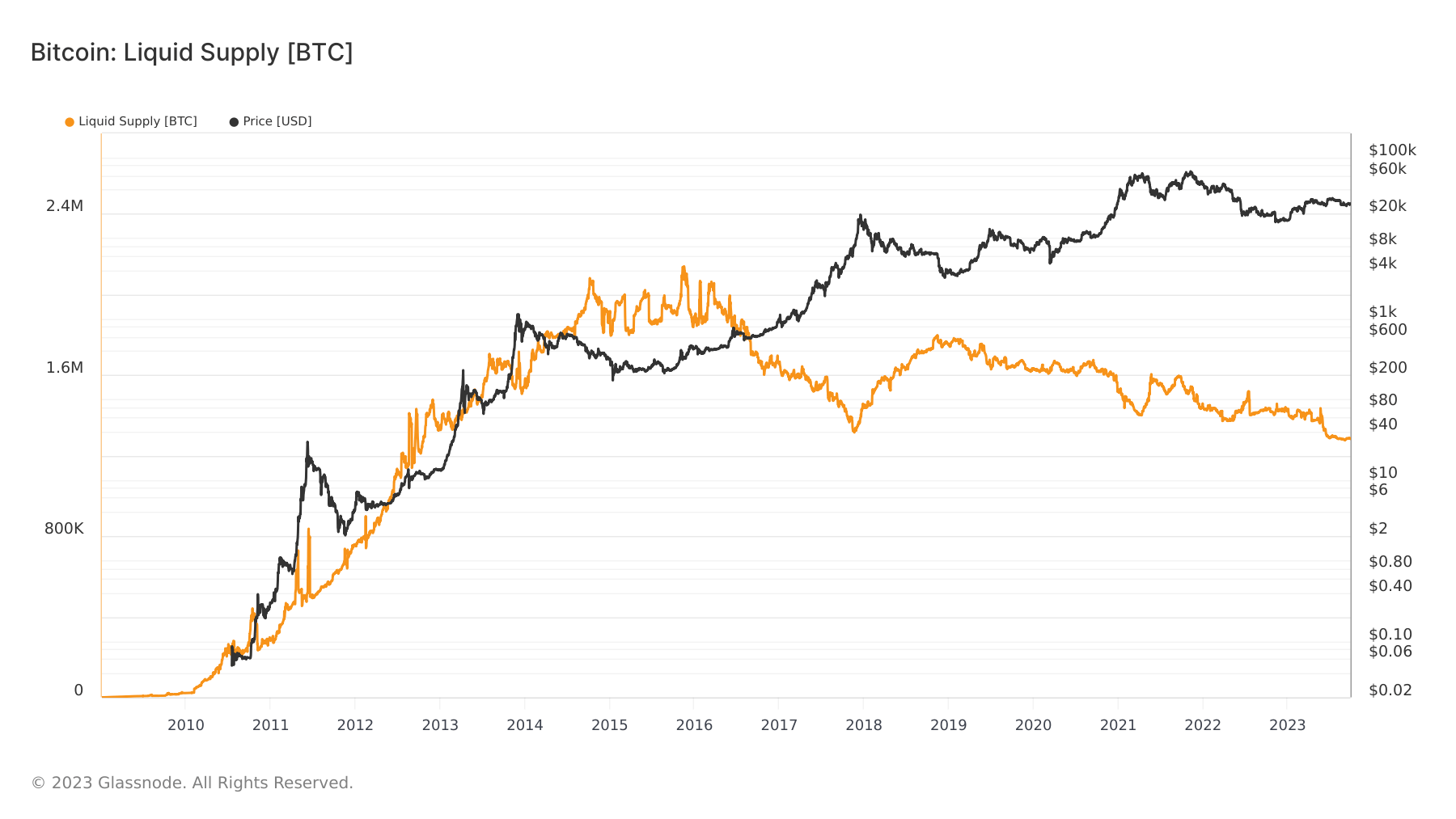
However, determining Bitcoin’s liquid supply is not without its challenges. One primary issue is whether to include the supply held by Long-Term Holders (LTH). While these coins aren’t being actively traded, they could re-enter the market under the right conditions.
Similarly, there’s a debate on whether to consider just the “highly liquid supply” – coins that move frequently – or to also include a broader category of liquid supply that might be traded less often but is still accessible.
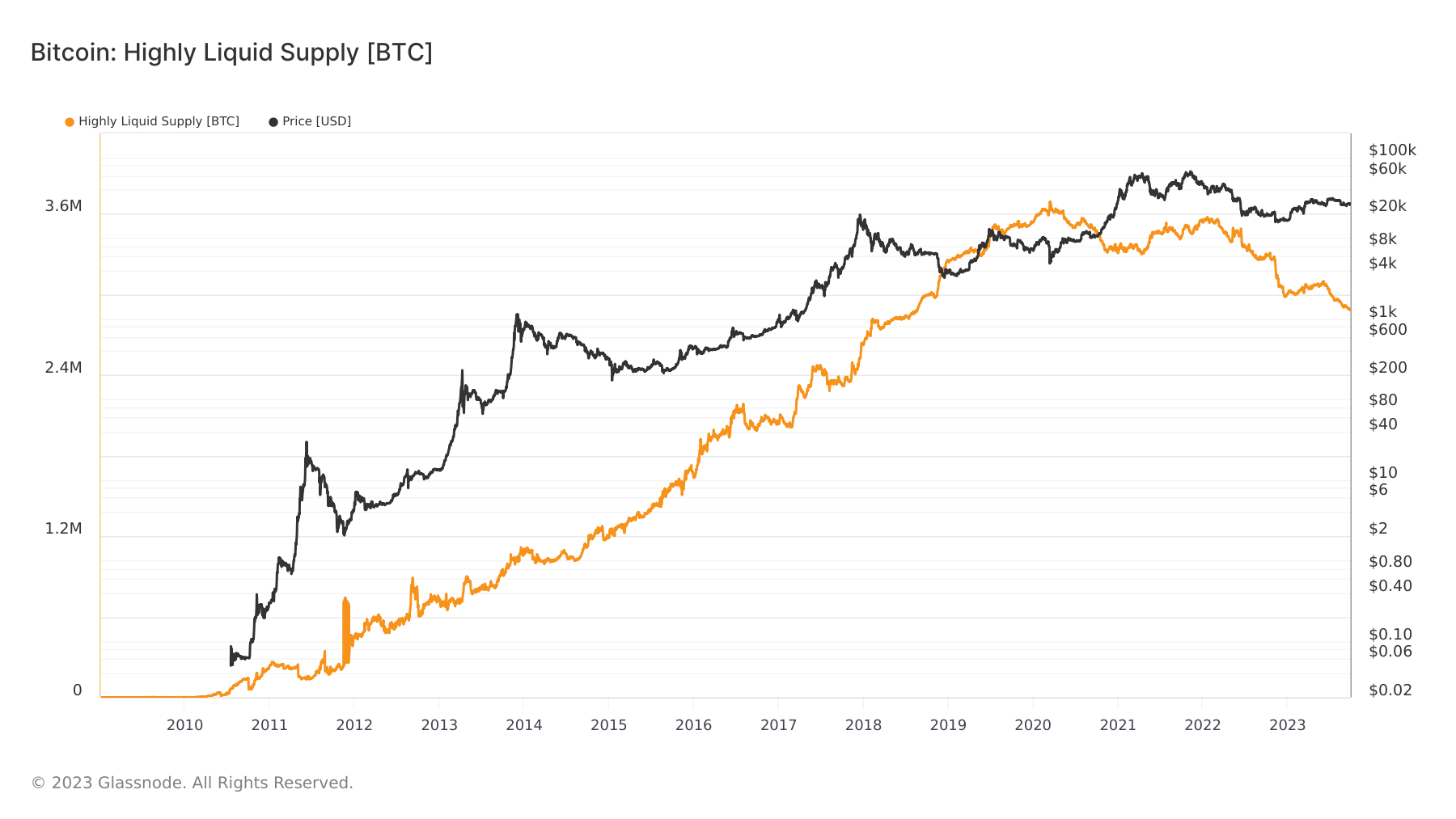
Understanding Bitcoin’s liquid supply is crucial for several reasons. It provides insights into market sentiment, potential price volatility, and the overall health of the Bitcoin ecosystem. A decreasing liquid supply, for instance, might indicate that more investors are holding onto their Bitcoins, expecting future price increases.
Several factors can influence Bitcoin’s liquid supply. Market sentiment, news events, regulatory changes, and macroeconomic factors can all lead to an increase in the amount of Bitcoin being traded. Additionally, actions of large institutional investors, technological developments in the Bitcoin network, and even trends in other cryptocurrency markets can impact how much Bitcoin is considered liquid at any given time.
How paper Bitcoin influences spot price
The relationship between paper Bitcoin and spot Bitcoin is intricate, with the former having a profound influence on the latter’s price dynamics. At its core, paper Bitcoin refers to financial derivatives like futures and options that track Bitcoin’s price but don’t involve the actual ownership of the cryptocurrency. When traders and investors engage in high volumes of paper Bitcoin trading, it can signal market sentiment and expectations about future price movements. This, in turn, can influence the spot price, which is the current market price at which Bitcoin is bought or sold for immediate delivery.
Institutions play a pivotal role in the paper Bitcoin market. Their large-scale trading activities can introduce significant liquidity and also sway market sentiment. For instance, if a major institution takes a bullish stance on Bitcoin and enters a large futures contract, it could drive optimism in the market, pushing up the spot price. Conversely, bearish bets can have the opposite effect.
Delving deeper into trading strategies, it’s also important to note synthetic short interest. Synthetic short interest involves an investor buying an asset, like Bitcoin, and simultaneously entering a derivative contract to profit from a potential decline in its price. Essentially, it’s a strategy to hedge or speculate on price drops without selling the asset outright. In the context of paper Bitcoin, this means that while an investor might be “short” through a derivative, they are “long” in the actual asset, making the position market-neutral. This neutrality means that synthetic short interest doesn’t exert direct downward pressure on Bitcoin’s spot price, unlike traditional short selling.
:max_bytes(150000):strip_icc()/SyntheticPut-23bc8fc01b094709b51a5d6c1e188220.png)
Furthermore, a reduction in Bitcoin’s liquid supply can be bullish for its price. Fewer Bitcoins available for trading can lead to increased demand relative to supply, driving up prices, especially if market sentiment is positive. However, an increase in paper Bitcoin trading can introduce additional volatility. If the market perceives a surge in bearish paper Bitcoin contracts, it might counteract the bullish implications of a reduced liquid supply, stabilizing or even depressing prices.
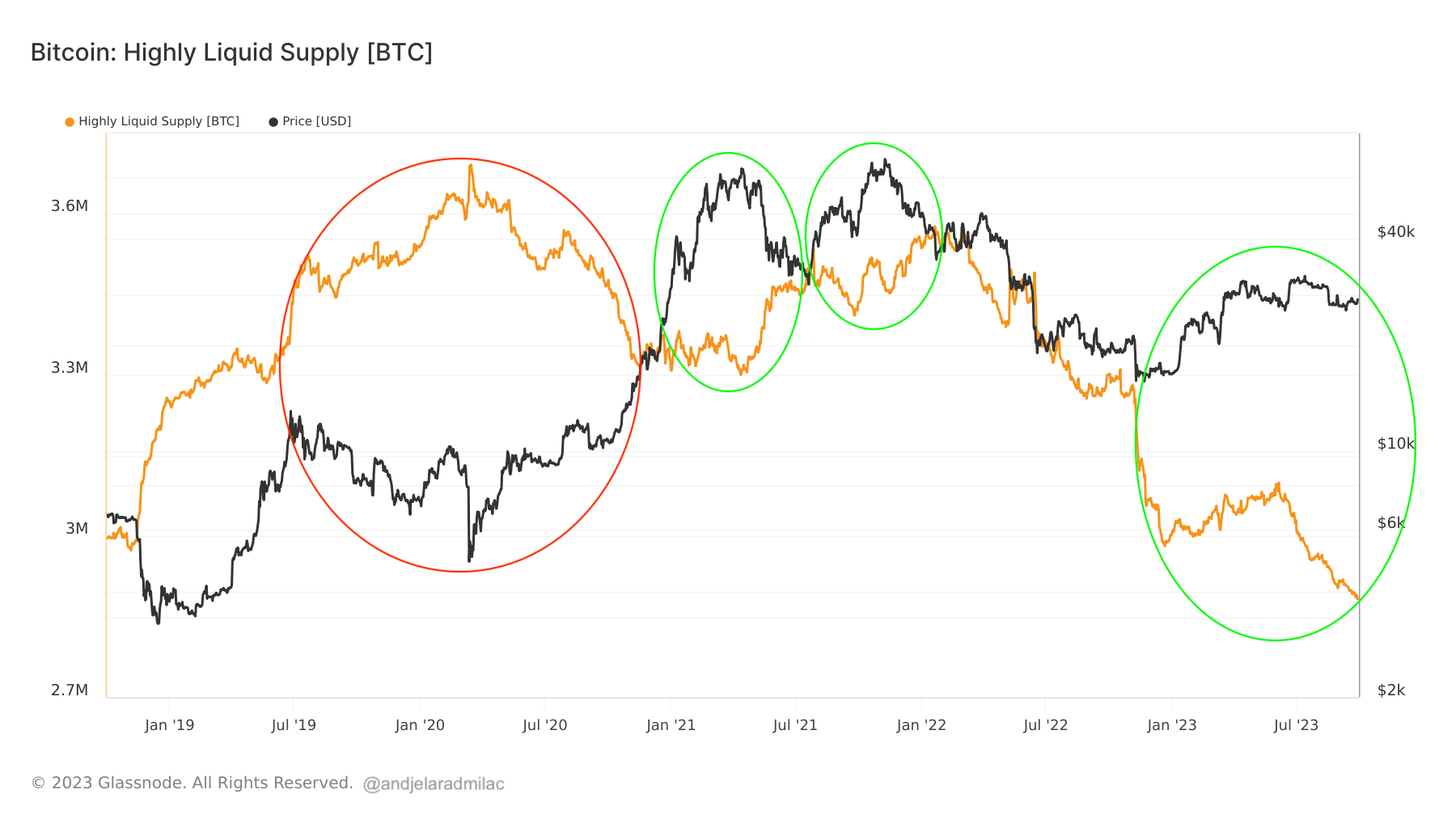
Drawing parallels with other assets, much like Bitcoin, gold has both physical and paper markets. Historically, the gold market has seen instances where the volume of paper gold, like futures contracts, far exceeded the actual physical gold available. This disparity has, at times, led to price distortions. For instance, if paper gold trading is overwhelmingly bullish, it can drive up the price, even if the demand for physical gold isn’t as robust. Bitcoin, with its growing paper market, might face similar dynamics, making it essential for investors to understand the nuances of both markets.
Comparing spot and paper markets
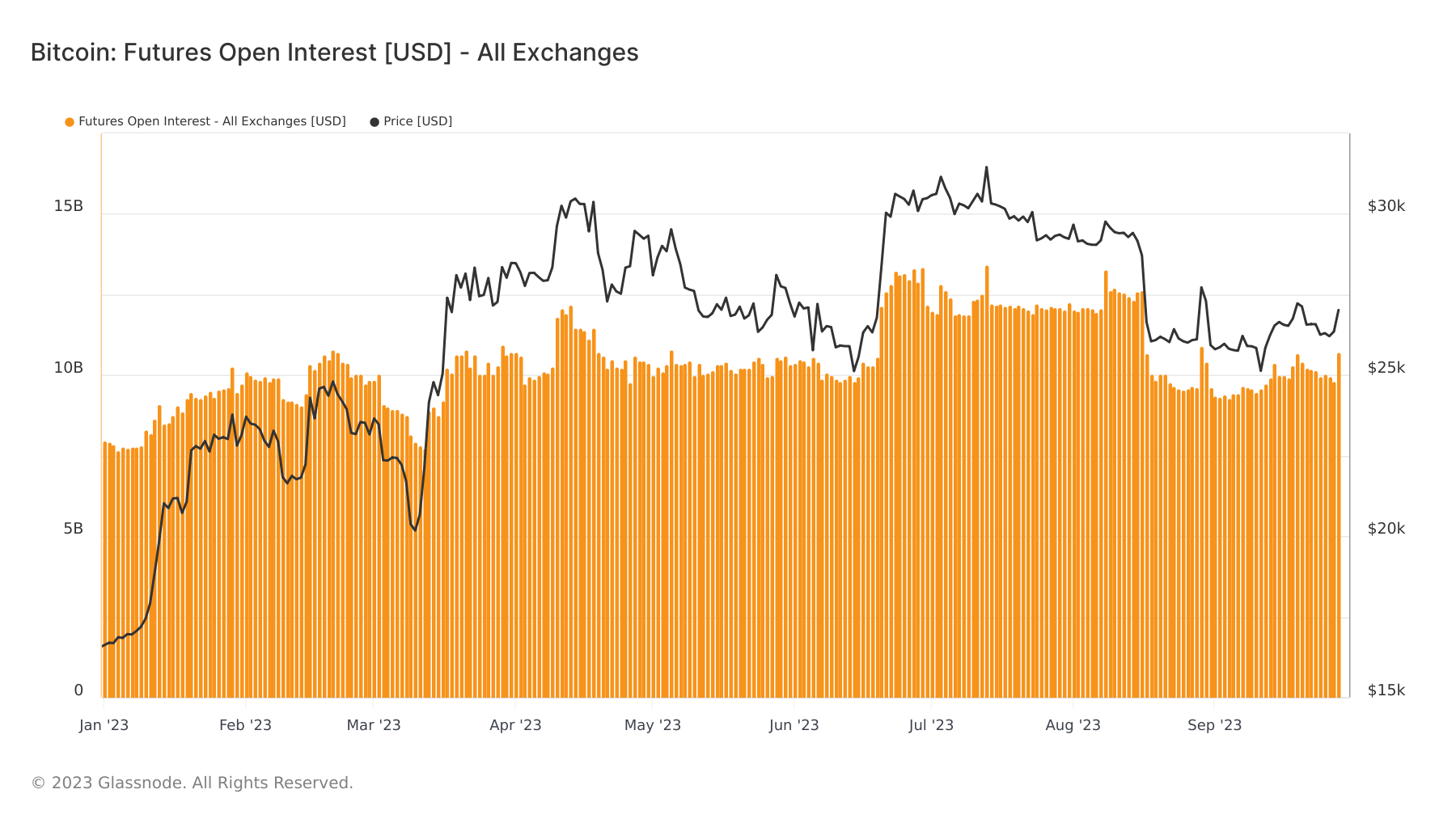
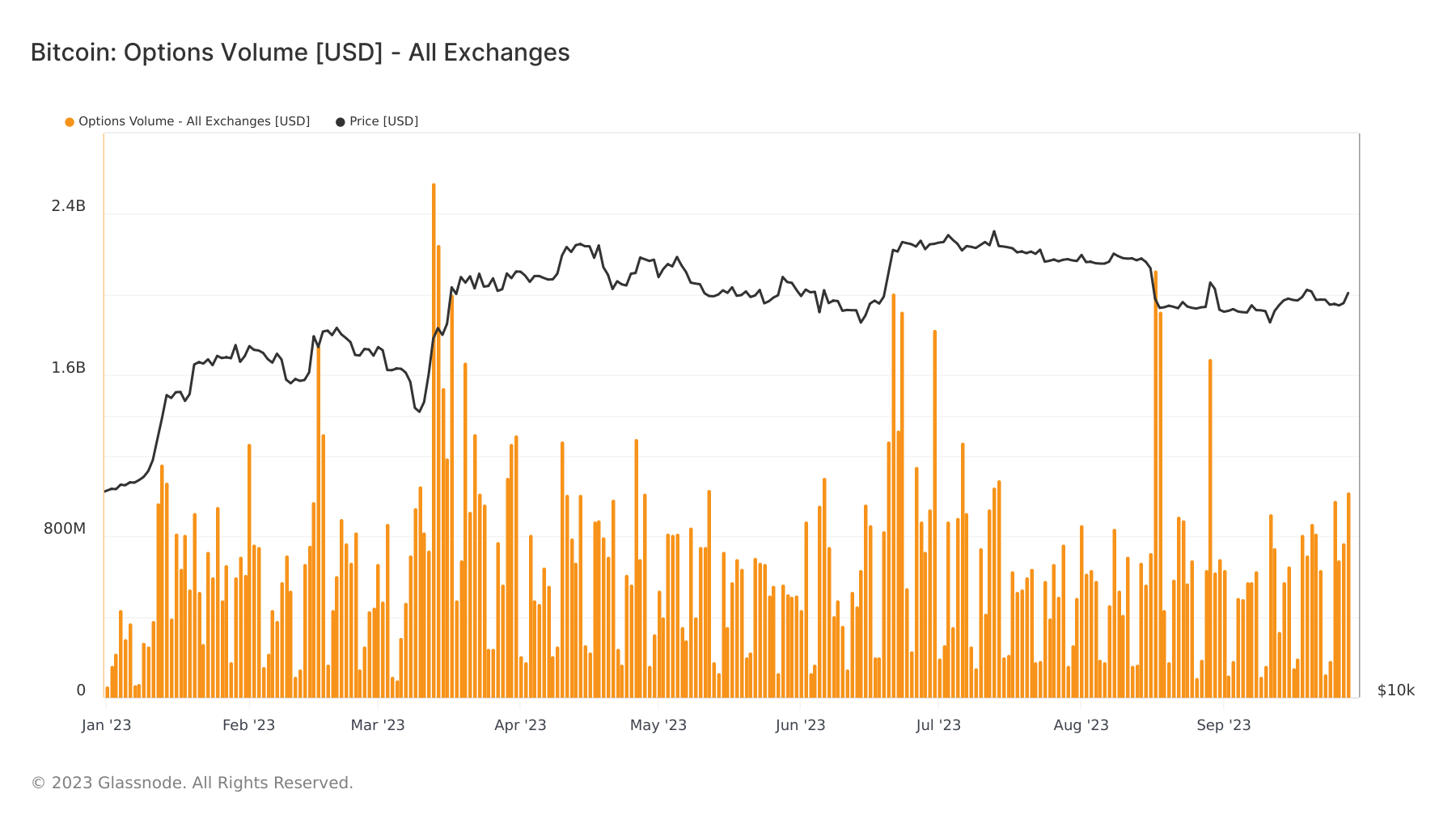
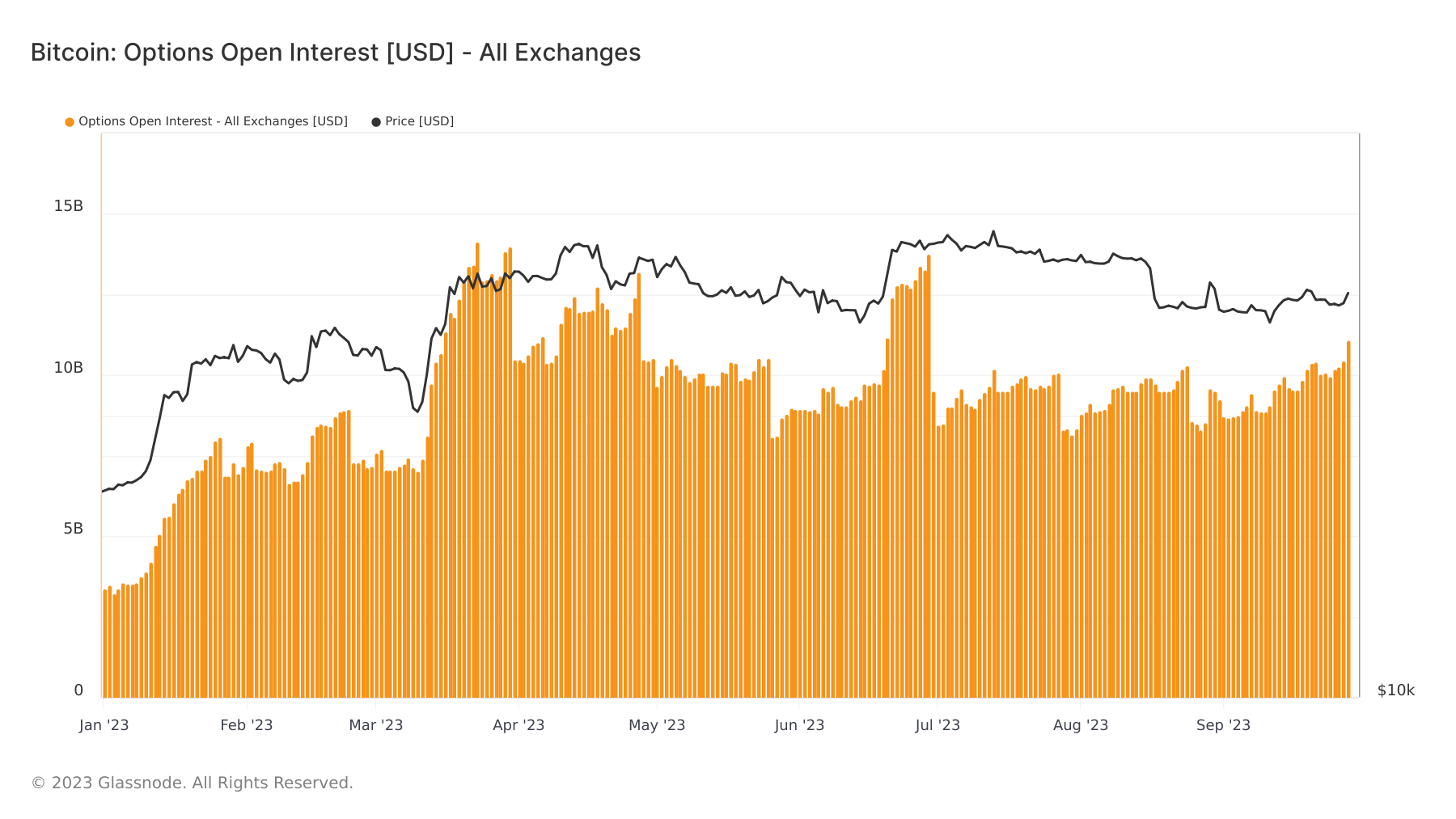
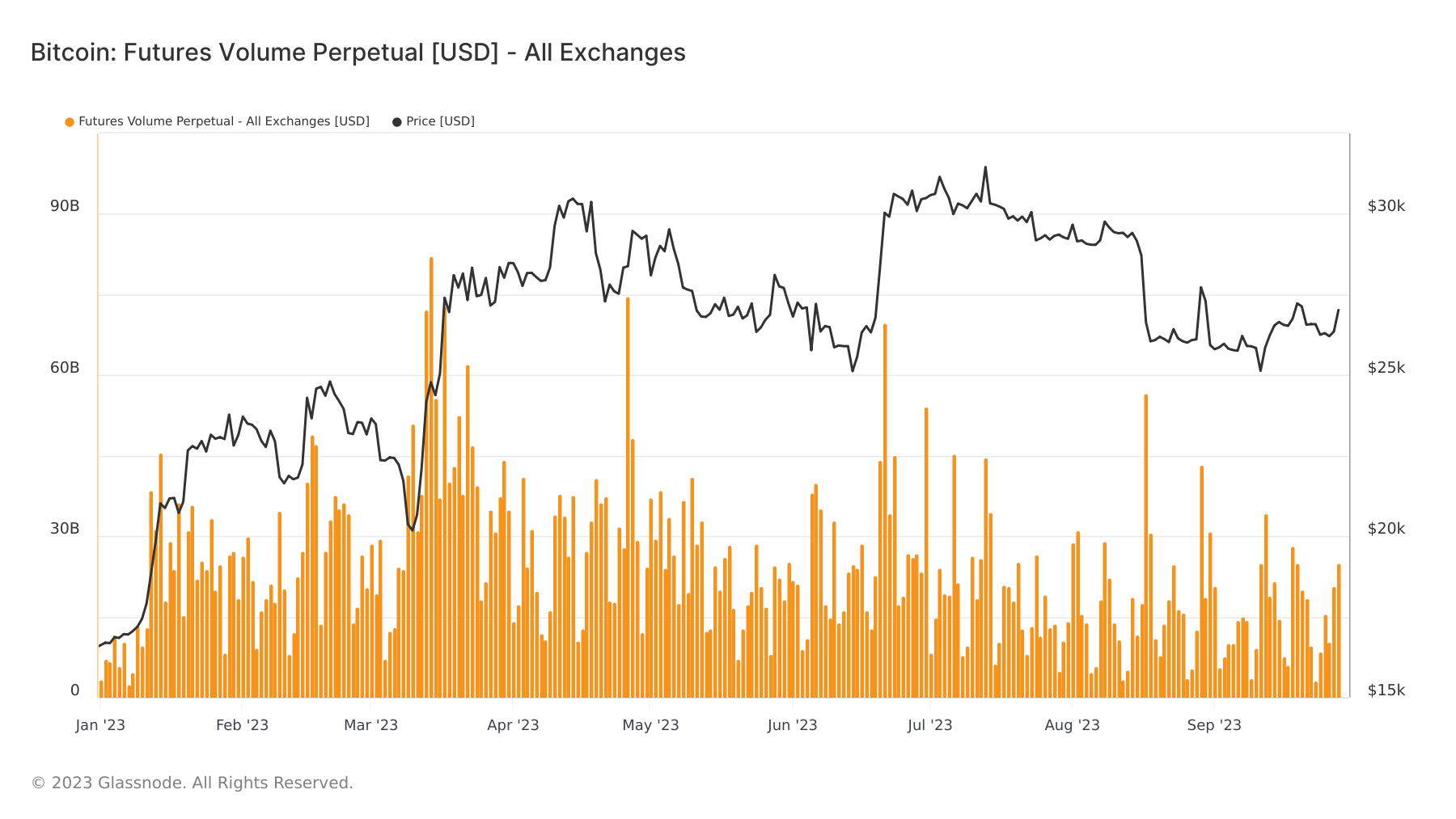
To understand the influence paper Bitcoin has on the market, we must compare its volumes to spot volumes. For the sake of simplicity, we take rounded-up data from one point in time, in this instance September 28, and compare the sizes of the two markets.
Futures contracts, which are agreements to buy or sell Bitcoin at a predetermined price on a specified future date, have a substantial volume of $29 billion.
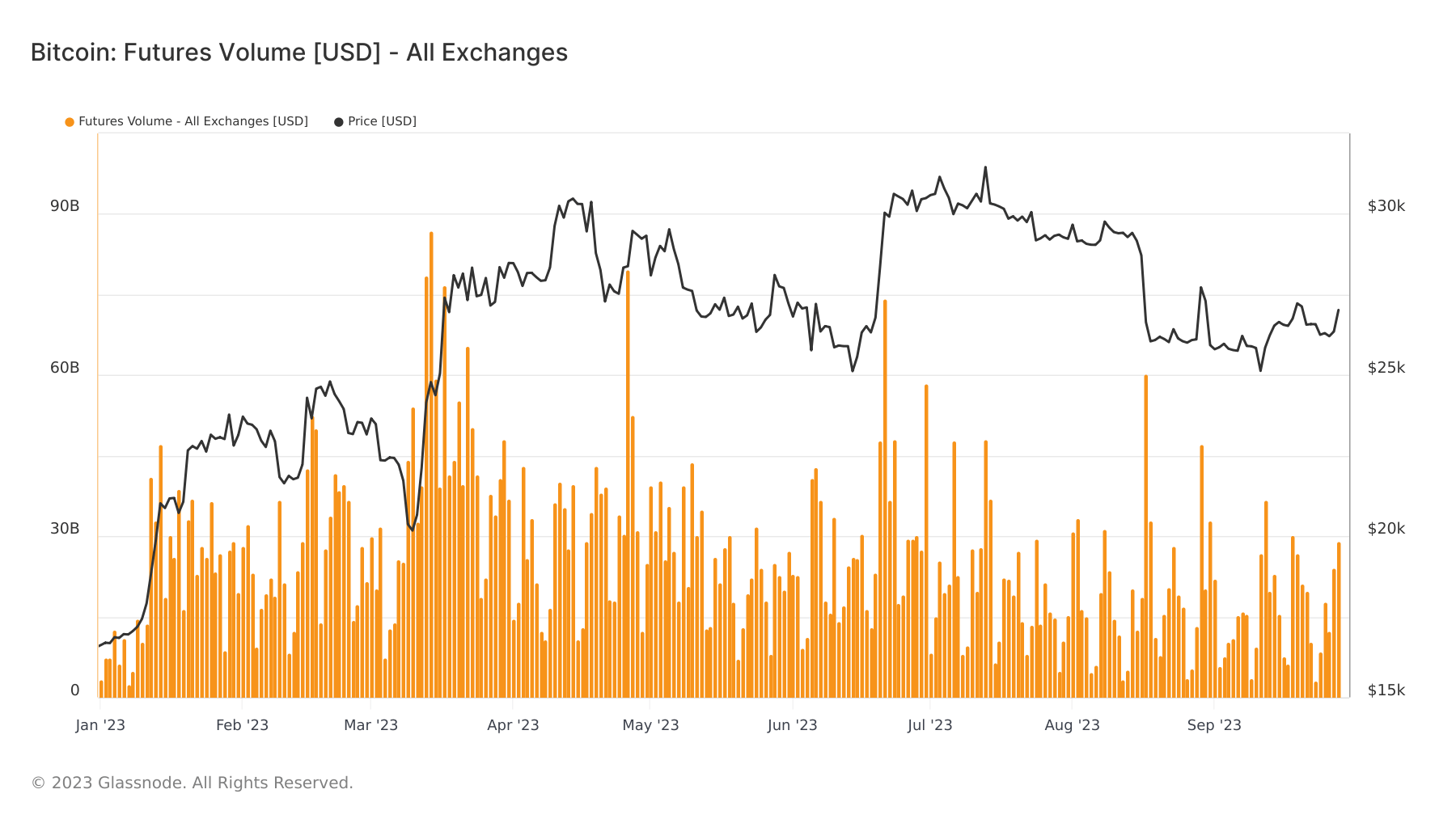
The open interest for futures, representing the total number of outstanding contracts, stands at $10.7 billion.
On the other hand, options, which give the holder the right (but not the obligation) to buy or sell Bitcoin at a specified price within a certain period, have a trading volume of $1 billion and an open interest of $10.48 billion.
The open interest for perpetual futures is $7.7 billion. Furthermore, the trading volume for perpetual futures is a staggering $25 billion, indicating the high level of activity and liquidity associated with these contracts. The substantial volume underscores the significance of perpetual futures in the derivatives market and their role in shaping Bitcoin’s price dynamics.
In contrast, the spot market, where Bitcoin is bought or sold for immediate delivery, has an exchange-traded volume of $149.8 million. This figure, often referred to as the spot volume, represents the actual buying and selling of Bitcoin on exchanges.
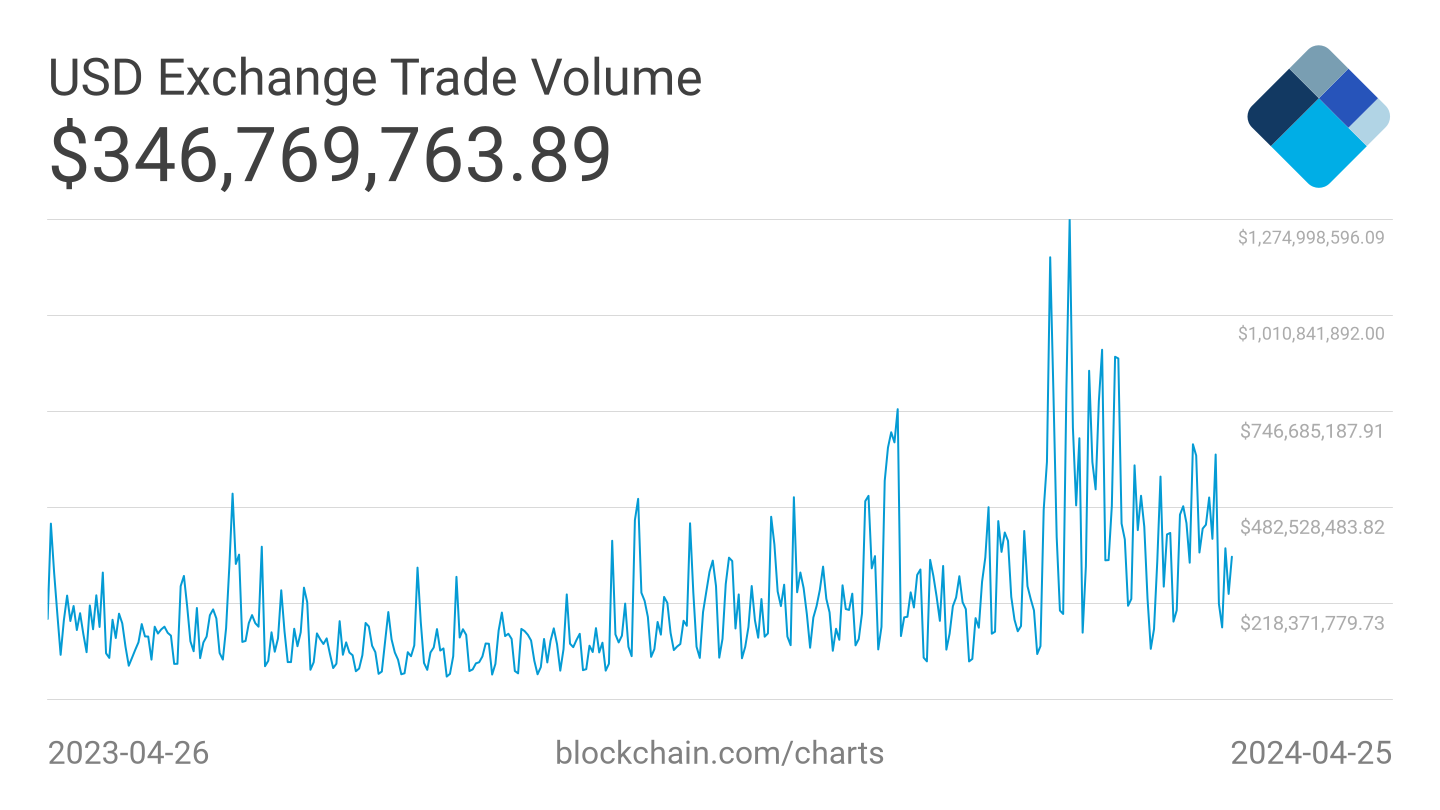
Comparing the two, it’s evident that the paper market, especially futures, dominates in terms of volume, dwarfing the spot market volume. The substantial difference highlights the growing interest of institutional investors and traders in derivative products, which offer hedging, speculation, and leverage opportunities. The spot market, while essential for immediate transactions and liquidity, is just a fraction of the overall trading activity when juxtaposed with the derivatives market.
Conclusion
Paper Bitcoin, encompassing futures, options, and perpetual futures, has seen substantial growth in both volume and open interest. The dominance of the derivatives market starkly contrasts with the spot market volume, even during periods of low volatility.
This data suggests a trend where the crypto market may be more influenced by derivatives than by the liquid supply in the foreseeable future. As the derivatives market continues to expand, it introduces increased liquidity, offering traders more opportunities for hedging, speculation, and leveraging. However, this growth comes with implications. A rising derivatives market, in the context of a diminishing supply of Bitcoin on exchanges, can lead to heightened price volatility. As more traders engage in paper trading without the actual transfer of Bitcoin, it could amplify price swings, especially during market uptrends or downtrends.
In essence, while derivatives offer sophisticated tools for traders and can inject significant liquidity into the market, their growing prominence, coupled with a decreasing liquid Bitcoin supply, might result in more pronounced price fluctuations.
More Market Reports


