Could Bitcoin feel the BlackRock effect?
Market Report Bitcoin

Could Bitcoin feel the BlackRock effect?

BlackRock, the world's leading asset manager, shakes up the world of crypto with its recent application for a Bitcoin Exchange-Traded Fund (ETF), signaling a potential new era for Bitcoin investments and the broader digital assets landscape.


Introduction

In a significant development for the cryptocurrency industry, BlackRock, the world’s largest asset manager, has filed for a Bitcoin Exchange-Traded Fund (ETF). An ETF is a type of security that tracks an index, sector, commodity, or other asset, which can be purchased or sold on a stock exchange like a regular stock. A Bitcoin ETF, specifically, would track the price of Bitcoin, allowing investors to buy into the ETF without dealing with the complexities of owning Bitcoin itself.

BlackRock’s entry into the Bitcoin ETF space is a significant event. With over $8.5 trillion in assets under management, BlackRock’s influence on the financial markets is substantial.

In this report, CryptoSlate will dive deep into the performance of the assets BlackRock’s previous ETFs have tracked and compare them to the potential effect its Bitcoin ETF could have on the crypto market.


Why BlackRock?

Founded in 1988 by eight partners, including current CEO Larry Fink, BlackRock started as a risk management and fixed-income institutional asset manager. Over the years, it has grown into a global powerhouse, managing assets across various classes, including equities, fixed income, real estate, and, more recently, digital assets.

BlackRock rose to prominence due to its innovative approach to investment and risk management. The company was among the first to use technology to manage risk, developing its proprietary risk management system, Aladdin, which is now widely used in the industry.

As of July 2023, BlackRock is the world’s largest asset manager, with over $8.5 trillion in assets under management (AUM). This figure is more than the GDP of most countries, underscoring the firm’s significant influence in the global financial market.

In the U.S., BlackRock’s influence extends beyond its role as an asset manager. The firm has been a key player in shaping financial regulations and policies, often working closely with regulators and policymakers. Its executives have held prominent positions in U.S. administrations, further cementing its role in the country’s financial landscape.

Internationally, BlackRock’s reach is equally extensive. The firm operates in over 30 countries, providing a wide range of investment and risk management services. Its global presence allows it to tap into different markets and provide diversified investment options to its clients.

The decision by BlackRock to file for a Bitcoin ETF is a significant development, given the firm’s stature and influence. It reflects the growing acceptance of digital assets among traditional financial institutions. The move could potentially open the floodgates for other institutional investors to enter the crypto market, given BlackRock’s role in the industry.



BlackRock’s ETFs

iShares, launched in 2000, is a family of ETFs managed by BlackRock. The platform offers a wide range of ETFs that cater to various investment needs, from those seeking broad market exposure to those targeting specific sectors or asset classes.

The process of issuing ETFs involves creating a fund that holds a portfolio of assets mirroring a specific index. The fund is then divided into shares, which are traded on the open market.

BlackRock’s iShares offers one of the most comprehensive ranges of ETFs in the industry. These include ETFs that track major global indices, such as the iShares Core S&P 500 ETF, which replicates the performance of the S&P 500 index. There are also ETFs focused on specific sectors, like the iShares U.S. Technology ETF, which targets the technology sector of the U.S. market.

In addition to equity-based ETFs, iShares also offers bond ETFs, such as the iShares iBoxx $ Investment Grade Corporate Bond ETF, which provides exposure to U.S. investment-grade corporate bonds. For investors seeking exposure to commodities, there are options like the iShares Gold Trust and the iShares Silver Trust, which track the price of gold and silver.

Furthermore, iShares offers thematic ETFs that focus on emerging trends and sectors. Examples include the iShares Self-Driving EV and Tech ETF, which targets companies in the electric vehicle and self-driving technology sector, and the iShares Genomics Immunology and Healthcare ETF, which focuses on companies in the genomics, immunology, and healthcare sectors.


BlackRock’s commodity ETFs

BlackRock’s most popular commodity ETFs that provide investors with exposure to gold and silver are the iShares Gold Trust (IAU) and the iShares Silver Trust (SLV).

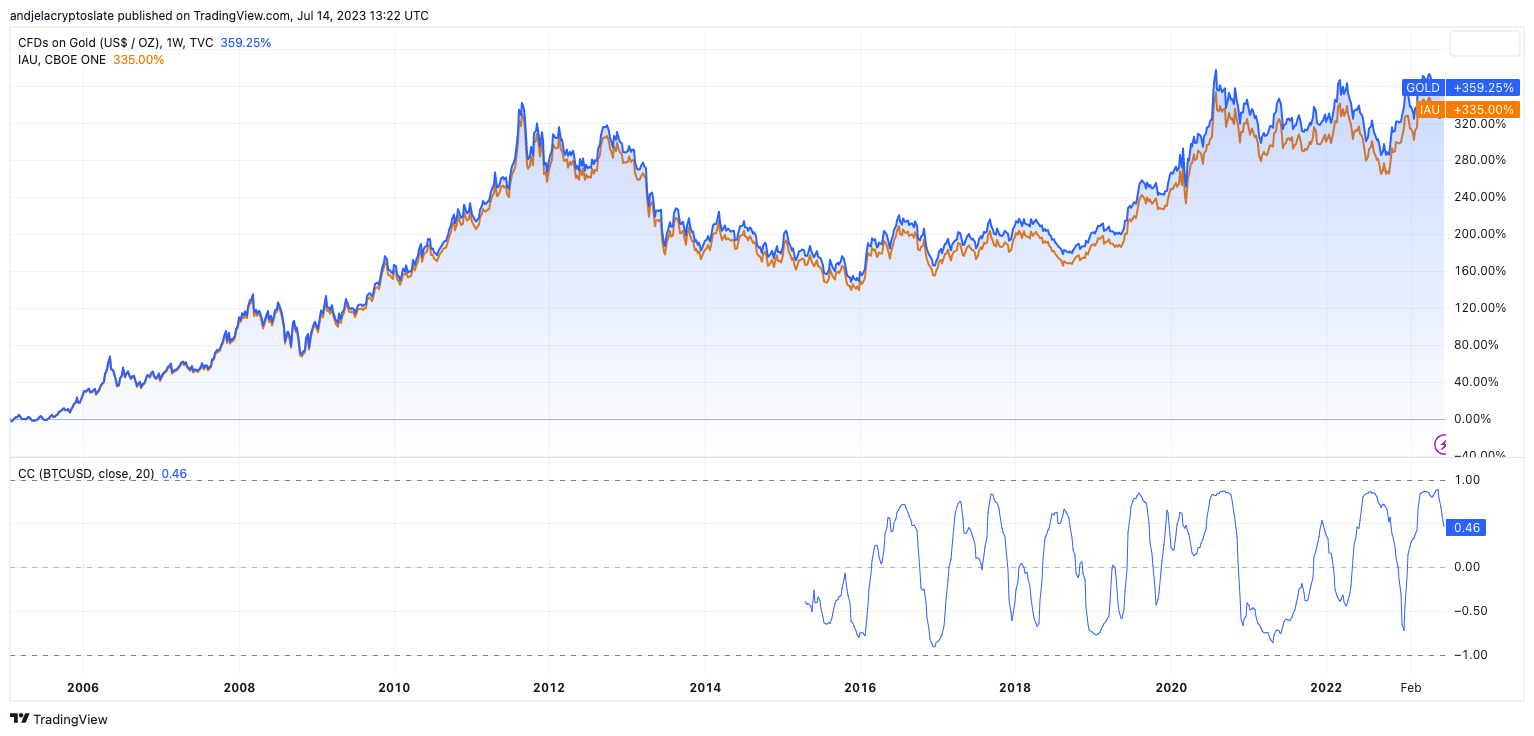
The iShares Gold Trust (IAU) was launched on January 21, 2005. It is designed to track the price of gold and offers investors a cost-effective way to access the gold market. As of July 14, 2023, the ETF has seen a significant increase in its value since its inception. It opened at a price of $8.42 in 2005 and has grown to $37.14, representing a substantial 335% return for long-term investors. The performance of IAU has generally mirrored the performance of gold, which has seen a growth of 359.2% over the same period.

gold iau comparison
Graph comparing the performance of Gold’s spot price and IAU from January 20, 2006, to July 14, 2023 (Source: TradingView)

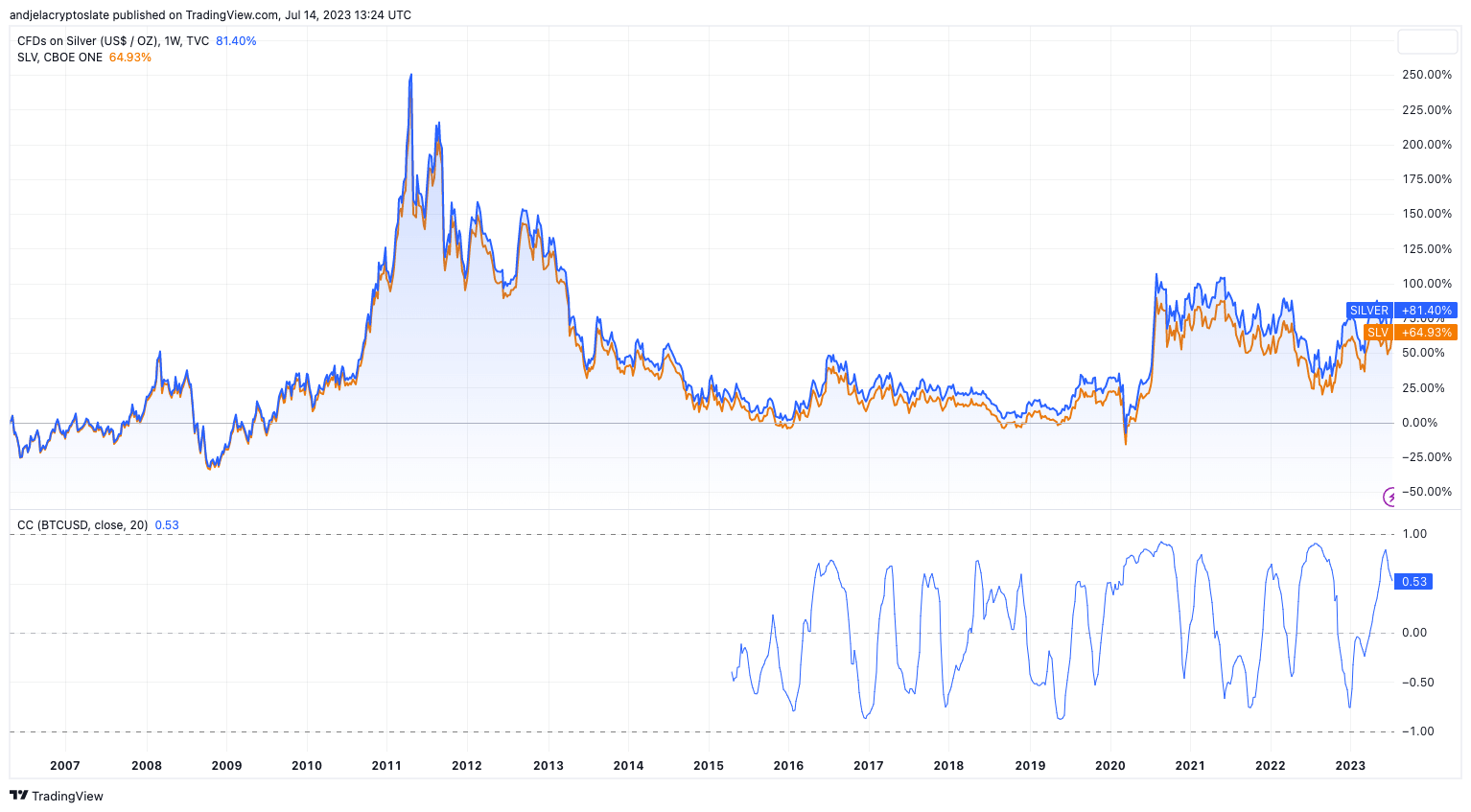
The iShares Silver Trust (SLV) was launched on April 28, 2006, aiming to track the price of silver. Since its inception, the SLV has also seen a substantial increase in its value. It opened at a price of $13.81 in 2006 and has grown to $22.78 as of July 14, 2023. This represents a 64.93% increase. The performance of SLV has generally followed the performance of silver, although the price of silver has been more volatile than gold over the same period. The spot price of silver increased by 81.3% since April 28, 2006, showing much higher volatility of the spot market when compared to the ETF.

silver slv comparison
Graph comparing the performance of silver’s spot price and SLV from April 28, 2006, to July 14, 2023 (Source: TradingView)

BlackRock’s tech ETFs

BlackRock’s technology-focused ETFs offer investors a way to gain exposure to the dynamic and rapidly evolving tech sector. These ETFs include the iShares U.S. Technology ETF (IYW), the iShares Expanded Tech-Software Sector ETF (IGV), and the First Trust Cloud Computing ETF (SKYY).

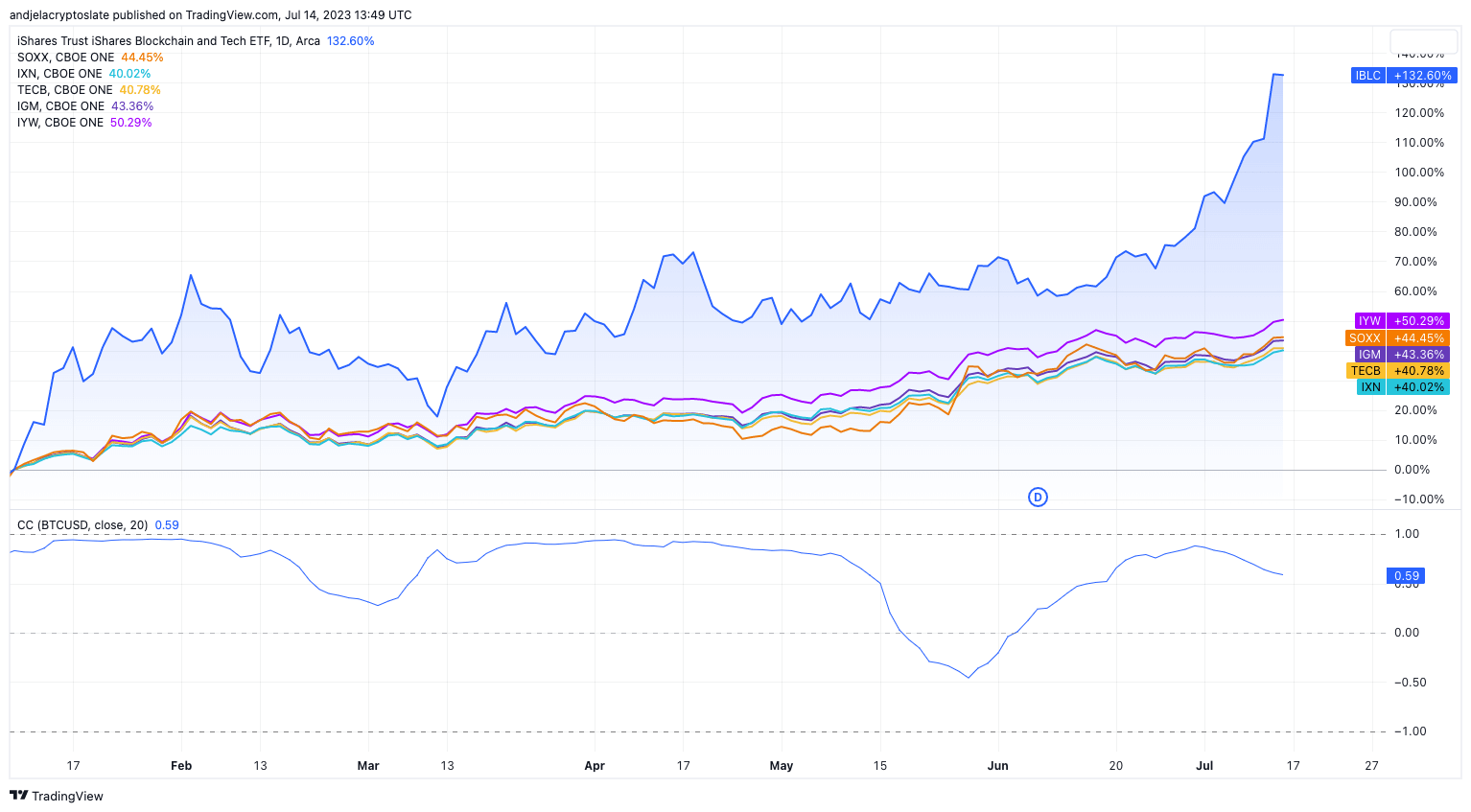
However, the iShares Blockchain and Tech ETF (IBLC), tracking a portfolio of companies involved with blockchain technology, has been the best-performing ETF this year. Since the beginning of the year, BLOK has provided a return of 153.9%. In comparison, the second best-performing fund, the iShares Semiconductor ETF, provided a YTD return of 51.31%.

Other tech-focused ETFs, including the U.S. Technology ETF, the Expanded Tech Sector ETF, the U.S. Tech Breakthrough Multisector ETF, and the Global Tech ETF, have all provided YTD returns ranging from 41.31% to 49.80%.

performance of ishares tech etfs
Graph comparing the performance of various tech-related ETFs from iShares in 2023. Note that the TradingView numbers may differ slightly from BlackRock’s official data due to time lags and different methodologies. (Source: TradingView)

BlackRock’s potential Bitcoin ETF

The launch of a Bitcoin ETF by BlackRock could potentially have a significant impact on Bitcoin’s spot price. To understand the potential impact, we can look at the performance of other assets that BlackRock’s ETFs track.

For instance, in the year since the launch of the iShares Gold Trust, the fund increased by approximately 34.9%. In the tech sector, the iShares Blockchain and Tech ETF has seen a year-to-date return of 153.9%, indicating a significant increase in the value of the underlying assets.

If we were to apply similar performance metrics to a potential Bitcoin ETF, we could expect a substantial increase in Bitcoin’s spot price. However, it’s important to note that the performance of an ETF doesn’t solely determine the price of the underlying asset. Market dynamics, investor sentiment, and broader economic factors also play a crucial role.

As of the time of writing, the spot price of Bitcoin is approximately $31,000. If a Bitcoin ETF were to follow the performance of the iShares Gold Trust, it would put the price of Bitcoin at around $41,820 within a year.

However, if the Bitcoin ETF were to mirror the performance of the iShares Blockchain and Tech ETF, which has seen a year-to-date return of 153.9%, we could see the spot price of Bitcoin increase to approximately $78,709 within six months.

Bitcoin’s pricePercentage increaseProjected price
$31,000
34.90%$41,820
153.90%$78,709

Conclusion

The potential impact of BlackRock’s Bitcoin ETF on the cryptocurrency market is significant. Given the performance of BlackRock’s previous ETFs, the approval of its Bitcoin ETF could potentially lead to a substantial increase in the price of Bitcoin.

It’s important to note that these are hypothetical scenarios based on the performance of other ETFs, and the actual impact on Bitcoin’s price could be different. The launch of a Bitcoin ETF would likely attract more institutional investors to the crypto market, potentially leading to increased liquidity and stability. However, it could also lead to increased market volatility, especially in the short term, as the market adjusts to the new investment product.


Keep Reading

More Market Reports

View all reports