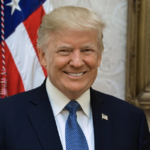
Donald Trump is a United States president, real estate developer, and media personality who has become one of the most consequential political figures for the digital asset industry. In his second term in the White House, Trump has positioned cryptocurrencies, and particularly Bitcoin, as strategic tools of U.S. economic and geopolitical policy, while simultaneously building a sprawling ecosystem of Trump-branded crypto ventures and tokens.
Overview
Born in 1946 in Queens, New York, Trump first rose to prominence as a real estate magnate through the Trump Organization, then as a reality television figure. He served as the 45th president of the United States from 2017 to 2021 and returned to office in 2025, this time with a far more explicit focus on integrating digital assets into federal policy and national strategy. Crypto markets now track Trump’s statements, regulatory moves, and business ventures as key catalysts for price action and sector narratives.
History and Background
Trump’s pre-crypto career centered on large scale commercial real estate, hospitality, and licensing, including flagship properties such as Trump Tower in New York and extensive holdings in golf courses and hotels. Over decades he cultivated a global brand that later became a foundation for political fundraising and digital asset experimentation. His first presidential term saw a mixed posture toward crypto, with sporadic criticism of Bitcoin and stablecoins, while his second term has pivoted toward explicit embrace of Bitcoin and U.S. leadership in digital assets.
Crypto Policy and Regulatory Agenda
Trump’s administration has outlined an expansive crypto policy that includes a proposed National Strategic Crypto Reserve. The concept envisions the United States holding a basket of major digital assets, including Bitcoin (BTC), Ethereum (ETH), XRP, Solana (SOL), and Cardano (ADA), as part of a broader strategy to keep the U.S. competitive against rival economies in the digital currency race.
He has also pledged to end what supporters describe as “Operation Chokepoint 2.0”, a constellation of prior banking and regulatory pressures on crypto firms, and to push the country toward “Bitcoin supremacy”. At the same time, a congressional report titled “Trump, Crypto, and a New Age of Corruption” alleges that the dismantling of certain enforcement units and interventions in high profile cases were structured in ways that benefited Trump aligned ventures and investors, highlighting ongoing political and legal scrutiny.
Macroeconomic decisions during his second term have had direct impact on digital assets, with one recent policy shock coinciding with a more than $1 trillion drawdown across the crypto market, underscoring how closely Trump era policy and crypto market structure are now intertwined.
Trump-linked Crypto Ventures
Trump and his family are associated with several prominent projects that sit at the intersection of politics, branding, and decentralized finance:
- World Liberty Financial (WLFI) – A DeFi protocol and token that launched in 2024 and has grown into a multi billion dollar asset. WLFI is closely tied to the Trump family through equity ownership and token allocations, and its launch triggered heavy trading volumes and notable moves in Ethereum gas fees. The project offers yield products, a USD1 stablecoin, and has announced integrations with networks such as Aptos as well as regional expansion efforts in Asia.
- Official Trump (TRUMP) memecoin – A Solana based memecoin branded around Trump’s persona. The token debuted with a multibillion dollar market capitalization and has since experienced significant volatility, including an extended drawdown of more than 80 percent from early highs and a long term token unlock schedule that directs substantial distributions to insider linked wallets.
- American Bitcoin (ABTC) – A Trump linked mining stock marketed as a Bitcoin proxy trade. Recent share unlocks led to a sharp intraday decline of around 50 percent even as Bitcoin itself traded higher, highlighting the risks of using Trump branded equities as stand ins for direct BTC exposure.
- Tokenized real estate – Through World Liberty Financial, Trump associated entities are exploring the tokenization of iconic properties such as Trump Tower, with the goal of offering fractionalized exposure to high profile real estate via blockchain based investment products. Scenario analyses suggest that even modest tokenization of his real estate portfolio could unlock significant liquidity.
- Media and payments integrations – Trump’s media platform Truth Social has partnered with Crypto.com to convert in app rewards into crypto on the Cronos chain, expanding on a strategy that connects political media, digital assets, and user engagement.
Risks, Criticism, and Controversies
Trump’s crypto activities sit at the center of an intensifying debate over conflicts of interest and market integrity. A U.S. congressional committee report estimates that his crypto portfolio could exceed $11 billion, largely tied to WLFI and TRUMP, and argues that token purchases and liquidity provision by foreign and corporate actors may function as a form of “shadow lobbying”.
WLFI has drawn criticism for blacklisting more than 270 wallet addresses, including high profile industry figures, raising questions about censorship, governance, and the degree of control exerted by its insiders.
Trump has also filed a multibillion dollar defamation lawsuit against a major newspaper over its coverage of his crypto ventures, coinciding with a period of steep price declines in the TRUMP token, which his legal team claims were exacerbated by negative media narratives.
Significance for the Digital Asset Ecosystem
Donald Trump’s evolving role in crypto, combining presidential policymaking with direct exposure to branded tokens and platforms, is reshaping how political power, regulation, and digital assets intersect. Supporters view his agenda as clearing structural barriers, positioning the U.S. as a global leader in Bitcoin and crypto innovation, and accelerating tokenization of real world assets. Critics warn that concentrated insider ownership, selective regulatory relief, and the blurring of public office with private token economics introduce systemic governance and ethical risks.
Regardless of viewpoint, Trump’s policies and ventures are now material variables in the digital asset landscape, influencing liquidity, market sentiment, and regulatory expectations across Bitcoin and the broader crypto economy.