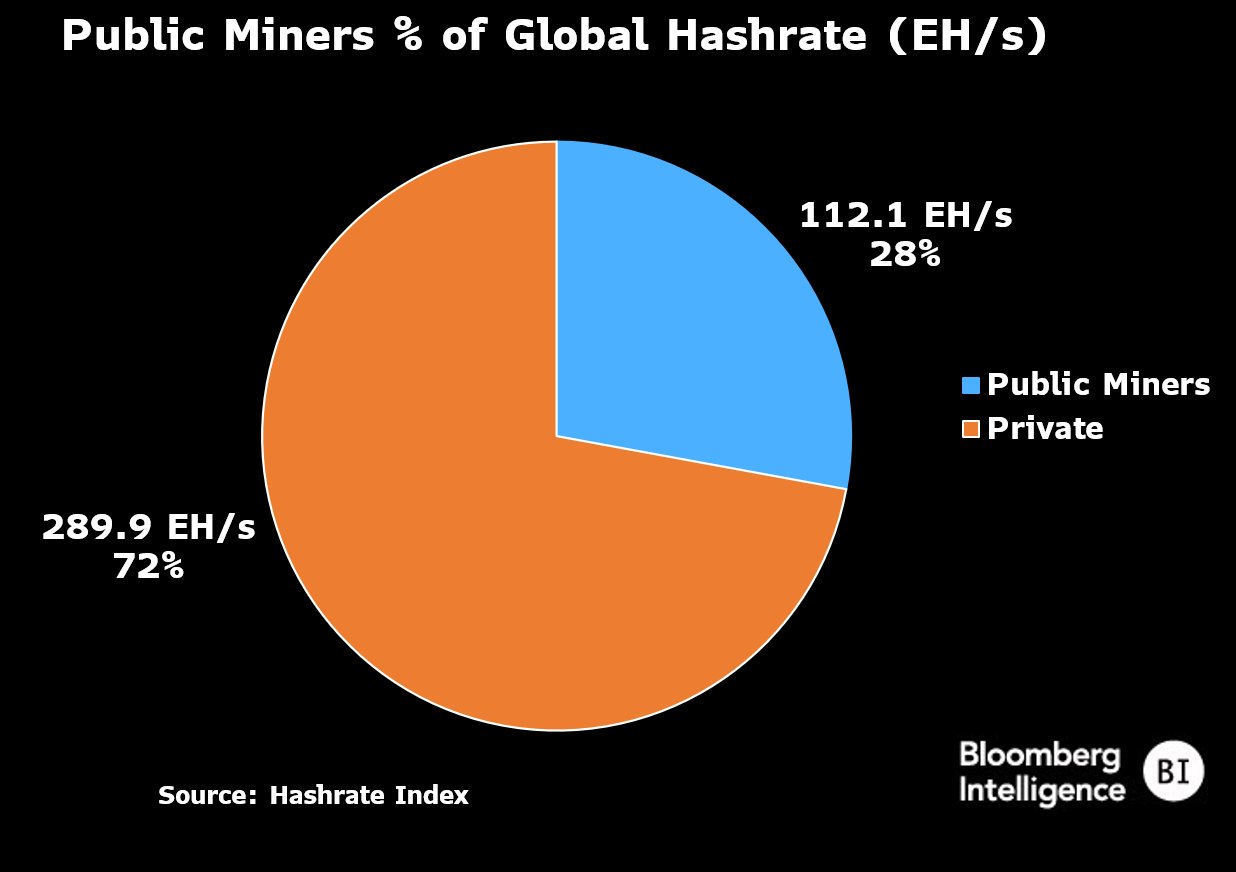
Hash Index data, presented by Jamie Coutts, reveals that public miners constitute 28% of Bitcoin's global hashrate. This data point offers a fresh perspective to the centralization versus decentralization debate surrounding Bitcoin mining. While it is a misconception that miners have central control over the network – an actuality vested in nodes – the fact that public miners control less than one-third of the global hash rate does strengthen the decentralization argument.
However, it's critical to note that mining pools may still present potential centralization points. The balance, roughly 70% of the network, is propelled by private entities. according to Hashrate Index. This blend of public and private participation further adds to the decentralization dynamic within Bitcoin's network, ensuring a heterogenous mix of players contributing to network security.
Public Miners % global hash rate: (Source: Hashrate Index)