Most crypto users start on centralized platforms, then run into the same limits: slower access to onchain tokens, less control over execution, and the added risk of leaving funds with a third party. A decentralized crypto exchange (DEX) changes that by letting you trade directly from your own wallet.
That shift can be worth it. The right DEX can give you faster access to tokens, better routing on the right chain, and more control over your trades. It also puts more responsibility on you, from checking gas and slippage to verifying token contracts and wallet prompts.
This guide helps you narrow the field quickly. It starts with the best decentralized crypto exchanges in 2026, then breaks down DEX vs CEX, costs, safety checks, and which platforms make the most sense for EVM, Solana, stablecoin swaps, and perps. If you still need fiat rails or account recovery, start with a centralized exchange first and move to a wallet when you’re ready.
The right choice depends on your chain and whether you want spot swaps or derivatives. Most picks here are AMMs (Uniswap, PancakeSwap, Curve, Raydium) for spot trading, while aggregators (1inch, Jupiter) help route orders for better execution. Order-book and perp platforms like Hyperliquid and dYdX are built for active trading rather than simple swaps.
Two DEXs can show similar quotes and still deliver different execution once routing and pool depth kick in. Start with your chain, then your use case: EVM users usually shortlist Uniswap and 1inch (Curve for stable swaps), while Solana users typically start with Jupiter and Raydium. After that, compare liquidity depth and routing — that’s what decides price impact and real execution.
Two DEXs can show similar quotes and still deliver different execution once routing and pool depth kick in. Start with your chain, then your use case. EVM users usually shortlist Uniswap and Pancake Swap, with Curve as a stablecoin option. Solana users typically start with Jupiter and Raydium. After that, compare liquidity depth and routing — that’s what decides price impact and real execution.
Start with the chain you use, then compare liquidity. EVM users usually start with Uniswap/1inch (Curve for stable swaps), Solana users with Jupiter/Raydium. Hyperliquid and dYdX aren’t “swap DEXs” — they’re perp platforms with leverage risk and a trading-terminal UI.
The picks above cover different chains and trading styles. The review blocks below break down what each DEX does best, what it costs to use in practice (swap fees, gas, slippage), and the trade-offs beginners should know before they connect a wallet.
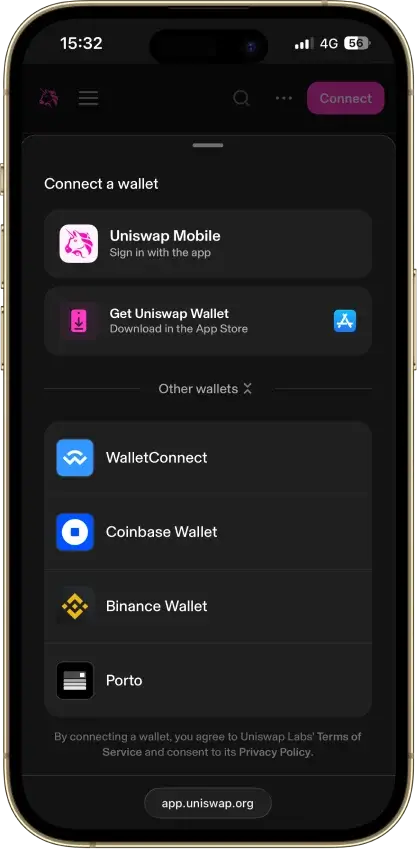
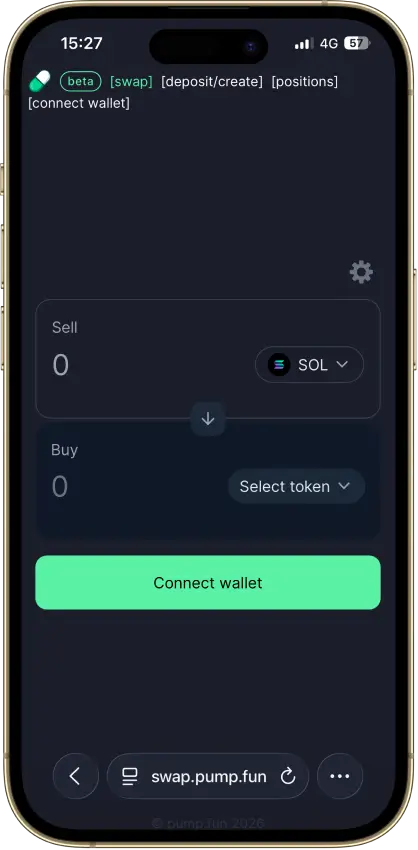
The flow is similar across most spot DEXs, — connect your wallet, choose tokens, review price impact/slippage, and confirm. What matters most is execution quality (liquidity depth and routing), chain focus (EVM vs Solana), and whether the platform is built for simple swaps or active trading.
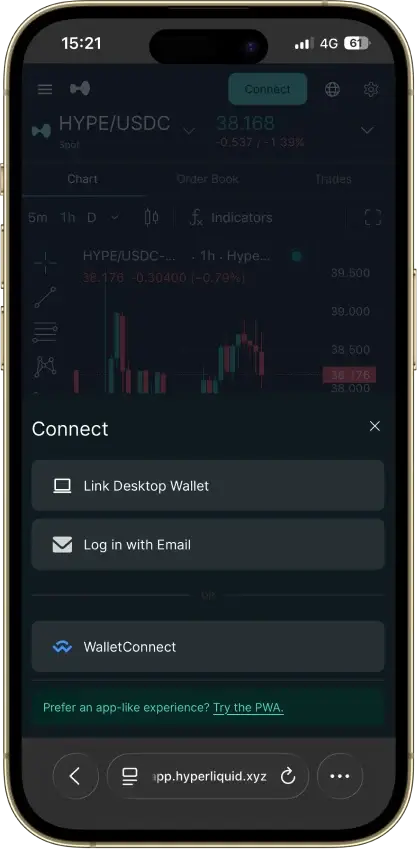
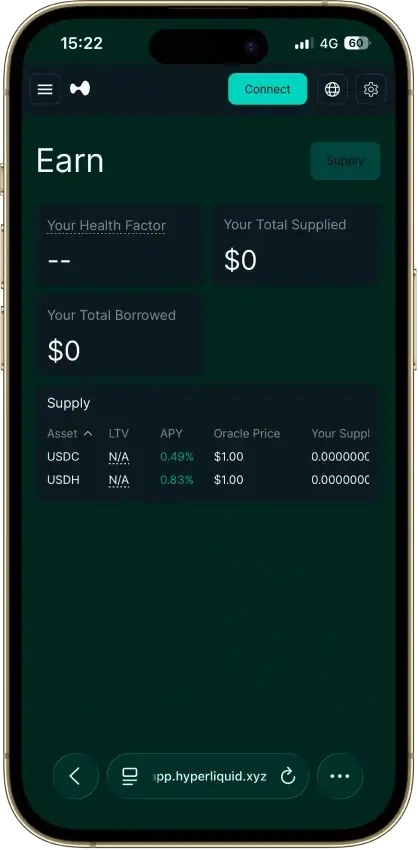
Aggregators like Jupiter route across multiple pools to improve pricing. Perp and order-book DEXs like Hyperliquid feel closer to trading terminals. They can be powerful for active traders, but they also bring more complexity and more risk, especially when leverage is involved.
CryptoSlate DEX Review Methodology
We use CryptoSlate’s 0–10, pillar-based scoring model for exchanges, adapted for non-custodial, onchain trading.
Each pillar is scored 0–100 using:
- Verifiable sources: protocol documentation, audits, onchain disclosures, and contract references.
- Hands-on testing: connecting wallets, running swaps, checking routing/price impact, and reviewing fee disclosures before signing.
Weighted pillar scores roll up to a single 0–10 rating (one decimal place).
| Pillar | Weight | What we assess |
|---|
| Security & smart-contract risk | 22% | Audit coverage and recency, incident history, bug bounties, upgradeability and timelocks, admin-key/multisig controls, oracle/dependency risk, and safety defaults (approvals, slippage warnings) |
| Transparency & verifiability | 8% | Open-source availability, published audits and disclosures, clear contract addresses, onchain verifiability of key claims, and documentation quality |
| Governance & upgrade risk | 12% | Who can change contracts/parameters, timelock and emergency powers, governance transparency, and how clearly upgrade and pause risks are communicated |
| Market quality & execution | 18% | Liquidity depth on major pairs, routing quality, price impact behavior, limit-order support where relevant, and consistency of fills during volatility |
| Fees & cost stack | 12% | Protocol fees, clarity of fee tiers, gas sensitivity, expected “all-in” costs (fees + gas + slippage), and whether costs are shown before you sign |
| Chain coverage & interoperability | 8% | Network support (EVM/L2s/Solana where relevant), bridge/cross-chain complexity, and how clearly cross-chain steps and risks are explained |
| Product breadth | 8% | Spot swaps, stable swaps, aggregations/routing, liquidity tools, and (where applicable) perps/advanced order features |
| UX & support | 7% | Wallet connection reliability, mobile usability, transaction clarity, error handling, docs/help resources, and incident communication |
| Developer & pro tooling | 5% | APIs/SDKs, integrations (indexers/subgraphs), analytics visibility, changelogs, and operational transparency for power users |
We refresh core inputs at least quarterly,
We refresh core inputs at least quarterly. We also update scores after material events such as exploits, major upgrades, outages, or fee-model changes. Scoring is handled by the editorial team and is not for sale — commercial relationships never affect rankings.
What Is a Decentralized Crypto Exchange?
A decentralized cryptocurrency exchange (DEX) is a crypto trading platform built on smart contracts that lets you swap or trade tokens directly from your own wallet. Most people just say “DEX.” Trades execute onchain while you keep control of your funds, without making a custodial deposit.
In practice, a DEX trade usually looks like this:
- Connect your wallet.
- Pick the token you’re selling and the token you want to buy.
- If it’s your first time swapping that token, approve the smart contract to spend it (check the spender and the amount before you confirm).
- Review the route, network fees (gas), and estimated slippage/price impact.
- Confirm the transaction and wait for it to finalize on the blockchain.
A DEX is not automatically the same thing as a “no‑KYC exchange.” Many DEX protocols don’t ask for identity checks. You are still responsible for wallet security, using the right token contract, and covering network fees. Fiat on-ramps are usually handled elsewhere.
AMM vs Order-Book DEXs
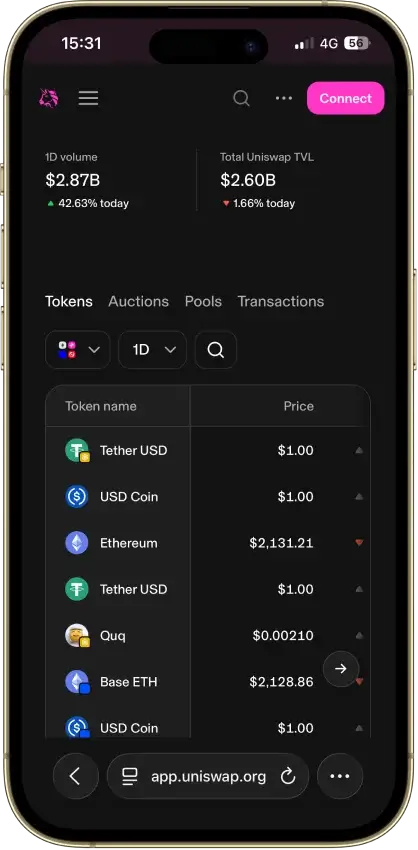
Most beginner-friendly spot DEXs are AMMs (automated market makers). They price trades using liquidity pools, and your swap executes against those pools. That’s the model behind Uniswap, PancakeSwap, Curve, and Raydium.
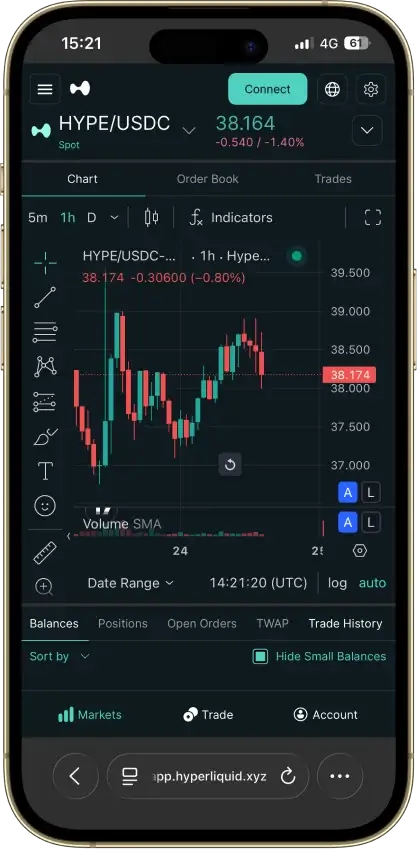
Order-book DEXs match buyers and sellers using bids and asks, similar to a traditional exchange interface. This model is common in decentralized derivatives and perpetuals platforms like Hyperliquid and dYdX, and it usually feels more like a trading terminal than a simple swap screen.
Centralized vs Decentralized Crypto Exchange
The biggest difference between a centralized and a decentralized crypto exchange is custody and control. A centralized exchange (CEX) holds user deposits and runs trading off-chain in its own systems. A decentralized exchange (DEX) lets you trade from a wallet by executing swaps or orders onchain.
| Category | Centralized exchange (CEX) | Decentralized exchange (DEX) | What beginners should know |
|---|
| Custody | Funds are typically held by the platform | You keep funds in your wallet | Self-custody reduces counterparty risk, but raises personal security responsibility |
| Onboarding / Fiat | Bank cards, bank transfers, easier first buy | Usually no direct fiat support | Many beginners buy on a CEX first, then move funds to a wallet |
| KYC | Common or required in many regions | Often no identity checks at the protocol level | “No KYC” does not mean “no risk” and on-ramps may still require checks |
| Fees | Maker/taker fees, withdrawal fees, spreads | Swap fees + network gas + slippage | Small trades can cost more on a DEX if gas is high |
| Slippage | Usually lower on deep order books | Varies by liquidity and routing | Routing quality and liquidity depth matter more than token count |
| Asset access | Often curated listings, fewer long-tail tokens | Broad access, including long-tail tokens | Wider access also means more scam tokens and fake contracts |
| Support & recovery | Account recovery and support tickets exist | No account to recover, wallet is the account | If you lose keys or sign something malicious, support cannot reverse it |
| Consumer recourse | More formal dispute paths depending on jurisdiction | Limited or none | DEX trades are generally final once confirmed onchain |
| Best use cases | First-time buying, simple trading, fiat ramps | Self-custody swaps, onchain access, composability | Pick the tool that matches your goal, not the ideology |
A beginner should usually start with a CEX if they need a fiat on-ramp, want a simpler login-based experience, or are making their first purchase and learning the basics. It’s also often the easiest way to set up recurring buys and move funds onto a chain when you’re ready. That can make more sense if you plan on spending crypto later on, rather than just swapping it.
A DEX makes more sense once you’re comfortable using a wallet and want self-custody, faster access to onchain tokens, or better routing for specific chains. It is also the default route for many onchain activities, from token swaps to DeFi apps and decentralized derivatives.
How to Choose the Best Decentralized Crypto Exchange
The right DEX is usually the one that matches your chain, your wallet, and your trade type. A great DEX on Ethereum can be the wrong choice for a Solana user, and a spot-swap DEX won’t help much if you actually want perpetuals.
Use this checklist to narrow your options:
- Chain support and where liquidity actually is: pick the DEX that is strongest on the network you’re using (Ethereum/L2s, BNB Chain, Solana).
- Routing quality / aggregator support: if you care about execution, aggregators can route across pools to reduce slippage.
- Wallet compatibility: the easiest DEX is the one that connects cleanly to your wallet without extra steps.
- Total cost stack: compare swap fees + gas + slippage/price impact instead of looking at swap fees alone.
- Stablecoin efficiency (if relevant): stable-to-stable swaps reward DEXs built for low slippage in pegged assets.
- Cross-chain needs: if you’re moving between networks, factor in bridge complexity and extra fees.
- Security history and audit posture: prefer protocols with a longer track record and clear security practices.
- Spot vs perps: choose spot-only DEXs for simple swaps, and perp DEXs only if you understand leverage risk.
Liquidity, Routing, and Slippage
Liquidity is what keeps your swap close to the quoted price. On a DEX, thin liquidity can turn a normal trade into a bad fill through price impact and slippage.
Focus on:
- Deep pools on the tokens you actually trade (not just a long token list).
- Better routing, especially for larger swaps or volatile tokens.
- Realistic slippage settings and a clear price-impact warning before you confirm.
In most cases, deeper liquidity and smarter routing beat “more tokens” or flashy features.
Wallet UX and Chain Support
Most first-time DEX mistakes are basic but costly: using the wrong network, missing the gas token, or swapping the wrong token contract.
Before you trade:
- Confirm you’re on the right chain for the DEX.
- Keep the gas token available (ETH on Ethereum/L2s, SOL on Solana, BNB on BNB Chain).
- Double-check the token contract when trading long-tail assets.
- Review approval prompts (spender + amount) and what you’re signing.
If the wallet connection or network switching feels confusing, try a simple swap on a liquid pair first, then scale up once the workflow makes sense.
How to Buy Crypto on a Decentralized Exchange
Buying crypto on a DEX is really a wallet-to-wallet swap. You connect a self-custody wallet, pay network fees (gas), and the trade settles onchain.
- Get crypto into a wallet as part of a self-custody setup. Many beginners buy on a centralized exchange first, then withdraw to their wallet.
- Make sure you have the gas token. You’ll need it to pay network fees (for example, ETH on Ethereum/L2s, SOL on Solana, BNB on BNB Chain).
- Open the DEX and connect your wallet. Use the official site (avoid search ads) and follow your wallet’s connection flow.
- Confirm the chain and token contract. If you’re trading a long-tail token, verify the contract address from a reliable source.
- Review the route and costs. Check estimated slippage/price impact, any routing steps, and the total cost (swap fee + gas).
- Approve the token (if prompted). Approvals give a smart contract permission to spend your token — review the spender and amount, and approve only what you need.
- Confirm the swap and save the transaction hash. For your first trade on a new DEX, token, or chain, keep the amount modest until the workflow feels familiar.
Wallet Setup Before Your First DEX Trade
- Download the wallet from the official source.
- Create a new wallet and store your recovery phrase offline (never in screenshots or cloud notes).
- Turn on device security (PIN/biometrics) and set a strong password if your wallet uses one.
- Add a small amount of the chain’s gas token.
- Do a small test transfer to confirm everything works as expected.
Common First-Swap Mistakes
- Using the wrong network (or forgetting to switch networks before swapping).
- Not having enough gas to cover network fees.
- Swapping the wrong asset because of a fake token or incorrect contract address.
- Getting hit by high price impact on low-liquidity tokens (especially long-tail assets).
- Approving unlimited allowances and never revoking them.
- Connecting through a fake front end (phishing domains and spoofed links).
- Bridging to the wrong chain or using a bridge you don’t understand (extra steps, extra fees, more risk).
DEX Fees Explained — Swap Fees, Gas, Slippage, and MEV
DEX costs don’t work like centralized exchange fees. DEX costs usually come in layers. Instead of one trading fee, you pay a mix of protocol swap fees, network gas, and execution costs such as slippage or price impact. Cross-chain routes can add more costs.
| Cost component | What it is | Why it matters | Beginner tip |
|---|
| Swap fee (protocol) | A fee charged by the DEX/pool on the swap | It’s paid on top of everything else | Compare total cost, not swap fee alone |
| Gas fee (network) | The blockchain fee to execute the transaction | Can make small swaps uneconomical on some networks | If gas is high, consider a cheaper network/L2 or swap less often |
| Slippage / price impact | The “execution gap” from thin liquidity or fast price moves | This is where many bad fills happen | Stick to liquid pairs and watch price impact before you sign |
| Routing / bridge costs | Extra steps if the route uses multiple pools or crosses chains | Adds fees, complexity, and additional risk | Avoid cross-chain routes unless you understand each step |
| MEV (high level) | Bots may try to profit from visible transactions (especially in volatile markets) | Can worsen execution on certain chains/pairs | Use reputable UIs, keep slippage reasonable, and prefer liquid markets; use limit orders where available |
On a DEX, “cheap” depends on the whole stack, not just the swap fee. Two platforms with the same protocol fee can feel very different if one has deeper liquidity (lower price impact) or if your trade requires extra routing.
If you’re new, optimize for simplicity and liquidity first. Trade well-known pairs, avoid cross-chain routes, and do not ignore gas costs. Once you’re comfortable, you can start comparing routing quality, timing swaps when network fees are lower, and using limit orders on platforms that support them.
Supported Chains, Assets and Liquidity Depth
The “best DEX” is often chain-specific. Most DEXs are strongest in one ecosystem, and liquidity can vary a lot even when the interface looks the same. Use this section to match your wallet and assets to the networks where each pick tends to work best.
Ethereum and L2s (EVM)
If you’re in the Ethereum ecosystem or on an EVM L2, prioritize execution quality and gas-aware choices.
- Best fits: Uniswap for spot swaps, 1inch when you want routing across multiple pools, and Curve when you’re swapping stablecoins.
- What to watch: gas can dominate small swaps on some networks, and low-liquidity pairs can create outsized price impact.
BNB Chain and Multichain (EVM)
Lower fees help keep BNB Chain activity attractive for smaller swaps.
- Best fit: PancakeSwap for low-cost multichain swaps.
- What to watch: liquidity and token quality can vary more across smaller networks — verify token contracts and stick to liquid pairs when possible.
Solana
The Solana ecosystem is usually fast and low-cost for DEX trading, but it relies on a different wallet and token environment.
- Best fits: Jupiter for routing and best execution, and Raydium for AMM access (including many long-tail tokens).
- What to watch: long-tail tokens can be illiquid and volatile; always confirm you have enough SOL for fees.
Perps and Order-Book Category (On-Chain Derivatives)
Perpetuals DEXs are not “just another swap UI.” They’re trading platforms with leverage, funding rates, and liquidation risk.
- Best fits: Hyperliquid and dYdX for order-book style perpetuals.
- What to watch: understand margin, liquidation, and funding before you trade. If you’re here to do a simple swap, you probably don’t need a perp DEX.
Tip: Network support and liquidity change over time. Before moving a large amount, verify the official app, the correct chain, and current liquidity for the pair you plan to trade.
DEX Wallets and Mobile Apps
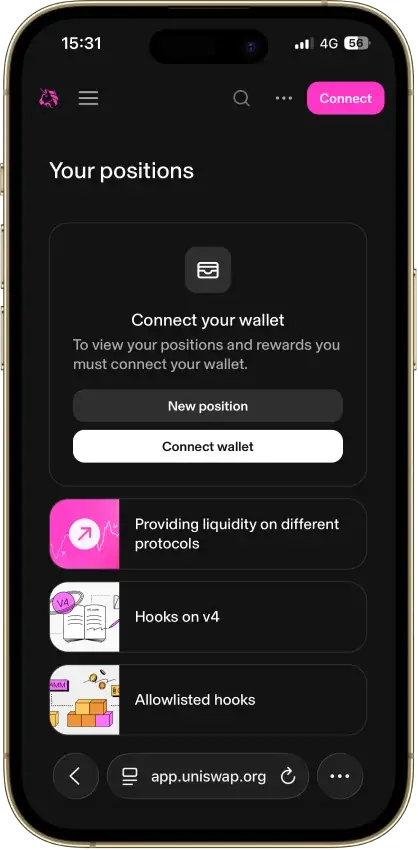
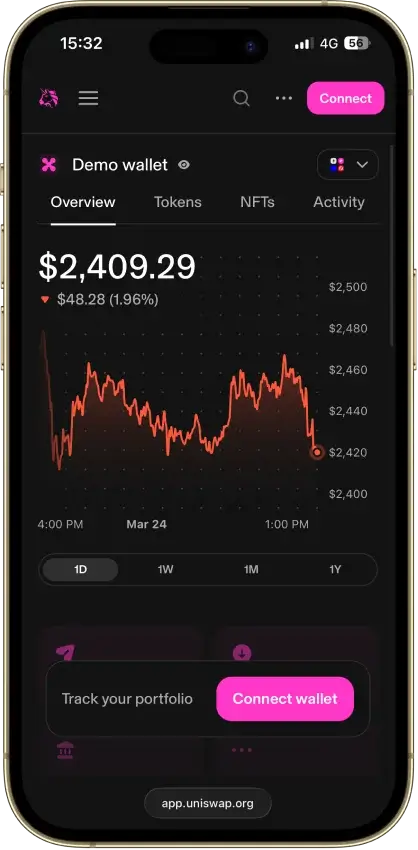
Most decentralized exchanges don’t work like a single “exchange app.” A DEX is usually a web dApp you open in a browser (desktop or mobile) and connect to with a wallet. On mobile, that often means using your wallet’s built-in browser, or switching between your wallet app and a normal browser.
Beginners often expect a dedicated app, but most DEXs are web apps — you access them through a browser or a wallet’s in-app browser.
Here’s how the common setups compare:
- Browser dApp (desktop / mobile browser): best readability and easiest to double-check what you’re signing. On mobile, you may still need to jump to your wallet to approve transactions.
- In-wallet browser (mobile): convenient because wallet connection is usually smoother, but you should be extra careful about opening the right site (phishing risk is higher on mobile).
- Wallet extensions (desktop): fast for frequent use, and a common browser wallet setup for EVM networks, but still requires the same checks (network, token contract, approvals).
Mobile UX expectations (what’s “normal”):
- You’ll typically confirm two actions: an approval (first-time token spend permission) and the swap/trade itself.
- Network fees and confirmations can vary — a swap may “feel slow” simply because the chain is congested.
- Some DEXs are built for a specific ecosystem (EVM vs Solana), so the smoothest experience often comes from using a wallet native to that chain, such as a Solana wallet like Phantom.
Example: First Mobile Swap (In-Wallet Browser)
- Open your wallet app.
- Use the in-app browser to open the DEX from its official URL.
- Connect the wallet and confirm the correct network.
- Approve the token (first time only), then confirm the swap.
- Save the transaction hash and check the result in your wallet.
Wallet connection reliability (how to avoid friction):
- Keep your wallet updated and enable the correct network.
- If a wallet connection fails, try switching between browser dApp ↔ in-wallet browser, or disconnect/reconnect inside the wallet.
- Avoid connecting on public Wi‑Fi and don’t sign anything you don’t understand.
Native Wallet Experience vs Wallet-Agnostic dApp
Some DEX teams offer a more “app-like” flow (for example, a dedicated wallet or a tightly integrated interface). Others are wallet-agnostic and rely on standards like WalletConnect or common chain wallets.
For new users, a simpler setup is usually safer:
- Use one wallet you trust.
- Use the official DEX URL.
- Make your first swap on a liquid pair.
- Review approval prompts (spender + amount) and every signature request.
Decentralized Crypto Derivatives and Margin Trading
Decentralized derivatives (especially perpetual futures, or “perps”) let you trade with leverage directly from a wallet-connected account.
Perp DEXs sit on the crypto margin trading side of the market and function as decentralized derivatives platforms — built for active trading, not casual swaps. That also means liquidation risk: if the market moves against you, your position can be closed automatically, and losses can happen fast.
If you’re a beginner, treat perp DEXs as an advanced tool — start with spot swaps first, and only consider margin or perps once you understand position sizing, liquidation price, and funding rates.
Best DEXs for Perpetuals
Perps platforms like Hyperliquid and dYdX are closer to trading terminals than swap UIs. Before you choose one, compare:
- Custody model: how collateral is held and how withdrawals work.
- Collateral options: what you can deposit as margin (and what you actually plan to use).
- Leverage limits and margin mode: cross vs isolated margin, and how liquidation is calculated.
- Funding rates: how often they update and how they impact your P&L.
- Fees: trading fees plus any hidden costs (spreads, impact, incentives).
- Order types: market/limit, stop-loss, take-profit, reduce-only, post-only.
- Liquidity and execution: whether your size can be filled without heavy slippage.
- Risk controls: liquidation engine behavior, insurance funds, and whether the UI supports clear risk warnings.
The safest way for new users to approach perps is to start with low leverage, use isolated margin, and set a stop-loss. Trade small until you understand how funding and liquidations behave in real conditions.
Security and Scam Checks Before You Connect a Wallet
On a DEX, you’re in control — and that’s the point. It also means there’s usually no support desk that can reverse a bad approval, recover a drained wallet, or undo a swap once it’s confirmed onchain.
Treat every wallet connection and every signature prompt as a security decision.
Beginner Safety Checklist
- Verify the official domain. Use bookmarks, not search ads or random links from social posts.
- Confirm the token contract. Especially for long-tail assets, verify the contract address from a reliable source before you swap.
- Keep approvals minimal. Avoid unlimited allowances when possible, and revoke old approvals you no longer need.
- Read signature requests carefully. If the prompt isn’t clearly a swap/trade/approval you intended, cancel.
- Be cautious with bridges. Cross-chain routes add extra steps, extra fees, and more phishing risk.
- Start with a small test swap. When trying a new DEX, new token, or new chain, test first—then scale.
Extra Wallet Safety Steps
- Use a separate “DeFi wallet” with limited funds, and keep larger holdings in a different wallet.
- Never share your recovery phrase, and don’t store it in screenshots, cloud notes, or email.
- If something feels off (unexpected popups, odd token symbols, unclear prompts), disconnect and re-check the official app URL.
Choose the Right DEX for Your Chain
If you want the simplest path, pick the DEX that matches your chain and stick to liquid pairs.
On EVM networks, most beginners start with Uniswap. On BNB Chain, PancakeSwap is often the cheaper option for straightforward swaps.
On Solana, Jupiter is usually the first stop for routing, while Raydium is more relevant for long-tail tokens. If you mainly swap stablecoin options like USDC, Curve is built for low-slippage stable trades.
If you want leverage, treat it as advanced. Hyperliquid and dYdX are decentralized perp platforms with a steeper learning curve.
For your first onchain trade, stick to a liquid pair and take a second look at every approval and signature.