




Trading
 Market cap rank 1
Fresh market data is needed for a current signal.
$28.83B traded Price signal supported
Trading Activity price-reliability indicator with 100 percent data coverage. Low activity replaces price-derived sentiment because the displayed market price may not be supported by meaningful trading.Target
Peg Health price-stability indicator with 0 percent data coverage. It measures observed market pricing, not reserve quality or redemption safety.30D -13.9% 43.3% below ATH
Price-based current market conditions indicator with 100 percent data coverage. This is not a price forecast.Bitcoin is trading at $71,546.91 as of , reflecting a change over the past 24 hours. BTC’s market capitalization stands at $1.44T, making it the largest cryptocurrency by market cap with 60.2% dominance over the total crypto market.
Over the past seven days, Bitcoin has moved , while the 30-day trend shows a shift. Trading volume over the past 24 hours reached $28.83B, a change from the prior 24 hours.
Bitcoin is currently 43.31% below its all-time high. Its all-time high was $126,198.07 on Oct 6, 2025. The total circulating supply is 20.11M BTC of the maximum 21M, meaning 95.8% of the maximum supply is in circulation.
Using the live USD market price. Additional fiat rates will appear after the daily sync.
$126,198.07 (Oct 6, 2025)
$0.049 (Jul 14, 2010)
20,111,181
20,111,181
21,000,000
Market conditions have changed since this page was prepared. Reload to view current analysis
Price momentum across the scored timeframes weighs on the reading, while logarithmic historical position supports it. Together these inputs produce a price-neutral reading rather than a price forecast.
A complete ATL and ATH range is not available for this asset.
What it measures
The model converts price momentum, logarithmic historical position, milestone recency, and short-term volume confirmation into one 0–100 score. Missing evidence lowers data coverage instead of counting as neutral.
Configured model weights
When inputs are missing, these configured weights are renormalized across the available evidence; data coverage records what is missing.
How to read it
50 is the neutral midpoint. Scores of 60 or higher are bullish, 40 or lower are bearish, and 41–59 are neutral.
| Pair | Liquidity shows how easily a token can be bought or sold in a given market pair without materially moving its price. On centralized exchanges, it appears as a Liquidity Score. On decentralized exchanges, it reflects the size of the pair's liquidity pool. | Market details | ||||
|---|---|---|---|---|---|---|
| 1 | BTC/USDT | $71,570.73 | Vol (24h) $1.25B | 1,082 | ||
| 2 | BTC/USDC | $71,543.45 | Vol (24h) $383.87M | 964 | ||
| 3 | BTC/USD | $71,529.56 | Vol (24h) $722.2M | 977 | ||
| 4 | BTC/USDT | $71,546.54 | Vol (24h) $661.56M | 930 | ||
| 5 | BTC/USDT | $71,488.07 | Vol (24h) $596.42M | 893 | ||
| 6 | BTC/USDT | $71,708.95 | Vol (24h) $248.33M | 903 | ||
| 7 | BTC/USDT | $71,546.74 | Vol (24h) $774.78M | 976 | ||
| 8 | BTC/USDT | $71,537.95 | Vol (24h) $335.91M | 871 | ||
| 9 | BTC/USDT | $71,484.57 | Vol (24h) $194.01M | 837 | ||
| 10 | BTC/USDT | $71,472.41 Best price | Vol (24h) $204.45M | 831 |
CryptoSlate may receive a commission when you click trading links on this page and complete an action with a third party. This does not influence our editorial independence or coverage. Read disclosure
Bitcoin (BTC) is the world’s first and largest cryptocurrency by market capitalization. It operates on a decentralized peer-to-peer network secured by cryptographic proof rather than trust in a central authority. Bitcoin transactions are recorded on a public ledger called the blockchain, which is maintained by a global network of miners who validate and confirm transactions in exchange for block rewards.
Created in 2009 by the pseudonymous Satoshi Nakamoto, Bitcoin introduced a breakthrough solution to the double-spending problem in digital currencies without requiring a trusted third party. Its supply is permanently capped at 21 million coins — a hard limit enforced by the protocol’s code — making it one of the scarcest digital assets in existence.
Bitcoin serves multiple roles in the modern financial system: a medium of exchange for peer-to-peer payments, a store of value often compared to digital gold, and an investment asset traded on hundreds of exchanges worldwide. It has been adopted as legal tender in El Salvador, and major financial institutions including BlackRock, Fidelity, and ARK Invest now offer Bitcoin investment products through spot ETFs approved in January 2024.
Bitcoin is a decentralized digital currency that allows people to send and receive value directly over the internet without banks, payment processors, or any other intermediary. Unlike traditional currencies issued by governments, known as fiat money, Bitcoin is not controlled by any single entity. Instead, it runs on an open-source protocol maintained by thousands of computers worldwide.
At its core, Bitcoin uses a technology called blockchain, a distributed ledger where every transaction is permanently recorded and publicly verifiable. When you send Bitcoin to someone, that transaction is broadcast to the network, verified by miners through a process called proof of work, and then added to a block of transactions. Once confirmed, the transaction is irreversible.
Each Bitcoin is divisible into 100 million smaller units called satoshis (or “sats”), making it possible to buy and transact with very small amounts. You don’t need to buy a whole Bitcoin, most people own a fraction. As of today, 1 BTC equals approximately $71,546.91, and 1 satoshi equals approximately $0.000715.
Bitcoin’s total supply is capped at 21 million coins, a limit hardcoded into the protocol. This fixed supply is one of the key reasons Bitcoin is often compared to gold, it cannot be inflated or debased by central banks. As of today, over 20.11M BTC have already been mined, with the remaining supply released gradually through mining rewards that halve approximately every four years.
Bitcoin was created by an individual or group using the pseudonym Satoshi Nakamoto. In October 2008, Nakamoto published a whitepaper titled “Bitcoin: A Peer-to-Peer Electronic Cash System” that described a method for electronic transactions without relying on trust. The Bitcoin network launched on January 3, 2009, when Nakamoto mined the first block, known as the genesis block, which contained the now-famous embedded headline from The Times: “Chancellor on brink of second bailout for banks.”
Nakamoto actively developed the software and communicated with early contributors like Hal Finney and Gavin Andresen until mid-2010, then gradually withdrew from public involvement. Finney received the first-ever Bitcoin transaction, 10 BTC sent by Nakamoto on January 12, 2009, and remained an active developer until his death in 2014.
Despite numerous investigations and claims over the years, Satoshi Nakamoto’s true identity has never been conclusively established. The wallet addresses associated with Nakamoto hold an estimated 1 million BTC, none of which have ever been moved.
Bitcoin operates on a proof-of-work blockchain, a decentralized network of computers called nodes that collectively maintain a shared ledger of all transactions ever made.
When you send Bitcoin, your transaction is broadcast to the network and placed in a pool of unconfirmed transactions, the mempool. Miners, specialized computers running the Bitcoin software, compete to bundle pending transactions into a block by solving a computationally intensive cryptographic puzzle. The first miner to solve the puzzle earns the right to add the block to the chain and receives a block reward, currently 3.125 BTC, plus any transaction fees included by senders.
This process, known as proof of work, ensures that no single party can alter the transaction history without redoing the computational work of every subsequent block, a task that becomes exponentially more difficult as the chain grows. Bitcoin’s current network hashrate exceeds 1.1 ZH/s, making it the most computationally secure network in existence.
New blocks are added approximately every 10 minutes, and each block can contain several thousand transactions. Once a transaction is included in a block and several subsequent blocks are added on top of it, typically 6 confirmations or about one hour, it is considered final and irreversible.
Bitcoin mining is the process of using specialized computer hardware to validate transactions and secure the Bitcoin network. Miners compete to solve a cryptographic hash puzzle, and the winner adds the next block of transactions to the blockchain and earns a reward.
In Bitcoin’s early years, mining was possible with regular CPUs and GPUs. Today, the network’s difficulty has increased to the point where mining requires ASIC hardware, purpose-built machines designed solely for Bitcoin mining. The largest mining operations are run by publicly traded companies like Marathon Digital, Riot Platforms, and Core Scientific.
Solo miners can still participate, though the odds of successfully mining a block individually are extremely low given the current hashrate. Most individual miners join mining pools, where participants combine their computing power and share rewards proportionally.
The current block reward is 3.125 BTC, which at today’s price is worth approximately $223,584.09. This reward is the primary incentive that secures the network, supplemented by transaction fees paid by users. As the block reward decreases through future halvings, transaction fees are expected to become a larger share of miner revenue.
The Bitcoin halving is a programmed event that cuts the mining block reward in half approximately every 210,000 blocks, roughly every four years. This mechanism is built into Bitcoin’s protocol to control the rate at which new BTC enters circulation, gradually enforcing the 21 million supply cap.
| Halving | Date | Block | Reward Before | Reward After |
|---|---|---|---|---|
| 1st | Nov 28, 2012 | 210,000 | 50 BTC | 25 BTC |
| 2nd | Jul 9, 2016 | 420,000 | 25 BTC | 12.5 BTC |
| 3rd | May 11, 2020 | 630,000 | 12.5 BTC | 6.25 BTC |
| 4th | Apr 20, 2024 | 840,000 | 6.25 BTC | 3.125 BTC |
| 5th (est.) | ~2028 | 1,050,000 | 3.125 BTC | 1.5625 BTC |
The most recent halving occurred in April 2024, reducing the block reward from 6.25 BTC to 3.125 BTC. Historically, each halving has preceded a significant bull run in Bitcoin’s price within 12-18 months, as reduced supply issuance meets sustained or growing demand. Bitcoin reached a new all-time high of $126,198 in October 2025, roughly 18 months after the fourth halving, consistent with the pattern observed in prior cycles.
However, past performance does not guarantee future results, and each successive halving reduces supply issuance by a smaller absolute amount, which may dampen the effect over time. The next halving is expected around 2028.
Bitcoin’s all-time high price was $126,198.07, reached on Oct 6, 2025. At that peak, Bitcoin’s total market capitalization briefly exceeded $2.5 trillion, making it one of the most valuable assets in the world.
Bitcoin is currently trading at $71,546.91, approximately 43.31% below its all-time high below its all-time high.
| Milestone | Date | Context |
|---|---|---|
| $1 | Feb 2011 | First parity with the US dollar |
| $1,000 | Nov 2013 | First major retail cycle |
| $20,000 | Dec 2017 | ICO boom peak |
| $69,000 | Nov 2021 | Institutional adoption cycle |
| $100,000 | Dec 2024 | Post-halving rally, spot ETF inflows |
| $126,198 | Oct 2025 | Current all-time high |
Bitcoin’s all-time low was $0.049, recorded on July 14, 2010, representing a gain of over 140 million percent from its lowest recorded price to its highest.
A Bitcoin ETF (Exchange-Traded Fund) is a regulated financial product that tracks the price of Bitcoin and trades on traditional stock exchanges like the NYSE and Nasdaq. Bitcoin ETFs allow investors to gain exposure to BTC through their existing brokerage accounts without needing to buy, store, or manage Bitcoin directly.
In January 2024, the SEC approved the first spot Bitcoin ETFs in the United States, marking a watershed moment for institutional adoption. The largest spot Bitcoin ETFs by assets under management include:
Spot Bitcoin ETFs hold actual Bitcoin in custody, meaning their price closely tracks the real-time BTC market price. This differs from futures-based Bitcoin ETFs (like ProShares BITO), which hold Bitcoin futures contracts and can deviate from the spot price over time.
Within their first year, spot Bitcoin ETFs attracted tens of billions of dollars in net inflows, significantly expanding the pool of institutional and retail capital with access to Bitcoin.
For the latest ETF fund flow data and news, see our Bitcoin ETF coverage.
Bitcoin can be purchased through cryptocurrency exchanges, brokerage apps, Bitcoin ATMs, and peer-to-peer platforms. Here’s an overview of the most common methods:
After purchasing, you can store your Bitcoin on the exchange or transfer it to a personal Bitcoin wallet for greater security and self-custody.
Bitcoin is stored using wallets, software or hardware tools that manage your private keys, which are required to authorize transactions. Your Bitcoin doesn’t physically live “in” a wallet; it exists on the blockchain. The wallet simply holds the cryptographic keys that prove ownership.
There are several types of Bitcoin wallets:
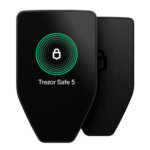
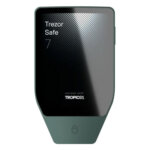
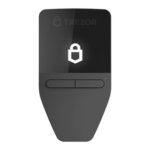
For most users, a combination works best, a hot wallet for day-to-day transactions and a cold wallet for long-term holdings. For our full comparison of Bitcoin wallets by type, security, and features, see Best Bitcoin Wallets.
Bitcoin has a fixed maximum supply of 21 million coins, a hard cap written into its protocol that cannot be changed by any individual, company, or government. As of Nov 12, 2026, approximately 20.11M BTC have already been mined, leaving fewer than one million left to enter circulation.
This built-in scarcity is central to Bitcoin’s value proposition. Unlike fiat currencies, where central banks can increase the money supply at will, no one can create additional Bitcoin beyond the 21 million limit. The final Bitcoin is projected to be mined around the year 2140, though the vast majority of supply will be in circulation well before then, with over 99% expected to be mined by approximately 2035.
It’s worth noting that a significant portion of the existing supply is estimated to be permanently lost. Research suggests that between 3 and 4 million BTC are inaccessible due to lost private keys, forgotten wallets, and the presumed holdings of Satoshi Nakamoto, roughly 1 million BTC that have never moved. This effectively reduces the circulating supply below what the blockchain reports.
Bitcoin and Ethereum are the two largest cryptocurrencies, but they serve fundamentally different purposes.
| Bitcoin (BTC) | Ethereum (ETH) | |
|---|---|---|
| Primary purpose | Store of value, digital gold | Programmable smart contracts |
| Launch | January 2009 | July 2015 |
| Creator | Satoshi Nakamoto | Vitalik Buterin |
| Consensus | Proof of Work (PoW) | Proof of Stake (PoS, since Sep 2022) |
| Max supply | 21 million (fixed) | No hard cap |
| Block time | ~10 minutes | ~12 seconds |
| Primary use case | Payments, store of value, reserve asset | DeFi, NFTs, dApps, smart contracts |
| Market cap | $1.44T | $245.7B |
Bitcoin is designed to do one thing well, be sound, censorship-resistant money with a predictable and finite supply. Ethereum is designed to be a general-purpose computation platform where developers build decentralized applications.
Many investors hold both as complementary assets: Bitcoin for long-term value storage and a hedge against monetary inflation, and Ethereum for exposure to the broader decentralized application ecosystem including DeFi, NFTs, and layer-2 scaling networks.
Satoshi Nakamoto publishes the Bitcoin whitepaper
Genesis block mined on January 3; first BTC transaction (Nakamoto → Hal Finney)
First commercial Bitcoin transaction, 10,000 BTC for two pizzas (May 22, now “Bitcoin Pizza Day”); BTC reaches $0.08
Bitcoin reaches $1 for the first time; first major exchanges (Mt. Gox) gain traction
BTC crosses $1,000; US Senate holds first hearings on cryptocurrency
Mt. Gox exchange collapses, losing 850,000 BTC; IRS classifies Bitcoin as property
Bitcoin reaches ~$20,000 during the ICO boom; CME and CBOE launch Bitcoin futures
Third halving reduces block reward to 6.25 BTC; MicroStrategy begins corporate Bitcoin treasury strategy
Bitcoin reaches $69,000 in November; El Salvador adopts BTC as legal tender; first US Bitcoin futures ETF (BITO) launches
Fourth halving in April reduces reward to 3.125 BTC; SEC approves spot Bitcoin ETFs in January; BTC crosses $100,000 in December
Bitcoin reaches all-time high of $126,198 in October
As of Nov 12, 2026, Bitcoin trades at $71,546.91.
Bitcoin has a market capitalization of $1,438,892,849,837.70.
Bitcoin has a 24-hour trading volume of $28,826,836,012.93.
Bitcoin reached an all-time high of $126,198.07, recorded on Oct 6, 2025. It is currently 43.31% below its all-time high.
Bitcoin recorded an all-time low of $0.049, recorded on Jul 14, 2010. It is currently 147.07 million percent above its all-time low.