


 Released in 2023
- Tied for the cheapest hardware wallet we review
- Bitcoin-only firmware option
- FIDO2 authentication for compatible services
Trezor Safe 3 Overview
- Crypto Wallet Name
- Trezor Safe 3
- Release Date
- 2023
- Wallet Type
- Hardware wallet
- Custodial Status
- Non-custodial
- Built-in Swaps
- Yes
- Open-source
- Partially open-source
- Fiat On-ramp
- Yes
Additional details
- Supported Blockchains
- Bitcoin, Ethereum, BNB Smart Chain, Avalanche, Arbitrum, Base, Polygon, Optimism, Solana
- Token Standards
- ERC-20, BEP-20, SPL
- Platforms
- Android, Desktop (Windows), Desktop (macOS), Desktop (Linux)
- Hardware Wallet Support
- No
- Staking Support
- Limited
- Hardware Connection Methods
- USB
Trezor Safe 3 Screenshots
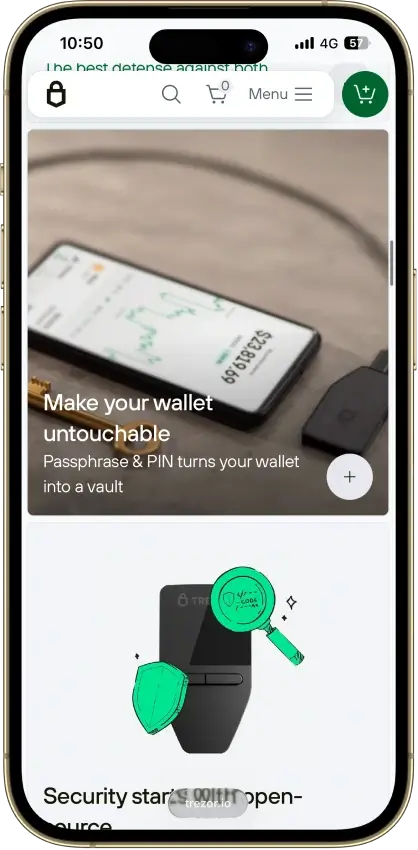
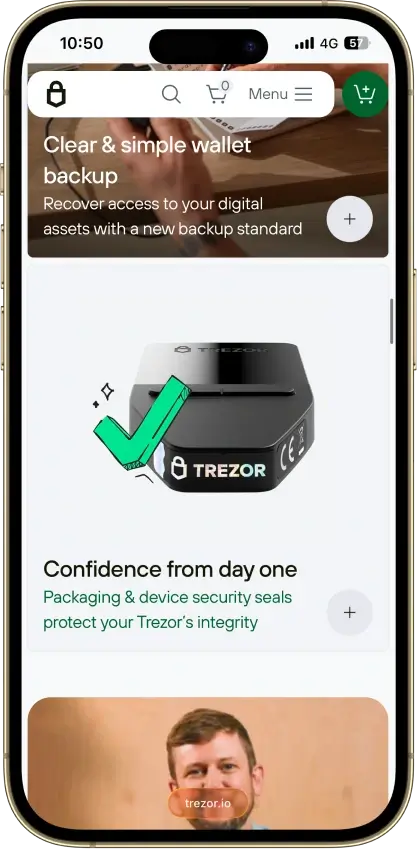
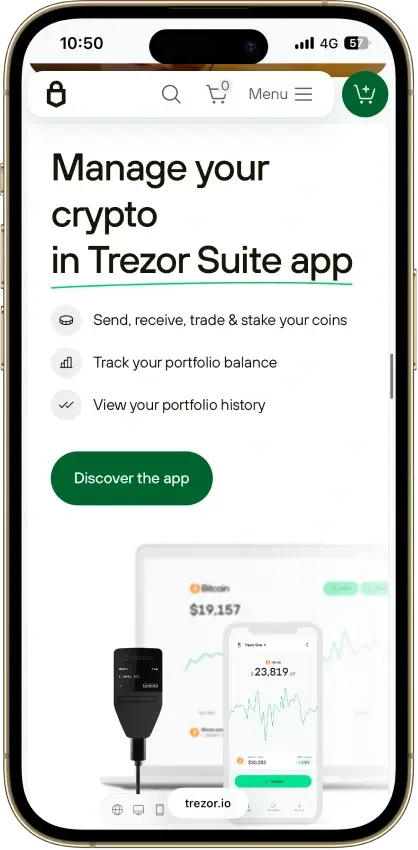
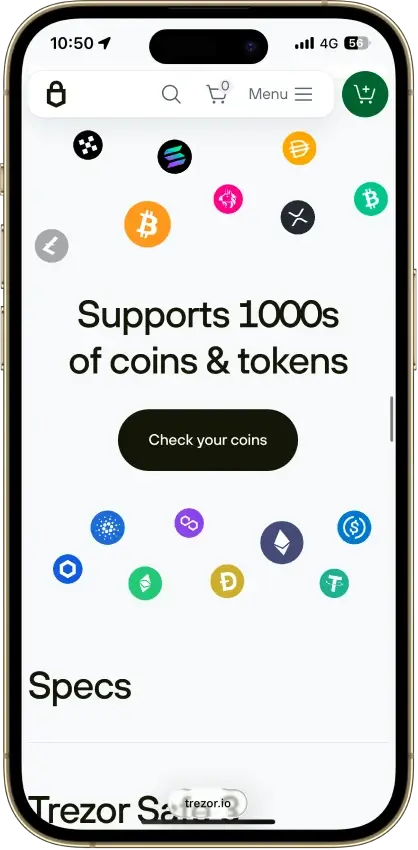
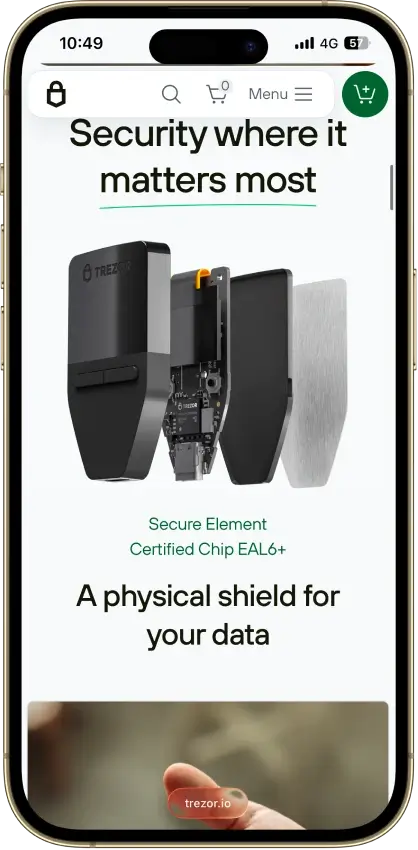
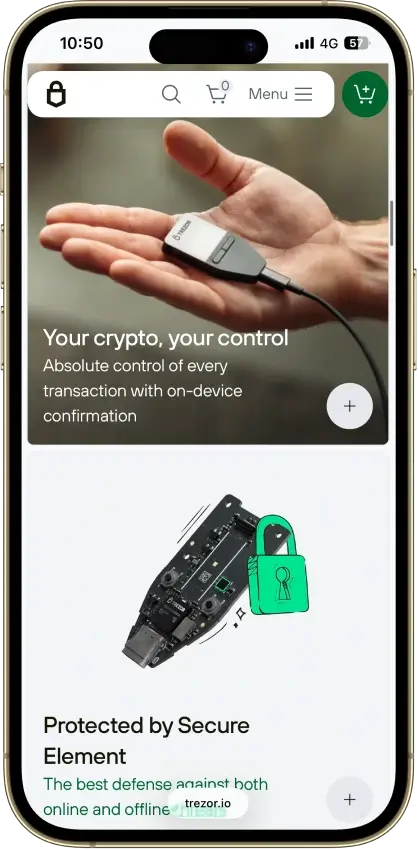
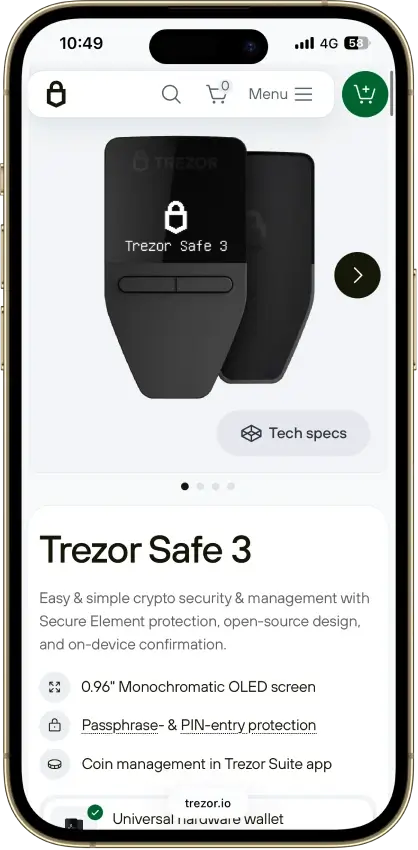
Screenshot 1 of 8
Trezor Safe 3 Pros and Cons
Pros
- USB power needs no battery maintenance
- Secure element guards the PIN
- Recovery words entered on the device
- SLIP39 supports distributed backup shares
- Core firmware can be inspected and rebuilt
Cons
- Cannot sign with an iPhone
- Small screen and repeated button navigation
- 2025 research bypassed its authenticity checks
- Secure element software is closed-source
- Shipping-data exposure raises phishing risk
What Trezor Safe 3 Is And Who Makes It
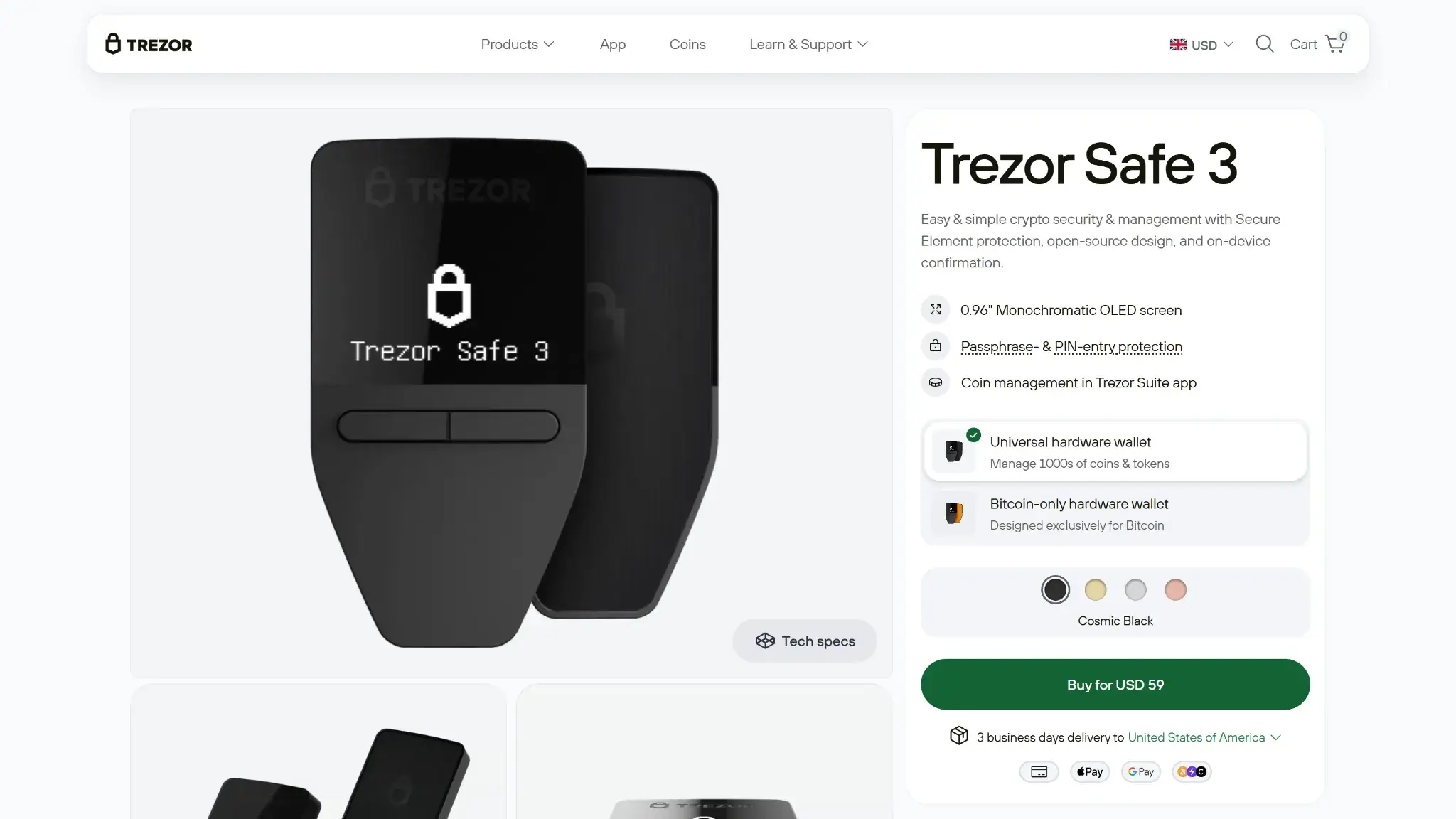
| Key Fact | Detail |
|---|---|
| Wallet type | USB-C hardware wallet, powered by its host |
| Custody | Self-custody, with encrypted keys on the main chip |
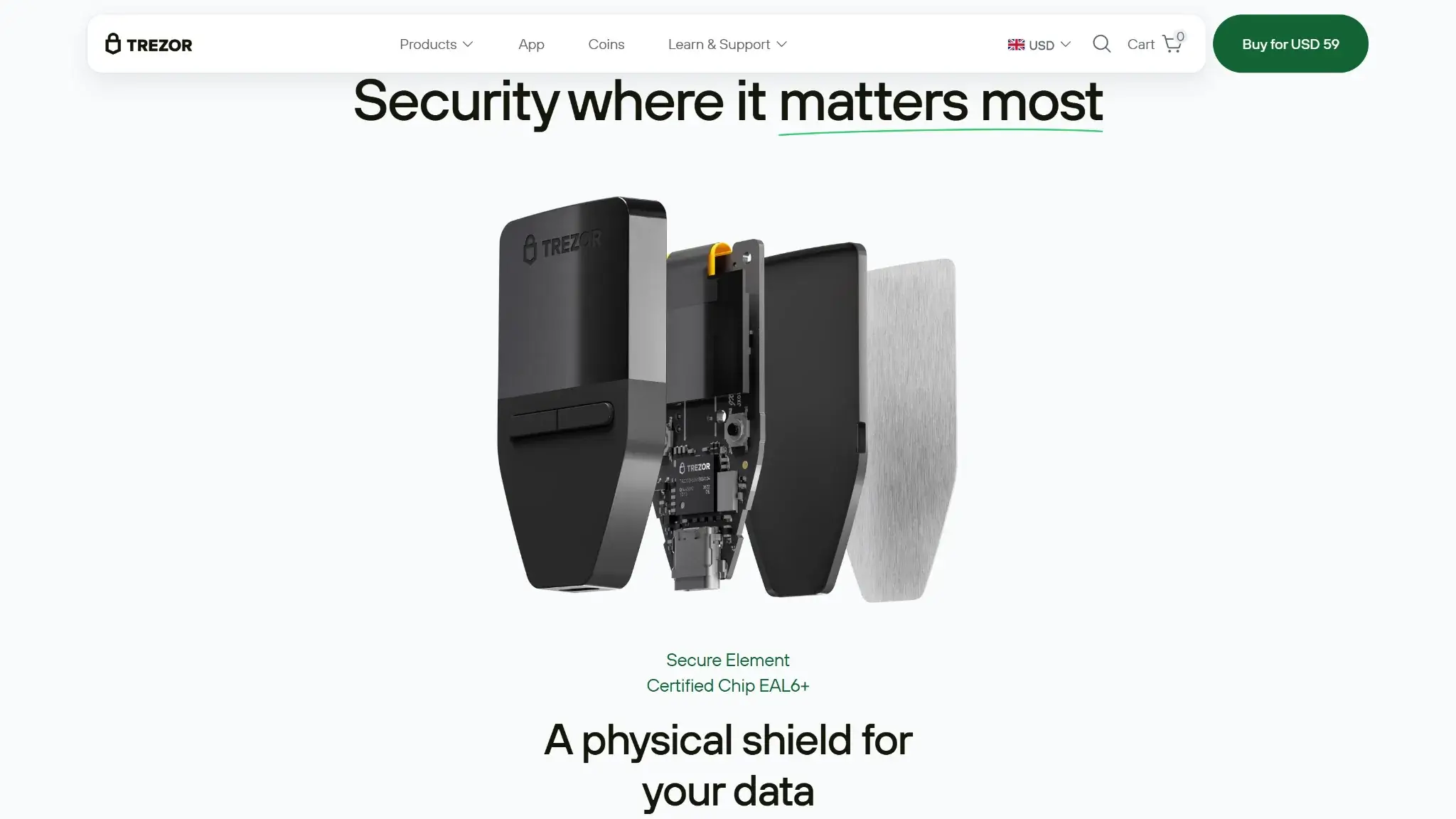
| Security component | OPTIGA Trust M V3 secure element, CC EAL6+ |
| Approval interface | Two buttons and a 0.96-inch OLED, 128 × 64 pixels |
| Software | GPLv3 core firmware, separate Suite reference-source license |
| Example assets | Bitcoin, Ethereum, Solana, Cardano and XRP |
| Recovery | 12/18/24-word BIP39 or 20-word SLIP39 single-share and multi-share backups |
| Fiat purchases and swaps | Integrated third-party providers, with variable costs |
| Staking | ETH, SOL and ADA options with different risks |
| Device price | Cosmic Black listed at $59 USD on September 9, 2026 |
| Company | Trezor Company s.r.o., Prague, Czech Republic |
| US availability | US sales, with shipping and provider eligibility checked separately |
This assessment uses product documentation and published security research. It does not include a hands-on device test or a completed transaction.
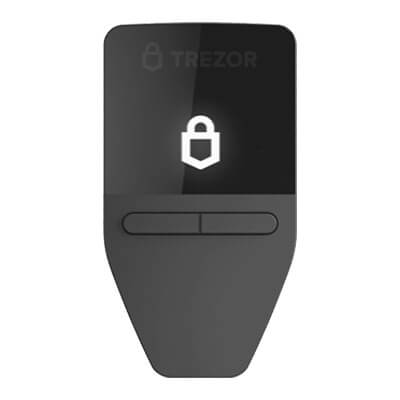
The Trezor Safe 3 hardware wallet connects to Trezor Suite or a compatible wallet app over USB-C. It has no battery or Bluetooth. The included cable has USB-C connectors at both ends, so a computer with only USB-A ports needs a compatible cable or adapter.
Trezor Company s.r.o. is registered in Prague. Buyers can choose standard firmware for multiple assets or Bitcoin-only firmware. The latter does not provide the Ethereum and Solana features covered here.
At 59 × 32 × 7.4 mm and 14 g, the device is small enough to store separately from a computer without taking much space. It is not waterproof. Treat the backup as a separate recovery item, since water damage or a failed button can make the hardware unusable.
Security And Custody
What The Secure Element Protects
The OPTIGA Trust M V3 stores a secret used with your PIN to protect encrypted keys on the main microcontroller. Correct PIN entry releases that secret. After 16 incorrect attempts, the device resets and recovery requires the backup.
Signing happens on the main chip. The secure element's CC EAL6+ certification applies to that component, not the entire wallet or every connected service. During normal operation, the host receives signatures without needing the private keys. A copied recovery backup can bypass the original device's PIN, which is why its storage deserves as much attention as the hardware.
Safe 3 also works as a FIDO2 authentication device for compatible services.
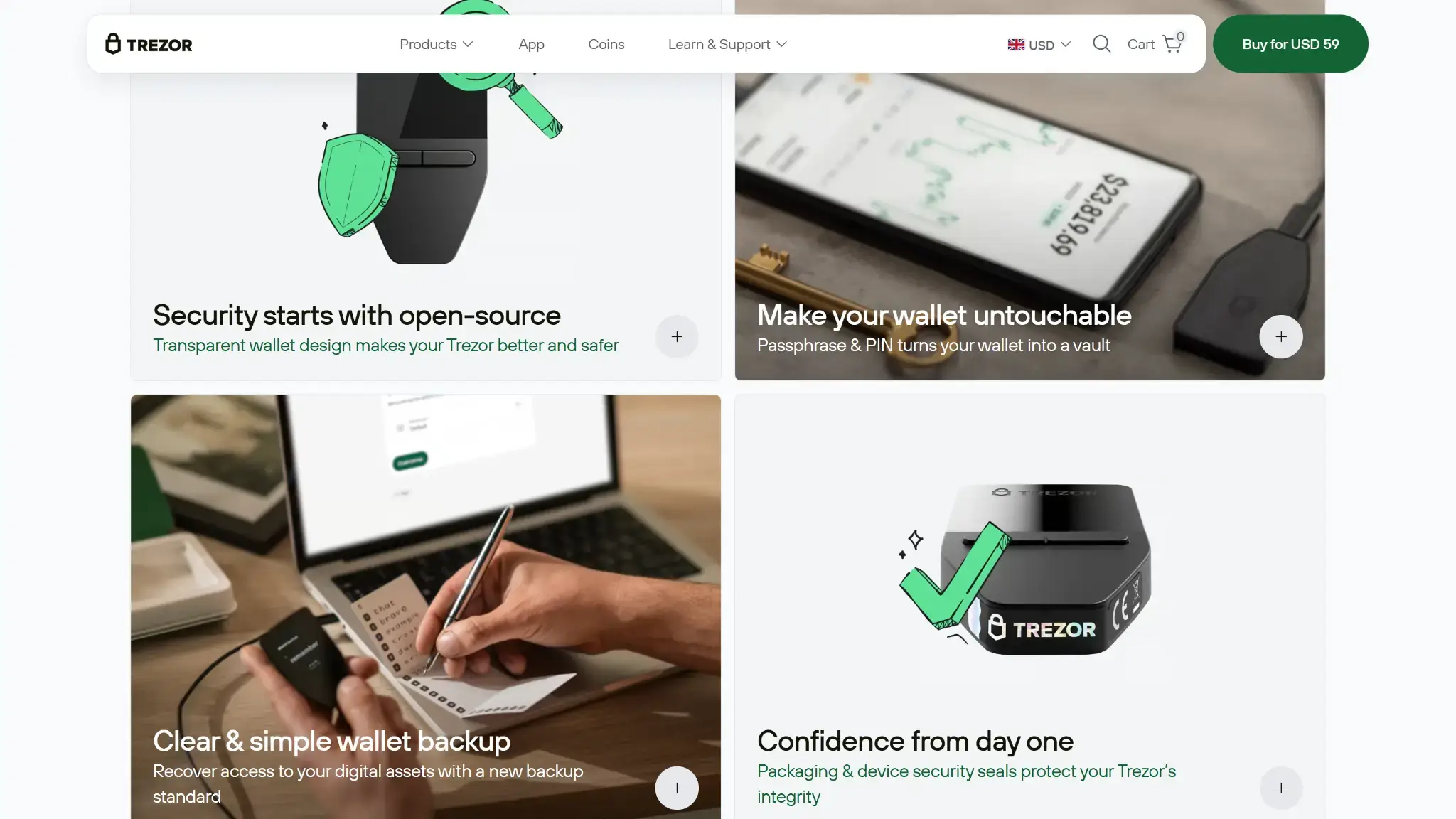
The 2025 Finding And Later Updates
In March 2025, Ledger's Donjon researchers demonstrated firmware tampering on a Safe 3 with an STM32F429 microcontroller. Physical modification let them bypass device-authenticity and firmware-hash checks. Donjon described how malicious firmware could manipulate cryptographic randomness and enable later theft. Ledger is a competing wallet manufacturer, so this is attributed research, not a neutral product comparison.
Trezor acknowledged the bypasses and said the test did not extract a private key or PIN. Its response described additional protections, including checks on wallet-generation randomness and firmware revisions. Malicious signing firmware can also endanger a passphrase-protected wallet.
Safe 3 also exists in two hardware revisions, T2B1 and T3B1. Trezor identifies them separately in its firmware build instructions. The disclosed attack tested an STM32F429 unit. Check a particular device's revision before applying those hardware findings to it.
The official changelogs for both revisions include Ethereum data-confirmation and multisignature fixes in 2.11.0, followed by Solana and Bitcoin signing and confirmation fixes in 2.12.2. Neither a completed update nor an authenticity check guarantees protection against every attack. Keeping firmware current is still necessary to receive these fixes. Install the official version offered for your device.
Open Firmware And Separate Licenses
Safe 3's core firmware is GPLv3-licensed. Other parts of the firmware repository use different licenses, and Trezor provides instructions for reproducing and checking builds. The OPTIGA chip contains closed-source software, as Donjon's hardware analysis explains.
Trezor Suite's repository uses the Trezor Reference Source License. That license permits limited reference use and excludes redistribution outside the user's company. The core firmware and companion app therefore have different conditions for inspecting and reusing their code.
Trezor operates a bug-bounty program covering its devices, software and infrastructure. A bounty program is not a certification that the latest version has no defects. Use the public disclosures to check individual findings and the versions they affect.
Customer Data And Phishing History
Customer information has been exposed through services Trezor uses. In April 2022, the Mailchimp breach enabled phishing aimed at Trezor users. In January 2024, unauthorized access to a third-party support portal prompted Trezor to warn up to 66,000 contacts about possible exposure of names and email addresses.
In June 2025, attackers abused support-ticket auto-replies to send phishing subjects from Trezor's legitimate support address. A familiar sender address was not enough to establish that a message was safe.
A breach at shipping provider ShipMonk exposed order and contact data. Trezor's September 4, 2026 update added approximately 67,000 US customers with older orders to the group disclosed in August. Trezor said the provider still held order records that Trezor believed had been deleted. Affected information included shipping addresses and other contact details, creating risks of targeted scams and physical threats. Trezor said its own systems and devices were not compromised in this incident and notified affected customers.
On September 9, 2026, Trezor warned that its email provider had been breached. A phishing email posed as an STM32 entropy-vulnerability alert. Trezor told recipients not to open the phishing email's links and said it was investigating the attackers' access to Trezor's legitimate domain.
These incidents concern customer data and communications, not demonstrated extraction of a Safe 3's keys. A phisher can use stolen contact details to make an unsolicited recovery request look familiar. Obtain software through Trezor's official website, and never give backup words to someone claiming to provide support.
Trezor Safe 3 Supported Coins
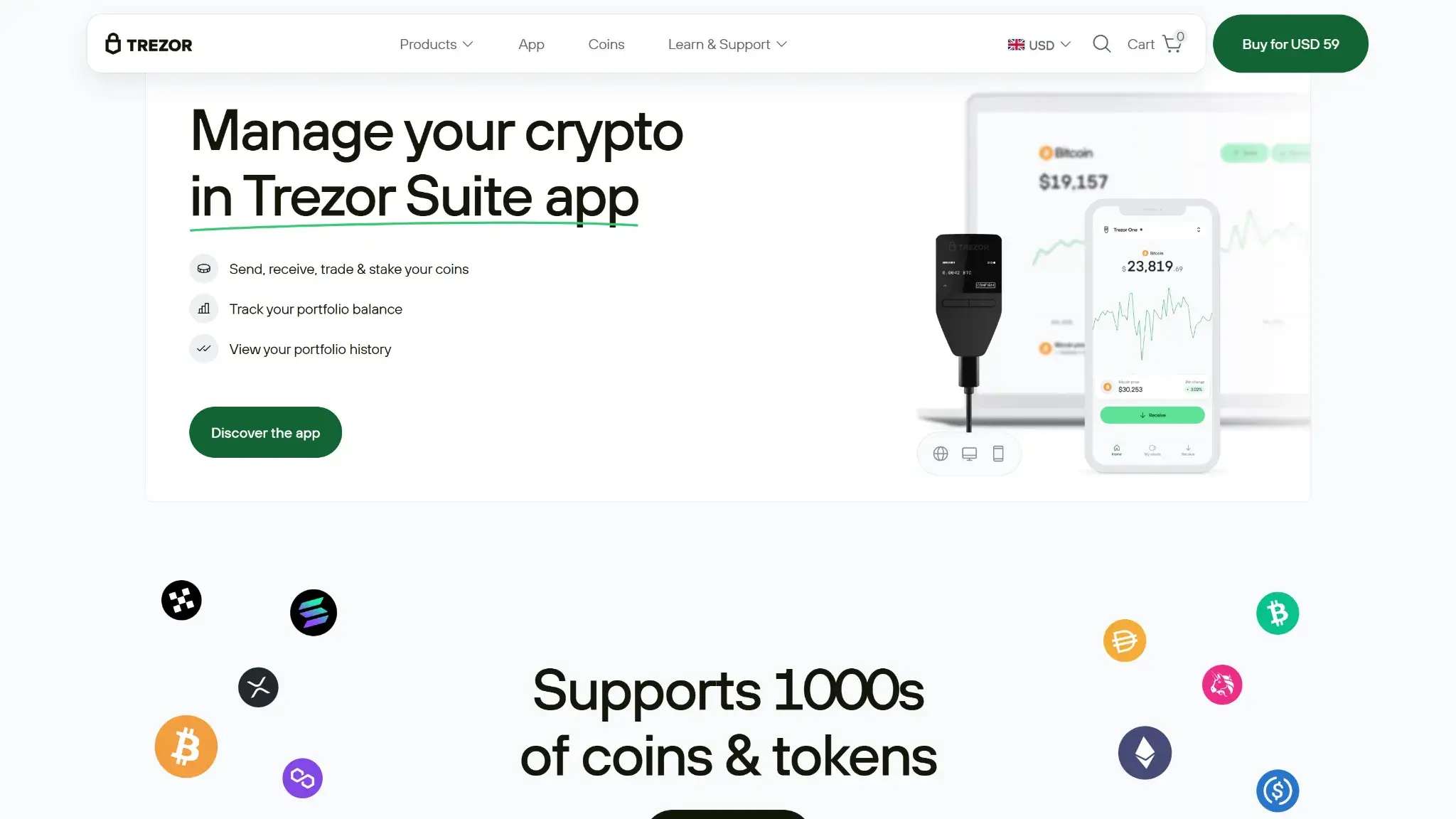
Safe 3 supports several networks, but the asset, firmware and wallet app must all match. The same token ticker can appear on more than one chain. Check the token's network against the account you are funding.
| Asset Or Use | Where To Manage It | Important Limit |
|---|---|---|
| BTC | Trezor Suite | Available with standard or Bitcoin-only firmware |
| ETH and ERC-20 tokens | Trezor Suite | Use the correct Ethereum account and token contract |
| SOL | Trezor Suite | Standard firmware required |
| ADA and XRP | Trezor Suite | Standard firmware required |
| LTC, DOGE, BCH, ZEC and ETC | Trezor Suite | These are separate networks, not interchangeable deposit routes |
| Assets requiring another app | Compatible third-party wallet | Check Safe 3 support and the intended operation before funding |
Trezor's support directory separates assets available in Suite from those needing another wallet app. Its generic guide gives Monero and Tezos as examples of third-party access. Use the current asset entry to confirm the model and app instead of assuming that a hardware-supported asset has a native Suite account.
Suite removed Dash, Bitcoin Gold, DigiByte, Namecoin and Vertcoin support in February 2025, so older instructions can mislead existing holders. Check the current directory for the wallet app your coin needs.
Setup And Recovery
Starting With The Device
Trezor's onboarding guide covers desktop and Android setup. A new device ships without installed firmware.
- Get Trezor Suite through the official website and connect the Safe 3 by USB.
- Inspect the device. Ask Trezor support about unexpected tampering or preinstalled firmware before depositing.
- Follow Suite's firmware installation and device-authentication prompts.
- Create a wallet, choose its backup format and privately record the words shown on the device.
- Complete the backup check and set your PIN using the buttons.
The two-button interface also handles recovery-word selection and on-device passphrase entry. It avoids typing those secrets into a website, but entering long text requires repeated navigation. Check receive addresses and outgoing transaction details on the Safe 3 itself, not only in the companion app.
| Platform | Safe 3 Use |
|---|---|
| Computer | Suite manages the USB-connected device and signing |
| Android | USB connection supports setup and signing |
| iPhone | Portfolio tracking and receiving features, no Safe 3 signing connection |
An iPhone's USB-C port does not remove the Safe 3 compatibility limit. People who manage all their crypto from an iPhone should choose hardware that explicitly supports signing with it.
Backup Formats And Lost Access
Safe 3 supports 12-, 18- or 24-word BIP39 backups, plus 20-word SLIP39 backups. A 20-word backup is not BIP39. Newer devices default to SLIP39, while older units may initially offer 12 words.
SLIP39 can use one recovery share or a threshold of several shares. With a two-of-three arrangement, any two shares from that set can recover the wallet. Losing too many shares can leave you unable to recover after device loss. Older backups remain valid after you create a new SLIP39 backup. An old single-share backup therefore still provides a recovery route.
Suite does not convert an existing BIP39 wallet to SLIP39. A command-line tool can perform that conversion, but Trezor discourages it. Trezor recommends creating a new SLIP39 wallet and transferring funds.
For SLIP39 backups created before June 2024, Trezor says changing to a new set of shares requires creating a new wallet and transferring funds. Confirm your existing format before planning a change, and check a replacement backup before disposing of anything.
| Loss Scenario | What You Need |
|---|---|
| Broken or missing device | Correct backup, a compatible replacement and any enabled passphrase |
| Forgotten PIN | Verified backup before wiping and recovering the device |
| Forgotten passphrase | The exact passphrase, which Trezor cannot reset |
| Missing backup and unusable device | No support-account recovery route |
A passphrase creates a separate wallet when combined with the backup. Different capitalization or spacing opens a different wallet. Recovering in another app also requires support for the backup format, assets and account derivation paths. For a 20-word Safe 3 backup, confirm SLIP39 support specifically before attempting recovery.
Swaps, Staking And dApps
Trading Through Suite
Suite offers purchases through providers such as Banxa and MoonPay. Centralized swap options include Changelly and ChangeNOW, while decentralized routes include 1inch and LI.FI. Available offers depend on the asset, location and payment method.
A Changelly or ChangeNOW swap sends your coins to the provider for processing. Identity checks may be required, including during a refund. Suite's decentralized swap routes involve contracts and token approvals. Even when signed on Safe 3, these trades expose you to the chosen provider or contract.
Staking Choices
| Asset | Suite Staking Arrangement | Costs And Access |
|---|---|---|
| ETH | Everstake contracts and infrastructure | 10% commission on rewards, network costs and withdrawal processing |
| SOL | Delegation to Everstake | Trezor quotes a 7% commission applied by Everstake before rewards are distributed, with network costs and unstaking cooldown |
| ADA | Stake-pool delegation | Refundable 2 ADA registration deposit plus network fees, delegated ADA remains spendable |
ETH committed to Everstake's staking system depends on its contracts and infrastructure, even with the signing key on a Safe 3. Trezor warns that Everstake ceasing operations could prevent recovery of staked funds.
SOL returns vary with validator performance, and Everstake's quoted 7% commission reduces rewards before distribution. Check the current reward breakdown and service eligibility before delegating. The commission figure is separate from any estimated annual return.
ADA holders who used the former 5binaries integration should follow Suite's provider-migration prompt, as Trezor switched to Everstake in November 2025.
Reading Contract Approvals
Trezor's September 7, 2026 Clear Signing announcement includes Safe 3 with standard firmware. After a firmware update, supported Ethereum and EVM contract actions can appear as readable details on the hardware through Suite, WalletConnect or Trezor Connect.
Coverage depends on a supported ERC-7730 contract descriptor. Unsupported contracts still produce the blind-signing warning. Read the requested permissions on Safe 3 and decide whether to grant them. Contract and investment risks remain even when the approval details are readable.
Trezor Safe 3 Price And Ongoing Costs
The official Cosmic Black listing priced the device at $59 USD on September 9, 2026. Check your selected variant and the checkout total for delivery, taxes and any import charges. US delivery is available, but the store's destination selector determines where an order can be sent.
Suite is available to download without buying a subscription. Sending crypto still incurs network fees. Trading adds provider pricing and exchange-rate differences, while staking has the costs described above.
Trezor does not offer one fixed fee covering every Suite trade. Compare the amount paid with the final amount received, as well as separately presented network costs. For a DEX route, inspect the approval and slippage tolerance too. Slippage tolerance limits acceptable price movement and is not itself a fixed service fee.
Who Should Choose Safe 3?
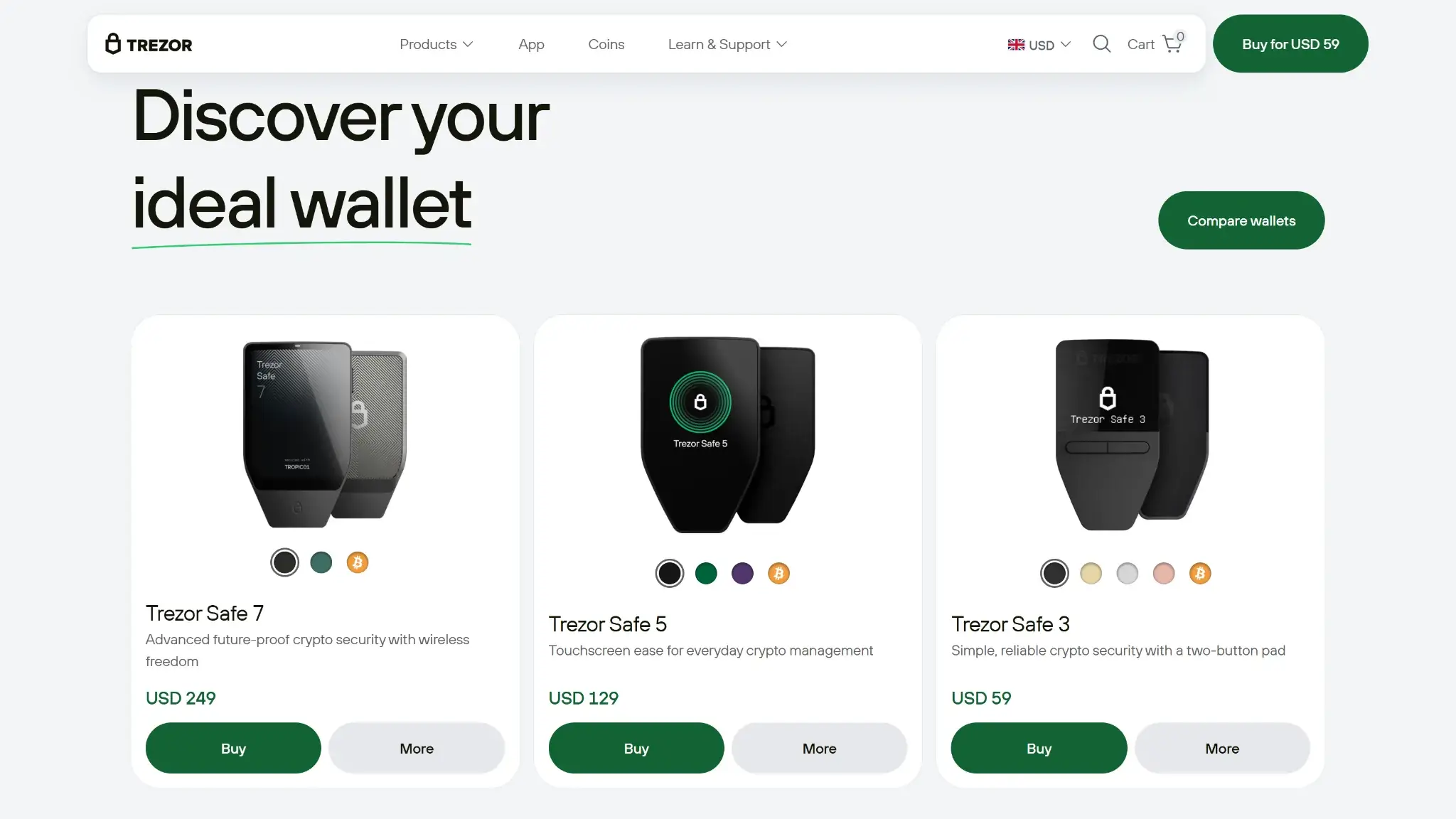
Safe 3 fits holders who can connect a computer or Android phone when they need to sign. Its buttons and monochrome display are reasonable for occasional transfers, provided you can read the confirmation details comfortably.
- Consider it for BTC and other supported assets when you want to verify transfers on hardware and maintain your own offline backup.
- Consider SLIP39 if you can securely manage recovery shares in separate locations.
- Choose a different interface if small text or repeated button presses make careful checking difficult.
- Do not buy it for iPhone-only signing or because you expect Trezor support to recover lost wallet secrets.
The Trezor Safe 5 offers a larger color display if readability is the deciding factor. Screen size and phone compatibility also help narrow the hardware and software wallet choices before considering optional trading features.
Several SLIP39 shares stored together can all be lost if that location is destroyed. A passphrase that only you remember can make inheritance or emergency recovery difficult. Plan separate storage for the shares and a way for the intended recipient to recover a passphrase-protected wallet.
Crypto Wallets Pillar Scores
- Custody and key security 30% weight Who can authorize spending, protection of keys and signing, and independent access to every reviewed account type.9.0 / 10
- Security validation and track record 25% weight Independent security assessments, their coverage and findings, plus updates and the handling of known incidents.7.0 / 10
- Transaction safety and signing 20% weight Transaction details, signing warnings, scam checks, permission controls and the handling of unreadable requests.8.0 / 10
- Backup and recovery 10% weight Repeatable backup checks, complete restoration, recovery dependencies, costs and resilience after backup loss.10.0 / 10
- Usability, privacy and costs 10% weight Setup and everyday tasks, accessibility, support guides, data-sharing choices and device, service and transaction costs.9.0 / 10
- Assets, networks and compatibility 5% weight Asset and network support, devices, companion apps and connections needed for the uses covered in the review.10.0 / 10
Final Verdict
At $59, it provides on-device confirmation and several backup choices for USB-based self-custody. The owner remains responsible for firmware updates and protecting recovery material. The small screen and lack of iPhone signing are firm purchase constraints. Security also depends on authentic hardware and careful approvals, with a history of disclosed firmware issues and customer-data incidents to consider. Buy through an official channel, check the device during setup and confirm your recovery plan before transferring a significant balance.
Disclaimer: CryptoSlate may receive a commission when you click links on our site and make a purchase or complete an action with a third party. This does not influence our editorial independence, reviews, or ratings, and we always aim to provide accurate, transparent information to our readers.