
Quick Take
- MSCI scheduled Strategy’s USA index removal for the November 30 close, creating a dated test for future MSTR fundraising.
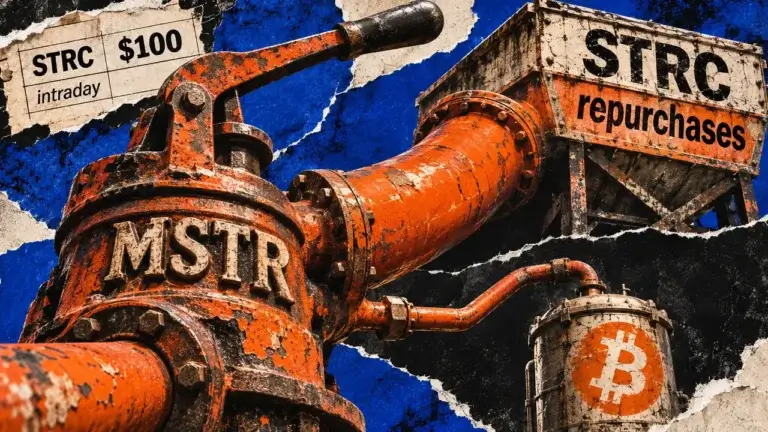
- During November 2–8, MSTR proceeds funded $188 million of STRC buybacks and $82 million of Bitcoin purchases.
- Index removal requires no Bitcoin sale; Strategy’s existing monetization policy leaves further sales subject to separate capital-allocation decisions.


MSCI has scheduled Strategy’s removal from the MSCI USA Index for the November 30 close, putting a date on a financing test for the Bitcoin treasury company. MSTR common-stock sales recently funded both Bitcoin purchases and a larger preferred-share buyback.
During November 2–8, Strategy allocated $188 million of common-stock proceeds to STRC preferred-share repurchases and $82 million to Bitcoin purchases. The competition for that money makes future MSTR fundraising central to how quickly the company can keep adding Bitcoin.
The November 11 review lists STRATEGY A among the MSCI USA deletions. MSCI’s final-impact announcement applies its non-operating-company methodology in the November review. Existing constituents must fail the ineligibility screen in each of their two most recent annual filing periods; MSCI may also consider the latest interim filing.
Strategy’s November 9 filing reports $284 million in net proceeds from selling 2,051,348 MSTR shares during November 2–8. It reported no sales under the at-the-market offering programs for its listed preferred securities during that period.
A further $14 million of the common-stock proceeds went to USD Cash. Strategy bought 1,036 BTC, bringing its reported holdings to 850,364 BTC as of November 8.
That allocation explains why index membership matters beyond a single stock-market rebalance. Newly issued common shares supplied money for two competing priorities: adding Bitcoin and retiring preferred claims. A reduction in the attractiveness of MSTR issuance could leave less money for either use unless another funding source supplies the difference.
The filing also reported about $18 billion of MSTR stock available for issuance and sale as of November 8. That is remaining offering capacity, not cash already raised or a commitment from investors to buy it.
A tracker selling an existing MSTR share transfers it to another investor. Strategy receives proceeds when it issues new shares. These are separate transactions, so a tracker’s sale does not directly withdraw money from the company or dispose of its Bitcoin.
The potential connection runs through price and demand. If rebalancing weakens either enough to make new MSTR issuance less attractive, Strategy could face a tighter choice between Bitcoin accumulation, preferred buybacks and cash retention. Its June capital framework already makes common-equity issuance dependent on market conditions, capital needs, trading levels and management’s judgment about shareholder value.
One funding pool. Three different transactions.
MSCI’s November 30 rebalance tests future share demand. The latest reported MSTR proceeds funded more STRC buybacks than Bitcoin purchases.
Follow the transaction
Existing shares and cash change hands between investors. Any effect on Strategy’s future fundraising is indirect.
Strategy receives money when it sells new shares; management then allocates the proceeds.
Existing policy permits sales for reserve funding, dividends, interest and repurchases, without requiring a sale. Board approval is needed beyond its purposes or limits.
Tracker trading can affect future fundraising; an additional Bitcoin sale is a separate capital-allocation decision.
No current tracker-selling quantity, price effect or future issuance is established. November 30 is the scheduled closing implementation. The $431.8 million prior-sale disclosure is October 29 YTD context, not sales caused by the final deletion decision.
Sources and evidence
Sources
Supporting facts
- MSCI’s November 11, 2026 Global Standard Indexes review lists STRATEGY A for deletion from the MSCI USA Index, effective at the November 30 close, subject to possible review adjustments. [1]
- For November 2–8, Strategy reported selling 2,051,348 MSTR shares for $283.8 million net; the filing reports no ATM sales for its listed preferred securities. [2]
- Strategy allocated November 2–8 MSTR proceeds to $188.3 million of STRC repurchases, $81.9 million of Bitcoin purchases and $13.6 million of USD Cash. [2]
- Strategy’s June 29 BTC Monetization Program authorizes sales for reserve funding, dividends and interest, and securities repurchases, without obligating any sale; activity beyond authorized purposes or limits requires further board approval. [3]
- In its October 29 results, Strategy disclosed approximately $431.8 million of Bitcoin sales year to date 2026 to fund part of its preferred dividends and STRC buybacks. [4]
- Strategy’s June capital framework says future common-equity issuance depends on market conditions, capital needs, trading levels and management’s assessment of shareholder value. [3]
- Index-tracker sales of existing MSTR shares would be investor-to-investor transactions; if they weaken price or demand, they could make Strategy’s future issuance less attractive and constrain funds available for Bitcoin purchases after competing uses. [1] [2] [3]
Method
Reported November 2–8 net proceeds and uses in USD millions. Main band widths are 700 × allocation / 283.8; mobile bars are 304 × allocation / 283.8. Amounts retain reported precision. Role diagrams show transaction relationships, not sale forecasts.
Scope
No current tracker-selling quantity, price effect or future issuance is established. November 30 is the scheduled closing implementation. The $431.8 million prior-sale disclosure is October 29 YTD context, not sales caused by the final deletion decision.
 CryptoSlate
The size of that pressure remains uncertain. Strategy’s consultation response estimates that funds linked to MSCI’s global investable indexes held about 13 million shares, or 3.1% of basic shares outstanding. The page supplies no holdings observation date, so those figures do not establish November 12 exposure or the amount trackers will sell.
Further Bitcoin sales require a separate decision
Strategy has already authorized and used Bitcoin sales. Its October 29 results disclosed approximately $432 million of Bitcoin sold year to date to fund part of its preferred dividends and STRC buybacks. Those sales preceded MSCI’s final deletion decision.
The June monetization program permits sales for reserve funding, dividends and interest, and securities repurchases. It obligates none. Further sales within those purposes depend on management’s capital-allocation judgment; activity beyond authorized purposes or limits requires additional board approval.
Cash also has distinct roles. At November 8, Strategy reported about $5 billion in its USD Reserve supporting preferred dividends and debt interest, alongside $146 million of separate USD Cash for broader treasury uses. Under the June policy, other reserve uses require board authorization. Its July buyback policy specifically bars reserve-funded STRC repurchases and leaves buybacks discretionary.
The next financing disclosures will show whether MSTR or preferred issuance supplies fresh capital, how much goes to Bitcoin and whether buybacks continue to absorb the larger allocation.
Mentioned in this article


Editorial credits