



 Launched in 2015
- Pick market-maker or exchange routing
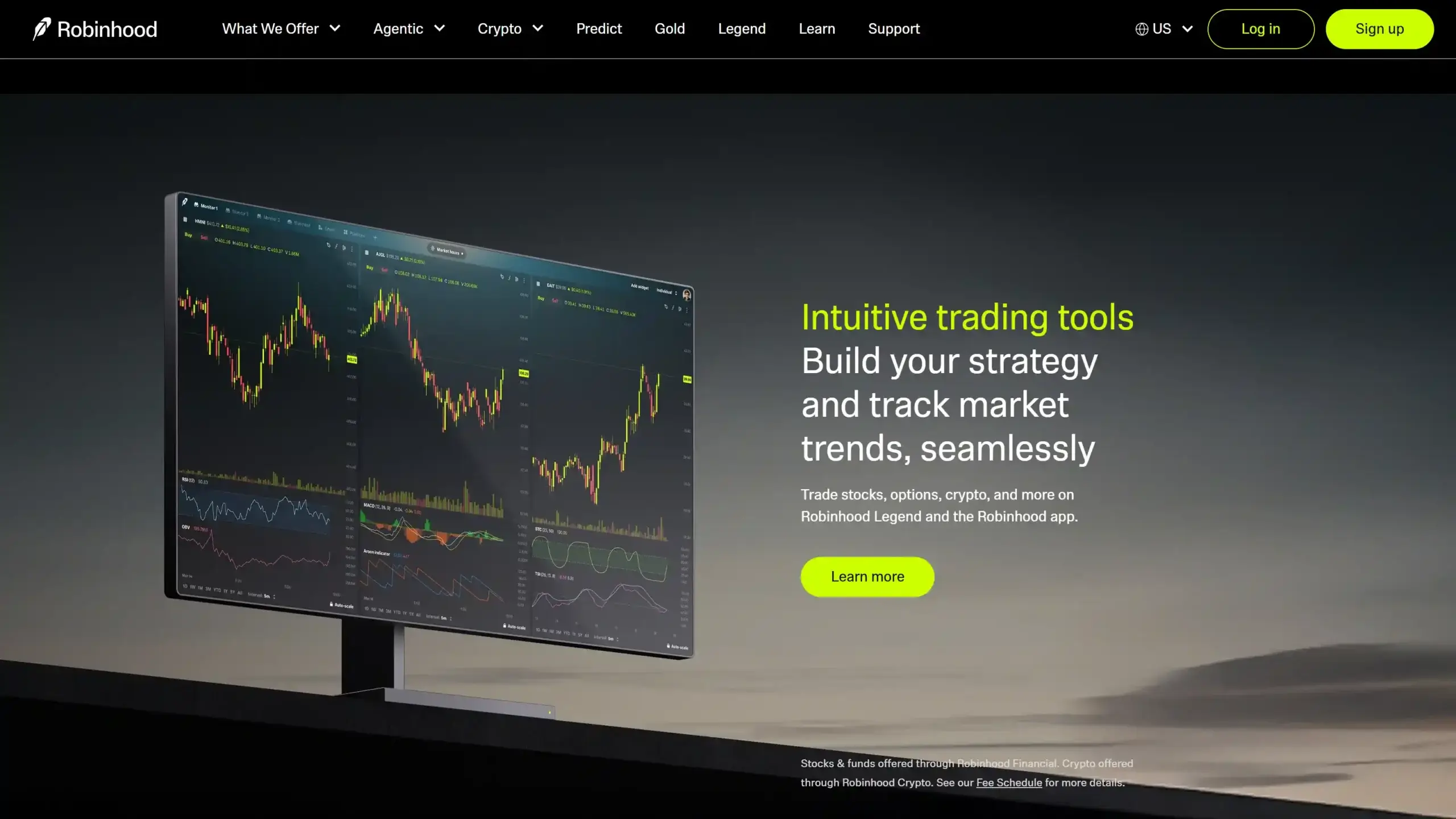
- Legend desktop platform with a trading ladder
- Crypto 1099-DA inside one consolidated tax form
Robinhood Overview
- Crypto Exchange Name
- Robinhood
- Parent Company
- Robinhood Markets, Inc.
- Launch Year
- 2015
- KYC
- Yes
- Products
- Spot, Futures or Perps, Simple-buy Broker
- Total Assets
- 90+
- Staking
- Yes
- Copy Trading
- No
- Derivatives
- Yes
- Proof of Reserves
- No
- Trading Fees
- 0.00% - 0.95%
- Maker Fee
- 0.5%
- Payout Time
- Fiat: Instant - 1 day
Additional details
- Languages
- English
- Restricted Countries
- Afghanistan, Albania, Algeria, Andorra, Angola, Antigua and Barbuda, Argentina, Armenia, …Afghanistan, Albania, Algeria, Andorra, Angola, Antigua and Barbuda, Argentina, Armenia, Australia, Austria, Azerbaijan, Bahamas, Bahrain, Bangladesh, Barbados, Belarus, Belgium, Belize, Benin, Bhutan, Bolivia, Bosnia and Herzegovina, Botswana, Brazil, Brunei, Bulgaria, Burkina Faso, Burundi, Cabo Verde, Cambodia, Cameroon, Canada, Central African Republic, Chad, Chile, China, Colombia, Comoros, Costa Rica, Cote d’Ivoire, Croatia, Cuba, Cyprus, Czechia, Democratic Republic of the Congo, Denmark, Djibouti, Dominica, Dominican Republic, Ecuador, Egypt, El Salvador, Equatorial Guinea, Eritrea, Estonia, Eswatini, Ethiopia, Fiji, Finland, France, Gabon, Gambia, Georgia, Germany, Ghana, Greece, Grenada, Guatemala, Guinea, Guinea-Bissau, Guyana, Haiti, Honduras, Hungary, Iceland, India, Indonesia, Iran, Iraq, Ireland, Israel, Italy, Jamaica, Japan, Jordan, Kazakhstan, Kenya, Kiribati, Kuwait, Kyrgyzstan, Laos, Latvia, Lebanon, Lesotho, Liberia, Libya, Liechtenstein, Lithuania, Luxembourg, Madagascar, Malawi, Malaysia, Maldives, Mali, Malta, Marshall Islands, Mauritania, Mauritius, Mexico, Micronesia, Moldova, Monaco, Mongolia, Montenegro, Morocco, Mozambique, Myanmar, Namibia, Nauru, Nepal, Netherlands, New Zealand, Nicaragua, Niger, Nigeria, North Korea, North Macedonia, Norway, Oman, Pakistan, Palau, Palestine, Panama, Papua New Guinea, Paraguay, Peru, Philippines, Poland, Portugal, Qatar, Republic of the Congo, Romania, Russia, Rwanda, Saint Kitts and Nevis, Saint Lucia, Saint Vincent and the Grenadines, Samoa, San Marino, Sao Tome and Principe, Saudi Arabia, Senegal, Serbia, Seychelles, Sierra Leone, Singapore, Slovakia, Slovenia, Solomon Islands, Somalia, South Africa, South Korea, South Sudan, Spain, Sri Lanka, Sudan, Suriname, Sweden, Switzerland, Syria, Tajikistan, Tanzania, Thailand, Timor-Leste, Togo, Tonga, Trinidad and Tobago, Tunisia, Turkey, Turkmenistan, Tuvalu, Uganda, Ukraine, United Arab Emirates, United Kingdom, Uruguay, Uzbekistan, Vanuatu, Vatican City, Venezuela, Vietnam, Yemen, Zambia, Zimbabwe, Isle of Man, Jersey, Gibraltar, Martinique, Guadeloupe, French Guiana, Reunion, Mayotte, St. Martin, French Polynesia, Wallis and Futuna, New Caledonia, Dutch West Indies, Cayman Islands, Curacao, Ontario (Canada), Anguilla, Antarctica, Aruba, Bermuda, Bonaire St Eustatius and Saba, Bouvet Island, British Indian Ocean Territory, Christmas Island, Cocos (Keeling) Islands, Cook Islands, Falkland Islands (Malvinas), Faroe Islands, Greenland, Guam, Guernsey, Hawaii, Heard Island and McDonald Islands, Hong Kong, Macau, Montserrat, Niue, Norfolk Island, Northern Mariana Islands, Pitcairn, Saint Barthélemy, Saint Helena, Saint Pierre and Miquelon, Sint Maarten, South Georgia and the South Sandwich Islands, Svalbard and Jan Mayen, Taiwan, Tokelau, Turks and Caicos Islands, Virgin Islands (British), Virgin Islands (U.S.), Western Sahara, Åland Islands, American Samoa, French Southern Territories
Robinhood Screenshots


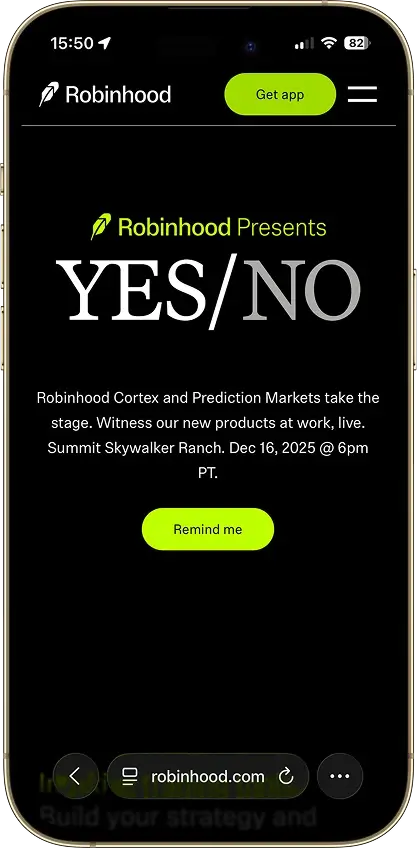
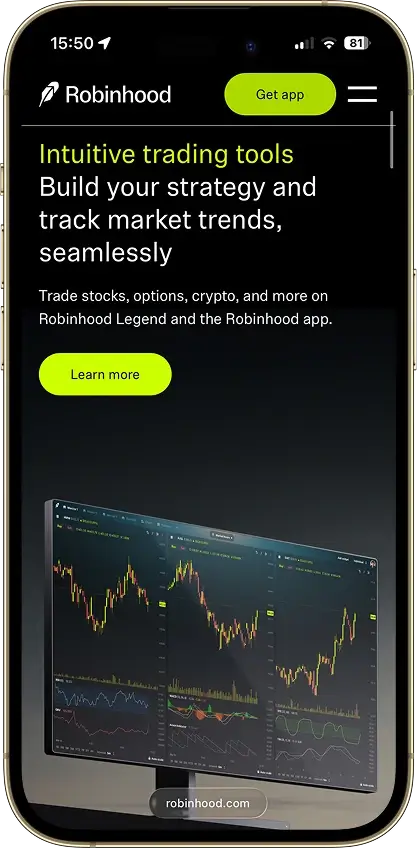
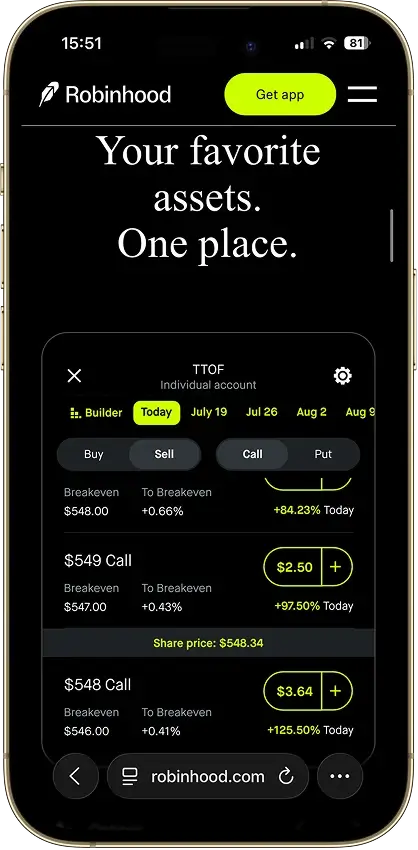
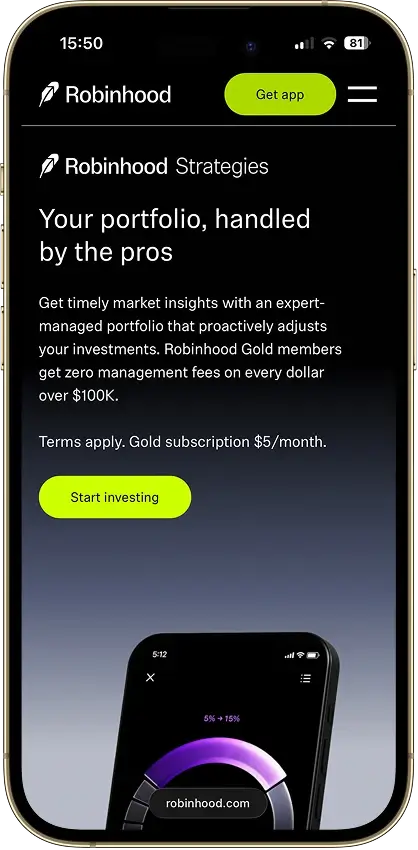
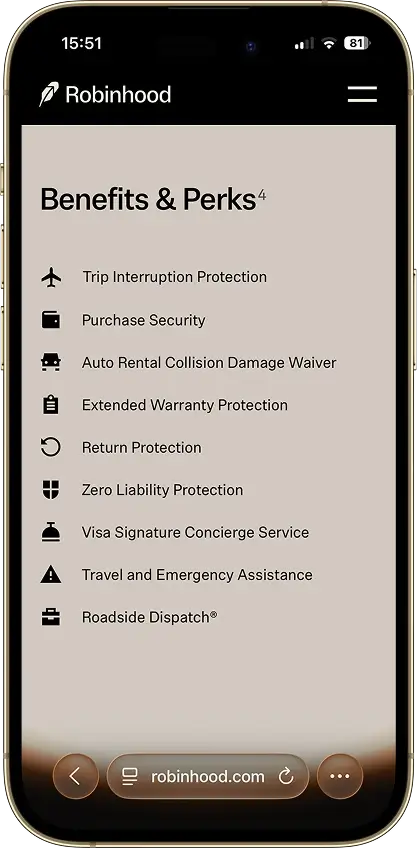
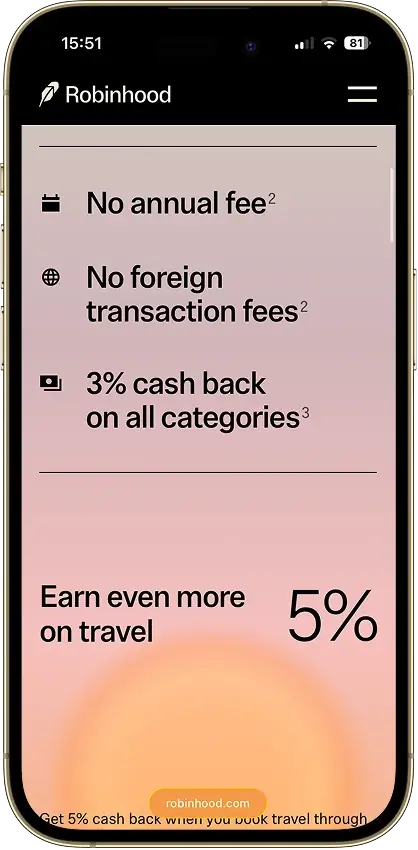
Screenshot 1 of 8
Robinhood Pros and Cons
Pros
- Free standard ACH deposits and withdrawals
- Crypto trading available in all 50 states
- Retail API with account-level permissions
- Listed parent files audited financials
- Withdrawal allowlist with a 48-hour wait
Cons
- Entry exchange-routed taker fee is 0.95%
- Market maker compensation sits in the spread
- No public customer reserve-inclusion check
- Instant cash-out costs 1.75%
Quick Decision: Is Robinhood Worth It?
Robinhood offers U.S. crypto trading within the same app used for stocks, but the crypto account has different custody and protections. Standard purchases and exchange-routed orders also use different pricing, so commission-free marketing describes only one route. This Robinhood review evaluates the U.S. custodial crypto account, including its bank connection and the tools available after a first purchase.
Robinhood makes sense for a U.S. investor who wants a modest crypto allocation beside securities and can fund by bank transfer. The same app offers advanced charts, a trading ladder and exchange routing on supported assets.
Cost depends on the route and volume tier. At the entry exchange-routing tier, a $1,000 order has a $5 maker fee or $9.50 taker fee before market spread and price movement. A limit order only earns maker pricing when it qualifies under the routing rules. Users seeking another shared simple-buy and advanced account can compare the Coinbase fees and platform review.
Who Robinhood Is Best For And Who Should Skip It
Robinhood's existing brokerage relationship can simplify account management, but the available coin and interface should decide whether a trade belongs there.
The account is less suitable if you need to buy any asset shown on a price screen. Robinhood also displays market data for coins that cannot be traded there.
Features And Services
Robinhood's standard app, web classic and Legend do not expose identical execution options. In particular, choosing Legend changes how a supported crypto order is routed.
Futures require separate approval after opening a Robinhood Crypto account. Banking, credit cards and Wallet swaps also have their own providers and terms.
Supported Assets And Markets
On September 8, 2026, Robinhood's U.S. availability table listed 90 assets tradable through market maker routing. Of those, 66 were marked for exchange routing in the app and on Legend. A separate list showed 45 view-only assets.
The published page places ZRX in both the trading table and the view-only list. Because those entries conflict, confirm its trade button before transferring money specifically to buy it. Neither list includes all assets reachable through the standalone Wallet.
Liquidity, Order Types, And Trading Limits
Market maker routing sends orders to non-exchange liquidity providers. Exchange routing uses partners including EDX Markets and Bitstamp. Resting limit orders normally use Bitstamp, which Robinhood Crypto identifies as an affiliate. Another exchange may receive the order when enough price improvement offsets a taker fee.
Market and stop orders incur taker fees on the tiered route. Limit and stop-limit orders can also execute as takers. A resting order may miss a price available on a different exchange, so the fee classification alone does not establish execution quality.
Robinhood's published position limits use acquisition cost: $50 million per coin for BTC, ETH, DOGE, PEPE, SHIB and XRP, and $20 million for other coins. Market appreciation can take a position above that cost-basis amount. These are holding limits, not permission to withdraw the same amount in a day.
Margin And Derivatives
The scored Robinhood Crypto account supplies spot ownership, not leveraged spot borrowing. U.S. crypto futures use Robinhood Derivatives LLC and separate approval, contract and margin requirements. Products advertised for European perpetual traders do not establish access for a U.S. customer.
The Kraken trading-tools assessment separates spot and derivatives eligibility. Check whether the specific contract is available to your account before comparing costs or margin requirements.
Staking And Rewards
Robinhood supports staking ETH, SOL and ADA from small balances. The quoted reward rate changes with the protocol, and staking can prevent an immediate sale or transfer.
The partner fee is included within the combined deduction. ETH batching can deliver 50%–100% of the protocol rate before the 25% commission, according to Robinhood's staking help. For Cardano and its ADA token, rewards begin after a 15-day bonding period on Robinhood. These platform conditions differ from direct participation through another wallet.
Robinhood Earn moves USDG from the custodial account into an integrated user-controlled wallet and then a Morpho lending vault. Withdrawals can be requested without a fixed lockup, but insufficient vault liquidity can delay them. New York and Texas users cannot access this USDG-based feature, and the lending balance is not a bank deposit. The described insurance protects Robinhood, with no direct customer claim or guarantee against lending losses.
Card
Robinhood's credit cards and spending products have separate eligibility and agreements. Rewards follow those product terms. A cash reward redeemable into an investing account is not automatically a cryptocurrency reward.
Wallet And Self-Custody Options
Crypto bought in the main account stays in Robinhood's custody until transferred. The standalone Robinhood Wallet is a separate app with user-controlled assets. Earn creates another self-custody wallet within the main app, so those two wallet products should not be treated as one balance.
Exporting the Earn wallet makes it read-only within Robinhood and prevents new lending through that wallet in the interface. The self-custody wallet directory can help compare recovery arrangements before moving assets outside a custodial account.
API And Programmatic Trading
Robinhood exposes a retail Crypto Trading API with credentials that restrict permitted actions. The version used for an order changes its pricing route and whether volume counts toward a tier.
Executed V2 tiered orders count toward qualifying volume. V1 orders do not. The fee-tier help page says V2 orders receive taker pricing until maker/taker rollout is complete, so a bot should not assume that placing a limit order earns the lower rate.
Fees And Pricing
Robinhood's commission-free route still has an execution cost. Its June 15, 2026 disclosure says market makers pay Robinhood $0.95 for each $100 of executed notional volume, included in the spread. That payment is not an additional commission separately charged to you, nor is it a fixed guarantee of the total spread.
Exchange routing charges a transaction fee instead of paying Robinhood a market maker rebate. The received amount after all charges is the useful comparison, not which route has a zero in its commission column.
Hidden Costs To Watch On Robinhood
The chart's midpoint is not the price at which a buy or sell is guaranteed to execute.
- A market-maker-routed trade does not earn progress toward exchange-routing fee tiers.
- Opening a trade from Legend or the mobile ladder selects exchange routing where available.
- A limit order may take liquidity and incur the taker charge.
- Instant cash-out can add a fee even though standard ACH is free.
- Staking exit periods can leave an asset unavailable to sell during price changes.
Fund through standard ACH if avoiding transfer charges is the priority. Then compare available order routes on the coin you intend to trade, including the fee shown at order placement.
VIP Tiers And Fee Discounts
Robinhood reduces exchange-routing fees with trailing 30-day qualifying volume. These reductions do not require owning a house token or paying for Gold.
Tier upgrades normally remain locked for seven days and apply to the next order after the qualifying execution. Maker/taker availability is still being rolled out, so the fee displayed for the account takes precedence over assuming that every published tier is already usable.
Deposits, Withdrawals, KYC And Availability
Instant buying power can arrive before a bank deposit settles. External transfers require withdrawable funds, even when a recent deposit can already be traded.
Robinhood's general transfer table lists ACH deposits up to $500,000 and withdrawals up to $250,000, but individual limits can be lower. Check Transfers before funding. For 60 days after a deposit, withdrawing to a different source account can require extra verification.
What US Users Need To Check Before Signing Up
Robinhood Crypto serves all U.S. states through a mapped legal entity. The important exceptions affect specific coins and execution tools after the account is open.
North Carolina's routing restriction does not mean crypto trading is entirely unavailable there. Likewise, approval for spot purchases does not establish staking eligibility.
Payment Rails, Networks, And Limits
Robinhood separates cash movement from onchain transfers. The bank account's daily limit is not the crypto withdrawal allowance, and neither follows directly from the maximum cost basis of a holding.
Fiat Rails By Region
The U.S. account uses dollar funding. Other Robinhood entities have their own currencies, bank partners and product restrictions.
Robinhood lists one day for its standard ACH withdrawal processing, with receiving-bank policies able to extend delivery. Deposits can take up to five business days. Eligible instant withdrawals cost 1.75%, with a $1 minimum and $150 maximum per transaction. Settlement and account holds can still prevent submission.
Withdrawal Networks And Fees
Robinhood quotes a network charge when sending supported crypto. Check the receiving address and any tag before approving, because support cannot undo a confirmed send.
Bitcoin's network mechanics determine onchain confirmations, while Robinhood handles account approval. Robinhood supports specified BTC addresses but excludes Lightning transfers and taproot addresses. Check compatibility before sending.
Verification Levels And Withdrawal Limits
Robinhood applies identity checks when opening the account and can require further verification to enable crypto transfers. A first approval is not a guarantee that later risk reviews will be unnecessary.
Crypto withdrawal limits depend on verification, transaction history and other account factors. The product currently states no maximum deposit limit for crypto, but each transfer still needs the supported asset and network.
Is Robinhood Safe? Security, Custody And Proof Of Reserves
Robinhood combines a regulated U.S. crypto entity with a listed parent's financial reporting. That supports a disclosure-based trust assessment, but the crypto account is not insured like an eligible bank deposit or protected like securities held at a SIPC member.
Controls
Robinhood offers app-based authentication, passkeys on supported Apple devices and device monitoring. Withdrawal allowlisting restricts sends to approved addresses. New addresses and configuration changes have a 48-hour waiting period, while previously approved addresses remain usable. A newly trusted device can also trigger transfer checks. A user-configured anti-phishing code is not documented.
Custody And Insurance
Robinhood states that most customer coins are held offline and that it does not lend or borrow against ordinary crypto holdings. Its crime insurance covers a portion of custody assets against specified theft events, including cyber breaches. It is not a personal policy promising reimbursement for every loss.
Crypto at Robinhood Crypto is neither FDIC-insured nor SIPC-protected. Eligible brokerage cash and securities have separate arrangements, which do not extend to a coin merely because it appears in the same app.
Proof Of Reserves Or Audits
Robinhood Markets publishes annual audited financial statements and interim SEC reports. The customer agreement retains user ownership and separates customer crypto from assets used for Robinhood's own business. That is substantive corporate and custody disclosure, without a public tool for checking your balance in a Merkle-tree reserve snapshot.
Financial statements and customer reserve-inclusion checks answer different questions. The Gemini custody review covers another account with corporate disclosures and a dedicated trading interface.
Incidents And Remediation
Robinhood's November 2021 incident exposed customer information after an attacker socially engineered support staff. The company said the incident caused no financial loss to customers.
New York's financial regulator separately imposed a $30 million penalty on Robinhood Crypto in 2022 over compliance and cybersecurity deficiencies. The settlement required an independent consultant. These events limit a claim of a spotless record, even though neither establishes a new unresolved custody loss.
App, UX And Customer Support
Robinhood lets you move from a conventional purchase screen into advanced charts using the same balance. That navigation can also change the routing method and fee.
UI And Navigation
Web classic supports market maker routing. Legend uses exchange routing, and the mobile ladder follows that route too. Advanced mobile charts can fall back to market maker routing for assets ineligible for exchange routing. Inspect the order review instead of assuming the same charge follows you between screens.
Mobile App
The iOS and Android app handles funding, trading and crypto transfers. Advanced charts and the ladder add trade controls. The standalone Wallet has its own app and token selection.
Reliability And Status Page
Robinhood maintains a public status page covering service incidents. A status report can distinguish a platform interruption from an issue that requires account support.
Allow for both an execution interruption and delayed movement when planning a time-sensitive trade. A platform-wide incident and an account review require different follow-up.
Customer Support
Robinhood offers 24/7 chat. General callback availability is narrower: the contact page lists 7 a.m.–9 p.m. ET on weekdays for investing features, excluding holidays, and says not every inquiry qualifies.
- The help center covers common account and transfer questions.
- Authenticated support keeps the inquiry tied to the account.
- A dedicated phone resource handles Crypto, Spending and Cash Card issues.
- Standalone Wallet questions use a separate support address.
Use account support to investigate a restriction or failed transfer. A confirmed onchain send remains irreversible, and protocol unstaking queues follow the network's release process.
Reporting And Tax Records
Robinhood supplies transaction records, crypto tax-lot tools and applicable tax forms. For 2025 activity, Form 1099-DA is included within its consolidated tax delivery. Crypto moved in from elsewhere can have missing cost basis, so reconcile those records before treating the form as a complete calculation of gains and losses.
Robinhood Alternatives
-


Coinbase
Coinbase fits U.S. users who fund by ACH and use Advanced, but Simple Buy costs and regional product rules require attention.
-

Kraken
Kraken combines quarterly reserve-inclusion checks with separate Pro trading tools and account security controls. Its entry spot fees and funding-related withdrawal holds are the main tradeoffs.
-

Gemini
Gemini offers U.S. access, free ACH, and documented controls. Compare alternatives for lower entry fees or access in more countries.
-

Uphold
Direct asset conversions and two staking modes, with substantial crypto spreads and funding-related withdrawal restrictions.
Coinbase and Kraken offer dedicated crypto trading interfaces, with separate tradeoffs in fees and funding holds. Gemini provides another disclosure-led account, while Uphold emphasizes direct asset conversions.
| Alternative | Better For And The Catch |
|---|---|
| Coinbase | Simple Buy and Advanced share a balance. The purchase screen and order book use different pricing |
| Kraken | Dedicated Pro order controls and user reserve-inclusion checks. Some funding routes restrict withdrawals |
| Gemini | Audited disclosures and a dedicated exchange API. ActiveTrader entry fees are 0.60% maker and 1.20% taker |
| Uphold | Direct conversions across supported assets. Typical BTC and ETH spreads exceed 2% |
Robinhood's most defensible advantage is account consolidation for an investor who already uses the app. The Uphold review and fee assessment covers a different approach to asset conversion. If the desired coin or order route is unavailable, that convenience cannot substitute for the missing functionality.
Robinhood Category Scores
These scores highlight how this review performs in specific categories, with each score tailored to the focus of that category.
Final Verdict
Robinhood earns 7.6/10 for its U.S. custodial crypto account. Audited public-company reporting, all-state basic trading and free standard ACH support the result. Entry trading costs and inconsistent asset access between interfaces limit its appeal for frequent traders. Choose Robinhood if you want bank-funded crypto alongside existing investments and will compare the available order routes. Consider a dedicated exchange if your strategy requires a specific token, consistent access to advanced controls or public customer reserve verification.
Disclaimer: CryptoSlate may receive a commission when you click links on our site and make a purchase or complete an action with a third party. This does not influence our editorial independence, reviews, or ratings, and we always aim to provide accurate, transparent information to our readers.