

Kraken combines quarterly reserve-inclusion checks with separate Pro trading tools and account security controls. Its entry spot fees and funding-related withdrawal holds are the main tradeoffs.
Kraken vs Coinbase: Which Exchange Should You Choose?
Kraken wins for lower standard US trading and wire fees and individual reserve checks. Coinbase wins for all-state spot access, public financial reporting and simple and Advanced trading in one app.

Coinbase fits U.S. users who fund by ACH and use Advanced, but Simple Buy costs and regional product rules require attention.
Affiliate Disclosure
Some links in this comparison are affiliate links. CryptoSlate may earn a commission if you sign up through these links. Our ratings remain editorially independent.
Kraken vs Coinbase Overview
Kraken is our pick for eligible US order-book traders using standard fees. Coinbase is the choice for New York or Maine residents and users who want simple and Advanced trading in one app.
Kraken Coinbase
Entry Maker / Taker Fees
Kraken wins — lower standard maker and taker commissions.
0.40% / 0.80%
0.50% / 0.90%
Standard Domestic Wire Fees
Kraken wins — lower standard incoming and outgoing wire fees. Coinbase One Preferred and Premium waive its fees.
$0 incoming / $4 outgoing
$10 incoming / $25 outgoing
US Spot Access
Coinbase wins — core spot accounts in all 50 states. Asset and product restrictions still apply.
Excludes New York and Maine
All 50 states, with asset restrictions
Trading Apps
Coinbase wins for switching between simple and Advanced trading inside one app.
Separate consumer and Pro interfaces
Simple purchases and Advanced in one app
Winners by Category
Kraken wins on standard entry commissions, standard domestic wire fees and individual reserve checks. Coinbase wins on state coverage, public financial reporting and one-app trading. Our overall pick prioritizes trading and funding costs.
Kraken Coinbase
Kraken wins — Kraken is our pick for an eligible US order-book trader who places these costs and reserve checks first. Coinbase can be the more useful account for the other priorities below.
Lower standard entry commissions, lower standard wire fees and individual reserve checks
All-state spot access, a combined app and public financial reporting
Kraken wins — Kraken saves $1 per $1,000 fill at either entry rate. Membership rebates and higher tiers can change the comparison.
0.40% maker / 0.80% taker
0.50% maker / 0.90% taker
Kraken wins — Kraken charges less in both directions on the standard schedules. Coinbase One Preferred and Premium waive Coinbase’s wire fee. Bank charges may still apply.
$0 incoming FedWire / $4 outgoing
$10 incoming / $25 outgoing
Coinbase wins — Coinbase is available in the two states excluded by Kraken. Individual assets and additional products still have restrictions.
Unavailable in New York and Maine
Available in all 50 states
Kraken wins — Kraken lets users verify inclusion in an independently attested snapshot. That check is not a complete financial audit or a guarantee of future withdrawals.
Customer Merkle-inclusion check for covered assets
No customer Merkle-inclusion tool
Coinbase wins — Coinbase publishes recurring public-company financial statements. This award concerns financial disclosure, not a promise that custody is safer.
Private company, with reserve attestations
Quarterly and annual SEC reporting, with annual financial audits
Coinbase wins — Coinbase keeps both trading interfaces under one app and balance. Kraken’s separation suits users who prefer a dedicated Pro interface.
Consumer app and separate Kraken Pro interface
Simple purchases and Advanced within the Coinbase app
Kraken wins on the published US staking selection. State eligibility and net returns differ.
17 assets on the US staking menu
Nine named retail staking assets
Kraken is the overall pick for eligible US users trading at standard fees. Coinbase’s state coverage and combined app can outweigh that cost advantage.
Trading Fees
Kraken Pro starts below US Coinbase Advanced on both maker and taker commission. The simple-buy screens use different pricing and should be compared through their final quotes.
Kraken Coinbase
Entry Maker Fee
Kraken wins — $4 versus $5 commission on a $1,000 maker fill.
0.40%
0.50%
Entry Taker Fee
Kraken wins — $8 versus $9 commission on a $1,000 taker fill.
0.80%
0.90%
Kraken wins at the standard opening order-book tier. Simple-buy quotes, higher tiers and paid-plan benefits need a separate calculation.
A $1,000 maker fill costs $4 on Kraken Pro and $5 on Coinbase Advanced. As a taker, the same notional costs $8 and $9. For a $5,000 fill, those commissions become $20 versus $25 as maker or $40 versus $45 as taker. Spread and slippage are additional execution costs.
Coinbase’s US entry rates took effect on September 16, 2026. Its lower European and UK schedule does not apply to this comparison. Under Kraken’s fee schedule, its next fee tier starts at $2,500 in trading volume. Its first Assets on Platform route starts at $20,000, at Tier 3. Coinbase’s next Advanced volume tier starts at $10,000 in qualifying volume, while eligible USDC balances provide a separate route to VIP pricing. The tier shown in the account determines the actual order fee.
Kraken charges 1.5% for custom consumer orders and 3% for small-balance conversions, before applicable spread and payment costs. Coinbase quotes simple-purchase fees and spread before confirmation. Kraken’s stated consumer fee also excludes spread and payment costs, so the percentage alone is not a total-price comparison. Preview the amount of crypto received at the same dollar amount.
Paid plans can also change the result. Coinbase One Preferred and Premium offer an eligible 25% Advanced spot rebate. Kraken+ waives qualifying consumer transaction fees, not Kraken Pro commissions. The subscription cost and any rebate cap belong in the calculation.
Supported Cryptocurrencies and Markets
Coinbase provides a dated US listing range. Kraken’s published 600-plus total is global, so it cannot establish which US account lists more cryptocurrencies.
Kraken Coinbase
Dollar Trading
Tie — both offer dollar-denominated spot markets for eligible US accounts. Check your intended asset and pair.
USD markets for eligible US accounts
USD markets on the US platform
Kraken’s published 600-plus asset figure is global. Coinbase’s reviewed US range is roughly 270–315 assets, but these figures do not measure matching inventories. Neither number establishes which exchange has more coins available to your particular US account.
For a purchase of Bitcoin, the relevant checks are the available dollar pair, the withdrawal route and the cost of moving the funds. A total listing count becomes useful only when it represents the same country and product.
Neither a global inventory nor a wallet’s on-chain token access proves that an asset can be traded in a US exchange account. State restrictions can also remove a particular token even when the platform accepts residents. Compare the exact asset and withdrawal network shown in each account.
Kraken offers eligible 1:1 USD conversions to USDC and USDG. That conversion feature should not be treated as a universal zero-fee trading rule for other stablecoin pairs. Check the specific transaction, then confirm that the intended withdrawal network is enabled.
Derivatives, Margin and Staking
Both offer separately approved US crypto futures. Kraken wins on the published US staking selection, with 17 assets against Coinbase’s nine. Staking access and reward commissions depend on the state and product.
Kraken Coinbase
US Derivatives
Tie — both offer a US crypto-futures route through separately regulated services. Contract menus, margin and fees differ.
US crypto futures through Kraken Derivatives US, with separate onboarding
US crypto futures through Coinbase’s separate derivatives service, with separate onboarding
US Staking Selection
Kraken wins on named US staking selection, not guaranteed net yield or statewide access.
17 assets, with state restrictions
Nine assets, with state and asset restrictions
Kraken’s US perpetuals are listed through Bitnomial and brokered through Kraken Derivatives US and NinjaTrader. Kraken gives $0.15 per contract per side as an example for that route, with perpetual funding charged separately. Coinbase’s US perpetual-style product uses its own contract and margin rules. A contract fee cannot be compared with a percentage commission without matching the instrument and size.
Kraken offers US spot margin through Kraken Derivatives US, subject to an eligibility questionnaire and account approval. Bitcoin positions can reach 20 times their collateral, with lower limits on other pairs. Borrowing increases liquidation risk. Its US margin service and international derivatives are separate permissions.
Coinbase’s staking list includes ETH and SOL alongside ADA, ATOM, AVAX, DOT, MATIC/POL, SUI and XTZ. Its standard 35% commission covers eight of those assets, with the SUI commission requiring an in-account check. Coinbase One discounts apply to ADA, ATOM, DOT, ETH, SOL and XTZ only: 31.75% on Basic, 28.5% on Preferred and 25.25% on Premium.
Kraken’s bonded commission tiers run from 25% to 0% depending on qualifying assets under management. Its flexible and Auto Earn rate is 30%. These are deductions from rewards, not guaranteed returns. For Ethereum staking, compare the net reward, unbonding period and account eligibility before committing funds. A larger published menu does not settle those terms.
Kraken’s US staking menu lists 17 assets, but its state coverage is narrower than its spot-account coverage. In addition to New York and Maine, the states absent from its US staking eligibility list are Alabama, California, Illinois, Kentucky, Maryland, New Jersey, South Carolina, Texas, Vermont, Washington and Wisconsin. Coinbase blocks new staking principal in California, Maryland, New Jersey and Wisconsin, and SUI also excludes New York.
Kraken’s 30% flexible and Auto Earn rate is not a universal US commission. Bonded tiers and Opt-In Rewards follow separate terms, and ordinary US customers generally cannot use Opt-In Rewards unless they qualify as accredited investors. Check the actual staking product and net reward before comparing it with Coinbase’s commission.
Order Controls, Execution and Limits
Kraken publishes several conditional order instructions. Coinbase Advanced provides order-book trading with REST and WebSocket access. Compare live depth at the intended trade size before placing an order.
Kraken Coinbase
Trading Interface
Tie — both provide an order-book interface for US spot trading.
Kraken Pro order book
Coinbase Advanced order book
Market and Limit Orders
Tie — both support market and limit orders. Shared instructions do not establish identical execution quality.
Supported on Kraken Pro
Supported on Coinbase Advanced
Both support market and limit orders. Coinbase Advanced also offers bracket orders, attached take-profit/stop-loss and TWAP, alongside stop-limit orders. Kraken’s additional controls depend on the product and interface. Check whether the exact stop, bracket or conditional instruction your strategy needs is available on the US market you intend to trade.
A limit order can still take liquidity if its price crosses an existing order. Post-only instructions are useful when the intent is specifically to add liquidity, but an unfilled maker order does not guarantee that the trade will complete at the preferred price.
The number of order types does not establish the fill quality of a large trade. Inspect current depth at the intended size and account for the chance of a partial fill. A larger order can cross several price levels even when the headline spread is small.
Kraken’s Intermediate and Pro Personal verification paths have different funding and service access. Coinbase also uses account-specific limits. A trading limit, a cash-out limit and a funding hold answer different questions, so check each before moving a large balance.
Deposits and Withdrawals
Kraken charges less for standard incoming and outgoing domestic wires. ACH is free at both, but Kraken’s seven-day hold on Plaid-funded amounts makes timing a separate decision.
Kraken Coinbase
ACH Deposit
Tie on the exchange’s ACH deposit fee. Kraken’s Plaid route excludes Texas, New York and Maine. Eligibility and holds differ.
Free, $1 minimum through Plaid ACH
Free, typically 1–5 business days
ACH Withdrawal
Tie — neither charges its own ACH withdrawal fee. Release timing remains account dependent.
Free, $1 minimum, usually 0–2 business days after release
Free, with account and settlement conditions
Incoming Domestic Wire
Kraken wins — $0 on its eligible Dart Bank route versus Coinbase’s standard $10 fee. Coinbase One Preferred and Premium waive its fee.
$0 through Dart Bank, $1 minimum, usually 0–1 business day
$10 standard Coinbase fee. Preferred and Premium waive it
Outgoing Domestic Wire
Kraken wins — $4 versus Coinbase’s standard $25 outgoing fee. Preferred and Premium waive Coinbase’s fee.
$4 Kraken fee, $20 minimum, usually 0–1 business day
$25 standard Coinbase fee. Preferred and Premium waive it
Kraken’s Plaid route can make the balance available for trading before it can leave the platform. The seven-day hold applies to the associated deposit amount, not automatically to every unrelated balance. A completed purchase does not remove the hold.
For an ordinary wire user without a qualifying Coinbase subscription, Kraken saves $10 on the exchange’s incoming fee and $21 on its outgoing fee. Preferred and Premium remove Coinbase’s own wire fee, while intermediary or receiving-bank charges can remain. Choose the route by both its price and the release date.
Kraken’s RTP cap reaches $50 once a withdrawal exceeds roughly $3,333.33. Coinbase’s $100,000 RTP figure is a per-transaction ceiling for eligible cash-outs, not a promise of free transfers or an unlimited daily allowance. Compare Coinbase’s in-account RTP quote with Kraken’s 1.5% fee.
For crypto transfers, match the destination network before comparing costs. Coinbase charges 0.2% for Lightning sends and lists a separate 0.01% USDT withdrawal charge capped at 20 USDT, plus network fees. Kraken’s fixed asset-network quotes can change. Use the final withdrawal screen for the particular coin and chain.
Kraken’s Plaid ACH and Customers Bank FedWire funding exclude Texas as well as New York and Maine. A Texas resident may have a Kraken spot account without access to those funding routes. The $0 Dart Bank incoming-wire route has its own eligibility conditions. The Customers Bank restriction does not establish that Dart deposits or all withdrawal providers are unavailable in Texas. Check the provider shown in your funding screen.
Identity Checks and US Availability
Coinbase supports centralized spot accounts in all 50 states. Kraken excludes New York and Maine. State access to an account does not enable every asset, staking service or derivatives contract.
Kraken Coinbase
US Spot State Coverage
Coinbase wins — it serves all 50 states, while Kraken excludes New York and Maine.
Excludes New York and Maine
All 50 states, with asset restrictions
Identity Verification
Tie — both require identity verification for ordinary exchange use.
Required, with additional documents for higher limits and services
Required for normal funding, trading and transfers
Among these US crypto exchanges, state availability makes Coinbase the available option for residents of New York or Maine. Elsewhere, the account’s asset and product permissions still matter. Staking and derivatives need their own checks.
Kraken Financial’s Wyoming charter does not turn a standard Payward retail balance into an insured bank deposit. Coinbase’s qualifying cash arrangements can provide pass-through FDIC or NCUSIF protection, up to the applicable $250,000 limit and subject to the institution and other conditions. That protection concerns qualifying cash and institutional failure, not losses on crypto prices or custody.
Either company can request additional source-of-funds or identity evidence after an account opens. Higher verification status does not prevent a compliance review or promise an immediate withdrawal.
Security, Custody and Reserve Checks
Kraken wins for individual inclusion in an independently attested reserve snapshot. Coinbase wins for recurring public-company financial reporting. Those are different disclosures, not competing guarantees of safety.
Kraken Coinbase
Login and Session Controls
Tie — both support passkeys, security keys and authenticator-app two-factor authentication.
Passkeys, security keys, authenticator-app 2FA and session review
Passkeys, security keys, authenticator-app 2FA and session review
Individual Reserve Inclusion
Kraken wins for individual inclusion checks on covered balances. A snapshot does not guarantee solvency or withdrawals.
Merkle verification for assets in the quarterly snapshot
No customer Merkle-inclusion tool
Public Financial Statements
Coinbase wins for recurring public-company financial statements and annual financial audits, not guaranteed custody safety.
Reserve attestations, without equivalent public-company reporting
Quarterly and annual SEC reporting, with annual financial audits
Kraken’s June 30, 2026 snapshot covered selected assets and included independent attestation. A customer can check whether the covered balance appears in the liability tree. That process does not establish every corporate obligation or certify that funds remain available continuously.
Coinbase publishes audited annual financial statements and recurring SEC reports. Kraken’s inclusion check concerns covered customer balances at one point in time. Neither disclosure replaces the other: financial statements do not provide an individual reserve proof, and a reserve snapshot is not a complete financial audit.
Kraken’s general security disclosure includes ISO 27001:2022 and SOC 2 Type 1. Its separate Type 2 announcement concerns institutional qualified custody, not every retail exchange account. Coinbase’s 2025 support-contractor data incident led to customer scam losses, even though the company said its central custody systems were not breached. The incident raises impersonation risk even without a central-custody breach.
Keeping assets with either exchange is a custodial wallet arrangement. Account recovery and withdrawal approval depend on the service. Coinbase’s limited crime cover and conditional paid-plan account protections should not be treated as blanket insurance against every loss.
Apps, APIs and Customer Support
Coinbase wins for keeping simple and Advanced trading in one app. Both offer REST and WebSocket APIs. Kraken provides 24/7 chat, while Coinbase publishes a 24/7 phone route specifically for compromised accounts.
Kraken Coinbase
Simple and Advanced Trading in One App
Coinbase wins for simple and Advanced trading within one app. Kraken uses separate consumer and Pro apps.
Kraken and Kraken Pro for iOS and Android
Coinbase app with Simple and Advanced
Trading APIs
Tie — both offer REST and WebSocket trading APIs. Protocol availability does not rank speed or fill quality.
Spot REST and WebSocket, with separate additional APIs
Advanced REST and public/private WebSocket
Coinbase wins for one-app trading. Support channels serve different needs, so use the exchange’s official help page for your case.
Coinbase users can switch between a simple purchase and Advanced without changing apps. Kraken’s dedicated Pro app separates its order-book tools from the consumer purchase flow. The fee schedule still depends on which interface and order you use.
Both provide REST and WebSocket APIs. Coinbase Advanced’s sandbox returns static mocked responses, which help test data handling rather than live execution. Kraken’s separate futures demo does not by itself establish test access to the US contract you want. Check the endpoint and account permissions before building an integration.
Kraken offers 24/7 chat and in-app voice when available. Coinbase’s general contact page describes chat and requested calls during business hours. Its compromised-account page separately publishes 24/7 US and Canada phone help. That emergency route is not a promise of round-the-clock general support or a faster resolution.
Screenshots
Kraken screenshots

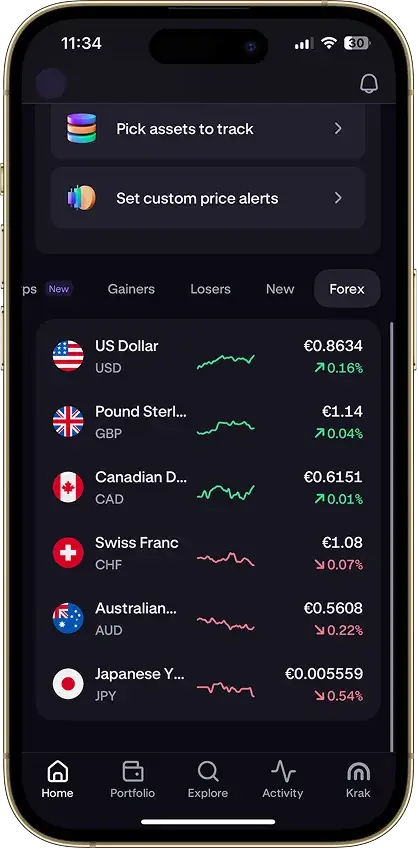
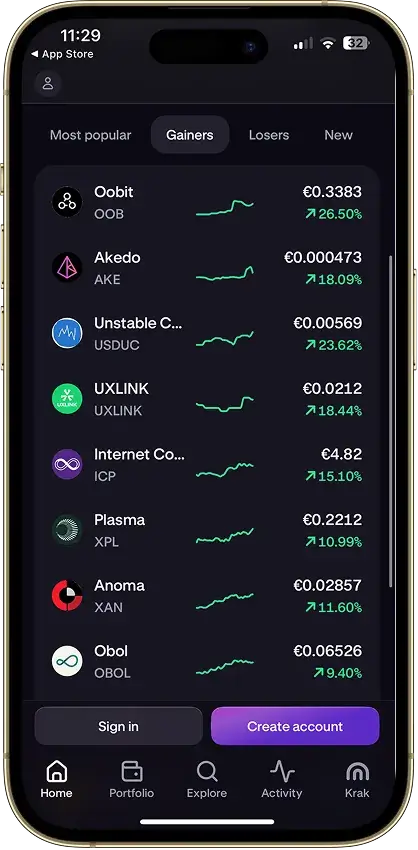
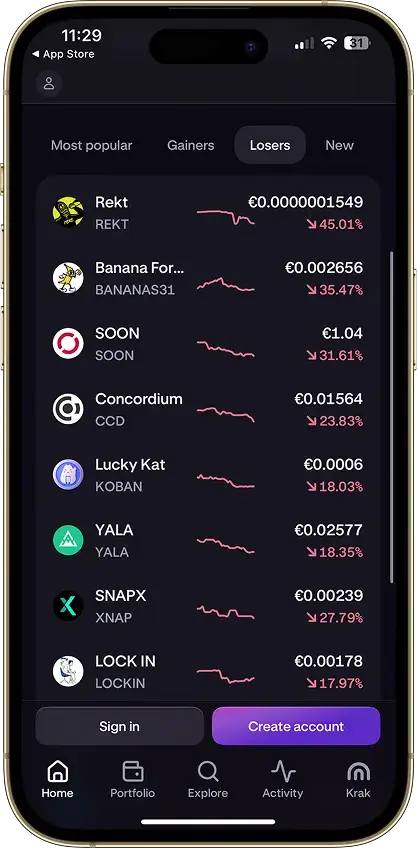
Screenshot 1 of 4
Coinbase screenshots

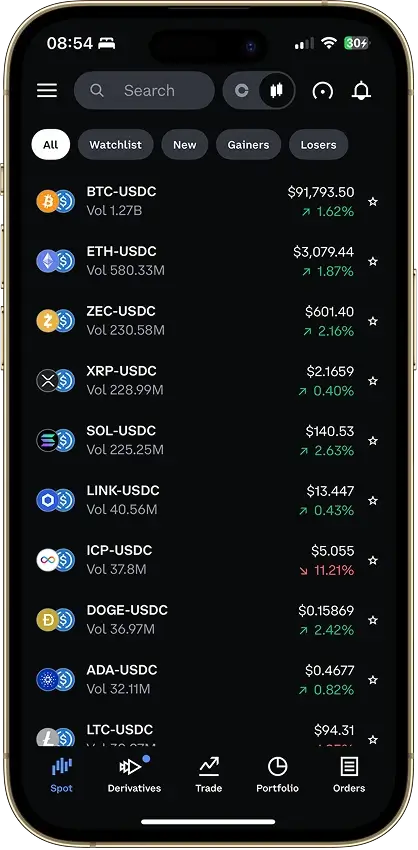
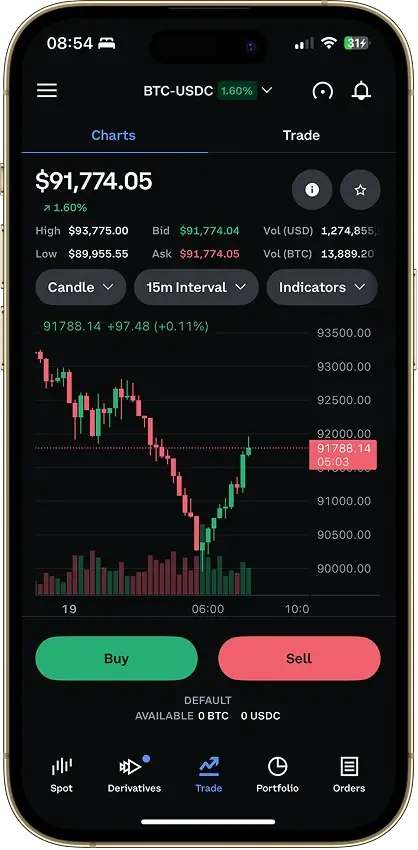
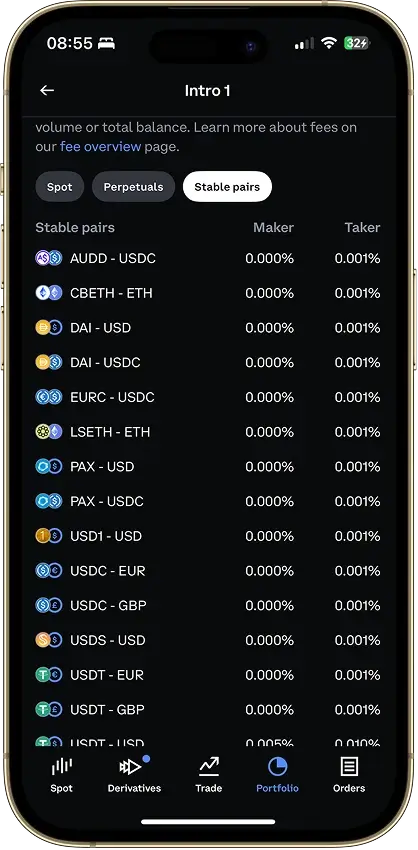
Screenshot 1 of 4
Subscriptions and Trading Costs
Kraken+ targets consumer transactions. Coinbase One combines simple-purchase allowances with tier-specific staking, Advanced rebate and wire benefits.
Kraken Coinbase
Entry-Priced Plan: Simple-Trade Allowance
Kraken wins on the eligible simple-trade allowance at the same $4.99 monthly or $49.99 annual plan price. Spread and payment costs remain.
Kraken+: up to $10,000 a month
Coinbase One Basic: up to $500 a month
Paid-Plan Advanced Spot Rebate
Coinbase wins for an Advanced spot rebate. Preferred caps it at 100 USDC monthly. Include the higher subscription price.
Kraken+ does not waive Kraken Pro commissions
One Preferred and Premium: 25% eligible Advanced spot rebate
Kraken+ costs $4.99 a month or $49.99 a year. It waives eligible consumer Buy, Sell and Convert transaction fees on up to $10,000 a month. Spread and payment-processing charges remain. The waiver does not cover Kraken Pro, API orders, futures or OTC.
Under the Coinbase One terms, Basic’s $4.99 monthly price, or $49.99 annual price, includes a waiver of eligible simple-trade fees on up to $500 a month. Preferred costs $29.99 monthly or $299.99 annually, with a $10,000 simple-trade allowance. Premium costs $299.99 monthly or $2,999.99 annually and removes that eligible simple-trade volume cap. Spread still applies.
Preferred’s 25% Advanced spot rebate is capped at 100 USDC a month. Premium’s 25% rebate is not subject to Preferred’s 100 USDC monthly cap. Applied to the entry US rates, a qualifying 25% rebate gives an effective 0.375% maker or 0.675% taker commission before membership cost. A paid plan can therefore reverse the standard commission comparison, but only after its fee, usage and benefit limits are considered.
Cards and Self-Custody Wallets
Both offer US debit products under separate terms: Krak Card and Coinbase Card. Coinbase also offers a membership-linked credit card. These card programs do not change exchange trading fees.
Kraken Coinbase
US Visa Debit Product
Tie — both offer a US Visa debit product with state restrictions. Rewards and funding terms differ.
Krak Card, excluding NY, ME, MA and IN
Coinbase Card, excluding Hawaii
Recurring Debit Card Fee
Tie — neither charges a recurring card membership fee. Transaction and conversion charges can still apply.
No recurring fee
No annual fee
The US Krak Card is a Visa debit card with no recurring fee and rewards of up to 2% in USD or Bitcoin. It spends from the separate Krak Everyday balance and excludes New York, Maine, Massachusetts and Indiana. This is separate from the UK/EEA Kraken Card. Coinbase Card is a US Visa debit product unavailable in Hawaii, with no annual fee and variable rewards shown in the app.
Coinbase’s separate One Card is an Amex-network credit card requiring credit approval and a qualifying paid membership. Basic members need the $49.99 annual plan, not monthly Basic. Preferred and Premium also qualify. Ordinary rewards run from 2% to 4% in Bitcoin according to qualifying assets. Rates above 2% apply to the first $10,000 of eligible monthly purchases, then fall to 2%. Separate eligible One Card Travel portal bookings earn 5%, outside that ordinary cap.
The Krak rewards schedule requires a $50,000 average qualifying balance for the current 2% top tier. Announced thresholds change on October 15, 2026, when the 2% tier requires $150,000. Lower balances earn less, including no cashback below the minimum qualifying tier.
Kraken’s card help pages disagree on foreign-exchange charges, so check the terms shown for your US card before spending abroad. Debit rewards and a credit card’s rewards should be weighed against their different funding, membership and borrowing costs.
The Kraken Wallet and Coinbase’s Base app are separate self-custody products. Their on-chain token access does not expand US exchange listings. Confirm the destination network before withdrawing, and keep recovery credentials offline.
Final Verdict
Kraken wins for lower standard US trading and wire fees and individual reserve checks. Choose Coinbase for all-state spot access, public financial reporting or simple and Advanced trading in one app.
Affiliate Disclosure
Some links in this comparison are affiliate links. CryptoSlate may earn a commission if you sign up through these links. Our ratings remain editorially independent.
Choose Kraken if you can use its US service and expect to trade on Pro without a paid Coinbase rebate. Its standard wire schedule also suits occasional bank transfers without a subscription. Plan around the seven-day hold on Plaid-funded amounts and use reserve inclusion as one disclosure check, not proof of complete solvency.
Choose Coinbase if you live in New York or Maine, want simple and Advanced trading in one app, or value recurring public-company financial reporting. Frequent users should calculate whether a One plan’s wire waiver and eligible trading rebate justify the subscription.
FAQs
Is Kraken or Coinbase better for US users?
Kraken is our overall pick for eligible US users who prioritize standard trading and wire fees and individual reserve checks. Coinbase wins for all-state spot access, public financial reporting and simple and Advanced trading in one app.
Which has lower entry trading fees?
The opening Kraken Pro rate is 0.40% for maker fills and 0.80% for takers, compared with 0.50% maker and 0.90% taker on US Coinbase Advanced. Either type of $1,000 fill costs $1 less on Kraken at these tiers. Higher tiers and eligible Coinbase One rebates can change the result.
Can I use either exchange in New York or Maine?
Coinbase supports centralized spot accounts in both states, subject to asset restrictions. Kraken’s core US service is unavailable in New York and Maine. Staking and derivatives have additional state and account rules, even where a spot account is available.
Why can I trade a Kraken ACH deposit but not withdraw it?
Kraken’s Plaid ACH route allows trading before its seven-day withdrawal hold ends. The hold applies to the associated funded amount. A purchase or sale does not release it early. Check the release date before planning a transfer to a bank or wallet.
Does Coinbase One make Coinbase cheaper than Kraken?
Yes, when rebate and wire-fee savings exceed the subscription price. Preferred and Premium provide a 25% eligible Advanced spot rebate and waive Coinbase domestic wire fees. Preferred caps its Advanced rebate at 100 USDC per month. Include the subscription price and benefit limits before comparing the result with Kraken’s standard fees.
Which exchange provides proof of reserves?
Kraken provides customer inclusion checks for the assets covered by its independently attested quarterly snapshot. Coinbase publishes SEC financial reports and annual audited statements without a customer Merkle-inclusion tool. Neither disclosure guarantees future withdrawals or insures crypto balances.
Do both offer staking and US derivatives?
Both offer US staking and separately approved crypto futures. Kraken names 17 US staking assets, while Coinbase names nine. Kraken staking excludes more states. Commission, unbonding and contract eligibility depend on the product, so compare the terms shown for your account.
Can I contact either exchange by phone?
Kraken offers in-app voice when available alongside 24/7 chat. Coinbase lets signed-in customers request calls, and separately publishes a 24/7 US and Canada phone route for compromised accounts. Its general contact page lists business hours. Neither exchange promises a particular response or resolution time.






This comparison covers US Kraken and Kraken Pro accounts against US Coinbase and Advanced. Kraken has lower opening spot commissions, while Coinbase serves all 50 states.
A $1,000 taker fill costs $8 on Kraken Pro or $9 on Coinbase Advanced at their opening tiers. Kraken’s seven-day withdrawal hold on Plaid-funded amounts can matter more than that $1 difference if you plan to move the purchase into a wallet.
Kraken’s overall win applies where its US account is available. Between these two exchanges, New York and Maine residents need Coinbase. International fee schedules, global asset totals and overseas derivatives do not determine the US decisions below.