

Kraken combines quarterly reserve-inclusion checks with separate Pro trading tools and account security controls. Its entry spot fees and funding-related withdrawal holds are the main tradeoffs.
Kraken vs Gemini: Fees, Security, and Markets Compared
Kraken wins for lower opening US spot fees, an eligible $4 outgoing wire and covered reserve checks. Gemini wins for New York and Maine access and a separately approved US credit card.

Gemini offers U.S. access, free ACH, and documented controls. Compare alternatives for lower entry fees or access in more countries.
Affiliate Disclosure
Some links in this comparison are affiliate links. CryptoSlate may earn a commission if you sign up through these links. Our ratings remain editorially independent.
Kraken vs Gemini Overview
Kraken is our pick for an eligible US order-book trader using standard fees. Gemini is the available option in New York and Maine, where Kraken's core service is unavailable.
Kraken Gemini
Opening Spot Commission
Kraken wins on both standard opening rates, before spread and other costs.
0.40% maker / 0.80% taker
0.60% maker / 1.20% taker
Standard Outgoing USD Wire
Kraken wins on the exchange fee where its listed wire route is available.
$4 where eligible
$25
Spot Access in New York and Maine
Gemini wins access in these two states.
Unavailable
Available, subject to account and asset rules
Customer Reserve Inclusion
Kraken wins this narrow transparency feature, not a blanket safety ranking.
Quarterly tool for covered snapshot balances
No customer-queryable Merkle inclusion tool
Winners by Category
Kraken wins the overall US trading decision and several defined cost and access categories. Gemini wins state coverage, audited financial reporting and the separately approved US credit-card option.
Kraken Gemini
Kraken is our pick for an eligible US user prioritizing standard trading and funding costs. Gemini can be the only available choice in New York or Maine.
Lower opening spot fees, eligible $4 outgoing wire and covered reserve checks
All-state spot access and audited financial reporting
Kraken wins at the opening order-book tier.
0.40% maker / 0.80% taker
0.60% maker / 1.20% taker
Kraken wins on its exchange fee for an eligible standard wire.
$4 where the route is available
$25
Kraken wins this specific product-access decision. Gemini's US event contracts and ECP margin are different products.
17 Bitnomial perpetual contracts through a separate approved route
US event contracts available. Ordinary US retail crypto perpetuals unavailable
Kraken wins ordinary retail eligibility, subject to approval, market and state rules.
Eligible retail accounts can apply through Kraken Derivatives US
Moonbase ECP status required for its margin offering
Kraken wins on the published US menu size, not net yield or state coverage.
17 assets, with state and product restrictions
ETH, SOL and MON, subject to account rules
Kraken wins individual inclusion checking, not overall solvency or safety.
Merkle checks for covered snapshot balances
No customer-queryable Merkle tool
Kraken wins live general exchange chat availability, not proven resolution speed.
24/7 messaging and live chat
Form and email, with exceptional arranged callbacks
Gemini wins the two-state access decision.
Unavailable
Available, subject to asset and account rules
Gemini wins this distinct company-reporting format. It is not interchangeable with an individual reserve proof.
Reserve attestations cover selected snapshot balances
Published audited financial statements
Gemini wins credit-card availability only. Both have a US card product, but debit and credit costs differ.
Krak Card is a debit card under separate eligibility
Gemini Credit Card requires approval
Kraken is the overall choice for eligible US spot traders using standard fees. Gemini's availability, disclosures or credit card may decide the choice for a different user.
Kraken Pro and ActiveTrader Fees
Kraken has lower standard opening maker and taker rates. Gemini's named zero-fee stablecoin pairs and higher-volume tiers require a separate account-and-market comparison.
Kraken Gemini
Opening Maker Fee
Kraken wins at the standard opening tier.
0.40%
0.60%
Opening Taker Fee
Kraken wins at the standard opening tier.
0.80%
1.20%
$2,000 Taker Fill
Kraken saves $8 in this fee-only example. Spread and slippage are excluded.
$16 commission
$24 commission
Kraken wins standard opening spot commissions. Check the actual assigned tier and market before trading.
A limit order that crosses the book can incur taker rather than maker fees. Compare the fee assigned to the order, not the button used to place it.
Kraken's first lower Pro tier begins at $2,500 of trailing 30-day spot volume. Its assets-on-platform route does not begin until $20,000 at a later tier. Gemini assigns the lower qualifying fee from trading volume or eligible asset balance. Neither platform's top advertised rate establishes a typical account cost.
Gemini publishes zero-commission terms for named GUSD/USD, RLUSD/USD and USDC/GUSD pairs. Other qualifying stablecoin markets have separate terms. This exception does not change the ordinary-pair winner above. Consumer buy flows and Kraken+ are separate from the Pro and ActiveTrader rates compared here.
Listed Assets and Available Markets
The published global asset figures do not measure a matched US account inventory. The practical decision is whether each platform lists the exact market and withdrawal network you need.
Kraken Gemini
US Spot Trading Availability
Tie on offering US spot trading, not on identical asset selection or liquidity.
Order-book markets for eligible US accounts
Order-book markets for eligible US accounts
Tie on US spot availability. Neither published total proves a larger usable inventory for your account.
Kraken's 600-plus figure describes global assets. Gemini's dated company snapshot lists 99 cryptocurrencies, but is not the live inventory of every US account. These counts have different dates and scopes, so they do not support an asset-count winner.
Check the intended pair in each account, then confirm the receiving network before sending funds. Assets in the separate Kraken Wallet or Gemini Wallet do not expand the centralized exchange menu.
US Perpetuals, Margin and Staking
Kraken has separately approved US retail routes for crypto perpetuals and spot margin. Gemini's US event contracts and ECP margin are different products. Both have eligible US staking menus.
Kraken Gemini
US Retail Crypto Perpetuals
Kraken wins this defined crypto-perpetual route, not every derivatives category.
17 Bitnomial contracts through Kraken Derivatives US, after approval
US event contracts available. Ordinary US retail crypto perpetuals unavailable
Ordinary US Retail Spot Margin
Kraken wins ordinary retail eligibility. Approval and instrument limits still apply.
Eligible retail users can apply. Up to 20× on BTC/USD
Moonbase Eligible Contract Participant status required
Published US Staking Selection
Kraken wins on the named US asset menu only. Neither net rewards nor state coverage is ranked.
17 assets, with narrower state eligibility
ETH, SOL and MON where eligible
Kraken wins the defined US retail crypto-perpetual, retail-margin and published staking-selection rows. Product approval remains separate from spot access.
Kraken Derivatives US requires separate onboarding for US perpetuals and margin. Its current futures overview names 17 Bitnomial perpetual contracts. Its US retail margin page allows up to 20 times collateral on BTC/USD, with lower caps on other named pairs. Do not carry these permissions into a standard spot account. Borrowing and perpetual funding can magnify losses.
Gemini's Moonbase margin route requires Eligible Contract Participant status. Its non-US perpetual offering is unavailable to US persons. Gemini also has US event contracts through Gemini Titan, but those are not a matched retail crypto-perpetual product.
Kraken lists 17 US staking assets. Its onchain program is limited to 37 named states plus DC and Puerto Rico, narrower than its core spot availability. Gemini names ETH, SOL and MON. Kraken's Flexible and Auto Earn commission is 30% where those programs apply. Bonded tiers differ. Gemini's agreement and help pages conflict on a 35% versus 25% commission. Compare the same asset's eligible net reward and exit period. Neither earns a yield winner here.
Order Controls, APIs and Execution
Both exchanges support US order-book trading and REST and WebSocket connections. Gemini offers a public retail sandbox. Kraken's futures demo and qualified spot testing are different environments.
Kraken Gemini
US Order-Book Interface
Tie on an order-book interface. Specific instructions and fills need separate checks.
Kraken Pro
Gemini ActiveTrader
REST and WebSocket APIs
Tie on these protocols, not endpoint coverage or execution speed.
Available
Available
Public Retail Sandbox
Gemini wins a public retail spot-API practice environment. Simulated fills do not prove live execution.
Futures demo. Spot testing requires qualification
REST and WebSocket exchange sandbox with test funds
Both support order books and APIs. Gemini wins the narrow public retail spot-sandbox decision.
Check the exact order instruction required by your strategy on the market and interface you intend to use. A published API list is not an execution-quality measurement. Gemini's sandbox supports simulated exchange testing, while Kraken's public futures demo does not establish live US contract permission or open spot sandbox access.
ACH, Wires and Crypto Withdrawals
Both charge no exchange fee for ACH and incoming USD wires. Kraken's eligible standard outgoing wire is cheaper, but funding holds and provider availability determine when proceeds can leave.
Kraken Gemini
ACH Deposit Exchange Fee
Tie on the exchange fee. Kraken's Plaid route excludes Texas, New York and Maine. Holds differ.
$0 via eligible Plaid route
$0
ACH Withdrawal Exchange Fee
Tie on exchange fees, not release timing or limits.
$0 on the eligible route
$0
Incoming USD Wire Exchange Fee
Tie where the named route is available. Bank or intermediary fees may differ.
$0 via eligible Dart Bank route
$0
Standard Outgoing USD Wire Fee
Kraken wins the stated exchange fee, subject to the account's wire route.
$4, $20 minimum where eligible
$25, $25.01 minimum
Kraken wins the eligible standard outgoing USD wire fee. Free ACH and incoming-wire exchange fees tie.
Kraken's Plaid ACH deposit can provide near-instant trading credit while holding the associated amount from withdrawal for seven days. Gemini ordinarily takes four to five business days for ACH settlement before withdrawal. Neither figure is a guarantee that unrelated account checks will clear at the same time.
Kraken's Plaid ACH and Customers Bank FedWire funding routes exclude Texas, as well as New York and Maine. That does not establish that its separate Dart Bank wire route or every outgoing wire provider excludes Texas. Check the funding provider and destination offered inside the account before transferring money.
A crypto withdrawal has an asset- and network-specific fee and minimum at both exchanges. Compare the same route at checkout. The exchange wire-fee award does not cover network fees, card purchases, spread or bank charges.
US States, Verification and Account Entities
Gemini's core spot service covers New York and Maine, where Kraken's does not. Identity checks and separate product permissions still apply after account opening.
Kraken Gemini
New York and Maine Spot Access
Gemini wins access in these states.
Core service unavailable
Available for supported accounts and assets
Ordinary Identity Verification
Tie on requiring identity checks. Approval times are not ranked.
Required
Required
Gemini wins the two-state access decision. Both require verification for ordinary trading.
A New York or Maine resident cannot access Kraken's core spot service by switching from its consumer interface to Kraken Pro. Gemini serves both states, subject to asset and account rules. US Kraken staking, margin, futures, funding providers and the Krak Card each have their own eligibility boundaries.
Gemini's US user-agreement routing assigns Idaho, Louisiana, New York, Ohio and Texas residents to Gemini Trust. Other listed US states use Moonbase terms. That legal-entity split does not by itself change the opening ActiveTrader fee comparison. Confirm the contracting entity in the account terms.
Reserve Checks, Financial Audits and Account Security
Kraken lets eligible customers check inclusion of covered balances in a reserve snapshot. Gemini publishes audited company financial statements. These disclosures answer different questions.
Kraken Gemini
Individual Reserve Inclusion
Kraken wins this individual snapshot check, not a solvency or loss-protection guarantee.
Merkle check on covered snapshot balances
No customer-queryable Merkle inclusion proof
Audited Company Financial Statements
Gemini wins this company-level disclosure format, not a customer reserve-inclusion check.
Selected reserve attestations, not the same reporting format
Published audited financial statements
Account Two-Factor Protection
Tie on published 2FA options. These descriptions do not rank security outcomes.
Authenticator or security-key controls
Required 2FA with hardware-key support
Kraken wins individual reserve inclusion. Gemini wins audited company reporting. No blanket safety winner is established.
Kraken's covered-asset reserve snapshot gives an eligible customer a way to check inclusion at a point in time. It does not cover every asset, every liability or future withdrawal ability. Gemini's audited financial statements through December 2025 concern company reporting and do not give each customer a comparable Merkle check.
Neither form of disclosure guarantees recovery from a security incident, fraud or insolvency. Use passkeys or a security key, verify withdrawal destinations and consider the custody risks before leaving a large balance on either exchange.
Apps, Wallets, Cards and Customer Support
Kraken wins general live-chat availability. Both offer US card products under different terms: Krak is debit, while Gemini's card is credit and requires approval.
Kraken Gemini
General Exchange Live Chat
Kraken wins live general exchange chat, not response or resolution speed.
24/7 messaging and live chat
General form/email, with exceptional arranged callbacks
US Card Product
Tie on a named US card product. Debit and credit costs and eligibility differ.
Krak Card, a Visa debit card with state exclusions
Gemini Credit Card, subject to credit approval
US Credit-Card Option
Gemini wins the specific credit-card option, not overall card value.
No Kraken credit-card product in this comparison
Gemini Credit Card
Kraken wins general exchange live chat. Gemini wins US credit-card availability. Both have a separate US card product.
The US Krak Card launched in August 2026 and is separate from the UK/EEA Kraken Card. It spends from a Krak Everyday balance and excludes New York, Maine, Massachusetts and Indiana. Its top 2% cashback tier currently requires a $50,000 average qualifying balance. An announced October 15, 2026 change raises that threshold to $150,000. Lower balances earn less. Check the current app terms before applying.
Gemini offers a separately approved credit card for eligible US applicants. Its 4% qualifying gas and transit rate applies to the first $300 of that category's monthly spending, then 1%. Other published rates vary by category. Credit approval, repayment and interest obligations make it unlike a funded debit card.
Kraken publishes general 24/7 live chat and conditional in-app voice. Gemini staffs general form/email support around the clock and can arrange exceptional callbacks. Its public 24/7 phone line is for card issues, not general exchange support. Neither publishes a matched resolution-time result.
Screenshots
Kraken screenshots

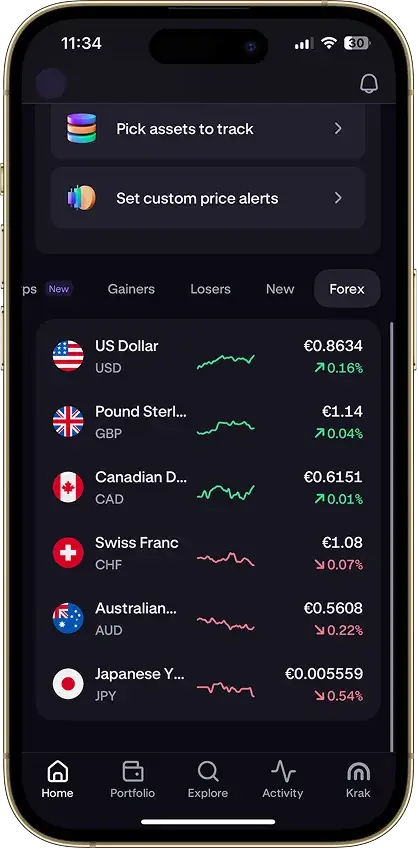
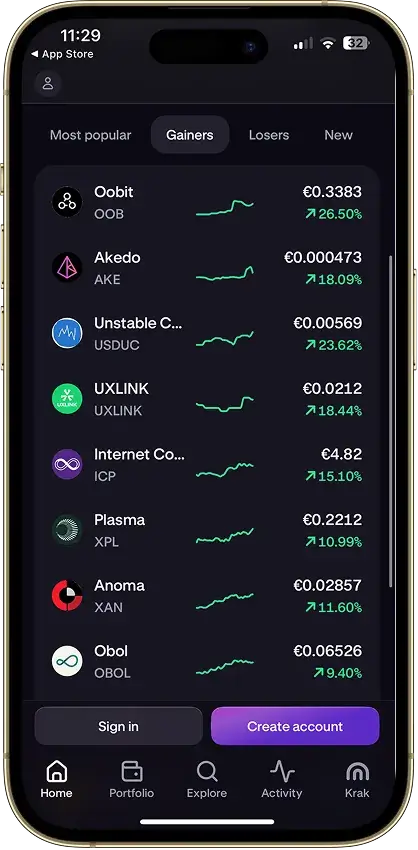
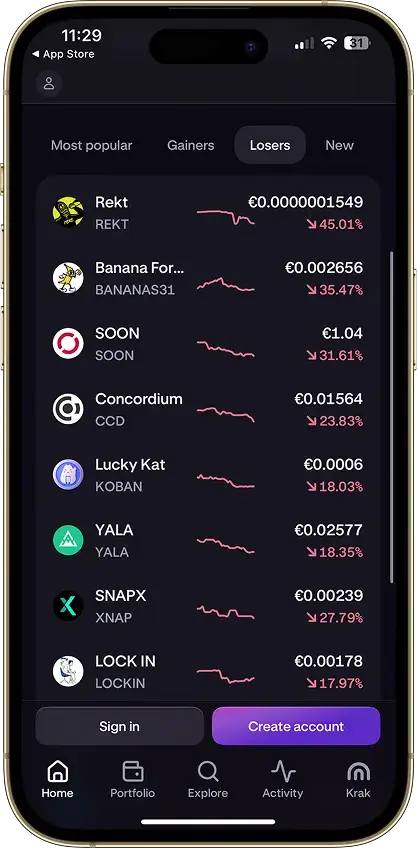
Screenshot 1 of 4
Gemini screenshots

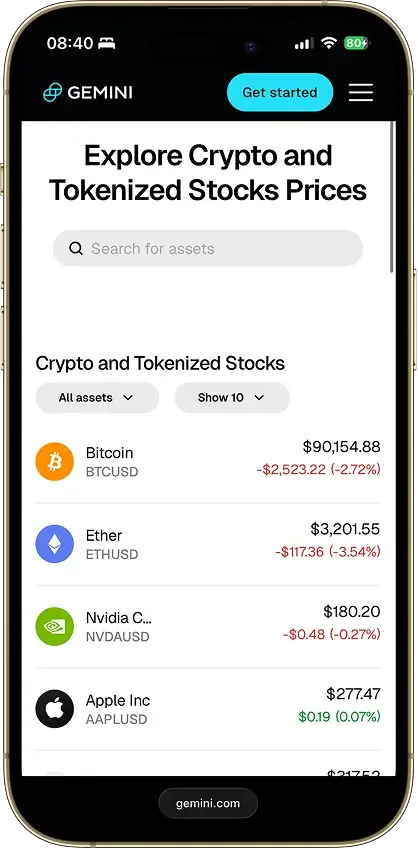


Screenshot 1 of 4
Final Verdict
Kraken wins this US comparison for lower standard opening spot fees, an eligible $4 outgoing wire and covered reserve-inclusion checks. Gemini is the spot-access choice in New York and Maine.
Affiliate Disclosure
Some links in this comparison are affiliate links. CryptoSlate may earn a commission if you sign up through these links. Our ratings remain editorially independent.
Choose Kraken if you can open the relevant US account and value its standard Pro trading and wire costs. Plan around the seven-day hold on Plaid-funded amounts. Its reserve tool checks covered balances at a snapshot, and margin, futures, staking and Krak Card each require separate eligibility.
Choose Gemini if Kraken does not serve your state, or if audited company reporting and a separately approved credit card matter more to you. ActiveTrader's ordinary opening fees are higher, but special pairs and account tiers can alter the price of a particular trade.
Use the US account terms for the exact trade and withdrawal route. International product menus do not determine the outcome for a US resident.
FAQs
Which is cheaper for a US spot trader, Kraken or Gemini?
The opening Pro tier charges makers 0.40% and takers 0.80%. ActiveTrader starts with 0.60% maker commission and 1.20% taker commission. Each Kraken rate is one-third lower. A $2,000 taker fill costs $16 instead of $24 before spread, slippage and any funding or withdrawal charge.
Why would a US user choose Gemini over Kraken?
Gemini serves New York and Maine, where Kraken is unavailable. It also offers a separately approved US credit card and publishes audited financial statements. Those features can matter more than opening spot commission, but they do not make its ordinary ActiveTrader trades cheaper.
Can I withdraw a new ACH deposit immediately?
Kraken applies a seven-day withdrawal hold to each associated Plaid-funded amount, even when trading credit arrives quickly. Gemini’s ACH normally settles in four to five business days before the associated value can leave. Calendar timing and account checks prevent a universal immediate-withdrawal promise.
Does Kraken’s proof of reserves make it safer than Gemini?
Kraken’s tool verifies covered balance inclusion in a quarterly snapshot. It is not a full audit of corporate liabilities or a promise of future solvency. Gemini uses audited statements and control examinations without a customer Merkle tool. These checks address different risks, so they do not establish an overall safety winner.
Can US retail accounts use perpetuals or margin at both?
Kraken offers separately approved US retail crypto-perpetual and spot-margin routes, subject to eligibility. Gemini's US margin requires ECP status. Its event contracts are a different product from retail crypto perpetuals.
Which has the lower staking fee?
Kraken publishes 30% commission for eligible Flexible and Auto Earn rewards, with different bonded tiers. Gemini's staking agreement says 35%, but its help page says 25%. Those conflicting and product-specific terms do not establish a universal lower fee. Check the applicable account agreement for the same asset and staking product.
Can US users get cards from both exchanges?
Yes, subject to separate eligibility. Krak Card is a US Visa debit product with state exclusions. Gemini Credit Card requires a separate credit application. The UK/EEA Kraken Card is not the US Krak Card.
Is either exchange’s phone support available around the clock?
Kraken publishes 24/7 general chat and conditional in-app voice. Gemini's general support is primarily form/email, staffed around the clock, with exceptional arranged callbacks. Gemini's 24/7 phone line is for card issues. Neither promises a resolution time.




This is a US-to-US comparison of Kraken Pro and Gemini ActiveTrader, with separately eligible products named where relevant. Kraken Pro starts with a lower ordinary spot fee than Gemini ActiveTrader. Both are US spot exchanges, but their bank rails and product approvals differ. If neither supports your required asset or funding route, compare other options in the exchange hub.
On a $2,000 opening-tier taker fill, Kraken charges $16 and Gemini $24 in exchange commission. An eligible standard outgoing USD wire then adds $4 or $25, respectively. Those $20 and $49 combined examples exclude spread, bank charges, changing fee tiers and any withdrawal hold.
Kraken's overall decision applies only where the account and the intended funding route are available. In New York and Maine, Gemini wins the access decision before the fee comparison begins.