Ethereum ETFs offer brokerage exposure to ether, but their costs and staking arrangements differ. This comparison covers eleven U.S. spot funds, with dated ratings and fund summaries. Start with the annual charge, then check whether the fund stakes, how much of the rewards it retains and which custody terms apply.
Rating clarification: FETH and TETH are currently unrated while specific methodology inputs remain unresolved. Any 0.0/10 or “Poor” label shown for these two funds is a display error, not an editorial rating.
Ethereum ETFs at a Glance
Observations: Aug 31, 2026 – Sep 24, 2026; dates vary by fund and metric
- Annual Fee
- 0.15%
- Fund assets
- $2.5BNet assets (GAAP)
- Bid/ask spread
- 0.04%30-day median
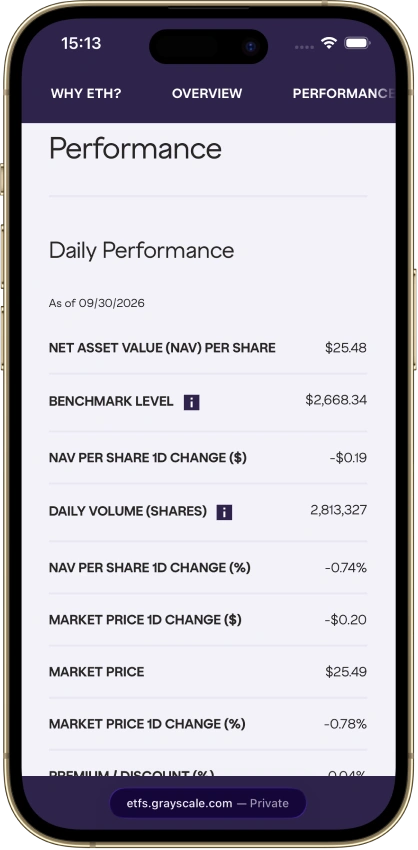
- 0.15% sponsor fee plus a 6% staking cut
- 0.271% combined cost at the reference rate
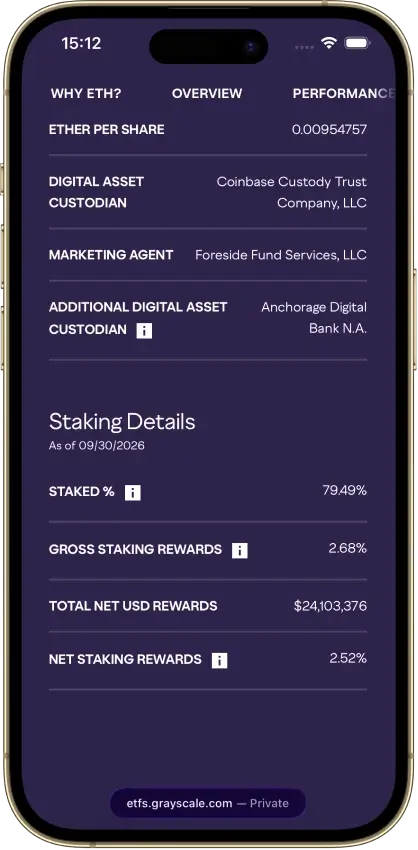
- 77% of ether staked as of Sep. 24, 2026
Brokers offering ETH
 Robinhood
Trade ETH shares through Robinhood’s U.S. securities brokerage.
U.S. accounts, subject to account eligibility and trading permissions.
Listing: Primary listing (ETH — NYSE Arca). Verified markets: United States. Eligible accounts: U.S. self-directed securities brokerage through Robinhood Financial LLC; check IRA and fractional-share eligibility in your account.
 Webull
Trade ETH shares through Webull’s U.S. securities brokerage.
U.S. accounts, subject to account eligibility and trading permissions.
Listing: Primary listing (ETH — NYSE Arca). Verified markets: United States. Eligible accounts: U.S. self-directed securities brokerage through Webull Financial LLC; check IRA and fractional-share eligibility in your account.
Availability depends on country and account.
- Annual Fee
- 0.25%
- Fund assets
- $9.69BNet assets
- Bid/ask spread
- 0.05%30-day median
- BlackRock’s iShares ether fund
- $9.69 billion in net assets, Sep. 23, 2026
- Coinbase custody, plus Anchorage appointment
Brokers offering ETHA
- Robinhood
Trade ETHA shares through Robinhood’s U.S. securities brokerage.
U.S. accounts, subject to account eligibility and trading permissions.
Listing: Primary listing (ETHA — Nasdaq). Verified markets: United States. Eligible accounts: U.S. self-directed securities brokerage through Robinhood Financial LLC; check IRA and fractional-share eligibility in your account.
- Webull
Trade ETHA shares through Webull’s U.S. securities brokerage.
U.S. accounts, subject to account eligibility and trading permissions.
Listing: Primary listing (ETHA — Nasdaq). Verified markets: United States. Eligible accounts: U.S. self-directed securities brokerage through Webull Financial LLC; check IRA and fractional-share eligibility in your account.
Availability depends on country and account.
- Annual Fee
- 0.19%
- Fund assets
- $56.69MTotal net assets
- Bid/ask spread
- 0.06%30-day median
- 0.19% sponsor fee
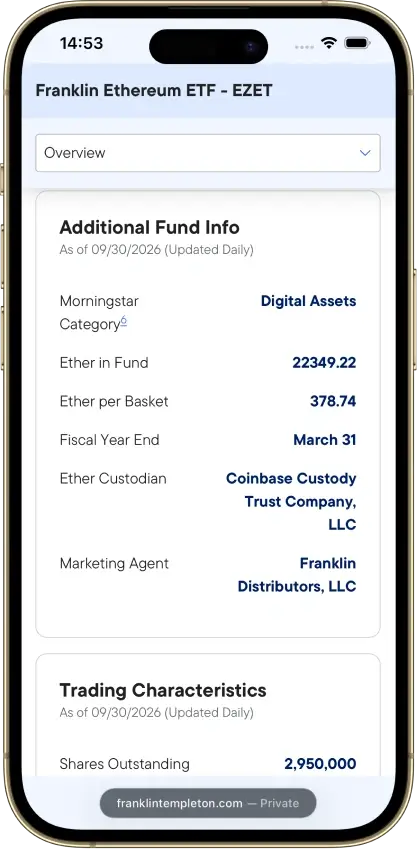
- Coinbase custody on a negligence standard
- Franklin Templeton ether fund
Brokers offering EZET
- Robinhood
Trade EZET shares through Robinhood’s U.S. securities brokerage.
U.S. accounts, subject to account eligibility and trading permissions.
Listing: Primary listing (EZET — Cboe BZX). Verified markets: United States. Eligible accounts: U.S. self-directed securities brokerage through Robinhood Financial LLC; check IRA and fractional-share eligibility in your account.
- Webull
Trade EZET shares through Webull’s U.S. securities brokerage.
U.S. accounts, subject to account eligibility and trading permissions.
Listing: Primary listing (EZET — Cboe BZX). Verified markets: United States. Eligible accounts: U.S. self-directed securities brokerage through Webull Financial LLC; check IRA and fractional-share eligibility in your account.
Availability depends on country and account.
- Annual Fee
- 2.5%
- Fund assets
- $1.97BNet assets (GAAP)
- Bid/ask spread
- 0.05%30-day median
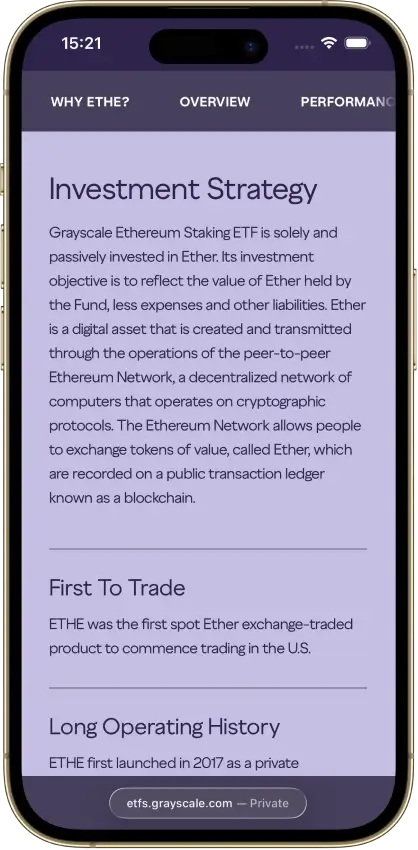
- Grayscale’s original ether trust, from 2017
- 80% of ether staked as of Sep. 24, 2026
- Staked share published daily
Brokers offering ETHE
- Robinhood
Trade ETHE shares through Robinhood’s U.S. securities brokerage.
U.S. accounts, subject to account eligibility and trading permissions.
Listing: Primary listing (ETHE — NYSE Arca). Verified markets: United States. Eligible accounts: U.S. self-directed securities brokerage through Robinhood Financial LLC; check IRA and fractional-share eligibility in your account.
- Webull
Trade ETHE shares through Webull’s U.S. securities brokerage.
U.S. accounts, subject to account eligibility and trading permissions.
Listing: Primary listing (ETHE — NYSE Arca). Verified markets: United States. Eligible accounts: U.S. self-directed securities brokerage through Webull Financial LLC; check IRA and fractional-share eligibility in your account.
Availability depends on country and account.
- Annual Fee
- 0.2%
- Fund assets
- $297.35MNet assets (AUM)
- Bid/ask spread
- 0.06%30-day median
- 0.20% sponsor fee
- Proof-of-reserves report published daily
- Coinbase custody
Brokers offering ETHW
- Robinhood
Trade ETHW shares through Robinhood’s U.S. securities brokerage.
U.S. accounts, subject to account eligibility and trading permissions.
Listing: Primary listing (ETHW — NYSE Arca). Verified markets: United States. Eligible accounts: U.S. self-directed securities brokerage through Robinhood Financial LLC; check IRA and fractional-share eligibility in your account.
- Webull
Trade ETHW shares through Webull’s U.S. securities brokerage.
U.S. accounts, subject to account eligibility and trading permissions.
Listing: Primary listing (ETHW — NYSE Arca). Verified markets: United States. Eligible accounts: U.S. self-directed securities brokerage through Webull Financial LLC; check IRA and fractional-share eligibility in your account.
Availability depends on country and account.
- Annual Fee
- 0.25%
- Fund assets
- $24.31MMarket value of holdings
- Bid/ask spread
- 0.08%30-day median
- Coinbase custody on a negligence standard
- Invesco and Galaxy ether fund
- Creations in cash or ether
Brokers offering QETH
- Robinhood
Trade QETH shares through Robinhood’s U.S. securities brokerage.
U.S. accounts, subject to account eligibility and trading permissions.
Listing: Primary listing (QETH — Cboe BZX). Verified markets: United States. Eligible accounts: U.S. self-directed securities brokerage through Robinhood Financial LLC; check IRA and fractional-share eligibility in your account.
- Webull
Trade QETH shares through Webull’s U.S. securities brokerage.
U.S. accounts, subject to account eligibility and trading permissions.
Listing: Primary listing (QETH — Cboe BZX). Verified markets: United States. Eligible accounts: U.S. self-directed securities brokerage through Webull Financial LLC; check IRA and fractional-share eligibility in your account.
Availability depends on country and account.
- Annual Fee
- 0.2%
- Fund assets
- $128.85MTotal net assets
- Bid/ask spread
- 0.11%30-day median
- 0.20% sponsor fee
- Gemini custody, plus Coinbase appointment
- VanEck ether fund
Brokers offering ETHV
- Robinhood
Trade ETHV shares through Robinhood’s U.S. securities brokerage.
U.S. accounts, subject to account eligibility and trading permissions.
Listing: Primary listing (ETHV — Cboe BZX). Verified markets: United States. Eligible accounts: U.S. self-directed securities brokerage through Robinhood Financial LLC; check IRA and fractional-share eligibility in your account.
- Webull
Trade ETHV shares through Webull’s U.S. securities brokerage.
U.S. accounts, subject to account eligibility and trading permissions.
Listing: Primary listing (ETHV — Cboe BZX). Verified markets: United States. Eligible accounts: U.S. self-directed securities brokerage through Webull Financial LLC; check IRA and fractional-share eligibility in your account.
Availability depends on country and account.
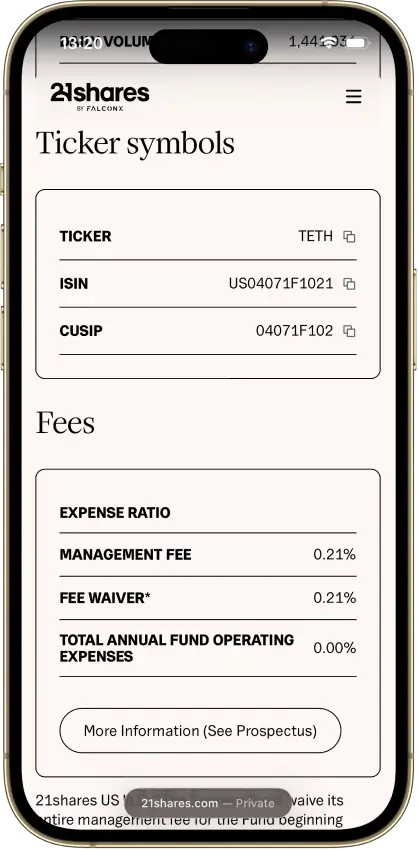
- Annual Fee
- 0.21%
- Fund assets
- $35.94MNet assets
- Bid/ask spread
- 0.08%30-day median
- Three named staking providers
- Two providers reimburse slashing losses
- 0% sponsor fee until Oct. 8, 2027
Brokers offering TETH
- Robinhood
Trade TETH shares through Robinhood’s U.S. securities brokerage.
U.S. accounts, subject to account eligibility and trading permissions.
Listing: Primary listing (TETH — Cboe BZX). Verified markets: United States. Eligible accounts: U.S. self-directed securities brokerage through Robinhood Financial LLC; check IRA and fractional-share eligibility in your account.
- Webull
Trade TETH shares through Webull’s U.S. securities brokerage.
U.S. accounts, subject to account eligibility and trading permissions.
Listing: Primary listing (TETH — Cboe BZX). Verified markets: United States. Eligible accounts: U.S. self-directed securities brokerage through Webull Financial LLC; check IRA and fractional-share eligibility in your account.
Availability depends on country and account.
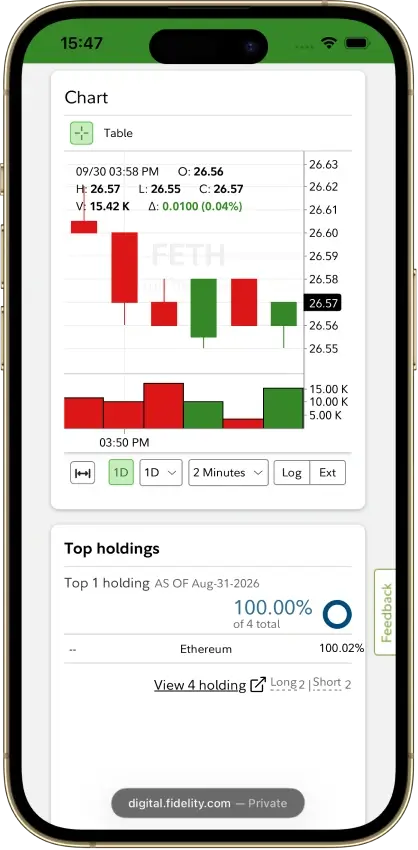
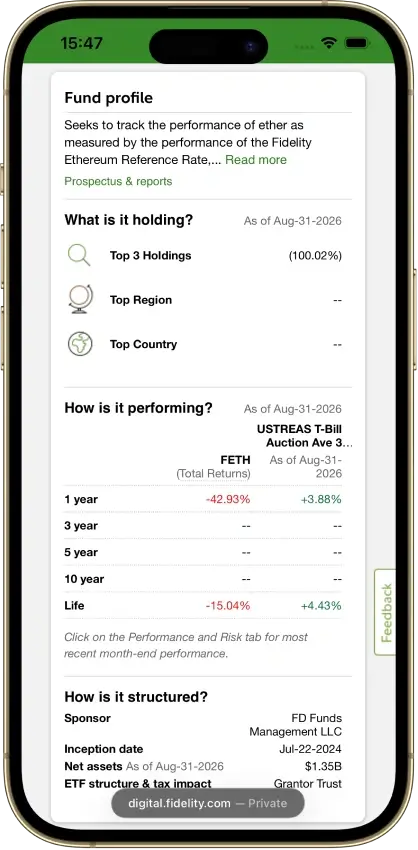
- Annual Fee
- 0.25%
- Fund assets
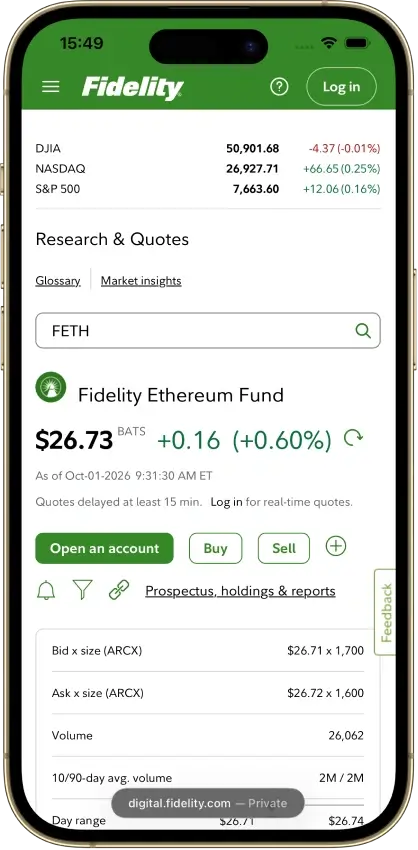
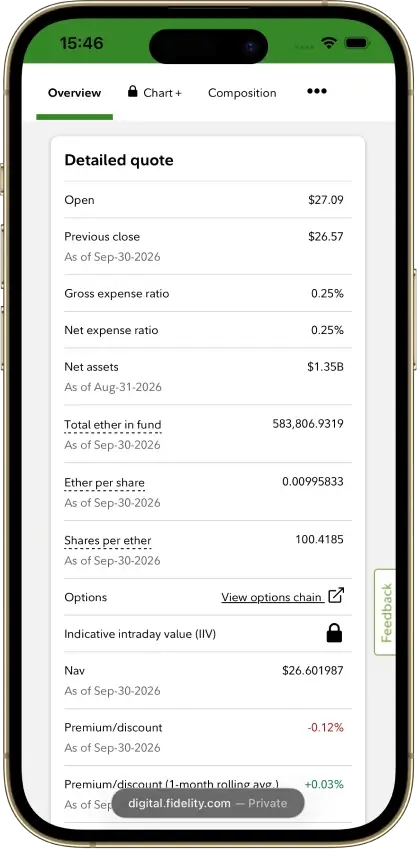
- $1.35BNet assets, month end
- Bid/ask spread
- 0.04%30-day median
- Flat 15% cut of staking rewards
- Fidelity Digital Assets among its custodians
- Staking via Blockdaemon, Figment and Galaxy
Brokers offering FETH
- Robinhood
Trade FETH shares through Robinhood’s U.S. securities brokerage.
U.S. accounts, subject to account eligibility and trading permissions.
Listing: Primary listing (FETH — Cboe BZX). Verified markets: United States. Eligible accounts: U.S. self-directed securities brokerage through Robinhood Financial LLC; check IRA and fractional-share eligibility in your account.
- Webull
Trade FETH shares through Webull’s U.S. securities brokerage.
U.S. accounts, subject to account eligibility and trading permissions.
Listing: Primary listing (FETH — Cboe BZX). Verified markets: United States. Eligible accounts: U.S. self-directed securities brokerage through Webull Financial LLC; check IRA and fractional-share eligibility in your account.
 Fidelity
Trade FETH shares through Fidelity’s U.S. securities brokerage.
U.S. accounts, subject to account eligibility and trading permissions.
Listing: Primary listing (FETH — Cboe BZX). Verified markets: United States. Eligible accounts: U.S. brokerage, trust and IRA accounts through Fidelity Brokerage Services LLC, subject to eligibility.
Availability depends on country and account.
CryptoSlate may earn a commission when you visit partner sites through links on this page, at no extra cost to you. Our rankings and reviews remain editorially independent and based on our published methodology. Read disclosure
Disclaimer: CryptoSlate may receive a commission when you click links on our site and make a purchase or complete an action with a third party. This does not influence our editorial independence, reviews, or ratings, and we always aim to provide accurate, transparent information to our readers.Annual charges are the ongoing rates before temporary waivers. Waivers can have expiry dates and asset limits, detailed in the fund summaries. Other fund expenses and trading costs may still apply.
Six of the eleven funds have staking arrangements. Their ongoing annual charges range from 0.14% to 2.50%, before any waiver. The staking reward cut is a separate deduction, so the lowest headline fee does not establish the lowest combined cost.
The ranking blocks draw from published fund reviews. The wider research comparison below covers eleven funds, including ETHB and MSSE, which do not yet have full reviews. Ratings use the September 24, 2026 assessment. Missing ratings are not zero.
Ethereum ETF Comparison Table
| Fund | Ticker | Issuer | Annual Fee (%) | Exchange |
|---|---|---|---|---|
 Grayscale Ethereum Staking Mini ETF Grayscale Ethereum Staking Mini ETF | ETH | Grayscale | 0.15 | NYSE Arca |
 iShares Ethereum Trust ETF iShares Ethereum Trust ETF | ETHA | BlackRock / iShares | 0.25 | Nasdaq |
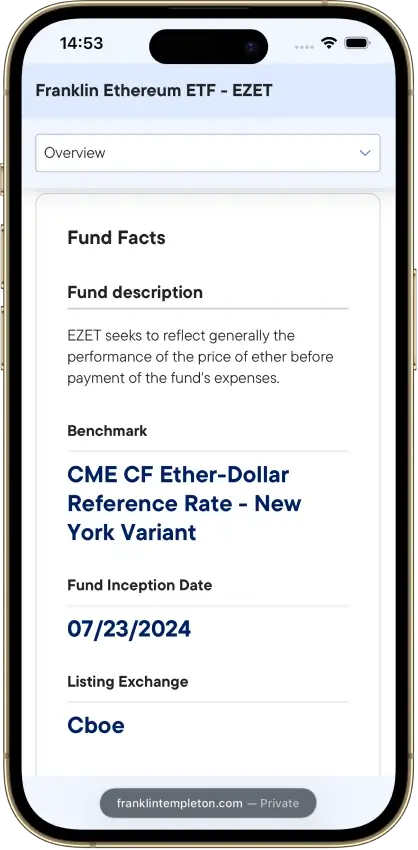
 Franklin Ethereum ETF Franklin Ethereum ETF | EZET | Franklin Templeton | 0.19 | Cboe BZX |
| Grayscale Ethereum Staking ETF | ETHE | Grayscale | 2.50 | NYSE Arca |
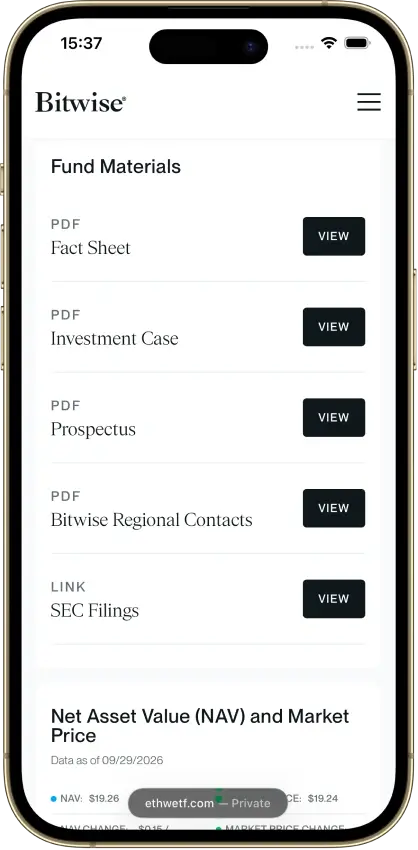
 Bitwise Ethereum ETF Bitwise Ethereum ETF | ETHW | Bitwise | 0.20 | NYSE Arca |
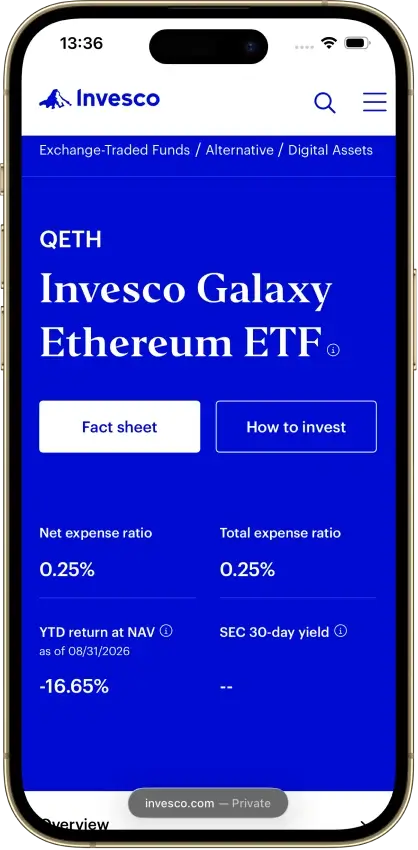
 Invesco Galaxy Ethereum ETF Invesco Galaxy Ethereum ETF | QETH | Invesco / Galaxy | 0.25 | Cboe BZX |
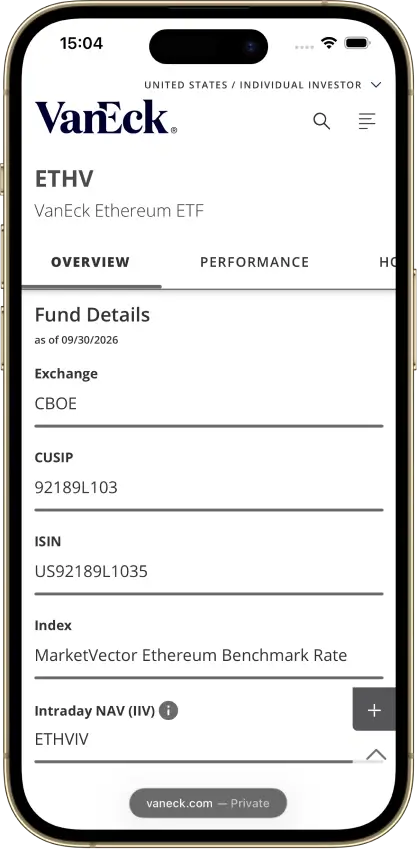
 VanEck Ethereum ETF VanEck Ethereum ETF | ETHV | VanEck | 0.20 | Cboe BZX |
 21Shares Ethereum Staking ETF 21Shares Ethereum Staking ETF | TETH | 21Shares | 0.21 | Cboe BZX |
 Fidelity Ethereum Fund Fidelity Ethereum Fund | FETH | Fidelity | 0.25 | Cboe BZX |
Ethereum ETF Staking and Spread Comparison
The table below preserves the dated staking and spread evidence for all eleven assessed funds. ETHB and MSSE are comparison-only entries without full review links.
| Fund | Rating /10 and Spread Sensitivity | Published 30-Day Median Spread | Staked Share and Date | Gross Staking Rewards Withheld |
|---|---|---|---|---|
| ETH | 8.7/10 (8.6 at a 0.05% spread) | 0.04% (2026-09-23) | 77.00% (2026-09-24) including queues | 6% |
| ETHA | 7.3/10 | 0.05% (2026-09-23) | Does not stake | Not applicable |
| ETHB | 8.4/10 (8.3 at a 0.07% spread) | 0.06% (2026-09-23) | 78.48% (2026-09-23) queues not separated | 10% |
| ETHE | 6.7/10 (6.8 at a 0.04% spread) | 0.05% (2026-09-23) | 80.14% (2026-09-24) including queues | 23% |
| ETHV | 6.4/10 (6.3 at a 0.12% spread) | 0.11% (2026-09-22, third-party data) | Does not stake | Not applicable |
| ETHW | 6.6/10 (6.5 at a 0.07% spread) | 0.06% (2026-09-21) | Does not stake | Not applicable |
| EZET | 6.9/10 (6.7 at a 0.11% spread) | 0.06% (2026-09-23) | Does not stake | Not applicable |
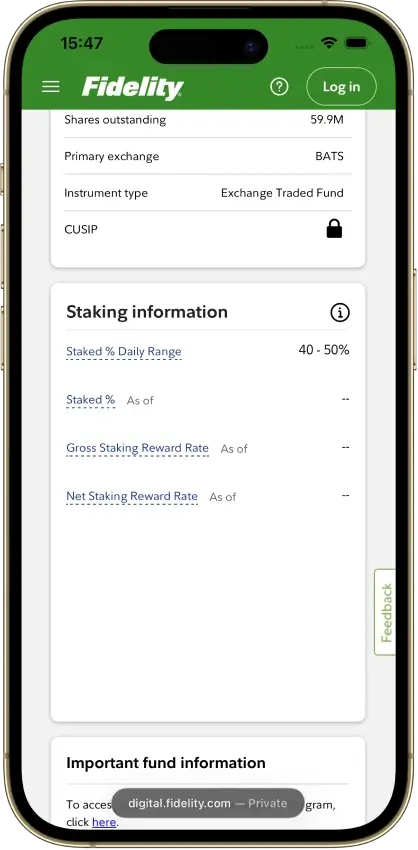
| FETH | No overall (Dated staked share unresolved) | 0.04% (2026-09-23) | 30–40%, undated range | 15% |
| MSSE | Not yet rateable (First assessment not yet due) | 0.33% (2026-09-23) | Not disclosed at cutoff | 5% |
| QETH | 6.5/10 (6.6 at a 0.07% spread, 6.4 at a 0.12% spread) | 0.08% (2026-09-23) | Does not stake | Not applicable |
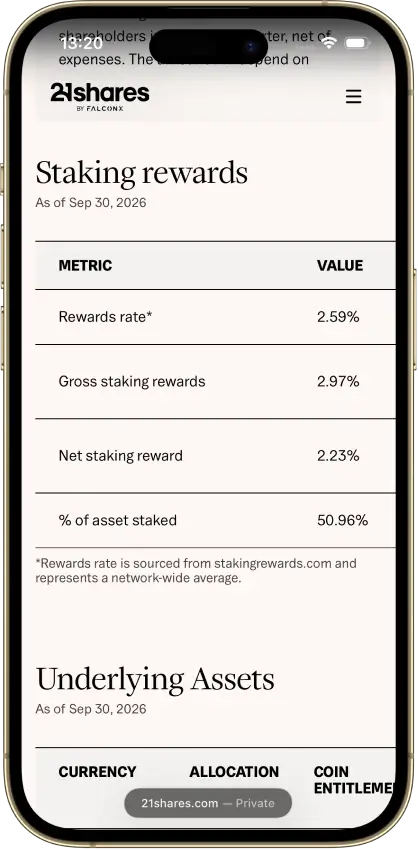
| TETH | No overall (Slashing contract term unresolved) | 0.08% (2026-09-22) | 56.91% (2026-09-23) | 25% |
Spread dates and staked-share dates are separate observations. ETHV uses labeled third-party spread data because the issuer does not publish the required median. Reward deductions are the stated shares of gross staking rewards at the assessment date and may change. A higher staked percentage is not a promised yield.
The published spread is a historical median, not the quote for your next trade. Some staked percentages include activation or exit queues and should not be read as identical measures of reward-earning ether.
Ethereum ETF Reviews
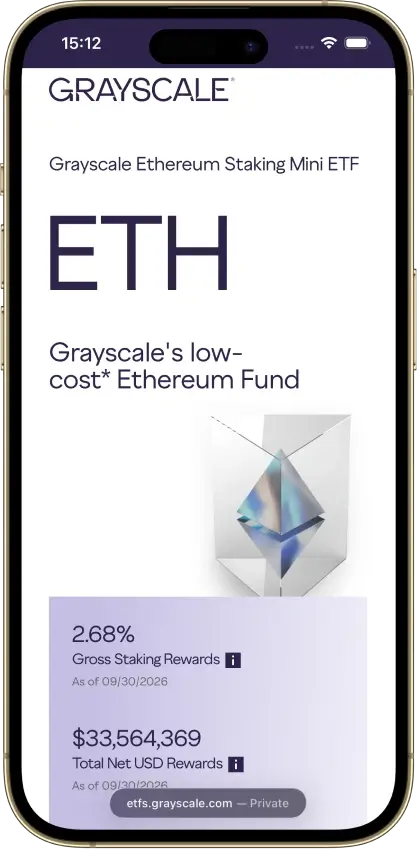
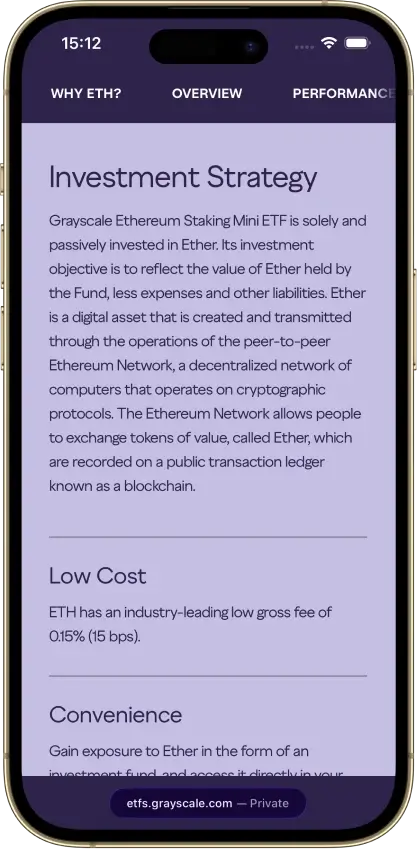
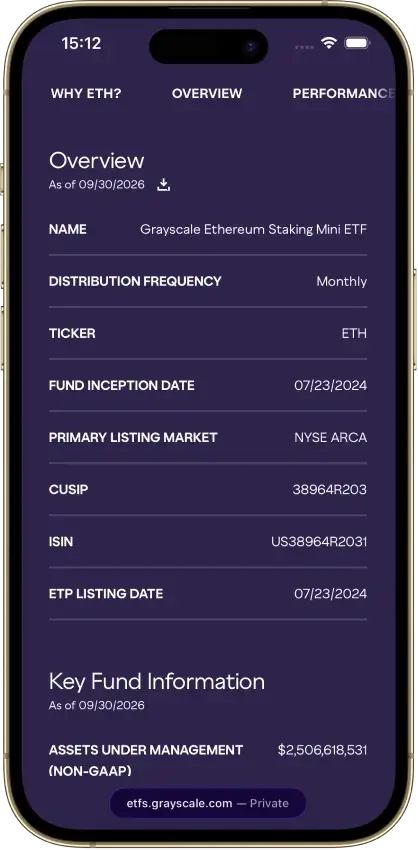
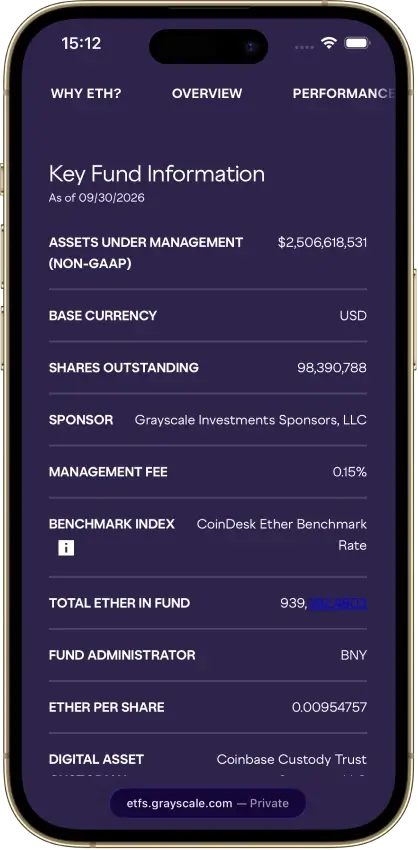
Grayscale Ethereum Staking Mini ETF
- Annual Fee
- 0.15%
- Fund assets
- $2.5BNet assets (GAAP)
- Bid/ask spread
- 0.04%30-day median
Pros
- Cash-distribution policy for net rewards
- Staked share published daily
- Custodians liable for negligent loss
Cons
- No public repayment terms for slashing
- No ether withdrawals to your wallet
- Sponsor can change its staking cut
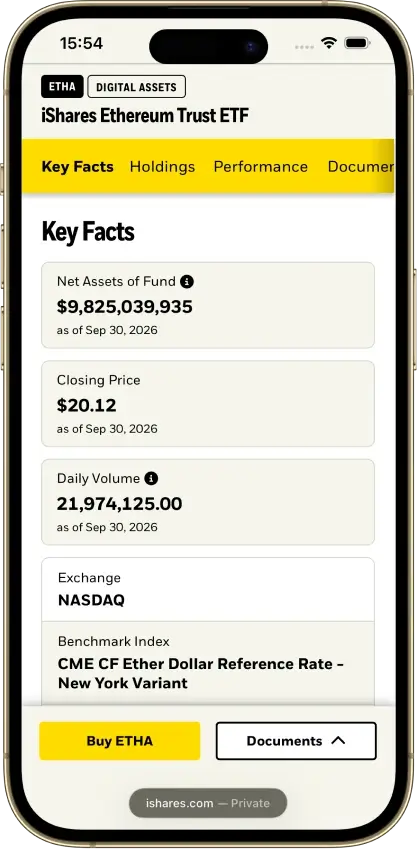
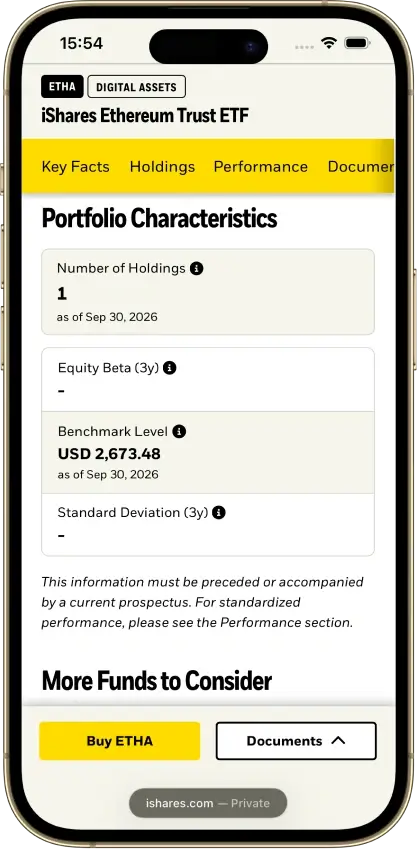
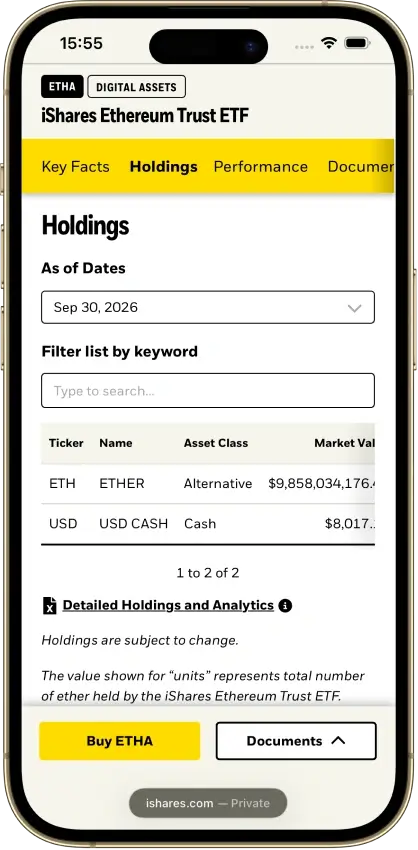
iShares Ethereum Trust ETF
- Annual Fee
- 0.25%
- Fund assets
- $9.69BNet assets
- Bid/ask spread
- 0.05%30-day median
Pros
- Ether exposure in a brokerage account
- No personal wallet or keys to manage
- Custodians answer for ordinary negligence
Cons
- No staking rewards
- No ether withdrawals to your wallet
- Share price can differ from asset value
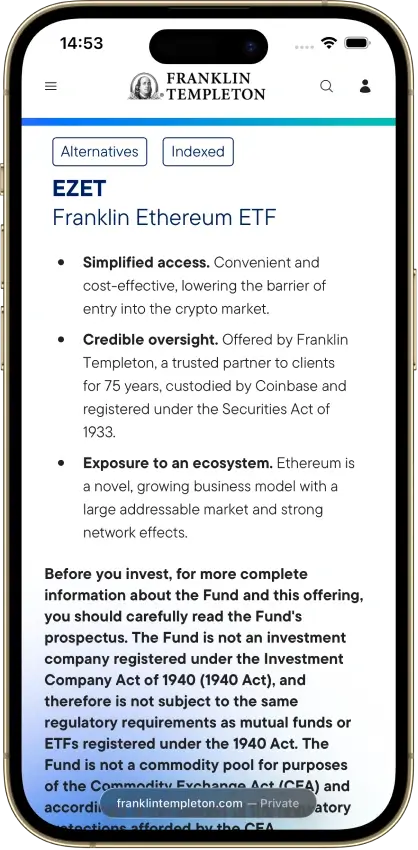
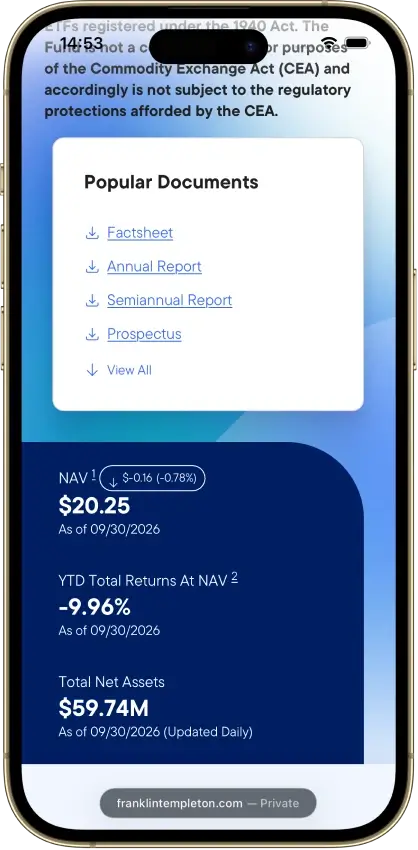
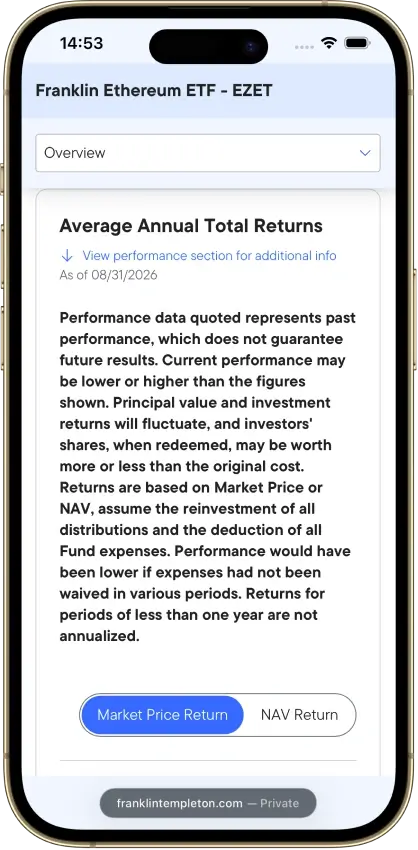
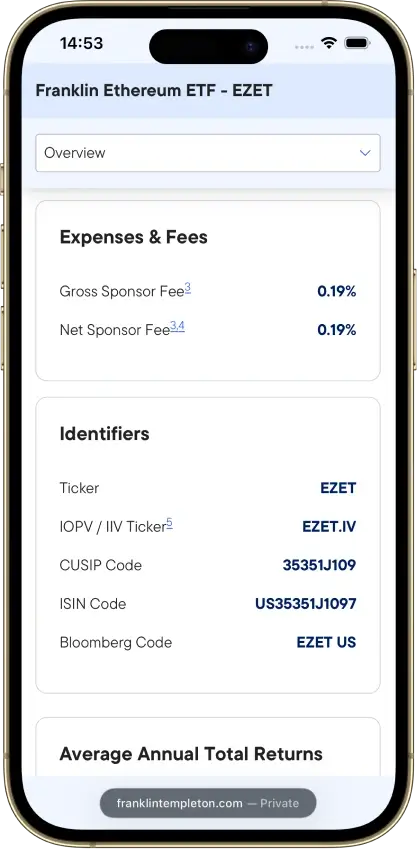
Franklin Ethereum ETF
- Annual Fee
- 0.19%
- Fund assets
- $56.69MTotal net assets
- Bid/ask spread
- 0.06%30-day median
Pros
- Lowest non-staking fee in this comparison
- Custodian answers for ordinary negligence
- No personal wallet or keys to manage
Cons
- No staking rewards
- Small fund, at about $57 million
- Share price can differ from asset value
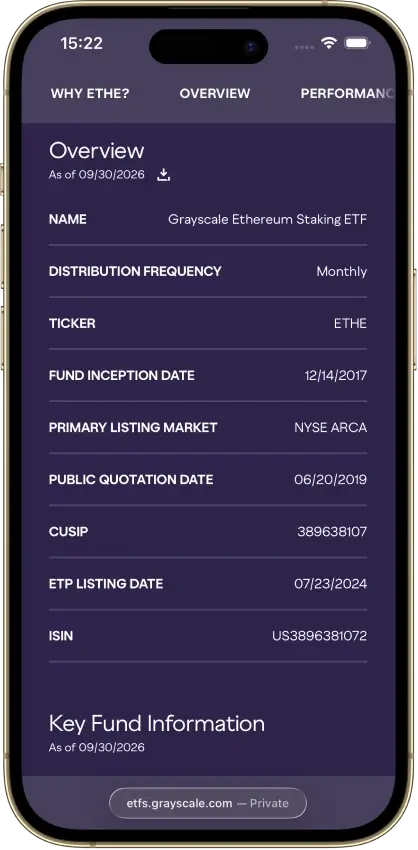
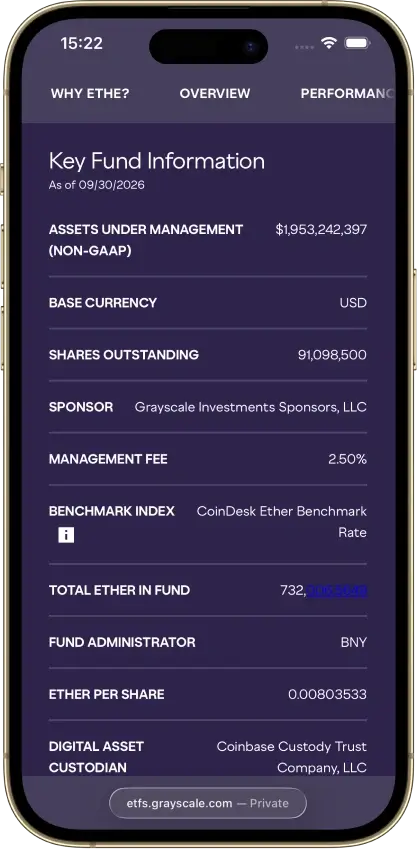
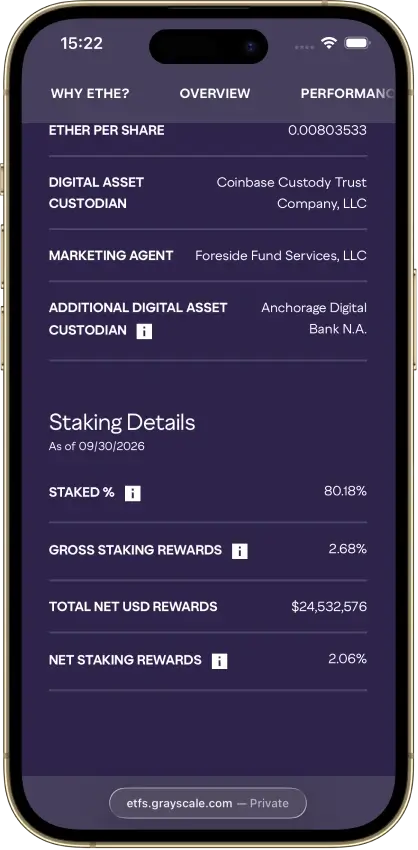
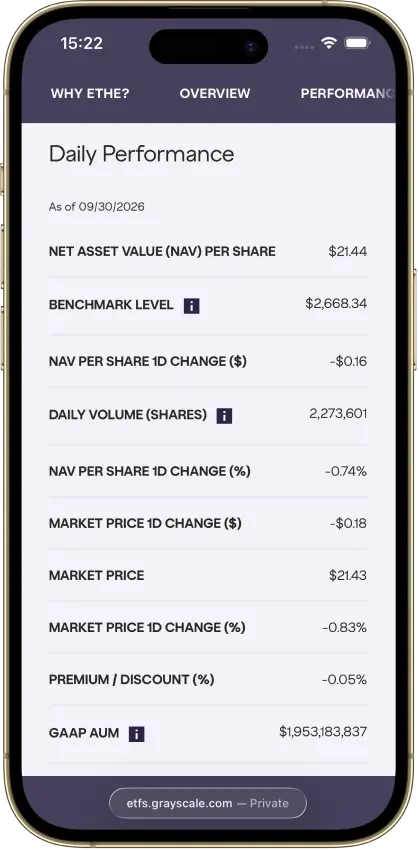
Grayscale Ethereum Staking ETF
- Annual Fee
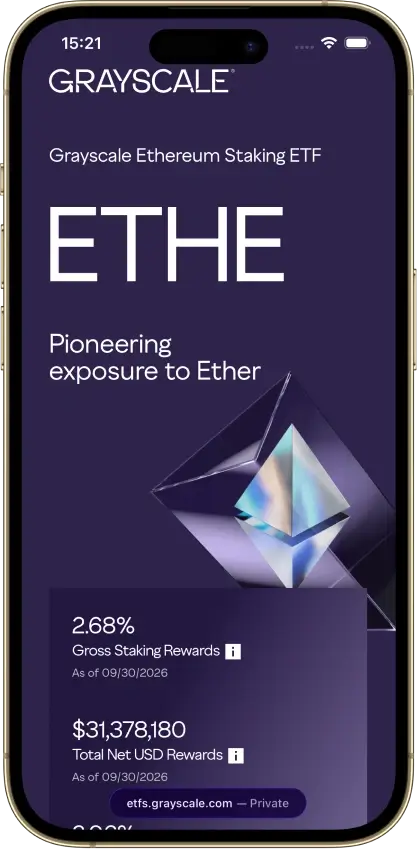
- 2.5%
- Fund assets
- $1.97BNet assets (GAAP)
- Bid/ask spread
- 0.05%30-day median
Pros
- Cash-distribution policy for net rewards
- Custodians liable for negligent loss
- $1.97 billion in net assets
Cons
- 2.50% sponsor fee
- 23% of gross staking rewards withheld
- No public repayment terms for slashing
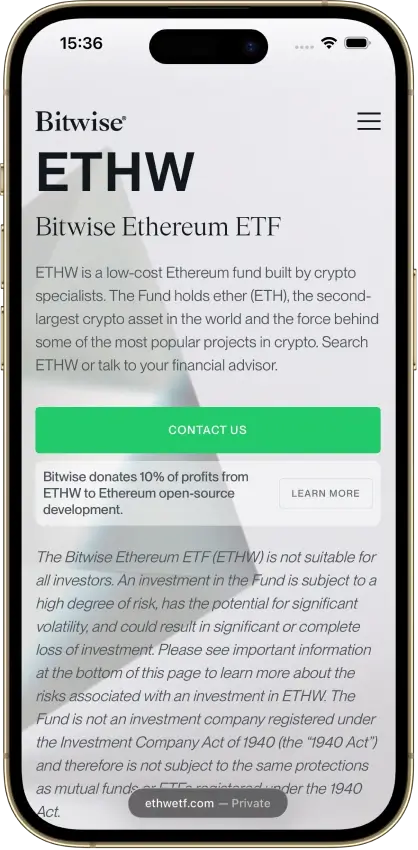
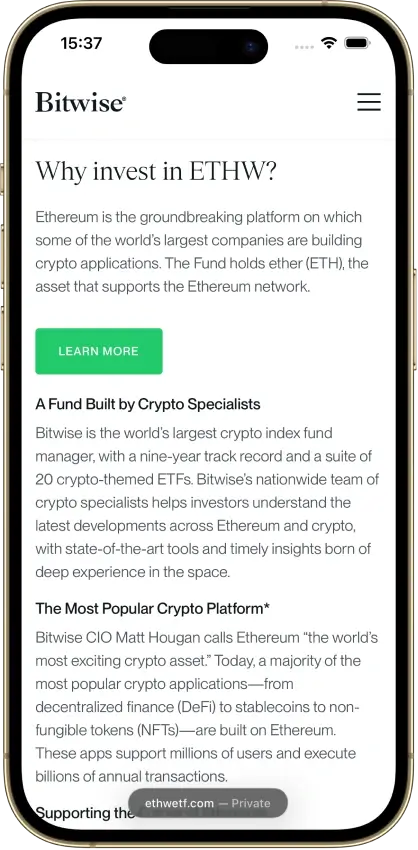
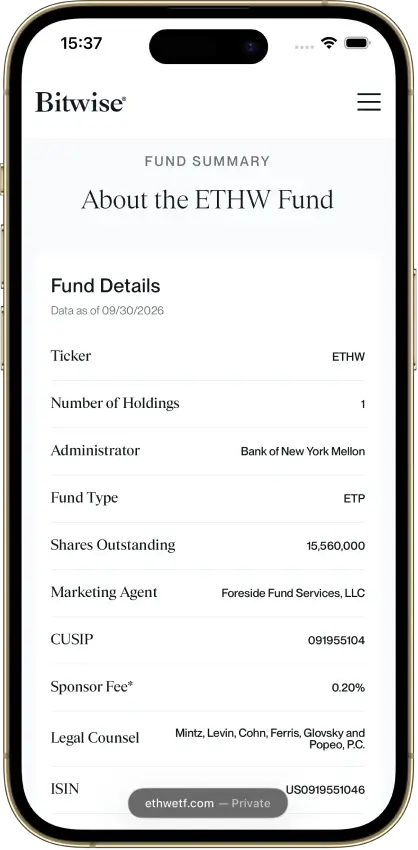
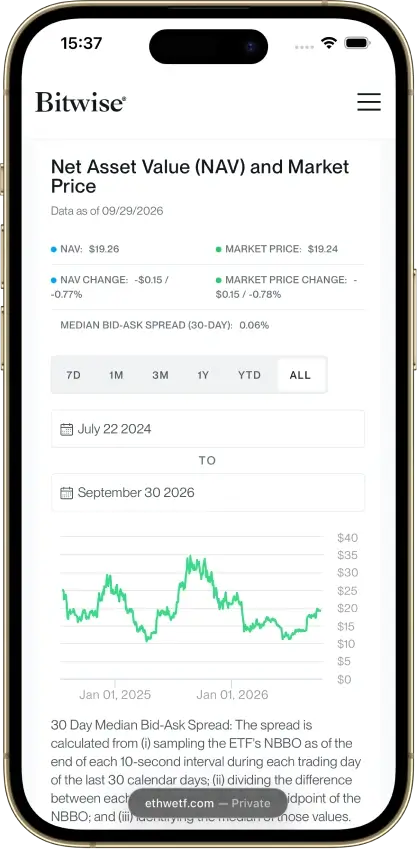
Bitwise Ethereum ETF
- Annual Fee
- 0.2%
- Fund assets
- $297.35MNet assets (AUM)
- Bid/ask spread
- 0.06%30-day median
Pros
- Daily proof-of-reserves report
- No personal wallet or keys to manage
- Ether exposure through listed shares
Cons
- No staking rewards
- No ether withdrawals to your wallet
- Higher threshold for custody-loss recovery
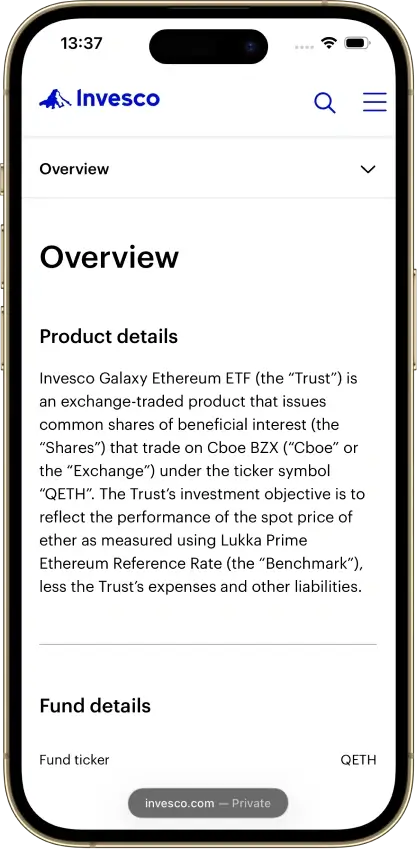
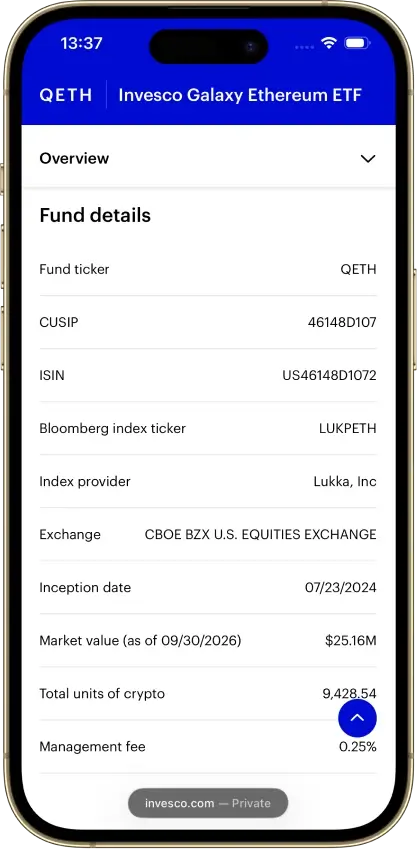
Invesco Galaxy Ethereum ETF
- Annual Fee
- 0.25%
- Fund assets
- $24.31MMarket value of holdings
- Bid/ask spread
- 0.08%30-day median
Pros
- Custodian answers for ordinary negligence
- Reports and disclosures up to date
- No personal wallet or keys to manage
Cons
- No staking rewards
- No ether withdrawals to your wallet
- Smallest fund we rate, at $24 million
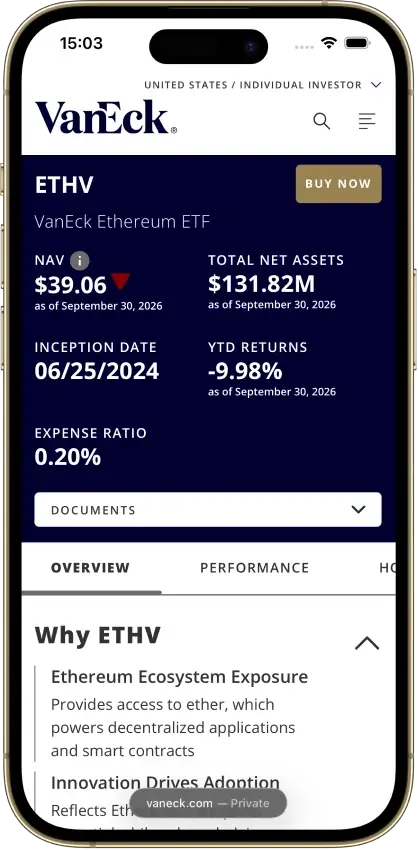
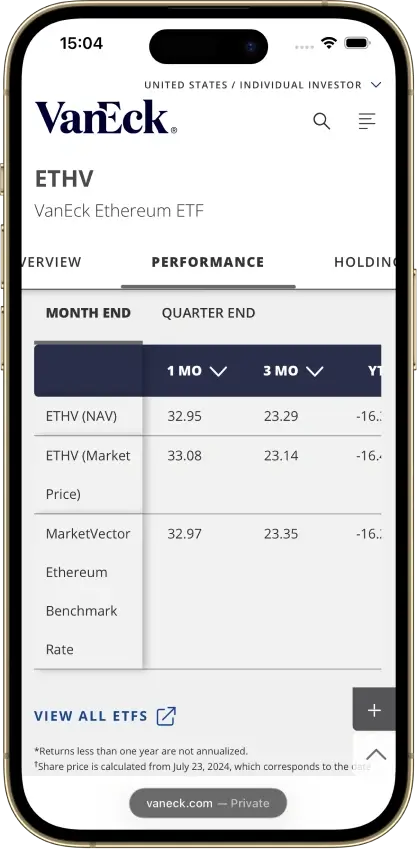
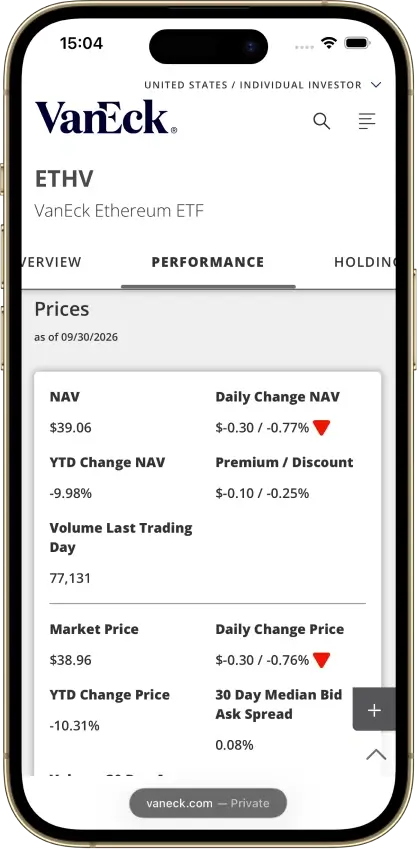
VanEck Ethereum ETF
- Annual Fee
- 0.2%
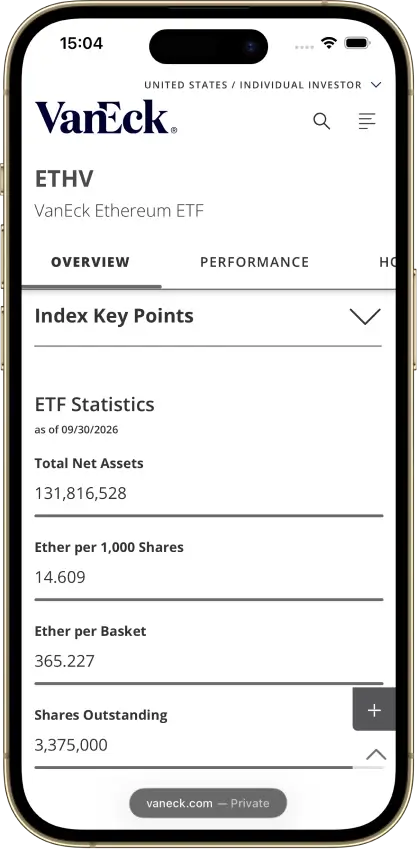
- Fund assets
- $128.85MTotal net assets
- Bid/ask spread
- 0.11%30-day median
Pros
- Ether exposure through exchange-traded shares
- Main custodian liable for negligence
- No personal wallet or keys to manage
Cons
- No staking rewards
- Some custody claims need a higher fault standard
- No issuer-published median spread
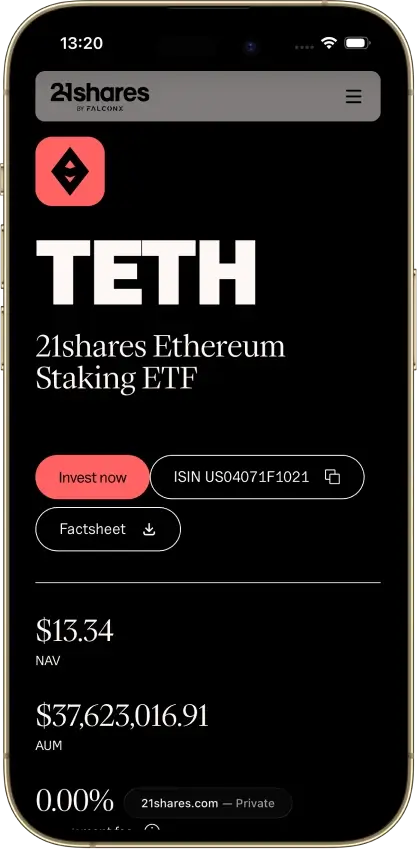
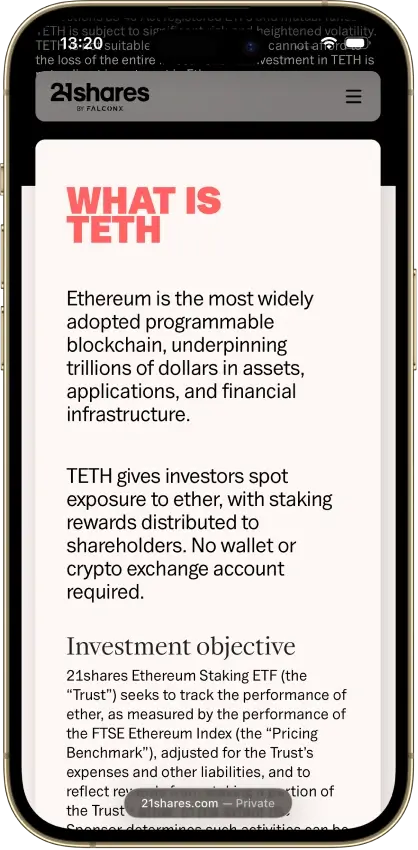
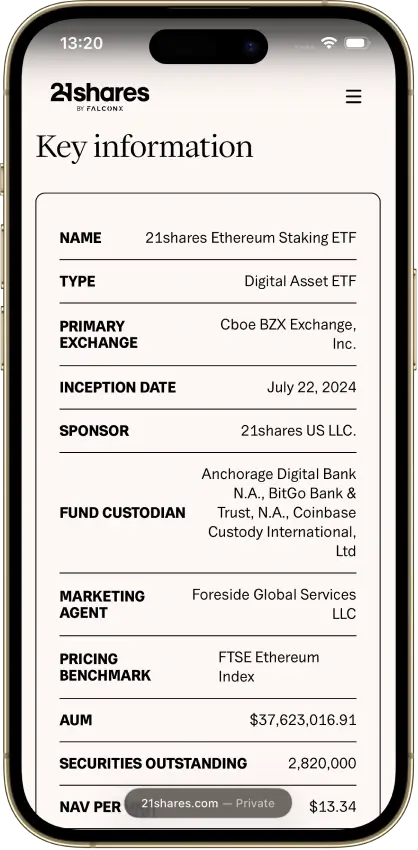
21Shares Ethereum Staking ETF
- Annual Fee
- 0.21%
- Fund assets
- $35.94MNet assets
- Bid/ask spread
- 0.08%30-day median
Pros
- Named providers with public contracts
- Figment reimburses slashing, subject to caps
- Staked share published daily
Cons
- 25% of gross staking rewards withheld
- Small fund, at about $36 million
- Higher threshold for custody-loss recovery
Fidelity Ethereum Fund
- Annual Fee
- 0.25%
- Fund assets
- $1.35BNet assets, month end
- Bid/ask spread
- 0.04%30-day median
Pros
- Quarterly cash-distribution policy
- $1.35 billion in net assets
- Staking providers named in the prospectus
Cons
- Staked share published only as a range
- Weaker custody terms at Fidelity Digital Assets
- No public repayment terms for slashing
The distinction between custody and staking responsibility matters across these funds. A contract can protect ownership and provide recovery for negligent safekeeping while offering no public terms for recovering a validator’s slashing loss. Compare those obligations alongside the fee, not just the provider’s name.
Additional Funds in This Comparison
iShares Staked Ethereum Trust ETF (ETHB)
ETHB adds staking to an iShares ether fund, with a 0.25% ongoing sponsor fee and a 10% share of gross rewards retained by service providers and the sponsor. Its launch waiver reduces the fee on eligible assets. The reported staked share was 78.48% on Sep. 23, 2026, without separating queued ether.
ETHB’s waiver applies a 0.12% sponsor fee to the first $2.5 billion for twelve months from March 12, 2026. The ongoing 0.25% charge is used in its rating and in the 0.455% combined-cost illustration at the common reference rate. The 8.4/10 score becomes 8.3/10 at a 0.07% spread. Its holdings disclosure does not separate queued ether. The sponsor and trustee can raise the staking deduction on the notice described in the trust terms. Safekeeping recovery remains subject to contractual limits.
Morgan Stanley Ethereum Trust (MSSE)
Morgan Stanley’s Ethereum Trust states a 0.14% annual delegated sponsor fee and a 5% deduction from staking rewards. It has no overall rating at the September 24 cutoff. Its first applicable reporting assessment is not yet due, and no staked percentage was displayed in the reviewed disclosure.
MSSE remains unranked while its first applicable periodic assessment is not yet due. Its missing staked percentage also prevents a complete score. The 0.33% published spread, dated September 23, 2026, is an observation and does not complete the assessment. The 5% reward deduction is stated in its prospectus. It is not a guaranteed yield, and no combined-cost estimate is supplied.
How We Rank
- Fund fees 24% weightWhat we assess
Ongoing sponsor charge before temporary waivers, fee basis, covered expenses, extra fund costs, and waiver terms.
What earns 10/10 Zero ongoing sponsor charge before temporary waivers, with the fee basis, payment method, covered expenses, extra fund costs, and any waiver conditions clearly disclosed. - Trading spread 20% weightWhat we assess
Published 30-day median bid-ask spread, with its source, observation date, and calculation definition recorded.
What earns 10/10 The formula reaches 10/10 at a valid published 30-day median bid-ask spread of 0.00%, without implying zero execution cost. - Fund size 8% weightWhat we assess
Assets attributable to the fund, using a dated figure and a clearly identified asset-value basis.
What earns 10/10 A dated fund-level asset figure that meets the methodology's evidence requirements shows at least $1 billion. - Staking & reward sharing 20% weightWhat we assess
Share of fund ETH staked and the share of gross staking rewards retained for shareholders after all reward deductions.
What earns 10/10 The formula reaches 10/10 at 100% of ETH staked and 100% of gross rewards retained for shareholders, a theoretical maximum that does not assess the adequacy of redemption reserves. - Custody & asset rights 16% weightWhat we assess
Fund ownership, asset records, custody-loss liability, withdrawal rights, and recourse for provider-caused slashing.
What earns 10/10 All providers recognize fund ownership and separate records, with fund-directed staking withdrawals where applicable and recourse for ordinary-negligence or duty-breach custody losses and provider-caused slashing. - Reporting & transparency 12% weightWhat we assess
Required reports, public ETH and staking holdings, benchmark, NAV, and management's disclosure-control conclusions.
What earns 10/10 Required reports are current, ETH holdings, benchmark, NAV and any staked amount are public, and management reports effective disclosure controls with no unresolved material reporting-control weakness.
How We Assess Ethereum ETFs
Our Ethereum ETF rating compares the terms of the fund and its published characteristics. It does not predict ether’s price or measure the return an investor will receive. The assessment uses methodology eth-1.1 and a September 24, 2026 cutoff.
Staking has a material effect on these ratings. A fund that does not stake receives zero for that pillar and can score no more than 8.0/10. That is an editorial preference built into this methodology, not a finding that staking is suitable for every investor. Someone who wants exposure without staking can compare the non-staking funds on fees and custody terms.
Unresolved required information keeps the overall rating blank. It does not produce a zero, a confidence deduction or a score calculated from fewer pillars. Where a different published spread or one unit of published precision changes the rounded rating, the alternative appears beside the score. The spread figures come from public disclosures with differing calculation conventions and are not live execution quotes.
The Ethereum and Bitcoin methodologies have different weights. Their scores should not be ranked together. We refresh the Ethereum assessment monthly and after material changes. We treat this assessment as out of date after November 8, 2026. CryptoSlate’s approach to review ratings explains the wider editorial framework.
What Is an Ethereum ETF?
A spot Ethereum ETF holds ether and issues shares that trade on a securities exchange. Its shares give investors exposure through a brokerage account. Ether is the asset used to pay for transactions on the Ethereum network and its applications.
The U.S. spot products in this comparison are exchange-traded trusts. Although commonly called ETFs, they are not investment companies registered under the Investment Company Act of 1940. Exchange listing does not give them all the protections that apply to funds registered under that Act.
A futures fund gets exposure through derivatives. A leveraged or inverse product targets a different return pattern. Neither is interchangeable with the unleveraged spot funds compared here. Funds holding multiple crypto assets or liquid staking tokens also fall outside this comparison.
Ethereum ETF Staking Explained
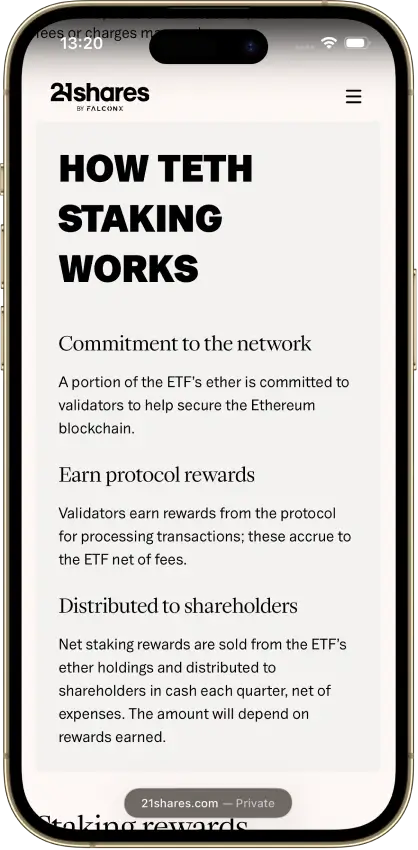
A staking fund commits some of its ether to validators that help process and confirm Ethereum transactions. Rewards earned by that ether accrue to the fund, subject to the fees and distribution terms in its documents. The shareholder does not choose validators or control their keys.
Three figures answer different questions. The staked share tells you how much ether is committed. The reward cut tells you how much of the gross staking reward goes to service providers or the sponsor. The net amount received by the fund depends on both, as well as the rewards actually earned.
For example, assume a fund stakes 70% of its ether and retains 90% of gross rewards. It would retain 63% of the reward that staking all its ether at the same gross rate would produce. This simplified illustration excludes downtime and other expenses. It is not a promised yield.
Rewards, Distributions and Exit Queues
A quoted network staking rate is not the yield shareholders receive. Funds can leave ether unstaked to meet liquidity needs, and their reward deductions differ. Check whether a published rate is gross or net, its measurement period and whether it has been annualized.
Distribution policy is a separate question. Net rewards may be held within the fund or sold for cash distributions under its terms. A cash distribution is not an extra return on top of the fund’s total return, and a distribution schedule does not guarantee a payment.
Some reported staked percentages include ether waiting to activate or exit. That amount is not necessarily all earning rewards. Leaving staking can also require a network queue, so a fund may be unable to sell that ether immediately even while its shares continue trading.
What Slashing Means for Shareholders
Slashing is a protocol penalty for certain validator violations that can destroy part of the staked ether. Ordinary downtime can cause other penalties or missed rewards. The fund’s loss can pass through to shareholders if its contracts do not provide recovery.
A custodian’s duty to safeguard ether does not automatically cover a validator’s staking failure. Check the responsible party, the conduct that triggers reimbursement and any monetary cap. A high custody score assesses specified contract terms. It is not a guarantee that every loss would be repaid.
Ethereum ETF Fees and Trading Costs
Start with the ongoing annual charge. A waiver can temporarily reduce it, but the rate after expiry matters for a holding that continues beyond the offer. The stated fee may also use a different assessment base across trusts, such as net assets or ether holdings.
| Cost | How It Affects a Holding | What to Check |
|---|---|---|
| Annual fund charge | Reduces fund assets over time | Ongoing rate, fee base and expenses excluded |
| Staking reward cut | Reduces gross rewards received by the fund | Aggregate cut and whether the sponsor can change it |
| Bid-ask spread | Creates a cost when entering or exiting | Current quote, order size and published historical median |
| Broker or currency charges | Add account-specific transaction costs | Commission, currency conversion and custody charges |
| Premium or discount to NAV | Changes the price paid relative to fund value | Quote timing and the fund’s valuation convention |
A 0.20% annual charge is about $20 on a constant $10,000 fee base for a year. Actual charges change as that base changes. A 10% staking reward cut means 10% of rewards, not a 10% annual charge on the investment.
The combined-cost illustrations discussed here add the ongoing fee to the reward deduction expressed as a share of ether holdings. They use a common network reference rate of 2.6178%, dated September 23, 2026. They are not realized expense ratios, actual yields or total ownership costs. Temporary waivers, broker charges and trading costs are excluded.
For frequent trades, the spread and order conditions can matter more than a small difference in annual fees. A published median cannot tell you the price available for a particular order. A limit order controls the worst price you accept, but it may not execute.
Ethereum ETFs vs. Holding ETH Directly
| Question | Spot Ethereum ETF | ETH in Your Own Wallet |
|---|---|---|
| What do you hold? | Shares in an exchange-traded trust | Ether controlled through wallet keys |
| Can you use Ethereum applications? | Shares cannot pay network fees or interact with applications | Ether can be transferred or used on-chain |
| Who chooses custody? | The fund appoints its service providers | You choose the wallet and key arrangements |
| Who decides about staking? | The fund decides under its documents | You choose whether and how to stake |
| How do you trade? | Through a broker under its market-access rules | Through crypto exchanges or direct trades |
| Can you withdraw ether? | Individual shares are not redeemable for ether to a personal wallet | Transfers are possible when the ether is available and you control the keys |
The share structure removes personal key management, but it adds dependence on the fund and its service providers. Direct ownership gives more control and brings responsibility for recovery, transaction signing and address checks. Our comparison of crypto wallets for self-custody covers that choice separately.
Authorized participants may create or redeem large baskets under a fund’s arrangements. Permission for in-kind baskets does not give an ordinary shareholder a right to exchange individual shares for ether.
How to Choose and Buy an Ethereum ETF
First decide whether you want staking exposure. Compare funds within that preference, then consider the full costs and the terms governing custody. A higher overall score cannot determine whether a product fits your account or investment objective.
-
Confirm Broker Access
Confirm that your broker offers the exact U.S. listing in your country and account type. Check the full fund name and exchange as well as the ticker.
-
Compare Fees and Staking Terms
Review the ongoing fee and any temporary waiver. For a staking fund, read the reward cut and distribution policy separately.
-
Check the Trading Quote
Check the current spread and market price before entering an order. Ether can move while the securities exchange is closed.
-
Review Your Order
Check the current spread and market price before entering an order. Ether can move while the securities exchange is closed.
-
Monitor Your Holding
After purchase, keep the fund documents and account statements. Recheck fee changes, custody appointments and staking terms while you hold the shares.
Broker availability is separate from the fund rating. Account restrictions can prevent access even when a fund is exchange-listed. A broker that offers ether trading or crypto derivatives does not necessarily offer the ETF shares in this comparison.
When a Spot Fund May Not Fit
An ETF cannot provide ether for network fees, on-chain transfers or choosing your own validator. It also retains exposure to sharp falls in ether’s price. Staking rewards can be smaller than a price decline, and a low annual fee does not limit losses.
Holding several funds backed by the same asset does not diversify away ether price risk. It can change service-provider exposure and fees, but the underlying asset remains the same.
Research and Review Dates
This comparison covers eleven U.S.-listed spot ether funds assessed against a September 24, 2026 cutoff. The tables retain each market or staking observation date. Later changes do not enter those scores until the assessment is refreshed. Educational material was checked on September 29, 2026. The TETH waiver extension and completed ETHA reverse split were checked on October 9, 2026; this targeted update does not redate the market observations or recalculate ratings.
The review uses public filings, fund disclosures and published market statistics. It does not include private control reports, validator testing or measured execution of investor orders. Custody appointments do not establish how ether is allocated between providers. This comparison is editorial information, not a personalized investment recommendation.
TETH’s 0.21% annual sponsor fee is waived through October 8, 2027. Its 25% deduction from gross staking rewards still applies. The combined-cost illustration uses the ongoing fee before the waiver.
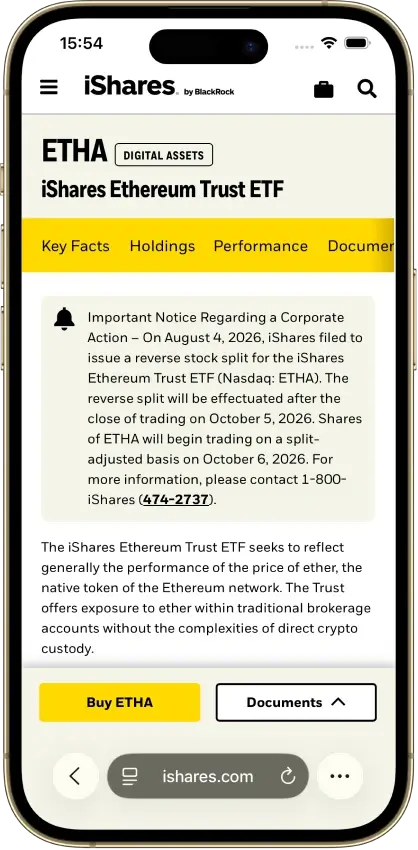
ETHA completed a 1-for-3 reverse share split on October 6, 2026. Each three shares became one. The split did not change proportional ownership except where fractional interests were redeemed for cash.
FAQ
Ethereum ETF FAQs
What is the best Ethereum ETF?
There is no single fund that fits every investor. Decide whether you want staking, then compare fees, reward deductions and custody terms among funds that fit that choice. Our overall score includes a 20% staking weight, so a fund without staking cannot score above 8.0/10. Account eligibility and the price of your trade still need separate checks.
Do all Ethereum ETFs stake their ether?
No. Some spot funds stake part of their ether, while others do not stake. Futures and leveraged products have different structures again. Check the current fund documents and the dated staking information. A filing seeking permission to stake is not proof that staking has begun.
Are staking rewards paid as dividends?
A fund’s distribution policy determines whether rewards are retained or paid out, and when. Do not assume that an advertised network rate is a cash payment rate. A payout may be funded by selling rewards, and its tax classification depends on the fund and the investor’s circumstances.
Why do some funds have no overall rating?
We withhold the overall when a required input or contract term remains unresolved. A new fund can also be too early in its reporting history for the assessment. The relevant explanation appears with each fund. A blank rating is not zero and does not mean the fund is necessarily unsuitable.
Can I move ETF shares into an Ethereum wallet?
No. Shares are securities held through a brokerage account. They cannot be used as ether in a wallet. An investor who sells shares and separately buys ether makes two different transactions, with their own charges and possible tax consequences.
Is a zero-fee Ethereum ETF free to hold?
A temporary waiver of the sponsor fee does not remove every cost. A staking fund can still retain part of the rewards, and trading spreads or broker charges can apply. Check the waiver’s end date and asset limits before comparing it with an ongoing fee.
Can I buy an Ethereum ETF in a retirement account?
That depends on the account provider, jurisdiction and exact product. A listing does not guarantee retirement-account eligibility. Ask the provider whether the specific shares are permitted and what charges or restrictions apply.
Are Ethereum ETF ratings comparable with Bitcoin ETF ratings?
No. Our Ethereum methodology assigns 20% to staking and uses different weights for the shared pillars. Compare scores within the same methodology and assessment period. The numbers are assessments of fund characteristics, not forecasts of either asset’s return.