

 Launched in 2013
- Local bank rails across Africa and SE Asia
- FSCA-licensed with ring-fenced custody
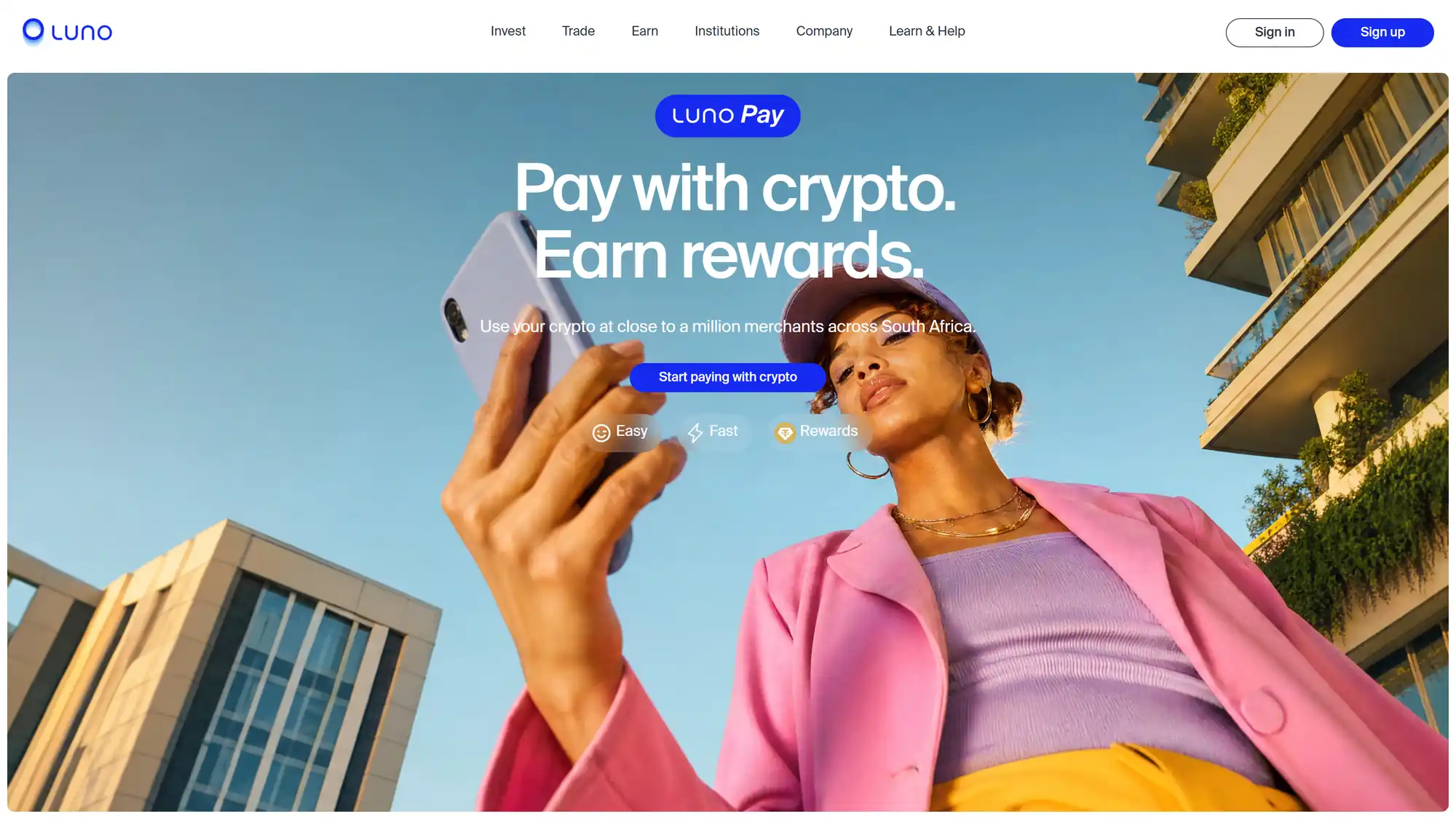
- Luno Pay covers about 1M merchants in South Africa
Luno Overview
- Crypto Exchange Name
- Luno
- Launch Year
- 2013
- KYC
- Yes
- Products
- Spot, Simple-buy Broker
- Staking
- Yes
- Copy Trading
- No
- Derivatives
- No
- Proof of Reserves
- No
- Trading Fees
- 0.1% - 0.25%
- Payout Time
- 2 days
Additional details
- Restricted Countries
- United States of America, Canada, China, Japan, India
Luno Screenshots
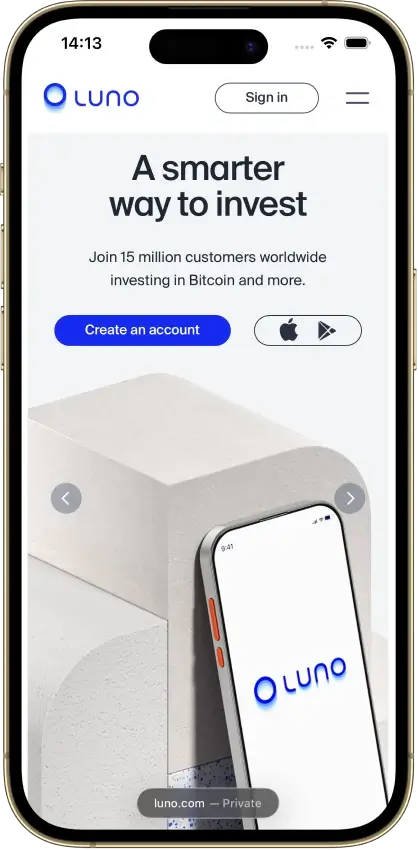
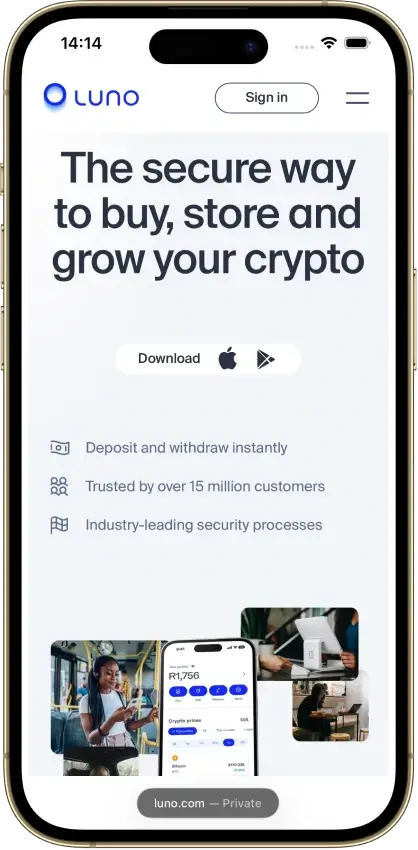
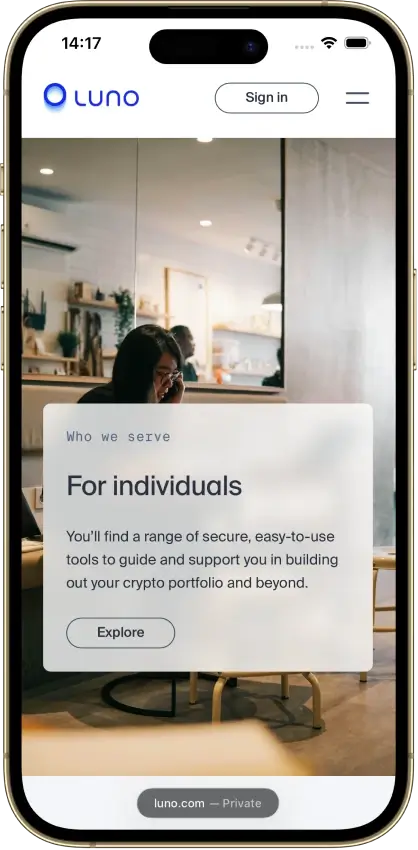
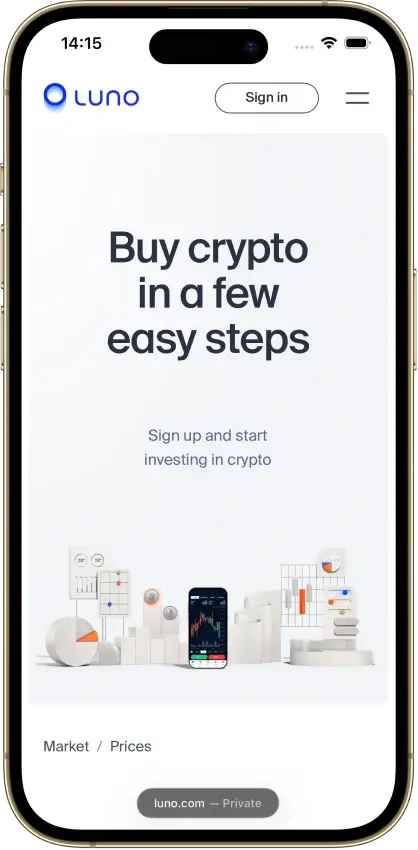
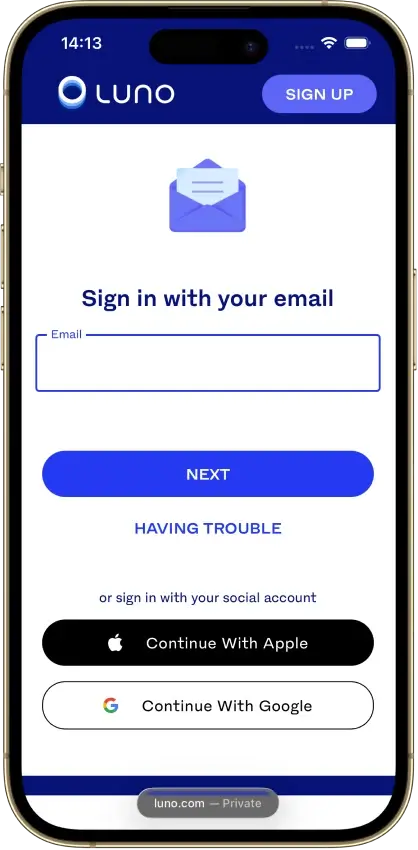
Screenshot 1 of 8
Luno Pros and Cons
Pros
- Clean app newcomers can learn on
- Tokenized U.S. stocks and ETFs in SA and Nigeria
- Staking available in Malaysia, Nigeria, SA
- Daily binary prediction markets in SA and Nigeria
- Order book at 0.1% maker, 0.25% taker
Cons
- Instant Buy spread is 1% in SA, 2% elsewhere
- No futures, perps or margin products
- No user-verifiable proof of reserves
Quick Decision: Is Luno Worth It?
Luno is worth considering if you want a clean local on-ramp, can accept a narrow asset list, and plan to use spot buying with a local bank account. It is a weaker fit for users who need a broad altcoin lineup, high-volume order-book liquidity, or full traditional derivatives such as futures, perps, and margin, or who expect fiat rails to work the same way in every region.
Use Luno if you want to buy and hold Bitcoin or Ethereum in South Africa, Malaysia, or a supported African market, or if you want simple binary Prediction Markets access in South Africa or Nigeria. Skip it if you need a wide token menu, full leverage products, or a venue that publishes proof of reserves. Browse other crypto exchanges for a wider comparison.
Who Luno Is Best For And Who Should Skip It
Luno earns its place as a first exchange in markets where clean, licensed alternatives are scarce. For anyone looking at a broader set of options, the best crypto exchanges for beginners covers venues with wider asset lists and more transparent fee structures. Luno is not a venue for active trading, and the fit breaks fast once a user wants choice.
Luno fits naturally for a salaried user in Cape Town, Kuala Lumpur, or Lagos who wants to convert local currency into a major coin and hold it. The local bank integration and the licensed custody in South Africa are the draw.
The friction becomes too much for anyone who trades often or wants choice. The asset list is still narrower than global leaders, the Instant Buy spread eats into small buys, and availability is changing in markets Luno is exiting during 2026.
Features And Services
Luno started as a buy, sell, and hold app, and that is still how most users experience it. The product set has expanded, but the additions are regional rather than universal. In its core markets, users can access spot crypto, staking on selected proof-of-stake assets, Prediction Markets in South Africa and Nigeria, and tokenized US stocks and ETFs in South Africa and Nigeria.
Most users still live in the main app, so the Instant Buy spread matters more than the cheaper Exchange screen. The one exception is Prediction Markets in South Africa and Nigeria, where users trade daily binary up or down markets settled in USDC rather than using the spot order book.
Supported Assets And Markets
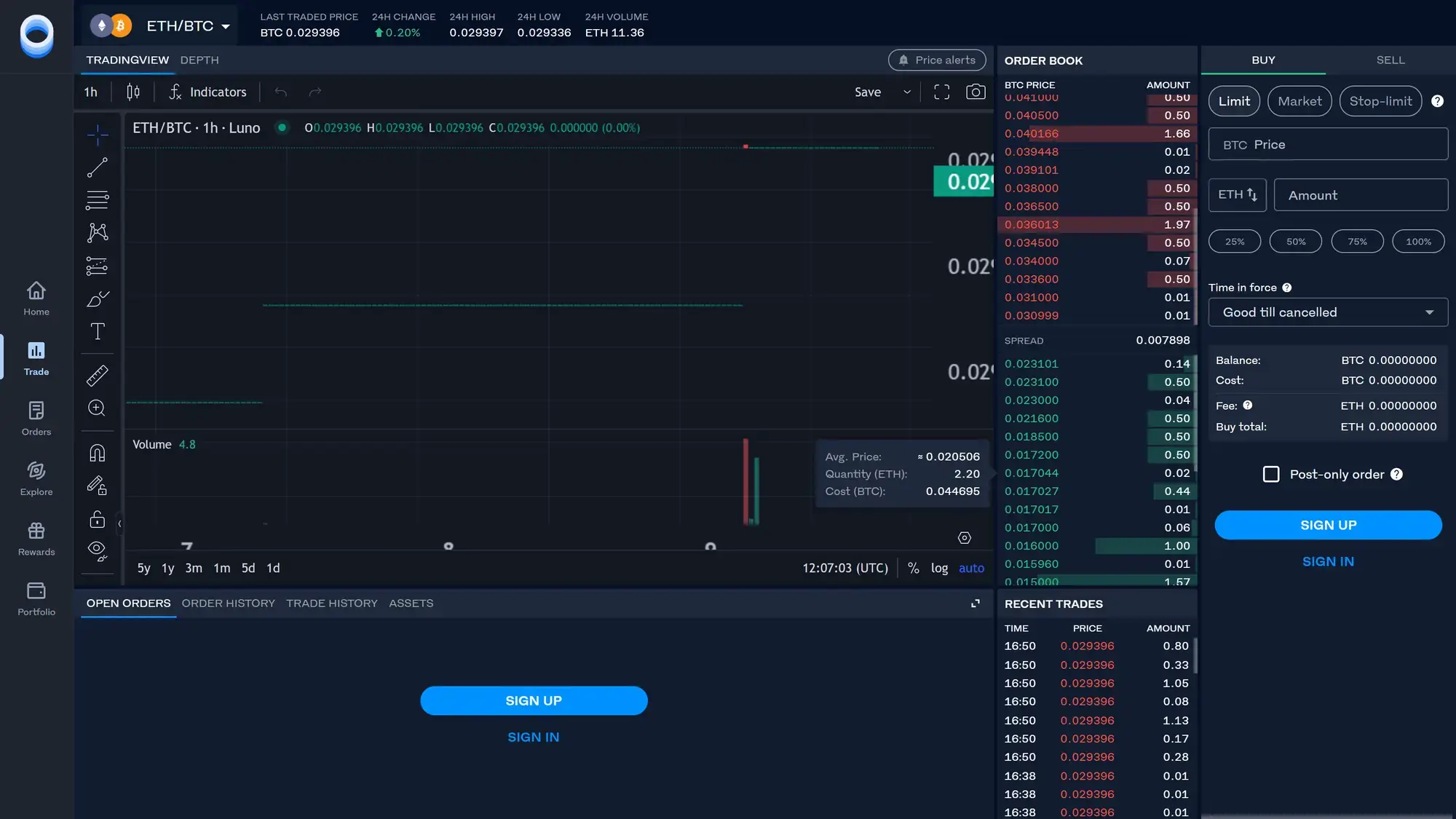
Luno runs a curated listings strategy rather than a long-tail menu. The lineup now covers major coins, multiple stablecoins, and related investment products such as tokenized US equities in selected markets, but it is still a narrow selection compared with global exchanges.
The menu covers what a beginner wants to own, so anyone hunting newer tokens will outgrow Luno quickly.
Staking And Rewards
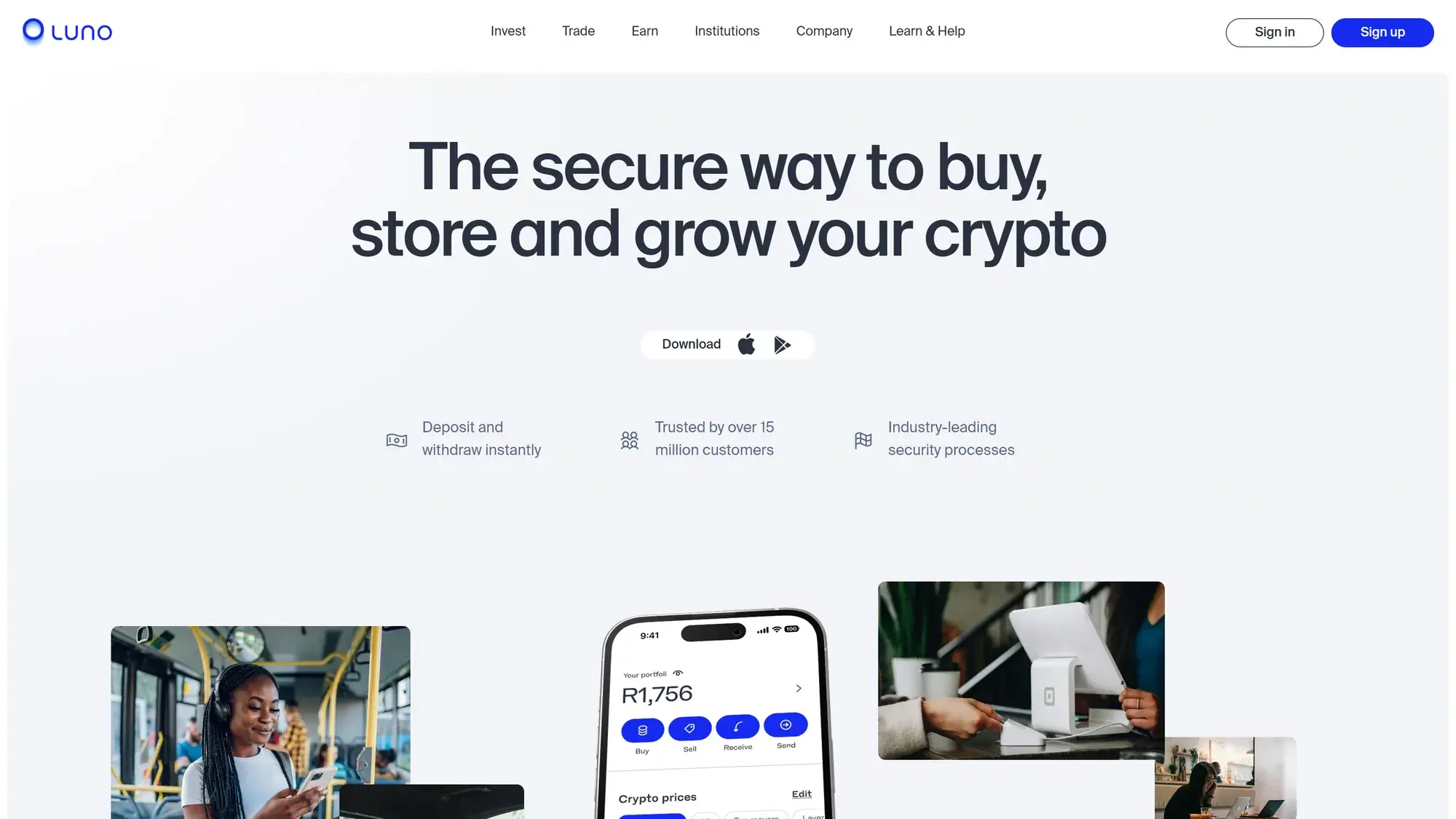
Luno's old savings or interest-style product is no longer the right frame here. The current product is staking on supported proof-of-stake assets, and it is only available in Malaysia, Nigeria, and South Africa. Yield rates are competitive for regional staking, but coverage is narrow enough that most users will find broader options by looking at the best crypto staking platforms before committing.
Staking is a real product, but it is limited by both geography and asset type. Treat it as a regional add-on rather than a universal reason to choose Luno.
Wallet And Self-Custody Options
Luno is custodial by default, and there is no separate self-custody wallet to step into. Luno holds the private keys for every balance. The app labels the holding area a Wallet, but the user never controls the keys.
Crypto sends and receives work through Luno's custody, so network fees are passed through and recovery depends on Luno, not the user. A user who wants true self-custody has to withdraw to an outside wallet. The trade is convenience for control, and nothing on Luno lets a user hold their own keys while staying inside the app.
API And Programmatic Trading
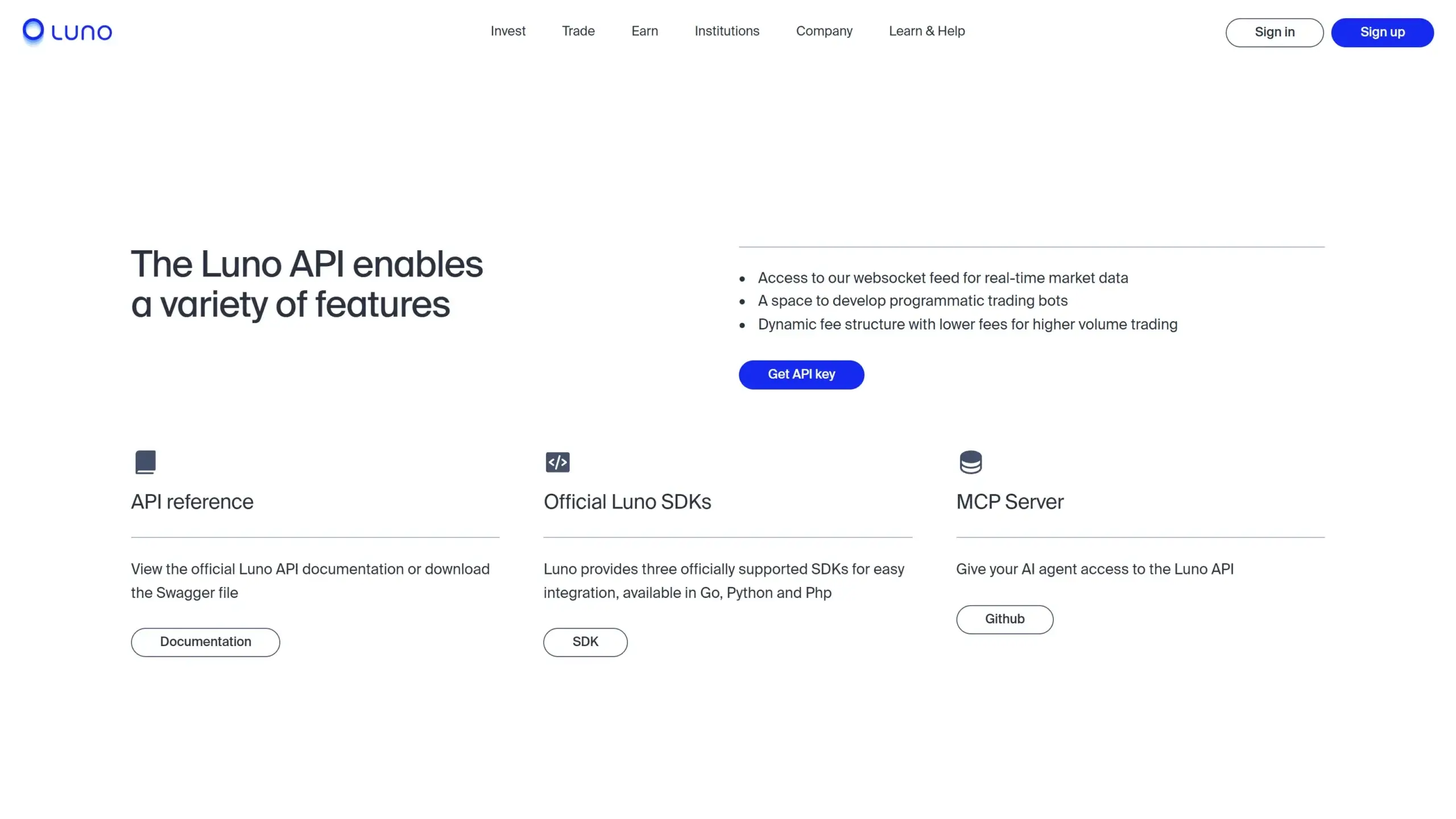
Luno offers an API, but it serves light automation rather than high-frequency trading. Most Luno users never touch it.
The API matters little for the beginner this exchange targets. It exists for hobbyist scripts and basic order automation, not for serious algorithmic trading on thin books.
Fees And Pricing
Luno's order book is cheaper than its default broker flow, but the exact fee structure is more regional and tiered than it might first appear. The 0.1% maker and 0.25% taker figures are a representative reference point in some markets, not a universal base rate. The Instant Buy path costs considerably more, and most beginners land there first because the app pushes it to the front.
Users pay more than they expect on Instant Buy. The cost is built into the quoted price, and depending on the region it can range from about 1% to about 2% without appearing as a separate fee line. For a sense of how those Instant Buy costs compare across platforms, the overview of best crypto swap exchanges is a useful reference.
Hidden Costs To Watch On Luno
The headline order-book rate is not what most users actually pay. The real cost a beginner meets sits inside the Instant Buy quote, where the spread is built into the price and never shown as a separate fee line.
Three cost areas catch users off guard on Luno:
- The Instant Buy and Instant Sell spread is roughly 1% in South Africa and can run up to about 2% in other markets. It shows up as a worse price rather than a fee line, and the cheaper route is usually the Exchange order book. The small first-time buyer feels it most.
- Express bank withdrawals in South Africa carry a small fee of roughly R20 to R80, while standard withdrawals are free. A user in a rush pays for speed, and most can wait for the free option.
- Crypto withdrawal network fees are passed through with no markup, but choosing a congested network at a busy time still costs more. The user picks the network, so a wrong choice is a self-inflicted cost.
The cheapest realistic path is funding by local bank transfer and trading on the Exchange order book. A typical beginner will not find that route without effort, because the app defaults to Instant Buy.
Deposits, Withdrawals, KYC And Availability
Funding and exit friction shape the Luno experience more than any individual feature. The process is smooth and low-cost in core markets, but the same account can stall behind a security lock or a regional rail outage, and Europe is being exited entirely in 2026.
The bigger story in 2026 is not any individual payment method. It is that Europe and other non-core regions are being shut down on a fixed timetable, which matters more to availability than any single feature change.
What U.S. Users Need To Check Before Signing Up
United States users should focus on one fact above everything else. Luno does not serve the United States, so the question is not which features are available, it is whether account access exists at all.
A user in the United States who wants a locally-licensed on-ramp has to look at a domestic exchange. The roundup of best crypto exchanges in the US covers the relevant options.
Payment Rails, Networks, And Limits
Once money moves, the local bank rail usually gives the best value. Card funding costs more, and the main question in 2026 is whether the market is part of Luno's durable footprint or being exited.
Fiat Rails By Region
Speed, cost, and availability all differ by region. In South Africa, normal withdrawals can take up to two business days, while express withdrawals are the faster paid option. The bigger story in 2026 is Europe and other non-core regions shutting down on a fixed schedule.
Withdrawal Networks And Fees
A supported asset does not always mean a low-fee network. Luno passes the network fee straight through, so the route the user picks sets the cost.
The lowest-friction stablecoin route is usually USDT on Tron, since it tends to be cheaper than Ethereum. Users who prefer other stablecoins can also use USDC, EURC, and PYUSD, but network costs still depend on the chain chosen.
Verification Levels And Withdrawal Limits
Luno uses a tiered KYC ladder. Each level unlocks more, and a stalled level blocks the whole account.
The hard part is rarely first-time sign-up. It is being asked to re-verify to regain access to an account that is already funded.
Is Luno Safe? Security, Custody And Proof Of Reserves
Luno's safety picture is regional and uneven. It is genuinely solid on local licensing in South Africa and weak on reserve transparency everywhere. There has been no major breach and no insolvency event as of mid-2026, but nothing about reserves is independently verified. Users who want firmer safety benchmarks across custody, controls, and public reserve attestation can compare alternatives on the safest crypto exchanges list.
Controls
Luno requires two-factor authentication using a TOTP authenticator, which reduces account-takeover risk. Standard security controls include 2FA with an authenticator app, along with security holds and verification reviews when warranted. The 2026 exit guidance notes that a 24-hour security window may apply when enabling crypto sends, so users in exiting regions should account for that before the deadline.
Custody And Insurance
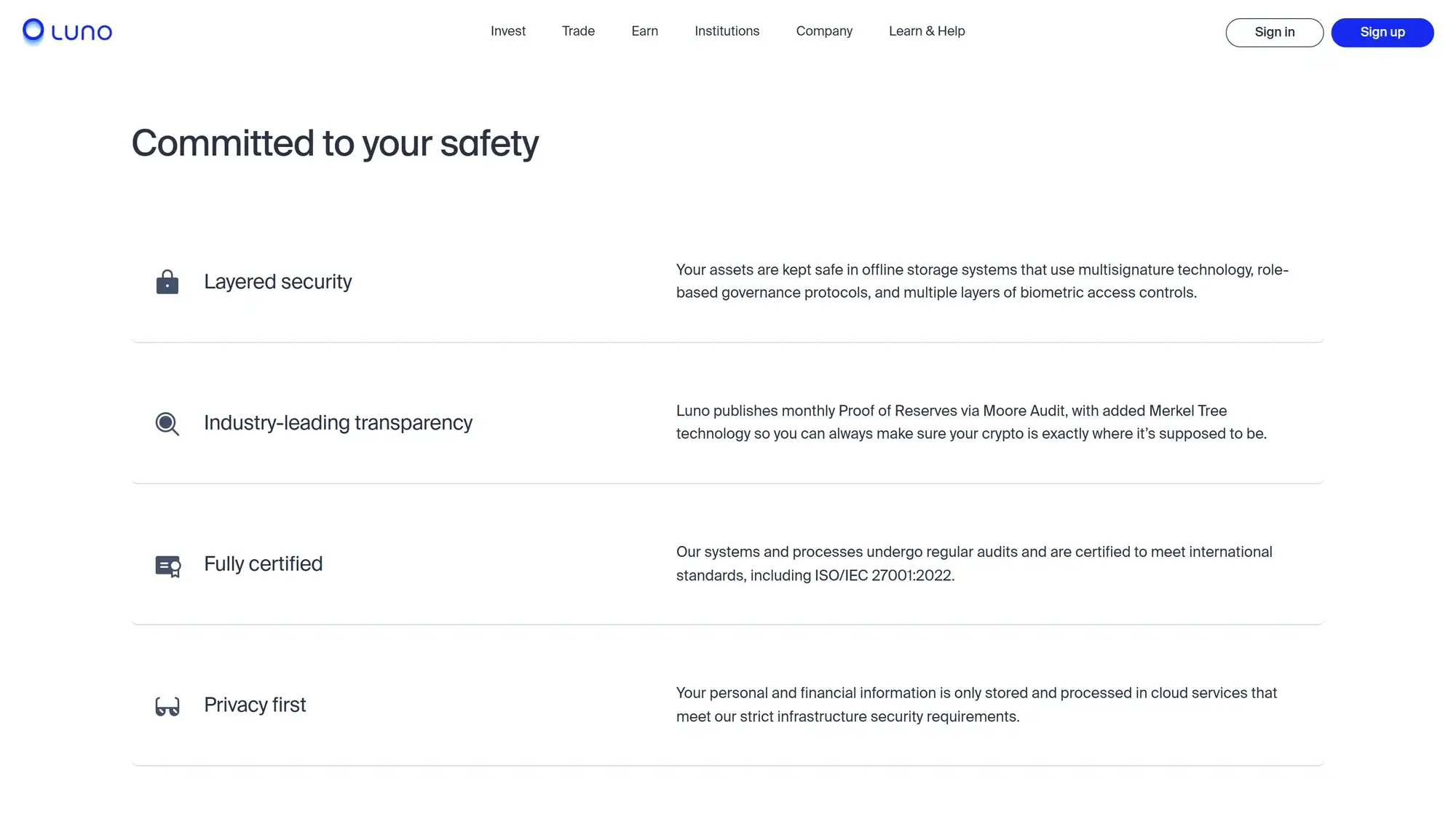
Luno is fully custodial and says it keeps most customer crypto in cold storage. Client funds are described as segregated. In South Africa, the FSCA-licensed Luno entity provides the regulatory backing for that custody claim, though the specific custody vehicle is not separately confirmed in publicly available materials. Insurance coverage is not publicly disclosed, so users should not assume balances are insured.
Proof Of Reserves Or Audits
Luno's trust case rests on disclosure and licensing rather than cryptographic proof. There is no user-verifiable proof of reserves and no third-party attestation of assets against liabilities. The South African registration and the cold-storage claim can only be verified as far as Luno's own statements reach. Reserve quality cannot be checked independently, and that gap is the main weakness in the trust picture.
Incidents And Remediation
Luno's status page has logged time-bounded incidents, including a withdrawal-processing failure affecting Kenya and internal transaction-processing errors. Both were operator-acknowledged and bounded. The larger events in 2026 are availability and footprint issues rather than security breaches, as Luno exits Europe and other non-core regions on a fixed deadline schedule.
App, UX And Customer Support
The Luno app review picture splits clearly. The product experience is beginner-first and well liked as software. Support is the weak point, and the gap shows most on high-stakes tickets: account locks, stuck withdrawals, and closure requests.
UI And Navigation
The app is designed to get a beginner through their first funded trade quickly. That design also steers most users onto the most expensive path, because Instant Buy is the default and the cheaper Exchange order book takes effort to find.
Several navigation decisions shape the experience for new users:
- Onboarding and the first funded trade are fast once KYC clears
- The cheaper Exchange path requires deliberate navigation and is not the default
- Buy, Sell, Send, Receive, and Save are clearly separated in the main menu
- The Instant Buy quote shows a price, not an itemized spread
- The most common costly mistake is buying on Instant Buy instead of the Exchange
The labeling is clear except where it costs money. A user can tell Buy from Send, but cannot see the spread inside the Buy quote before confirming.
Mobile App
Luno is mobile-first, and most users do everything on the app. App-store ratings fluctuate over time, so the most reliable signal is the distribution of reviews rather than any single score.
The app handles the full beginner workflow without any desktop dependency:
- Available on iOS and Android
- Funding, buying, selling, sending, and withdrawing all work in-app
- No desktop dependence for normal tasks in core retail workflows
- Two-factor setup and security controls are reachable in-app
Low-star reviews cluster around account access and support response time, not app stability.
Reliability And Status Page
Luno publishes a status page, which means outages are trackable rather than opaque. When problems occur, they tend to cluster around withdrawals and regional fiat rails rather than trading outages.
Users usually get notice through the status page, but a sudden account lock arrives with no advance warning and cannot be expedited through support.
Customer Support
Support is built for self-service and slow-ticket escalation, not live resolution. Routine questions fare fine. Lock, closure, and stuck-withdrawal tickets are where users describe extended delays and poor communication.
The pattern in user complaints is consistent across the main channels:
- Help center with self-service articles covers most routine questions
- No live phone support, only form and email
- Email and ticket replies can run slow on high-stakes issues
- Complaints cluster around account locks, closures, and stuck withdrawals
- Support can resolve routine account and verification questions
- Responses on security, access, or withdrawal issues can be slow, based on recurring user reports
Support quality does weigh on the verdict. The recurring complaint is not a documented policy failing but slow resolution when something goes wrong with an account that holds real funds.
Luno Alternatives
-


Coinbase
Coinbase fits U.S. users who fund by ACH and use Advanced, but Simple Buy costs and regional product rules require attention.
-

Kraken
Kraken combines quarterly reserve-inclusion checks with separate Pro trading tools and account security controls. Its entry spot fees and funding-related withdrawal holds are the main tradeoffs.
-

Binance
Binance.com combines 0.10% entry spot fees with deep liquidity and extensive trading tools, but access, fiat rails, and products vary by jurisdiction.
Users who need altcoins, derivatives, or proof of reserves should weigh alternatives closely, because those are Luno’s clearest gaps.
- Coinbase Exchange — Broader asset list and proof of reserves. Higher default fees.
- Kraken Exchange — Greater liquidity and derivatives. Less local African and SE Asia rail support.
- Binance Exchange — Huge asset menu and low fees. Heavier interface, regional access shifts.
- VALR — South Africa-native altcoin range. Smaller global footprint.
Coinbase and Kraken are where Luno loses the comparison most clearly on asset choice and reserve transparency.
Final Verdict
Luno is for the user in a core African or Southeast Asian market who wants local bank funding, a clean retail app, and more than just a basic crypto buy button. The single best reason to use it is the combination of local bank rails and local licensing, especially in South Africa. The product set is broader than it used to be, with staking, tokenized US stocks and ETFs in South Africa and Nigeria, and Prediction Markets in South Africa and Nigeria. Even with those additions, the platform has clear limits. Instant Buy is expensive, the exchange is not as large as larger global venues, traditional futures and perps are still absent, and there is no public proof of reserves. For simple regional access in a supported market, it fits. For full pro trading range or maximum transparency, it does not.
Crypto trading involves market, liquidity, custody, network, tax, and eligibility risks. Coinbase terms, fees, availability, and asset support can change, and U.S. users should review current Coinbase legal, fee, and status pages before using the exchange.