

 Released in 2024
- Classic and Open Mode token launches
- BNB Chain bonding-curve markets
- Per-token buy and sell tax settings
Four.meme Overview
- Crypto Launchpad Name
- Four.meme
- Release Date
- 2024
- Platform Type
- DEX / IDO Launchpad, Memecoin / Bonding-Curve Launchpad
- Access Model
- Connected Wallet
- Core Sale Types
- Fair Launch, Presale
- Native Token Dependence
- None For Base Access
- Allocation Model
- Pro-Rata Subscription, FCFS, Bonding Curve
- API / Public Data Access
- Limited
- Status
- Live
Four.meme Screenshots
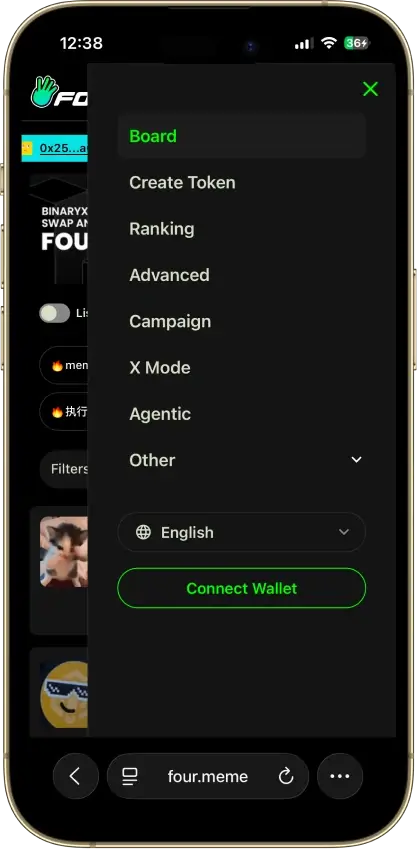
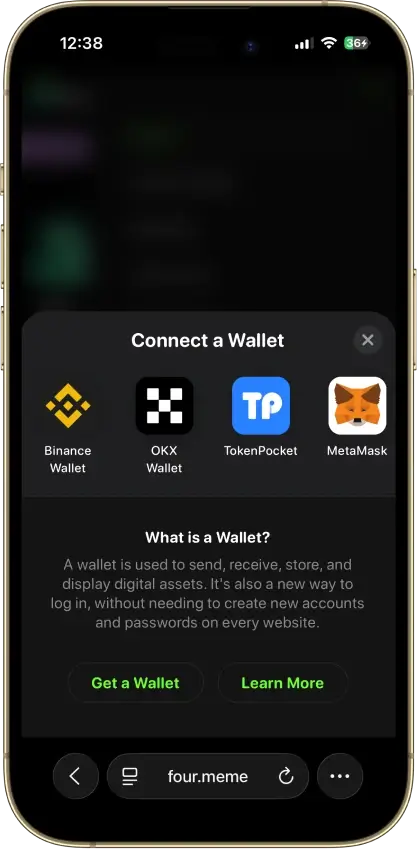
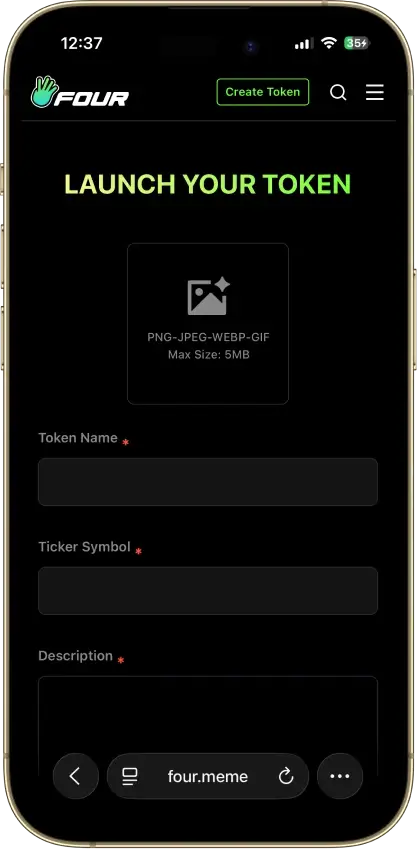
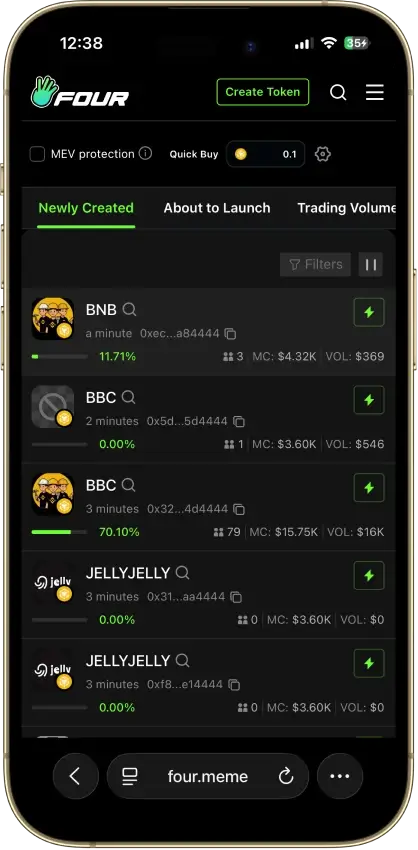
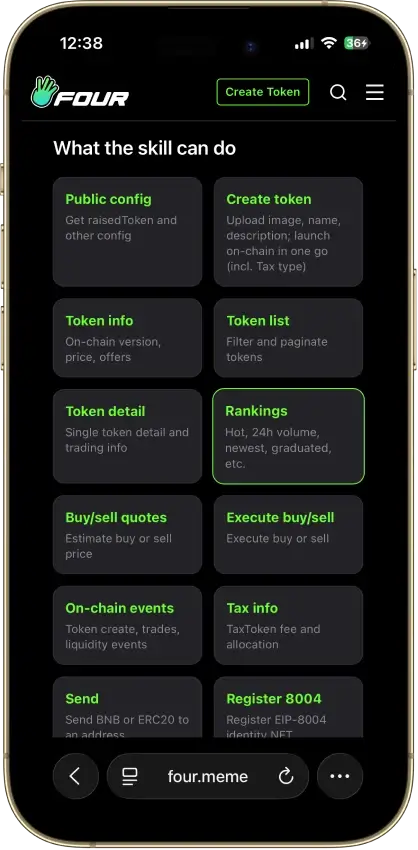
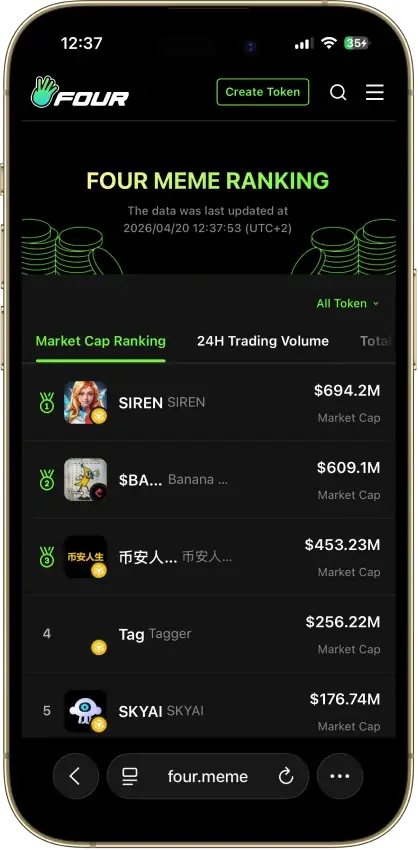
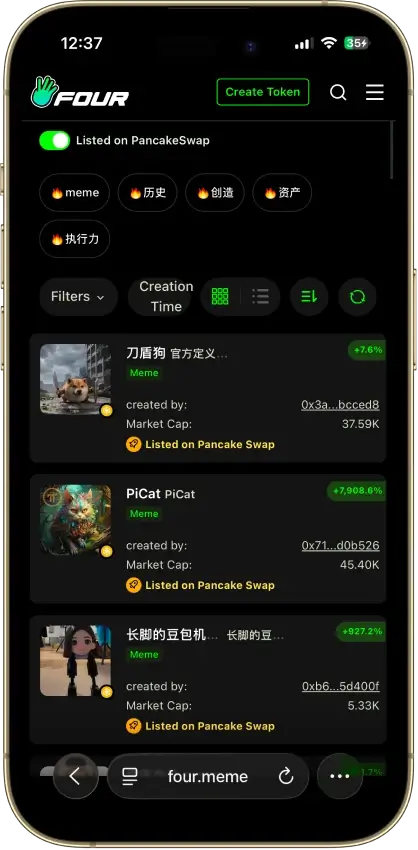
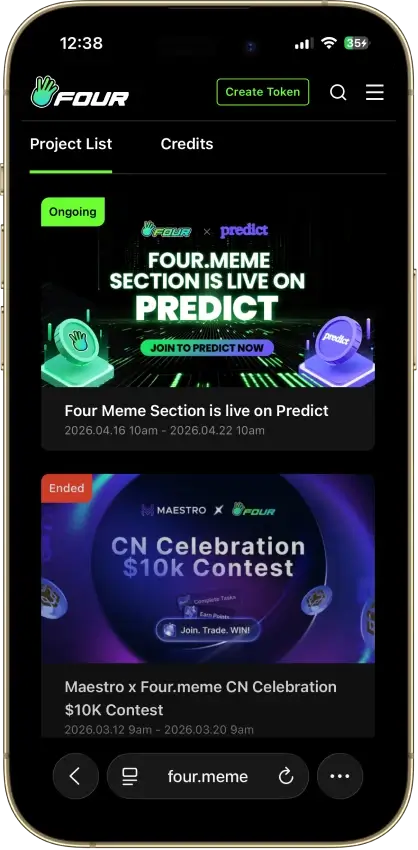
Screenshot 1 of 8
Four.meme Pros and Cons
Pros
- Public configuration shows fee parameters
- Open presets state access conditions
- Salus audited Openfour code in May. 2026
Cons
- Fee and graduation documents disagree
- Some presets restrict transfers before graduation
- Liquidity attacks reported in 2025
Classic and Open Mode
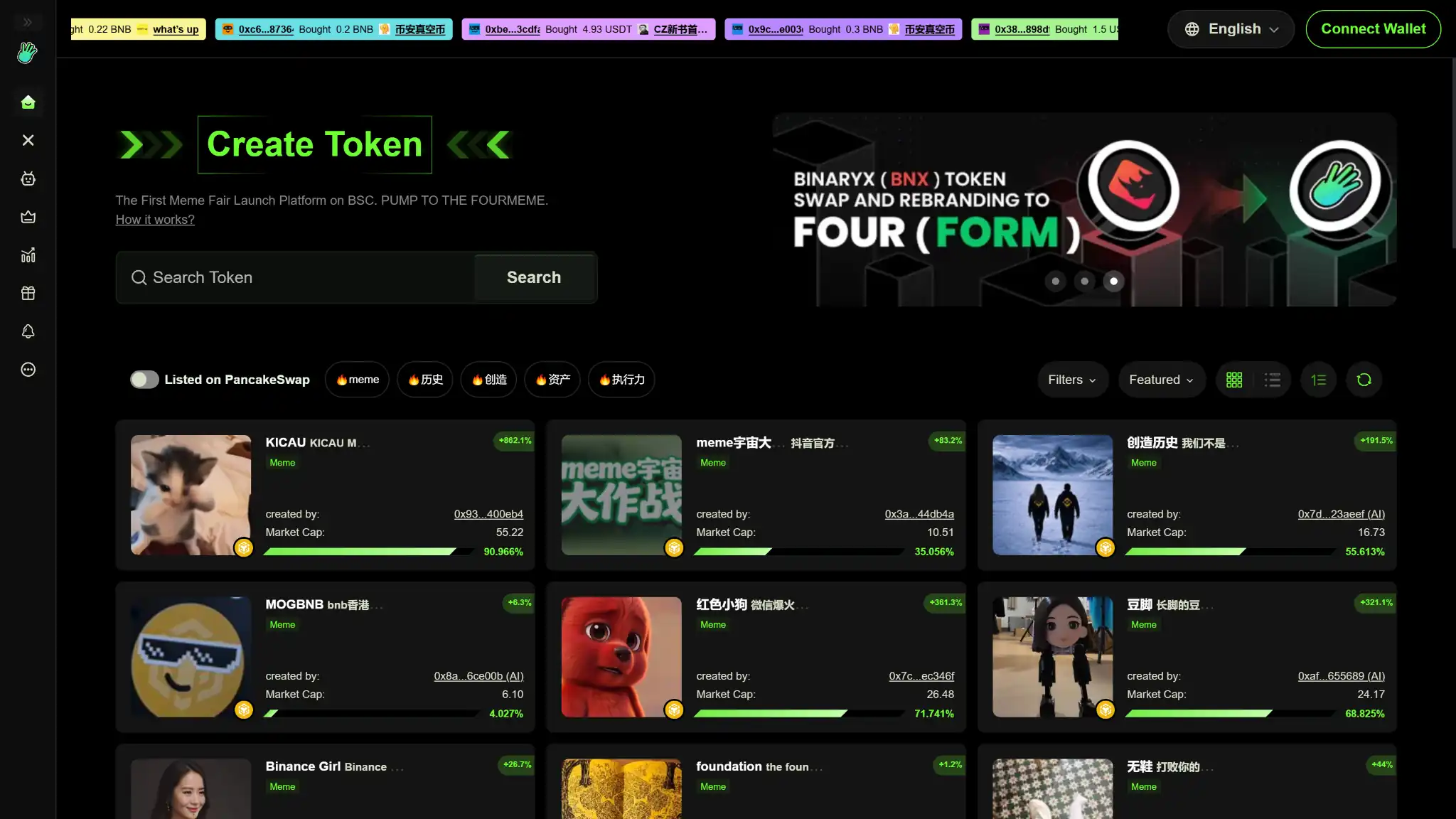
The current creation form offers Classic Mode and Open Mode. Classic documentation describes an internal bonding curve, with the chosen quote asset determining what funds the token’s market. BNB, USDT, and USD1 are among the options shown in the creation form. A launch using another quote asset has different funding requirements from a BNB pair.
Open Mode presents contract presets with their own rules. On Oct. 27, 2026, the selected Binance Agent ID Exclusive preset stated that only Binance Agentic Wallets could trade during the curve and that tokens could not be transferred before graduation. It also advertised a 1% total-supply purchase limit per Agentic Wallet, with a separate creator prebuy allowance of 1.5% of the fundraising amount.
| Open preset example | Preset details |
|---|---|
| Binance Agent ID Exclusive | Restricted curve trading and pre-graduation transfers |
| Universal Subscription | BNB subscriptions with proportional allocation when the subscription closes |
| ListaYield | Graduation on ListaDEX with a staking strategy for collected taxes |
The selected preset can determine both who participates and what happens after fundraising. OpenFour documentation describes a modular system, while the creation form shows the particular preset a launch uses.
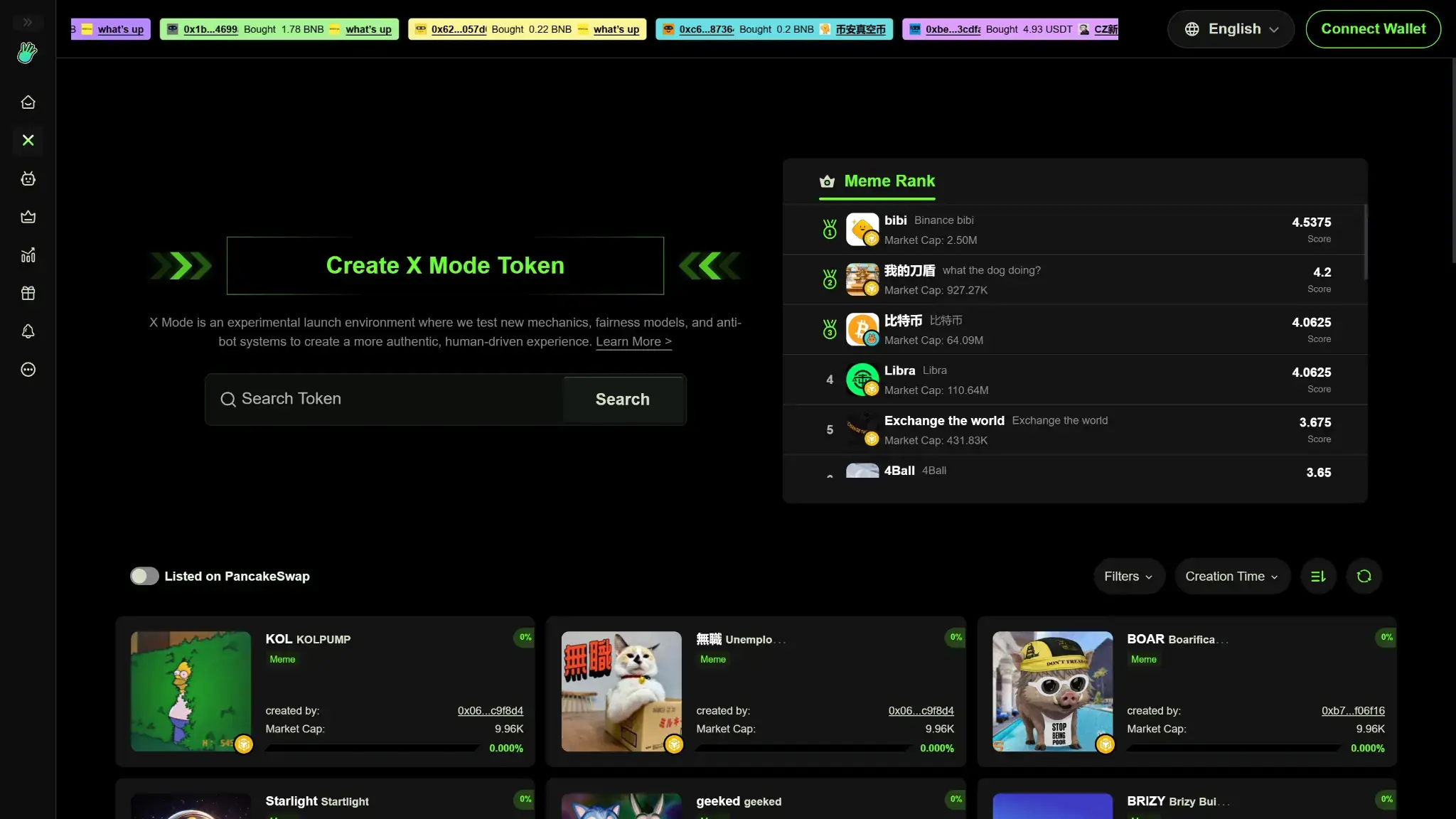
X Mode belongs to an earlier product description, including Four.meme’s Oct. 30, 2025 update. Today’s Classic/Open labels provide no retirement date for X Mode or confirmation that older tokens’ rules have changed.
Creation and Trading Costs
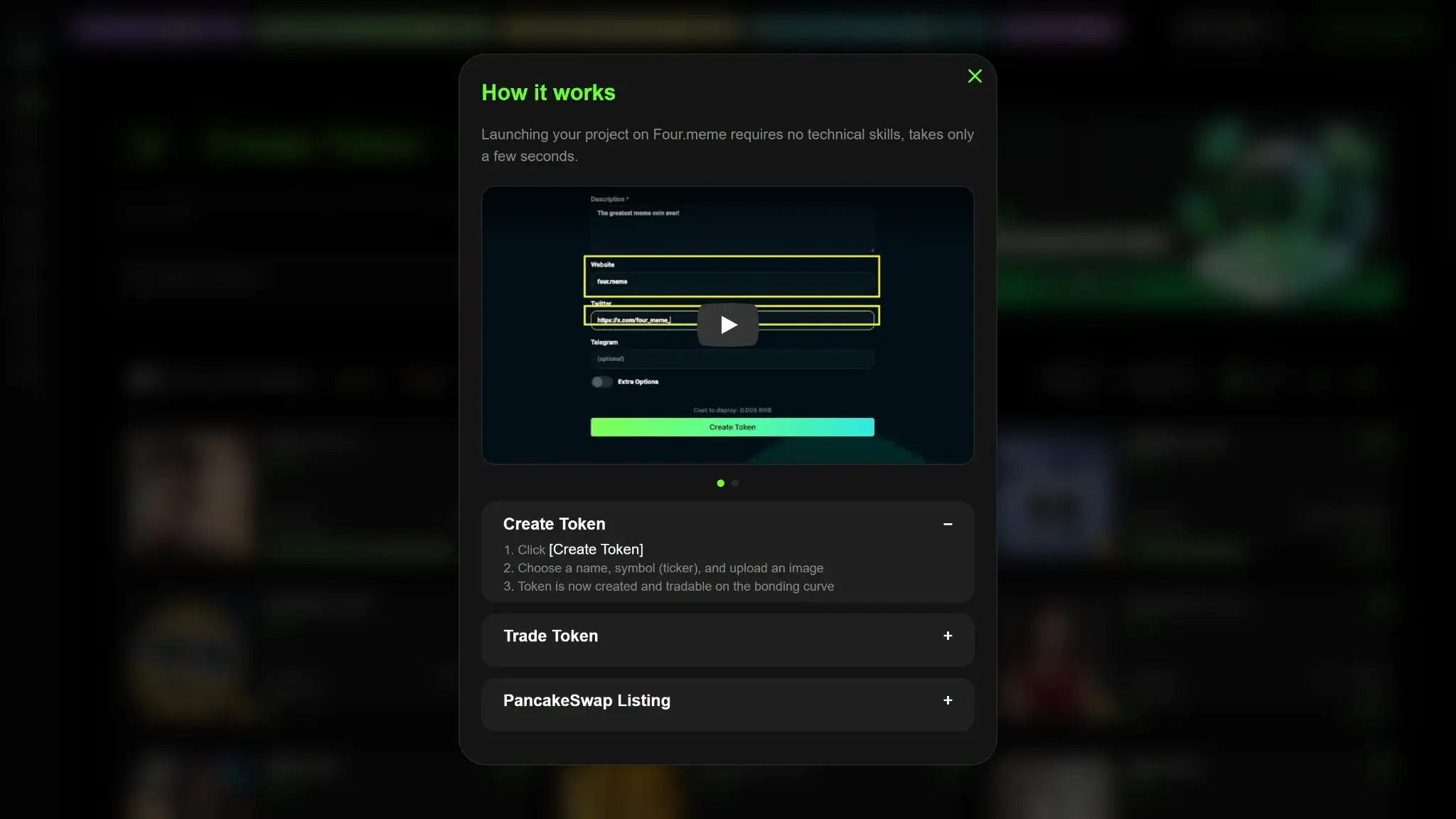
For token creation, the BNB configuration captured on Oct. 27, 2026 showed no platform fee. The Classic creation guide gives a 0.00 BNB creation-fee reference, while the GitBook how-it-works guide estimates transaction cost at approximately 0.005 BNB. Network fees and any initial creator purchase fall outside the zero platform creation-fee figure.
Buying and selling each had a listed 1% fee in the BNB configuration, represented by 0.01 values, with zero in the minimum-fee field. The GitBook how-it-works guide states a 0.001 BNB minimum. Four.meme’s integration instructions explain how to look up a token’s own fee rate and minimum.
| Cost component | Documented or displayed scope |
|---|---|
| Ordinary curve fee | Current BNB preset lists 1% for buys and sells |
| Minimum fee | Current BNB preset shows zero. How-it-works guide states 0.001 BNB |
| AntiSniper opening fees | Optional Classic panel displays fees changing by launch block |
| Token tax | Separate buy/sell settings, dependent on the token version |
| Network and routing | Gas, approvals, quote-asset conversion, and any applicable router charges |
| External pool | Pool-specific trading costs after migration |
Optional AntiSniper opening fees in the Classic form started at 100% in the creation block, then stepped down through 50%, 25%, 15%, 10%, and 5%, reaching 1% from block six. The X Mode announcement dated Oct. 30, 2025 says that mode’s dynamic fees are intended to deter bots.
Token Taxes and Holder Rewards
The current creation form has separate buy and sell tax inputs. Four.meme’s tax integration guide distinguishes older TaxToken contracts from TaxToken8 and TaxToken9, which the guide describes as applying taxes paid in BNB or the launch’s funding asset during curve trading and transfer taxes after migration. The general tax page contains both “after graduation” and “all trading phases” wording.
A BAgent token page displayed 1% buy and sell tax before curve completion on Oct. 27, 2026. The integration documentation treats the on-chain creator type as the authoritative check of tax version. API version labels serve as hints for apps reading token data.
Holder rewards can have eligibility thresholds and claim requirements distinct from simply acquiring a token. The general tax guide includes automated-distribution notes alongside manual-claim instructions, including a historical cutoff for older tokens.
Graduation and Selling After Launch
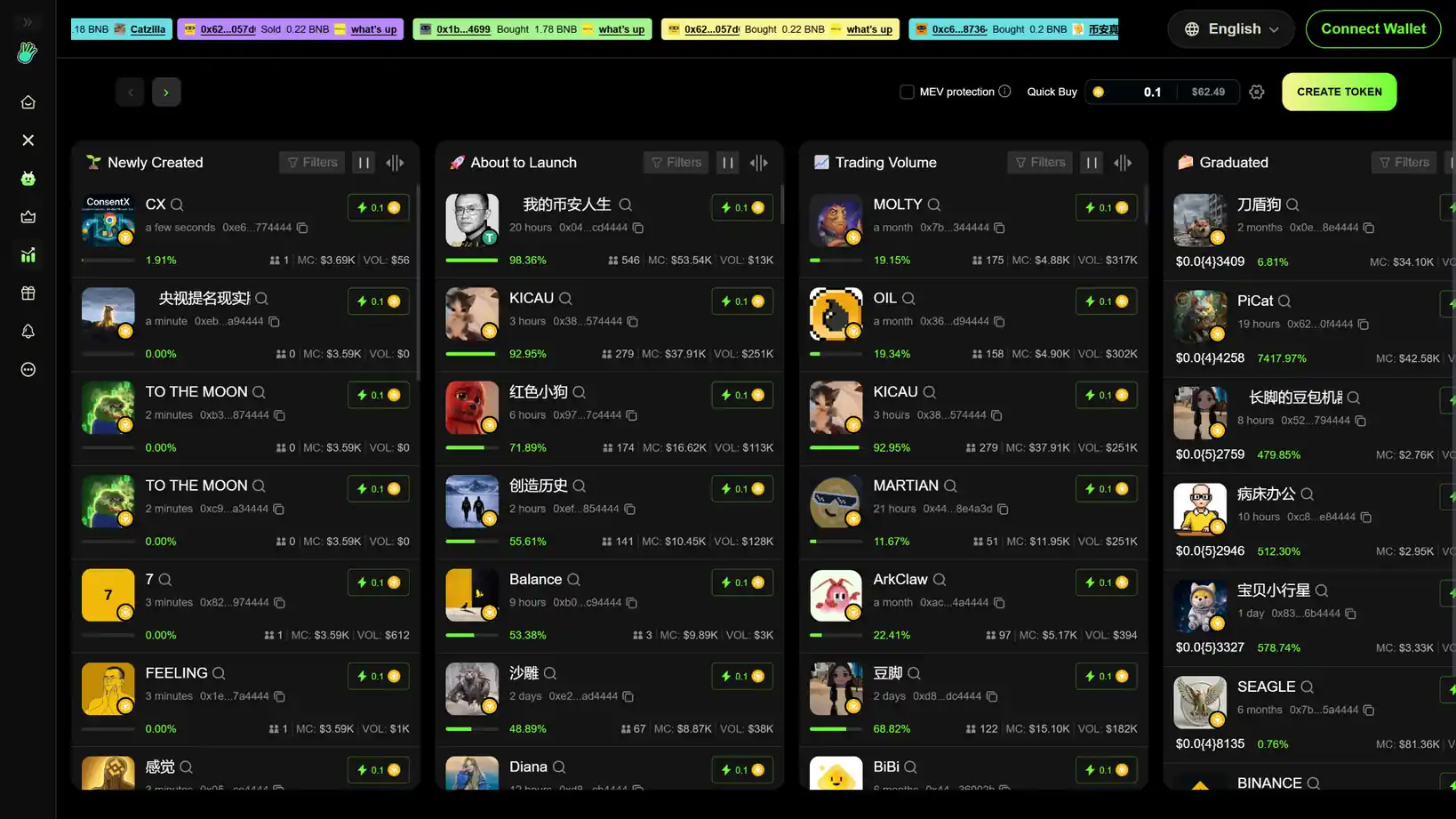
The GitBook how-it-works guide describes approximately 18 BNB at curve completion. On Oct. 27, 2026, the creation form’s BNB option and public configuration showed 13.6, while the Classic creation guide used 24 BNB in its creation table.
Classic integration instructions describe the internal curve ending and trading moving to an external decentralized exchange. Open presets can name different destinations, as ListaYield illustrates.
For the documented Classic route, trading after migration depends on the external pool. The curve’s progress bar describes fundraising, while available pool liquidity and price impact determine a sell quote.
Security and Audit History
Security researchers documented attacks against Four.meme in Feb. 2025 and Mar. 2025, including liquidity manipulation, and a news report on the Mar. 2025 incident described temporary restrictions and compensation offers.
Salus’s Jul. 2, 2024 TokenManager audit recorded replay and centralization findings as acknowledged. A Mar. 31, 2025 report on the TokenManager3.6.bsc.sol contract marked one high-severity and three medium-severity findings as pending at the report date. The Openfour report dated May. 29, 2026 recorded 25 resolved and 10 acknowledged findings, including one acknowledged high-severity finding, across a different code scope.
An audit covers only the modules and code versions it names. Classic contracts and Open presets can use different components, so the reviewed code needs to match the contract being assessed.
A token’s full contract address identifies it, and the last four characters alone cannot confirm a match. BAgent’s token address in the current Four.meme listing ends in ffff, whereas a Mar. 31, 2025 announcement described a 4444 suffix convention.
Documentation and Support
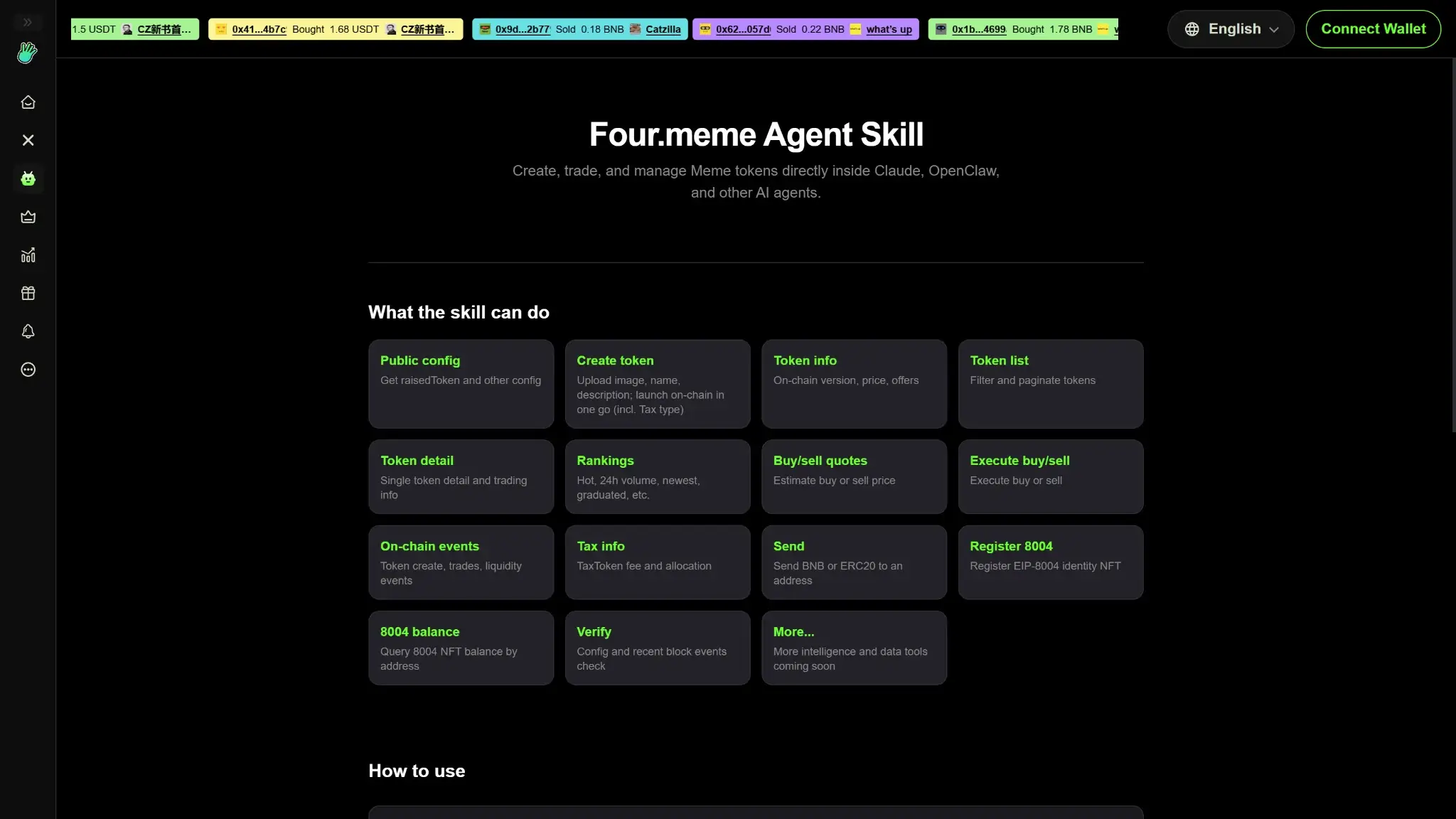
Four.meme provides public configuration data and instructions for creation, trading, taxes, and reward claims.
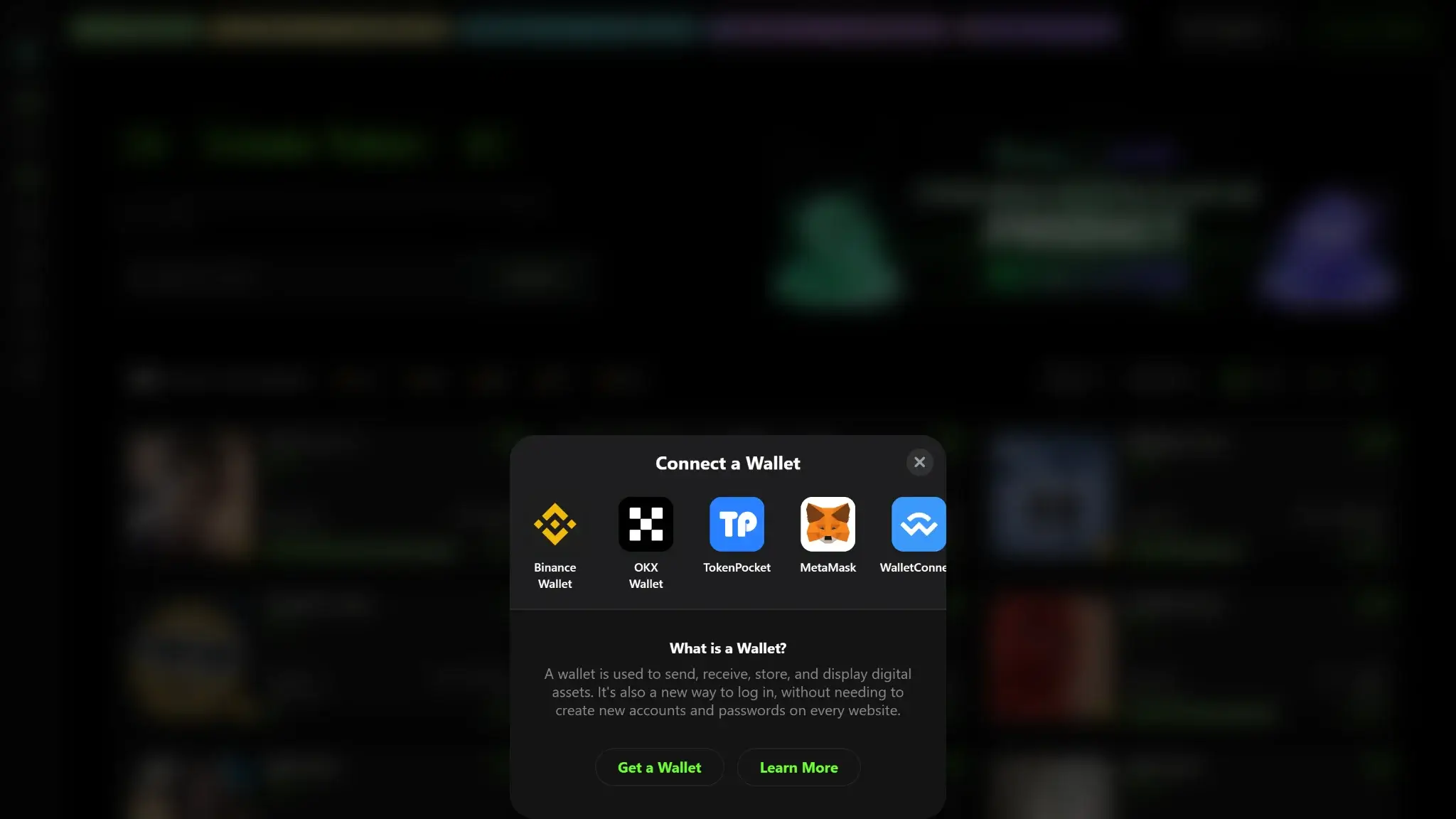
The site’s chat panel is labeled Four.meme Agent (Beta) and identifies an AI assistant whose model capability is delivered via OpenRouter. It presents a wallet requirement before messaging. That is an automated-assistant route, rather than evidence of staffed human live chat. Four.meme lists support@four.meme for marketing/business inquiries and questions about its terms or services.
Four.meme Alternatives
-


Binance Launchpad
A qualifying BNB balance sets what you can commit, while competing demand determines the allocation. Other Binance launch products change how you fund participation and receive tokens.
-

ChainGPT Pad
Two operator fee schedules disagree. Claiming tokens or excess funds can end a campaign’s full-refund option, so check the charge and rights before committing.
-

Legion
Deposit-first sales can leave unused funds to reclaim, while accepted purchases follow the project’s claim and vesting rules.
-
Kucoin Spotlight
GNOT’s buyback required opt-in and available tokens, while Zama allowed bid cancellation. Those rights apply at different stages of participation.
To compare token creation with organized token sales, use the crypto launchpad comparison, which includes token-creation platforms such as Pump.fun.
Final Verdict
Four.meme gives creators and traders several launch structures on BNB Chain, with public settings and developer docs that help explain how each one works. Classic and Open Mode need individual assessment, especially where a preset restricts wallets or transfers. Stated fee minimums and fundraising figures disagree across sources, and tax rules differ by contract version. Judging a launch means checking that token’s own fee, tax, and graduation settings. Assessing those settings and the relevant contracts takes experience. Avoid Four.meme if you need one uniform allocation process.

CryptoSlate may earn a commission when you use partner links, at no extra cost to you. Our reviews, ratings, and editorial decisions remain independent of advertisers. Read How CryptoSlate Makes Money for funding details.