

 Released in 2017
- Issuer-led token sales
- Account verification plus wallet funding
- Sale-specific allocation and vesting
Coinlist Overview
- Crypto Launchpad Name
- Coinlist
- Release Date
- 2017
- Platform Type
- ICO Platform
- Access Model
- Exchange Account, Connected Wallet
- KYC Level
- Full KYC
- Core Sale Types
- ICO, Private / Community Round, Presale
- Native Token Dependence
- None
- Allocation Model
- FCFS, Pro-Rata Subscription, Hybrid, Varies By Sale
- API / Public Data Access
- Limited
- Status
- Live
Coinlist Screenshots
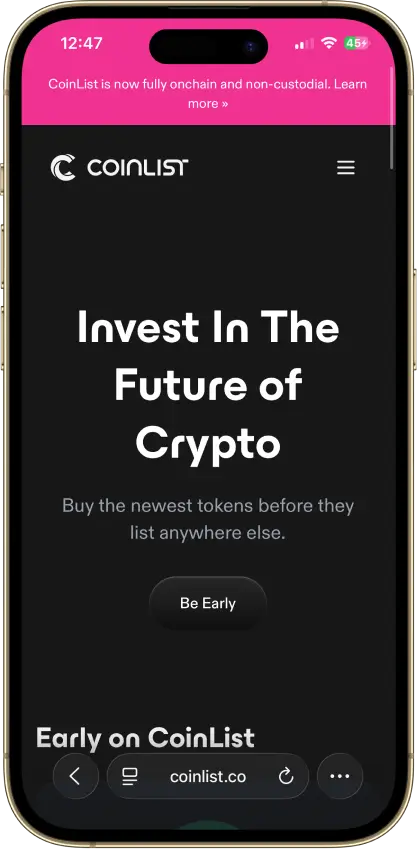
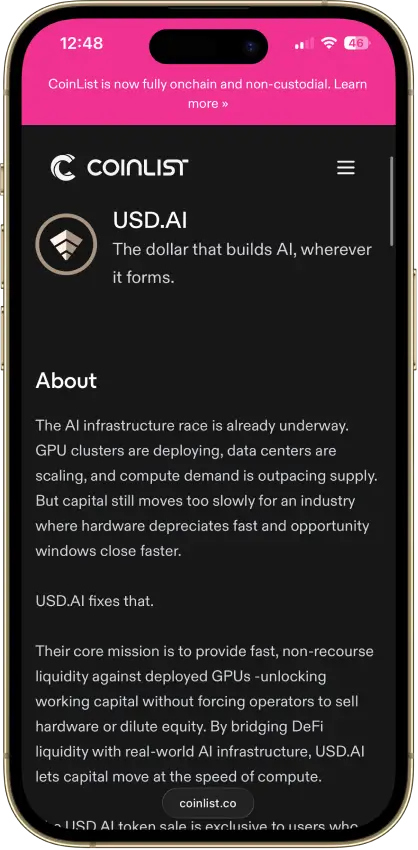
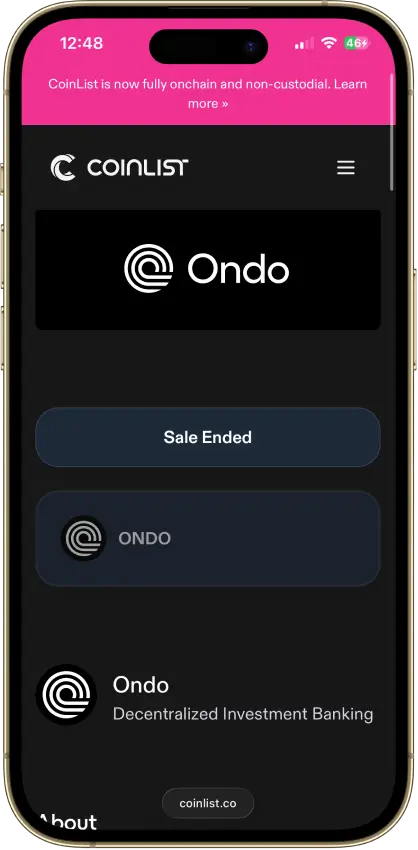
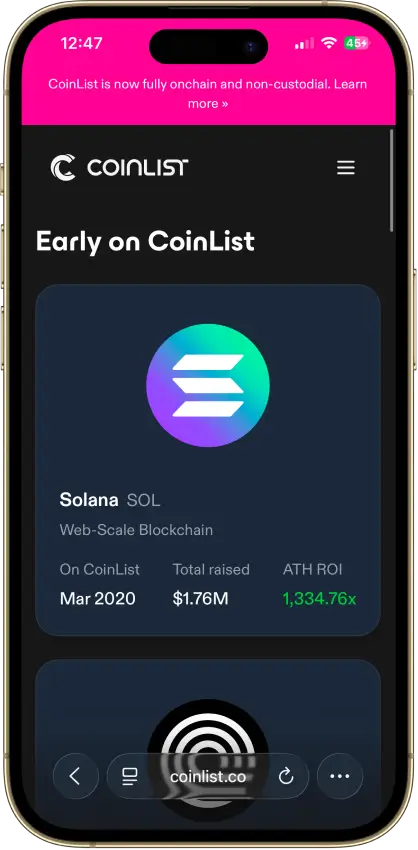
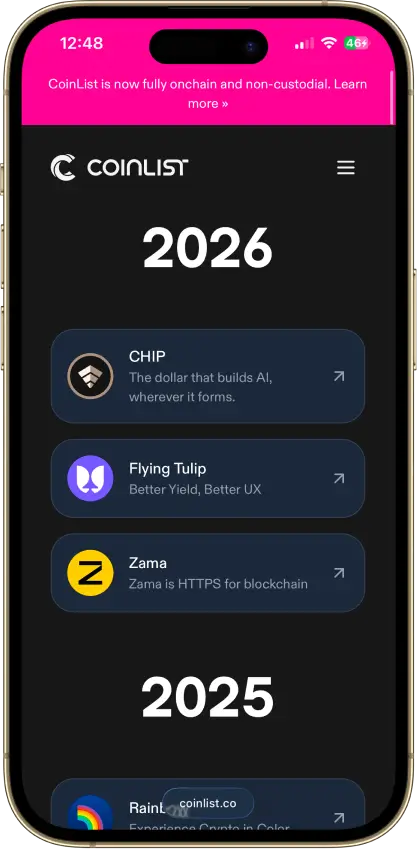
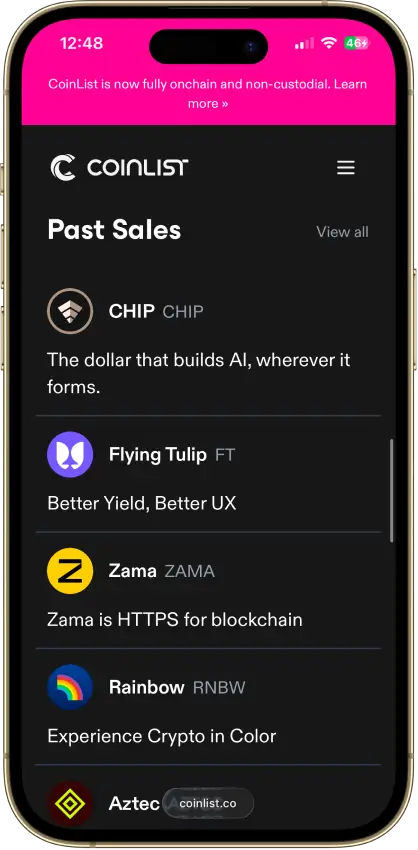
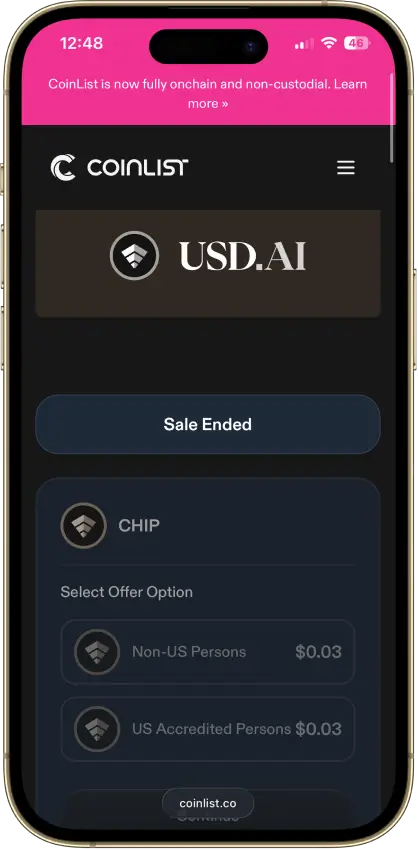
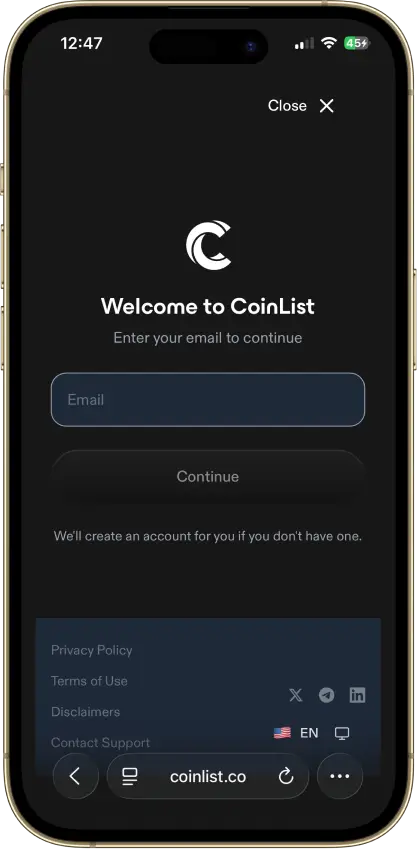
Screenshot 1 of 8
Coinlist Pros and Cons
Pros
- External wallet participation supported
- Several documented allocation formats
- Refunds return to the funding wallet
Cons
- Refund window of up to 5 business days
- Vesting and funding rules change by sale
- Embedded wallet limited to Ethereum mainnet
Who CoinList Suits
The funding flow in CoinList’s FAQ uses USDC or USDT, with ETH for gas. That setup suits users who can prepare both payment and network-fee assets before a sale. The purchase minimum and allocation method then determine how they can participate in that offering.
It is less suitable if you need immediate access to your funds after committing them. An unsuccessful purchase can require a refund wait, while a successful allocation may release tokens over time. A near-term exit requires released tokens and an available trading market.
How Token Sales Work
CoinList’s terms describe its role as providing the infrastructure for token sales made by third parties. The issuer’s agreement governs the purchase. Each sale selects participants or accepts bids under its own published rules.
First-come-first-served and Filling From The Bottom are among the formats described in CoinList’s FAQ. CoinList’s Jan. 2026 Zama announcement used a sealed-bid Dutch auction, while its Dec. 2025 Aztec announcement described a Continuous Clearing Auction. The selected format determines how bid price and purchase size affect the allocation.
A first-come-first-served sale makes timing relevant to participation. An auction can require a price decision as well as an amount to spend.
Account and Wallet Setup
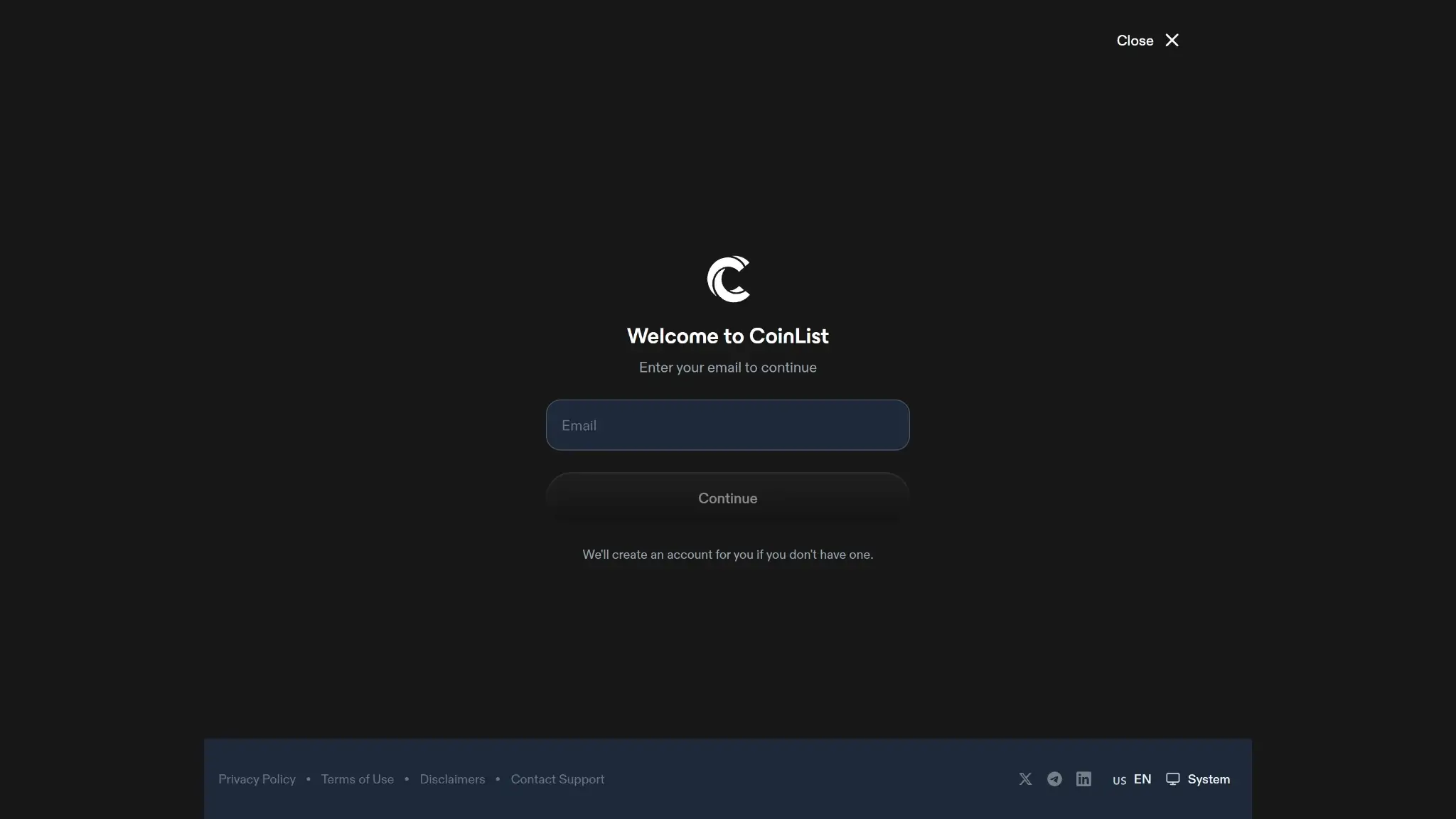
CoinList’s FAQ requires a verified account for token sales. Complete the identity checks before relying on a sale deadline, then confirm the wallet address and funding instructions for that offering. The payment asset and the asset needed for network fees can be different.
The embedded wallet interface is limited to Ethereum mainnet, according to the FAQ. This describes the interface’s network support, rather than the ecosystem of every project sold through CoinList. Follow the sale’s separate instructions for funding and token distribution.
For unsupported-network assets, CoinList’s FAQ describes possible access through a compatible external wallet after private-key export. That is conditional access to an asset, rather than reversal of the original transfer. Confirm the destination network before sending funds and keep wallet credentials out of support tickets.
Refunds and Unused Funds
CoinList’s general FAQ says unsuccessful participants receive refunds to the funding wallet within 5 business days after the sale concludes. Read this alongside the particular offering’s terms, including how it treats partially filled purchases and unused funds.
Successful allocations follow the issuer’s token-distribution schedule, which can involve later releases. These outcomes can tie up funds for different periods. A subsequent purchase may have to wait for a refund or for tokens that can be sold.
Vesting and Selling Tokens
An allocation can have an initial release followed by later installments. Check the quantity available at the token generation event (TGE), any cliff before further releases, and the distribution method. A token balance that remains locked cannot be treated as immediately sellable.
CoinList’s Jan. 2026 Flying Tulip announcement described a position represented by a non-fungible token (NFT), with redemption rights. Under those terms, extracting tradable FT tokens would forfeit the associated redemption right. That feature belongs to the Flying Tulip offering and does not establish a general CoinList refund guarantee.
Once tokens are available, selling still depends on a supported market and buyers at an acceptable price. Available liquidity affects how much you can sell at a given price, and the price may be below your purchase cost.
Fees and Legacy Balances
Fees depend on the service or offering, and CoinList’s terms permit charges paid by users. Check the sale agreement for participation charges, then account for funding transactions and the cost of selling or moving tokens afterward.
Money committed during an allocation process or locked by vesting also has an opportunity cost. That is distinct from a platform fee, and a token can lose value before you can sell it. A release schedule that extends beyond your intended holding period can leave part of the allocation unavailable for sale.
Returning users should separate current token-sale participation from balances left on the legacy platform. The FAQ provides a legacy withdrawal route and points to a separate fee schedule. Those legacy terms apply to old balances, while current wallet-sale instructions address new participation.
Sale History and Project Screening
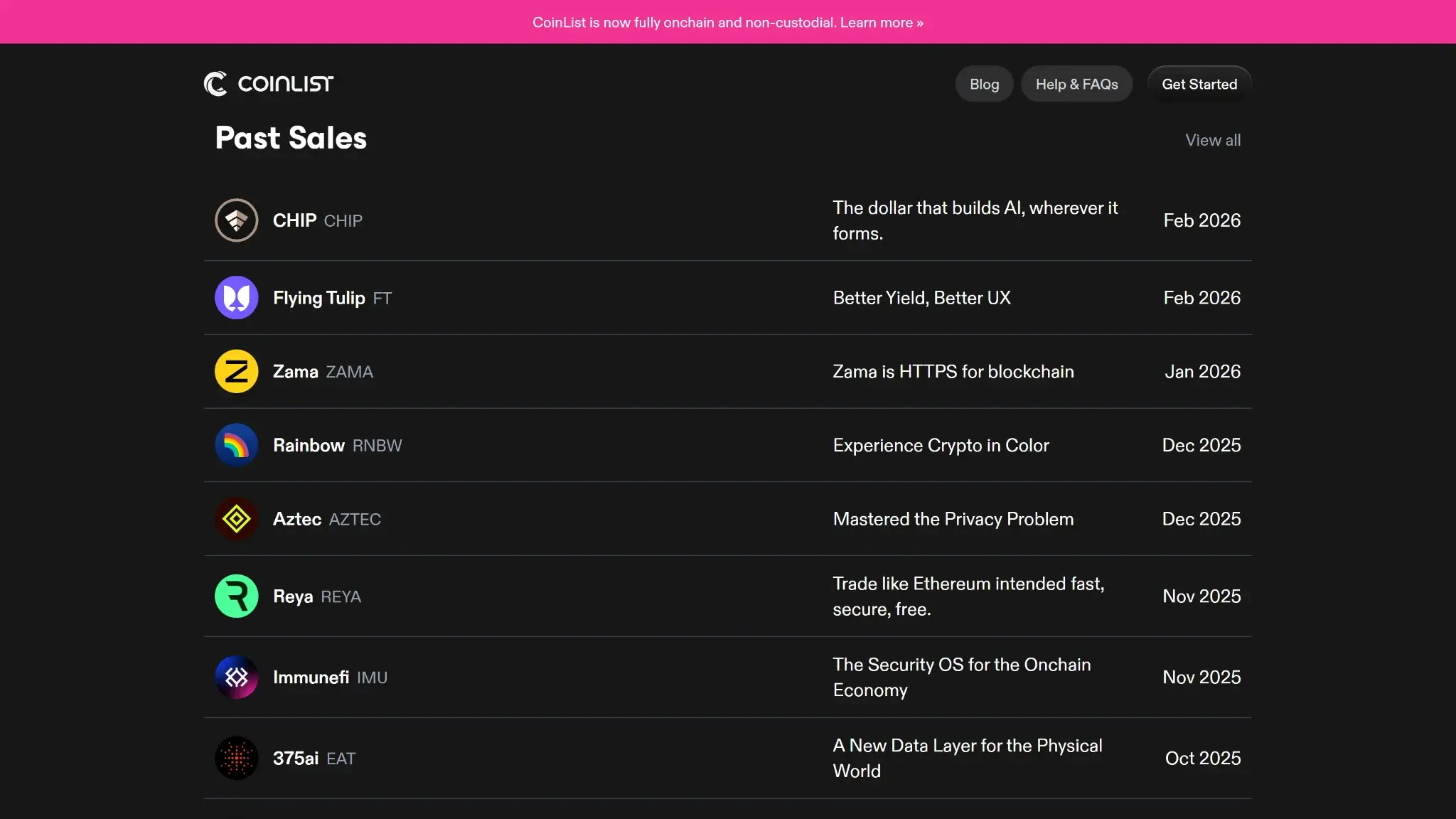
CoinList’s year-in-review post reported 21 token sales in 2025. Zama and Flying Tulip also published issuer accounts of their 2026 sales involving CoinList. These examples describe completed fundraising activity.
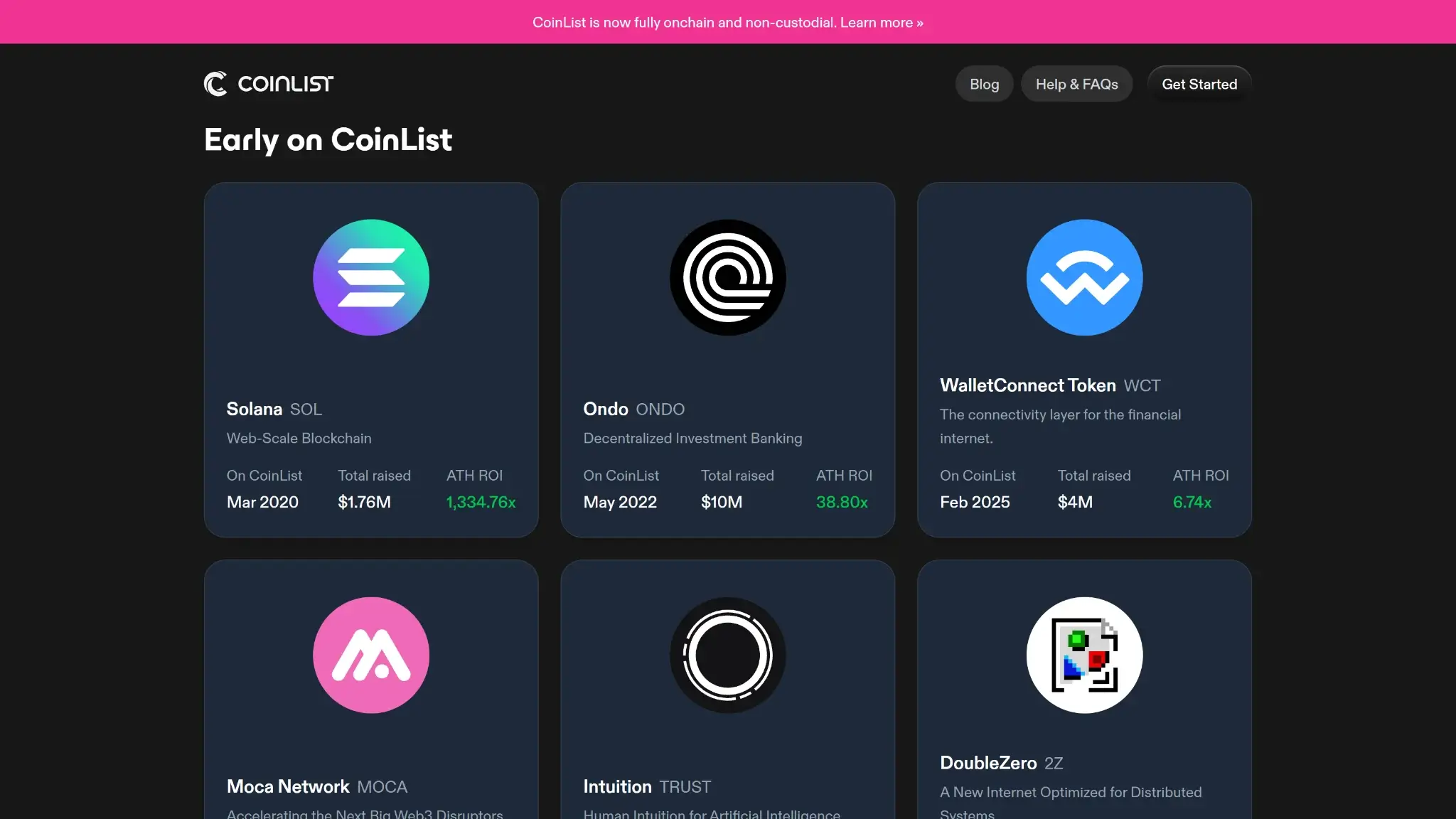
The current homepage places token sales alongside equities and funds. This review covers the token-sale service. The dates on a specific offer distinguish a participation window from a historical project listing.
CoinList’s terms disclaim review, verification, and endorsement of third-party offering materials. The investor still needs to assess the issuer’s plan and how token supply becomes available over time.
Custody and Support
CoinList describes its current token-sale service as non-custodial. Its documentation separates the account used to participate from the wallet used to fund an offering. You remain exposed to issuer and smart-contract risk while using a wallet you control.
The current terms direct questions and complaints to a support-ticket form. Identify the sale, relevant wallet address, and transaction when reporting a problem. CoinList also provides a public status page, which can help distinguish a reported platform incident from an individual account question.
CoinList Alternatives
-


Binance Launchpad
A qualifying BNB balance sets what you can commit, while competing demand determines the allocation. Other Binance launch products change how you fund participation and receive tokens.
-
Kucoin Spotlight
GNOT’s buyback required opt-in and available tokens, while Zama allowed bid cancellation. Those rights apply at different stages of participation.
-

Bybit Launchpad
Snapshot qualification can include balances outside Funding, but a commitment needs funds in that account and stays locked until after distribution.
-

Pump.Fun
Ordinary curve purchases have no buyer vesting cliff, but curve completion can interrupt selling. Custom fees and wallet migration instructions conflict across operator pages.
Binance Launchpad provides a different route for exchange-account users. Its documented Fan Token subscription format measures BNB balances and allocates tokens according to commitments, subject to an individual limit. That format can suit someone who already holds BNB and wants an exchange-managed subscription.
Legion lets projects assess applications and decide how much each participant receives. Compare that application process with a specific CoinList sale by examining how the issuer selects participants and whether your request can receive a partial allocation.
The allocation method and release schedule can differ substantially across crypto launchpads. Those terms define the purchase more precisely than the platform name, particularly when one platform hosts several sale formats.
Final Verdict
CoinList suits users who want an issuer-led token sale and can manage the account checks, wallet funding, and offering terms. Its documented formats give issuers several ways to allocate tokens, which also means a previous sale’s instructions may not apply to the next one. The conditions above can delay access to committed funds or leave only part of an allocation available to sell. CoinList’s history provides examples to examine, but its presence on a sale page is not an endorsement of the investment.

CryptoSlate may earn a commission when you use partner links, at no extra cost to you. Our reviews, ratings, and editorial decisions remain independent of advertisers. Read How CryptoSlate Makes Money for funding details.