


- SOL, USDC, and custom pair choices
- Web/mobile fee added to pool charges
- Creator or Holder Rewards configurations
Pump.Fun Overview
- Crypto Launchpad Name
- Pump.Fun
- Platform Type
- Memecoin / Bonding-Curve Launchpad
- Access Model
- Connected Wallet
- KYC Level
- No KYC, Varies By Region
- Core Sale Types
- Fair Launch
- Native Token Dependence
- None For Base Access
- Allocation Model
- Bonding Curve
- API / Public Data Access
- Limited
- Status
- Live
Pump.Fun Screenshots
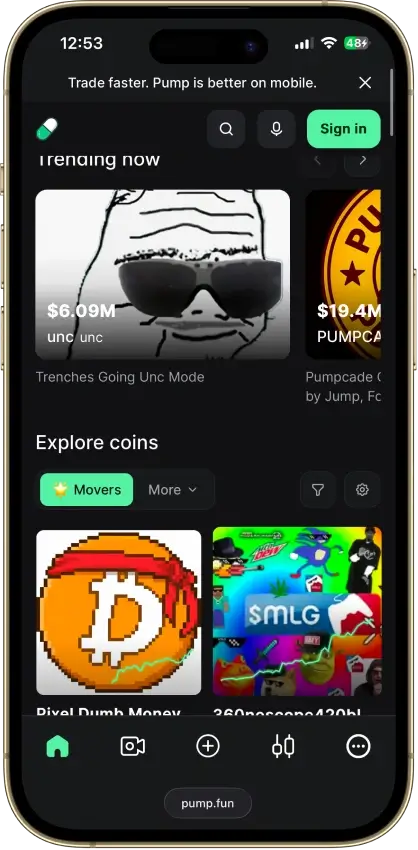
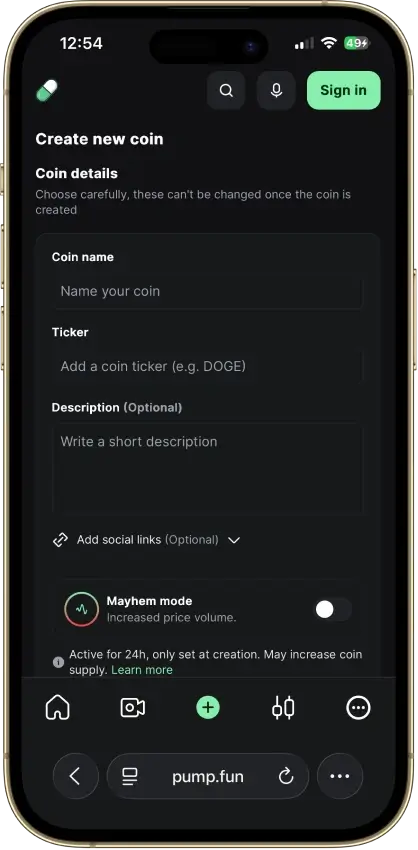
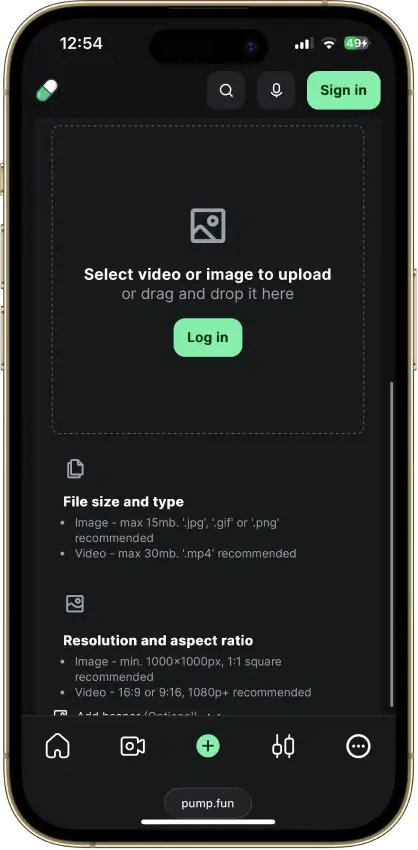
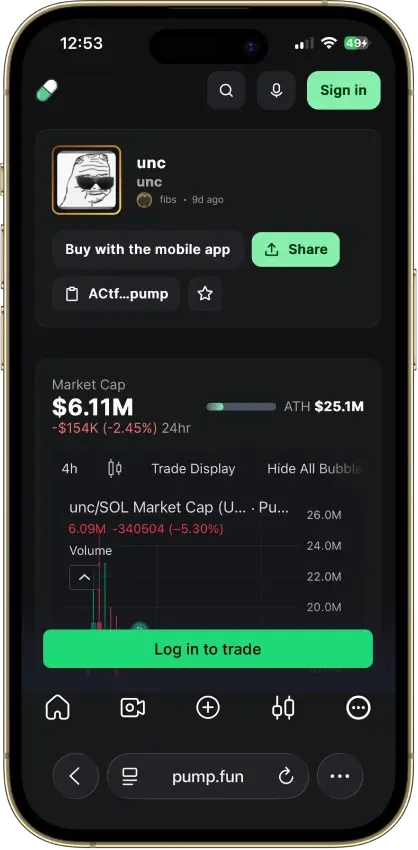
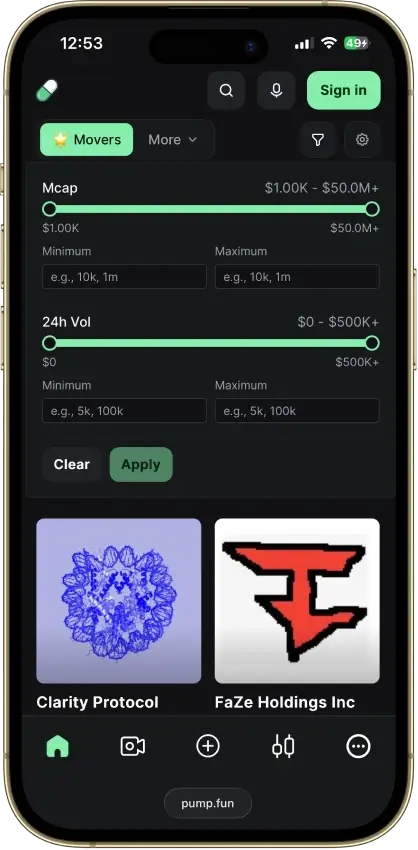
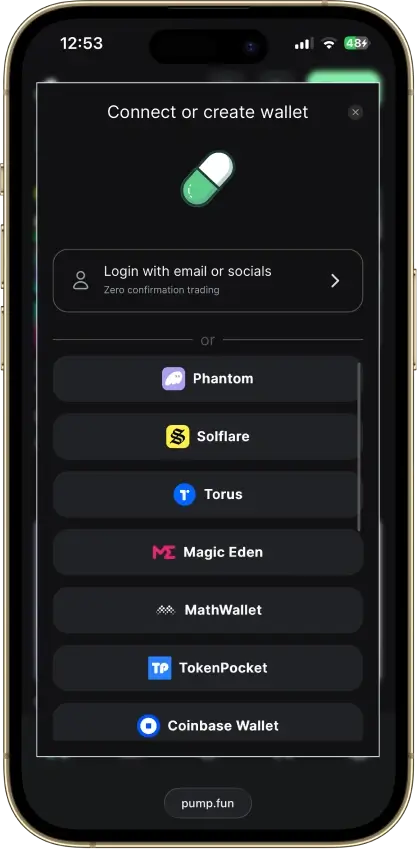
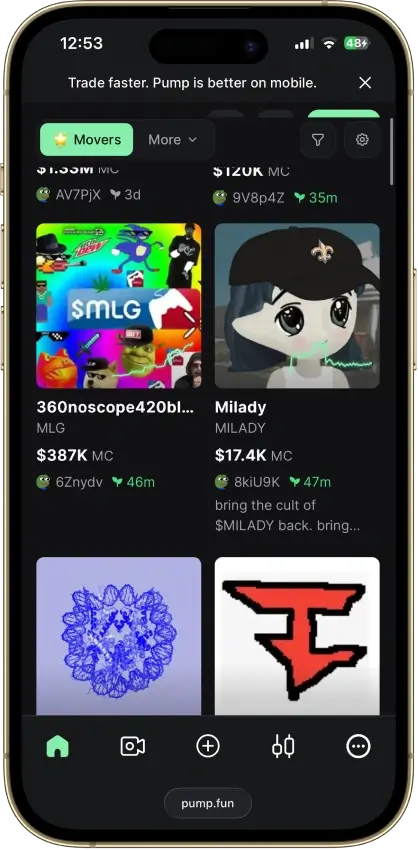
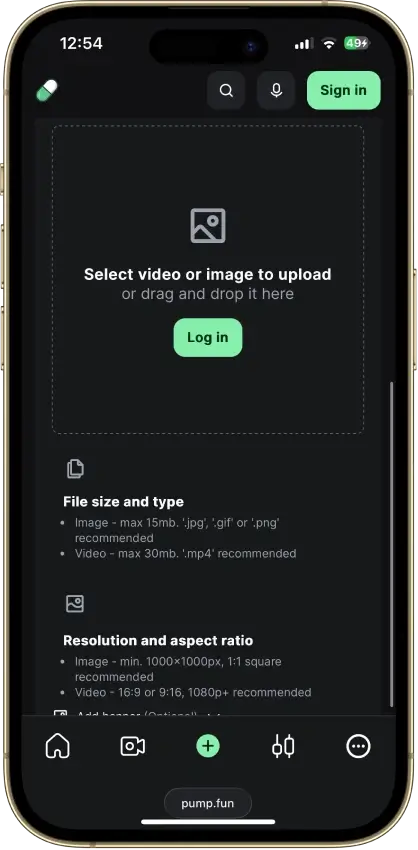
Screenshot 1 of 8
Pump.Fun Pros and Cons
Pros
- Coin details set in a single creation form
- PUMP staking unnecessary for base launches
- Ordinary buyers receive traded tokens
- Documented PumpSwap migration route
Cons
- Fees conflict across custom-pair guidance
- Selling pauses at curve completion
- Private-key guidance contradicts Terms
- Mayhem adds supply and exit risks
Coin Creation and Curve Purchases
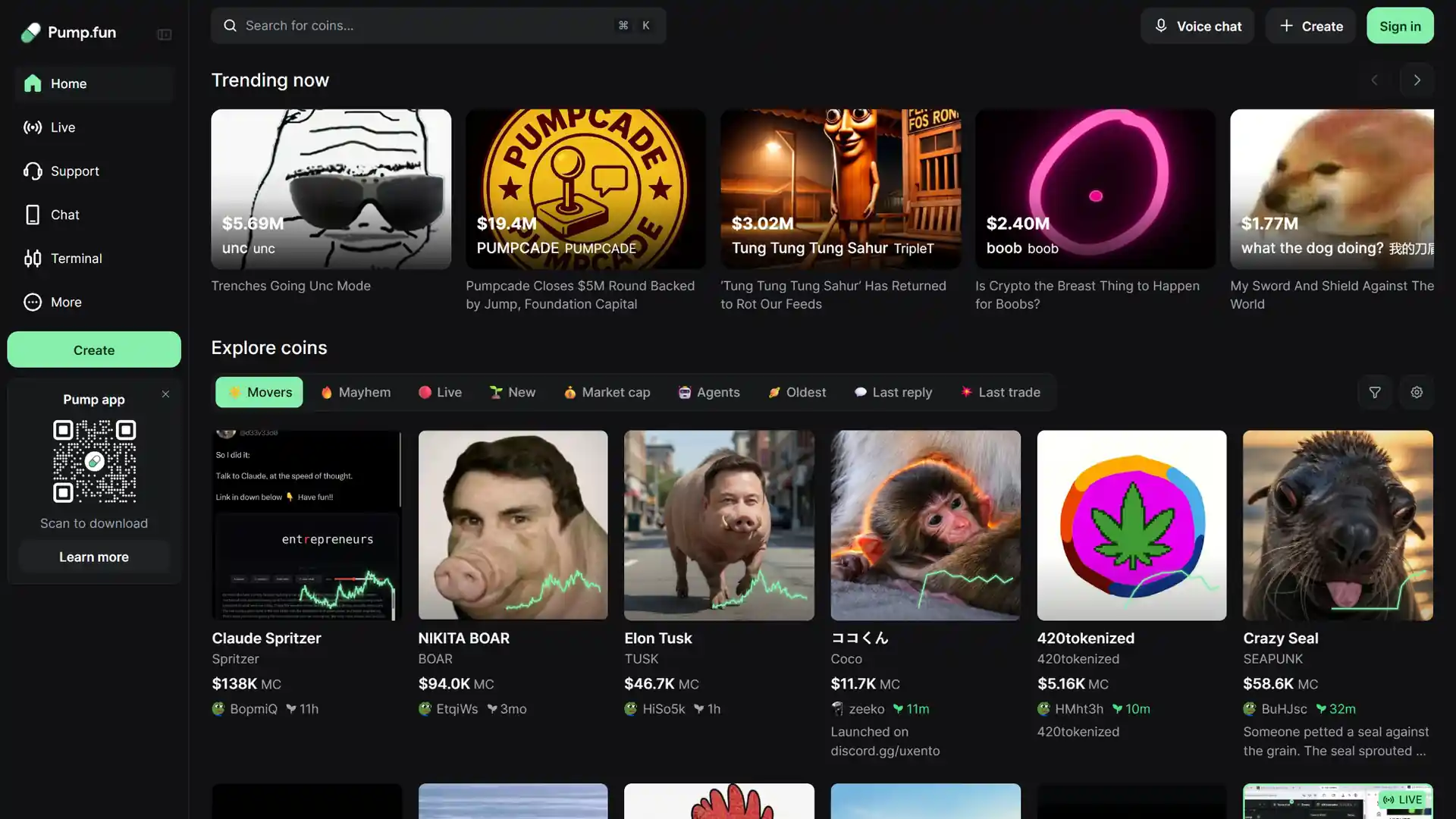
The creation form combines pairing and reward choices, but those choices can alter both charges and token behavior. Pump.fun suits creators and buyers who can examine a particular coin’s configuration before committing funds. Someone seeking a screened project allocation or a guaranteed selling window will need a different sale model.
The public creation form asks for coin details and a liquidity pair, then requires sign-in to create the coin. Its SOL, USDC, and Custom choices are pairing assets on Solana. A USDC pair therefore does not mean the token is launched on Ethereum.
A bonding curve calculates the exchange price from its reserve parameters and purchases or sales. There is no registration allocation to win before buying through the ordinary curve mechanism. Your purchase depends on the available price, transaction limits, and execution, so open entry does not reserve an equal amount or entry price for everyone.
Pump’s technical instructions describe a completed curve migrating to a canonical PumpSwap pool. They also identify the earlier Raydium withdrawal route as deprecated. Graduation conditions vary with the quote asset and program version. The Pump.fun trading app also displays assets from other launch venues, so its feed extends beyond coins created through this form.
Custom pairs introduce exposure to another asset’s issuer, liquidity, and contract rules. There is also a documentation conflict over how many layers of paired coins are allowed: the legal and pairing pages describe a narrower structure than the technical documentation updated on Oct. 13, 2026. A repository update alone does not establish that every interface supports the same route.
Fees, Creation Costs, and Migration Charges
The Oct. 17, 2026 fee schedule separates coin creation from purchasing the coin. Creation has no platform fee, but Solana transaction costs and the deposit needed for onchain accounts remain. A first purchase at creation is a trade, so applicable trading charges can apply immediately.
| Cost Layer | Fee Treatment |
|---|---|
| Standard SOL/USDC curve pool | 1.25%, made up of a 0.30% Creator component and 0.95% Protocol component |
| Canonical SOL/USDC PumpSwap pool | Separate market-cap schedules, with total pool fees from 1.25% to 0.30% |
| Non-canonical PumpSwap pool | Separately listed at 0.30% |
| Web/mobile Platform Fee | An additional 0.45%, or 0.40% when another user’s referral code is applied |
| Network and external services | Account deposits, network charges, and applicable third-party fees remain separate |
| Graduation | 0.015 SOL, with the payer depending on the quote asset and migration trigger |
The Platform Fee includes first buys and conditional-order execution through the web or mobile app. It is deducted from the asset spent on a purchase or received on a sale. A conditional order incurs the rate applicable when it was placed, with the charge collected when it executes. Terminal and third-party interfaces are excluded from this particular fee, although those interfaces can impose other charges.
Adding the percentages in the table does not produce a universal transaction quote. A routed trade can involve different assets and fee treatment across pools, while the final amount can also depend on execution and network charges. Pump’s fee page itself warns that displayed estimates may differ from the smart-contract charge.
The fee page describes fixed rates, but the public Custom form exposes an optional Creator fee control, and the technical creation instructions describe a configurable custom-pair rate. That conflict prevents a single fixed custom rate from describing every possible coin configuration.
For a SOL-paired coin, the fee schedule deducts the graduation charge from the curve. With another quote asset, the account performing migration normally pays the SOL charge. A user whose trade triggers migration can become that payer. This cost is distinct from the amount paid to purchase tokens.
Wallet Setup and Account Identity
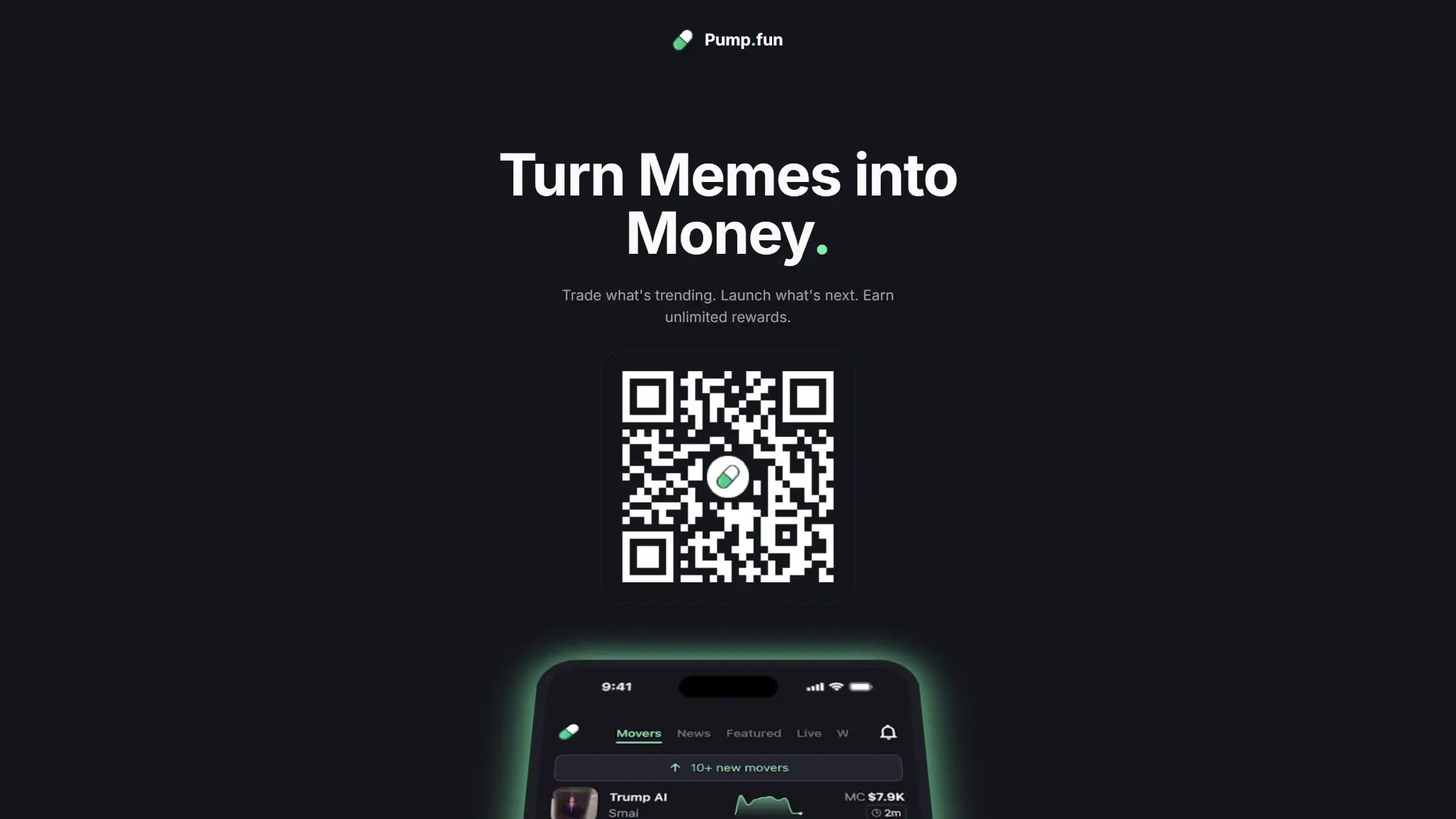
Email or social sign-in still involves a wallet. Pump’s current sign-in modal says using the same method as the mobile app brings the app wallet, while another method or an external wallet opens a different account. That distinction can explain why signing in successfully is insufficient to identify the wallet holding an existing position.
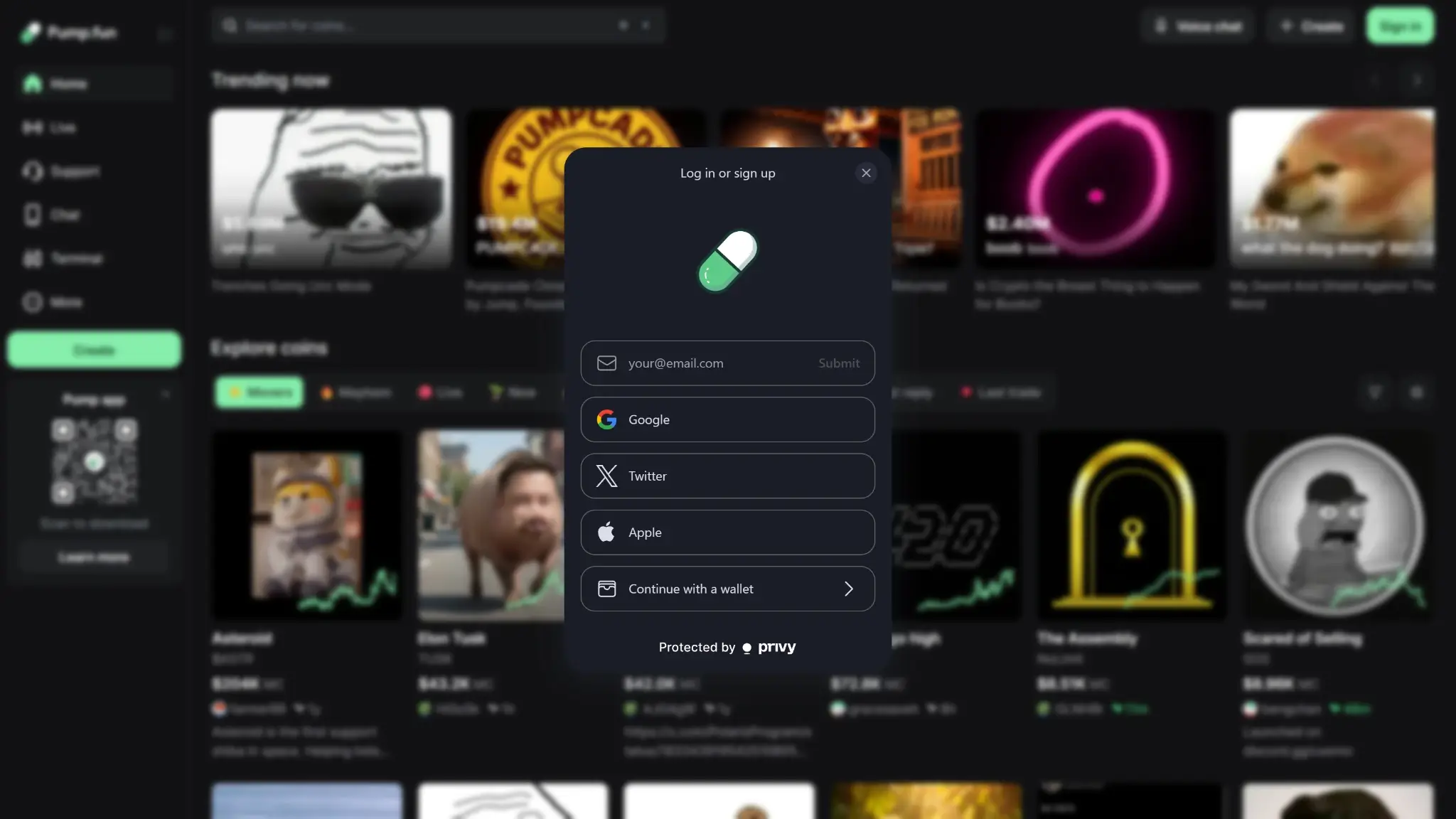
The public modal on Oct. 28, 2026 displayed Google, Apple, GitHub, email, Phantom, Coinbase Wallet, and further wallet choices. However, an operator notice says web browser-wallet sign-in would be retired from Sep. 25, 2026. Displayed choices and the retirement notice therefore give conflicting setup guidance.
The same migration notice describes private-key import, while Terms Section 12.2(c) says Pump will never ask users to share wallet private keys or recovery phrases. The documents give incompatible instructions for migrating an existing account. Check the wallet address and account identity before funding a position, and distinguish a newly created wallet from an existing one.
Selling, Migration, and Reward Distributions
Ordinary curve purchases do not use a conventional launchpad vesting cliff followed by a token-allocation claim. That makes them different from the registration-based allocation sales offered by some crypto launchpads, but it does not guarantee immediate execution of a later sale.
Pump’s synthetic-migration documentation says that once the completing buy finishes the curve, further curve buys and sells fail until migration happens. Its newer buy instructions can also split a completing purchase between curve pricing and prospective pool pricing. The completion pause applies to v2 and v3 trades alike, so selling can be interrupted even though ordinary buyers have no vesting cliff.
Under Pump’s fee schedule, SOL/USDC Holder Rewards redirect the Creator component to holders. For custom pairs, the schedule describes a launch-set Holder Rewards rate, subject to a platform maximum stated as 3%. Eligibility conditions and distribution costs apply, and the Terms say payments may never occur. These reward distributions are separate from purchased tokens and are not guaranteed rebates.
Existing Cashback coins have their own credit and claim mechanics, while the current documentation says new Cashback launches are unavailable.
Mayhem and Launch Integrity
The creation form displays Mayhem as a separate option with a first-24-hours description and a supply warning. The older Mayhem guide describes an additional token mint and possible automated agent trading. It also describes circumstances in which agent selling can prevent some holders from exiting the curve. Neither an available toggle nor an agent’s possible participation guarantees liquidity.
The guide’s Nov. 12, 2025 statement that web and mobile cannot select Mayhem conflicts with the current form. The public Custom configuration disables the option and identifies SOL/USDC as its supported pairing choices. The public form displays these configuration choices before sign-in.
For standard canonical migration, Pump’s technical description says the received liquidity-provider (LP) tokens are burned. Burning those LP tokens limits that particular withdrawal route. It does not stop concentrated token holders from selling, validate an issuer, or make every pool and program parameter immutable. Pump’s technical documentation also describes authorities that can change global configuration and disable operations.
Security, Legal Record, and User Feedback
A former employee stole funds from Pump.fun in 2024. Contemporary reporting described misuse of privileged access to bonding-curve funds, and later reporting covered a court-confirmed sentence.
An Aug. 31, 2026 opinion in Aguilar v. Baton Corporation partly granted and partly denied motions to dismiss. Some claims survived the motions to dismiss, while others were dismissed. The ruling assessed whether the complaint’s allegations could proceed, rather than deciding whether the alleged misconduct occurred.
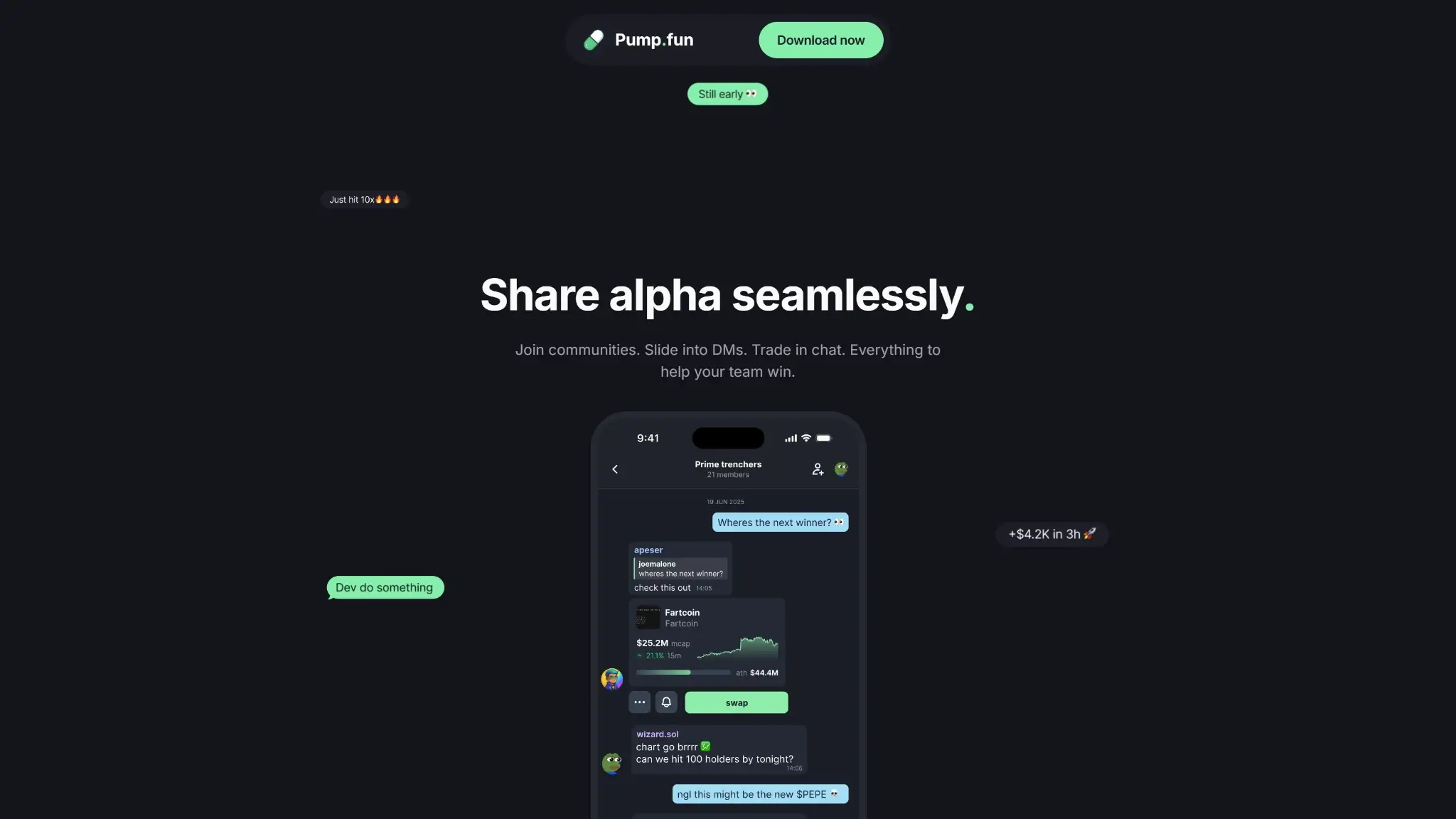
The available Trustpilot and App Store accounts include complaints about selling, balances, navigation, and support, alongside praise for app updates and mobile convenience. Their causes remain unresolved, and the examples do not establish a measured failure rate or support standard. Recovery-service promotions and unsupported allegations cannot substantiate a platform misconduct finding.
Pump’s Terms direct ordinary questions and complaints to the Pump Support Portal on Telegram. That is a contact route, without a measured response or resolution time. The legal-notice email serves formal notices.
Pump.fun Alternatives
-

Kucoin Spotlight
GNOT’s buyback required opt-in and available tokens, while Zama allowed bid cancellation. Those rights apply at different stages of participation.
-

Binance Launchpad
A qualifying BNB balance sets what you can commit, while competing demand determines the allocation. Other Binance launch products change how you fund participation and receive tokens.
-

Jupiter Studio
Studio starts trading on a Meteora curve and moves completed launches to a DAMMv2 pool. Creator vesting and pool configuration can affect what becomes available at that transition.
-

Coinlist
Refund timing and vesting determine when funds become available.
Final Verdict
Pump.fun provides a creation form and a bonding-curve purchase mechanism for Solana token launches. The choice of quote asset, reward configuration, and trading interface changes the costs and risks a buyer needs to examine. The web/mobile fee schedule adds a 0.45% charge, reduced to 0.40% with an applied referral code. Custom-fee and wallet guidance also contain unresolved inconsistencies. Creators who can inspect a coin’s configuration may find the launch mechanism accessible without staking PUMP. Buyers must still account for migration interruptions, contract controls, and the possibility of a poor exit. The historical 6.5 rating comes from the earlier assessment and has not been recalculated.

CryptoSlate may earn a commission when you use partner links, at no extra cost to you. Our reviews, ratings, and editorial decisions remain independent of advertisers. Read How CryptoSlate Makes Money for funding details.