

 Released in 2019
- BNB subscriptions use proportional allocation
- Launchpool assets depend on the campaign
- Alpha selection does not promise Spot listing
Binance Launchpad Overview
- Crypto Launchpad Name
- Binance Launchpad
- Release Date
- 2019
- Platform Type
- CEX / IEO Launchpad
- Access Model
- Exchange Account
- KYC Level
- Full KYC
- Core Sale Types
- IEO, Launchpool, Airdrop / Quest Distribution
- Native Token Dependence
- Varies By Sale
- Allocation Model
- Pro-Rata Subscription
- API / Public Data Access
- Limited
- Status
- Watchlist
Binance Launchpad Screenshots
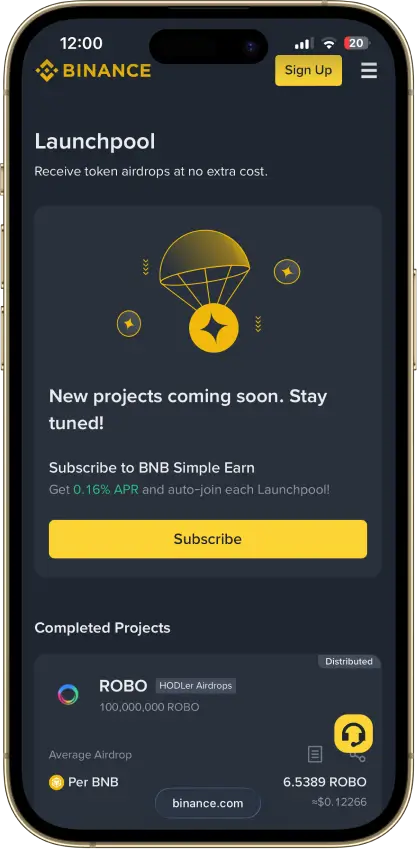
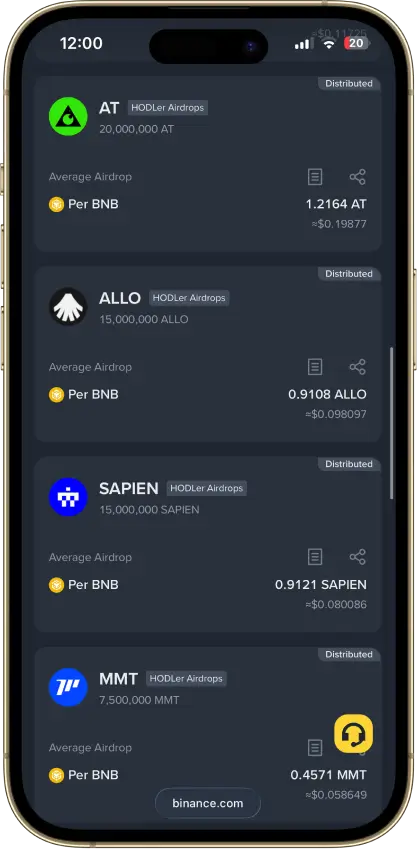
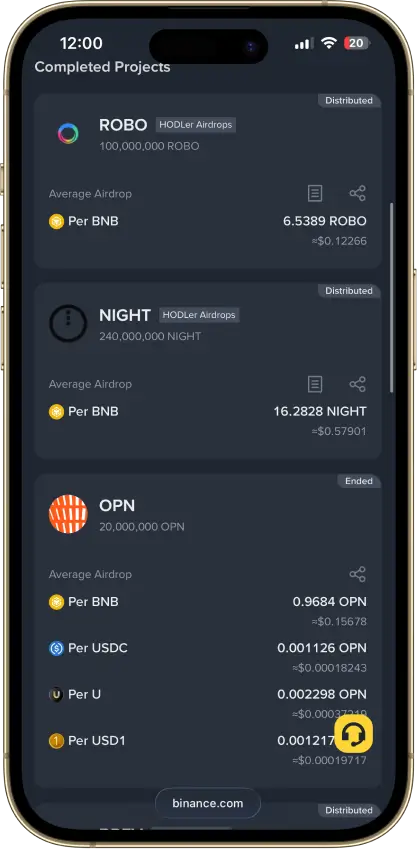
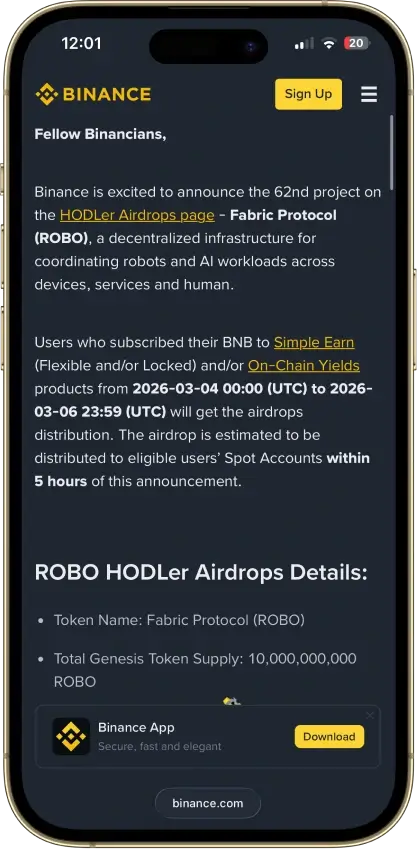
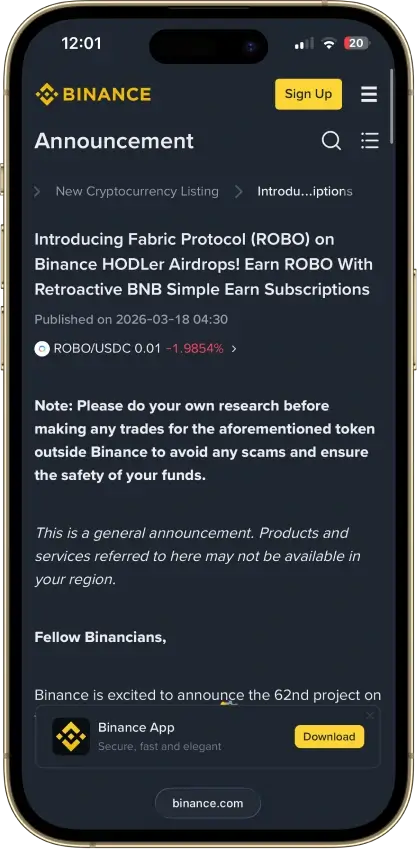
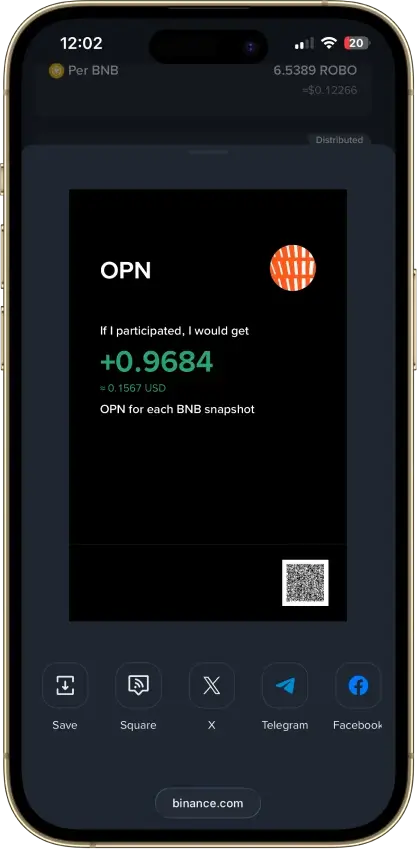
Screenshot 1 of 8
Binance Launchpad Pros and Cons
Pros
- Sale tokens arrive in your Binance account
- Launchpool can offer pools beyond BNB
- No early-commitment advantage in classic sales
Cons
- Heavy demand can reduce allocations
- Buying BNB adds price exposure
- Several announcement pages to track for launches
How Launchpad Differs From Other Binance Launch Products
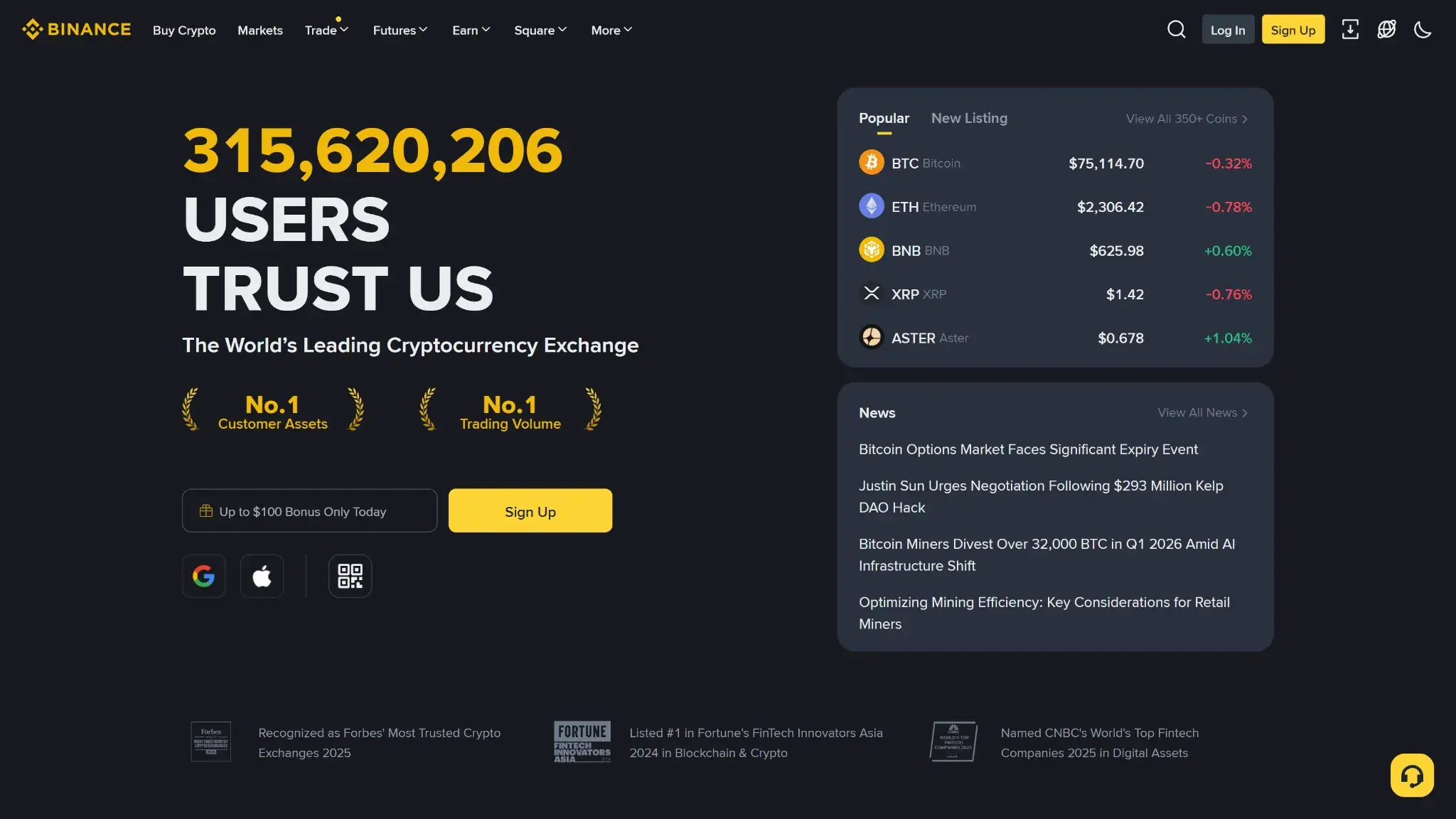
Classic Launchpad uses a subscription process. Binance’s Fan Token Launchpad instructions take it from balance measurement through a commitment window to allocation and final distribution. Your measured BNB balance limits what you can commit, but the final token amount depends on total commitments and the individual allocation cap. Only after that calculation is the unused BNB returned.
The other product names describe different ways to obtain or trade tokens:
| Product | Participation model | What to check |
|---|---|---|
| Classic Launchpad | Subscribe to a token sale with BNB | Balance-measurement period, commitment deadline, per-participant cap, and distribution schedule |
| Launchpool | Deposit a campaign's designated assets to earn token rewards | Which pools exist, reward calculation, campaign duration, and redemption conditions |
| HODLer Airdrops | Rewards tied to historical qualifying balances | Which Earn or other products qualify and the retrospective snapshot dates |
| Megadrop | Rewards based on BNB Locked Products subscriptions, wallet quests, or both | Quest requirements, score calculation, and the relevant wallet |
| Alpha and Alpha 2.0 | Early-token discovery and trading, including on-chain execution | Trading route, liquidity, fees, and whether a Binance Spot listing exists |
A BNB purchase is therefore not a universal entry requirement across these products. Megadrop’s FAQ allows participation through the qualifying quest route without a BNB Locked Products subscription. HODLer eligibility depends on the product holding the balance too, as Binance’s Apr. 2026 CHIP distribution included qualifying BNB in Simple Earn and On-Chain Yields.
Alpha 2.0 gives exchange-account users an on-chain trading route. Selection for Alpha still provides no guarantee of a later Binance Spot listing, so that route needs its own liquidity and exit assessment.
Account Setup and Subscription Timing
Binance's Fan Token Launchpad instructions require an account and identity verification. Complete those steps before planning around a subscription window, then check how the event measures BNB balances. The qualifying balance depends on holdings during the stated measurement period, so a late deposit may arrive too late for that event.
Note the maximum amount shown for your account alongside the start and end of the commitment window. Once you commit, track how much BNB is deducted for your allocation and how much returns unused at distribution.
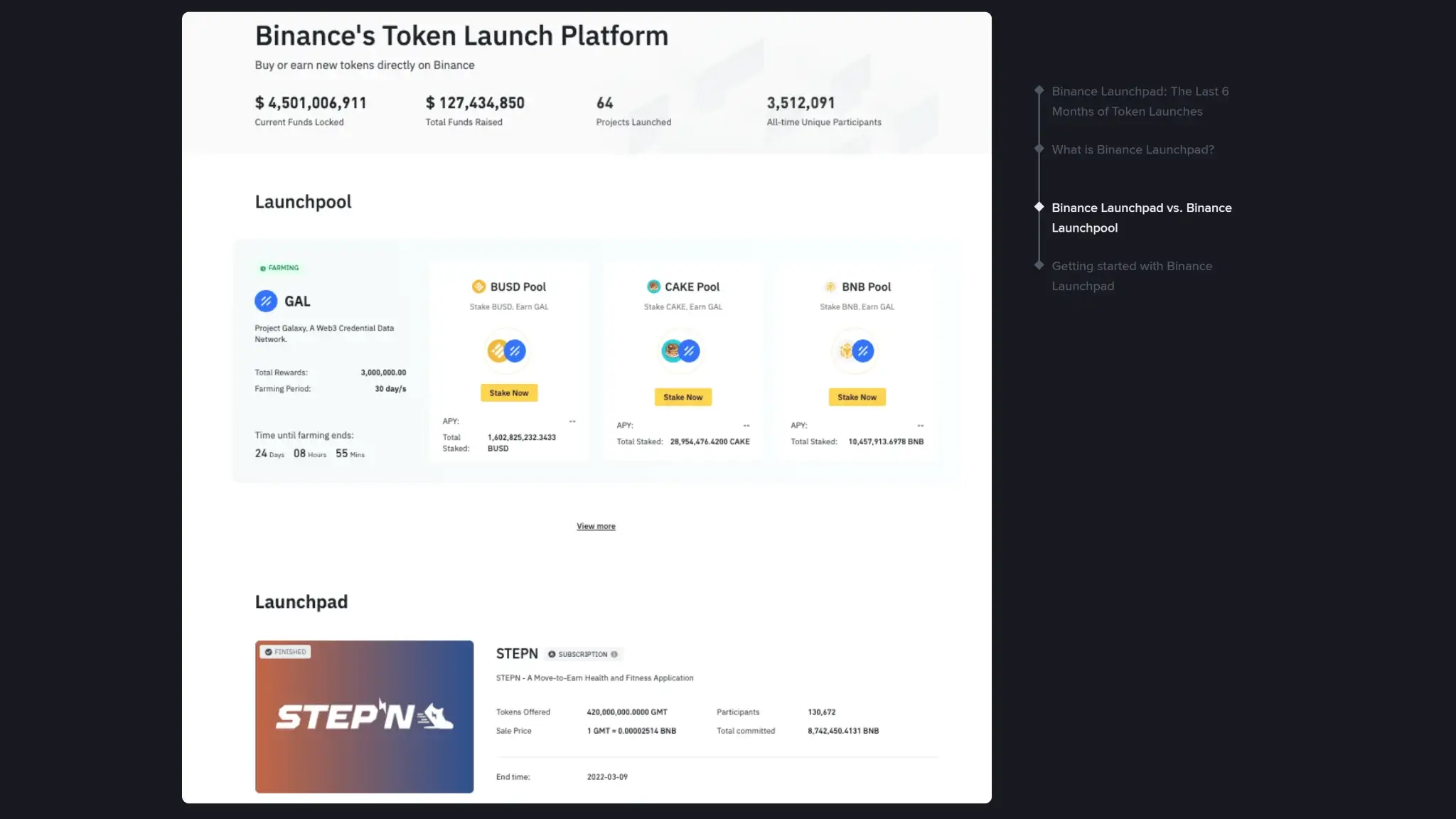
Those commitment-window steps do not apply to Launchpool. There, the available pool names the deposit asset, and some campaigns provide stablecoin pools alongside BNB. Because the next campaign can designate different assets, an earlier pool does not establish what you need for the next one.
Reading Launch Announcements
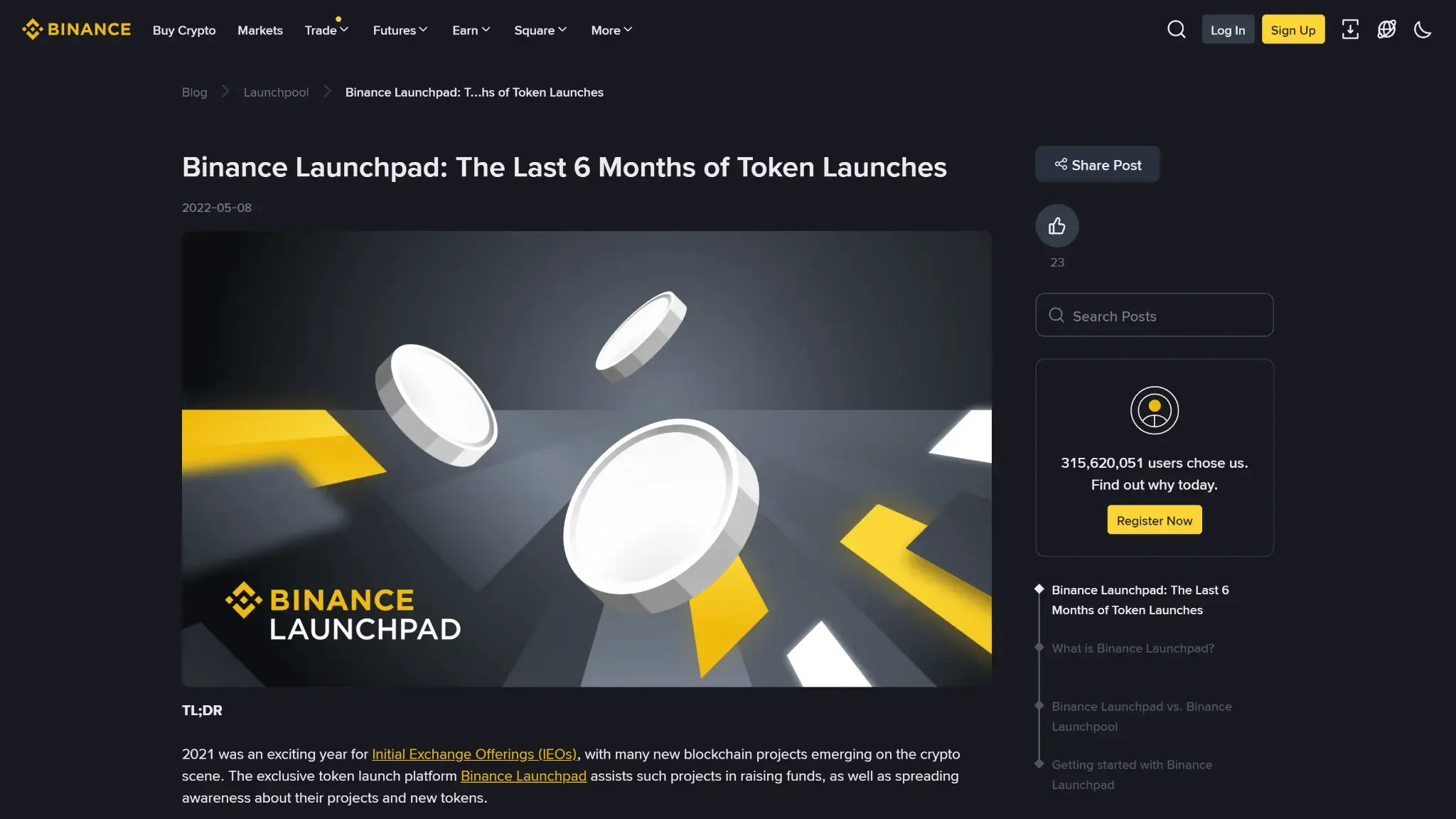
Binance's launch history spans several product families. Adding their project counts together hides whether you are looking at a token sale, a farming campaign, or rewards for balances you already held. Classic subscription opportunities need a Launchpad sale announcement with a commitment window. HODLer notices concern a different distribution process.
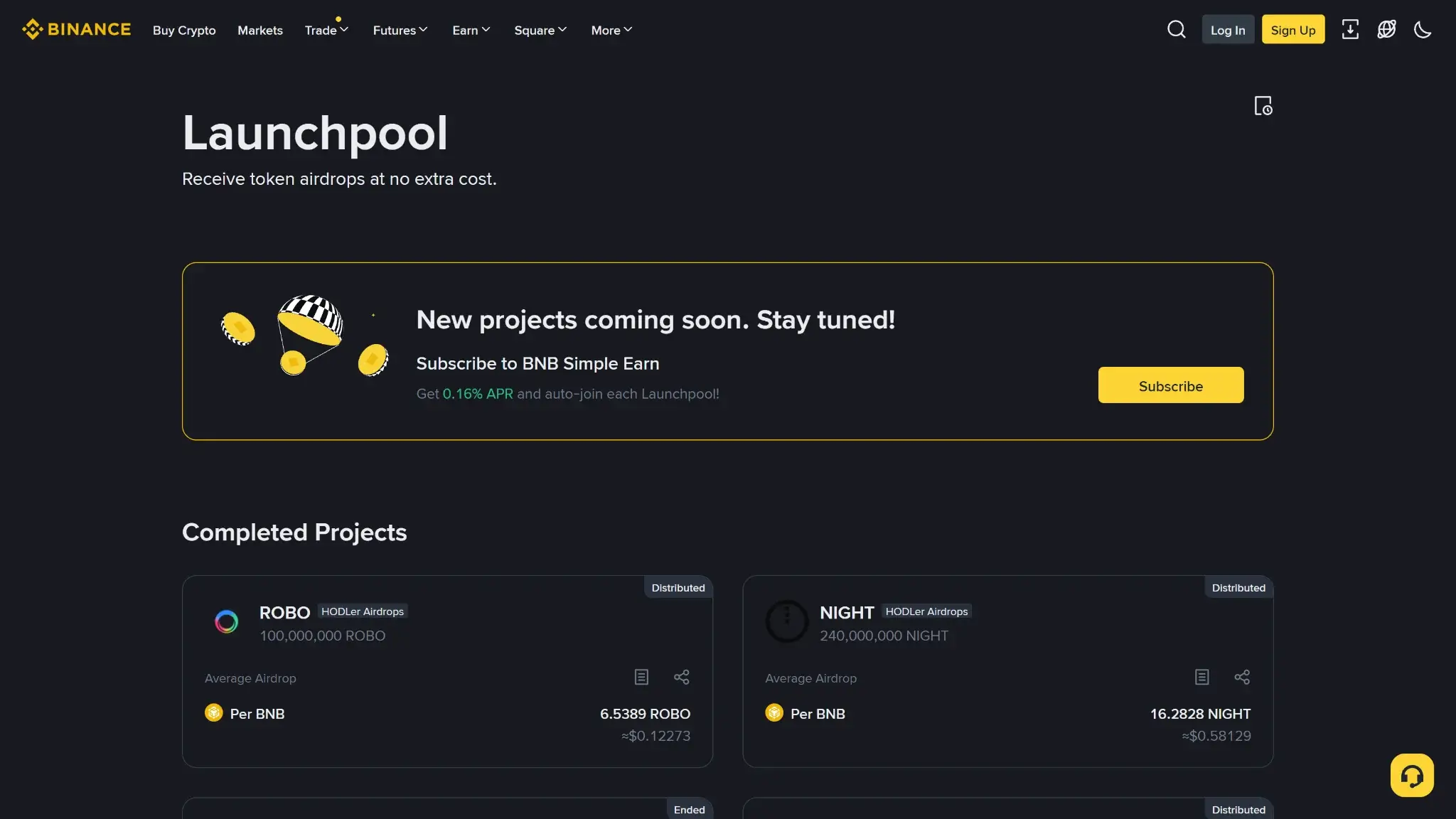
For upcoming projects, start with the announcement for the actual product and token. Check whether participation is still open and whether the dates refer to farming, subscription, distribution, or trading. Projects marked completed belong to earlier campaigns, with participation dates that have already passed.
Fees and the Cost of Qualifying
Binance describes Launchpool participation without an additional product fee. The total cost can still include acquiring the deposit asset, moving it to the exchange, selling the rewards, and withdrawing funds afterward. The applicable trading tier and withdrawal network affect those later costs.
Classic subscription participation is handled within the exchange account, without a wallet transaction for each subscription action. Deposits and withdrawals can still involve network costs. Binance Wallet quests and Alpha execution need a fee check for the route being used.
BNB price exposure is the main additional consideration for someone buying it solely to enter a classic sale. The BNB you buy can lose value while you wait, and the token allocation may still be small. A Launchpool stablecoin pool avoids that particular BNB exposure but still involves custody and stablecoin risks, along with the opportunity cost of committing the funds.
Assessing Token Supply
Compare the amount offered through a classic BNB subscription with the project's total token supply. The sale allocation describes what participants can buy, while the project's release schedule identifies when team and investor tokens become available. Those later releases can increase the supply that can be sold after the subscription ends.
Distribution, Vesting, and Selling Tokens
Launchpad subscription tokens follow the event’s distribution schedule. Receiving them completes the allocation process, but selling still requires an available trading pair and buyers at an acceptable price. Withdrawal availability can also differ from the start of trading, so account credit does not establish when every exit route opens.
Team and investor tokens can remain subject to later releases after your own allocation arrives. Reading the project’s vesting schedule alongside Binance’s distribution date shows when those other holdings become tradable.
For an Alpha position, the available exit can instead rely on on-chain liquidity when no Binance Spot market exists. A classic subscription’s distribution and trading dates cannot establish that route’s selling conditions.
Launchpool exits follow the campaign instead. Its public FAQ describes hourly reward accrual, claims during the campaign, and redemption of deposited assets, while the product terms permit campaign-specific conditions and release delays. Redemption may therefore not be immediate.
Custody and Asset Control
In classic Launchpad participation, the exchange holds the funds and distributes the tokens, so those steps do not require a signed wallet transaction. With Binance Wallet events and Wallet-route Alpha trades, you instead need to check wallet permissions, contract approvals, and how the trade settles on the network. Alpha 2.0 starts from your exchange account, but its trades still execute on-chain, so the outcome depends on the underlying network and available token liquidity.
Where to Raise a Support Case
Binance's help center and support chat are the starting points for subscription, reward, and funding questions. Include the token, product name, relevant time, and account transaction or subscription record when raising a case. A Launchpool reward query and a Wallet transaction problem require different information.
Who Binance Launchpad Suits
The clearest fit is someone who already holds BNB on Binance and wants to participate in a specific subscription sale. With an existing balance, you can assess a subscription without first buying BNB solely for eligibility. The decision then turns on the sale terms and the share of tokens that your commitment could receive.
Proportional allocation gives each participant a share of the subscription pool, subject to the event's per-participant cap. Joining earlier within the accepted subscription window does not itself buy a larger share. Heavy demand can leave a small BNB holder with few sale tokens.
Buying extra BNB can increase the eligible commitment if the added balance counts toward the event’s measurement period. The larger commitment still faces the same competing demand, though, and the additional BNB increases price exposure before the final allocation is known.
Because the exchange manages classic subscriptions and distribution, the format is a poor match for someone who wants to retain direct control of the assets throughout a sale. Binance Wallet events change that setup, with wallet preparation and the relevant network’s transaction requirements taking the place of the exchange-only process.
Binance Launchpad Alternatives
-

Kucoin Spotlight
GNOT’s buyback required opt-in and available tokens, while Zama allowed bid cancellation. Those rights apply at different stages of participation.
-
ChainGPT Pad
Two operator fee schedules disagree. Claiming tokens or excess funds can end a campaign’s full-refund option, so check the charge and rights before committing.
-
Four.meme
The public BNB configuration and documentation disagree on fee minimums and fundraising figures.
-

Legion
Deposit-first sales can leave unused funds to reclaim, while accepted purchases follow the project’s claim and vesting rules.
Choose alternatives by how they allocate tokens. KuCoin Spotlight provides another exchange-based route, with sale-specific subscription and distribution conditions. Compare the funding requirements of the specific Spotlight and Binance events.
Legion lets each project review applications and decide allocations. Consider it if you prefer a project to choose participants from applications, though applying does not guarantee an allocation.
Binance Launchpad and other crypto launchpads differ in account requirements, token commitments, and who controls the funds during a sale. Start with a particular event's conditions when choosing between exchange and wallet participation.
Final Verdict
Binance Launchpad fits existing BNB holders who want a subscription handled through their exchange account. That convenience still leaves the allocation dependent on demand, so a substantial commitment can still receive only a small token share. Buying BNB solely for access adds price exposure before that allocation is known. Launchpool's designated-asset pools offer a different route, and Megadrop, HODLer Airdrops, and Alpha each need their own eligibility and exit checks. In particular, Alpha exposure should never be bought on the assumption that a Binance Spot listing will follow.

CryptoSlate may earn a commission when you use partner links, at no extra cost to you. Our reviews, ratings, and editorial decisions remain independent of advertisers. Read How CryptoSlate Makes Money for funding details.