Quick Take
- White House rejects Democratic ethics demands that could reshape the CLARITY Act.
- The dispute risks unraveling a bill central to US crypto market-structure rules.
- Industry pressure mounts as lawmakers seek a compromise before momentum fades.


The White House pushed back against the Senate Democrats' rejection of the latest version of the CLARITY Act, with ethics remaining a major sticking point.
The clash comes despite President Donald Trump’s decision this week to accept new ethics limits, reflecting how far apart negotiators remain as lawmakers try to advance sweeping crypto market legislation.
On July 22, Senate Republicans submitted revised CLARITY Act legislation to bar the president, vice president, members of Congress, federal judges and other covered officials from issuing or sponsoring digital assets for compensation while in office.
These officials would be required to sell certain crypto holdings, place them in blind trusts they do not control, or use a combination of both approaches. Crypto sales exceeding $1,000 would also trigger disclosure requirements.
The proposal would also give the Justice Department civil enforcement authority over violations, including cases involving exchanges that knowingly list prohibited digital assets.
Key Senate Democrats reject latest CLARITY draft
The revised ethics provisions have failed to win over several Senate Democrats whose votes Republicans may need to pass the CLARITY Act.
Sens. Angela Alsobrooks, Cory Booker, Catherine Cortez Masto, Ruben Gallego, John Hickenlooper, Mark Warner and Raphael Warnock said the latest Republican draft still falls short on ethics, illicit finance, conflicts of interest and other unresolved issues.
Their opposition carries particular weight because several have previously supported efforts to establish a federal framework for digital assets.
Alsobrooks and Gallego joined Republicans when the Senate Banking Committee advanced the CLARITY Act in a 15-9 vote in May, although both warned that their committee support did not guarantee backing on the Senate floor.
Alsobrooks said at the time that ethics and other provisions still required further negotiations. Booker, Cortez Masto, Hickenlooper, Warner and Warnock have also participated in Democratic efforts to craft cryptocurrency legislation.
The seven senators have not abandoned negotiations, but their rejection of the current draft creates an immediate vote-count problem for Republicans.
The GOP holds 53 Senate seats and would need at least seven Democrats to reach the 60 votes required to overcome a procedural hurdle, assuming every Republican supports the bill.
That assumption is also uncertain. Sen. Thom Tillis of North Carolina has said additional ethics changes are necessary to secure his support, while Sen. John Kennedy of Louisiana has raised concerns about other provisions, including stablecoin rewards.
Democratic criticism has focused heavily on whether the revised ethics language would meaningfully restrict Trump’s existing cryptocurrency businesses.
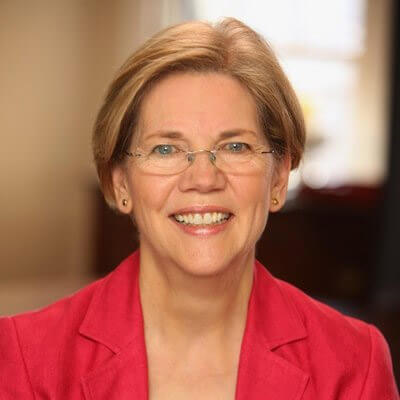
Sen. Elizabeth Warren, the top Democrat on the Senate Banking Committee, said the proposal would fail to prevent Trump from earning another $1.4 billion from crypto. She said:
The new draft of the Senate GOP crypto bill does nothing to stop President Trump from making his next $1.4 billion from crypto. It’ll supercharge Trump’s crypto corruption. This bill should be dead on arrival.
Warren has repeatedly argued that Congress should not create a new regulatory framework for digital assets while allowing senior government officials to continue profiting from businesses affected by those rules.
Amanda Fischer, who works on financial policy at Better Markets, similarly argued that the draft could leave several revenue streams tied to existing Trump-linked ventures untouched.
Fischer said the proposal does not clearly prohibit income from trading fees or reserve assets connected to existing businesses and criticized its compliance timetable, lack of state or private enforcement and exclusion of officials’ children.
She also questioned provisions requiring certain violations to be committed “knowingly and willfully” before the Justice Department could pursue civil penalties, arguing that the standard could make enforcement more difficult.
Those concerns have strengthened the Democratic case that the revised ethics package remains too narrow, leaving Republicans without the bipartisan support they currently need to move CLARITY through the Senate.
White House pushes back on Democratic objections
The White House has rejected two of the objections now threatening Democratic support for the revised CLARITY Act.
Patrick Witt, a senior White House crypto adviser, said the dispute has narrowed around whether state attorneys general should be allowed to enforce the ethics provisions and whether the legislation should address President Donald Trump’s past cryptocurrency activity.
In a July 22 post on X, Witt argued that denying state attorneys general enforcement authority would be consistent with existing federal ethics laws.
He said:
“If you hold position (1), then you are basically saying that ALL current federal ethics laws are meaningless because none of them are enforceable by state AGs.”
He also pushed back against demands for stronger restrictions targeting Trump’s previous crypto activity, setting up a separate dispute over how far Congress can go in addressing conduct that predates the legislation.
Crypto industry warns ethics fight could sink broader reform
The ensuing back-and-forth between Democrats and the White House has prompted crypto industry leaders to warn that the ethics dispute could derail the wider regulatory framework.
Miles Jennings, general counsel at Andreessen Horowitz’s crypto division, argued that lawmakers risk losing proposed rules for exchanges, intermediaries, illicit finance and other parts of the digital-asset market if negotiations collapse over the ethics provisions.
His argument is that rejecting the CLARITY Act because the restrictions do not go far enough would also leave the industry operating under the existing regulatory structure.
Coinbase Chief Policy Officer Faryar Shirzad similarly urged lawmakers to accept that major legislation requires compromise, saying the industry did not receive everything it sought from the proposal.
He nevertheless described the broader framework as an important step toward bringing digital assets under clearer federal oversight.
Ripple Chief Legal Officer Stuart Alderoty also defended the legislation, pointing to provisions covering anti-money-laundering requirements, law-enforcement authorities and consumer protections.
He said:
“Perfect can't be the enemy of good.”
However, Democrats involved in the negotiations reject the suggestion that opposing the current draft amounts to preserving the status quo.
Their position is that lawmakers still have time to strengthen the bill before establishing a regulatory framework that could be difficult to revisit once enacted.
That divide leaves the CLARITY Act caught between two competing calculations: whether lawmakers should accept an imperfect compromise now or hold out for stronger ethics protections, risking delays to the broader crypto framework.
Mentioned in this article




Editorial credits