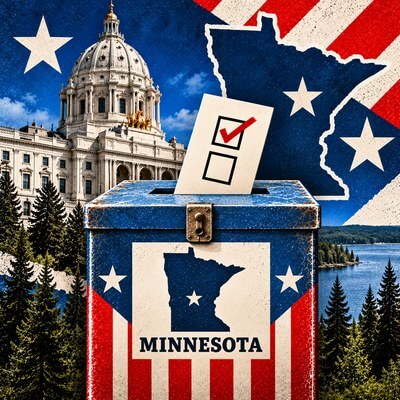
Which party will win Minnesota’s 2026 US Senate election?
Final Results
Scheduled deadline: Nov 4, 2026, 04:59 UTC


8 more outcomes Other final results
- Person DNo
- Person ENo
- Person FNo
- Person GNo
- Person HNo
- Person INo
- Person JNo
- OtherNo
Market Resolution
Polymarket reports Peggy Flanagan (D) as the winning outcome for the Which party will win Minnesota’s 2026 US Senate election prediction market with a final probability of 100%. Scheduled deadline: Nov 4, 2026, 04:59 UTC. Final reported trading volume was $1.8M.
Polymarket · Final sync
 Democratic Presidential Nominee 2028


 Which party wins 2028 US Presidential Election?


 Republican Presidential Nominee 2028


Market Analysis
Minnesota’s 2026 Senate race tests Flanagan’s edge after Smith’s exit
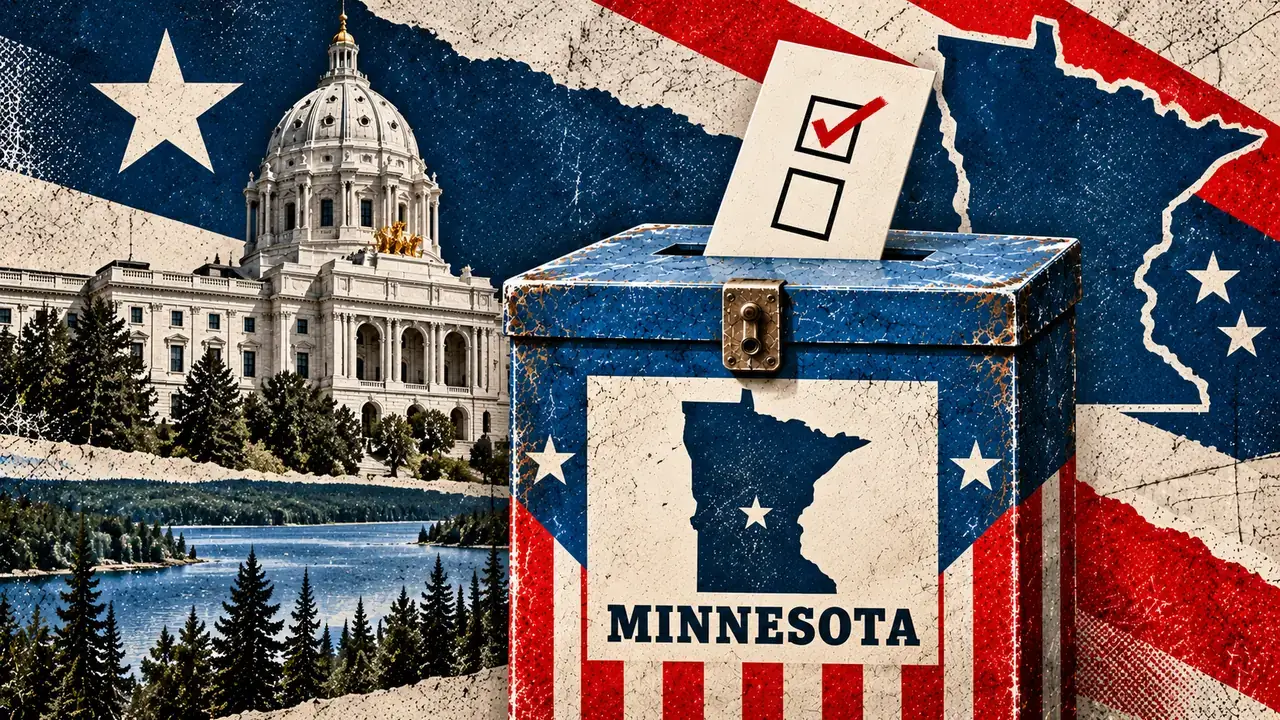
The settled Flanagan–Tafoya matchup shifts attention from nomination risk to whether either candidate can build a statewide majority. Smith’s retirement removes the incumbent from the contest, while the limited polling evidence leaves the durability of a Democratic advantage open to challenge.

The case for a Democratic advantage in Minnesota’s 2026 Senate election depends on Peggy Flanagan converting a primary victory into a general-election coalition without Tina Smith on the ballot. Smith’s retirement creates that challenge; the completed nominations make it possible to test. A narrow Flanagan polling edge, as described in the supplied research summary, supports a competitive Democratic lead, with substantial limits on how confidently that lead can be interpreted.
The supplied market record contains no outcome prices, and the research summary provides no pollster, field dates, sample sizes, or margins. Those omissions prevent a numerical judgment about the market’s hierarchy. The defensible analysis concerns the assumptions that could sustain a Democratic lead and the evidence that would weaken it.
Smith’s retirement removes an incumbent from the equation
Smith announced in February 2025 that she would not seek reelection in 2026, according to her Senate office. That decision means voters will choose a successor, and neither major-party nominee can campaign as the sitting senator seeking another term.
The causal implication is narrower than declaring the seat a toss-up. Flanagan must establish her own claim to the office, while Republican nominee Michele Tafoya can contest an open seat without directly defeating Smith. An interpretation that carries over confidence in the outgoing senator would therefore assume that voters transfer their support to the Democratic nominee.
Evidence of that transfer would include sustained Flanagan support in head-to-head polling after voters receive more information about both nominees. Weakness would emerge if her support slipped as the campaign became more candidate-specific. Smith’s announcement establishes the vacancy; it does not establish how much electoral strength either successor inherits.
Flanagan and Tafoya’s nominations sharpen the contest
The supplied Associated Press reporting identifies Flanagan as the August 11, 2026 DFL primary winner and Tafoya as the Republican nominee chosen that day. Their victories remove a major source of uncertainty: which candidates will represent the two parties.
That changes what subsequent evidence can explain. A poll of Flanagan against Tafoya measures the nominated matchup, while hypothetical primary-era pairings may describe a contest voters will never face. Campaign messages, endorsements, and spending can now be assessed against the same two candidates.
Flanagan’s primary victory establishes that she won the nomination. It supplies no direct measurement of her appeal among general-election voters who did not participate in that primary. Tafoya faces the equivalent test. Either nominee could consolidate party supporters yet struggle to attract the additional voters needed for a statewide majority.
A narrow Flanagan lead needs a verifiable polling foundation
The research summary describes recent polls showing a narrow Flanagan edge. Without the underlying surveys, that description supports only a provisional directional conclusion. It cannot establish whether separate pollsters agree, whether the advantage persists over time, or whether the apparent movement exceeds ordinary sampling variation.
This is the strongest challenge to a confident Democratic interpretation. A small reported lead could represent durable support, a temporary post-primary response, or differences in survey methods. The supplied evidence cannot distinguish those explanations.
Several independent, post-primary surveys showing similar results would strengthen the case that Flanagan holds a repeatable advantage. A sustained Tafoya lead across comparable surveys would weaken it. A single reversal would require scrutiny of its timing and methodology before supporting a broader conclusion about the race.
Minnesota’s filing rules limit candidate-entry scenarios
Minnesota’s secretary of state set the Senate filing window for May 19 through June 2, 2026, at 5 p.m. The supplied official filing context says that process has closed and identifies withdrawal provisions before ballot finalization.
Those deadlines constrain scenarios involving an ordinary late entrant. With the major-party nominations settled, the central analytical task is evaluating Flanagan against Tafoya. A hypothetical withdrawal or write-in effort would require separate evidence about eligibility, ballot treatment, and actual voter support before changing that assessment.
Post-primary evidence can change the Minnesota Senate outlook
The next useful catalysts are identifiable: verifiable head-to-head polling, candidate disclosures that substantiate campaign capacity, and debates or major announcements followed by measurable changes in voter preference. None automatically determines the outcome. Each matters through its effect on the nominees’ ability to retain supporters or persuade additional voters.
If Flanagan maintains a lead across independent surveys as the general-election campaign develops, the Democratic case gains firmer support. If Tafoya closes the gap consistently, Smith’s departure becomes a more consequential opening. Publication of the underlying polls would allow the reported Flanagan edge to be tested first.
Sources
Market Details
- Resolution criteria
- This market will resolve according to the winner of the 2026 midterm Minnesota U.S. Senate election, inclusive of any run-offs.
- Platform
-


- Category
- Politics › US Election
- Scheduled deadline
- November 4, 2026, 4:59 AM UTC
- Market rules summary
- Multi-outcome Polymarket event. Each listed option is represented by its Yes price on the underlying market. View full rules
Frequently Asked Questions
What was the final result of the Which party will win Minnesota’s 2026 US Senate election prediction market?
Polymarket reports Peggy Flanagan (D) as the winning outcome for the Which party will win Minnesota’s 2026 US Senate election prediction market with a final probability of 100%. The final market snapshot includes $1.8M volume and $1.12M open interest. CryptoSlate last synced the final market data at Nov 4, 2026, 08:24 UTC.
How does the Which party will win Minnesota’s 2026 US Senate election prediction market resolve?
This market will resolve according to the winner of the 2026 midterm Minnesota U.S. Senate election, inclusive of any run-offs. Multi-outcome Polymarket event. Each listed option is represented by its Yes price on the underlying market.
Related US Election Markets
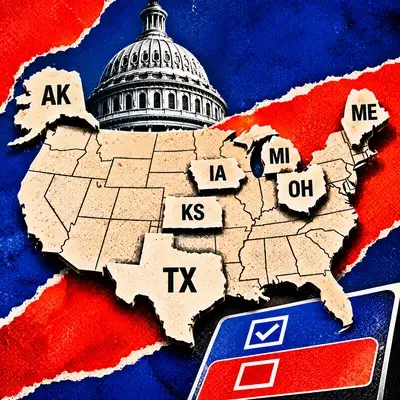 Which Senate Swing States will Republicans win? (Build Your Map)
 Which party will win Vermont’s 2026 governor election?