Quick Take
- Invesco’s IROXX fund records shares on Ethereum and initially targets institutions, including stablecoin issuers.
- Superstate normally sends same-day dollar wires for valid fund business-day requests received before the cutoff.
- Shareholders can choose USDC proceeds through a third party that sets its own conversion and delivery terms.


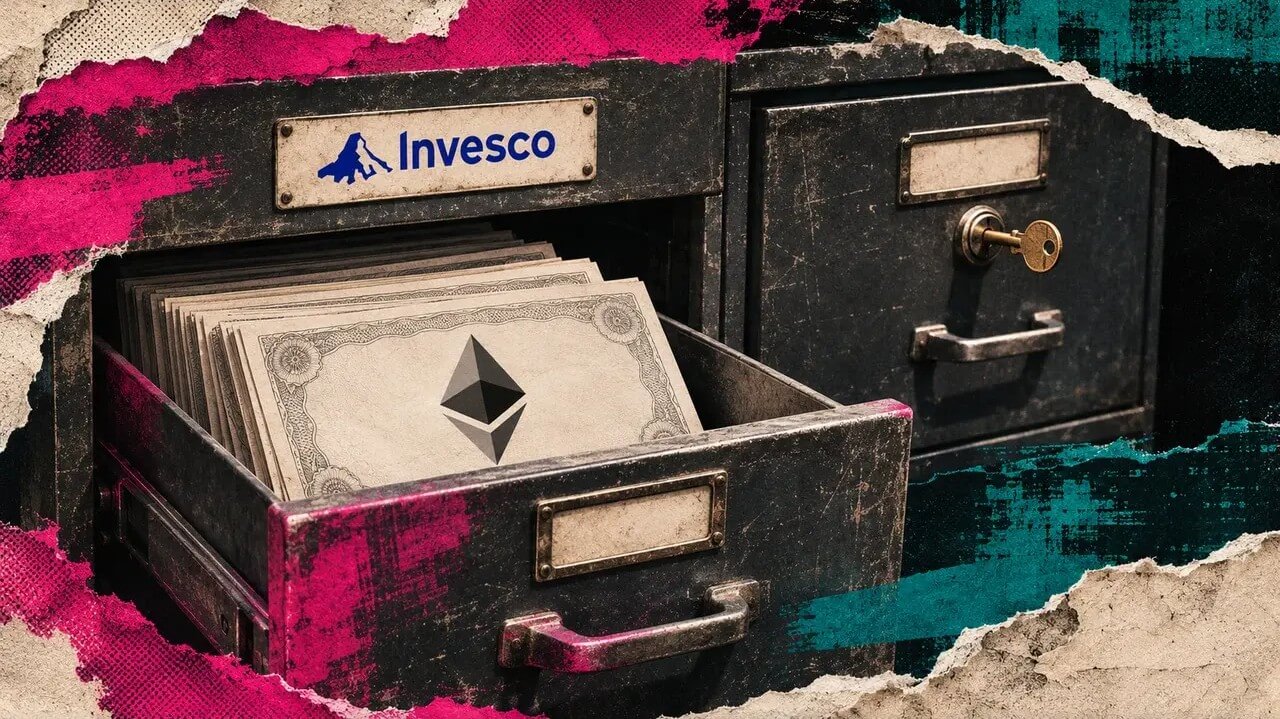
Invesco announced a government money market fund on Nov. 17 that gives eligible institutions a way to hold part of their stablecoin reserves in fund shares recorded on Ethereum.
If a stablecoin issuer needs dollars from the fund to pay customers, it has to redeem those shares on the fund’s business-day schedule.
The Invesco Stablecoin Reserves Onchain Fund (IROXX) is initially aimed at institutions such as stablecoin issuers and digital asset infrastructure providers. Its shares represent an investment in short-duration US Treasury securities and other eligible reserve assets. Holding a stablecoin alone gives a customer no right to redeem shares in the fund.
Investors in supported jurisdictions need an approved Superstate account and a verified wallet on the allowlist to hold IROXX on the Ethereum network.
The standard initial minimum is $1 million per fund account, and Invesco or an intermediary can combine master accounts and subaccounts to meet it.
When the stablecoin wire goes out
To redeem, shareholders submit a request through the Investor Portal run by Superstate, the fund’s sub-transfer agent.
Under the fund’s redemption terms, Superstate normally sends a dollar wire on the next business day if it receives a valid request before 5 p.m. Eastern. For a request received after the cutoff on a business day, the fund normally prices the redemption and sends the wire on the next business day.
The price is the next net asset value per share calculated after Superstate receives the request in good order. The ordinary payment terms allow up to seven days after Superstate receives a request in good order.
Early closes can affect same-day payment, and the fund can also withhold same-day payment in the 30 minutes before it calculates the share price.
A fund business day depends on the New York Fed, the fund’s custodian, and its main portfolio markets being open. Management also has to judge that the market can handle purchase and redemption requests.
Shareholders pay blockchain transaction fees, known as gas, on redemptions. Congestion or insufficient gas can delay a request past the cutoff even if the shareholder starts the transaction before it.
Investors can also elect USDC proceeds through a third-party intermediary, with the service setting its own onboarding and conversion terms, including when it delivers the tokens. The fund’s normal wire schedule gives investors a timetable for when dollars are sent, while USDC delivery depends on the intermediary.
When IROXX pays out
Superstate’s normal dollar wire schedule for valid redemption requests on a fund business day.
The wire schedule tells investors when the fund sends the money.
The prospectus allows up to seven days under ordinary payment terms. The fund may also decline same-day payment shortly before it calculates the share price.
Sources and evidence
Sources
Supporting facts
- Eligible investors in supported jurisdictions must obtain Superstate account approval and use a verified wallet on the allowlist to hold IROXX on Ethereum. The standard initial investment is $1 million per fund account, subject to the prospectus’s account aggregation provision. [2] [1]
- An IROXX shareholder redeems through Superstate’s Investor Portal. For the normal same-day window, Superstate must receive the request in good order before 5 p.m. Eastern on a fund business day. The next net asset value calculated after receipt determines the redemption price. [1]
- The prospectus says Superstate normally sends the dollar wire on the business day a request arrives in good order before 5 p.m. Eastern, or on the next business day for a request received after 5 p.m. Eastern on a business day. Its ordinary payment terms allow up to seven days after a request is received in good order, and an early close can affect same-day payment. [1]
- Investors may elect USDC proceeds through a third-party financial intermediary with separate onboarding and conversion terms. The fund does not guarantee when that intermediary delivers USDC. [2] [1]
- A fund business day requires that the Federal Reserve Bank of New York, the fund’s custodian and the relevant portfolio markets are open and management considers the market adequate for orders. The fund can close early and may decline same-day payment during the 30 minutes before its net asset value determination. [1]
Method
Compare valid Investor Portal requests received on the same fund business day. The two branches show the normal dollar wire schedule specified in the prospectus. The USDC strip identifies the separate conversion service.
Scope
The prospectus allows up to seven days under ordinary payment terms. The fund may also decline same-day payment shortly before it calculates the share price.
 CryptoSlate
That leaves a gap for a stablecoin issuer drawing on IROXX to plan for if customers seek dollars after the fund’s cutoff. Paying them before the next wire goes out depends on the liquidity the issuer already has available.
Mentioned in this article


Editorial credits