


 Launched in 2021
- Hybrid AMM plus order book
- Regulated by NYDFS, Hong Kong's SFC and BaFin
- Deloitte audits and daily reserve reconciliation
Bullish Overview
- Crypto Exchange Name
- Bullish
- Launch Year
- 2021
- KYC
- Yes
- Total Assets
- 75+
- Staking
- No
- Copy Trading
- No
- Derivatives
- Yes
- Proof of Reserves
- No
- Trading Fees
- -0.015% - 0.025%
- Maker Fee
- 0%
Additional details
- Products
- Spot, Margin, Futures or Perps, Options, OTC
- Restricted Countries
- United States of America, Canada, China, Japan, Israel, Russia, Iran, North Korea, …United States of America, Canada, China, Japan, Israel, Russia, Iran, North Korea, Myanmar, United Kingdom, Hong Kong
Bullish Screenshots
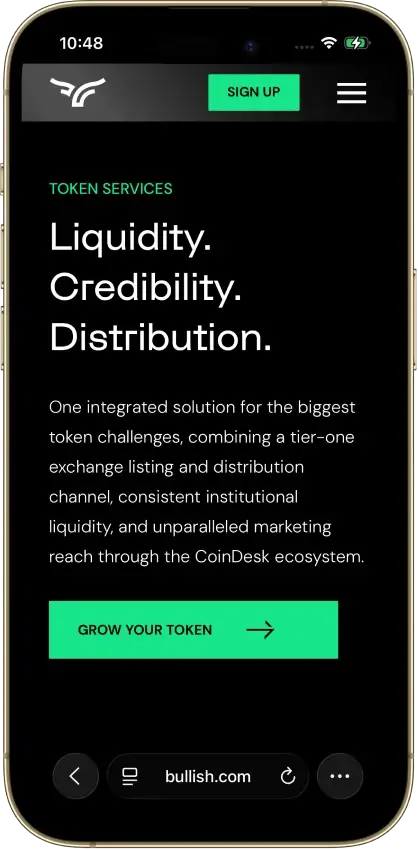
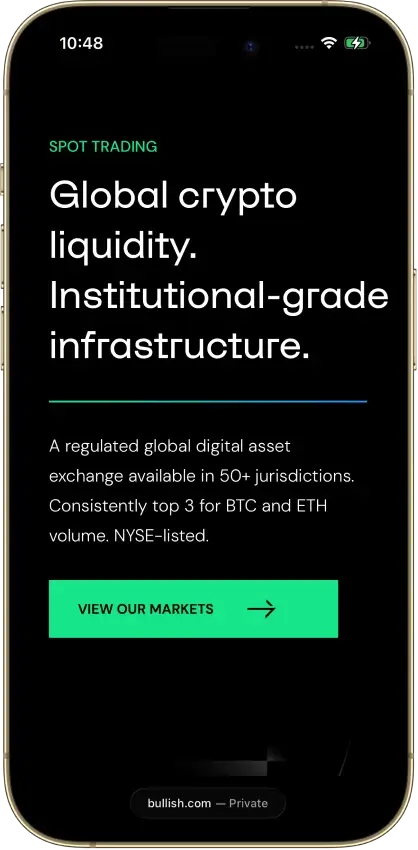
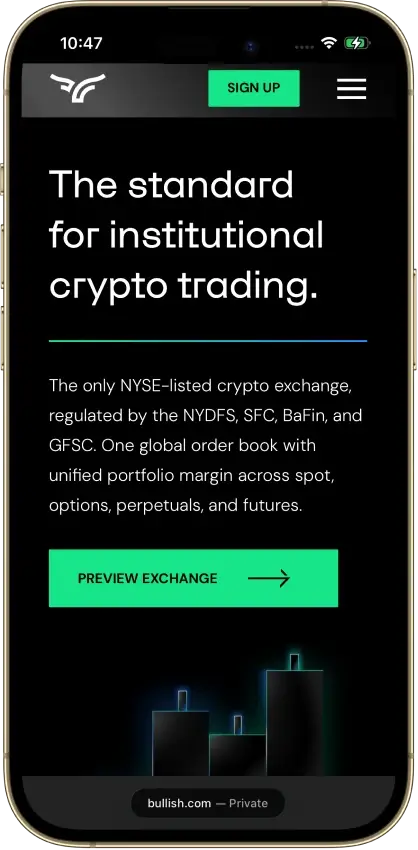

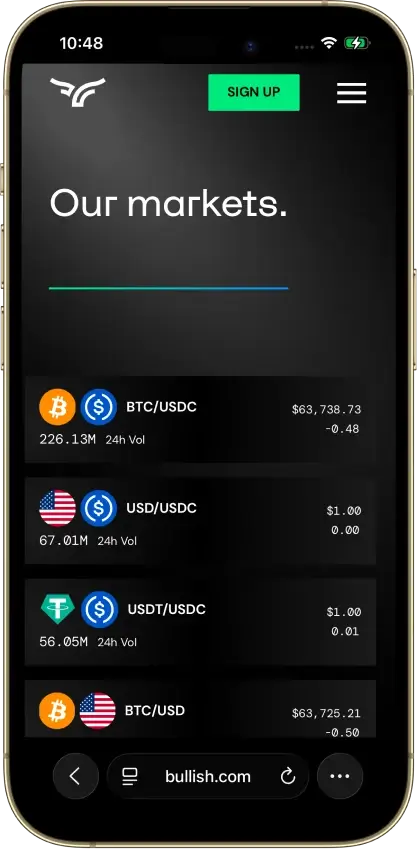
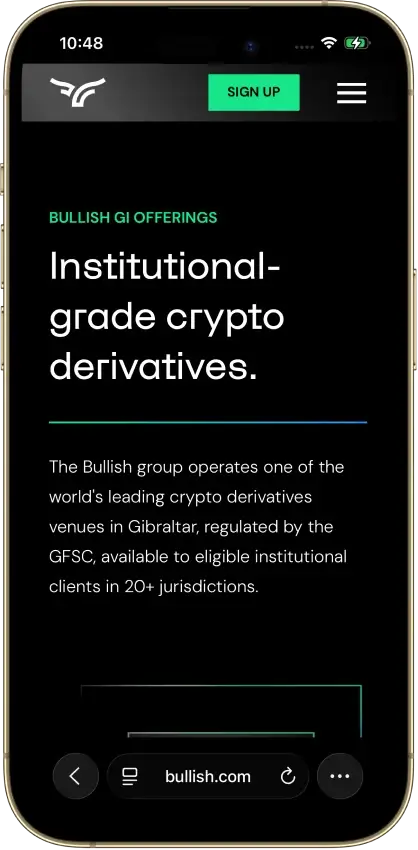
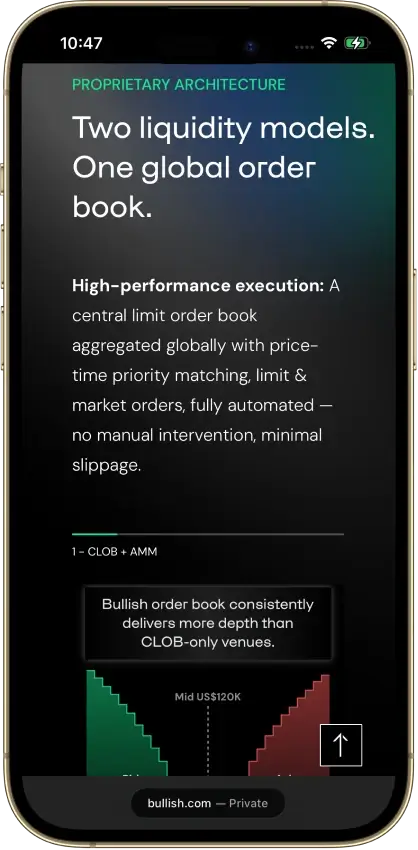
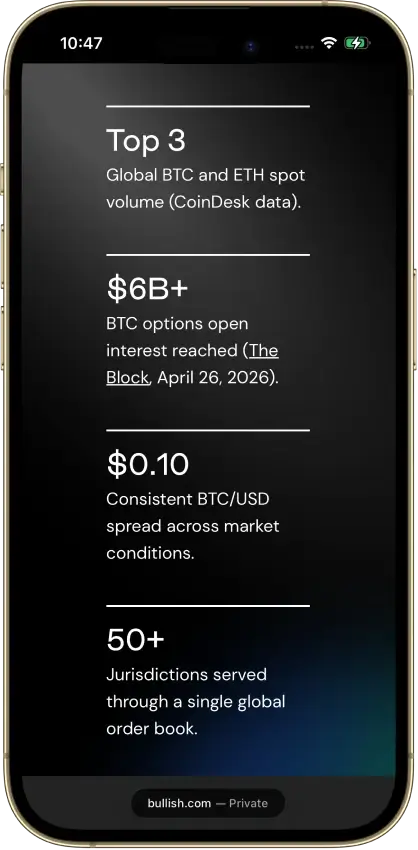
Screenshot 1 of 8
Bullish Pros and Cons
Pros
- NYSE-listed parent with SEC reporting
- No major hack or fund freeze on record
- Full REST, WebSocket and FIX API stack
- Mandatory MFA with WebAuthn on key actions
- Full reserves segregated from company assets
Cons
- Narrower asset list than major retail exchanges
- No ACH or card rails
- CoinDesk editorial-independence overhang
Quick Decision: Is Bullish Worth It?
Bullish is worth considering if you want institutional-style execution on major assets, clear published spot fees, and, where you qualify, derivatives access in select locations. It works less well for users who need broad token coverage or easy card funding, and it offers no consumer extras like staking.
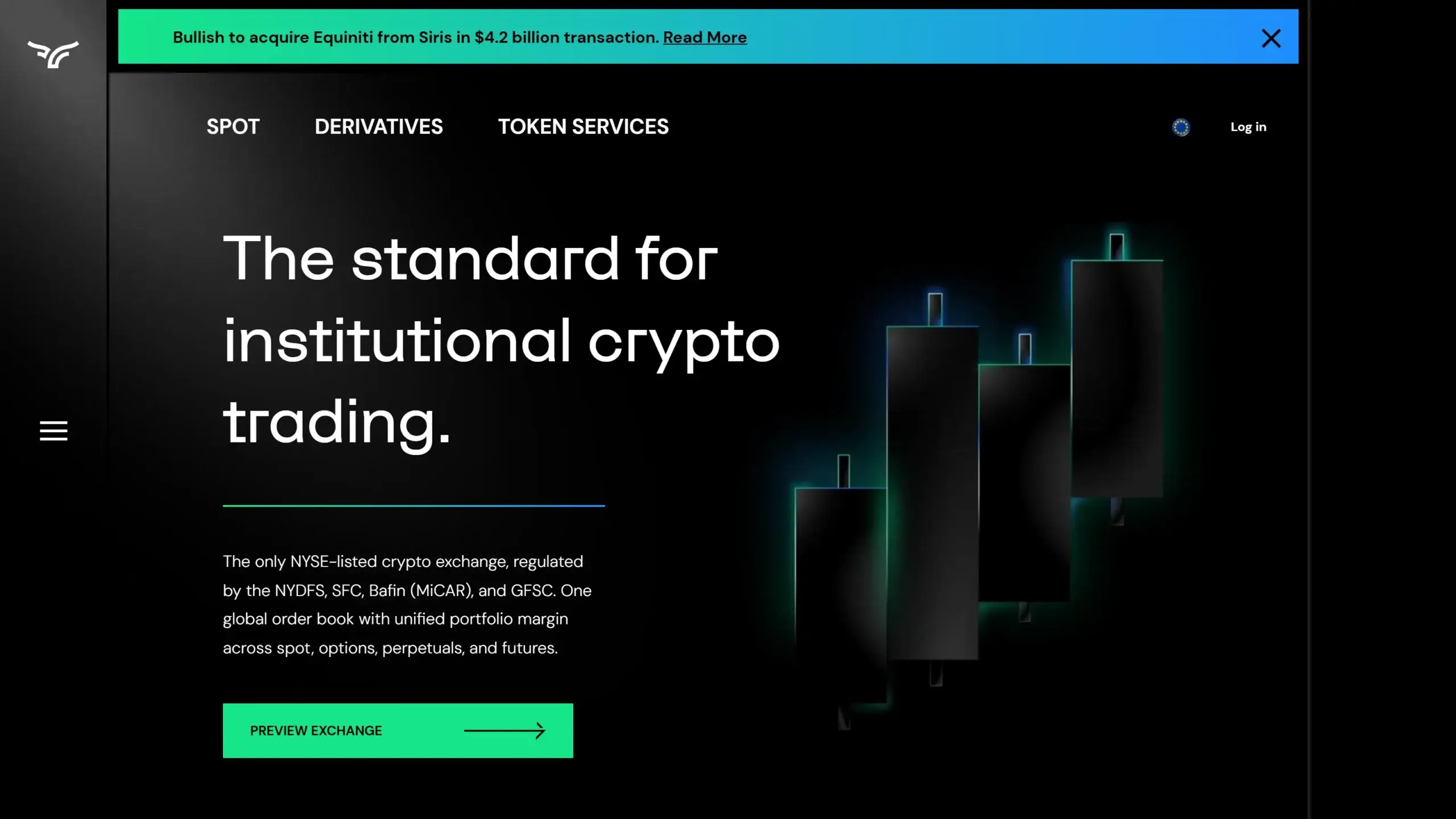
Use Bullish if you want a regulated, NYSE-listed venue with strong liquidity on Bitcoin, Ether and the major stablecoins. Skip it if you need the widest coin list, simple card buys, or a retail app designed for beginners. If you are still weighing options, it helps to compare other crypto exchanges before committing funds.
Who Bullish Is Best For And Who Should Skip It
The audience splits along one line: active trading against mainstream retail convenience.
The fit is natural for traders who care more about execution and market structure than about app simplicity. That user gets strong liquidity on major pairs and full API access, wrapped in a public-company governance layer.
For anyone chasing a mass-market retail experience, the friction shows up fast. Coverage is narrower than mainstream exchanges and derivatives access is regional. Consumer extras are thin.
Features And Services
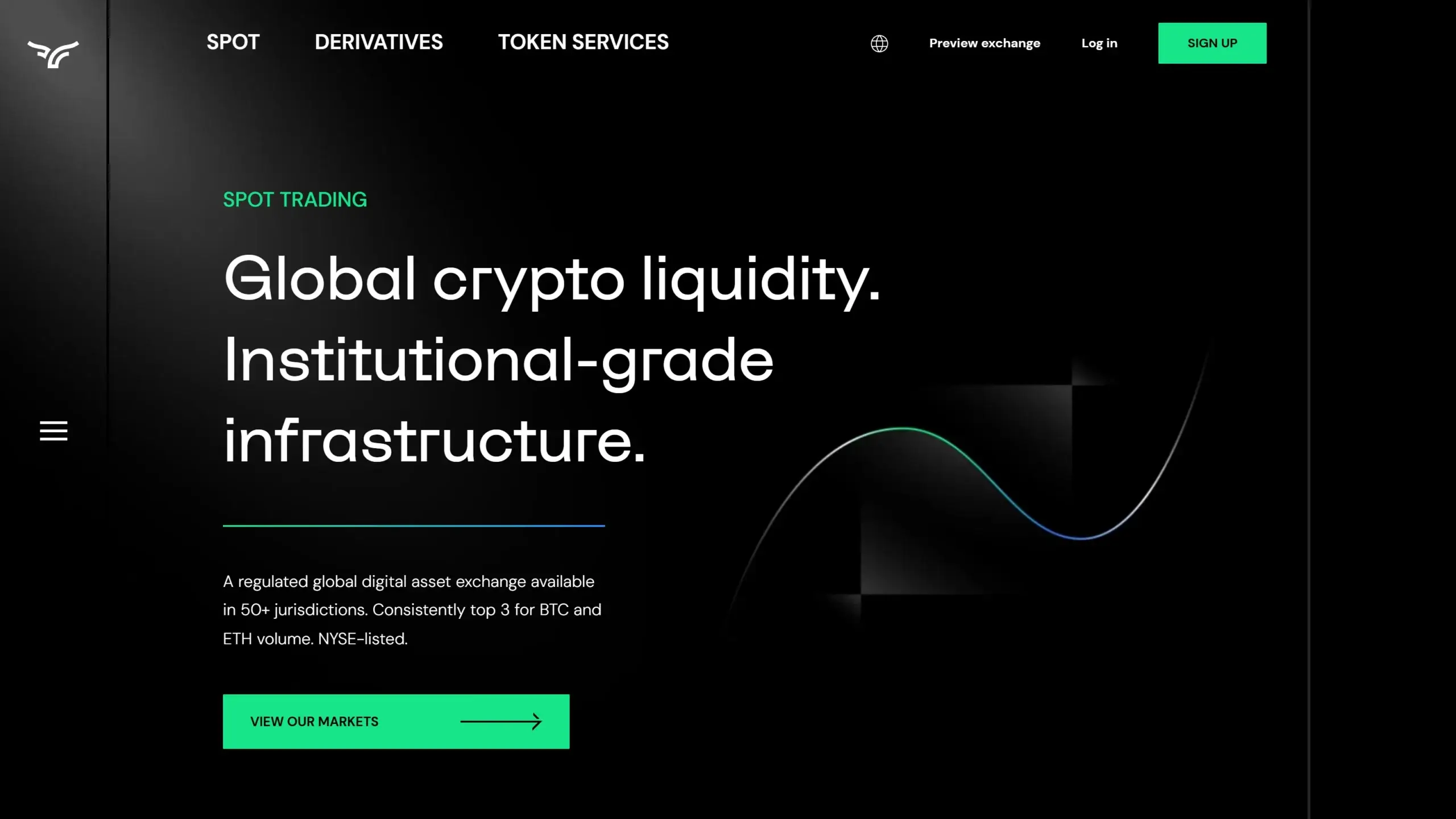
The product set on Bullish centers on trading. Its core is a hybrid liquidity engine that pairs a proprietary automated market maker with a traditional order book. Around that sit institutional OTC and a full API stack, plus derivatives and margin for eligible professional investors in select locations. There is no card, no standard staking product, and no copy trading.
Most users who qualify will trade spot or derivatives through the order book and AMM stack. Execution quality and fee structure matter more here than retail extras.
Supported Assets And Markets
Bullish focuses on major liquid assets and large-cap markets instead of chasing the longest possible token list. That serves serious trading well, though it gives altcoin hunters little to explore.
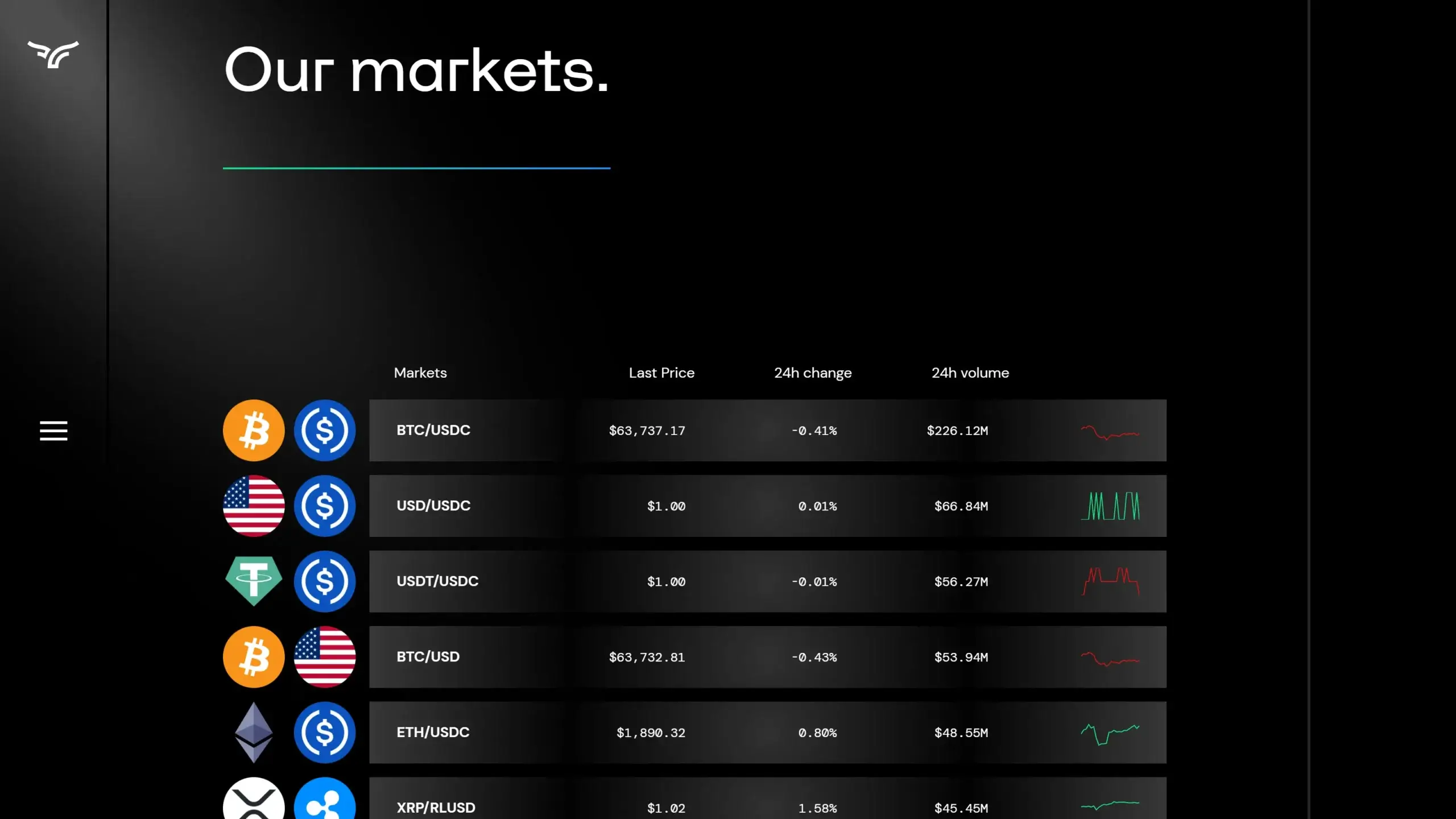
The lineup is deliberately selective. It covers the assets most active traders care about without trying to match exchanges that list hundreds of smaller tokens.
Staking And Rewards
Staking is not a core product here. Passive holders will find no standard staking or earn surface on the platform.
Idle assets earn nothing through a standard program on the platform, so anyone who wants passive yield will need a different venue or strategy.
Wallet And Self-Custody Options
Bullish is custodial by default, and it offers no separate self-custody wallet or vault product. Assets sit in a full-reserve 1:1 custody model, segregated from company assets.
With no integrated self-custody tool, the way to hold your own keys is to withdraw to an external wallet you control. Once funds leave the platform, address and network risk sit with you, and so does recovery.
API And Programmatic Trading
The API is one of the best parts of the platform. Retail buyers may never touch it, but an institutional desk or active trader can build a full workflow around it.
A FIX endpoint alongside REST and WebSocket is unusual for a brand that also serves individual accounts, and it shows how firmly the platform leans toward trading.
Fees And Pricing
Individual standard-market spot trades cost 0% maker and 0.005% taker. Token markets have a -0.015% maker rebate and 0.02% taker fee, while designated promotional markets are zero-fee. From October 1, 2026, stable markets charge 0%/0.005% and FX markets 0%/0.025%. Eligibility and the fee shown at trading determine the applicable rate.
The costs that catch people out sit outside the headline trading fee. Banking rails and region-specific access still matter, and so does withdrawal method.
Hidden Costs To Watch On Bullish
The real cost drag comes from limited funding rails and execution details, not the maker or taker rate itself. Three things account for most of it:
- There is no ACH or card rail, so users who want fast retail-style funding lose that convenience.
- Market orders and quote-based trades still carry spread risk, even with low posted fees.
- Bank transfer support varies by region, and crypto withdrawals still depend on the asset, the network and the transfer method.
The cheapest realistic path stays simple: use eligible individual-account pricing and post maker orders where possible.
Deposits, Withdrawals, KYC And Availability
Funding and exit options shape Bullish more than they do most retail apps. It supports bank transfers in eligible regions and standard crypto rails, but the mix changes by jurisdiction.
What U.S. Users Need To Check Before Signing Up
Location and account profile drive most of the difference. Product access, banking options, and derivatives availability all depend on region and eligibility.
U.S. access runs through Bullish US Operations LLC. The real question is whether your state is covered and which products are enabled.
U.S. product access is narrower than the global set. Spot is the core offering, while derivatives stay off the table.
Payment Rails, Networks, And Limits
Once money starts moving, Bullish behaves like a trading venue, not a beginner app. The best route depends on your region, asset, and the rail enabled for your account.
Fiat Rails By Region
Fiat access exists, though it changes from region to region.
Speed, cost, and availability shift with the rail and the region. Bullish is more flexible than a crypto-only venue, yet less plug-and-play than a mainstream retail exchange.
Withdrawal Networks And Fees
A supported asset does not guarantee every network in every jurisdiction. Verify the exact network and fee before you confirm a transfer.
The lowest-friction route is usually the supported network with the lowest total transfer cost for your asset. A wrong-network send is still an avoidable own goal.
Verification Levels And Withdrawal Limits
Bullish handles verification through account-type checks rather than a simple retail ladder, and limits and access expand with verification level and client profile.
Account type, region, and product access usually trigger any extra review. Institutional onboarding goes further by design.
Is Bullish Safe? Security, Custody And Proof Of Reserves
Trust here is mixed. The platform pairs a public-company reporting layer with clear custody and authentication controls. The main gap is the absence of a crypto-native Merkle-tree proof of reserves.
The structural plus is straightforward: a NYSE listing brings SEC reporting obligations that most private exchanges avoid. The reputational overhang is the CoinDesk editorial-independence episode.
Controls
Security controls go beyond the usual exchange boilerplate. Mandatory multi-factor authentication with WebAuthn protects high-privilege actions, a bug bounty program is in place, and custody uses layered wallet controls and key-management safeguards.
Custody And Insurance
Customer assets are maintained in a full-reserve 1:1 model and segregated from company assets. They are not lent out or used for proprietary trading or investing. Insurance limits and policy terms remain lightly detailed.
Proof Of Reserves Or Audits
Bullish is not a Merkle-tree proof-of-reserves venue. Its trust model rests on Deloitte-audited financial statements, daily reconciliations, and explicit full-reserve segregation of customer assets.
That counts as a real trust signal, but it differs from a live crypto-specific proof-of-reserves system with user-verifiable liabilities.
Incidents And Remediation
No major platform hack or fund-freeze event is on record, so the most serious overhang is reputational rather than operational. Bullish owns CoinDesk, which is why the outlet's editorial record bears on the exchange. In December 2024, CoinDesk removed a story about Justin Sun and senior editors later departed, raising a governance question about editorial independence under Bullish ownership.
App, UX And Customer Support
The experience stays trader-first, even where individual accounts are now supported. It is easier to justify for someone who already understands order books and market structure than for a first-time buyer.
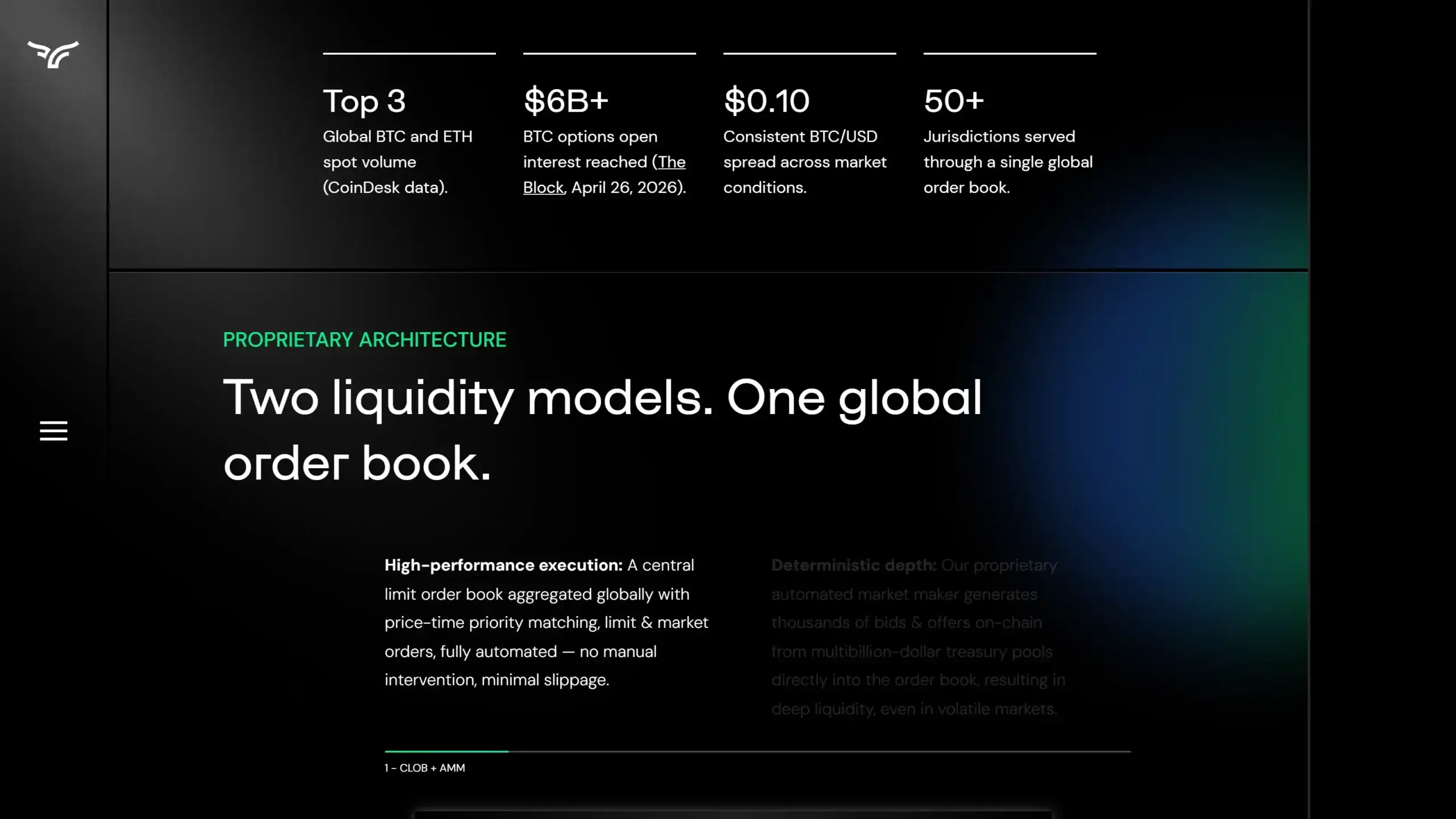
UI And Navigation
The platform assumes you already know your way around trading. Pricing is clear, but region-specific access, product eligibility, and the more advanced surfaces still expect a user who knows what they are doing.
Mobile App
Detail on the full mobile experience remains limited. The platform serves individual users as well as institutions, yet the product is still defined far more clearly around trading structure, fees, custody, and API access than around the end-to-end mobile flow.
Reliability And Status Page
Reliability disclosure is still thinner than the best retail exchanges, though a public status page exists.
| Reliability Area | Details |
|---|---|
| Status Page Quality | Public status page available |
| Outage Communication | Limited public detail |
| Known Trading Or Transfer Delays | No major recurring issue is on record |
| Maintenance Communication | Limited public detail |
That leaves Bullish in a middle ground: better than a venue with no public operations page, but still not unusually transparent on uptime metrics.
Customer Support
Support looks more structured than the average crypto exchange, with a formal help center, a ticket-based flow, and a published complaints process all in place. Here is what that setup covers:
- Help center exists with knowledge-base articles
- Live chat availability is unclear
- Email and ticket support are available
- A formal complaints process is published
- Support can handle account, funding, and trading queries
- Support cannot reverse a wrong-network crypto withdrawal
Support is not the reason to choose Bullish, but the structure is more formal than on many crypto exchanges.
Bullish Alternatives
-


Coinbase
Coinbase fits U.S. users who fund by ACH and use Advanced, but Simple Buy costs and regional product rules require attention.
-

Kraken
Kraken combines quarterly reserve-inclusion checks with separate Pro trading tools and account security controls. Its entry spot fees and funding-related withdrawal holds are the main tradeoffs.
-

Binance
Binance.com combines 0.10% entry spot fees with deep liquidity and extensive trading tools, but access, fiat rails, and products vary by jurisdiction.
-

Gemini
Gemini offers U.S. access, free ACH, and documented controls. Compare alternatives for lower entry fees or access in more countries.
Users who need retail rails, broader coin coverage, or the simplest beginner flow should compare alternatives closely, since those remain Bullish's clearest weak spots. Each option is reviewed in full below.
- Coinbase Exchange — Better for U.S. retail with easier bank integration and a simpler beginner flow. The cost is a higher default buy spread.
- Kraken Exchange — Better for transparent fees and broader assets with solid security. The cost is fewer hybrid-liquidity mechanics.
- Binance Exchange — Better for the broadest asset list and lowest headline fees. The cost is a more complex regulatory picture by region.
- Gemini Exchange — Better for regulated U.S. retail access and a simpler product set. The cost is a smaller market footprint and higher fees.
A competitor beats Bullish most clearly on retail accessibility. Coinbase, for example, covers the card-buy and beginner-app use case that Bullish still does not try to own.
Final Verdict
Bullish is a clear fit for active, professional, and institutional traders who care most about execution on major assets. The clearest reasons to use it are its hybrid AMM-plus-order-book structure, publicly posted low fees, regulated footprint, and better-than-average custody disclosure. The reasons to avoid it still come down to coverage and convenience: narrower asset coverage than the biggest retail exchanges, region-specific access, no card rail, and no standard staking product. The platform is also expanding beyond exchange operations, including its planned $4.2 billion Equiniti acquisition and tokenized-securities push. That widens the strategic story around the business without changing the basic user verdict. Bullish suits serious traders far more than casual buyers.
Crypto trading involves market, liquidity, custody, network, tax, and eligibility risks. Coinbase terms, fees, availability, and asset support can change, and U.S. users should review current Coinbase legal, fee, and status pages before using the exchange.