Quick Take
- Circle launches Arc on Sept. 16, using one USDC balance for payments and network fees.
- Arc removes the need for a second gas token, potentially simplifying stablecoin payments and onboarding.
- Public activity may only shift existing USDC to Arc, not close the gap with Tether.


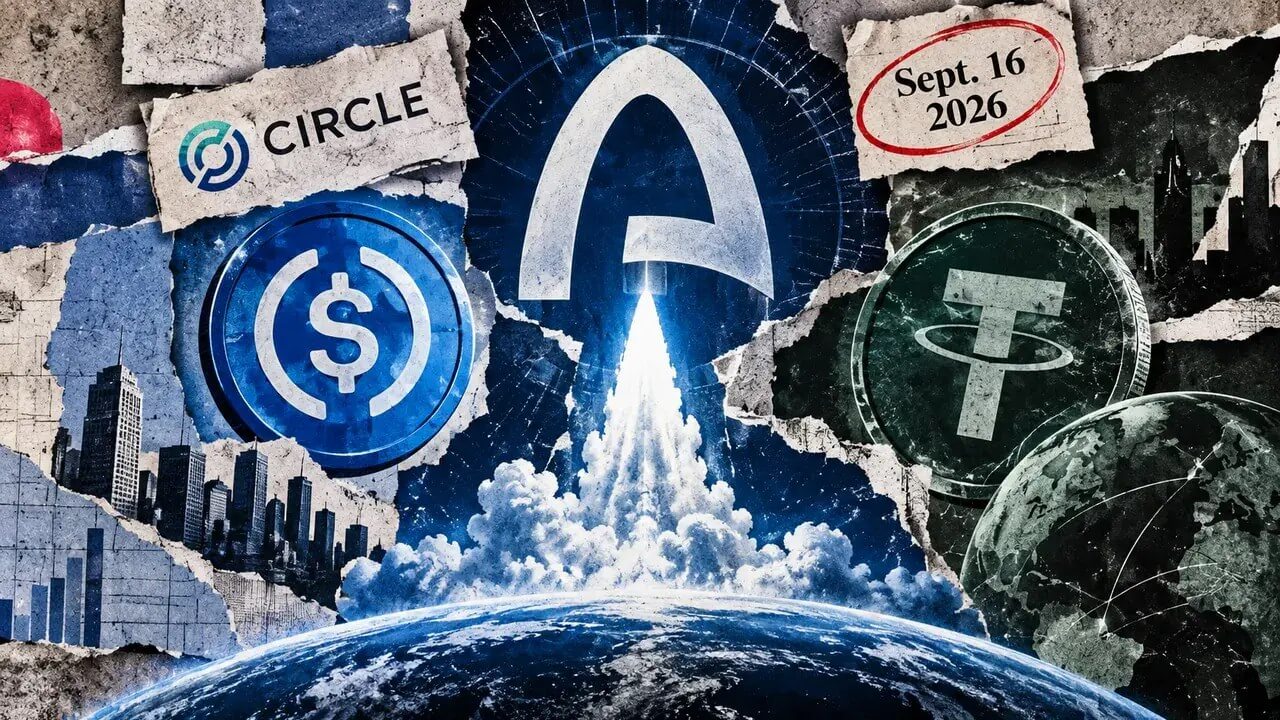
Circle has scheduled the public launch of Arc for Sept. 16, giving USDC a network where the same dollar balance can fund both payments and transaction fees. That could remove a common obstacle to using stablecoins, giving Circle a possible way to attract additional USDC demand as it competes with Tether.
The public-mainnet rollout follows a private network that Circle said had more than 100 ecosystem and institutional builders in August.
Arc's public testnet opened on Oct. 28, 2025. Today's scheduled milestone is the move to a public production network, where its design can face a broader commercial test.
One balance for payments and fees
Arc is a layer-1 blockchain, meaning it operates its own network. Its documentation describes an Ethereum-compatible environment built around stablecoin transactions, with USDC as the asset used to pay network fees and transactions designed to become final in less than a second.
On many Ethereum-compatible chains, someone can have enough USDC to make a payment yet lack the separate token needed to pay the network fee. Acquiring that second asset adds another step before the payment can move.
Arc's USDC model combines those functions. A user holds USDC, sends USDC, and pays the fee from the same underlying balance. Developers can use familiar Ethereum tools while building an application whose spending and fee requirements are expressed in the same asset.
For a payment product, that could simplify onboarding and balance management. It gives USDC an operational role in every fee-paying transaction on the network, beyond being an asset an application happens to support.
The wallet integration guidance also makes clear that USDC's native and token interfaces represent the same holding. They are two ways for software to access one balance, so displaying them as separate pots of money would double-count the user's funds.
This makes the fee payable in the asset the user already intends to spend.
Arc combines open developer access with a permissioned validator set. Anyone can build applications under that model, while the operators responsible for validating the network are selected.
Circle's announced founding validator cohort includes BlackRock, DTCC, Visa, Mastercard, Standard Chartered, and other financial companies alongside Circle. That places institutional participation within the network's operating design.
For businesses considering blockchain settlement, the proposed role of those institutions is part of what distinguishes Arc. It also means that permissionless application access should not be confused with permissionless participation in validation.
The roster and private-mainnet builder count describe participation, but they cannot show how much demand a public launch will generate.
Arc also advertises opt-in privacy, but its execution documentation still lists Arc Privacy Sector and Stablecoin Services as planned and unavailable.
Arc's route to additional USDC demand
Circle reported $73.3 billion of USDC in circulation at the end of June, while Tether reported approximately $184.6 billion of USDT issued at the same quarter-end. These quarter-end figures show the difference in scale entering the scheduled launch.
Arc gives Circle a possible route to greater use: make USDC the balance that customers need for both financial applications and the transactions powering them. Payments and institutional settlement could give users reasons to keep funds available in USDC.
But additional activity on Arc and additional USDC demand are different outcomes. Moving an existing USDC balance from another chain to Arc changes where it is used, and paying fees in USDC likewise establishes a use for the token without proving a market-share gain.
The competitive test is whether easier transactions encourage customers to bring additional money into USDC and keep using it. A public network can provide the infrastructure for that change, but the launch alone cannot demonstrate it.

USDC is -0.01% over the past 24 hours and currently sits at rank #6 by market cap.
Mentioned in this article





Editorial credits